Product-Linked Breakouts From Hair and Skin Products on Dark Skin
For many of us, the journey to radiant, healthy skin is a delicate dance, especially when balancing our unique hair care needs, makeup routines, and the desire for a clear complexion. It’s a common experience: you’ve meticulously cleansed, moisturized, and applied your favorite products, only to wake up to an unwelcome visitor – a breakout. And often, these breakouts aren’t random. They appear in familiar patterns, along the hairline, on the temples, cheeks, or neck, leaving us to wonder if our trusted beauty staples are secretly working against us.
This isn’t about shaming any product or routine; it’s about understanding the intricate relationship between what we apply to our hair and skin and how our melanin-rich skin responds. Our skin, while resilient, can be particularly prone to post-inflammatory hyperpigmentation (PIH) from acne, making early identification and gentle management crucial. The very products we rely on for moisture, styling, and enhancement – from rich hair oils and edge controls to luxurious balms and full-coverage foundations – can, for some, contribute to congestion and breakouts, especially when they migrate or are used in certain ways.
This guide is crafted to help you decode these subtle clues, to understand how your hair and skin products might be inadvertently triggering breakouts, and to equip you with the knowledge to make informed choices. We’ll explore common culprits, demystify ingredient lists, and offer practical, non-shaming strategies for adjusting your routine. Our goal is to empower you to achieve clearer, more balanced skin without sacrificing the moisture, style, and beauty practices that are integral to your self-expression and cultural identity. Let’s uncover the connections and cultivate a routine that truly serves your skin’s highest good.
What Product-Linked Breakouts Can Look Like on Dark Skin
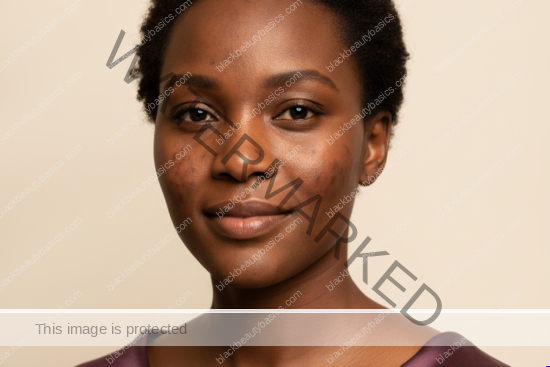
When breakouts emerge due to product use, they often present with distinct characteristics and patterns that can offer valuable clues. Unlike hormonal acne, which might appear cyclically or along the jawline, or fungal acne, which often manifests as uniform, itchy bumps, product-linked breakouts tend to be localized to areas where certain products are applied or where they migrate. For melanin-rich skin, recognizing these patterns is not just about identifying the type of breakout, but also about understanding the potential for subsequent post-inflammatory hyperpigmentation (PIH), which can linger long after the blemish has healed. This makes a proactive and informed approach even more essential.
Common Manifestations and Locations
Product-linked breakouts can take various forms, from small, non-inflammatory bumps (comedones) to more inflamed papules and pustules. The key differentiator is usually their placement. You might notice:
- Closed Comedones (Whiteheads): These are small, flesh-colored bumps that don’t have an open pore. They often appear in clusters in areas where heavy products have been applied, feeling like a rough texture under the skin.
- Open Comedones (Blackheads): While less common with product-linked issues than whiteheads, blackheads can still occur if pores become clogged with product residue and sebum, and the pore opening remains exposed to air, causing oxidation.
- Papules: Small, red, tender bumps without a pus head. These indicate inflammation and are a common response to pore-clogging ingredients.
- Pustules: Red, tender bumps with a white or yellow center of pus. These are more inflamed and can be quite noticeable, often leading to more significant PIH.
- Cystic Lesions (less common but possible): In severe cases, or if a product is highly irritating and occlusive, deeper, painful cysts can form, though this is more typically associated with hormonal or severe inflammatory acne.
Location, Location, Location: Decoding the Clues
The geographical distribution of these breakouts is perhaps the most telling sign that a product is involved. Pay close attention to these zones:
- Hairline and Forehead: This is a classic area for product-linked breakouts, often dubbed “pomade acne” or “acne mechanica” if hats are involved. Hair oils, edge controls, pomades, and even some shampoos and conditioners can migrate onto the forehead, especially if not rinsed thoroughly or if you sweat. The rich, often occlusive nature of these products can easily clog pores in this sensitive area.
- Temples: Similar to the hairline, the temples are susceptible to hair product runoff, particularly from styling products used to smooth edges or define curls near the face.
- Cheeks (especially near the hairline/jawline): When we sleep, hair products can transfer from our hair to our pillowcases, and then onto our cheeks. Additionally, if you’re using heavy moisturizers or foundations that aren’t suitable for your skin type, breakouts might appear more generally across the cheeks.
- Jawline and Neck: This area can be affected by hair products, especially if you have longer hair that rests on your neck, or if you apply rich body butters that extend up to the jaw. Some people also experience breakouts here from heavy makeup or even certain neck creams.
- Back and Chest: Often overlooked, breakouts on the back (“bacne”) and chest can sometimes be linked to heavy conditioners, body washes, or lotions that aren’t fully rinsed off or are too occlusive for the skin.
Distinguishing from Other Acne Types
While the appearance can sometimes overlap, there are subtle differences that help distinguish product-linked breakouts from other forms of acne. For instance, hormonal acne typically presents as deeper, more inflammatory cysts and nodules, often concentrated around the chin, jawline, and mouth, and tends to flare cyclically. Fungal acne (Pityrosporum folliculitis) usually manifests as uniform, itchy, small red bumps or pustules, often on the forehead, chest, and back, that don’t respond to traditional acne treatments. Product-linked breakouts, on the other hand, are often less inflammatory (more comedonal) unless the pore becomes severely irritated, and their distribution is directly correlated with where a product has been applied or migrated.
The key is to observe. Are your breakouts consistently in areas that come into contact with your hair products? Do they improve when you alter your hair care routine or switch to lighter skin products? Keeping a simple log, as discussed in how to observe and log your acne patterns, can be incredibly insightful in making these connections and guiding your next steps towards clearer skin.
Hair Oils, Pomades, Edge Products, and Where They Tend to Show Up
For many Black women, hair care is a sacred ritual, a cornerstone of self-expression and a testament to our heritage. Our hair often requires rich, nourishing products to maintain moisture, promote growth, and achieve desired styles. Oils, pomades, and edge controls are staples in many routines, providing the slip, hold, and shine that our unique hair textures thrive on. However, the very properties that make these products so effective for hair – their occlusive nature, rich emollients, and sometimes heavier textures – can also inadvertently contribute to breakouts when they come into contact with the skin, especially for those prone to congestion.
The Role of Rich Hair Products in Breakouts
The primary mechanism by which hair products can cause breakouts is through pore occlusion. Many traditional hair oils, pomades, and edge controls contain ingredients like mineral oil, petrolatum, heavy silicones, and waxes. While these are excellent for sealing moisture into hair strands and providing hold, they can create a barrier on the skin that traps sebum, dead skin cells, and bacteria within the pores. This trapped mixture then leads to the formation of comedones (blackheads and whiteheads) and, if inflammation occurs, papules and pustules.
- Hair Oils: Often used for scalp health, shine, and sealing moisture, oils like castor oil, coconut oil, and shea butter can be quite rich. When applied near the hairline or if they drip onto the face or back, they can easily clog pores.
- Pomades and Waxes: These are designed for strong hold and slickness. Their dense, often sticky texture makes them highly occlusive. They are notorious for causing “pomade acne” along the hairline and forehead.
- Edge Controls: Essential for sleek edges and defined styles, edge controls often contain a blend of gels, waxes, and conditioning agents. Their close application to the skin around the hairline and temples makes them prime candidates for triggering localized breakouts.
- Leave-in Conditioners and Styling Creams: While often lighter than pomades, some leave-ins and styling creams can still be quite rich, especially those designed for very dry or thick hair. If they contain heavy butters or oils and are applied generously near the face, they can contribute to congestion.
Common Breakout Zones Linked to Hair Products
The location of breakouts often directly correlates with how and where hair products are applied or where they tend to migrate:
- Hairline and Forehead: This is the most classic zone for “pomade acne.” The frequent application of edge control, pomades, or heavy oils to smooth the hair directly adjacent to the forehead means these products are constantly interacting with the skin. Sweat can also cause these products to run down the forehead, spreading the occlusive ingredients.
- Temples: Similar to the forehead, the temples are often targeted when styling edges or securing protective styles like braids or twists. The skin here is delicate and can easily become clogged.
- Cheeks (especially near the ears/jawline): This area is particularly susceptible to product transfer from the hair, especially during sleep. If you use rich hair products and don’t wrap your hair or change your pillowcase frequently, the residue can transfer to your cheeks, leading to breakouts. This can also happen if you wear protective styles that rest on your face.
- Neck and Upper Back: For those with longer hair or who use heavy conditioners and styling products that drip down the back during washing or styling, breakouts on the neck and upper back are a common concern. The skin on the back, while thicker, can still become clogged, leading to “bacne.”
Navigating Protective Styles and Product Use
Protective styles are a cornerstone of healthy hair practices for Black women, offering versatility and promoting length retention. However, the very nature of some protective styles can exacerbate product-linked breakouts. For instance, braids, twists, and locs often require regular oiling of the scalp and hair, and the hair itself can rest on the skin for extended periods. Wigs and weaves, while protecting the natural hair, can trap heat and sweat, creating an environment where products applied underneath can more easily clog pores on the scalp and adjacent skin.
This doesn’t mean abandoning protective styles or rich hair products. Instead, it calls for mindful application and strategic adjustments. Consider:
- Targeted Application: Instead of liberally applying oils and pomades all over, focus on the hair strands or specific areas of the scalp, carefully avoiding direct contact with facial skin.
- Lighter Alternatives: Explore lighter-weight edge controls or water-based gels that offer hold without heavy waxes or oils. For scalp oiling, consider lighter oils or serums.
- Barrier Protection: When applying hair products, especially around the edges, consider using a headband or a tissue to create a temporary barrier between your hair and your forehead/temples.
- Post-Styling Cleanse: After styling your hair, especially if you’ve used heavy products, gently wipe down your hairline, forehead, and temples with a micellar water or a gentle toner to remove any migrated product residue before it has a chance to settle into pores.
- Pillowcase Hygiene: Regularly change your pillowcases, ideally every 2-3 days, or sleep on a silk/satin pillowcase to minimize friction and product transfer.
Understanding these connections allows us to continue celebrating our hair in all its glory while also nurturing our skin. It’s about finding harmony, not compromise, in our beauty routines. For more on protective styles, you can explore resources like Protective Styles Strategy: Braids, Twists, Locs, Wigs, Weaves.

Skin Care, Makeup, and Rich Textures That Can Quietly Clog Routines
Beyond hair products, the very skin care and makeup items we choose to nurture and adorn our faces can also be silent contributors to breakouts. For melanin-rich skin, which often leans towards dryness and can benefit from rich hydration, the line between nourishing and occlusive can sometimes blur. Our desire for deep moisture, a flawless finish, or sun protection can inadvertently introduce ingredients or textures that lead to congestion, especially when used consistently over time. This section delves into how certain skin care and makeup formulations can quietly clog pores and how to identify them.
The Double-Edged Sword of Rich Hydration and Occlusives
Many skin care products formulated for dry or sensitive skin, which is common among Black women, contain a higher concentration of emollients and occlusives. These ingredients are excellent at preventing transepidermal water loss and keeping the skin supple. However, for those with acne-prone skin, or even skin that is simply sensitive to pore-clogging ingredients, these rich textures can be problematic.
- Heavy Moisturizers and Balms: Products containing high amounts of shea butter, cocoa butter, mineral oil, petrolatum, lanolin, or certain waxes can be highly occlusive. While fantastic for extreme dryness, if your skin type is combination or prone to congestion, these can trap sebum and dead skin cells, leading to breakouts. They often appear as whiteheads or small, flesh-colored bumps.
- Face Oils: While many face oils are non-comedogenic for most people, some oils (like coconut oil for some individuals) can be problematic. The concentration and blend of oils in a formula matter. If an oil feels heavy or leaves a persistent greasy film, it might be too much for your skin.
- Sunscreen Formulations: Physical sunscreens containing zinc oxide and titanium dioxide are often preferred for sensitive and acne-prone skin. However, some formulations, especially those designed to be very water-resistant or tinted, can be quite thick and occlusive. Chemical sunscreens can also sometimes be formulated in heavier bases.
Makeup: The Pursuit of Flawless Coverage
Makeup, particularly foundations, concealers, and primers, can be a significant factor in product-linked breakouts. The desire for full coverage, long-wear, or a dewy finish often means formulations contain ingredients that can be problematic for acne-prone skin.
- Full-Coverage Foundations and Concealers: These products are designed to create a uniform canvas, and often achieve this through a higher concentration of pigments, silicones, and occlusive agents. While excellent for masking imperfections, they can also effectively “suffocate” the skin, trapping everything beneath them.
- Primers: Many primers, especially “blurring” or “pore-filling” primers, contain silicones and other film-forming agents that can, ironically, contribute to clogging if not properly removed.
- Cream Blushes, Contours, and Highlighters: Cream-based makeup products, by their very nature, tend to be richer and more emollient than powder alternatives. If they contain heavy oils or waxes, they can contribute to breakouts in the areas where they are applied.
- Setting Sprays: While generally lighter, some setting sprays can contain ingredients that might irritate or contribute to a film on the skin, especially if used excessively.
For more on integrating makeup with acne-prone skin, consider exploring Acne and Makeup Integration.
The Cumulative Effect and Application Habits
It’s rarely one single product that’s the villain; more often, it’s the cumulative effect of several products in a routine, combined with application habits. Consider:
- Layering: Applying a rich serum, followed by a heavy moisturizer, then a silicone-heavy primer, and finally a full-coverage foundation can create a formidable barrier on the skin.
- Incomplete Cleansing: If these rich products aren’t thoroughly removed at the end of the day, residue can build up, leading to chronic pore clogging. Double cleansing (using an oil-based cleanser followed by a water-based cleanser) can be particularly beneficial for removing heavy makeup and sunscreen.
- Dirty Applicators: Makeup brushes, sponges, and even your fingertips can transfer bacteria and old product residue back onto your skin, exacerbating breakouts. Regular cleaning of tools is non-negotiable.
Identifying Problematic Ingredients (Without Obsessing)
While a definitive “comedogenic list” can be misleading (as individual reactions vary and formulation matters), certain ingredient types are more commonly associated with pore clogging. Instead of memorizing a rigid list, focus on understanding the *texture* and *feel* of products on your skin, and observing your skin’s response. However, if you’re consistently breaking out, you might want to look out for high concentrations of:
- Heavy Waxes: Carnauba wax, candelilla wax, beeswax.
- Certain Oils: Coconut oil (for some), flaxseed oil, wheat germ oil.
- Heavy Butters: Cocoa butter, shea butter (especially in high concentrations in leave-on products for the face).
- Petroleum-based ingredients: Mineral oil, petrolatum (while often non-comedogenic for many, can be occlusive for some, especially when combined with other ingredients).
- Thick Silicones: While many silicones are non-comedogenic, very heavy, film-forming silicones can sometimes contribute to a feeling of occlusion.
The goal isn’t to demonize these ingredients, as they serve valuable purposes. It’s about recognizing that if you’re experiencing product-linked breakouts, these might be areas to investigate. Opting for products labeled “non-comedogenic” or “oil-free” can be a good starting point, but always remember that these labels are not foolproof. Your skin is the ultimate test.
When seeking alternatives, consider lighter, gel-based moisturizers or those specifically formulated for acne-prone skin. Shop non comedogenic moisturizer dark skin on Amazon or explore fragrance free gel moisturizer acne prone skin on Amazon for lighter hydration options. For makeup, look for mineral-based foundations or those with lighter textures. And crucially, ensure you have a robust cleansing routine, perhaps incorporating a gentle makeup remover acne prone skin on Amazon.
How to Read Ingredient Lists and Test Changes Without Spiraling
The world of beauty product ingredients can feel like a labyrinth, filled with scientific jargon and marketing claims. When you’re trying to pinpoint what might be causing breakouts, the temptation to become an ingredient detective can be overwhelming, leading to “analysis paralysis” or an unnecessary fear of entire categories of products. The key is to approach ingredient lists with a discerning eye, understanding general principles, and then testing changes systematically and patiently, without falling into a cycle of obsessive elimination.
Decoding Ingredient Lists: Beyond the Buzzwords
While a deep dive into cosmetic chemistry isn’t necessary, understanding a few basic principles can empower you:
- Order Matters: Ingredients are listed in descending order of concentration. The first five to seven ingredients make up the bulk of the product. If a known occlusive or potentially irritating ingredient is high on the list, it’s more likely to have an impact. Ingredients listed after the “1%” mark can be in any order.
- Look for Common Occlusives (with nuance): As mentioned, ingredients like mineral oil, petrolatum, lanolin, certain waxes (carnauba, candelilla, beeswax), and heavy butters (cocoa butter, shea butter) are highly occlusive. While they are not inherently “bad” and are excellent for moisture, if you’re experiencing product-linked breakouts, especially whiteheads or small bumps, these are ingredients to observe.
- Silicones: Many silicones (e.g., dimethicone, cyclomethicone) are often non-comedogenic and can create a smooth, breathable barrier. However, very heavy, film-forming silicones in high concentrations might feel occlusive to some. Don’t automatically demonize all silicones; observe how your skin feels.
- Fragrance and Essential Oils: While not directly pore-clogging, fragrances (both synthetic and natural essential oils) are common irritants. Irritated skin can become inflamed, making it more susceptible to breakouts. If you have sensitive or acne-prone skin, “fragrance-free” or “unscented” options are often a safer bet.
- “Non-Comedogenic” and “Oil-Free” Labels: These are helpful starting points, but not guarantees. There’s no universal standard for “non-comedogenic,” and some “oil-free” products can still contain ingredients that clog pores for certain individuals. Use them as a guide, not a definitive truth.
The Art of Systematic Elimination and Introduction
Trying to identify a problematic product by changing everything at once is a recipe for frustration and confusion. Instead, adopt a methodical approach:
- One Product at a Time: This is the golden rule. If you suspect a product, remove it from your routine for at least 2-4 weeks (the skin’s cellular turnover cycle). Observe your skin carefully. If things improve, you’ve likely found a culprit.
- Start with the Heaviest/Most Frequent Suspects:
- Hair Products: If breakouts are along your hairline, temples, or cheeks, start by temporarily switching to lighter-weight or water-based edge controls, pomades, or oils. Or, ensure you’re wiping skin clean after application.
- Leave-on Skin Products: If breakouts are more general, consider your heaviest moisturizer, face oil, or sunscreen.
- Makeup: If you wear full-coverage foundation daily, try switching to a lighter tinted moisturizer or mineral powder for a few weeks.
- Patch Testing (for new products): Before slathering a new product all over your face, apply a small amount to a discreet, acne-prone area (e.g., a small patch on your jawline or forehead) for a few days. If no reaction occurs, you can slowly introduce it to your full face.
- Observe and Log: Keep a simple skin journal. Note down new products introduced, products removed, and any changes in your skin (new breakouts, reduced inflammation, changes in texture). This objective data is invaluable.
- Don’t Over-Strip: In the quest for clear skin, it’s tempting to use harsh cleansers or multiple acne treatments. This can compromise your skin barrier, leading to irritation, dryness, and paradoxically, more breakouts. Keep your cleansing gentle and your treatment targeted.
Patience and Self-Compassion
The process of identifying product triggers requires patience. Skin doesn’t change overnight, and it can take weeks to see the full effect of a product removal or introduction. During this time, it’s crucial to practice self-compassion. Breakouts can be frustrating, especially when you’re trying your best to care for your skin. Remember that this is a journey of understanding your unique skin, not a judgment of your beauty choices.
Avoid the “spiral” of constantly buying new products in desperation. This often introduces too many variables at once, making it impossible to identify what’s working or what’s causing issues. Stick to a minimal, gentle routine while you’re testing, focusing on cleansing, moisturizing, and sun protection with products you know your skin tolerates well. Once you’ve identified a potential trigger, you can then slowly reintroduce products one by one, or seek out alternatives with different formulations, always prioritizing ingredients that support your skin’s health without compromising your desire for beautiful hair and skin.

Building a Clearer Routine Without Giving Up Moisture or Style
The dilemma is real: how do you maintain deeply moisturized hair and skin, achieve your desired styles, and wear makeup that makes you feel confident, all while preventing product-linked breakouts? The good news is that it’s absolutely possible. This isn’t about stripping your skin or sacrificing your self-expression; it’s about strategic choices, mindful application, and a holistic approach that honors both your hair and skin needs. The goal is harmony, not deprivation.
Strategic Hair Care Adjustments
Your hair care routine doesn’t have to be a source of breakouts. Small, intentional shifts can make a big difference:
- Mindful Application:
- Edge Control & Pomades: When applying, use a precise tool (like a small brush or comb) and focus only on the hair strands. After application, gently wipe any excess product from your skin with a cotton pad soaked in micellar water or a gentle toner.
- Oils & Butters: If oiling your scalp, try to part your hair and apply directly to the scalp, rather than slathering it near your hairline. For hair strands, apply from mid-shaft to ends, keeping it away from your face and neck.
- Rinsing: When washing your hair, ensure you thoroughly rinse all shampoo and conditioner. Lean your head back under the shower stream to prevent product runoff onto your face and back.
- Product Selection:
- Lighter Edge Controls: Explore water-based or gel-based edge controls that offer hold without heavy waxes or petrolatum.
- Non-Comedogenic Hair Oils: If you oil your scalp, consider lighter oils like jojoba, argan, or grapeseed oil, which are generally less likely to clog pores than heavier options like coconut or castor oil (though individual reactions vary).
- Clarifying Shampoos: Incorporate a gentle clarifying shampoo once a month to remove product buildup from your scalp and hair, which can prevent it from migrating to your skin.
- Protective Measures:
- Pillowcases: Sleep on a clean silk or satin pillowcase, and change it frequently (every 2-3 days) to minimize product transfer from your hair to your skin.
- Hair Wrap: Always wrap your hair at night, especially if you use rich products or have protective styles that might rub against your face.
- Workout Prep: If you work out, consider pulling your hair back and wearing a sweat-wicking headband to prevent hair products and sweat from mixing and running down your face.
Optimizing Your Skin Care Routine
A balanced skin care routine is your best defense against product-linked breakouts. This means focusing on gentle cleansing, appropriate hydration, and targeted treatment:
- Double Cleansing is Key: Especially if you wear makeup or heavy sunscreen, or use rich hair products, a double cleanse at night is transformative. Start with an oil-based cleanser or micellar water to dissolve oil-soluble impurities (makeup, sunscreen, sebum, hair product residue), then follow with a gentle, hydrating water-based cleanser to thoroughly clean your skin without stripping it. Shop gentle makeup remover acne prone skin on Amazon.
- Choose Non-Comedogenic Hydration: Look for moisturizers labeled “non-comedogenic” or “oil-free,” especially if you have acne-prone skin. Gel-creams, lotions, or lighter emulsions can provide ample moisture without feeling heavy or occlusive. Ingredients like hyaluronic acid, glycerin, and ceramides are excellent for hydration and barrier support. Shop non comedogenic moisturizer dark skin on Amazon or fragrance free gel moisturizer acne prone skin on Amazon.
- Strategic Sun Protection: Sunscreen is non-negotiable for dark skin to prevent PIH. Opt for mineral sunscreens (zinc oxide, titanium dioxide) if you find chemical sunscreens irritating, but ensure the texture is light and non-greasy. Many brands now offer elegant, non-comedogenic formulas that don’t leave a white cast.
- Introduce Actives Gently: If you’re incorporating acne-fighting ingredients like salicylic acid or retinoids, do so slowly and consistently. These can help keep pores clear, but overuse can lead to irritation and compromise the skin barrier.
Mindful Makeup Habits
Makeup can enhance your natural beauty, and with a few adjustments, it doesn’t have to be a breakout trigger:
- Clean Your Tools: This cannot be stressed enough. Wash your makeup brushes and sponges regularly (at least weekly) with a gentle cleanser to remove bacteria, oil, and old product buildup.
- Product Selection:
- Foundations: Consider lighter formulas like tinted moisturizers, BB/CC creams, or mineral powders for everyday wear. If you prefer full coverage, look for non-comedogenic, oil-free options.
- Cream vs. Powder: If you’re prone to breakouts, consider switching from cream blushes and contours to powder versions, which are generally less occlusive.
- Less is More: Sometimes, simply using less product, or spot-concealing instead of applying a full layer of foundation, can make a difference.
- Always Remove Makeup: Never, ever sleep in your makeup. This is one of the quickest ways to guarantee clogged pores and breakouts.
The Holistic View: Beyond Products
Remember that product-linked breakouts are just one piece of the puzzle. Your overall skin health is influenced by many factors. Don’t forget the importance of:
- Diet: A balanced diet rich in antioxidants and anti-inflammatory foods supports skin health from within.
- Hydration: Drinking plenty of water keeps your skin hydrated and helps with detoxification.
- Stress Management: Stress can exacerbate acne, so finding healthy coping mechanisms is crucial.
- Sleep: Adequate sleep allows your skin to repair and regenerate.
By integrating these mindful practices into your routine, you can create a synergistic environment where your hair thrives, your skin glows, and your confidence shines, without feeling like you have to choose between them. It’s about empowering yourself with knowledge and making choices that truly serve your whole self.
Frequently Asked Questions
Can “non-comedogenic” products still cause breakouts on dark skin?
Yes, “non-comedogenic” labels are helpful guidelines but not absolute guarantees. Individual skin reactions vary, and a product might still contain ingredients that trigger breakouts for you, especially if you have very sensitive or highly reactive skin. It’s always best to patch test and observe your skin’s unique response.
How long should I test a new product before deciding if it’s causing breakouts?
It’s generally recommended to test a new product for at least 2-4 weeks. This allows for your skin’s natural cellular turnover cycle to complete, giving you a clearer picture of how the product is truly affecting your skin. Patience is key in identifying triggers.
Are natural oils like coconut oil or shea butter always bad for acne-prone skin?
Not necessarily “bad,” but their comedogenicity can vary greatly from person to person. For some, these rich oils can be highly occlusive and lead to breakouts, especially on the face. For others, they are perfectly fine. It’s about your individual skin’s tolerance and where on the body they are applied.
Can my shampoo or conditioner cause face or back acne?
Absolutely. Heavy shampoos, conditioners, or styling products can migrate onto your face, hairline, neck, and back during washing or throughout the day. Their occlusive ingredients can then clog pores in these areas, leading to breakouts. Ensure thorough rinsing and consider using lighter formulas if you suspect this is a trigger.
What’s the best way to remove heavy makeup or sunscreen without irritating acne-prone skin?
Double cleansing is highly effective. Start with an oil-based cleanser or micellar water to dissolve makeup and sunscreen, then follow with a gentle, hydrating water-based cleanser to remove any residue and cleanse the skin thoroughly without stripping it. This ensures all occlusive layers are removed.
Should I avoid all makeup if I have product-linked breakouts?
Not necessarily. While taking a break from makeup can help identify triggers, you don’t have to avoid it entirely. Focus on lighter, non-comedogenic formulas, ensure your makeup tools are clean, and always remove makeup thoroughly at the end of the day. Spot concealing instead of full-face foundation can also help.
How can I tell if a breakout is from a product versus hormonal or fungal acne?
Product-linked breakouts often appear in areas where products are applied or migrate (hairline, temples, cheeks, back). They tend to be more comedonal (whiteheads, blackheads) or papular. Hormonal acne is typically deeper, cystic, and concentrated around the jawline/chin. Fungal acne presents as uniform, itchy bumps that don’t respond to traditional acne treatments. Observing the location, type of lesion, and response to product changes is key.

Where to go next
Understanding how products impact your unique skin is a powerful step towards cultivating a routine that truly serves you. This journey is one of observation, patience, and self-compassion, recognizing that your skin’s needs are dynamic and deeply personal. We’ve explored how hair oils, pomades, rich moisturizers, and makeup can contribute to breakouts, and how mindful choices in product selection and application can make a profound difference.
Remember, the goal is not to eliminate entire categories of products, but to find the formulations and habits that allow your skin to thrive without compromising your hair care rituals or your desire for self-expression. Your melanin-rich skin deserves a thoughtful, gentle approach that celebrates its resilience and beauty.
As you continue on your path to clearer, more radiant skin, we encourage you to delve deeper into related topics that can further enhance your understanding and empower your choices. Explore how different acne types and triggers specific to Black women might be influencing your skin, including lifestyle triggers like sweat, fabric, stress, and sleep. For a holistic view of managing your skin’s unique needs, our comprehensive Acne and Sensitive Skin in Black Women pillar offers a wealth of knowledge. By arming yourself with information and embracing a gentle, consistent approach, you can achieve the clear, confident complexion you deserve, without compromise.
INTERNAL LINKING OPPORTUNITIES
acne types and triggers specific to Black women
Acne and Sensitive Skin in Black Women
how to observe and log your acne patterns
Protective Styles Strategy: Braids, Twists, Locs, Wigs, Weaves
lifestyle triggers like sweat, fabric, stress, and sleep
Related next steps
Related posts:
 Hormonal-Pattern Acne on Melanin-Rich Skin: Jawline, Chin, and Cycle-Linked Flares
 Injury-Linked PIH (Scratches, Bites, Burns, Surgery) on Dark Skin
 Buttocks Hyperpigmentation on Dark Skin: Sitting, Breakouts, and Texture
 Condition-Linked PIH: Eczema, Psoriasis, HS, & Injury Dark Marks on Melanin-Rich Skin
 Tackling Mask-Induced Breakouts and Irritation with the Right Skincare Products
 Tackling Mask-Induced Breakouts and Irritation with the Right Skincare Products