How to Read Your Undertone on Deep, Melanin-Rich Skin
For too long, the conversation around skin undertones has felt like a secret language, whispered in hushed tones by those who seem to inherently understand it. For Black women and others with deep, melanin-rich skin, this language often felt foreign, built on assumptions and visual cues that simply didn’t translate to our complexions. We’ve been handed advice that was either too shallow, too binary, or frankly, too detached from the vibrant reality of our skin. The result? Frustration, mismatched foundations, and the nagging feeling that perhaps our skin was “too difficult” to understand.
But let’s be clear: your skin is not difficult. It is magnificent, layered, and utterly unique. The challenge hasn’t been your skin; it’s been the limited framework through which undertones have traditionally been explained. Mainstream beauty often reduces undertones to simplistic “warm vs. cool” or “yellow vs. red” binaries, failing to acknowledge the rich spectrum of hues that exist within deep skin tones. This article is here to dismantle those myths and offer a more nuanced, empowering approach. We’re going to explore how to truly read your undertones, not just label them, by observing the subtle yet significant patterns that emerge when you look closely.
This isn’t about passing a quick quiz or finding a single, definitive label that will solve all your makeup woes. Instead, it’s about developing an observant eye, understanding the interplay of light, surface tone, and true undertone, and recognizing that your skin’s beauty is multifaceted. We’ll move beyond the oversimplified tests that often fail deep complexions and instead focus on practical, real-world cues that empower you to make informed choices about your foundation, concealer, and color cosmetics. Consider this your invitation to a deeper, more affirming understanding of your own beautiful skin.
What This Post Covers
In this comprehensive guide, we will embark on a journey to demystify undertones for deep, melanin-rich skin. We’ll start by acknowledging why traditional undertone advice often falls short for our complexions, setting the stage for a more tailored approach. From there, we’ll dive into the specific visual cues that are genuinely useful for identifying undertones, moving beyond superficial observations to truly understand what your skin is communicating. We’ll tackle the common challenge of comparing your face, neck, and chest, offering practical strategies to navigate these subtle differences without overthinking them. A critical section will distinguish between undertone, surface tone, and hyperpigmentation, helping you interpret your skin’s signals accurately. Finally, we’ll provide actionable advice on how to integrate this knowledge into your beauty routine, ensuring you feel confident and equipped to choose shades that truly harmonize with your unique beauty.
Why Undertone Reading Can Look Different on Deep Skin
The conventional wisdom around identifying skin undertones often falls flat for Black women and individuals with deep, melanin-rich skin. This isn’t a flaw in our skin; it’s a limitation in the traditional methods themselves, which were largely developed with lighter skin tones in mind. When you have a rich concentration of melanin, the way light interacts with your skin, and the visible manifestation of underlying pigments, can be profoundly different. This section explores why the standard tests often fail and what makes our approach to undertone identification necessarily more nuanced and observant.
The Melanin Veil: How Pigment Influences Perception
Melanin, the pigment responsible for our beautiful range of deep skin tones, acts like a natural filter. It absorbs and reflects light in ways that can mask or subtly alter the appearance of underlying tones. For instance, a very warm, golden undertone on lighter skin might be immediately obvious, but on deep skin, that same golden hue can be softened or appear more muted due to the overlying melanin. Similarly, a cool, reddish-blue undertone might not present as a stark blue vein, but rather as a deeper, almost purplish cast in certain areas. This “melanin veil” means we need to look beyond surface-level observations and train our eyes to see the underlying warmth, coolness, or neutrality that subtly peeks through.
Beyond the Binary: Why “Warm vs. Cool” Isn’t Enough
The beauty industry’s default setting for undertones is often a simple warm/cool dichotomy. Warm is typically associated with yellow or gold, and cool with pink or red. While these categories exist, they are woefully inadequate for deep skin. Our complexions often feature a breathtaking array of undertones that defy such simplistic classification. We see rich, true reds, deep olives, complex neutrals that lean neither distinctly warm nor cool, and even mixed undertones where different areas of the face or body exhibit varying characteristics. Reducing this spectrum to just “warm” or “cool” not only limits our understanding but also leads to frustrating shade mismatches. We need a vocabulary that embraces gold, red, olive, and truly neutral undertones, recognizing their unique expressions on melanin-rich skin.
The Flaws of Traditional Undertone Tests for Deep Skin
Many popular undertone tests, while seemingly straightforward, often provide inaccurate or confusing results for deep skin. Let’s break down why:
- The Wrist-Vein Test: This test asks you to look at the color of your veins on your wrist. If they appear blue, you’re cool; if green, you’re warm; if both, you’re neutral. For deep skin, however, the melanin concentration can make veins appear uniformly dark, indistinct, or even a deep purplish-blue regardless of true undertone. The skin over the veins is often too opaque to allow for clear color differentiation, rendering this test largely unreliable.
- The White-Shirt Test: This test suggests that if you look better in stark white, you’re cool, and if you look better in off-white or cream, you’re warm. While clothing color can indeed influence perception, this test is highly subjective and doesn’t account for personal preference, the specific shade of white, or the vast spectrum of deep skin tones. Many deep complexions can beautifully wear both stark white and cream, making this a poor indicator of underlying pigment.
- The Jewelry Test: This test posits that if gold jewelry flatters you more, you’re warm, and if silver jewelry looks better, you’re cool. Again, this is a highly subjective test. Many deep skin tones look stunning in both gold and silver, and personal style or the specific design of the jewelry can heavily influence perception. Furthermore, the interplay of light on metallic surfaces can create illusions, making it difficult to discern true skin undertone.
These tests, while well-intentioned, often lead to more confusion than clarity for those with deep skin. They are too simplistic, failing to account for the visual complexities introduced by melanin. Our approach must therefore be more holistic, relying on multiple cues and careful observation rather than a single, easily misinterpreted indicator.
The Role of Lighting and Environment
Another crucial factor is lighting. The color temperature of light can drastically alter how your skin’s undertones appear. Fluorescent lights, common in many retail stores, often cast a cool, sometimes greenish hue, making warm undertones appear ashy or dull. Warm incandescent lights can make cool undertones look sallow or overly yellow. Natural daylight, particularly indirect daylight, is the most reliable light source for assessing undertones, but even then, the time of day and cloud cover can have an impact. Understanding how different lights play on your skin is key to not misidentifying your undertone. This constant variability underscores why a single “test” is insufficient; instead, we need to develop an understanding of how our skin responds across various conditions.
The Interplay of Surface Tone and Undertone
Finally, it’s vital to differentiate between surface tone (the visible color of your skin) and undertone (the subtle hue beneath the surface). On deep skin, surface tone can range from rich ebony to deep caramel, mahogany, or chocolate. These surface colors can sometimes be mistaken for undertones. For example, a person with a deep mahogany surface tone might have a warm, golden undertone, or a cool, red undertone. The surface color is what you see first, but the undertone is what gives your skin its overall warmth, coolness, or neutrality, affecting how makeup truly blends and harmonizes. Learning to see past the immediate surface color to the underlying hue is a critical skill we will cultivate.
Which Visual Cues Are Actually Useful
Moving beyond the unreliable traditional tests, let’s focus on the visual cues that genuinely provide insight into your undertones on deep, melanin-rich skin. This requires a more observant, holistic approach, looking at your skin in various conditions and considering multiple signals simultaneously. No single cue is definitive, but when combined, they paint a clearer picture.
Observing the Overall Cast of Your Skin
Instead of looking for a single color, observe the overall “cast” or dominant hue that seems to emanate from your skin. This is best done in natural, indirect daylight, preferably near a window, with a bare face. Look at your jawline, cheeks, forehead, and neck. What subtle color seems to be woven throughout your complexion?
- Golden/Yellow: Your skin might have a subtle warmth, appearing like a rich honey, amber, or golden bronze. This isn’t necessarily a bright yellow, but a deep, sun-kissed glow. Makeup shades with a golden or peach base tend to look seamless.
- Red/Reddish-Orange: Your skin might have a beautiful, vibrant richness, appearing like a deep brick, terracotta, or a warm, berry-like hue. This is a common and stunning undertone in deep skin, often mistaken for “warm” but distinct from purely golden. Foundations with a red or reddish-orange base will disappear into your skin.
- Olive: This is a complex undertone, often described as a greenish-gray or muted yellow-green. On deep skin, olive undertones can present as a subtle, earthy, or almost smoky quality. It’s not overtly green, but rather a muted warmth that can sometimes appear slightly desaturated compared to purely golden or red undertones. Foundations that are too yellow or too red will often look off, while those with a slight greenish or neutral-yellow cast blend beautifully.
- Neutral: Your skin doesn’t lean distinctly warm or cool. It might have a balanced mix of golden and red, or simply appear very balanced without a strong dominant hue. Neutral undertones can sometimes have a subtle grayish or beige quality. Foundations that are too warm or too cool will stand out, while truly neutral shades blend seamlessly.
- Cool/Blue-Red: While less common as a dominant undertone in deep skin compared to warmer or redder tones, some individuals do have a subtle cool, almost purplish or blue-red cast. This is different from the vibrant red undertone; it’s a deeper, more muted coolness. Foundations with a true blue-red or plum base, or those that are very neutral-cool, will be your best bet.
The key here is to look for the *dominant* subtle hue, understanding that it might be a blend. For example, many deep skin tones have a beautiful golden-red undertone, a rich blend of warmth and vibrancy.
The “Sheet of Paper” Test (with a caveat)
While the white-shirt test is unreliable, holding a plain white sheet of paper next to your *bare* skin in natural light can offer a subtle clue. The stark white of the paper can help reveal the underlying hue of your skin by contrast. Does your skin appear:
- Slightly golden or peachy against the paper? (Suggests warm/golden)
- A bit reddish or rosy against the paper? (Suggests red/reddish-orange)
- A bit muted, almost greenish-gray, or sallow against the paper? (Suggests olive)
- Balanced, neither distinctly warm nor cool, perhaps a soft beige or brown? (Suggests neutral)
Caveat: This is a subtle cue, not a definitive test. It’s about noticing the *slightest* shift in perception, not a dramatic color change. It’s best used in conjunction with other observations.
How Makeup Colors Behave on Your Skin
This is one of the most practical and reliable indicators. Pay attention to how different foundation, concealer, and even blush shades look on your skin. This is where real-world application provides invaluable feedback.
- Foundations:
- If foundations with a yellow or golden base tend to look too “orange” or “sallow” on you, you might have a red, olive, or cool undertone.
- If foundations with a red or reddish base tend to look too “pink” or “ashy,” you might have a golden, olive, or neutral undertone.
- If foundations with a neutral or beige base look dull or gray, you might have a strong golden or red undertone.
- If foundations with a slight greenish or muted yellow cast look the most natural, you likely have an olive undertone.
- Concealers: The same principles apply. A concealer that perfectly cancels darkness without looking ashy or too bright will likely have an undertone that harmonizes with yours.
- Blush: While blush is meant to add color, certain blush tones will look more harmonious than others. For example, a vibrant orange-red blush might look stunning on someone with a golden or red undertone, while a deep berry or plum might be more striking on someone with a cooler or deeper red undertone.
The key is to swatch shades directly on your jawline or chest (more on this later) and see which ones truly disappear into your skin, rather than sitting on top or creating a noticeable cast.
The “Sun Kissed” Effect: How Your Skin Tans
How your skin responds to sun exposure can also offer clues, though this should be observed carefully and without encouraging unprotected sun exposure.
- If your skin tends to deepen into a rich, golden bronze when tanned, you likely have warm or golden undertones.
- If your skin deepens into a rich, reddish-brown or mahogany, you likely have red or reddish-orange undertones.
- If your skin tans to a deep, earthy brown without a strong golden or red lean, you might have neutral or olive undertones.
This is a less precise indicator, as tanning is a complex process, but it can contribute to the overall picture.
Considering Your Natural Lip and Nail Bed Color
Look at the natural color of your lips (without any product) and your nail beds. These areas often retain a truer reflection of your underlying blood flow and pigment.
- If your lips have a warm, peachy-brown or reddish-orange tint, and your nail beds appear warm, you might have warm/golden undertones.
- If your lips have a deeper berry, plum, or cool red tint, and your nail beds appear more pinkish-blue, you might have cool/red undertones.
- If these areas appear more muted, earthy, or a blend, it could suggest neutral or olive undertones.
Again, this is a subtle cue to add to your overall assessment, not a standalone test.
The Importance of Indirect Natural Light
We cannot stress this enough: always assess your undertones and swatch makeup in indirect natural light. Fluorescent lights, warm incandescent bulbs, or direct harsh sunlight can all distort colors. Stand near a window, facing away from direct sun, and use a good quality makeup mirror with natural light if possible. This provides the most accurate and consistent view of your skin’s true colors.
By combining these observational cues, you’ll start to notice patterns. It’s not about finding one perfect label, but understanding the dominant characteristics of your skin’s unique undertone profile. This nuanced approach empowers you to choose makeup that truly enhances your natural beauty.
How to Compare Your Face, Neck, and Chest Without Overthinking It
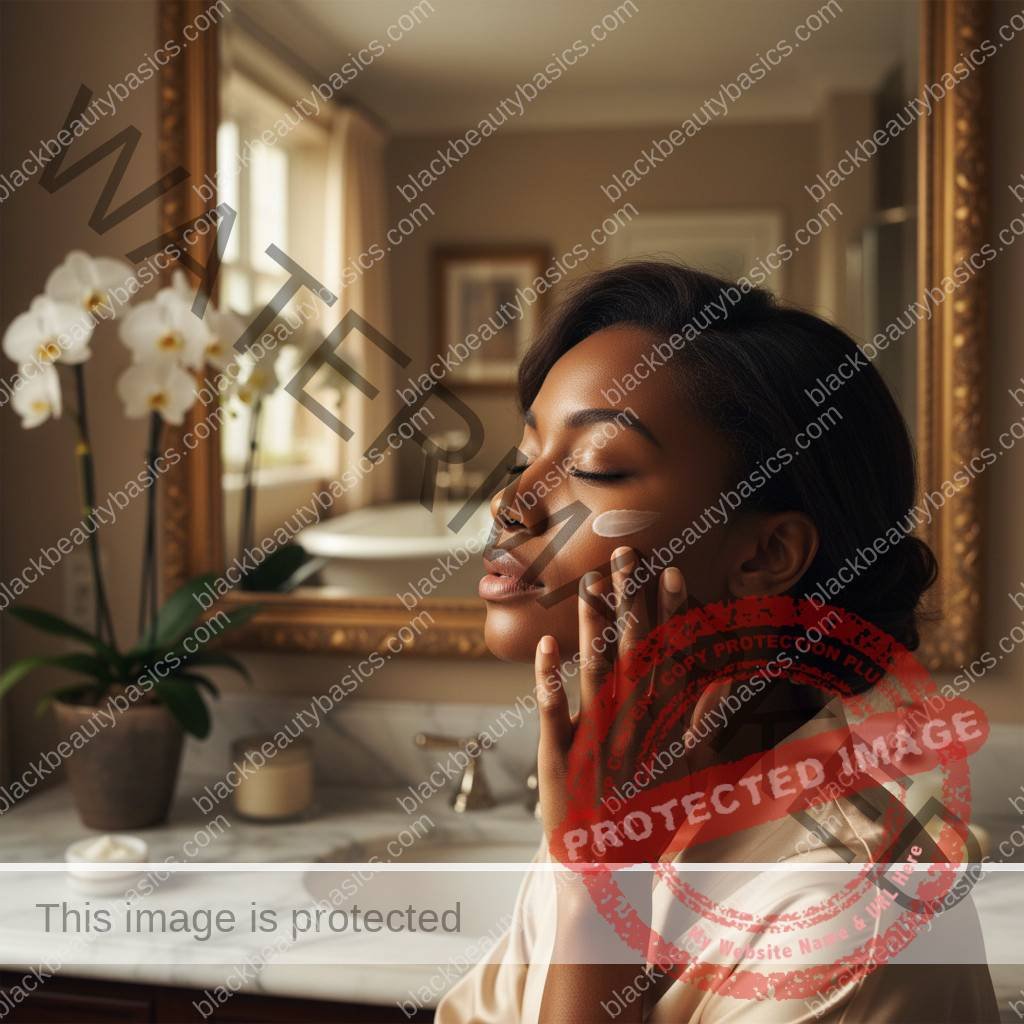
One of the most common challenges in foundation matching for deep skin tones is the often-subtle but significant difference in color and undertone between the face, neck, and chest. It’s a reality for many, and it can be a source of frustration when trying to achieve a seamless blend. The goal isn’t to overthink these variations, but to acknowledge them and learn how to work with them gracefully. This section will guide you through a practical approach to comparing these areas and making smart choices.
Understanding Why Differences Occur
There are several reasons why your face, neck, and chest might not be a perfect match:
- Sun Exposure: Your face and chest are often more exposed to the sun than your neck, leading to varying degrees of tanning or hyperpigmentation.
- Skincare Routines: Active ingredients in skincare (like retinoids or AHAs) applied to the face can affect its surface tone and texture, sometimes making it lighter or more prone to redness than your neck.
- Blood Flow and Thinness of Skin: The skin on your neck can sometimes be thinner, allowing underlying blood vessels to show through more, which can influence its perceived undertone.
- Natural Variation: Just as hair color or eye color can vary slightly, so too can the natural pigment distribution across different areas of your body.
These differences are normal and beautiful. The aim is not to erase them but to harmonize them with your makeup choices.
The “Sweet Spot” for Swatching
When testing foundation shades, the traditional advice is often to swatch on the jawline. For deep skin, this is a good starting point, but it’s often more effective to extend your swatch down onto your neck and even a little onto your upper chest. The goal is to find a shade that blends seamlessly into all three areas, or at least the two most visible ones (face and neck).
- Bare Skin is Best: Always start with clean, bare skin. Any existing makeup or skincare can interfere with accurate color assessment.
- Apply Stripes: Apply three to four thin stripes of potential foundation shades directly from your jawline down onto your neck. If you’re comfortable, extend one or two of these stripes onto your upper chest.
- Blend Lightly: Gently blend out the edges of each stripe, but don’t fully blend the product in. You want to see how the color sits against your skin.
- Observe in Natural Light: Step back into indirect natural daylight. Look at your reflection from different angles. Which stripe seems to disappear the most into your skin, creating a seamless transition from face to neck to chest?
Often, the ideal foundation shade will be one that doesn’t perfectly match your face, nor perfectly match your neck, but rather falls somewhere in between, creating a cohesive look. For many, matching the neck is the most crucial step, as it prevents the dreaded “floating head” effect where your face looks disconnected from your body.
Addressing Different Undertones in Different Areas
It’s entirely possible for your face to have a slightly different undertone than your neck or chest. For example, your face might lean a bit more golden due to sun exposure, while your neck retains a cooler, redder undertone. How do you handle this?
- Prioritize the Most Visible Area: If your face and neck are the primary areas you’re concerned about matching, aim for a shade that harmonizes with both. If your neck is significantly different, matching your neck is often the most forgiving approach.
- Consider a Neutralizing Shade: If your face is significantly warmer than your neck, you might opt for a foundation that has a slightly more neutral or even subtly cool undertone to balance the warmth of your face and blend into your neck. Conversely, if your face is cooler, a slightly warmer foundation might be ideal.
- Strategic Concealing: Sometimes, the difference is so subtle that a well-matched foundation can bridge the gap. For more pronounced differences, a color corrector or a slightly different concealer shade can be used strategically on specific areas.
- Bronzer and Contour: These products can also help create a seamless transition. A warm bronzer can bring warmth to a cooler neck, or a cooler contour shade can subtly balance a warmer face.
The goal is to create an illusion of uniformity, not to erase your natural variations. Think of it as painting a cohesive portrait, where different elements are brought into harmony.
When to Use Correctors and Mixers
If you find a foundation that is almost perfect but still a little off in undertone or depth, this is where correctors and mixers become invaluable tools. For example:
- If a foundation is too yellow/golden, a tiny drop of a blue or red mixer can adjust the undertone.
- If a foundation is too red, a green or yellow mixer can help neutralize it.
- If your face is significantly warmer than your neck, a green or blue color corrector can be applied very sheerly to the warmer areas before foundation to neutralize some of that warmth.
These tools allow you to customize your foundation to your exact needs, rather than settling for an “almost right” shade. You can learn more about these techniques in our article, Fixing Almost-Right Shades with Correctors and Mixers.
Embrace the Nuance, Not the Perfection
Ultimately, don’t strive for absolute, pixel-perfect uniformity across your face, neck, and chest. Our skin is dynamic, and minor variations are natural. The goal is to find a foundation that makes you feel confident, looks natural in various lighting conditions, and doesn’t create a stark line of demarcation. By observing these areas together and understanding the subtle interplay of color, you’ll develop a keen eye for what truly flatters your unique complexion.
How to Tell the Difference Between Undertone, Surface Tone, and Hyperpigmentation
One of the most common sources of confusion when identifying undertones on deep, melanin-rich skin is distinguishing between true undertone, surface tone, and hyperpigmentation. These three elements can often blend together visually, leading to misinterpretations and ultimately, mismatched makeup. Understanding their distinct characteristics is crucial for accurate shade selection and a seamless finish.
Surface Tone: The Visible Color of Your Skin
What it is: Surface tone is the immediate, visible color you see when you look at your skin. It’s the outermost layer, influenced by the amount of melanin present. This is what people typically refer to when they say “light brown,” “medium brown,” “deep brown,” “caramel,” “mahogany,” or “ebony.”
How it appears on deep skin: Surface tones on deep skin are rich and varied. They can range from light caramel to deep chocolate, with various shades of reddish-brown, golden-brown, and neutral-brown in between. Surface tone is what determines the *depth* of your foundation shade (e.g., light, medium, deep).
What can confuse it: Surface tone is often mistaken for undertone. For example, a person with a very deep, reddish-brown surface tone might assume they have a red undertone, when in fact, their underlying undertone could be golden, olive, or neutral. The surface color is the most obvious, but it doesn’t tell the whole story of the subtle hues beneath.
Example: Someone might have a rich, deep chocolate surface tone, but their undertone could be a warm golden, a vibrant red, or a complex olive.
Undertone: The Subtle Hue Beneath the Surface
What it is: Undertone is the subtle, underlying hue that comes through from beneath your skin’s surface. It’s the color that dictates whether your skin has a warm, cool, neutral, or olive cast. It’s not the color you *see* as much as the color that *influences* how other colors appear on your skin.
How it appears on deep skin: On deep skin, undertones are often more muted and complex than on lighter skin. They can be golden, red, reddish-orange, olive, or truly neutral. They are the background color that determines whether a foundation will look harmonious or “off” (e.g., too ashy, too orange, too pink, too gray).
What can confuse it: Undertones can be subtle and mixed. A person might have a primary golden undertone but also a subtle red component, making them a “golden-red” or “warm-neutral.” Lighting conditions, surface tone, and hyperpigmentation can all make it harder to discern the true underlying hue.
Example: Two people might have a similar “medium brown” surface tone, but one has a golden undertone (looks best in yellow-based foundations) and the other has a red undertone (looks best in red-based foundations).
Hyperpigmentation: Discoloration on the Skin’s Surface
What it is: Hyperpigmentation refers to areas of skin that are darker than the surrounding skin due to an excess production of melanin. This can manifest as dark spots, patches, or an uneven skin tone. It’s a common concern for deep skin tones, often resulting from acne, sun exposure, inflammation, or hormonal changes.
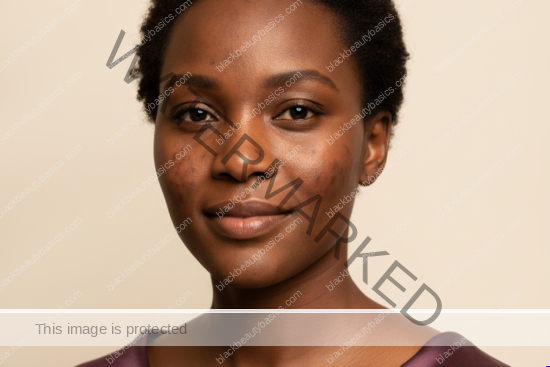
How it appears on deep skin: Hyperpigmentation can appear as dark brown, grayish-brown, or even purplish-brown spots or patches. It is a *surface phenomenon* and is not an undertone. While it affects the overall appearance of your skin, it doesn’t change your fundamental underlying undertone.
What can confuse it: Darker areas of hyperpigmentation can sometimes be mistaken for a “cool” or “ashy” undertone, especially if they have a grayish cast. Conversely, hyperpigmentation can sometimes have a reddish or purplish tint, leading one to believe they have a strong red undertone when it’s actually localized discoloration.
Example: Someone with a golden undertone might have dark spots from past acne. These spots might appear grayish-brown, but their overall undertone remains golden. Matching foundation to these spots will lead to a mismatch on the rest of the face.
A Practical Guide to Distinguishing Them
Here’s a table summarizing the distinctions and common confusions:
| Cue | What it is | How it appears on Deep Skin | What can confuse it | Key to Identifying |
|---|---|---|---|---|
| Surface Tone | The visible, outermost color of your skin. | Caramel, mahogany, chocolate, ebony, etc. (the “depth” of your skin). | Often mistaken for undertone; people assume their surface color dictates their undertone. | Look at the overall depth. What shade of brown is it? |
| Undertone | The subtle, underlying hue beneath the surface. | Golden, red, reddish-orange, olive, neutral, cool/blue-red. | Can be masked by surface tone or hyperpigmentation; traditional tests fail. | Observe overall cast in natural light, how makeup *reacts* on skin, and blend on jaw/neck/chest. |
| Hyperpigmentation | Localized darker spots or patches due to excess melanin. | Dark brown, grayish-brown, purplish-brown spots/patches. | Can be mistaken for a cool or ashiness, or a strong red/purple undertone. | It’s *uneven* and localized. Your undertone is generally consistent across your skin. |
The Strategy for Makeup Application
Once you can differentiate these three, your makeup strategy becomes much clearer:

- Match Foundation to Your Undertone and Surface Tone: Your foundation should primarily match your true undertone and the general surface tone of your face/neck/chest. This creates a harmonious base.
- Address Hyperpigmentation with Correctors: If you have significant hyperpigmentation, use a color corrector *before* foundation. For dark spots on deep skin, an orange or reddish-orange corrector is often effective to neutralize the darkness, allowing your foundation to then create an even surface tone without looking ashy or too light.
- Conceal Strategically: Use a concealer that matches your foundation (or is slightly lighter) to brighten areas or provide additional coverage *after* correcting hyperpigmentation.
By understanding that hyperpigmentation is a separate issue from your undertone, you avoid the trap of choosing a foundation that is too cool or too light in an attempt to “cover” the dark spots, which often results in an ashy or unnatural finish. Instead, you treat the hyperpigmentation first, then apply a foundation that perfectly complements your skin’s true undertone and depth.
How to Navigate This Topic
Navigating the topic of undertones, especially for deep, melanin-rich skin, can feel overwhelming. There’s a lot of information, much of it contradictory or unhelpful. The key is to approach it with patience, observation, and a willingness to experiment. This isn’t about finding a quick answer, but about developing a deeper, more intuitive understanding of your own skin. Here’s a structured approach to help you confidently navigate this journey.
Patience and Observation Over Quick Fixes
Resist the urge to find a single, definitive label for your undertone after one quick test. Your skin is complex, and its nuances reveal themselves over time and through careful observation. Think of this process as learning a new skill – it requires practice, attention to detail, and a willingness to re-evaluate. Spend time observing your skin in different natural lighting conditions, at different times of day, and even in different outfits. What patterns do you notice? Does your skin consistently lean a certain way?
Embrace the “Mixed” or “Subtle” Reality
Many individuals with deep skin tones have undertones that aren’t a stark “warm” or “cool.” You might have a beautiful blend of golden and red, or a neutral undertone with a subtle olive hint. It’s also common for undertones to be very subtle, not overtly obvious. This is perfectly normal and doesn’t make your skin “harder” to match; it just means you need to look for foundations that are equally nuanced. Don’t force your skin into a rigid category if it doesn’t fit. Embrace its unique blend.
Focus on Harmony, Not Just Color
When choosing makeup, the ultimate goal is harmony. A foundation isn’t just about matching a color; it’s about creating a seamless, natural-looking finish that makes your skin look radiant and healthy. An undertone-matched foundation will disappear into your skin, making it look like you’re not wearing anything at all, just a perfected version of your own complexion. If a foundation looks “off” – too orange, too gray, too pink, too sallow – it’s likely an undertone mismatch, even if the depth seems correct.
Utilize Swatching and Testing (The Right Way)
Swatching is your best friend. But remember the rules:
- Indirect Natural Light: Always, always, always test in natural light. Step outside the store if you have to.
- Jawline to Neck/Chest: Swatch stripes from your jawline down onto your neck and chest. This gives you the most comprehensive view of how the shade blends with your entire visible décolletage.
- Wear it Out: If possible, get samples and wear the foundation for a full day. See how it oxidizes, how it wears, and how it looks in various lighting conditions you encounter throughout your day.
- Compare Multiple Brands: Don’t limit yourself to one brand. Different brands have different undertone philosophies and shade ranges. What one brand calls “warm” might be “neutral” in another.
You can find more detailed guidance on this in our article, Testing Shades In-Store and Under Real-Life Lighting.
Don’t Be Afraid of Mixers and Correctors
Even with the best efforts, sometimes a foundation is 90% perfect but needs a slight tweak. This is where foundation mixers and color correctors shine. A blue mixer can neutralize excessive warmth, a yellow mixer can add warmth, and a red or orange corrector can cancel out darkness from hyperpigmentation. These tools empower you to customize your shades and achieve a truly bespoke match. Our article on Fixing Almost-Right Shades with Correctors and Mixers provides in-depth strategies.
Learn Brand-Specific Language
Every beauty brand has its own way of describing undertones. What one brand labels “warm” might be “golden” in another, or “red-based” in a third. Take the time to understand the specific language a brand uses for its deep skin shades. Look for patterns in their numbering or naming conventions. This knowledge will save you a lot of guesswork. We delve deeper into this in Decoding Brand Shade Systems for Deep Skin.
Trust Your Intuition and How You Feel
Ultimately, the best judge of your undertone and foundation match is you. If a shade makes you feel confident, radiant, and like your skin looks its best, then it’s a good match. Don’t let rigid rules or labels override your own perception and comfort. Your emotional resonance with a product is just as important as its technical accuracy.
The Journey is Ongoing
Your skin can change over time due to sun exposure, age, or even hormonal shifts. What worked perfectly a year ago might need a slight adjustment now. View your undertone understanding as an ongoing journey of self-discovery and adaptation, rather than a one-time solved puzzle. This flexible mindset will serve you well in your beauty endeavors.
Where to Go Next
Understanding your undertone is a powerful first step, but it’s just one piece of the larger beauty puzzle. To continue building your expertise and confidence in selecting makeup for your deep, melanin-rich skin, we invite you to explore these related resources:
- Decoding Brand Shade Systems for Deep Skin: Learn how to navigate the often-confusing terminology brands use to describe their foundation shades and undertones, specifically tailored for deep complexions.
- Testing Shades In-Store and Under Real-Life Lighting: Master the art of swatch testing, understanding how different lighting conditions affect your perception of color, and ensuring your perfect match holds up in the real world.
- Finding and Verifying Foundation Matches Online: Discover strategies for confidently selecting foundation shades when shopping online, minimizing guesswork and maximizing your chances of a successful purchase.
- Fixing Almost-Right Shades with Correctors and Mixers: Turn “almost perfect” into “absolutely perfect” by learning how to use color correctors and foundation mixers to customize your shades.
- Base Makeup Architecture: Foundation, Concealer, Powder, Correctors: Dive deeper into the foundational elements of your makeup routine, understanding the purpose and application of each product for a flawless base.
- Color Products for Deep Skin: Blush, Bronzer, Highlight, Eyes, Lips: Expand your color palette and learn how to select and apply blush, bronzer, highlight, and eye and lip colors that truly pop on deep skin.
- Everyday vs. Occasion Routines: Office, Night Out, Camera: Adapt your makeup application to suit different contexts and occasions, from a subtle everyday look to a glamorous evening out or a camera-ready finish.
By exploring these interconnected topics, you’ll gain a holistic understanding of makeup for deep skin, moving beyond basic undertone identification to truly master your beauty routine. This entire cluster of articles, Shade Matching Systems and Undertones for Deep Skin, is designed to be your comprehensive guide.
Quick Principles
Navigating the world of undertones for deep, melanin-rich skin can be simplified by adhering to a few core principles. These aren’t rigid rules, but rather guiding lights that will help you make more informed and confident beauty choices. Keep these in mind as you continue your journey of understanding your unique complexion.
- Your Skin is Not Difficult: First and foremost, release the notion that your deep skin tone is inherently challenging to match. The difficulty lies in the limited frameworks often presented by the mainstream beauty industry, not in your magnificent complexion. Your skin is complex and beautiful, deserving of a nuanced approach.
- Undertones are Real and Visible: While often subtle, undertones are a tangible aspect of your skin’s chemistry. They are the underlying hues (golden, red, olive, neutral, cool) that influence how colors appear on your skin. Learning to see them is a skill, not a mystery.
- Beyond the Binary: Reject the simplistic “warm vs. cool” or “yellow vs. red” binaries. Deep skin tones encompass a rich spectrum of undertones, including complex blends like golden-red, red-orange, and various forms of olive, alongside true neutrals. Embrace this diversity.
- Observe, Don’t Guess: Move away from quick, unreliable tests (like wrist veins or jewelry). Instead, cultivate an observant eye. Look at the overall cast of your bare skin in natural, indirect light. Pay attention to how different makeup shades actually *behave* on your skin.
- Natural Light is Your Best Friend: Always assess your undertones and swatch makeup in indirect natural daylight. Artificial lighting can drastically distort colors, leading to inaccurate perceptions and mismatched shades.
- Face, Neck, and Chest Tell a Story: Acknowledge that your face, neck, and chest may have subtle differences in depth and undertone. When swatching foundation, extend it from your jawline down onto your neck and upper chest to find a shade that creates a harmonious blend across all visible areas. Often, matching the neck is key to avoiding a “floating head” effect.
- Differentiate Undertone from Surface Tone and Hyperpigmentation: Understand that your visible skin color (surface tone) and any dark spots or unevenness (hyperpigmentation) are distinct from your underlying undertone. Match foundation to your undertone and surface tone, and use color correctors for hyperpigmentation *before* foundation.
- Undertones Can Be Mixed and Subtle: It’s perfectly normal for your undertones to be a blend of hues or to be very delicate and not immediately obvious. Don’t feel pressured to fit into a rigid category. Focus on finding shades that make your skin look healthy and vibrant.
- Makeup Behavior is a Key Indicator: How a foundation or concealer oxidizes, settles, or appears throughout the day is a crucial clue. If a shade turns ashy, orange, or gray, it’s likely an undertone mismatch. If it disappears seamlessly, you’re on the right track.
- Patience and Practice Lead to Confidence: Understanding your undertones is an ongoing journey of learning and adaptation. Be patient with yourself, practice your observation skills, and don’t be afraid to experiment. Each observation brings you closer to mastering your unique beauty.
- You Don’t Need a Perfect Label: You don’t need to definitively label yourself “warm-olive-red” to choose better shades. The goal is to understand the *characteristics* of your undertone so you can identify products that harmonize with your skin, regardless of the label a brand assigns.
- Utilize Correctors and Mixers: These tools are game-changers for deep skin. They empower you to customize “almost right” shades into perfect ones, addressing subtle undertone shifts or hyperpigmentation with precision.
By internalizing these quick principles, you’ll approach makeup selection with a newfound sense of clarity and empowerment, ensuring your beauty choices always celebrate the richness of your deep, melanin-rich skin.
Frequently Asked Questions
What are the most common undertones for deep, melanin-rich skin?
For deep, melanin-rich skin, common undertones include golden (yellow-based warmth), red (vibrant, often brick or terracotta-like), reddish-orange, olive (a muted, earthy yellow-green), and neutral (a balanced mix without a strong lean). It’s also very common to have mixed undertones, such as golden-red, or subtle variations that defy simple categorization.
Why do traditional undertone tests (like wrist veins) often fail for deep skin?
Traditional tests like the wrist-vein test are often unreliable for deep skin because the high concentration of melanin can obscure the underlying vein color, making all veins appear dark or purplish-blue regardless of true undertone. These tests were developed for lighter skin tones and do not account for the visual complexities of melanin-rich complexions.
How can I tell if I have an olive undertone on deep skin?
Olive undertones on deep skin often appear as a subtle, earthy, or muted yellow-green cast, sometimes with a grayish quality. Foundations that are too yellow or too red might look off or sallow on you, while shades with a slight greenish or muted yellow hue will blend seamlessly. Observing how your skin appears slightly desaturated compared to purely golden or red tones can also be a clue.
Should I match my foundation to my face, neck, or chest if they are different colors?
If your face, neck, and chest have different depths or undertones, it’s often best to find a foundation that creates a harmonious blend across all visible areas. Many find that matching their neck is the most effective strategy to prevent a “floating head” effect. Swatch shades from your jawline down onto your neck and chest in natural light to find the most seamless match.
How do I differentiate between my undertone and hyperpigmentation?
Your undertone is the consistent, underlying hue across your skin (e.g., golden, red), while hyperpigmentation refers to localized, darker spots or patches caused by excess melanin. Hyperpigmentation is a surface condition and does not change your fundamental undertone. To address it, use a color corrector (often orange or reddish-orange for deep skin) on the dark spots *before* applying foundation that matches your true undertone.
Can my undertone change over time?
While your fundamental undertone typically remains consistent, its *appearance* can be influenced by factors like sun exposure (tanning can deepen surface tone and emphasize certain undertones), age, and even hormonal changes. Your skin’s surface tone and texture can also evolve, which might require slight adjustments to your foundation shade or formula over time.
Do I need to know my exact undertone label to find the right foundation?
No, you don’t need a perfect label. The goal is to understand the *characteristics* of your undertone – whether your skin leans more golden, red, olive, or neutral – so you can identify foundations that harmonize with it. Focus on how a foundation looks and feels on your skin, and if it disappears seamlessly, rather than getting fixated on a specific label. Trust your observation and intuition.
This journey of understanding your undertones is a powerful act of self-love and empowerment. By embracing the unique beauty of your deep, melanin-rich skin, you unlock a world of confident and harmonious beauty choices. Continue to observe, experiment, and celebrate the magnificent canvas that is your complexion.
INTERNAL LINKING OPPORTUNITIES
Shade Matching Systems and Undertones for Deep Skin
Makeup for Deep Skin Tones
Decoding Brand Shade Systems for Deep Skin
Testing Shades In-Store and Under Real-Life Lighting
Finding and Verifying Foundation Matches Online
Fixing Almost-Right Shades with Correctors and Mixers
Base Makeup Architecture: Foundation, Concealer, Powder, Correctors
Color Products for Deep Skin: Blush, Bronzer, Highlight, Eyes, Lips
Everyday vs. Occasion Routines: Office, Night Out, Camera
Related next steps
Related posts:
 Nude Lipsticks for Dark Skin: Shade Guide by Undertone
 How to Find Your Undertone as a Black Woman (With Examples)
 How Texture and PIH Show Up on Deep, Melanin-Rich Skin
 The Glow Up Secret: Medicube Deep Vita C Toner Pads Review for Melanin-Rich Skin – Fading Hyperpigmentation and Achieving Luminous Clarity
 Skin Type vs. Skin Condition on Melanin-Rich Skin: Unlocking Your Skin’s True Needs
 Layering Base Products for Everyday vs. Occasion Looks on Melanin-Rich Skin