
Smooth Confidence: The Definitive Guide to Treating and Preventing Razor Bumps and Dark Spots on Melanin-Rich Skin
There is a unique kind of frustration that comes with caring for melanin-rich skin. We dedicate ourselves to hydration, protection, and glow, only to be met by the persistent, painful, and often darkening presence of razor bumps and ingrown hairs. It’s more than just a cosmetic annoyance; it’s a direct assault on the smooth, confident canvas we work so hard to maintain.
If you have ever looked down at your legs, underarms, or bikini line and felt that familiar sting of irritation coupled with the dread of developing dark spots, know this: you are not alone. Our beautiful, tightly coiled hair texture, which gives us such versatility and volume on our heads, also makes us uniquely susceptible to this issue, medically known as Pseudofolliculitis Barbae (PFB).
But the story doesn’t end in frustration. This guide is your elegant roadmap to reclaiming smooth skin. We will move beyond quick fixes to establish a holistic, gentle, and highly effective routine that not only soothes active bumps but prevents the scarring and hyperpigmentation that often follows. It’s time to treat your skin with the reverence it deserves.
The Science of the Bump: Why Ingrown Hairs Happen to You
For Black women, razor bumps are not a sign of poor hygiene or bad luck; they are a biological reality tied to our hair structure. Understanding this is the first step toward effective prevention.
Pseudofolliculitis Barbae (PFB) Defined
PFB occurs when a shaved or tweezed hair curls back and re-enters the skin before it leaves the follicle. Because our hair is naturally curly, when it is cut close to the skin, the sharp tip is perfectly angled to pierce the follicle wall or the surrounding skin as it grows. This is the definition of an ingrown hair.
When the skin detects this sharp hair tip, it registers it as a foreign invader. The body’s immune response kicks in, leading to inflammation, redness, and the formation of a raised, painful bump—the razor bump. This inflammation is the direct precursor to our biggest concern: Post-Inflammatory Hyperpigmentation (PIH).
The PIH Connection: Why Inflammation Equals Dark Spots
Melanated skin is exquisitely sensitive to trauma. Any irritation, whether from picking, friction, or the inflammation caused by PFB, triggers the melanocytes (the cells that produce pigment) to go into overdrive. This results in the darkening of the skin long after the bump has healed, leaving behind stubborn dark spots that can take months or even years to fade.
Therefore, our primary goal is twofold: minimize inflammation and eliminate trauma.
Treating Active Bumps: Gentle Care to Prevent Scarring
If you currently have active razor bumps, the immediate focus is on calming the skin and encouraging the trapped hair to release without causing further trauma.
The Absolute Rule: Do Not Pick or Squeeze
This cannot be overstated. Picking at razor bumps is the single fastest way to guarantee a dark spot. It introduces bacteria, increases inflammation exponentially, and damages the skin barrier, leading to deeper, more persistent PIH.
Soothe and Soften with Warmth
Applying a warm compress is a gentle, effective way to reduce swelling and soften the skin, making it easier for the hair to emerge naturally. Soak a clean washcloth in warm water (not scalding), wring it out, and hold it on the affected area for 5–10 minutes, three times a day. The heat helps draw the hair closer to the surface.
Targeted Topical Treatments
Once the inflammation has calmed slightly, introduce a gentle exfoliant to help clear the dead skin cells blocking the follicle opening. Look for products containing Salicylic Acid (BHA) or Glycolic Acid (AHA). These ingredients work to dissolve the bonds holding dead skin cells together, allowing the trapped hair to escape.
- Salicylic Acid (BHA): Ideal because it is oil-soluble, meaning it can penetrate the pore and exfoliate from the inside out. Choose a concentration between 0.5% and 2%.
- Benzoyl Peroxide: If the bump appears infected (pustule formation), a spot treatment with a low concentration of benzoyl peroxide can help kill surface bacteria and reduce inflammation quickly.
Product Recommendation: A gentle, post-shave treatment pad containing salicylic acid is highly effective. We recommend the Salicylic Acid Ingrown Hair Treatment Pads. These pads combine chemical exfoliation with soothing ingredients like witch hazel or aloe.
Shaving Smarter: Protecting Your Skin from Recurrence
The most crucial step in achieving smooth skin is prevention, and that starts with overhauling your hair removal routine. For curly hair, the goal is not the closest shave possible, but the safest shave possible.

Pre-Shave Preparation: Setting the Stage
- Warm Shower: Always shave at the end of a warm shower. The heat and steam soften both the hair and the skin, making the hair less resistant to cutting.
- Gentle Exfoliation: Before shaving, use a mild physical or chemical exfoliant. This lifts the hair away from the skin and removes surface debris that could clog the razor. Use a gentle scrub or a washcloth in circular motions.
- Lubrication is Key: Never dry shave or use bar soap. Use a thick, moisturizing shave cream or gel designed for sensitive skin. Look for ingredients like shea butter or colloidal oatmeal to minimize friction.
Product Recommendation: Invest in a rich, non-foaming shave cream that provides a protective barrier. Try a Moisturizing Shave Cream for Sensitive Skin to ensure maximum glide and reduce drag.
The Tools of the Trade: Single Blade Superiority
Multi-blade razors are the enemy of curly hair. They are designed to pull the hair out with the first blade and cut it below the skin surface with the subsequent blades. This guarantees the hair will curl back into the skin as it grows.
- Safety Razors (Single Blade): The gold standard for PFB prevention. A single-blade safety razor cuts the hair cleanly at the surface level, significantly reducing the likelihood of the hair being cut too short or pulled.
- Electric Clippers: For highly sensitive areas like the bikini line, consider using electric clippers that leave a slight stubble (about 0.5mm). If the hair is not cut below the skin surface, it cannot become ingrown.
- Disposable Razors: If you must use a disposable, choose one with only one or two blades and replace it after every 1-2 uses. Dull blades cause dragging and irritation.
The Shaving Technique
The way you move the blade matters immensely:
- Shave With the Grain: Always shave in the direction of hair growth. This prevents the hair from being pulled and cut too short.
- Light Pressure: Use minimal pressure. Let the sharpness of the blade do the work. Pressing hard increases irritation and the chance of cutting the hair beneath the skin.
- Rinse Frequently: Rinse the blade after every single stroke to prevent clogged blades, which drag and pull.
Post-Shave Care: Calming and Closing
Immediately after shaving, rinse the area with cool water to close the pores and reduce inflammation. Pat the skin dry gently—do not rub.
Apply a soothing, alcohol-free post-shave balm or serum. Look for ingredients like aloe vera, chamomile, or niacinamide, which are excellent for reducing immediate redness and strengthening the skin barrier.
Fighting PIH: Managing Dark Spots After the Bump Heals
Once the active bump has subsided, the battle shifts to managing the resulting hyperpigmentation. Consistency is key here.
Exfoliation and Cell Turnover
Regular, gentle exfoliation is necessary to encourage the pigmented skin cells to shed faster. Continue using your AHA/BHA products (like glycolic or salicylic acid) 2–3 times a week on the affected areas. These acids help lift the superficial layers of darkened skin.
Brightening and Inhibiting Pigment
Introduce ingredients known to inhibit melanin production and brighten the overall skin tone:
- Niacinamide (Vitamin B3): A powerhouse ingredient that reduces inflammation and helps prevent the transfer of pigment within the skin cells. It is gentle enough for daily use.
- Vitamin C: A potent antioxidant that brightens the skin and protects against environmental damage that can worsen PIH.
- Kojic Acid or Azelaic Acid: These are effective tyrosinase inhibitors (tyrosinase is the enzyme needed for melanin production) and are excellent for fading stubborn dark spots.
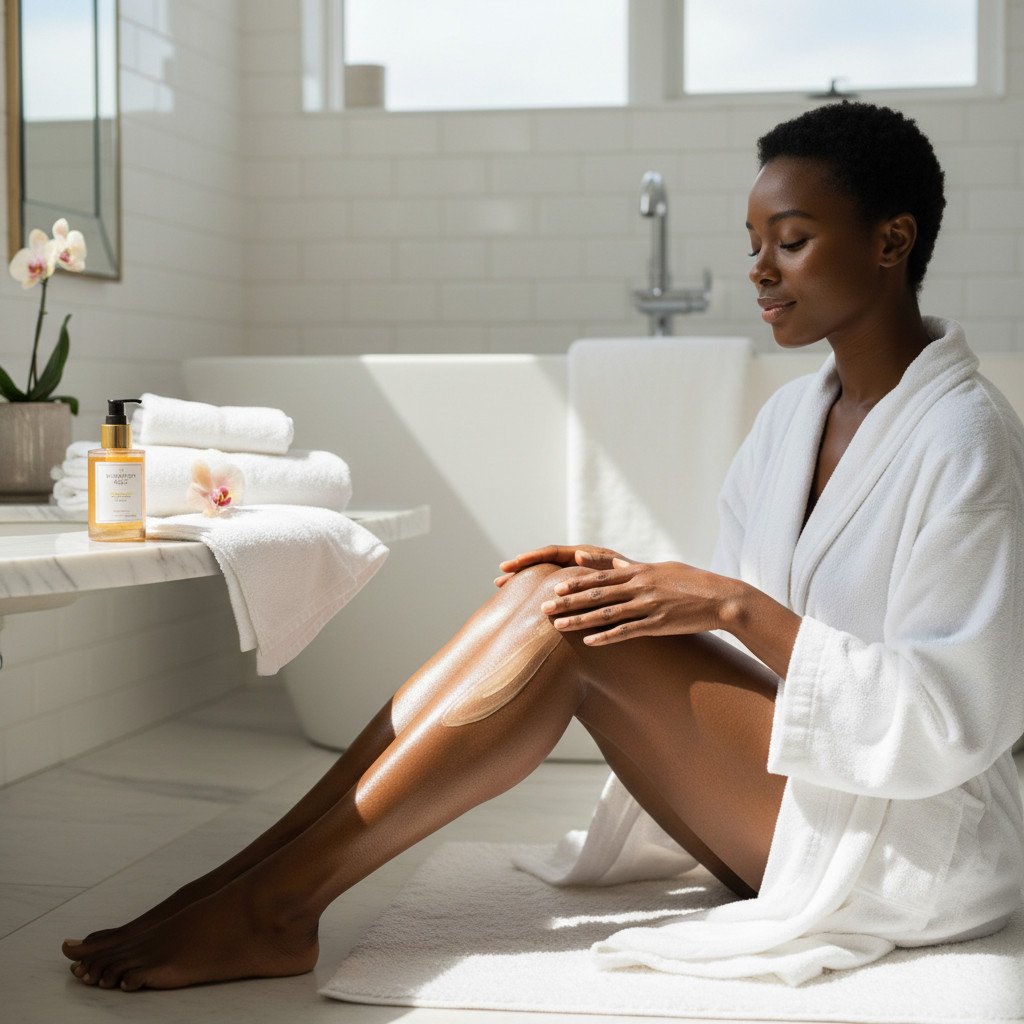
Product Recommendation: A dedicated body lotion or serum containing Niacinamide and Vitamin C can be applied daily to the areas prone to PIH. Consider a Niacinamide Body Serum for Dark Spots to accelerate the fading process.
The Non-Negotiable: Daily Sun Protection
Sun exposure is the number one enemy of PIH. UV radiation stimulates melanocytes, making dark spots darker and harder to fade. Even if the area (like the bikini line) is usually covered, if you are exposing it, or if you are treating areas like the legs or underarms, daily broad-spectrum SPF 30 or higher is mandatory.
Choose a mineral-based sunscreen (zinc oxide or titanium dioxide) or a chemical sunscreen formulated specifically for melanated skin to avoid the dreaded white cast. This step is critical for preventing new spots and ensuring the old ones fade efficiently.
Beyond the Razor: Permanent Solutions for Smooth Skin
If PFB is chronic and severely impacts your quality of life, it may be time to consider alternative hair removal methods that eliminate the need for regular shaving.
Professional Laser Hair Removal
Laser hair removal works by targeting the pigment in the hair follicle. For melanated skin, this requires specific technology to avoid damaging the surrounding skin pigment (which would cause severe PIH).
Crucial Note: Always seek a provider who uses an Nd:YAG laser (1064nm wavelength). This laser bypasses the melanin in the epidermis and targets the deeper follicle, making it the safest and most effective option for Fitzpatrick skin types IV, V, and VI.
Depilatory Creams
Depilatories use chemicals to dissolve the hair at the skin surface. They prevent the sharp, cut tip that causes PFB. However, the chemicals can be irritating. Always perform a patch test first, and ensure you choose a formula designed for sensitive skin.
Waxing and Sugaring
While waxing pulls the hair out entirely, eliminating the ingrown risk initially, the new hair growth process can still lead to PFB when the hair breaks the skin surface. Sugaring is often a gentler alternative as it adheres less strongly to the skin itself, reducing trauma.
FAQ: Your Most Pressing Questions Answered
Q: Can I use hydrocortisone cream on razor bumps?
A: Yes, short-term use (1-3 days) of a low-strength hydrocortisone cream (0.5% or 1%) can significantly reduce the inflammation and redness associated with active razor bumps. However, prolonged use can thin the skin, so use it sparingly and only when necessary.
Q: How long does it take for razor bump dark spots (PIH) to fade?
A: Unfortunately, PIH can be stubborn. With a dedicated routine involving exfoliation, brightening agents (like Niacinamide and Vitamin C), and strict sun protection, superficial spots may fade in 3–6 months. Deeper spots can take a year or more. Consistency is paramount.
Q: Is dry brushing effective for preventing ingrown hairs?
A: Dry brushing can be an effective form of physical exfoliation to lift hairs and remove dead skin cells. However, if your skin is already sensitive or inflamed, dry brushing can be too harsh and worsen PFB and PIH. Use it gently, and only on healthy, non-inflamed skin.
Q: Should I stop shaving completely if I have severe PFB?
A: If PFB is severe and persistent, taking a break from shaving for several weeks is highly recommended to allow the skin to fully heal. During this time, you can trim the hair with electric clippers to a short stubble length (not skin level) and focus entirely on treating the inflammation and existing PIH.
Q: Are exfoliating gloves safe to use?
A: Exfoliating gloves can be safe, provided you use them gently and ensure they are cleaned thoroughly after each use to prevent bacterial growth. Over-scrubbing is the main risk, as it causes micro-trauma leading to PIH. Always pair physical exfoliation with a moisturizing shave cream.
Q: When should I see a dermatologist?
A: If your razor bumps are severely painful, show signs of infection (pus, excessive heat, spreading redness), or if the PIH is not responding to over-the-counter treatments after 6 months, consult a board-certified dermatologist. They can offer prescription-strength topical retinoids, antibiotics, or professional chemical peels tailored for melanated skin.
Your Smooth Skin Action Plan
Achieving and maintaining smooth, bump-free skin is a journey, not a sprint. It requires patience, consistency, and a commitment to treating your skin with the utmost gentleness. Remember that every time you choose a single-blade razor, apply your soothing balm, or diligently wear your SPF, you are honoring your skin and preventing future trauma.
We are building a legacy of confidence, and that confidence starts with feeling comfortable and beautiful in our own skin. Embrace this refined routine, and watch as your skin transforms into the smooth, radiant canvas you deserve.
Now, it’s your turn: Take the first step today by swapping out that multi-blade razor for a safer alternative. Your skin will thank you.
Continue exploring
Related posts:
 The Role of Antioxidant-Rich Skincare Products in Preventing Premature Aging in Darker Skin Tones
 The Role of Antioxidant-Rich Skincare Products in Preventing Premature Aging in Darker Skin Tones
 The Art of Sculpting: A Comprehensive Guide to Highlighting and Contouring for Melanin-Rich Skin
 How to Treat Acne on Dark Skin Without Causing Dark Spots
 The Ultimate Glow Routine: How to Achieve Radiant, Melanin-Rich Skin
 Treating Hormonal Acne with the Right Skincare Products for Black Women