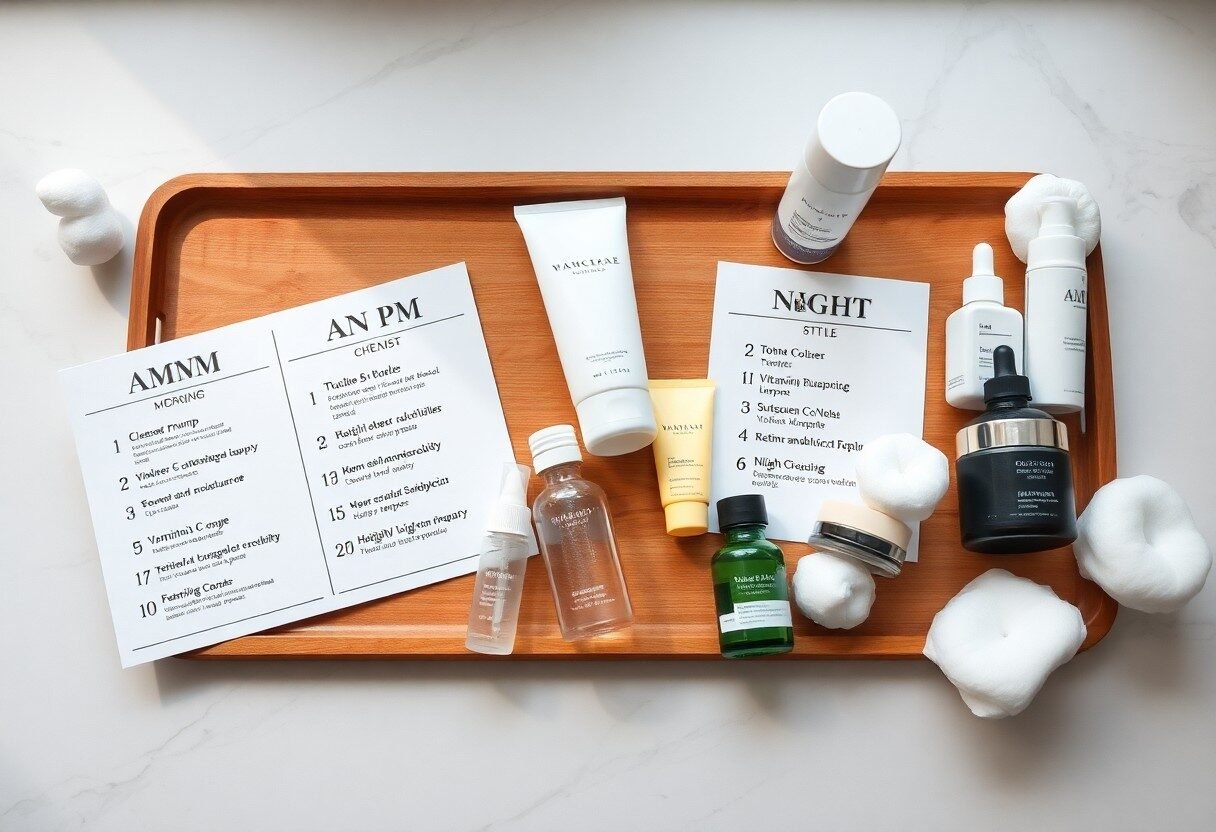
It’s vital I guide you through the correct sequence so your routine delivers results and avoids irritation: start thinnest to thickest (serums before creams), apply hydrating layers before occlusives, and in the AM always apply sunscreen as the last step. I warn that mixing strong acids with retinol can be dangerous; following this order gives you better absorption and less irritation, maximizing benefits safely.
Key Takeaways:
- Layer from thinnest to thickest: water-based (toners/essences) → serums/treatments → creams → oils → sunscreen (AM).
- AM routine: cleanse → antioxidant serum (vitamin C) → hydrating serums/eye cream → moisturizer → sunscreen.
- PM routine: cleanse → chemical exfoliant when used → treatment serums (retinol or targeted actives) → moisturizer → face oil or occlusive.
- Separate incompatible actives (e.g., retinol with strong AHAs/BHAs or benzoyl peroxide) by alternating nights or using buffering layers.
- Apply eye products before heavier creams and put spot treatments on clean skin, typically before moisturizer to target the area.
- Sunscreen is the final step in the morning and must be reapplied every two hours during prolonged sun exposure.
- Allow brief absorption between layers and use thin layers to improve penetration and reduce pilling.
Understanding Your Skin Type
I use simple, observable signs to classify skin so you can fine-tune product order: blotting paper pressed to your T-zone after two hours reveals oil production, while flaking or tightness after washing points to dryness. I also watch reactions-persistent redness or stinging suggests sensitivity-and note mixed signals like an oily T-zone with dry cheeks for combination skin. These quick tests let you decide whether to prioritize hydrating humectants, barrier-repair creams, or oil-control actives in your AM/PM sequence.
Oily Skin
I recommend cleansing twice daily with a gentle surfactant and using a 1-2% salicylic acid product on congested areas to reduce pore build-up; follow with a lightweight, oil-free moisturizer and a gel SPF in the morning. I advise clay masks once weekly and avoiding heavy occlusives that trap sebum. If you over-cleanse, your skin will compensate by making more oil, so keep exfoliation to 1-3 times per week depending on tolerance.
Dry Skin
I prioritize humectants like hyaluronic acid layered under a cream rich in ceramides and fatty acids to restore lipids; sealing with an occlusive at night prevents trans-epidermal water loss. I tell clients to avoid hot showers, use a creamy non-foaming cleanser, and apply moisturizer within 60 seconds of towel-drying. If you let dryness persist, barrier disruption can lead to inflammation and sensitivity, so hydrate consistently.
I often structure a dry-skin routine as: hydrating toner/essence, a serum with hyaluronic acid (multi-molecular weights if available), a ceramide-forward cream, then an occlusive like petrolatum or squalane for the final sealing step at night. I recommend gentle chemical exfoliation no more than once every 10-14 days to remove flakes without stripping lipids, and I avoid high-concentration retinoids unless paired with robust moisturizing support.
Combination Skin
I split my routine by zone: lightweight, water-based products for the oily T-zone and richer creams for dry cheeks, using targeted actives-like spot 0.5-2% salicylic acid on congested areas-while keeping the rest of the face hydrated. I often employ multi-masking once a week: clay for the nose/chin and a hydrating sheet mask on the cheeks. This lets you balance oil control without over-drying other areas.
Practically, I recommend a gel or micellar cleanse, then treat the T-zone with a mattifying serum and the cheeks with a nourishing cream; sunscreen should be broad-spectrum and non-comedogenic across all zones. I suggest exfoliating the oily areas 1-2 times weekly and limiting exfoliation on dry patches to avoid flaking and barrier damage, which can worsen oil rebound.
Sensitive Skin
I focus on minimal-ingredient formulations and patch testing for 24-48 hours before full-face use; if you experience burning, stinging, or visible redness, stop the product immediately. I favor fragrance-free formulas, barrier-repair ingredients like ceramides, and introduce actives slowly-start retinoids or acids at very low concentrations and increase frequency only as tolerated. Irritation can quickly escalate, so I treat any recurring reaction as a sign to simplify the routine.
When building a sensitive-skin routine, I prioritize a short ingredient list, pH-balanced cleansers, and daily moisturization with ceramides and cholesterol to rebuild barrier function. I add actives one at a time, every 7-10 days, and note responses; for example, I’ll trial 0.01% retinol twice weekly before increasing. If inflammation appears, I revert to basic hydration and consult product labels for potential irritants like necessary oils or high alcohol levels.
Morning Skincare Routine
Cleansing
I begin with a gentle, pH-balanced cleanser (around pH 5-5.5) for 30-60 seconds; for oily skin I use a foaming formula, while dry skin does better with a cream or micellar water. I avoid harsh sulfates and over-exfoliation-over-stripping the barrier increases oil production and sensitivity, undermining the rest of your routine.
Toning
I follow with a water-based toner or essence to boost hydration and normalize pH; look for humectants like glycerin or hyaluronic acid to prep skin for actives. If your toner contains AHA/BHA, use it cautiously in the morning and pair with sunscreen because exfoliation increases UV sensitivity.
I choose toners by goal: hydrating essences (2-5% humectant blend) for dryness, or a 1-2% BHA for oily, congested pores. I apply 2-3 pumps to palms and pat until slightly damp-this improves absorption and reduces product waste compared with cotton pads.
Treatment Products
I layer targeted serums next, applying thinnest to thickest: vitamin C (10-20% L-ascorbic acid) or a stable derivative, niacinamide (2-5%), peptides, and hyaluronic acid serums. I avoid retinoids in the AM-use them at night-because they increase photosensitivity and need to be paired with sunscreen.
For dosing I use 2-3 drops or one pump per serum, allowing ~15-30 seconds for each to settle; if combining strong actives (like acids + vitamin C) I space them by time or alternate mornings to limit irritation and maximize efficacy.
Moisturizing
I apply a lightweight moisturizer suited to your skin type-gel or lotion for oily, richer cream for dry-containing humectants (glycerin, HA) and a light occlusive (dimethicone) to lock hydration. I pat it in while skin is still slightly damp to seal moisture and support the skin barrier.
I typically use a pea-to-nickel-sized amount for face and neck, adjusting based on climate; sealing while damp increases hydration by up to 30% compared with dry-skin application, which helps reduce transepidermal water loss and irritation.
Sun Protection
I finish with a broad-spectrum sunscreen SPF 30 or higher applied as the final step; sunscreens should be the last skincare layer before makeup. Apply at the recommended dose and reapply every two hours outdoors-skipping sunscreen negates morning actives and increases long-term photoaging risk.
I aim for roughly a nickel-sized amount for face and neck and apply about 15 minutes before sun exposure to allow chemical filters to bind; if swimming or sweating use a water-resistant formula and follow the 40/80-minute reapplication guidance on the label.
Evening Skincare Routine
I treat the evening as repair time: I remove sunscreen and makeup, follow with actives that resurface or treat, then finish with barrier-repairing products. I spend about 5-10 minutes on this routine, since studies show consistent nightly care improves barrier function and texture over weeks. If I use strong actives I space them out across nights to avoid irritation and keep a simple standby moisturizer for sensitive days.
Cleansing
I double-cleanse when I wear SPF or makeup: an oil or balm first to dissolve residues, then a gentle, pH-balanced gel or cream to remove grime. I massage for 30-60 seconds on the second cleanse to lift impurities without stripping. For quick nights I use micellar water followed by a low-foam cleanser to ensure pores are clear before treatments.
Exfoliating
I exfoliate chemically 2-3 times per week for most skin types: AHAs like glycolic at 5-10% for texture and BHAs like salicylic at 0.5-2% for oily, acne-prone skin. I avoid daily physical scrubs to reduce microtears and I watch for redness or flaking as signs to back off.
When I dive deeper I choose the right exfoliant for the goal: glycolic 5-10% or lactic 5-10% for brightening, salicylic 1-2% for comedonal acne, and in-office peels for stubborn pigmentation. I patch-test for 24-48 hours, space exfoliation away from new retinoid nights, and note that exfoliation increases sun sensitivity, so I always pair it with morning SPF the next day.
Treatment Products
I layer targeted actives after cleansing/exfoliating, applying thinnest (water serums) to thickest (creams). For retinoids I use retinol 0.1-1% OTC or tretinoin 0.025-0.1% by prescription; for acne I reach for benzoyl peroxide 2.5-5% or azelaic acid 10-20%. I emphasize to start slow-alternate nights to build tolerance and minimize irritation.
In practice I wait a minute between water-based serums and oils, and if a retinoid feels harsh I either buffer it with a pea-sized moisturizer or wait 20 minutes after cleansing to apply. I avoid combining harsh actives on the same night-do not mix benzoyl peroxide directly with tretinoin on the same spot without guidance-and I patch-test combos to monitor tolerance.
Night Creams
I finish with a night cream to seal in actives and repair the barrier: rich, occlusive formulas with petrolatum or squalane if my skin is dry; lightweight ceramide/niacinamide gels if oily. I look for ingredients like ceramides, hyaluronic acid, and 2-5% niacinamide to support recovery and reduce transepidermal water loss-lock in hydration is the goal.
When skin needs repair I reach for creams containing peptides and higher occlusive content overnight; using a thin layer of petrolatum over a humectant boosts hydration retention. I also rotate ingredients-peptides/niacinamide nights versus retinoid nights-to maximize repair without compounding irritation, which speeds visible improvement across 4-12 weeks.
Seasonal Adjustments to Skincare
Seasonal Tweaks I Use
When temperatures or humidity change, I change textures and actives so your barrier stays intact: in winter, if indoor RH drops below 30% I add an occlusive (petrolatum or balm) at night and run a humidifier to maintain 40-60% RH; in summer, if UV index exceeds 8 I switch to SPF 50+ and lower retinoid strength because retinoids increase photosensitivity. For example, a client with eczema cleared flares after swapping a gel serum for a richer cream and upping occlusion by one step.
Common Skincare Mistakes to Avoid
I see people strip their barrier by over-exfoliating – using AHAs/BHAs more than 3×/week or pairing a 10% AHA with nightly retinol, which increases transepidermal water loss. You often trap serums by applying oils first; wait 30-60 seconds between thin layers so actives absorb. I recommend applying ~1/4 teaspoon (2 mg/cm²) of sunscreen and reapplying every 2 hours outdoors. Avoid combining retinol with benzoyl peroxide and place vitamin C in the AM under sunscreen for best results.
Frequently Asked Questions
FAQ Highlights
I often get asked how quickly to layer products; I advise waiting about 30-60 seconds for serums to absorb, or until the surface feels no longer tacky. Use vitamin C in the AM and retinol at night, and never combine benzoyl peroxide with retinol to avoid irritation. For sunscreen apply ~2 mg/cm2 (about 1/4 teaspoon for face) and reapply every 2 hours if sun exposure continues. Patch test new actives for 24-48 hours on your jawline if you’re sensitive, and apply eye cream before thicker creams so lighter formulas penetrate.
To wrap up
Hence I urge you to use the AM/PM cheat sheets as a simple blueprint: apply lightweight, active treatments first, then heavier hydrators, and always finish daytime routines with SPF. I’ve seen consistent layering boost product performance and reduce irritation, so follow your personalized order and track how your skin responds.
FAQ
Q: What is the basic, step-by-step order for an AM skincare routine?
A: Cleanse, apply lightweight water‑based treatments (like hydrating serums with hyaluronic acid), apply targeted serums (antioxidants such as vitamin C), treat specific concerns (peptides, niacinamide), apply moisturizer, then sunscreen as the final step. If you use an oil, apply it after moisturizer. Thin, hydrating products go on before thicker creams so active ingredients penetrate effectively.
Q: What is the correct order for a PM skincare routine?
A: Remove makeup and sunscreen, cleanse, layer treatment serums and actives (exfoliating acids, retinol, targeted serums), follow with hydrating serums or creams, then seal with a moisturizer or facial oil if desired. Stronger actives typically go on bare skin after cleansing; heavier creams and oils come last to lock in moisture and reduce irritation risk.
Q: How should I layer potent actives like vitamin C, retinol, AHAs/BHAs and niacinamide?
A: Apply based on texture and pH: start with low‑viscosity, water‑based serums (vitamin C in the AM), then niacinamide, then thicker serums and creams. Avoid mixing retinol and strong acids in the same application – alternate nights or use a buffer (moisturizer between layers). If using multiple actives in one routine, apply the gentlest first and leave the more irritating actives for nights when skin is calm.
Q: When exactly do I apply sunscreen and how long should I wait after other products?
A: Sunscreen is the final topical in your AM routine. Apply it after moisturizer and any oils. Allow 30 seconds to a minute for serums and moisturizers to settle, then apply sunscreen evenly and liberally. If using chemical exfoliants or vitamin C, give those a minute to absorb before sunscreen to avoid pilling and ensure efficacy.
Q: Can I layer multiple serums together, and are there combinations to avoid?
A: You can layer compatible serums (for example hyaluronic acid then vitamin C then niacinamide), but avoid pairing high concentrations of exfoliating acids with retinol the same night to reduce irritation. Also be cautious combining benzoyl peroxide with vitamin C (it can oxidize vitamin C) and certain AHAs with vitamin C if irritation occurs. When in doubt, alternate nights or introduce one product at a time.
Q: How long should I wait between applying different skincare products?
A: Short waits (30-60 seconds) are fine between light serums. For thicker creams/oils wait until the previous layer is absorbed (about 1-3 minutes). When using active treatments like chemical exfoliants or strong serums, wait a minute for absorption before applying the next product to reduce pilling and allow the active to work. If layering retinol over a serum, a brief pause helps minimize interaction.
Q: How do I safely incorporate chemical exfoliants and retinol into my PM routine?
A: Start slowly: use chemical exfoliants 1-2 times per week and retinol 1-2 times per week, increasing frequency as tolerance builds. Avoid using both on the same night initially. If irritation occurs, reduce frequency or separate by alternating nights. Consider the buffer method (apply a moisturizer between exfoliant and retinol) to reduce sensitivity. Always follow with a hydrating moisturizer and use daily sunscreen in the AM when using these actives at night.
Continue exploring
Related posts:
 “Can I Mix These Products?” A Cheat Sheet for Layering Actives
 Why Does My Skin Sting When I Apply Moisturizer?
 From Cakey to Flawless: How to Apply Foundation on Textured Skin (For African American Women)
 How to Address Hyperpigmentation with Skincare Products
 Combatting Dry Skin with Nourishing Skincare Products
 Targeting Fine Lines and Wrinkles with Skincare Products for Darker Skin Tones