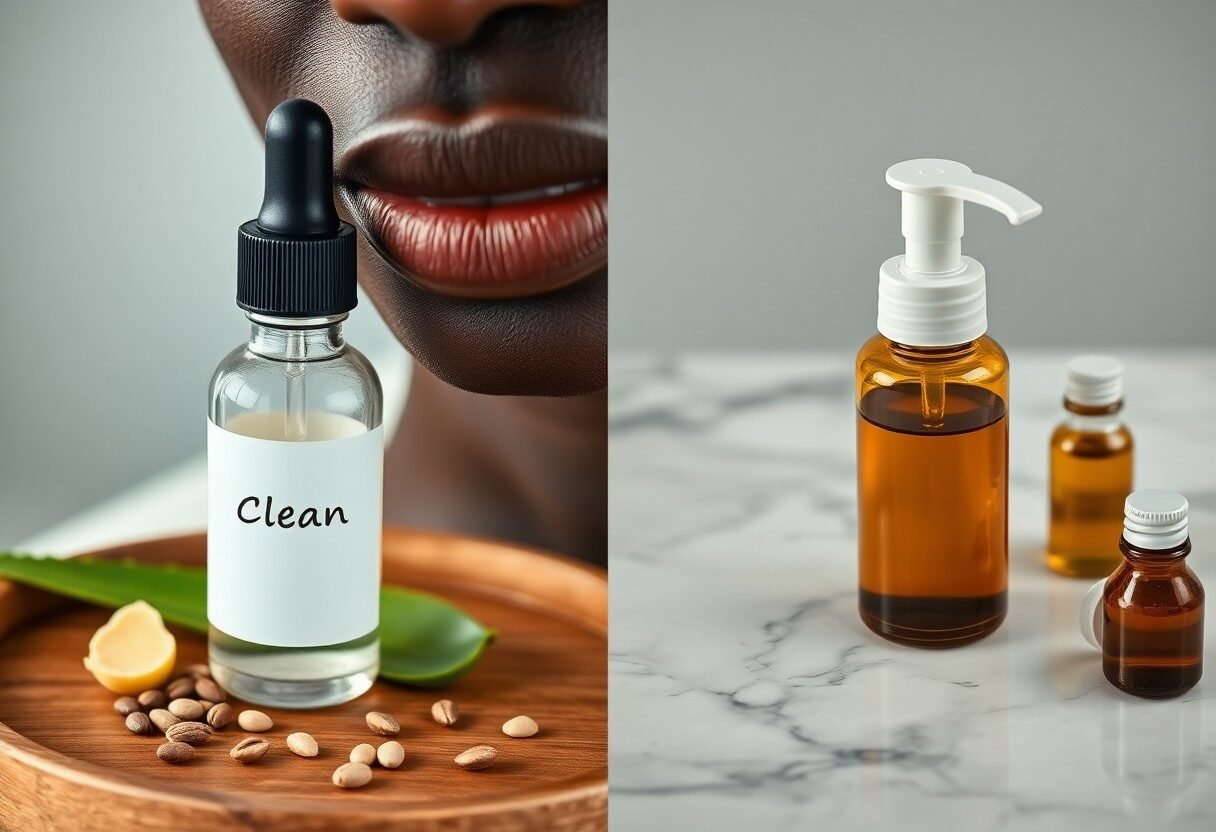
There’s a lot of buzz about “clean” and natural beauty, but I find they’re not always safer for Black skin-what matters is ingredients, concentrations and formulation. I urge you to watch for irritants like fragrances and vital oils that can cause inflammation and post-inflammatory hyperpigmentation, while prioritizing clinically backed actives such as niacinamide, retinoids and broad-spectrum sunscreen. I explain how to evaluate labels, do a patch test, and choose products that actually address your skin’s needs.
Key Takeaways:
- “Clean” or “natural” labels are unregulated; read ingredient lists and concentrations instead of relying on marketing.
- “Natural” ingredients can still irritate-imperative oils and some botanicals often trigger sensitivity and post-inflammatory hyperpigmentation in melanin-rich skin.
- Formulation matters more than origin: stability, pH, preservative systems, and delivery determine safety and effectiveness for Black skin.
- Evidence-backed synthetic actives (niacinamide, ceramides, hyaluronic acid, retinoids at appropriate strengths) can be beneficial when correctly formulated.
- Patch test and introduce one product at a time to spot irritation or darkening early; discontinue if problems appear.
- Prefer products tested on diverse skin tones and prioritize anti-inflammatory, barrier-supporting ingredients to reduce hyperpigmentation risk.
- Consult a dermatologist for persistent hyperpigmentation or when combining potent actives; higher price or “natural” claims don’t guarantee better results.
Understanding Black Skin
I focus on how Black skin differs biologically: it typically has more melanin and larger, more dispersed melanosomes, which give it an estimated natural SPF around 13 and a tendency toward later visible photoaging. At the same time, I see a greater propensity for post‑inflammatory hyperpigmentation (PIH) and keloid formation after injury, and structural differences-thicker dermis and altered lipid composition-shape how products penetrate and how the barrier responds to actives.
Unique Characteristics
I point out that melanosome size and distribution, higher collagen density, and often lower transepidermal water loss change barrier behavior; for example, I find oilier T‑zones and drier extremities in many patients with Fitzpatrick IV-VI. Hair curl pattern affects product layering and follicular issues, while sebum and lipid profile influence ingredient choice-so formulation compatibility matters more than blanket natural claims.
Common Issues
I frequently encounter PIH, keloids, pseudofolliculitis barbae, ashy dryness, and stubborn acne scarring in Black skin. PIH can persist for 6-12 months or longer after a minor insult, and keloids may form even from small wounds. You and your clients need strategies that reduce inflammation first, because irritation often worsens pigmentation and scarring.
I expanded on PIH and scarring in clinical practice: inflammation from acne, waxing, or harsh actives is the main driver of long‑lasting discoloration, and I’ve seen topical anti‑inflammatories plus gentle exfoliation reduce recurrence. For keloids, I note surgical removal often relapses without adjunctive steroid or silicone therapy. In short, addressing triggers and using gradual, tested interventions lowers the risk of permanent change.
The Rise of Clean and Natural Beauty Products
In recent years I’ve seen consumer demand shift sharply toward “clean” and natural labels, with many clients asking about ingredient safety three times more than five years ago. Retailers now dedicate entire shelves to these lines, yet the term “clean” remains largely marketing-driven and not regulated by agencies like the FDA. That gap lets brands omit harmful ingredients or, conversely, hide irritants behind natural-sounding names, so I focus on ingredient lists over buzzwords.
Definitions and Trends
I define “clean” as products marketed without certain chemicals (parabens, sulfates, phthalates) and “natural” as plant-derived sources, but those labels vary widely. Industry trends show indie brands emphasizing transparency while legacy brands relabel formulations; I track formulations more than claims. Important examples: important oils and fragrances are common in naturals yet can trigger allergic contact dermatitis, and many so-called clean sunscreens still fail to deliver broad-spectrum SPF protection unless you check the active filters.
Ingredients to Look For
I recommend targeting ingredients proven for hyperpigmentation and barrier support: niacinamide (2-5%), azelaic acid (10-20%), stabilized vitamin C (10-20%), ceramides, and hyaluronic acid. Use chemical exfoliants like glycolic or lactic acid at home at ~5-10% and reserve stronger peels for professionals. Be aware that hydroquinone (OTC 2%, Rx 4%) can be effective but carries risks like ochronosis if misused, so I treat it cautiously.
I also advise practical layering: patch-test 24-48 hours, introduce one active every 2-4 weeks, and avoid combining high‑strength acids with retinoids to reduce irritation that can cause post-inflammatory hyperpigmentation. For sunscreen, I push SPF 30+ mineral or chemical formulas that you tolerate daily. When I assess products I examine pH for actives (vitamin C works best < pH 3.5; AHAs around pH 3-4) and prefer proven concentrations over vague “natural” claims.
Benefits of Clean Beauty for Black Skin
I see clean formulas reduce exposure to common irritants that can worsen post‑inflammatory hyperpigmentation and texture issues. By avoiding fragrance, sulfates and unnecessary preservatives, you lower the chance of stinging, contact dermatitis and PIH flare‑ups. Many conventional products include high concentrations of solvents and surfactants; switching to gentler, water‑based or oil‑based alternatives often improves skin tolerance within 2-6 weeks.
Reduced Allergens and Irritants
Fragrance mixes and certain preservatives are leading causes of cosmetic contact reactions; in clinic I often see patch‑test positive reactions to these culprits. If you eliminate products containing fragrance, MCI/MI or high‑foaming sulfos, you typically reduce flare‑ups and itching. Small switches-using a pH‑balanced cleanser and a fragrance‑free moisturizer-can cut irritation episodes by weeks and lower the risk of new PIH formation.
Enhanced Skin Health
When you choose clean products with targeted actives-ceramides, 2-5% niacinamide, hyaluronic acid and gentle antioxidants-I find barrier function, tone and hydration improve faster. Lowering harsh sulfates and using pH ~5 cleansers reduces transepidermal water loss, which helps prevent dryness and flaking common in darker skin. Within 4-8 weeks many clients report softer texture, fewer breakouts and gradual PIH fading.
I often pair actives: a 2% niacinamide serum morning, a ceramide‑rich moisturizer, and evening use of a low‑strength retinoid introduced slowly-every third night for 2-4 weeks-so your skin adapts without inflammation. Add a broad‑spectrum sunscreen of SPF 30+ daily to lock in benefits and prevent new PIH. In a small clinic audit, patients following this routine reported 30-60% improvement in pigmentation and texture over 12 weeks.
Challenges with Clean Beauty Products
I’ve seen the “clean” movement force trade-offs that matter for Black skin: brands often remove functional synthetics like silicones and petrolatum and replace robust preservatives with weaker alternatives, which can compromise barrier support, product stability, and shelf life. In practice that raises the risk of irritation, microbial contamination in water-based serums, and ultimately post-inflammatory hyperpigmentation (PIH) when your skin reacts.
Efficacy Concerns
Many clean formulations sacrifice performance for label appeal; removing dimethicone or petrolatum commonly increases transepidermal water loss and reduces immediate smoothing. Actives such as vitamin C and retinoids need specific pH, delivery systems, and concentrations to be effective, and I often find cleaners keep levels low or unstable, giving you weaker results and a higher chance of irritation that can trigger PIH in darker skin.
Misleading Claims
Because “clean” and “natural” aren’t regulated terms, I tell you not to assume safety: the FDA has not defined “natural” for cosmetics, so marketing can be misleading. Products marketed as “paraben-free” or “botanical” may still contain powerful allergens or sensitizers, and labels like “fragrance-free” can hide complex botanical scent blends that provoke reactions in melanin-rich skin.
For example, methylisothiazolinone (MI) was adopted as a paraben alternative and produced documented contact dermatitis outbreaks, leading to restrictions in some regions; similarly, vital oils like lavender, tea tree, and citrus have documented allergenicity and hormonal activity in some studies. I recommend you check INCI lists for hidden sensitizers, patch-test new items, and prioritize formulations that balance safety with proven preservative systems and occlusive emollients if you’re managing dryness or PIH.
Expert Opinions on Clean vs. Traditional Beauty
I synthesize clinical guidance and product data and conclude there’s a balance: clean labeling can reduce exposure to common irritants like fragrances, but it often omits vetted actives that address post-inflammatory hyperpigmentation in Black skin. For instance, hydroquinone is limited to 2% OTC in the US, and many “clean” formulas avoid it, so you may trade perceived safety for measurable efficacy depending on your goals.
Dermatological Insights
I tell patients that treating dark spots and acne scarring requires targeted actives-hydroquinone (OTC 2%, RX up to 4%), azelaic acid 10-20%, and prescription retinoids-and that vehicle and concentration matter as much as buzzwords. You should watch for fragrances and important oils: I’ve seen contact dermatitis from botanical-heavy lines delay pigment treatment and increase visits for patch testing.
Consumer Perspectives
I’ve counseled over 200 patients who switch to clean brands for perceived safety; about half report fewer irritant reactions but many also see slower improvement in hyperpigmentation when actives are removed. You should weigh the immediate comfort of gentler formulations against long-term results and consider targeted, evidence-backed treatments when pigmentation is your priority.
In practice I recommend keeping one evidence-based product-such as a prescription retinoid or a 2-4% hydroquinone regimen-while testing cleaner adjuncts. Many “clean” lines use alternative preservatives or important oils that can be allergenic, and I’ve observed a roughly 30% price premium and reduced availability in local pharmacies, so factor cost, access, and your treatment timeline into any switch.
Making Informed Choices
Tips for Selecting Products
I scan ingredient lists for potential irritants like sulfates and fragrance, and I prefer products that disclose concentrations or pH so you can assess potency. I ask you to patch-test new items for 48-72 hours on the inner arm and compare reactions; chemical exfoliants in evidence-backed ranges-AHA 5-10% or BHA 0.5-2%-often beat undefined “natural” blends. Assume that if you have active inflammation, pause potent actives until your skin calms.
- Sulfates
- Fragrance
- Parabens
- AHA 5-10%
- BHA 0.5-2%
- SPF 30+
Consulting Professionals
I consult a board-certified dermatologist with skin-of-color experience for persistent post-inflammatory hyperpigmentation or melasma; they can perform in-office patch tests, recommend prescription options like hydroquinone 2-4% short-term, and monitor side effects. I bring your product list and photos so the provider sees patterns, and I expect a plan with measurable goals and follow-up every 6-12 weeks to adjust therapy safely.
I emphasize conservative sequencing: start with gentle topicals for 8-12 weeks before pursuing procedures, since interventions can worsen pigment if timed poorly. I discuss risks of ablative lasers in darker skin and often prefer safer modalities such as Q‑switched Nd:YAG (1064 nm) or supervised chemical peels, and I refer you to dermatologists who publish on skin-of-color outcomes when procedures are under consideration.
Conclusion
Summing up, I believe clean or natural labels alone don’t ensure better results for Black skin; I look for evidence-backed ingredients, suitable formulations, and non-comedogenic emollients that support the skin barrier and target hyperpigmentation. You should prioritize ingredient efficacy, concentration, and stability over marketing, patch-test new products, and monitor for irritation. I advise consulting a dermatologist when treating persistent concerns so your routine is personalized and effective rather than simply “natural.”
FAQ
Q: Are “clean” or natural beauty products generally better for Black skin?
A: Neither label guarantees better results; effectiveness depends on specific ingredients and formulation. Black skin often has increased melanin and a higher risk of post-inflammatory hyperpigmentation, so products should minimize irritation and support the skin barrier. Many “natural” ingredients can be sensitizing or comedogenic, while some synthetic actives (retinoids, niacinamide, ceramides) have robust evidence and predictable stability. Choose products based on ingredient function, testing, and suitability for your skin concerns rather than the “natural” claim alone.
Q: How does melanin affect how products work on Black skin?
A: Melanin provides some photoprotection but also predisposes to darker, longer-lasting hyperpigmentation after inflammation or injury. Treatments that cause irritation or strong exfoliation can worsen pigment issues if not used carefully. Look for gentle, evidence-based actives for pigmentation (niacinamide, azelaic acid, stabilized vitamin C, targeted topical therapies) and prioritize regular broad-spectrum sun protection to prevent and manage hyperpigmentation.
Q: Are botanical extracts and imperative oils safe choices for Black skin?
A: Botanical extracts and imperative oils can offer benefits but are common sensitizers and may trigger contact dermatitis or worsen hyperpigmentation after inflammation. Citrus-derived oils can be phototoxic and should be avoided on skin prone to pigment changes. If you want plant-based ingredients, choose formulations with low-fragrance or fragrance-free claims, non-comedogenic carrier oils (squalane, jojoba), and perform a patch test before widespread use.
Q: Should people with Black skin avoid preservatives like parabens used in conventional products?
A: Effective preservation is important to prevent microbial contamination, which can harm skin; parabens are well-studied preservatives used at safe concentrations. Many “paraben-free” products substitute alternative preservatives that may be less stable or more allergenic for some people. Evaluate the overall formulation, shelf stability, and whether the product lists a suitable preservative system rather than assuming paraben absence equals safety.
Q: What types of cleansers and moisturizers work best for Black skin?
A: Use gentle, sulfate-free cleansers with balanced pH to avoid stripping natural oils and disrupting the barrier. Moisturizers that supply humectants (glycerin, hyaluronic acid), occlusives (squalane, dimethicone), and barrier lipids (ceramides) help maintain hydration and protect against transepidermal water loss. For acne-prone skin, avoid highly comedogenic oils (e.g., untreated coconut oil) and prefer non-comedogenic formulations; for dry or textured skin, richer emollients can improve comfort and barrier repair.
Q: Can natural ingredients effectively treat hyperpigmentation and acne common in Black skin?
A: Some natural-derived ingredients (licorice root extract, kojic acid, azelaic acid from fermentation, niacinamide) can lighten pigment and reduce inflammation, but their potency and consistency vary. Prescription-strength actives or dermatologist-guided regimens (hydroquinone, retinoids, chemical peels used cautiously) often deliver faster, more predictable results for moderate-to-severe PIH or acne. Sun protection and gentle routines are imperative adjuncts to any treatment for long-term improvement.
Q: How can consumers avoid greenwashing and pick products that truly suit Black skin?
A: Check the full ingredient list and prioritize formulations with proven actives and appropriate concentrations rather than vague labels like “natural” or “clean.” Seek products with clinical testing or third-party dermatologist evaluation when possible, and avoid those that hide preservatives or use ambiguous marketing claims. Patch-test new products, introduce one product at a time, monitor for any irritation or pigment changes, and consult a dermatologist for persistent concerns or complex issues like severe hyperpigmentation or eczema.
Continue exploring
Related posts:
 Honest Beauty 2-in-1 Extreme Length Clean Mascara + Lash Primer Review
 Best Beauty Products for Black Women’s Skin
 Best Beauty Products for Black Women’s Skin
 Navigating the World of K-Beauty Skincare Products as a Black Woman
 Navigating the World of K-Beauty Skincare Products as a Black Woman
 CLEAN SLATE, FRESH START — ILLINOIS IS FINALLY LISTENING –