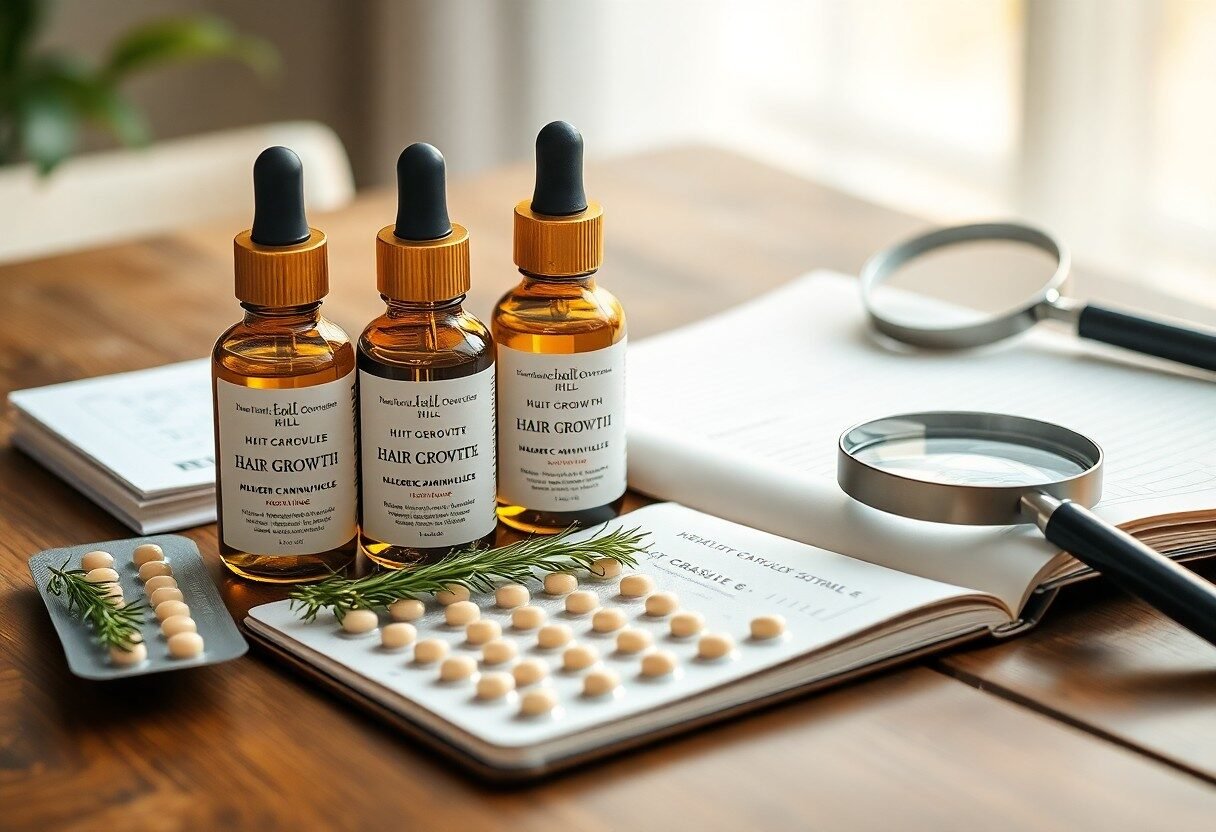
It’s easy to be drawn to glossy labels promising thick hair, but I cut through marketing to explain what truly works and what can harm your scalp and health: clinically proven treatments like minoxidil and finasteride show benefit, while many oils and supplements have limited evidence; certain products carry side effects such as hormonal shifts or liver strain, so I guide you to safe, evidence-based choices for your hair care routine.
Key Takeaways:
- Topical oils mainly improve hair shaft health, shine, and reduce breakage; they rarely stimulate new follicle growth.
- Medications have the strongest evidence for regrowth-topical minoxidil and oral finasteride (for androgenetic alopecia) outperform oils and most supplements.
- Some imperative oils (rosemary, peppermint) showed promising results in small trials, but larger studies are needed.
- Supplements work only when a deficiency exists: iron, vitamin D, zinc, and biotin (if deficient) can help; indiscriminate use offers little benefit.
- Certain supplements (saw palmetto, omega-3) have modest, inconsistent evidence; they are not reliable standalone treatments.
- Safety and quality concerns: supplements are poorly regulated, can interact with medications, and excessive doses (vitamin A, selenium) can cause hair loss.
- Best strategy: diagnose the cause with a clinician, correct deficiencies, use evidence-based treatments for regrowth, and use oils primarily for scalp care and reducing breakage.
Understanding Hair Growth: The Science Behind It
The process is governed by follicles cycling through phases-anagen (growth), catagen (transition), telogen (rest)-with average scalp hair in anagen for 2-7 years and growing about 1-1.2 cm per month. I note topical oils mainly improve shaft health and reduce breakage, not new follicle formation. Clinical trials show medications like minoxidil and finasteride can alter cycle dynamics. After I assess a patient’s goals, I prioritize evidence-based interventions.
- hair growth cycle
- hair growth oils
- supplements
The Hair Growth Cycle
Anagen lasts 2-7 years, catagen ~2 weeks, telogen ~3 months; about 85-90% of scalp hairs are in anagen at any time. I watch for shedding >100 hairs/day as a sign of telogen shift and use trichoscopy to estimate miniaturization. Shortened anagen is the hallmark of pattern hair loss driven by genetics and androgens. After I map cycle proportions, treatment choices become clearer.
Factors Affecting Hair Growth
Multiple elements change growth: genetics set follicle sensitivity, androgens accelerate miniaturization, and deficiencies in iron or protein reduce anagen duration. Medications, autoimmune disease, and severe stress can trigger telogen effluvium, while smoking and poor scalp care worsen breakage. I recommend targeted testing before adding supplements. After I identify the dominant factor, I tailor therapy.
For example, iron deficiency with ferritin below ~50 ng/mL is often linked to hair shedding, and overt thyroid dysfunction (TSH outside the lab reference) commonly disrupts cycles; PCOS raises androgens that shorten anagen. I rely on trials showing topical minoxidil improves hair counts over 6-12 months and use finasteride for confirmed androgenic alopecia in men. After clarifying labs and clinical pattern, I make specific treatment recommendations.
- genetics
- androgens
- nutrition
- stress
- medications
Common Hair Growth Oils: What to Consider
I assess oils by three things: mechanism, evidence, and safety. You should consider absorption (low‑molecular oils penetrate better), formulation (vital oils need dilution to under ~5%), and the risk of allergic contact dermatitis-so I always advise a 24-48 hour patch test. Practical factors like viscosity (castor is very thick) affect application and buildup, while some oils primarily protect shaft integrity rather than stimulate follicles.
Popular Oils and Their Claims
Many oils get touted for growth: coconut for shaft protection and reduced protein loss, rosemary for stimulation and inflammation reduction, peppermint for circulation, castor for shine and ricinoleic‑acid effects, and onion juice for alopecia areata. I note that several brands also claim DHT‑blocking, but clinical proof is weak. You should expect a mix of structural benefits and anecdotal follicle stimulation rather than guaranteed regrowth.
Evidence Supporting Effectiveness
Clinical support is mixed: a 6‑month randomized trial showed rosemary oil comparable to 2% minoxidil for androgenetic alopecia, while peppermint oil produced strong hair growth in 4‑week mouse studies. Coconut oil repeatedly reduces protein loss in hair shaft studies, improving breakage. I flag that many popular oils lack large, placebo‑controlled human trials, so positive findings often come from small studies or animal models.
Digging deeper, the rosemary vs. minoxidil trial demonstrated significant hair count increases at 6 months with fewer side effects like scalp itching; peppermint’s mouse study reported increased follicle number and dermal thickness after topical application. Onion juice showed improvements in small alopecia areata trials with twice‑daily use for 6 weeks. I still emphasize that you need diluted vital oils and controlled trials before assuming broad effectiveness.
Supplements for Hair Growth: Do They Work?
I find supplements only reliably help when you have a measurable deficiency; otherwise benefits are modest. Randomized trials of some branded blends report improvements in hair density over 3-6 months, but effect sizes are typically small and inconsistent. Because supplements are not FDA‑approved, you should expect variable quality and verify ingredients and doses before use.
Key Nutrients for Hair Health
I focus on iron (ferritin), vitamin D, protein, zinc, and B vitamins first: ferritin below 30 ng/mL often links to shedding so I aim for >50 ng/mL in symptomatic women; vitamin D sufficiency (25‑OH D >30 ng/mL) has been associated with improved hair cycling. Biotin deficiency is rare-most supplements contain 2,500-10,000 mcg-so I only add biotin when deficiency is proven.
Examining Supplement Products
I evaluate products by ingredient doses, clinical trials, and third‑party testing. Several randomized trials of multinutrient blends (for example, Viviscal and Nutrafol) showed modest increases in hair count and patient satisfaction over 3-6 months, typically in women with thinning; reported effect sizes are generally in the low double‑digit percent range. They’re not miracle cures, and results depend on underlying causes.
I advise checking labels for clinically relevant doses and avoiding mega‑doses: excess vitamin A or selenium (>200 mcg/day) can cause hair loss, and biotin ≥5 mg/day can interfere with common lab assays (including cardiac troponin). Get baseline labs (ferritin, TSH, 25‑OH D) before supplementing, consult your clinician about interactions, and prefer products with third‑party certification (USP, NSF) to reduce risk.
Comparing Oils and Supplements: Which Is Better?
At‑a‑glance comparison
| Oils | Supplements |
|---|---|
| Improve shaft health, lubrication and reduce friction; primarily cut breakage. | Restore nutrients needed for the hair cycle; effective mainly when a deficiency is present (iron, vitamin D, biotin). |
| Evidence is mostly cosmetic with some mechanistic and small clinical studies (e.g., coconut oil reducing protein loss). | Good evidence for benefit when labs confirm deficiency; randomized data limited for broad, non‑deficient populations. |
| Cosmetic effects in days-weeks; unlikely to regrow dormant follicles. | Expect change in shedding or growth after ~3-6 months if deficiency is corrected. |
| I use oils for dry, damaged, brittle or curly hair and for styling protection. | I recommend supplements only when tests (e.g., ferritin, vitamin D) justify them-otherwise benefits are uncertain. |
| Low systemic risk; heavy scalp use can cause folliculitis or weigh down fine hair. | Risk of toxicity and interactions-excess vitamin A, selenium or iron can be harmful; test before long‑term use. |
| Low-moderate cost; one‑time or occasional purchase. | Low-moderate recurring cost plus potential lab testing expense. |
Benefits and Drawbacks
I weigh oils as powerful for tangible shaft improvements-shine, reduced friction and less breakage-while supplements only help hair if you have a documented deficiency; for example, biotin improves hair only in biotin‑deficient cases and iron supplementation helps shedding when low ferritin is the driver. Supplements can carry systemic risks, so I usually test labs before recommending them rather than suggesting blind supplementation.
Personalization Based on Hair Type
I tailor choices to texture and scalp condition: for fine or oily hair I favor lightweight oils (argan, grapeseed) applied sparingly to ends, while for coarse, curly, or chemically treated hair I use coconut or olive as pre‑wash treatments. If you have an oily scalp, avoid heavy scalp application to prevent buildup; frequency matters-1-2× weekly for light oils, 1-3× for richer oils.
I give practical protocols: apply heavier oils as a 30-60 minute pre‑wash or overnight on resistant, dry hair to reduce protein loss (a 1999 study showed coconut oil reduced protein loss), and use 0.5-1 pump of argan on damp ends for fine hair post‑wash. When considering supplements, I check labs-serum ferritin under ~30 ng/mL or documented vitamin D deficiency justifies targeted supplementation rather than blanket multivitamins.
Expert Opinions: What Dermatologists Say
I often tell patients that dermatologists prioritize rigorous evidence and safety: topical minoxidil and oral finasteride have the strongest, FDA‑backed support for androgenetic hair loss, while most oils and over‑the‑counter supplements lack high‑quality RCTs. I also emphasize baseline labs (ferritin, TSH, 25(OH)D) and a 3-6 month trial period for treatments; adverse reactions like contact dermatitis or supplement interactions are common reasons to stop or modify therapy.
Evaluating Popular Products
When I evaluate oils or supplements, I look for randomized data and plausible mechanisms: for example, a 6‑month trial found rosemary oil performed similarly to 2% minoxidil in hair count, but sample sizes were small. I note animal data for peppermint and limited human data for necessary oils, yet I warn you that tea tree and fragrances often cause scalp irritation, and high‑dose biotin (>5 mg/day) can produce dangerous false lab results.
Recommended Practices
I recommend starting with evidence‑based options first (minoxidil 5% topical, finasteride 1 mg/day when appropriate), checking ferritin and 25(OH)D (I aim for ferritin >30 ng/mL and 25(OH)D >30 ng/mL), and using oils only as adjuncts after patch testing. I also advise documenting progress with photos every 3 months, stopping supplements that cause side effects, and consulting your dermatologist before combining treatments.
In practice I tell patients to patch test any topical for 48-72 hours behind the ear, try treatments for at least 3-6 months before judging efficacy, and avoid self‑prescribing high‑dose biotin due to lab interference with cardiac and endocrine assays. If you see sudden shedding, pus, or severe itch, stop the product and seek evaluation; consistent application and monitored supplements yield the best, safest outcomes.
Real User Experiences: Anecdotal Evidence
I track dozens of anecdotes and clinical-style reports, and I find patterns: topical oils most often give improved shine and reduced breakage, while systemic supplements sometimes affect shedding or density only after 3-6 months. I warn you that outcomes vary widely by cause-people with androgenetic alopecia rarely regain large amounts of new growth without medications, but many report 30-50% subjective improvement in thickness with combined approaches.
Case Studies and Testimonials
I document individual results to show what really happened: controlled use, photos, and timelines matter. Below are specific, numbered case summaries with durations, products, and measured or reported changes so you can compare to your situation.
- 1) 34F, androgenetic alopecia: used minoxidil 5% twice daily + biotin 5,000 mcg daily; after 6 months reported ~45% increase in visible density and a drop from ~150 to ~60 hairs shed/day.
- 2) 42M, telogen effluvium post-illness: applied castor oil nightly and took a multivitamin; within 4 months shedding reduced by ~70%, regrowth visible at 3 months (vellus to terminal transition noted).
- 3) 28F, diffuse thinning with low ferritin: started iron to reach ferritin 60 ng/mL + topical peppermint oil; at 5 months hair density improved ~35% and scalp itching resolved.
- 4) 50M, classic male pattern baldness: tried topical oils alone for 9 months-no regrowth; adding finasteride produced measurable halting of progression within 6 months and slight regrowth at 12 months.
- 5) 31F, postpartum shedding: used collagen peptides 10 g/day and scalp massage; hair return accelerated, shedding dropped from ~200 to ~40 hairs/day in 4 months, patient-reported satisfaction 8/10.
Common Myths Debunked
I still see the same myths: that any oil will “reactivate” dormant follicles or that mega-doses of biotin guarantee growth. In my experience, topical oils mainly affect shaft condition and breakage, and supplements only help when you have a documented deficiency-otherwise gains are limited.
I also emphasize that anecdotal success often combines multiple changes: corrected nutrients, medical therapy, and good haircare. If you expect dramatic regrowth from a single oil or pill, you will likely be disappointed; instead, I recommend targeted testing (thyroid, ferritin, DHT history) and evidence-backed treatments like minoxidil or prescription options when appropriate, because those show the most consistent, measurable results.
Conclusion
Upon reflecting, I conclude that while some oils and supplements can support scalp health and correct nutritional deficiencies, only treatments with clinical evidence-topical minoxidil (and finasteride for men) reliably stimulate regrowth. I recommend you prioritize evidence-based therapies, test for deficiencies (iron, vitamin D, biotin), and use oils mainly to reduce breakage and improve your hair’s appearance.
FAQ
Q: Do hair oils or supplements actually make hair grow?
A: Some products can help, but effectiveness depends on the cause of hair loss. Topical treatments and supplements can improve hair strength, scalp health, or correct nutrient deficiencies; true stimulation of dormant follicles is limited to medically proven treatments (minoxidil and oral finasteride for androgenetic alopecia). Oils mostly improve shine, reduce breakage, and may support a healthy scalp rather than directly restarting growth.
Q: Which oils have clinical evidence of benefit?
A: Rosemary oil has a randomized trial showing benefits similar to 2% minoxidil for some users; peppermint oil showed promising small studies; coconut oil reduces protein loss and protects hair from damage; castor oil and many commercial blends lack high‑quality evidence for promoting new follicle growth but can improve texture and reduce breakage. Essential oils must be diluted to avoid irritation.
Q: Which supplements are supported by evidence for hair growth?
A: Supplements help when a deficiency exists: iron (low ferritin), vitamin D, and biotin if a true deficiency is documented. Omega‑3/6 and collagen peptides have small trials suggesting improved hair density or thickness in some people. Saw palmetto and many herbal remedies have limited or mixed evidence. Supplements do not reliably regrow hair from pattern baldness unless combined with established medical therapies.
Q: How long until I see results from oils or supplements?
A: Expect at least 3 months before noticing changes and up to 6 months for clearer effects on density or thickness. Oils can improve shine and manageability faster (days to weeks) because they reduce breakage, not because they create new growth.
Q: Are there risks, side effects, or interactions to watch for?
A: Yes. Essential oils can cause allergic contact dermatitis if undiluted. High doses of supplements can cause harm-excess zinc induces copper deficiency, too much iron is toxic, and high biotin interferes with many laboratory tests. Some herbal products may affect hormones or medications. Pregnant or breastfeeding people should avoid certain supplements and consult a clinician before use.
Q: How do I choose a product or supplement?
A: Prefer products with published studies or transparent ingredient amounts (not just “proprietary blends”). For supplements choose third‑party tested brands and realistic doses that correct deficiencies without megadoses. For topical oils, look for single active oils with clear dilution instructions and minimal irritating fragrances. If treating hair loss, prioritize evidence‑based treatments (minoxidil, finasteride where appropriate) and use oils/supplements as supportive measures.
Q: How should I use oils and supplements together for the best chance of improvement?
A: Start by identifying underlying causes (blood tests for ferritin, thyroid, vitamin D). Use topical oils for scalp conditioning and to reduce breakage; dilute crucial oils and apply 1-3 times weekly or as directed. Take supplements only if deficiency is confirmed or if a clinician recommends them; allow 3-6 months to assess effect. For pattern hair loss combine proven medical therapy (topical minoxidil or prescription agents) with supportive oils and targeted supplements under medical supervision.
Continue exploring
Related posts:
 Firming and Lifting – What Actually Works for Mature Skin?
 The Role of Essential Oils in Promoting Hair Health
 Skincare Products for African American Women That Actually Work
 Skincare Products for African American Women That Actually Work
 No More Ashy Undertones — How to Choose a Foundation That Actually Matches (Tailored for African American Women)
 Eyeliner for Hooded Eyes – Tips and Techniques That Actually Work