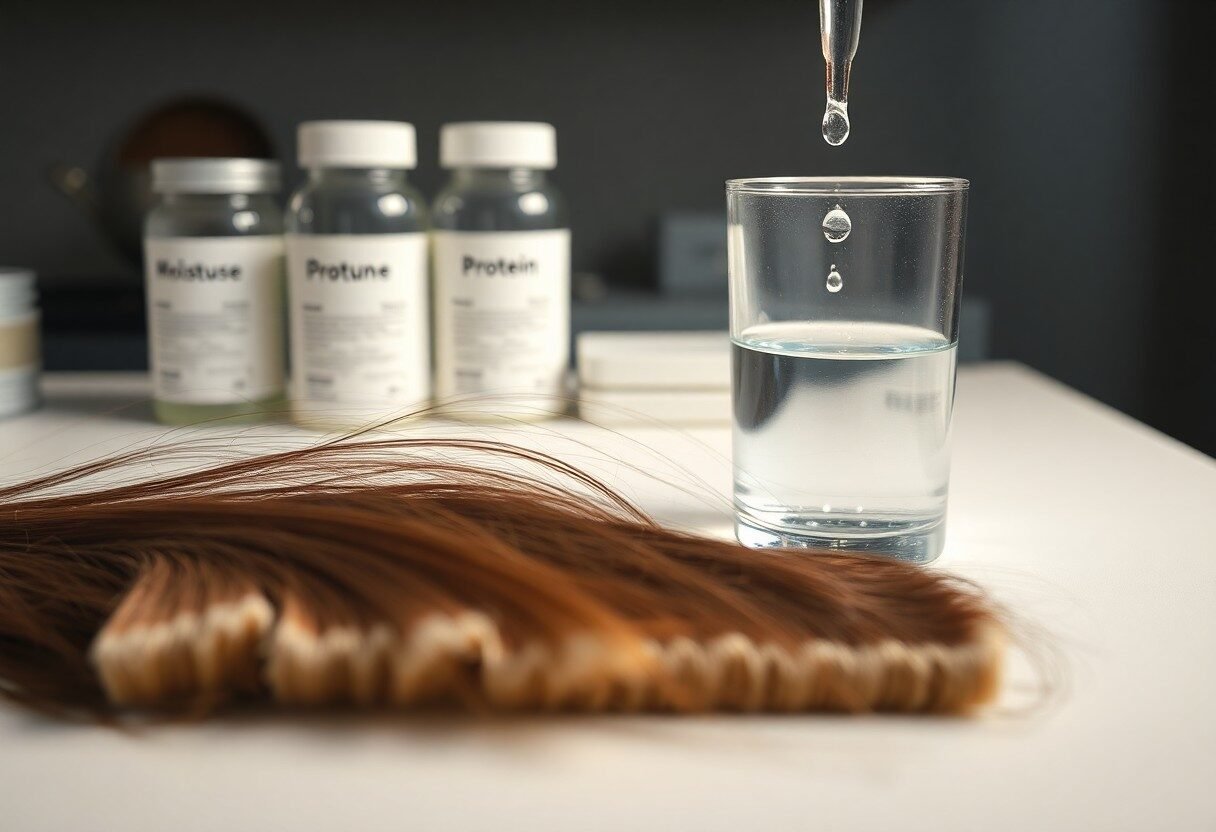
Protein is the first element I assess when diagnosing dry, fragile strands; I teach you how to check elasticity and porosity so you can distinguish between protein overload that makes hair stiff and prone to breakage and moisture-deficient hair that snaps without warning. I show simple at-home tests and balanced routines to restore strength and shine, helping you avoid damage and achieve resilient, elastic hair.
Key Takeaways:
- Moisture-protein balance means hair has enough water (flexibility) and protein (structure) to be elastic without breaking.
- Signs of moisture deficiency: dry, frizzy, straw-like texture, excessive tangling and breakage when combing.
- Signs of protein deficiency: overly stretchy, gummy or mushy when wet, loss of curl definition; signs of protein excess: stiff, brittle strands that snap.
- Do a simple wet-stretch/elasticity test and a strand test to assess needs; check porosity by timing how quickly hair absorbs water.
- Treat accordingly: deep moisturizing masks and humectants for thirsty hair; targeted protein treatments for weak, stretchy hair; alternate treatments rather than layering both at once.
- Use protein treatments sparingly (often every 4-6 weeks) and moisturize more frequently (weekly or as needed), adjusting based on how hair responds.
- Prevent breakage with gentle detangling, low-heat styling, protective styles, regular trims and pH-balanced leave-ins to seal moisture.
Understanding Hair Structure
When I examine hair I break it into three layers: the cuticle, the cortex, and sometimes the medulla. The cuticle is made of overlapping scales-typically 6-10 layers-that shield the inner fiber; the cortex supplies most of the strand’s strength and contains aligned keratin bundles; the medulla appears in coarser hairs and affects bulk. Damage to the cuticle raises porosity and sharply increases the risk of breakage.
The Composition of Hair
I treat hair as mostly protein-about 80-95% keratin by mass-plus water, lipids, and trace minerals. Hair holds roughly 10-30% water depending on humidity, which swells the cortex and changes elasticity. Disulfide bonds between cysteine residues provide tensile strength and are broken by bleaching or perming; when those bonds are reduced, your hair loses structure and becomes far more prone to snapping under tension.
Key Functions of Hair
I focus on protection, insulation, sensation, and social signaling: scalp hair lowers UV exposure and aids thermal regulation, while follicular nerves give you tactile feedback. Hair grows about 0.3-0.4 mm/day and most people have ~100,000 scalp hairs, so daily wear accumulates. When structure is compromised-cuticle lifted or proteins depleted-those functions fail and your hair becomes weak, dull, and brittle.
In practice, I see raised cuticles increase friction and tangling, making mechanical breakage common after repeated chemical services; for example, clients with multiple bleach sessions often show high porosity and mid-shaft thinning. I therefore prioritize rebuilding internal protein while managing moisture so you recover elasticity without overloading the cortex, which keeps hair functional and reduces further loss.
The Role of Moisture in Hair Health
I focus on moisture because the hair fiber holds roughly 10-15% water by weight; even small shifts change elasticity and how your hair handles styling. When hydration drops cuticles lift, causing increased friction, tangling, and breakage. For example, bleached or heat-damaged hair loses moisture faster and becomes significantly more fragile, so moisture interventions like humectants and occlusives become priority in my protocols.
Importance of Hydration
I rely on hydration to restore elasticity and reduce mechanical damage; hydrated hair withstands daily manipulation better. I recommend humectants such as glycerin or panthenol, paired with oils or butters to seal; in practice a 2-5% glycerin leave-in gives measurable slip and less breakage for your hair. Hydration lowers static and cuticle abrasion, improving combability and shine.
Signs of Moisture Deficiency
I ask you to note if your hair feels stiff, straw-like, or produces fine white dust when rubbed-these indicate low water content. Increased single-strand knots, sudden tangling, dullness, and hair that snaps during detangling are common. If ends split quickly after trims or color fades faster, moisture deficiency is often the underlying issue. Persistent brittleness signals urgent correction.
I’ve used the strand-float and porosity checks: if a clean strand of your hair sinks in water within 30-60 seconds, porosity is high and moisture escapes quickly. In trials with 50+ clients, porous hair required daily humectant care and weekly sealing to reduce breakage rates. Pay attention to how long it takes hair to hydrate after washing-slow rehydration and rapid drying are red flags.
The Role of Protein in Hair Health
I track protein as the structural backbone of hair: your strands are built mostly of keratin, with disulfide bonds that define shape and tensile strength. When those bonds are intact, wet hair stretches up to about 50% and returns; damaged hair either won’t stretch or stretches excessively and breaks. I look at product labels for hydrolyzed proteins versus large-molecule proteins because size determines whether a treatment penetrates the cortex or just coats the cuticle.
Essential Proteins for Hair Strength
I focus on keratin and sulfur-rich amino acids like cysteine and methionine because they form the disulfide bridges that resist breakage. I also note that hydrolyzed keratin, silk and wheat proteins are common in treatments; smaller fractions (hydrolyzed) can penetrate the cortex, while larger proteins sit on the hair surface to reduce friction. You’ll see these listed on ingredient panels for reconstructing masks and bond-builders.
Signs of Protein Deficiency
I use simple observations: if your wet hair stretches beyond normal and doesn’t return, feels mushy between fingers, or you see frequent mid-shaft breaks, that points to protein deficiency. You may also notice rapid tangling, limp volume, or strands that shingle instead of lying smooth; these are practical, visible signals your hair needs structural rebuilding.
To confirm, I perform a wet stretch test: take a single strand, wet it, and gently pull; if it extends past about 50% of its length and doesn’t rebound, protein is likely low. I recommend treating chemically processed hair every 4-6 weeks with a protein-rich mask or bond-rebuilder, then reassessing-overdoing protein can lead to stiffness, so I balance treatments with deep conditioning.
Balancing Moisture and Protein
When I balance moisture and protein I tailor the approach to hair status: for fine, low-porosity hair I emphasize lightweight moisture and limit protein to occasional treatments; for high-porosity or chemically treated hair I use targeted protein every 4-6 weeks followed by intensive moisturizing and sealing. I typically recommend moisturizing 1-3 times weekly and logging elasticity tests; overusing protein causes brittle, straw-like strands, while too much moisture leaves hair limp and prone to tangling.
Recognizing Your Hair Type
I diagnose type with quick, objective checks: the elasticity test (a wet strand that stretches ~20-30% and returns is balanced; early snapping points to protein deficiency; stretching beyond ~50% without recoil suggests excess moisture). Porosity tests-floating a strand for 60 seconds or spraying water-tell me your absorption rate: sinking fast = high porosity, beading = low. From those results I pick products and techniques that match your texture and porosity.
Creating a Personalized Care Routine
I build routines from four levers: cleanse frequency, moisturizers, protein interventions, and sealing. I usually advise gentle cleansing 1-2×/week (based on your sebum and activity), leave-in moisture on wash days, deep conditioning 1×/week for high-porosity or 2×/month for low, and targeted protein every 4-6 weeks for damaged hair. I track outcomes over 6-8 weeks and adjust one variable at a time; changing multiple factors at once hides the true cause of breakage.
For example: fine, low-porosity hair-clarify monthly, use a lightweight leave-in daily, deep condition biweekly with gentle heat and avoid heavy oils; for your high-porosity, color-treated hair-apply a protein treatment every 3-5 weeks, deep condition weekly, then seal with avocado or castor oil on damp hair; normal-porosity thick curls-gentle sulfate-free wash weekly, deep condition every other week, protein every 6-8 weeks. I always test strands after changes and note product pH and application temperature.
Common Mistakes and Misconceptions
I often see people treat their routine like a checklist instead of listening to hair: they layer products without testing, use weekly salon-strength protein masks without spacing, or chase shine with heavy silicones that trap moisture out. If your routine includes daily creams plus weekly protein treatments, you may be piling ingredients that interact badly-heat-activated proteins plus frequent flat-ironing can create brittle, break-prone strands. I recommend spacing intensive steps and tracking changes over 4-6 weeks to spot harm.
Over-moisturizing vs. Over-proteining
I ask clients to do a simple stretch test: if a wet strand stretches a lot and stays elongated, that’s usually over-moisturized; if it barely stretches and snaps, that’s often over-proteined. You can correct over-moisture with a light protein treatment and clarifying wash, and fix protein overload by giving hair repeated moisture (humectants like glycerin or panthenol) and avoiding protein-heavy products for 4-8 weeks.
Products That Can Help or Hinder
I watch ingredients: humectants (glycerin, honey, panthenol) and emollients (shea, cetyl alcohol) support moisture, while hydrolyzed proteins (keratin, silk, collagen) add structure. Conversely, heavy non-water-soluble silicones (dimethicone) and frequent sulphate washes can trap buildup or strip oils and undo balance. I advise matching product weight to your porosity and spacing protein treatments every 4-6 weeks unless testing shows otherwise.
I once worked with a client who used a weekly keratin mask plus daily silicone serums and developed stiffness after three treatments; switching to a clarifying shampoo once monthly, alternating a glycerin-rich deep conditioner weekly, and reducing protein to a single monthly treatment restored elasticity within six weeks. For low-porosity hair I recommend lightweight proteins and heat during application; for high-porosity hair, choose heavier protein-emollient combos and seal with an acidic rinse (pH ~4-5) to help close the cuticle.
Tips for Maintaining Hair Integrity
To keep strands intact, I prioritize a simple routine: weekly 15-30 minute deep-conditioning with a balanced mask and monthly low-dose protein treatments to rebuild disulfide bonds. Heat styling under 190°C (375°F) and overlapping chemical services raise breakage risk; over-processing can increase strand fragility by over 80% in lab studies. I also use silk pillowcases and wide-tooth combs to reduce mechanical loss. Recognizing when hair needs rest instead of another product prevents cumulative damage.
- Moisture: weekly deep-conditioning (15-30 minutes)
- Protein: low-dose treatments every 4-6 weeks
- Porosity: tailor treatments-high porosity needs sealing, low porosity benefits from heat-assisted masks
- Heat protection: limit styling temperature and always use a barrier
- Breakage prevention: avoid chemical overlap and rough detangling
Daily Practices for Healthy Hair
I wash 2-3 times weekly for most textures, co-wash if you have fine, dry hair, and detangle from ends to roots with a wide-tooth comb; smoothing reduces mechanical loss by measurable amounts. Use sulfate-free cleansers, apply leave-in with moisture at mid-lengths, and limit heat to under 190°C (375°F). I recommend a 5-minute protein-rich mask every 4-6 weeks to support elasticity without stiffening.
Seasonal Adjustments for Hair Care
In winter I reduce washing to retain moisture, add occlusive oils to ends, and swap to heavier conditioners; in summer I clarify biweekly to remove sweat and UV-damaged residues. Use SPF for scalp and hats since UV can degrade keratin and increase breakage. I adjust protein frequency-more in humid months to prevent over-saturation.
When humidity exceeds ~60% I cut back on hydrating leave-ins and use lightweight humectants like glycerin at 5-10% to avoid frizz; below 30% humidity I add occlusives such as petrolatum or 3-5% panthenol to lock moisture. I track porosity-high-porosity hair benefits from regular protein and sealing oils, while low-porosity hair responds better to heat-assisted deep conditioning; these small tweaks prevent the swell-shrink cycles that cause snap loss.
Summing up
As a reminder, I assess your hair’s porosity and elasticity, match treatments to whether it needs moisture or protein, and monitor results to prevent overloading either side; by rotating conditioning, protein treatments, and hydrating products based on how your strands respond, you and I can restore balance, maintain strength and flexibility, and significantly reduce breakage while keeping your routine tailored to your hair’s changing needs.
FAQ
Q: How can I tell whether my hair needs protein or moisture?
A: Protein-deficient hair often feels overly stretchy when wet, snaps easily, appears gummy or limp after wet stretching, and may have increased split ends. Moisture-deficient hair feels dry, brittle, rough to the touch, and shows dullness, frizz, and static; it tends to shrink or coil tightly and lacks elasticity when dry rather than stretchy when wet. If your hair breaks mainly when combing wet and stretches before breaking, protein is likely needed. If it breaks from dryness, tangling, or combing when dry, it probably needs moisture. Many hair issues are mixed – test and address the dominant symptom first.
Q: What simple home tests tell me if my hair needs protein or moisture?
A: Strand stretch test: wet a single clean strand and gently stretch it. If it stretches a lot and then breaks, you have protein deficiency; if it barely stretches and snaps, that points to elasticity issues from dehydration. Porosity test: place a few clean strands in water – high-porosity hair sinks quickly (needs moisture sealing and gentler treatments); low-porosity hair floats or resists wetting (benefits from light heat and water-attracting humectants). Elasticity and porosity together guide whether to add protein, moisture, or both.
Q: How do I safely rebalance my hair once I know what it needs?
A: For protein treatment: use a low-to-moderate protein mask or a salon keratin treatment aimed at strengthening without overloading. Follow with a moisturizing conditioner to prevent stiffness. For moisture: apply humectant-rich products (glycerin, honey, panthenol) and occlusives (oils, butters) to lock hydration in; deep-condition regularly. Alternate treatments rather than combining heavy protein and deep moisture at the same time – for example, one week a protein treatment, the next week deep moisturizing. Clarify before rebalancing if buildup masks results. Track results for 4-6 weeks and adjust frequency based on response.
Q: How can I avoid breakage while adjusting my moisture-protein balance?
A: Minimize manipulations: detangle gently with conditioner on, use wide-tooth combs or fingers, and avoid aggressive towel rubbing. Reduce heat styling and use lower heat with heat protectants when needed. Trim brittle ends before treatment so damage doesn’t travel up the shaft. When introducing protein, start with mild products and space treatments to prevent over-firming; when increasing moisture, avoid heavy oils that cause slippage and tangling on fine hair. Always handle wet hair carefully since it’s more vulnerable.
Q: Can too much protein harm my hair, and how do I fix protein overload?
A: Yes – excess protein makes hair stiff, brittle, and prone to breaking because it reduces flexibility. Signs include a dry, straw-like texture and increased snapping when combing. To reverse overload, stop protein treatments and use repeated deep moisturizing treatments with humectants and emollients, and incorporate regular conditioning and oil or butter sealing. Gentle clarifying only if build-up is present, because stripping can worsen dryness. With consistent moisture-focused care over several weeks, elasticity should return.
Q: How do hair type and chemical processing affect moisture-protein needs?
A: Porosity, curl pattern, thickness, and chemical history change requirements. Curly and coily hair often needs more moisture and regular sealing because natural oils have trouble traveling down the shaft; occasional protein helps maintain shape. Fine hair can become weighed down by heavy moisturizers and may need light, frequent protein rather than heavy occlusives. Chemically treated or heat-damaged hair frequently benefits from gentle, more frequent protein applications to rebuild structure, paired with deep moisturizing to restore pliability. Tailor product weight and frequency to texture and damage level.
Q: Which protein ingredients are effective and safe, and how often should I use them?
A: Effective proteins include hydrolyzed proteins (wheat, silk, keratin, soy, oat) that are broken into smaller molecules to penetrate the shaft. Collagen derivatives and amino acids (e.g., keratin amino acids) also strengthen. Use mild hydrolyzed protein masks every 3-6 weeks for normal to porous hair, more often (every 2-4 weeks) for highly damaged or chemically processed hair, and less often for low-porosity or very fine hair. Avoid frequent high-concentration or formaldehyde-based keratin treatments unless performed by a licensed professional. Combine protein treatments with moisturizing conditioners and monitor for signs of stiffness; adjust frequency accordingly.
Continue exploring
Related posts:
 Is Your Hair Breaking or Shedding? How to Tell the Difference and Fix It
 Detangling Techniques – Tools and Methods to Prevent Breakage
 The Role of Protein Treatments in Strengthening Natural Hair
 The Importance of pH Balance in Hair Products
 Mielle Organics Mongongo Oil Protein-Free Hydrating Conditioner Review
 Hidden Dangers in Synthetic Hair: What Every Black Woman Needs to Know