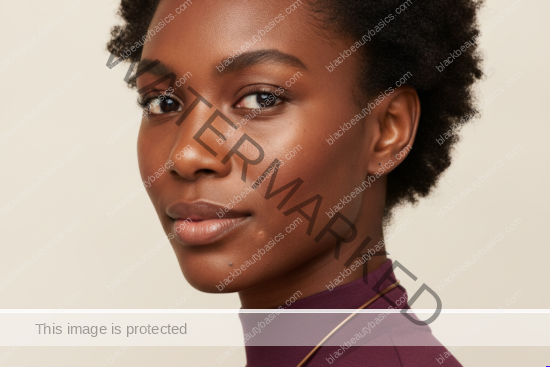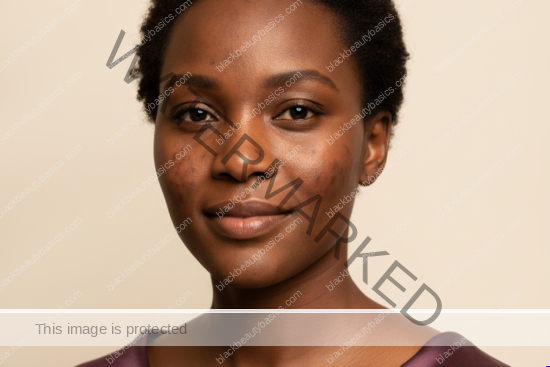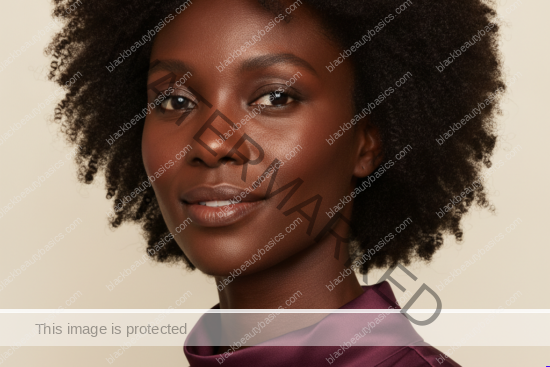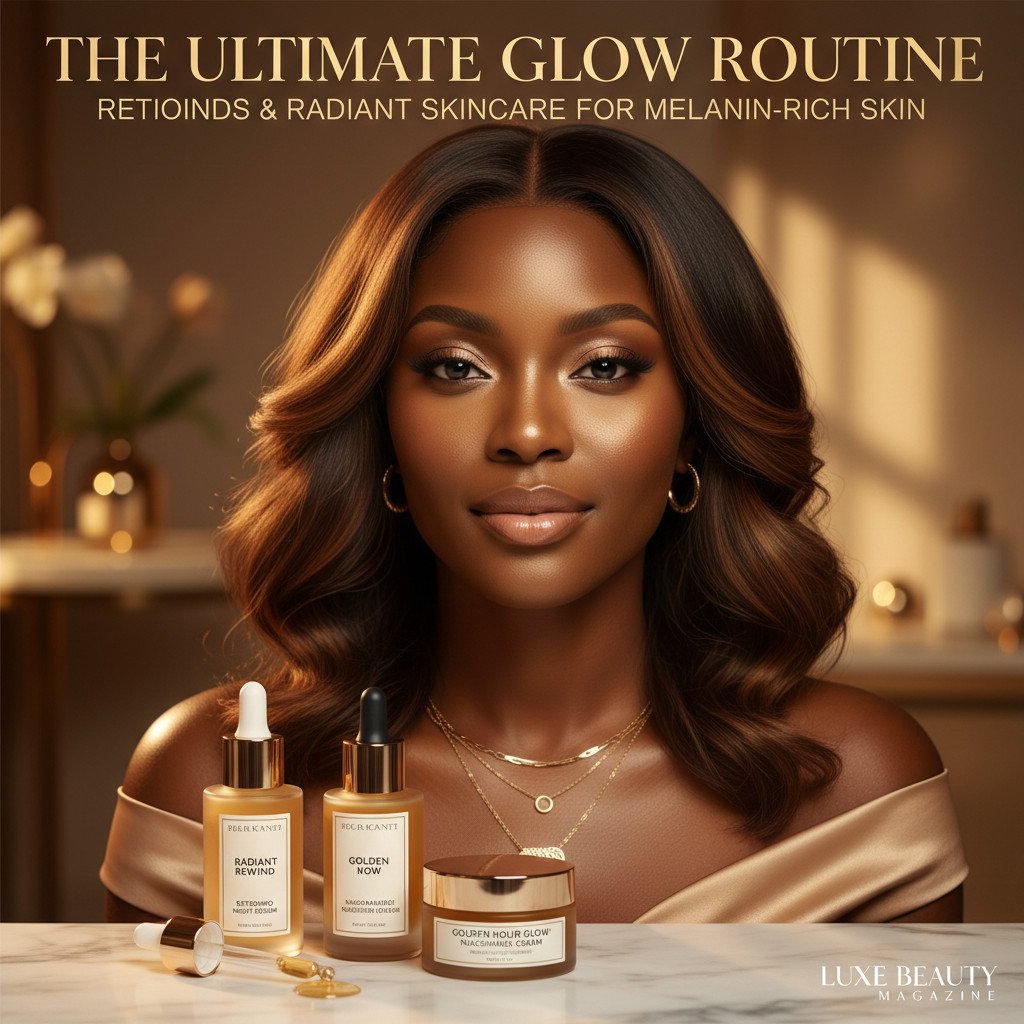
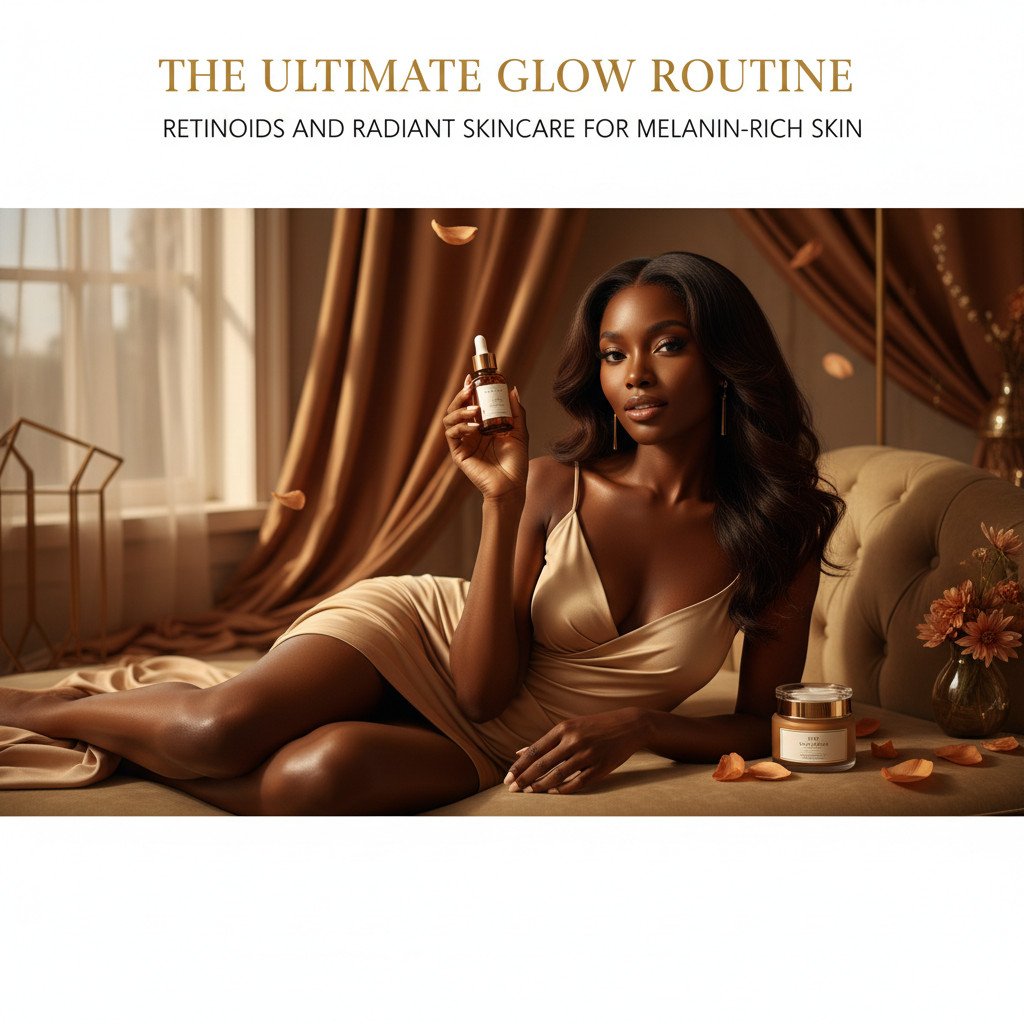
There’s something magical about melanin when it catches the light just right. That deep, rich glow that seems to come from within? It’s not just genetics—it’s a ritual, a practice, a love letter to your skin. For too long, skincare advice has treated melanin as an afterthought, but we know better. Our skin is resilient, vibrant, and deserves a routine crafted specifically to enhance its natural radiance.
Welcome to The Ultimate Glow Routine, a comprehensive guide designed to help you achieve that coveted, luminous complexion. We’ll focus on the specific needs of melanin-rich skin, addressing concerns like hyperpigmentation and inflammation, and demystifying powerful ingredients—especially the glow-inducing powerhouse: retinoids.
1. Why Glow Looks Different on Melanin
For Black women, achieving a ‘glow’ isn’t about chasing a pale luminescence; it’s about achieving clarity, evenness, and a deep, healthy radiance. Our skin has unique characteristics that influence how we approach skincare:
The Melanin Advantage and Challenge
- Natural Protection: Melanin provides superior natural protection against UV damage and photoaging.
- The Hyperpigmentation Hurdle: The trade-off is that our highly reactive melanocytes (the cells that produce melanin) are easily triggered by inflammation, leading to Post-Inflammatory Hyperpigmentation (PIH). A pimple, a scratch, or even harsh products can leave behind a dark mark that lasts months.
- Ceramide Richness: Black skin often has a slightly lower ceramide content, which can lead to transepidermal water loss and dryness if not properly moisturized.
Our glow routine must prioritize gentle care, barrier protection, and targeted treatment for uneven tone.
2. Understanding the Cornerstone of Radiance: Retinoids for Dark Skin
Retinoids—a class of Vitamin A derivatives—are the gold standard for cell turnover, collagen production, and treating acne and fine lines. But for melanin-rich skin, they are perhaps most crucial for their ability to combat hyperpigmentation and promote even tone.
Demystifying Retinoids: Starting Strong, Staying Safe
The key to using retinoids on darker skin is slow and steady integration. Because our skin is prone to PIH, the irritation and redness often associated with starting retinoids must be minimized at all costs. Inflammation equals dark spots.

Choosing Your Retinoid Strength
Retinoids come in various forms, requiring different conversion steps in the skin. The fewer steps, the stronger the product:
| Retinoid Type | Strength & Conversion | Best For Melanin Skin |
|---|---|---|
| Retinyl Palmitate | Weakest (3 conversions) | Sensitive skin, absolute beginners. |
| Retinol | Moderate (2 conversions) | Standard starting point. Look for encapsulated formulas (e.g., CeraVe Resurfacing Retinol Serum). |
| Retinaldehyde (Retinal) | Stronger (1 conversion) | Experienced users, highly effective for texture and PIH. |
| Tretinoin (Prescription) | Strongest (No conversion) | Severe acne, persistent hyperpigmentation. Requires careful buffering. |
The ‘Sandwich’ Method for Melanin Skincare
To prevent irritation and PIH when using a product like a Paula’s Choice 0.3% Retinol and 2% Bakuchiol Treatment, use the ‘sandwich’ technique:
- Apply a thin layer of hydrating moisturizer (e.g., La Roche-Posay Toleriane Double Repair Face Moisturizer) to clean, dry skin.
- Wait 5-10 minutes.
- Apply a pea-sized amount of your retinoid product.
- Wait 5 minutes.
- Apply a second, generous layer of moisturizer.
Start with once or twice a week, gradually increasing frequency only if your skin shows no signs of redness or flaking.
3. Morning Glow Routine Steps: Protection and Brightening
The morning routine is all about protecting the skin barrier and layering antioxidants to maximize radiance and prevent the formation of new dark spots.
Step 1: Gentle Cleansing
Avoid harsh, stripping cleansers. Use a gentle, hydrating cleanser (e.g., Cetaphil Gentle Skin Cleanser) that removes overnight buildup without disturbing your skin’s pH balance.
Step 2: Vitamin C (The Ultimate Brightener)
Vitamin C is non-negotiable for a glow routine. It’s a powerful antioxidant that brightens the skin, fades existing hyperpigmentation, and boosts the efficacy of your sunscreen. Look for L-Ascorbic Acid in concentrations between 10% and 20% (e.g., SkinCeuticals C E Ferulic).
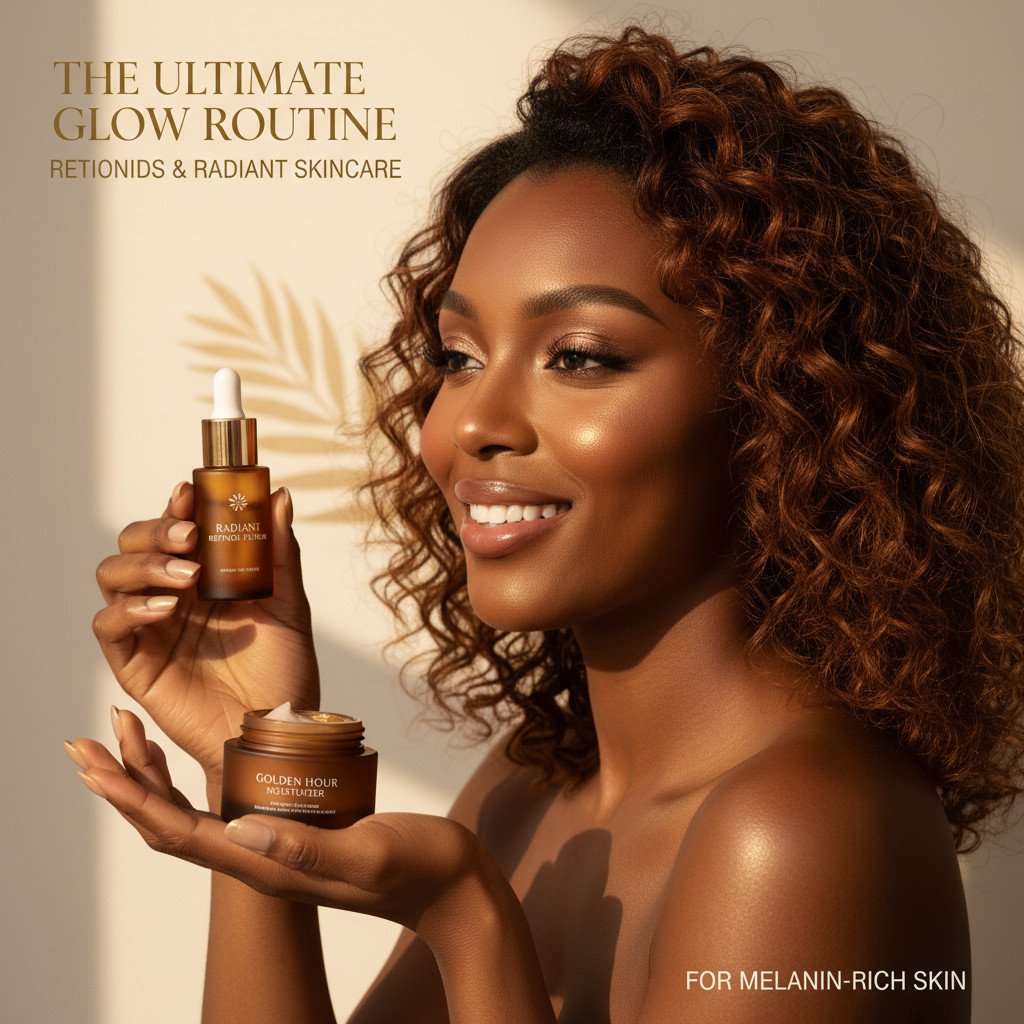
Step 3: Hydration and Barrier Support
Apply a lightweight serum containing humectants like Hyaluronic Acid or Glycerin, followed by a moisturizer rich in ceramides or niacinamide (e.g., The Ordinary Niacinamide 10% + Zinc 1%) to soothe and strengthen the skin barrier.
Step 4: Sunscreen (The Non-Negotiable Glow Shield)
This is the most critical step, especially when using retinoids. UV exposure is the number one cause of hyperpigmentation. You must use a broad-spectrum SPF 30 or higher every single day, rain or shine.
Pro Tip for Melanin: Mineral sunscreens (zinc oxide, titanium dioxide) are excellent for sensitive skin but often leave a white cast. Chemical sunscreens (oxybenzone, avobenzone) blend seamlessly but can sometimes irritate sensitive skin. Try tinted mineral formulas or chemical/hybrid formulas designed specifically for darker skin tones (e.g., Black Girl Sunscreen SPF 30).
4. Evening Prep for Next-Day Glow: Treatment and Repair
The evening is when the heavy lifting happens—repairing damage, boosting cell turnover, and treating hyperpigmentation.
Step 1: Double Cleanse
If you wear makeup or heavy sunscreen, start with an oil-based cleanser or balm (e.g., DHC Deep Cleansing Oil) to dissolve impurities, followed by your gentle water-based cleanser.
Step 2: Targeted Treatment (The Retinoid Night)
On nights you use your retinoid (2-4 times a week, depending on tolerance), apply it using the ‘sandwich’ method described above. Focus on hydration and soothing ingredients afterward.
Step 3: Alternative Treatment (The Brightening Night)
On non-retinoid nights, focus on other melanin-friendly brightening ingredients:
- Azelaic Acid: Excellent for reducing redness and inhibiting melanin production (e.g., The Ordinary Azelaic Acid Suspension 10%).
- Alpha Arbutin or Kojic Acid: Powerful tyrosinase inhibitors that directly target dark spots.
- Mandelic Acid: A gentle AHA that exfoliates the surface layer without causing deep irritation.
Step 4: Lock It In
Finish with a rich, occlusive moisturizer or a facial oil (e.g., Rosehip Oil) to seal in moisture and active ingredients, ensuring your skin wakes up plump and radiant.
5. Product Recommendations by Skin Type
While the core routine remains the same, your product choices should cater to your specific skin needs:
A. Oily/Acne-Prone Melanin Skin
- Cleanser: Foaming cleanser with Salicylic Acid (BHA) 2-3 times a week (e.g., Neutrogena Oil-Free Acne Wash).
- Retinoid: Gel or serum formulas (e.g., Adapalene Gel 0.1%).
- Treatment: Niacinamide and Azelaic Acid to control oil and inflammation.
- Moisturizer: Lightweight, oil-free gel cream.
B. Dry/Mature Melanin Skin
- Cleanser: Cream or oil cleanser.
- Retinoid: Cream-based formulas with added emollients.
- Treatment: Peptide serums to boost collagen alongside retinoids.
- Moisturizer: Rich, ceramide-heavy cream, especially at night.
C. Sensitive Melanin Skin
- Cleanser: Ultra-gentle, non-foaming formula.
- Retinoid Alternative: Start with Bakuchiol (a plant-derived retinoid alternative) before introducing Retinyl Palmitate.
- Treatment: Focus on soothing ingredients like Centella Asiatica (Cica) and colloidal oatmeal.
- Moisturizer: Minimalist, fragrance-free formula.
6. Weekly Treatments for Extra Radiance
Incorporate these treatments once a week to boost cell turnover and deep hydration:
Gentle Exfoliation (Mandelic Acid)
Chemical exfoliation is generally safer than physical scrubs for melanin skin, as scrubs can cause micro-tears and inflammation. Mandelic Acid is an AHA with a large molecular size, meaning it penetrates slowly and gently, making it ideal for darker skin tones prone to PIH. Use a Mandelic Acid toner or serum once a week on a non-retinoid night.
Hydrating Masks
Use a deeply hydrating sheet mask or cream mask (e.g., Laneige Water Sleeping Mask) to replenish moisture levels, especially after exfoliation or during dry weather. Plump, hydrated skin reflects light beautifully.
7. Common Mistakes Melanin Skincare Enthusiasts Must Avoid
Protecting the skin barrier is paramount when chasing the glow. Avoid these pitfalls:
- Over-Exfoliating: Combining AHAs/BHAs, harsh scrubs, and retinoids on the same night (or even consecutive nights) is a recipe for inflammation and dark spots.
- Skipping Sunscreen: If you use retinoids or Vitamin C, sunscreen is mandatory. Without it, you are actively undoing the work of your expensive serums.
- Ignoring the Neck and Chest: These areas show signs of aging and pigmentation just as quickly as the face. Extend your retinoid and SPF application down to your décolletage.
- Picking at Skin: Every time you pick a pimple or scratch a mosquito bite, you are guaranteeing a PIH mark. Use hydrocolloid patches instead of your fingers.
Achieving a truly radiant, deep glow is a marathon, not a sprint. Consistency is key, especially with powerful ingredients like retinoids. Give your routine at least 12 weeks to show significant results in tone and texture.
Cultivating Confidence and Radiance
Your melanin is magnificent—a masterpiece of nature that deserves intentional care. By embracing a routine that prioritizes protection, hydration, and the strategic use of powerful ingredients like retinoids, you are not just caring for your skin; you are affirming your beauty and cultivating a radiance that shines from within.
Ready to commit to your glow? Start slow, listen to your skin, and watch that beautiful, rich complexion transform.
Now, tell us: What is the one glow product you can’t live without? Share your secrets below!
Continue exploring
Related posts:
 The Ultimate Glow Routine: How to Achieve Radiant, Melanin-Rich Skin
 Choosing the Best SPF for Radiant Melanin Skin
 The Ultimate Glow Routine: 5 Non-Negotiable Steps for Radiant Melanin Skincare
 A Comprehensive Guide to Fading Hyperpigmentation and Achieving Radiant Melanin Skin
 Cut Crease Mastery for Hooded Lids: Make Your Eyeshadow Pop on Melanin-Rich Skin
 Nude, Not Washed Out: The Best Nude Lipsticks That Actually Flatter Melanin-Rich Skin