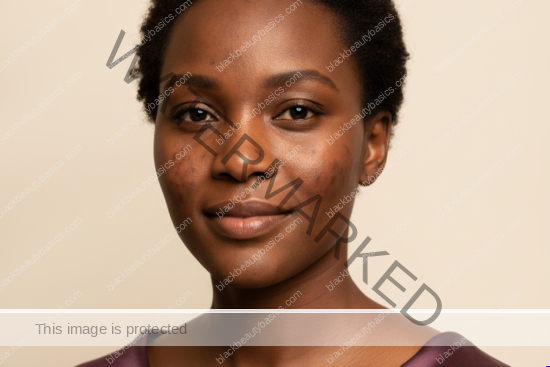
Facial Hyperpigmentation on Melanin-Rich Skin: Acne Marks, Melasma & Uneven Tone
Our melanin-rich skin is a canvas of unparalleled beauty, resilience, and depth. Yet, sometimes, this very richness can lead to unique experiences with skin concerns, particularly when it comes to hyperpigmentation. If you’ve ever looked in the mirror and seen lingering dark spots long after a breakout has healed, noticed patchy darkness around your cheeks and forehead, or struggled with an uneven tone that seems to settle around your mouth and jawline, you are not alone. These are common, deeply personal experiences for many Black women and others with medium-deep to deep skin tones.
This cluster hub is dedicated to understanding and navigating facial hyperpigmentation in all its forms—from the post-inflammatory marks left by acne to the more diffuse patterns of melasma and general unevenness. We approach this topic with warmth, empathy, and an unwavering commitment to practical, evidence-aware support, free from judgment or shame. Our goal is to empower you with knowledge, helping you make sense of what you see on your skin and outlining supportive options that honor your unique beauty journey. Dive deeper into understanding and caring for all aspects of your skin by exploring our comprehensive guide on Hyperpigmentation & Dark Spots.
What This Cluster Covers
This cluster is your essential guide to understanding facial dark spots and uneven tone that manifest on melanin-rich skin. We delve into the nuances of hyperpigmentation stemming from acne marks, explore the characteristics of melasma-like patterns, and address other triggers that contribute to an uneven complexion. Our focus is on providing clear, actionable insights tailored for our community.
- Understanding acne-linked marks and post-inflammatory hyperpigmentation (PIH) on the face.
- Identifying diffuse uneven tone, especially around the mouth, jawline, and cheeks.
- Exploring melasma-like patches and their potential triggers in melanin-rich skin.
- How facial hyperpigmentation intersects with concerns like acne and sensitive skin.
- Developing effective skincare routines and ingredient strategies for fading facial dark spots.
- The non-negotiable role of sunscreen in managing and preventing facial hyperpigmentation.
- Navigating professional care and knowing when to consult a dermatologist for facial dark spots.
Articles in This Cluster
Below are the key topics we explore within this cluster, designed to provide in-depth understanding and practical solutions for your facial hyperpigmentation concerns. These descriptions offer a glimpse into the rich content awaiting you.

- Acne Marks and Post-Inflammatory Hyperpigmentation on Dark Facial Skin: A deep dive into why breakouts leave dark spots and how to address them effectively.
- Melasma-Like Patches on Melanin-Rich Skin: Questions to Ask Your Doctor: Understanding the appearance of patchy darkness and how to prepare for a dermatologist consultation.
- Uneven Tone Around the Mouth and Jawline on Dark Skin: Addressing common areas of discoloration and strategies for a more uniform complexion.
- Daily Routines That Support Fading Facial Dark Spots: Crafting a consistent and effective skincare regimen to promote brighter, more even-toned skin.
- How to Choose Ingredients for Facial Hyperpigmentation on Dark Skin: A guide to selecting the most beneficial active ingredients for melanin-rich skin without causing irritation.
Mapping Your Facial Dark Spots: What You See, What It Might Be
Understanding the patterns of hyperpigmentation on your face is the first step toward effective management. This table helps you connect what you observe on your skin with common patterns and suggests initial routine focuses and where to find more detailed information within our resources.
| What you notice on your face | Likely pattern | First routine focus | Where to read more |
|---|---|---|---|
| Round, flat dark spots after pimples or bumps | Post-inflammatory hyperpigmentation (PIH) from acne | Gentle cleansing, consistent sunscreen, targeted brightening ingredients, addressing active breakouts | Acne Marks and PIH on Dark Facial Skin, Acne & Sensitive Skin in Black Women |
| Patchy, symmetrical darkness on cheeks, forehead, upper lip, or chin | Melasma-like patterns (often hormonal or sun-triggered) | Strict daily sunscreen, gentle brightening, barrier support, identifying triggers, consulting a professional | Melasma-Like Patches on Melanin-Rich Skin, Hormonal Skin & Hair |
| General dullness or darkening around the mouth, jawline, or temples | Diffuse uneven tone, often from irritation, sun exposure, or post-inflammatory changes | Consistent daily sunscreen, gentle exfoliation, antioxidant-rich skincare, barrier protection | Uneven Tone Around the Mouth and Jawline, Skincare for Black Women |
| Lingering dark marks after eczema flare-ups, rashes, or minor injuries | Post-inflammatory hyperpigmentation (PIH) from irritation/trauma | Soothing inflammation, barrier repair, consistent sunscreen, gentle brightening, avoiding further irritation | Condition-Linked PIH, Skincare for Black Women |
Why Facial Hyperpigmentation Shows Up the Way It Does on Melanin-Rich Skin
Our beautiful melanin-rich skin possesses a unique strength: a natural abundance of melanin, the pigment responsible for our gorgeous range of skin tones. This melanin offers some inherent protection against UV radiation, but it also makes our skin more prone to hyperpigmentation. When our skin experiences inflammation, injury, or hormonal shifts, our melanocytes (the cells that produce melanin) can go into overdrive, depositing excess pigment. This overproduction leads to the dark spots and uneven patches we know as hyperpigmentation.
For Black women, conditions like acne, eczema, and even minor irritation can trigger a more pronounced and longer-lasting pigment response compared to lighter skin tones. This isn’t a flaw; it’s simply how our skin’s protective mechanisms operate. Understanding this inherent characteristic allows us to approach care with specific strategies that honor our skin’s biology, focusing on gentle yet effective methods that respect its delicate balance. We also recognize that historical medical bias has often led to under-diagnosis and inadequate treatment for skin conditions in darker skin, making informed self-advocacy and culturally competent care even more crucial.

Common Facial Dark Spot Patterns: Acne Marks, Melasma-Like Patches & Uneven Tone
Facial hyperpigmentation isn’t a single entity; it manifests in various forms, each with its own characteristics and underlying triggers. Recognizing these patterns is key to choosing the right approach for your skin. The most common types we encounter are post-inflammatory hyperpigmentation (PIH), melasma-like patches, and general uneven skin tone.
Post-Inflammatory Hyperpigmentation (PIH): The Lingering Echo of Inflammation
PIH is perhaps the most common form of facial hyperpigmentation for Black women. It appears as flat, dark spots that remain after any form of skin inflammation or injury has healed. The most frequent culprit is acne—even a small pimple can leave a dark mark that can take months, or even years, to fade. Other causes include insect bites, rashes, eczema flare-ups, or even aggressive skincare treatments. These marks can range from light brown to deep black, depending on your natural skin tone and the depth of the pigment. Managing PIH often involves addressing the root cause of inflammation, such as active breakouts, while simultaneously working to fade the existing marks. For a deeper dive into managing these marks, explore our articles on Acne Marks and Post-Inflammatory Hyperpigmentation on Dark Facial Skin and our pillar on Acne & Sensitive Skin in Black Women.
Melasma-Like Patches: The Mask of Hormones and Sun
Melasma presents as symmetrical, patchy areas of discoloration, often on the cheeks, forehead, upper lip, and chin. While often associated with pregnancy (chloasma or
Frequently Asked Questions
What is the main difference between acne marks (PIH) and melasma on dark skin?
Acne marks, or post-inflammatory hyperpigmentation (PIH), are typically flat, round dark spots that appear where a pimple or injury once was. Melasma, on the other hand, presents as larger, often symmetrical patches of discoloration, commonly on the cheeks, forehead, and upper lip, and is often triggered by hormones and sun exposure. While both involve excess melanin, their appearance, triggers, and sometimes treatment approaches differ.

Can facial hyperpigmentation be completely cured or removed?
While facial hyperpigmentation can be significantly faded and managed, it’s often a chronic condition, especially melasma, that requires ongoing care and prevention. Complete ‘cure’ is a strong term to avoid; instead, focus on consistent routines and protective measures to keep it at bay and minimize its appearance. Maintaining results often means continuous use of sun protection and appropriate skincare.
How long does it take for facial dark spots to fade on melanin-rich skin?
The fading process for facial dark spots on melanin-rich skin can vary widely, from several months to a year or more. Factors like the depth of the pigment, the cause of the hyperpigmentation, consistency of treatment, and daily sun protection all play a role. Patience and persistence with a tailored skincare routine and sun protection are crucial.
Is it safe to use strong brightening ingredients on dark skin?
Yes, many brightening ingredients are safe and effective for dark skin when used correctly. The key is to choose ingredients known to be gentle yet effective, introduce them slowly, and always pair them with diligent sun protection. Ingredients like niacinamide, azelaic acid, tranexamic acid, and certain forms of vitamin C are often well-tolerated. However, always consult with a dermatologist, especially before using stronger ingredients like hydroquinone, to ensure proper usage and avoid irritation.
What is the single most important step for preventing and treating facial hyperpigmentation?
Without a doubt, consistent and diligent sun protection is the single most important step. UV radiation is a primary trigger for both PIH and melasma, and it can darken existing spots and prevent them from fading. Daily use of a broad-spectrum sunscreen with an SPF of 30 or higher, specifically formulated for dark skin, is non-negotiable, even on cloudy days or indoors near windows.
Can diet and lifestyle choices impact facial hyperpigmentation?
While topical treatments and sun protection are paramount, diet and lifestyle can play a supportive role. A diet rich in antioxidants (from fruits and vegetables) can help protect skin from oxidative stress. Managing stress, ensuring adequate sleep, and avoiding inflammatory foods may also indirectly support overall skin health and reduce inflammation, which can be a trigger for hyperpigmentation.
When should I see a dermatologist for facial hyperpigmentation?
It’s advisable to see a dermatologist if your dark spots are not responding to over-the-counter treatments, if they are spreading rapidly, if you suspect melasma, or if you are unsure about the cause of your hyperpigmentation. A dermatologist can provide an accurate diagnosis, prescribe stronger treatments, and offer professional procedures tailored to melanin-rich skin, ensuring safe and effective care.
More guides in this cluster
- Dark spots after picking pimples on melanin-rich skin
- Dark Spots from Acne on Dark Skin: Step‑by‑Step Treatment Plan
- Melasma in Black Women: Pregnancy, Hormones, and Safe Treatments
Continue exploring
Related posts:
 Acne Marks and Post-Inflammatory Hyperpigmentation on Dark Facial Skin
 Retinoids for Uneven Tone on Melanin-Rich Skin: A Gentle, Informed Approach
 Uneven Tone Around the Mouth and Jawline on Dark Skin
 Targeting Discoloration and Uneven Skin Tone with the Right Skincare Products
 Targeting Discoloration and Uneven Skin Tone with the Right Skincare Products
 Pregnancy Skin Changes on Dark Skin: Hyperpigmentation, Melasma, and Linea Nigra