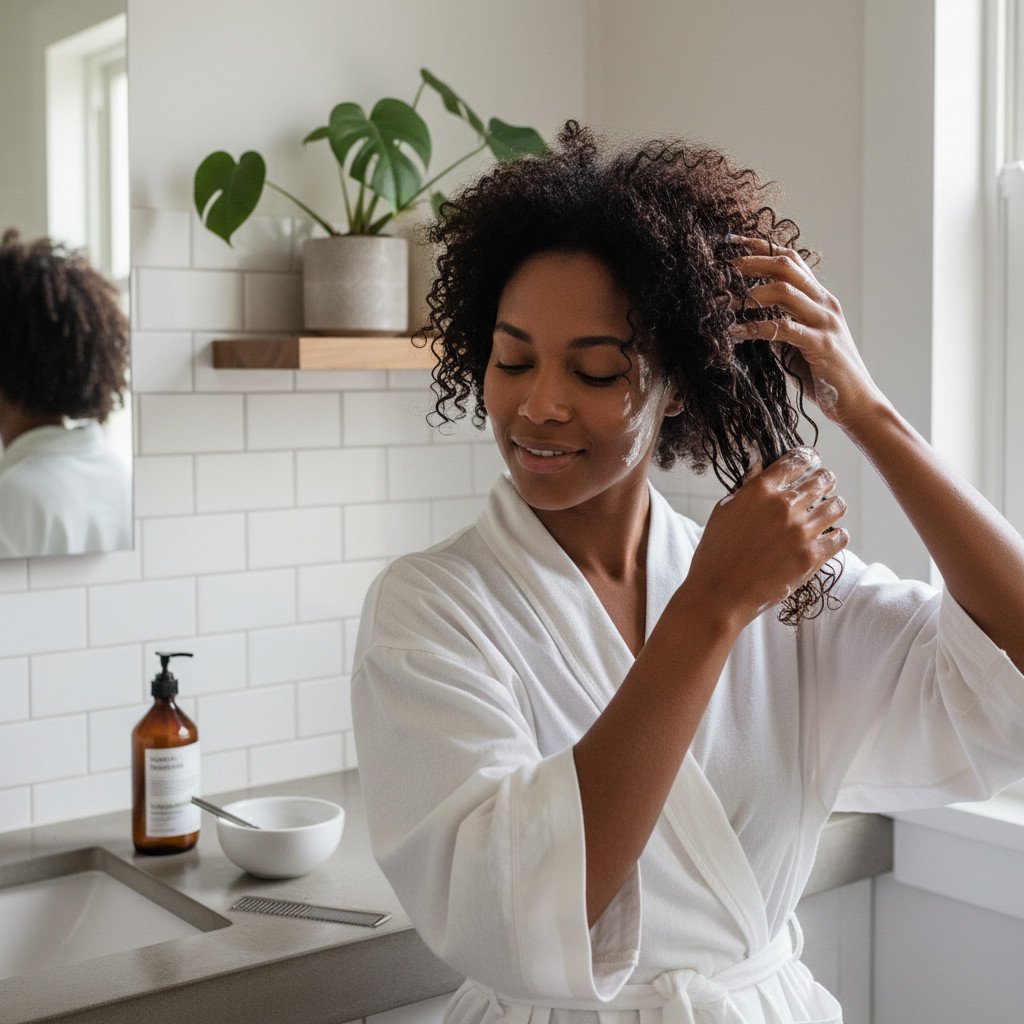
Weekly Hair Growth Routine for Busy Black Women (30‑Minute Version)
Dear sister, if you’re reading this, chances are you’re tired. Tired of the endless beauty regimens, tired of the pressure to spend entire days on your hair, and tired of feeling like you’re not doing “enough” to achieve the healthy, long hair you desire. We see you. We understand the delicate balance of juggling career, family, community, and personal well-being, often leaving little energy for elaborate hair care. At Black Beauty Basics, we believe your time is precious, and your hair care routine should support your life, not consume it.
Forget the multi-hour wash days and the 10-step regimens that promise miracles but deliver exhaustion. This isn’t about shaming you for seeking shortcuts; it’s about empowering you with a realistic, effective weekly hair growth routine that respects your schedule. We’re here to tell you that a basic, consistent routine, focused on the true pillars of hair health, can do more for growth and retention than occasional marathon sessions. It’s about the minimum effective dose – what truly moves the needle for your hair and scalp health without adding unnecessary stress to your already full plate.
This guide will outline a powerful yet streamlined ~30‑minute weekly routine, emphasizing efficient cleansing, essential conditioning, light moisture and sealing, and protective, low‑manipulation styling. We’ll also show you how to easily adapt this core framework for different hair situations – whether you’re natural, relaxed, loc’d, rocking protective styles, or navigating unique challenges like postpartum shedding or specific scalp concerns. Think of this not as another rigid set of rules, but as a flexible, empowering toolkit designed to fit seamlessly into your life. You’ll find this approach deeply rooted in the principles we explore in our Hair Growth & Scalp Health hub for Black women, connecting the dots between effective scalp care, smart styling, and understanding the nuances of hair health like shedding vs. breakage.
Our goal is to help you cultivate a routine that feels like self-care, not a chore. We’ll cut through the noise, focusing on what truly matters for fostering a healthy environment for growth and retaining the length you achieve. This isn’t about perfection; it’s about progress, consistency, and giving yourself the grace to prioritize your well-being while still nurturing your beautiful crown. Let’s reclaim your time and empower your hair journey, one intentional, efficient step at a time.
What Matters Most for Hair Growth (When You’re Short on Time)
Let’s be clear: you cannot control how fast your hair grows from the scalp. That rate is largely determined by genetics, nutrition, and overall health. However, what you absolutely can control is how well you support that growth and, crucially, how effectively you protect the length you achieve from breakage. For busy Black women, the secret to healthy, longer hair isn’t more products or more time; it’s smarter, more focused care.
When your time is a precious commodity, the priorities shift from elaborate treatments to foundational practices that yield the greatest return on your investment. We’re talking about the non-negotiables that create an optimal environment for hair to thrive and minimize the factors that lead to breakage and thinning. This approach is about efficiency and impact, ensuring every minute you dedicate to your hair truly counts. It’s about understanding that consistent, gentle care trumps sporadic, intense interventions.
For the busy woman, the core pillars of a successful hair growth and retention strategy can be distilled into a few key areas. These are the elements that, when consistently applied, will make the most significant difference in your hair’s journey, even when life is moving at warp speed:
- Regular but realistic scalp cleansing: A clean scalp is the foundation for healthy hair growth. It’s skin, after all, and needs regular care to prevent buildup and irritation.
- Simple conditioning and detangling: Hydrated, tangle-free hair is less prone to breakage, making conditioning a non-negotiable step for maintaining elasticity and manageability.
- Consistent moisture and sealing: Black hair thrives on moisture. Locking in hydration is key to preventing dryness, brittleness, and ultimately, breakage.
- Low‑manipulation styles that respect edges and ends: Protecting your hair from excessive styling and tension is paramount for length retention, especially for the delicate areas around your hairline and the fragile ends of your strands.
Understanding these priorities is the first step in reframing your hair care approach. It allows you to let go of the guilt associated with not following complex routines and instead focus on what truly supports your hair’s health and growth potential. If you’ve been noticing more hair than usual on your comb or in the shower, it’s crucial to understand the difference between natural shedding and actual breakage. We encourage you to review our comprehensive guide on Shedding vs Breakage: How Black Women Can Tell the Difference to pinpoint where you might be losing length and adjust your routine accordingly. This knowledge empowers you to address specific issues with targeted, efficient solutions, ensuring your precious 30 minutes are spent on what truly matters.
Moreover, embracing this minimalist yet impactful philosophy means recognizing that sometimes, less is truly more. Over-manipulation, excessive heat, and product overload can often do more harm than good, especially when time is limited. By streamlining your routine to these essential steps, you’re not just saving time; you’re also reducing the potential for damage, allowing your hair to flourish in a calm, consistent environment. This mindful approach to hair care becomes an act of self-love, integrating seamlessly into your life rather than becoming another source of stress. It’s about building a sustainable practice that nourishes both your hair and your spirit, proving that you don’t need hours to achieve beautiful, healthy hair.
The 30‑Minute Weekly Hair Growth Routine (Core Version)
This 30-minute routine is designed to be a flexible framework, not a rigid script. We understand that life happens, and some weeks you might have a little more time, while others you’re truly racing against the clock. The goal here is consistency in the core principles, not perfection in execution. This isn’t about adding another layer of pressure to your life; it’s about providing a reliable, efficient structure that ensures your hair and scalp receive the essential care they need to thrive, week after week.
It’s important to clarify that the ’30 minutes’ refers specifically to active, hands-on time. This means the time you spend physically cleansing, conditioning, detangling, and styling your hair. It does not include passive time, such as letting a deep conditioner sit under a cap, or the time it takes for your hair to air dry. By focusing on active time, we ensure that the routine is genuinely achievable within a tight schedule, allowing you to integrate it into your week without feeling overwhelmed. This distinction is crucial for maintaining a realistic expectation and making this routine truly sustainable.
Think of this as your weekly hair reset – a focused period where you intentionally nurture your hair and scalp, setting them up for success for the days ahead. Each step is designed for maximum impact with minimal fuss, ensuring that every minute you invest contributes directly to your hair’s health and growth potential. We’ve prioritized efficiency without compromising efficacy, selecting techniques and product applications that deliver the most significant benefits in the shortest amount of time. This is about working smarter, not harder, to achieve your hair goals.
Step 1 – Quick Scalp and Hair Cleanse (about 10 minutes)
The foundation of healthy hair growth begins with a clean scalp. Just as you care for the skin on your face, your scalp – being an extension of your skin – requires consistent and gentle cleansing to remove product buildup, excess oils, sweat, and environmental impurities. This step is non-negotiable for fostering an optimal environment for hair follicles to thrive. A clogged or irritated scalp can hinder growth and lead to various issues, making this 10-minute investment incredibly impactful.
Begin by thoroughly wetting your hair with warm water. Warm water helps to open the cuticle and loosen any debris on the scalp, preparing it for a more effective cleanse. Dispense a small amount of a gentle, sulfate-free shampoo or cleanser into your palms. The key here is ‘gentle’ – we’re aiming for effective cleansing without stripping your hair of its natural moisture. Focus the application primarily on your scalp. Use the pads of your fingertips (not your nails!) to gently massage the shampoo into your scalp in small, circular motions. This massage not only helps to lift dirt and stimulate blood circulation but also feels incredibly soothing, turning a necessary step into a moment of self-care.
Once your scalp feels thoroughly cleansed, allow the suds to run down the length of your hair as you rinse. There’s no need to aggressively scrub your hair strands; the gentle runoff from your scalp will be sufficient to cleanse the lengths without causing unnecessary friction or tangles. Rinse thoroughly with lukewarm water until your hair feels clean and free of shampoo residue. Ensure all traces of the cleanser are gone, as residue can lead to dullness and buildup over time.
For those wearing protective styles like braids, twists, or locs, this step requires a slightly modified approach. Instead of direct application, consider using a nozzle bottle to apply diluted shampoo directly to your scalp between the sections of your style. This allows for targeted cleansing without disturbing your intricate style. Massage gently with your fingertips, then rinse carefully, allowing the water to run through the lengths. The goal is to cleanse the scalp without causing frizz or unraveling. For locs, ensure you squeeze out excess water gently to prevent mildew. Remember, your scalp is skin, and just like the rest of your Skincare pillar, it needs regular, thoughtful care. For a deeper dive into maintaining a pristine scalp, explore our guide on Scalp Care 101: Oils, Exfoliation, and Treatments for Healthy Growth. This foundational step, executed efficiently, sets the stage for healthy hair from the root up, proving that a quick cleanse can be just as effective as a lengthy one when done right.
The choice of shampoo is also paramount in this quick cleanse. Opt for formulations that are specifically designed to be gentle yet effective. Look for ingredients that cleanse without stripping, such as mild surfactants derived from coconut or sugar. Avoid harsh sulfates if your hair tends to be dry or if you have a sensitive scalp. Some excellent options include moisturizing shampoos that leave your hair feeling soft, not squeaky clean and brittle. If you have specific scalp concerns, such as an oily scalp or mild flaking, a clarifying shampoo used once a month can be beneficial, but for weekly use, a hydrating or balancing formula is usually best. Remember, the goal is to create a clean canvas for growth without compromising the integrity of your hair strands. This mindful selection contributes significantly to the overall health and manageability of your hair, making the subsequent steps even more effective. A truly clean scalp allows your hair follicles to breathe and function optimally, which is a key component in promoting consistent, healthy hair growth. This efficient cleansing method ensures that even with limited time, you are providing your scalp with the essential care it needs to support your hair journey effectively.
Step 2 – Condition and Detangle in Sections (about 10 minutes)
After cleansing, conditioning is the next critical step in your 30-minute routine, and it’s where you truly begin to nurture your hair strands. This phase is about restoring moisture, improving elasticity, and making your hair manageable for detangling – a crucial process for preventing breakage and retaining length. Skipping conditioner, even when time is tight, is a disservice to your hair, as it leaves the cuticles exposed and the strands vulnerable to damage. A well-conditioned head of hair is more resilient, softer, and easier to work with, which ultimately saves you time in the long run.
Once your hair is thoroughly rinsed from the shampoo, gently squeeze out excess water. Hair that is too wet will dilute your conditioner, making it less effective. Apply a generous amount of your chosen conditioner, focusing on the mid-lengths and ends of your hair, which are typically the oldest and most fragile parts. While it’s tempting to slather conditioner all over, your scalp rarely needs heavy conditioning, and too much can lead to buildup or weigh down your roots. Distribute the product evenly, ensuring every strand feels coated and slippery.
Now comes the detangling, which is best done in sections. Divide your hair into 4-6 manageable sections, depending on your hair’s density and length. Working section by section prevents overwhelming your hair and minimizes breakage. Start at the ends of each section and gently work your way up to the roots, using either your fingers or a wide-tooth comb. The conditioner provides the necessary slip to allow knots and tangles to melt away with minimal effort. Be patient and gentle – aggressive detangling is a primary cause of breakage, undoing all your efforts towards length retention. If you encounter a stubborn knot, apply a little more conditioner and work through it slowly, rather than yanking.
While this routine focuses on efficiency, it’s important to note that deep conditioning can be done when time allows, perhaps on a weekend when you have an extra 20-30 minutes for passive treatment. However, a solid, quick rinse-out condition is infinitely better than skipping wash day altogether. Consistency with basic conditioning is more impactful than sporadic, intense deep treatments. If you find your hair particularly dry or tangled, you might leave the conditioner on for an extra 2-3 minutes while you finish your shower, allowing it to penetrate a bit more deeply. The key is to make conditioning a non-negotiable part of your weekly hair care, adapting the duration to your schedule but never omitting it.
The type of conditioner you use can also make a significant difference in this quick routine. Look for conditioners that offer excellent slip and moisturizing properties. Ingredients like fatty alcohols (cetearyl alcohol, stearyl alcohol), humectants (glycerin, honey), and natural oils (shea butter, coconut oil, argan oil) are excellent indicators of a nourishing formula. For a quick routine, a conditioner that works efficiently to detangle and soften within a few minutes is ideal. Some conditioners are specifically formulated for rapid action, delivering their benefits quickly. If you have fine hair, opt for lighter formulas that won’t weigh your hair down, while thicker, coarser hair types may benefit from richer, creamier textures. Experiment to find a conditioner that leaves your hair feeling soft, pliable, and easy to manage, setting the stage for the next crucial step in your streamlined hair growth journey. This focused conditioning and detangling process is a powerful act of preservation, directly contributing to your hair’s ability to retain length and resist damage, even within a tight 10-minute window.
Step 3 – Basic Moisture, Seal, and Set (about 10 minutes)
The final active step in your 30-minute weekly routine is all about locking in the moisture you’ve just infused and protecting your hair until your next wash day. This phase is crucial for preventing dryness, frizz, and breakage, ensuring that your hair remains supple and resilient. It’s also where you set your hair into a low-manipulation style, minimizing daily styling efforts and further safeguarding your strands. This efficient trifecta of moisturizing, sealing, and styling is the ultimate payoff for your focused wash day.
Once you’ve rinsed out your conditioner, gently blot your hair with a microfiber towel or an old t-shirt to remove excess water. Avoid rough towel drying, as this can rough up the cuticle and lead to frizz and tangles. Your hair should be damp, not dripping wet, to allow for optimal product absorption. Start by applying a leave-in conditioner or a light moisturizing cream. This product provides an additional layer of hydration and helps to smooth the hair cuticle. Focus on distributing it evenly from roots to ends, ensuring every strand receives some love. Choose a leave-in that is lightweight enough not to weigh your hair down but potent enough to provide lasting moisture.
Next, apply a small amount of a lightweight oil or serum to seal in that moisture. This sealing step is vital for Black hair, as it creates a barrier that helps to prevent water loss and protect the hair shaft from environmental stressors. Concentrate the oil primarily on your ends, which are the oldest and most vulnerable parts of your hair. A few drops are usually sufficient – you’re aiming for a light coating, not an oily residue. Popular choices include argan oil, jojoba oil, grapeseed oil, or a specialized hair growth serum if you’re targeting specific concerns. For a deeper dive into effective oils and serums, check out our guide on Hair Growth Oils and Serums for Black Hair: What Works and What’s Overhyped. This step ensures that the moisture you’ve worked so hard to put into your hair stays there, keeping your strands soft and pliable for longer.
Finally, set your hair into a low-manipulation style. This is where you truly maximize your time and protect your hair from daily styling damage. Low-manipulation styles are those that require minimal touching, combing, or heat throughout the week, significantly reducing the risk of breakage. Options include chunky twists, braids, a simple bun, or even a few large flat twists. The goal is to put your hair away in a style that can last for several days, allowing it to rest and grow undisturbed. This not only saves you precious minutes each morning but also greatly contributes to length retention. For inspiration and guidance on styles that protect your hair, our article on Low‑Manipulation Styles for Length Retention in Natural Hair offers a wealth of ideas. By completing these three steps efficiently within 10 minutes, you’ve successfully moisturized, sealed, and protected your hair, setting it up for a week of healthy growth and minimal fuss.
The selection of your leave-in conditioner and sealing oil should be tailored to your hair’s specific needs and porosity. For high porosity hair, which tends to lose moisture quickly, a richer leave-in and a slightly heavier oil might be beneficial to truly lock in hydration. Low porosity hair, on the other hand, can easily become weighed down, so lighter leave-ins and oils are often preferred to avoid product buildup. Pay attention to how your hair responds to different products; does it feel soft and moisturized, or does it feel coated and greasy? This feedback is crucial for refining your product choices. Additionally, consider the climate you live in. In humid environments, humectant-rich products can draw moisture from the air, but in dry climates, they can actually pull moisture from your hair, so a balanced approach is key. The beauty of this 30-minute routine is its adaptability. You can swap out products within the framework to perfectly suit your hair’s unique characteristics, ensuring that this efficient moisture and sealing process is always working optimally for your hair growth journey. This thoughtful product selection, combined with the strategic low-manipulation styling, transforms your wash day into a powerful act of proactive hair care, maximizing your results with minimal time commitment.
Adapting the Routine for Different Hair Situations
The beauty of this 30-minute weekly hair growth routine lies in its adaptability. While the core principles of cleansing, conditioning, moisturizing, and protective styling remain universal for healthy hair, the specific execution can and should be tweaked to suit your unique hair type, current style, and any particular challenges you’re facing. There’s no one-size-fits-all in Black hair care, and this framework is designed to be a flexible tool that empowers you to meet your hair’s needs precisely, without adding unnecessary complexity or time.
Whether you’re rocking your natural coils, maintaining a relaxed look, embracing locs, or enjoying the versatility of protective styles, the foundational steps provide a solid base. The adjustments come in the product choices, the detangling methods, and the specific low-manipulation styles you opt for. This customization ensures that your 30 minutes are always spent on the most impactful actions for your hair, maximizing efficiency and effectiveness. It’s about being mindful and intentional with your care, rather than rigidly adhering to a prescribed method that might not serve your hair’s best interests.
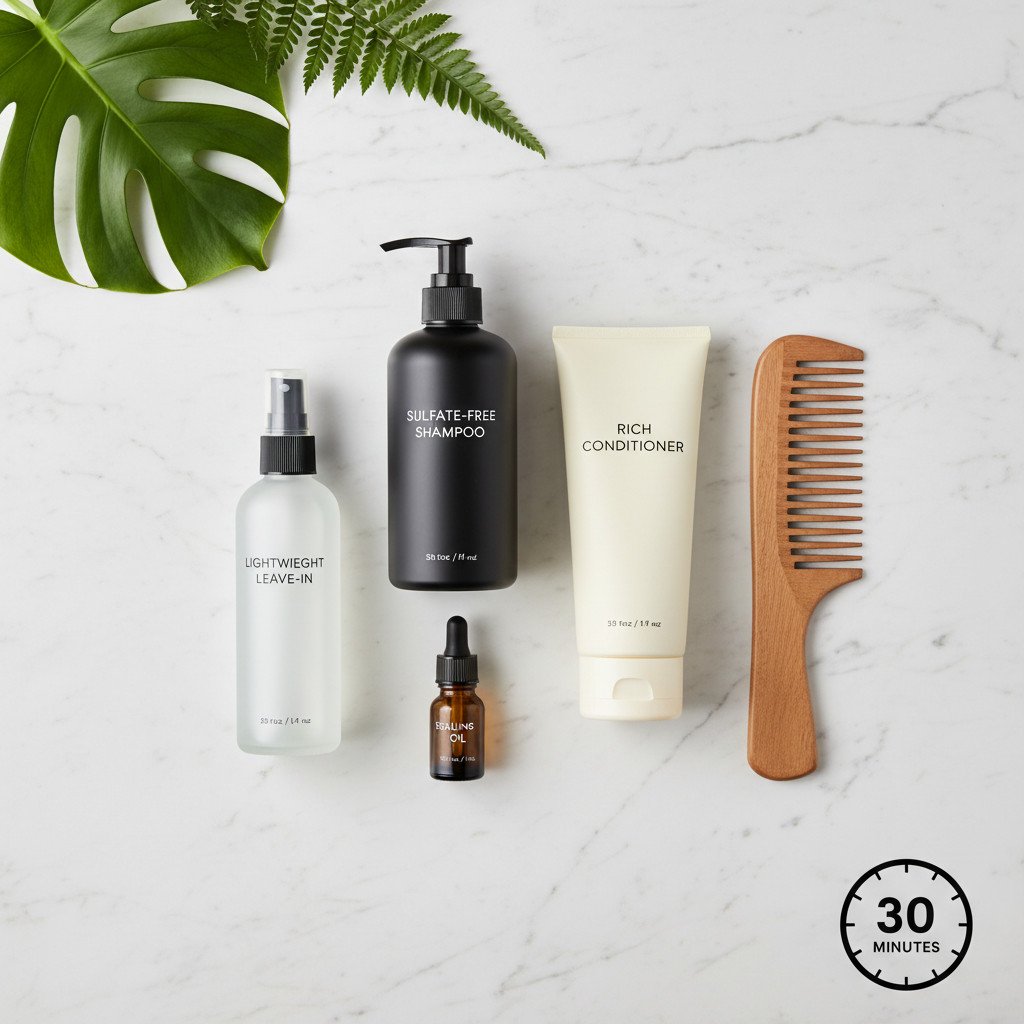
Think of these adaptations as dialing in your routine. Just as you wouldn’t use the same skincare products year-round, your hair care might need slight modifications depending on the season, your lifestyle, or even hormonal changes. This section will guide you through how to fine-tune each step to perfectly align with your hair’s specific needs, ensuring that your weekly 30-minute investment yields the best possible results for growth and retention. Remember, the core steps stay the same; the tweaks depend on hair type, style, and current challenges, making this routine truly yours.
Natural and Transitioning Hair
For our sisters with natural hair, from loose waves to tight coils, and those gracefully navigating the journey of transitioning, this 30-minute routine is your ally in maintaining health and promoting growth without the typical time commitment. The emphasis here is on maximizing moisture retention and minimizing manipulation, which are cornerstones of natural hair care.
During Step 1 (Cleansing), focus on using a moisturizing, sulfate-free shampoo that won’t strip your hair of its natural oils. Naturals often experience dryness, so preserving moisture from the very beginning is key. For transitioning hair, be extra gentle at the line of demarcation where your natural and relaxed textures meet, as this is the most fragile point prone to breakage.
Step 2 (Conditioning and Detangling) is paramount for natural and transitioning hair. Use a conditioner with excellent slip to aid in detangling. Work in smaller sections than usual if your hair is very dense or prone to tangles. Finger-detangling is often preferred for naturals as it allows you to feel for knots and gently work them out, minimizing breakage. If using a wide-tooth comb, always start from the ends and work your way up, being incredibly gentle at the transition point for those transitioning. Don’t rush this step; gentle detangling is crucial for length retention.
In Step 3 (Moisture, Seal, and Set), the LOC (Liquid, Oil, Cream) or LCO (Liquid, Cream, Oil) method can be adapted efficiently. After your leave-in (liquid), apply your sealing oil, and then a light cream for added moisture and hold. Then, set your hair into simple, protective styles that require minimal fuss throughout the week. Think chunky twists, large braid-outs, or a sleek low bun. These styles not only protect your ends but also stretch your hair slightly, reducing tangles and manipulation. The goal is to achieve a style that can last several days, allowing your hair to rest and grow. Don’t aim for perfection; aim for protection and hydration. These simple sets are your best friends for length retention, allowing your hair to thrive undisturbed. Remember, the less you manipulate your natural or transitioning hair, the more length you’ll retain, making these simple, protective styles an invaluable part of your 30-minute weekly routine.
For those with very coily or kinky textures, consider pre-pooing with a light oil like coconut or olive oil before your shampoo. This can provide an extra layer of protection against stripping and make the detangling process even smoother. Apply the oil to dry hair, let it sit for 5-10 minutes, then proceed with your shampoo. This adds a few extra minutes to your passive time but can significantly reduce active detangling time and breakage. Additionally, when choosing your leave-in and sealing oil, naturals often benefit from richer, more emollient products that provide deep, lasting moisture. Shea butter, mango butter, and heavier oils like castor oil or avocado oil can be excellent choices for sealing, especially for drier hair types. The key is to find the right balance that keeps your hair moisturized without feeling greasy or weighed down. This personalized approach ensures that your natural or transitioning hair receives exactly what it needs to flourish, even within the constraints of a busy schedule, proving that a little intentionality goes a long way in achieving your hair growth goals.
Relaxed, Texlaxed, and Silk‑Pressed Hair
For our sisters who maintain relaxed, texlaxed, or silk-pressed hair, the 30-minute weekly routine is about preserving the integrity of your chemically altered or heat-styled strands. The primary focus here shifts to protecting your straightened ends from breakage, minimizing heat exposure, and maintaining a healthy balance of moisture and protein. These hair types are often more susceptible to damage, so gentle care and strategic styling are paramount for length retention.
In Step 1 (Cleansing), opt for a gentle, pH-balanced shampoo that cleanses effectively without stripping. Relaxed hair can be prone to dryness and brittleness if harsh cleansers are used. If you have a silk press, choose a shampoo that is specifically designed to be gentle and preserve your style, often sulfate-free and moisturizing. For texlaxed hair, which retains some texture, a hydrating shampoo will help maintain elasticity.
Step 2 (Conditioning and Detangling) is crucial for relaxed and texlaxed hair. Use a conditioner that provides both moisture and a touch of protein to strengthen the hair shaft. Protein treatments can be incorporated monthly as an optional add-on, but a good protein-balancing conditioner for weekly use is a must. Detangle gently with a wide-tooth comb, always starting from the ends. For silk presses, be extremely gentle to avoid disturbing the straightness, using a very wide-tooth comb or your fingers. The goal is to smooth the cuticle and infuse moisture, preparing the hair for styling without causing stress.
Step 3 (Moisture, Seal, and Set) is where you protect your straightened ends and extend the life of your style. After applying a lightweight leave-in conditioner, use a very small amount of a light sealing oil, focusing on the ends. Over-oiling can weigh down relaxed hair and make it appear greasy. The most critical aspect here is styling: instead of daily hot tools, which can lead to heat damage and breakage, encourage careful wrapping or roller setting. A roller set can be done on damp hair and allowed to air dry or dry under a hooded dryer, providing a smooth, bouncy style that lasts for days. Wrapping your hair nightly with a satin scarf or bonnet is essential to preserve your style and protect your ends. By minimizing daily manipulation and heat, you significantly reduce the risk of breakage, allowing your hair to grow longer and healthier. This careful approach to styling is key to length retention for relaxed and silk-pressed hair, ensuring your 30-minute routine is highly effective.
When selecting products for relaxed, texlaxed, or silk-pressed hair, prioritize those that offer thermal protection if you do use heat, even occasionally. Look for leave-in conditioners with heat protectant properties. Additionally, be mindful of protein-moisture balance. Chemically treated hair often benefits from a regular dose of protein to reinforce the hair structure, but too much protein without adequate moisture can lead to stiffness and breakage. Conversely, too much moisture without enough protein can make hair feel weak and mushy. A good balance is key. Consider a weekly conditioner that has both moisturizing and strengthening ingredients, or alternate between a moisturizing conditioner one week and a protein-infused one the next. This thoughtful approach to product selection, combined with the emphasis on low-manipulation styling and heat reduction, ensures that your relaxed or silk-pressed hair remains strong, healthy, and capable of retaining length, all within the efficient framework of your 30-minute weekly routine.
Locs, Braids, and Other Protective Styles
For our sisters rocking locs, braids, weaves, or other protective styles, the 30-minute weekly routine shifts its focus primarily to scalp health and light, targeted moisture for the exposed hair. While your hair strands are tucked away and protected, your scalp still needs consistent attention to prevent buildup, itchiness, and potential issues that could hinder growth. This streamlined approach ensures your scalp remains healthy and comfortable, providing an optimal environment for your hair to flourish underneath your style.
Step 1 (Quick Scalp Cleanse) is the most critical for protective styles. Instead of saturating your entire head, focus on cleansing your scalp directly. Use a nozzle bottle to apply diluted shampoo or a specialized scalp cleanser directly to your scalp in sections. Gently massage with your fingertips to lift dirt and buildup. Rinse thoroughly, allowing the water to run through your braids or locs. Ensure all shampoo residue is removed to prevent flaking and irritation. For locs, this targeted cleansing helps prevent product buildup within the locs themselves. If you’re dealing with flakes or itchiness, consider using a medicated shampoo during this step. If flakes or itch are a persistent issue, our guide on Dandruff and Seborrheic Dermatitis in Black Women: Scalp Care Plan offers valuable insights.
Step 2 (Condition and Detangle) is often modified or skipped for protective styles. For braids or weaves, you might apply a very light, spray-on leave-in conditioner to the exposed hair (if any) and the ends of your braids. For locs, a light conditioning spray can be used sparingly. The goal isn’t to detangle, but to provide light moisture without causing frizz or buildup. Avoid heavy conditioners that can accumulate in your style or take too long to dry. The emphasis here is on minimal product and quick absorption.
Step 3 (Basic Moisture, Seal, and Set) for protective styles involves light moisturizing and protecting your edges. Use a light moisturizing spray or a diluted leave-in conditioner to hydrate your scalp and any exposed hair. Follow with a very small amount of a light oil (like jojoba or grapeseed) applied directly to your scalp and gently massaged in. This helps to seal in moisture and soothe the scalp. Pay particular attention to your edges. If you notice any tension or thinning around your hairline, it’s crucial to address it immediately. Our guide on Edges Care and Regrowth: Traction Alopecia in Black Women provides essential information on protecting and restoring your delicate hairline. When sleeping, always wear a satin bonnet or scarf to protect your style and prevent friction. This focused approach ensures your scalp stays healthy and your hair remains protected, even when tucked away in a beautiful protective style, all within your efficient 30-minute weekly routine.
Beyond the weekly routine, regular maintenance for locs and protective styles also involves checking for excessive tension. If your braids or twists feel too tight, especially around the edges, it’s a sign that they might be causing traction alopecia. Don’t hesitate to loosen or remove the style if it’s causing discomfort. For locs, ensure that your retightening schedule is appropriate for your hair’s growth rate, avoiding over-manipulation or excessive pulling. When choosing products, prioritize those that are lightweight, non-comedogenic, and specifically formulated for scalp health. Water-based sprays are excellent for moisturizing without causing buildup. Avoid heavy butters or petroleum-based products that can clog pores and attract lint, especially for locs. A good quality rosewater and glycerin spray can be a simple yet effective way to hydrate your scalp and locs throughout the week. By being mindful of these specific needs, you ensure that your protective style truly serves its purpose – to protect and promote healthy hair growth – without compromising your scalp health or taking up excessive time in your busy schedule.
Edges, Shedding, and Scalp Issues Within a 30‑Minute Routine
Even with a streamlined 30-minute routine, it’s crucial to remain attuned to the subtle signals your hair and scalp send. A quick, efficient routine doesn’t mean neglecting early warning signs of potential issues. In fact, by focusing your time, you can become more intentional about quick checks and targeted interventions. This section will guide you on how to integrate essential monitoring for your edges, track shedding versus breakage, and manage common scalp discomforts, all within the constraints of your busy schedule. The goal is to empower you to be proactive and address concerns before they escalate, ensuring your hair growth journey remains on track.
Think of these checks as mini health assessments for your hair. They don’t require extensive time or elaborate tools, but rather a few moments of mindful observation during your weekly routine. By catching issues early, you can often resolve them with minor adjustments, preventing the need for more intensive treatments down the line. This proactive approach is a hallmark of truly effective hair care, especially for busy Black women who cannot afford to let small problems become big ones. It’s about being an informed advocate for your own hair health, using your precious 30 minutes not just for maintenance, but also for vigilant care.
Integrating these quick checks into your routine transforms it from a mere maintenance schedule into a comprehensive wellness plan for your hair. It allows you to tailor your product choices, adjust your styling methods, and seek professional help when necessary, all while staying within your time budget. This mindful observation is a powerful tool for promoting long-term hair health and growth, proving that even a short routine can be incredibly comprehensive when approached with intention and awareness.
Watching Your Edges and Nape
Your edges and nape are some of the most delicate areas of your hairline, and they are often the first to show signs of stress or damage. Incorporating a quick visual and tactile check into your weekly 30-minute routine is a non-negotiable for preserving these fragile strands and preventing issues like traction alopecia. This vigilance takes mere seconds but can save you from significant hair loss and regret.
During Step 3 (Moisture, Seal, and Set) of your routine, as you apply your leave-in and sealing oil, take a moment to gently examine your edges and the hair at your nape. Look for any signs of redness, bumps, or irritation along your hairline. These can indicate tension from tight styles, headbands, or even aggressive brushing. Feel for any tenderness or soreness, which is another clear indicator of excessive pulling. Visually inspect for any thinning or areas where the hair appears sparse or broken. Compare your current edges to how they looked previously – any noticeable changes warrant attention.
If you regularly wear styles that involve pulling (like tight ponytails, braids, or wigs secured with glue), or if you frequently use bands, scarves, or hats, be extra diligent in your checks. If you notice any of these red flags – soreness, bumps, or thinning – it’s a clear signal to adjust your styling habits immediately. Loosen tight styles, opt for gentler alternatives, and give your edges a break from tension. Our detailed guide on Edges Care and Regrowth: Traction Alopecia in Black Women provides comprehensive strategies for prevention and recovery. This quick, weekly check is a powerful preventative measure, ensuring that your beautiful edges remain strong and healthy, contributing to your overall hair growth journey without adding significant time to your routine.
Beyond the weekly check, consider daily habits that impact your edges. When applying products, gently massage your edges with a light oil or a specialized edge serum, rather than pulling or rubbing aggressively. If you wear a satin bonnet or scarf at night, ensure it’s not too tight around your hairline. Even the way you tie your scarf can create unnecessary tension. Opt for silk or satin pillowcases if bonnets feel too restrictive. When styling, choose soft-bristled brushes for your edges, or even better, use your fingertips for a gentler touch. Avoid applying heavy gels or edge controls that can dry out and stiffen the delicate hairs, leading to breakage. If you use wigs, ensure they are not secured too tightly and give your hairline regular breaks from continuous wear. These small, consistent acts of kindness towards your edges, combined with your weekly check, form a robust defense against damage, ensuring that your hairline remains a vibrant part of your healthy hair growth story. This mindful approach to edge care is a testament to the fact that even within a busy schedule, targeted attention can yield significant, positive results for your hair’s well-being.
Tracking Shedding vs Breakage
Understanding the difference between normal hair shedding and actual hair breakage is fundamental to assessing your hair health and making informed adjustments to your routine. It’s easy to panic when you see hair in your comb or shower drain, but not all hair loss is cause for alarm. Integrating a quick observation into your 30-minute weekly routine can help you differentiate between the two, providing peace of mind or signaling a need for intervention.
During Step 2 (Conditioning and Detangling), as you work through your sections, pay close attention to the hairs that come out. Examine them closely. Are they full strands with a small, white bulb at one end? If so, this is likely normal shedding. We naturally shed 50-100 hairs a day as part of our hair’s growth cycle. Seeing a larger accumulation of these full strands on wash day, especially if you only wash once a week, is completely normal as those shed hairs have been held in place by your style. This is a natural process, and while it might seem like a lot, it’s generally not indicative of a problem.
Conversely, look for short, broken pieces of hair that do not have a bulb at the end. These are signs of breakage. Breakage can appear as tiny fragments, hairs that are shorter than your overall length, or strands that snap off mid-shaft. If you notice a significant amount of these broken pieces, it’s a red flag. Breakage indicates that your hair is weak, dry, or being subjected to too much stress – either from aggressive detangling, excessive heat, chemical damage, or friction from styling. If you’re seeing more breakage than shedding, it’s a clear signal that your hair needs more gentle handling, increased moisture, or a re-evaluation of your styling practices.
Our comprehensive guide on Shedding vs Breakage: How Black Women Can Tell the Difference provides even more detailed insights and visual aids to help you confidently distinguish between the two. Furthermore, if you’ve recently given birth, you might be experiencing a different type of shedding. Our article on Postpartum Hair Shedding in Black Women: What’s Normal and What Helps offers specific support for this common experience. By taking a moment to observe the hairs you lose during your weekly routine, you gain valuable intelligence about your hair’s health, allowing you to make targeted adjustments that truly support length retention and overall hair vitality, all within your efficient 30-minute timeframe.
Beyond the visual inspection, also pay attention to how your hair feels. If it feels overly dry, brittle, or rough, it’s more prone to breakage. If it feels mushy or overly elastic when wet, it might be a sign of hygral fatigue or over-moisturization, which can also lead to weakness. The texture and elasticity of your hair can provide additional clues. Consider keeping a small, consistent area where you collect shed hairs on wash day (e.g., in a small container or on a paper towel) to get a clearer picture of the volume and type of hair you’re losing. This informal tracking can help you identify trends over time. For example, if you notice a sudden increase in breakage after trying a new product or style, you can quickly identify the culprit. This simple, consistent observation is a powerful tool for proactive hair care, enabling you to respond effectively to your hair’s needs and maintain its health and strength, even with a busy schedule.
Managing Scalp Discomfort Within Limited Time
Scalp discomfort – whether it’s itchiness, flaking, or a persistent feeling of tightness – can be incredibly distracting and, if left unaddressed, can hinder healthy hair growth. Even within a 30-minute weekly routine, there are efficient ways to manage these issues, ensuring your scalp remains a healthy foundation for your hair. The key is targeted action and consistent, gentle care, rather than ignoring the problem until it becomes severe.
If you’re dealing with flakes or an itchy scalp, the most impactful adjustment you can make occurs during Step 1 (Quick Scalp and Hair Cleanse). Instead of your regular shampoo, swap it for a medicated shampoo specifically formulated to address dandruff or seborrheic dermatitis. Look for ingredients like pyrithione zinc, selenium sulfide, or ketoconazole. Apply this shampoo directly to your scalp, massage it in gently, and allow it to sit for the recommended time (usually 2-5 minutes) before rinsing thoroughly. This targeted treatment ensures that the active ingredients have time to work their magic, combating the underlying cause of the flaking or itch. For more in-depth guidance on managing these conditions, our article on Dandruff and Seborrheic Dermatitis in Black Women: Scalp Care Plan is an invaluable resource.
Beyond the cleansing step, managing scalp discomfort within a limited timeframe also involves being mindful of product application in Step 3 (Basic Moisture, Seal, and Set). If your scalp is prone to issues, it’s crucial to keep product layers light and avoid heavy butters or oils directly on the scalp, as these can clog pores and exacerbate flaking or irritation. Opt for lightweight, non-comedogenic oils like jojoba or grapeseed for sealing, and apply them sparingly, focusing on massage rather than saturation. A light, water-based leave-in can provide moisture without weighing down your scalp.
Additionally, consider incorporating a quick, gentle scalp massage (even for 1-2 minutes) during your cleansing or moisturizing step. This can help stimulate blood flow and distribute natural oils, providing relief from dryness and tightness. For persistent itchiness between wash days, a diluted apple cider vinegar rinse (used as a quick spritz) or a witch hazel toner can offer temporary relief without adding significant time to your routine. Remember, your scalp is an extension of your skin, and just like the rest of your body, it thrives on consistent, appropriate care. For more general scalp health practices, refer to Scalp Care 101: Oils, Exfoliation, and Treatments for Healthy Growth. By making these small, intentional adjustments, you can effectively manage scalp discomfort within your 30-minute weekly routine, ensuring a healthy and comfortable environment for your hair to grow.
Another subtle but important aspect of managing scalp discomfort is ensuring your hair tools are clean. Brushes, combs, and even satin bonnets can harbor bacteria, product residue, and dead skin cells, which can contribute to scalp irritation and flaking. A quick rinse of your comb or brush after each use, and a weekly wash of your bonnet, can make a significant difference. This simple habit adds virtually no time to your routine but can prevent recurring scalp issues. Furthermore, pay attention to your diet and hydration. Sometimes, scalp dryness or irritation can be an internal signal of dehydration or a nutrient deficiency. While this routine focuses on external care, remembering the holistic connection between internal health and external manifestations is crucial. By combining targeted product use, gentle massage, clean tools, and mindful internal care, you create a comprehensive strategy for a comfortable and healthy scalp, even when time is at a premium. This integrated approach ensures that your 30-minute routine is not just about hair growth, but about overall scalp wellness, which is foundational to achieving and maintaining healthy, beautiful hair.
Weekly Add‑Ons (Optional, Not Mandatory)
This 30-minute weekly routine is designed to be the minimum effective dose for healthy hair growth and retention. It’s your consistent, non-negotiable foundation. However, we understand that some weeks you might find an extra few minutes, or you might simply want to give your hair a little extra love. These optional add-ons are not mandatory, nor should you feel guilty if you don’t incorporate them every week. They are simply bonuses – small ways to enhance your hair care without derailing your commitment to a time-efficient routine. Think of them as sprinkles on your already delicious cake.
The key here is flexibility and self-compassion. Life is dynamic, and your hair care should be too. If you have a particularly stressful week, stick to the core 30 minutes. If you find yourself with a quiet evening, consider one of these additions. The purpose of these add-ons is to provide incremental benefits and moments of self-care, not to create new obligations. They are designed to fit into those small pockets of time you might unexpectedly find, or to be integrated into other activities, making them truly time-respectful.
These optional steps allow you to personalize your routine further, addressing specific needs or simply indulging in a moment of relaxation. They reinforce the idea that hair care can be a flexible and enjoyable part of your self-care journey, rather than a rigid set of rules. Remember, consistency in the core routine is far more important than sporadically adding every possible treatment. These are simply extra tools in your arsenal, to be used when and if they genuinely serve you and your hair.
Quick Scalp Massage (5 Extra Minutes)
A scalp massage is more than just a luxurious treat; it’s a powerful tool for stimulating blood circulation to the hair follicles, which is essential for healthy hair growth. Incorporating a quick 5-minute scalp massage into your weekly routine, perhaps once or twice a week, can provide significant benefits without adding much active time. The best part? You can do it while doing other things, like catching up on your favorite show or winding down before bed.
To perform a quick scalp massage, you can do it on dry hair or as part of your Step 3 (Moisture, Seal, and Set) after applying your sealing oil. Dispense a small amount of a lightweight hair growth oil or serum onto your fingertips. Oils like peppermint, rosemary, or castor oil (diluted with a carrier oil like jojoba or grapeseed) are popular choices for their stimulating properties. For more insights into effective oils, refer to our guide on Hair Growth Oils and Serums for Black Hair: What Works and What’s Overhyped.
Using the pads of your fingertips (avoiding your nails), apply gentle to medium pressure and massage your entire scalp in small, circular motions. Work your way from the front hairline to the nape of your neck, ensuring you cover all areas. Focus on areas where you might feel tension or dryness. The goal is to feel a gentle warmth and stimulation, not to aggressively rub or pull your hair. This massage helps to loosen any dead skin cells, distribute natural oils, and increase blood flow, delivering vital nutrients to your hair follicles. It also feels incredibly relaxing, turning a hair care step into a moment of mindful self-care.
You can also use a dedicated scalp massager, which can be an excellent tool for stimulating the scalp without tiring your hands. Many are designed to be used in the shower during your shampoo step or on dry hair. This 5-minute addition is a simple yet effective way to boost your hair growth efforts, reduce stress, and promote overall scalp health. It’s a small investment of time that yields significant returns for both your hair and your well-being, making it a highly recommended optional add-on for those weeks when you have a little extra room in your schedule.
To maximize the benefits of your scalp massage, consider the timing. Performing it before bed can be a wonderful way to unwind and prepare for sleep, allowing the oils to penetrate overnight. If you’re using essential oils like peppermint or rosemary, be sure they are properly diluted in a carrier oil to avoid irritation. Some women find that incorporating a few drops of lavender essential oil into their carrier oil can enhance the relaxing effect. The consistency of the massage is more important than its duration; even a few minutes regularly can make a difference. If you have a partner or a trusted friend, a longer scalp massage can be an incredibly bonding and relaxing experience. This optional add-on is a testament to the idea that self-care doesn’t always have to be a grand gesture; sometimes, it’s the small, consistent acts of nurturing that make the biggest impact on our overall well-being and, by extension, our hair health. It’s a gentle reminder to slow down, even for just a few minutes, and connect with your body, fostering a holistic approach to hair growth.
Simple Night Routine
While your 30-minute weekly routine sets your hair up for success, what you do (or don’t do) between wash days, particularly at night, plays a significant role in maintaining moisture and preventing breakage. A simple night routine is an optional yet highly effective add-on that requires minimal active time but offers maximum protection. It’s about creating a consistent habit that safeguards your hair while you sleep, ensuring your efforts from wash day aren’t undone by friction or dryness.
The cornerstone of a simple night routine is protecting your hair with a satin or silk bonnet, scarf, or pillowcase. Cotton pillowcases absorb moisture from your hair and create friction, leading to dryness, frizz, and breakage. Switching to satin or silk drastically reduces this friction, allowing your hair to glide smoothly and retain its moisture. This is a one-time investment that pays dividends every single night. If you don’t like wearing a bonnet, a satin or silk pillowcase is an excellent alternative. You can Shop satin bonnets on Amazon or Shop silk pillowcases on Amazon.
Beyond protection, a simple night routine might involve lightly re-moisturizing your ends every few nights, especially if your hair tends to be very dry. This doesn’t need to be an elaborate process. A quick spritz of a water-based leave-in or a few drops of a light sealing oil rubbed into your palms and gently smoothed over your ends can make a world of difference. This takes less than a minute but helps to keep your ends supple and prevents them from becoming brittle and breaking off. The key is ‘lightly’ – you don’t want to saturate your hair or create buildup, just provide a refreshing touch of hydration.
For those with longer hair or specific styles, gently gathering your hair into a loose pineapple (a high ponytail on top of your head) or a few loose twists before putting on your bonnet can further protect your ends from being crushed or tangled. This minimizes manipulation and preserves your style, making morning styling even quicker. The beauty of this night routine is its simplicity and passive nature. Once you establish the habit, it becomes second nature, requiring almost no conscious effort but providing continuous protection for your hair. It’s a powerful, low-effort way to support your hair growth and retention goals, ensuring your hair remains healthy and beautiful between your weekly 30-minute wash days.
Consider also the environment of your sleeping space. If you live in a very dry climate, a humidifier in your bedroom can add moisture to the air, which in turn can help your hair retain its hydration overnight. This is a passive way to support your hair health that requires no active effort from you once set up. Another aspect is to avoid going to bed with wet or damp hair, especially if you have tightly coiled or porous hair. This can lead to hygral fatigue, where the hair swells and contracts excessively, weakening the strands over time. It can also create an environment for mildew, especially for locs or dense styles. Ensure your hair is at least 80-90% dry before wrapping it up for the night. This simple precaution, while perhaps adding a few minutes to your evening routine, is a critical step in preserving the strength and integrity of your hair. By thoughtfully integrating these small, consistent practices into your nightly ritual, you empower your hair to thrive, making the most of your 30-minute weekly investment and truly nurturing your journey towards healthier, longer hair.
How Nutrition, Stress, and Health Fit In
While this guide focuses on an external, hands-on hair care routine, it’s impossible to discuss hair growth and health without acknowledging the profound impact of internal factors. Your hair is a living part of your body, and its condition is often a mirror reflecting your overall health, nutrition, and stress levels. No amount of external product or meticulous routine can fully compensate for significant internal imbalances. For busy Black women, who often carry immense loads, understanding this holistic connection is not about adding more to your plate, but about recognizing how your well-being directly influences your hair’s ability to thrive.
This isn’t about perfection in diet or a stress-free existence – that’s an unrealistic expectation for most. Instead, it’s about making conscious, realistic choices that support your body’s foundational needs. It’s about understanding that your hair’s vitality is intertwined with your physical and emotional state. When your body is under chronic stress, lacking essential nutrients, or battling underlying health issues, hair growth can slow down, and shedding or breakage can increase. Therefore, integrating a mindful approach to your overall health is an unspoken, yet crucial, component of any effective hair growth strategy.
The goal here is to empower you with knowledge, not to burden you with more tasks. By understanding these connections, you can make small, impactful adjustments to your lifestyle that benefit not just your hair, but your entire being. This holistic perspective ensures that your 30-minute weekly routine is supported by a healthy internal environment, maximizing its effectiveness and contributing to your long-term well-being. It’s a reminder that true beauty emanates from within, and nurturing your inner self is just as vital as nurturing your outer crown.
Realistic Health Support
For busy Black women, achieving optimal health support isn’t about radical lifestyle overhauls, but about consistent, realistic choices that prioritize foundational well-being. These choices directly impact your hair’s ability to grow strong and healthy. When time is scarce, focusing on the basics of self-care can make a significant difference, not just for your energy levels, but for your hair too.
First and foremost, hydration is key. Your body, and by extension your hair, needs water to function optimally. Make a conscious effort to stay hydrated throughout the day. Keep a water bottle handy and sip regularly. This simple habit supports cell function, including those in your hair follicles, and helps maintain the moisture balance of your scalp and skin. Secondly, eating regularly and mindfully is crucial. Skipping meals or relying on highly processed foods can lead to nutrient deficiencies that directly impact hair health. Aim for balanced meals that include lean proteins (chicken, fish, beans, lentils), healthy fats (avocado, nuts, seeds), and a variety of fruits and vegetables. These provide the essential vitamins, minerals, and amino acids that are the building blocks of strong hair.
Addressing major fatigue or other persistent symptoms with a healthcare provider is also vital. Chronic fatigue, unexplained weight changes, or unusual hair loss can be symptoms of underlying health conditions like thyroid imbalances, anemia, or hormonal fluctuations. These conditions can significantly impact hair growth and texture. Don’t dismiss these signals; your body is communicating with you. Seeking professional advice ensures that any internal issues are properly diagnosed and managed, which is often the most effective ‘hair growth treatment’ you can receive.
Regarding supplements, it’s easy to get caught up in the hype surrounding hair vitamins. While some supplements can be beneficial if you have a diagnosed deficiency, they are not magic pills. Our article on Collagen, Biotin, and Hair Vitamins for Black Women: What Science Actually Says provides a grounded, evidence-based view on what works and what’s overhyped. The best approach is always to prioritize a nutrient-rich diet and address deficiencies under medical guidance. By focusing on these realistic health supports – hydration, balanced nutrition, and proactive engagement with your health – you create a robust internal environment that empowers your hair to thrive, complementing your external 30-minute weekly routine beautifully.
Beyond diet and hydration, managing stress is another critical, albeit challenging, aspect of realistic health support. Chronic stress can push hair follicles into a resting phase prematurely, leading to increased shedding. While completely eliminating stress is impossible, finding healthy coping mechanisms is vital. Even small practices like deep breathing exercises for a few minutes, listening to calming music, or taking short breaks can make a difference. Prioritizing adequate sleep is another powerful, yet often overlooked, component. During sleep, your body repairs and regenerates, including your hair follicles. Aim for 7-9 hours of quality sleep whenever possible. These seemingly small lifestyle adjustments, when consistently applied, contribute significantly to your overall well-being and, consequently, to the health and vitality of your hair. It’s about building a sustainable foundation of self-care that supports your hair growth journey from the inside out, proving that holistic health is truly the ultimate beauty secret.
When to Seek Medical or Professional Help
While a consistent, efficient hair care routine can do wonders for promoting healthy hair growth and retention, there are certain signs and symptoms that warrant more than a routine tweak. Recognizing when to seek medical or professional help is a crucial aspect of responsible hair care, especially for Black women who may face unique challenges or conditions. Ignoring these red flags can lead to more significant issues, making early intervention key.
You should consider consulting a dermatologist or trichologist if you notice rapidly thinning areas, especially if it’s localized to specific patches rather than general shedding. This could indicate conditions like alopecia areata, central centrifugal cicatricial alopecia (CCCA), or other forms of scarring alopecia that require specialized medical treatment. Severe, unexplained shedding that persists for more than a few months, even after adjusting your diet and managing stress, is another strong indicator that a medical evaluation is needed. This could be a symptom of underlying health issues, significant nutrient deficiencies, or hormonal imbalances that a doctor can diagnose and treat.

Persistent scalp pain, soreness, open sores, excessive inflammation, or unusual bumps on your scalp are also serious red flags. These symptoms could point to infections, inflammatory conditions, or other dermatological issues that need professional attention. A dermatologist can accurately diagnose these conditions and prescribe appropriate treatments, which might include medicated shampoos, topical steroids, or oral medications. Remember, your scalp is skin, and just like the rest of your body, it deserves expert care when issues arise. Our Skincare pillar emphasizes the importance of professional care for skin-linked conditions, and your scalp is no exception.
Furthermore, if you’ve tried various over-the-counter solutions for conditions like severe dandruff or seborrheic dermatitis without success, a professional can offer stronger prescriptions or alternative treatments. They can also help you differentiate between common issues and more complex conditions that mimic them. Don’t hesitate to advocate for yourself and seek a second opinion if you feel your concerns aren’t being adequately addressed. A qualified professional can provide a proper diagnosis and a tailored treatment plan, which is often the most effective path to resolving persistent hair and scalp issues. This proactive approach ensures that your hair growth journey is supported by expert guidance when needed, complementing your diligent weekly routine with necessary medical oversight.
It’s also important to seek professional help if you notice changes in hair texture that are not related to chemical processes or heat styling. For example, if your hair suddenly becomes extremely brittle, dry, or unusually oily without any apparent cause, it could be a sign of an internal imbalance. A trichologist, who specializes in hair and scalp health, can perform diagnostic tests, such as hair mineral analysis or scalp biopsies, to uncover the root cause of these changes. They can also provide personalized advice on nutrition, lifestyle, and product recommendations tailored to your specific condition. Remember, early detection and treatment are crucial for many hair and scalp disorders, as some conditions can lead to irreversible hair loss if left untreated. Trust your instincts; if something feels fundamentally wrong with your hair or scalp, it’s always best to consult a professional. This step is not a failure of your routine, but a wise and empowering decision to ensure the long-term health and vitality of your beautiful crown, reinforcing that a holistic approach to hair care sometimes requires expert intervention.
Final Thoughts
Dear sister, as we conclude this journey into the 30-minute weekly hair growth routine, we want to leave you with a profound truth: a small, consistent routine is far more powerful than sporadic, intense efforts. Your hair care does not have to dominate your busy schedule to be effective. In fact, by embracing efficiency and focusing on the core pillars of cleansing, conditioning, moisturizing, and low-manipulation styling, you are setting yourself up for sustainable growth and length retention, without sacrificing your precious time or energy.
This routine is a testament to the fact that self-care, even for your hair, can be integrated seamlessly into a full and demanding life. It’s about being intentional with your minutes, understanding what truly moves the needle for your hair’s health, and letting go of the guilt associated with not doing “enough.” You are doing enough, and this routine is designed to support you in that truth. It’s a framework built on respect for your time and an understanding of the unique needs of Black hair, combining cultural wisdom with practical, modern efficiency.
We encourage you to give yourself grace when weeks don’t go as planned. Life is unpredictable, and there will be times when even 30 minutes feels like a luxury. On those weeks, do what you can, even if it’s just a quick co-wash and a protective bun. See this routine not as another obligation, but as a supportive tool – a flexible guide that you can adjust as life changes, seasons shift, or your hair’s needs evolve. Your hair journey is personal, and this routine is designed to be your steadfast companion, adapting to you, not the other way around.
Embrace this 30-minute framework, explore the wealth of knowledge in our Hair Growth & Scalp Health hub, and remember that healthy, beautiful hair is an attainable goal, even for the busiest among us. Your confidence, your well-being, and your time are invaluable. Let this routine be a reminder that nurturing your crown can be a joyful, efficient, and deeply empowering act of self-love. You deserve hair care that fits your life, not the other way around. Go forth, beautiful, and let your hair flourish with grace and ease.
Frequently Asked Questions
Is 30 minutes a week really enough to see hair growth?
Yes, 30 minutes of focused, consistent care per week can be incredibly effective for hair growth. The key is consistency in foundational steps like cleansing, conditioning, and protective styling, which prevent breakage and create a healthy environment for your hair to thrive. It’s about quality and regularity over sheer quantity of time, ensuring you retain the length you grow.
How often should I wash my hair if I’m following this routine?
This 30-minute routine is designed for weekly application, meaning you would wash your hair once a week. This frequency is generally ideal for Black hair, allowing for thorough cleansing without stripping natural oils, while also removing buildup that can hinder growth. For specific scalp issues, you might adjust to twice a week, but once a week is the standard for this efficient routine.
What if I miss a week because life is hectic?
Life happens, and it’s perfectly okay if you miss a week! The most important thing is to give yourself grace and get back on track when you can. Instead of feeling guilty, try a quick co-wash or simply re-moisturize and put your hair into a protective style. Consistency over time is more impactful than perfection every single week. Our Hair Growth hub encourages flexibility and self-compassion.
Can I still do special treatments (like masks or hot oil) sometimes?
Absolutely! Special treatments like deep conditioning masks or hot oil treatments are excellent optional add-ons when you have extra time, perhaps on a weekend. This 30-minute routine is your core foundation, but you can certainly layer in these treatments as bonuses to boost moisture or strength. Just ensure they don’t become a source of stress or derail your consistent weekly wash day.
How does this routine change if I’m dealing with dandruff or scalp issues?
If you’re managing dandruff or other scalp issues, the primary change occurs during Step 1. Swap your regular shampoo for a medicated shampoo designed to treat your specific concern, allowing it to sit for the recommended time. Also, keep product layers on your scalp light. For more in-depth guidance, refer to our Dandruff & Seborrheic Dermatitis and Scalp Care 101 articles.
Will this routine work if I’m postpartum or experiencing a lot of shedding?
Yes, this routine provides a gentle, consistent foundation that can be very beneficial during postpartum shedding or periods of increased hair loss. The focus on minimal manipulation and scalp health supports your hair during this vulnerable time. It’s crucial to differentiate between shedding and breakage; our Shedding vs Breakage and Postpartum Hair Shedding guides offer more specific support. Remember to also consider internal health factors and consult a doctor if shedding is severe or prolonged.
Shop sulfate-free shampoo on Amazon
Shop moisturizing conditioner on Amazon
Shop leave-in conditioner on Amazon
Shop lightweight oil on Amazon
Shop hair growth serum on Amazon
Shop microfiber towel on Amazon
Shop wide-tooth comb on Amazon
Shop silk pillowcase on Amazon
Shop medicated shampoo on Amazon
Shop apple cider vinegar on Amazon
Shop witch hazel toner on Amazon
Continue exploring
Related posts:
 Minimalist Skincare Routine for Busy Black Women
 The 10-Minute Makeup Routine for a Polished, Everyday Glow
 Everyday Natural Makeup Routine for Deep Skin Tones (10‑Minute Look)
 Managing Stress-Induced Skin Concerns for Busy Women
 Weekend Reset Routines After a Busy Week
 The Science of Hair Growth – Understanding Your Hair's Growth Cycle