Collagen, Biotin, and Hair Vitamins for Black Women: What Science Actually Says
You’ve seen them: the vibrant gummies promising luscious locks, the sleek tubs of collagen powder gracing celebrity feeds, the “hair, skin & nails” blends that whisper of a shortcut to your hair goals. Perhaps they’ve found a place on your bathroom shelf, or maybe they’re lingering in your online shopping cart, a hopeful solution to shedding, thinning edges, or hair that just won’t seem to grow past a certain point. For Black women, the journey to healthy, thriving hair is often deeply personal, intertwined with identity, cultural expression, and sometimes, the frustration of feeling unheard when concerns about hair health arise.
We understand that desire for control, that quiet hope that a simple supplement could be the answer to what feels like an intractable problem. Whether you’re navigating postpartum shedding, the challenges of traction alopecia, or simply slow growth, it’s easy to feel overwhelmed by the sheer volume of products and promises. And let’s be honest, for many Black women, our health complaints—including those related to hair—have historically been minimized or dismissed by medical professionals. This can lead us to seek solutions elsewhere, often in the supplement aisle, driven by testimonials and aspirational marketing.
But what’s truly behind these popular hair growth aids? Are they the miracle cure they claim to be, or are we investing our hard-earned money and precious hope into hype? This comprehensive guide from Black Beauty Basics is designed to cut through the noise. We’ll break down what biotin, collagen, and common hair vitamins actually are, what the current scientific evidence suggests about their benefits and limitations, and most importantly, how to approach them safely and strategically. Our aim is to empower you with informed consent, helping you decide if these supplements are a valuable addition to your regimen or if your focus should be elsewhere.
Understanding the role of supplements is just one piece of the puzzle. True hair health is holistic, deeply connected to your overall well-being. This article is part of our extensive Hair Growth & Scalp Health hub for Black women, where we explore everything from understanding shedding and breakage to navigating postpartum changes, caring for your edges, and establishing effective hair routines. We invite you to explore this resource as a companion on your journey to healthier hair, grounded in science, cultural wisdom, and self-love.
What Are Biotin, Collagen, and Hair Vitamins?
In the quest for longer, stronger, and healthier hair, three categories of supplements frequently rise to the top of popular discourse: biotin, collagen, and a broad array of multi-ingredient “hair vitamins.” These products are often marketed with compelling visuals and testimonials, promising transformative results. But before we delve into their efficacy, let’s establish a clear understanding of what each of these components is and how they are typically positioned in the beauty market.
Biotin, also known as Vitamin B7 or Vitamin H, is a water-soluble B-vitamin that plays a crucial role in several metabolic processes within the body. Specifically, it acts as a coenzyme for carboxylase enzymes, which are involved in the metabolism of fatty acids, amino acids, and glucose. For hair, biotin is particularly highlighted for its role in keratin infrastructure. Keratin is the primary protein that makes up hair, skin, and nails. The marketing narrative often suggests that by providing the body with ample biotin, you can strengthen this keratin structure, leading to less breakage, faster growth, and overall healthier hair. Biotin supplements are widely available, often in high-dose formulations, and are a staple in the “hair, skin & nails” category, frequently appearing as standalone pills or in delicious gummy forms.
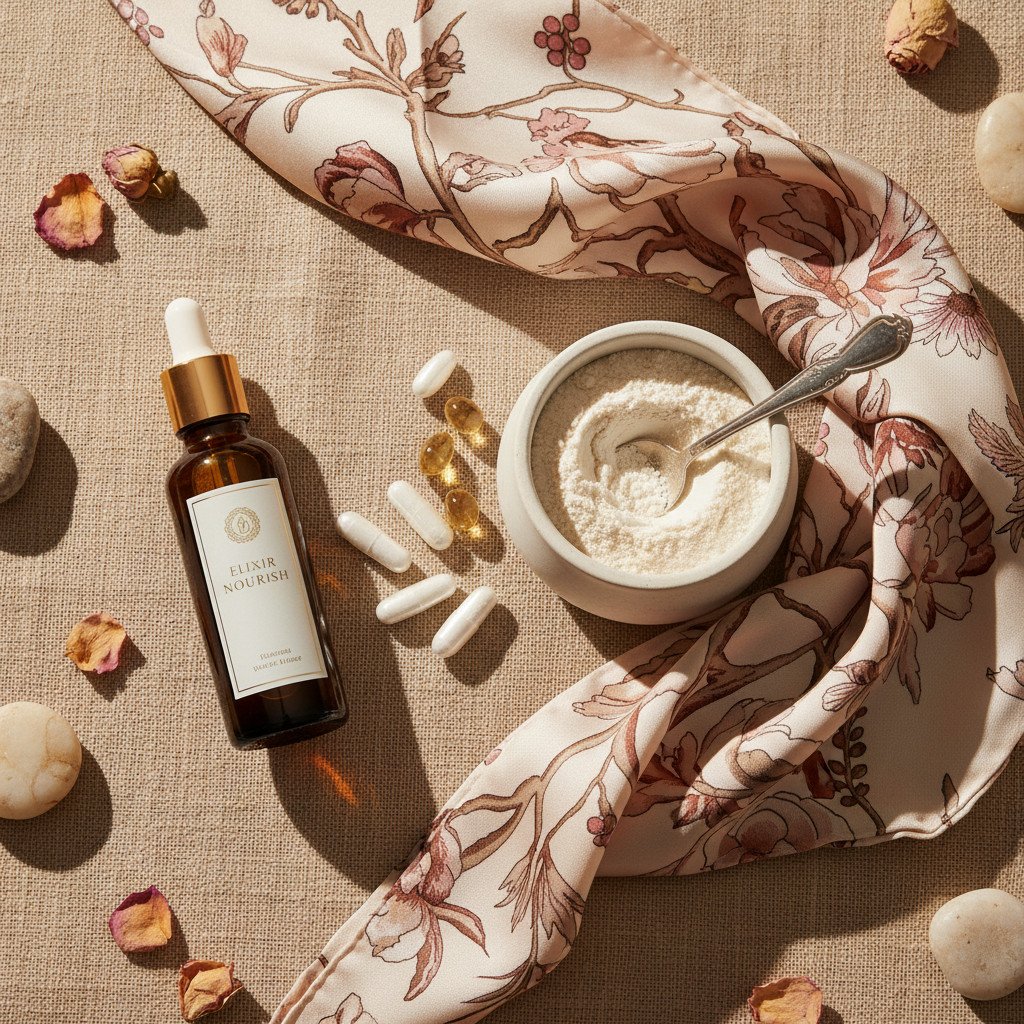
Collagen, on the other hand, is the most abundant protein in the human body, forming the structural scaffolding for skin, bones, tendons, ligaments, and cartilage. It’s what gives our skin its elasticity and firmness. For hair, collagen is promoted for its ability to provide amino acids—the building blocks of proteins—that the body can use to produce keratin. Additionally, some theories suggest collagen may help strengthen the hair follicle and support the dermal layer of the scalp, which is crucial for hair growth. Collagen supplements are typically derived from animal sources (bovine, marine, or chicken) and are often hydrolyzed into smaller peptides (collagen peptides) to improve absorption. They come in various forms, including powders that can be mixed into drinks, capsules, and even infused into beverages or food products. The appeal of collagen extends beyond hair to joint health, skin elasticity, and gut health, making it a multi-faceted beauty and wellness product.
Finally, generic “hair vitamins” represent a diverse category of multi-ingredient supplements. These blends typically combine a cocktail of vitamins, minerals, and sometimes herbal extracts, all chosen for their purported benefits to hair health. Common ingredients often include biotin, vitamin A, vitamin C, vitamin D, vitamin E, various B vitamins (like B12 and folate), iron, zinc, selenium, and sometimes botanical extracts like horsetail, saw palmetto, or adaptogens. The marketing for these products often emphasizes a holistic approach, suggesting that by addressing potential nutrient gaps, they can support the entire hair growth cycle, leading to thicker, longer, and more resilient strands. They are presented as a convenient, all-in-one solution for those seeking to optimize their hair from within.
The common thread among all these products is their promise to address hair concerns from the inside out, offering a seemingly simple solution to complex issues like shedding, thinning, or slow growth. They tap into a universal desire for visible results and often leverage the power of aspirational marketing, featuring individuals with seemingly perfect hair. However, understanding the science behind these claims is paramount to making informed choices that truly serve your hair and your health.
- Biotin: Often high-dose pills or gummies labeled for hair, skin, and nails, marketed to strengthen keratin.
- Collagen: Powders, capsules, or drinks promoting joint, skin, and hair benefits by providing amino acids for protein synthesis.
- Hair vitamins: Multi-ingredient products combining various vitamins, minerals, and herbs for “overall” hair support.
What Does the Science Actually Say About Hair Growth?
When we turn our attention from compelling marketing to rigorous scientific inquiry, the landscape surrounding biotin, collagen, and hair vitamins becomes significantly more nuanced. It’s crucial to approach these claims with a discerning eye, recognizing that the journey from a hopeful promise to evidence-based efficacy is often complex and fraught with limitations.
A significant challenge in evaluating the effectiveness of many hair supplements lies in the nature of the research itself. Many studies are small in scale, involving a limited number of participants, which can make it difficult to generalize their findings to a broader population. Furthermore, a substantial portion of the research is funded by the very brands that produce and sell these supplements. While not inherently problematic, industry-funded studies can sometimes be designed in ways that are more likely to yield positive results, or their findings may be presented with a bias. This isn’t to say all such research is invalid, but it warrants a closer look at methodology and interpretation.

Perhaps the most critical distinction to make is between studies conducted on individuals with diagnosed deficiencies or specific medical conditions causing hair loss, versus those conducted on generally healthy populations. For someone with a confirmed nutrient deficiency (e.g., severe biotin deficiency, iron-deficiency anemia), supplementation can indeed be transformative because it addresses the root cause of their hair issues. However, for individuals who are otherwise healthy and have no underlying deficiencies, the benefits of these supplements may be modest at best, or even negligible. In such cases, any perceived improvements might be attributed to the placebo effect, changes in other lifestyle factors, or simply the natural fluctuations of the hair growth cycle.
Our hair, like our bodies, operates on a complex biological clock. It goes through phases of growth (anagen), rest (catagen), and shedding (telogen). It’s entirely possible for hair to appear thicker or grow longer simply because it’s in a robust growth phase, not necessarily due to a supplement. Disentangling these natural cycles from the effects of a supplement can be incredibly difficult without well-designed, placebo-controlled studies over extended periods. Unfortunately, such rigorous research is often lacking for many popular hair supplements.
Moreover, the concept of
Frequently Asked Questions
Do I need biotin if my nails and hair seem “normal,” but I just want more growth?
Generally, if you don’t have a diagnosed biotin deficiency, taking extra biotin is unlikely to significantly boost hair growth beyond what your body naturally produces. Your body is already efficiently using the biotin it gets from your diet. For more targeted growth strategies, consider exploring topics like Weekly Hair Growth Routine or Hair Growth Oils and Serums within our Hair Growth & Scalp Health hub.
Is collagen good for natural Black hair, or is it just hype?
Collagen provides amino acids that are building blocks for hair, but its direct impact on natural Black hair growth for those without deficiencies is not extensively proven. Some anecdotal evidence suggests improvements in hair fullness or nail strength, but these results are not guaranteed. Focus on overall protein intake from food and a robust hair care regimen as outlined in our Hair Growth & Scalp Health hub.
Can hair vitamins fix my thinning edges or traction alopecia?
Hair vitamins are generally not the primary solution for thinning edges or traction alopecia, especially if scarring has occurred. These conditions often require specific interventions like gentle styling, addressing inflammation, or medical consultation. For comprehensive guidance, refer to our article on Edges Care and Regrowth: Traction Alopecia in Black Women.

How long should I take a hair supplement before deciding if it works?
Hair growth is a slow process, so it’s generally recommended to take a hair supplement consistently for at least 3 to 6 months before assessing its effectiveness. This timeframe allows for a full hair growth cycle to potentially show changes. Remember to track your progress with photos and notes, and always consult a healthcare provider if you have concerns, particularly if you’re experiencing heavy shedding.
Are hair gummies as effective as pills or powders?
The effectiveness of hair gummies versus pills or powders depends more on the dosage and quality of the active ingredients than the form factor itself. Some gummies may contain lower doses or more sugar, while others are formulated to be equally potent. Always check the ingredient list and concentrations. The best form is one you can take consistently, as discussed in our Hair Growth & Scalp Health hub.
Can I take hair vitamins while pregnant or breastfeeding?
It is absolutely crucial to consult your doctor or an OB/GYN before taking any hair vitamins or supplements while pregnant or breastfeeding. Many supplements are not tested for safety in these populations, and some ingredients could be harmful. Your doctor can advise on safe options and address any specific concerns like postpartum shedding.
Shop pill organizers on Amazon
Continue exploring
Related posts:
 The Science of Skincare – Understanding Ingredients for Black Women
 What Vitamins Are Good For Black Women’s Hair Growth?
 What Vitamins Are Good For Black Women’s Hair Growth?
 The Science of Hair Growth – Understanding Your Hair's Growth Cycle
 How Heat Affects Natural Hair and Curl Patterns: Understanding the Science Behind the Sleek
 Vitamins and Nutrients for Healthy Skin in African American Women