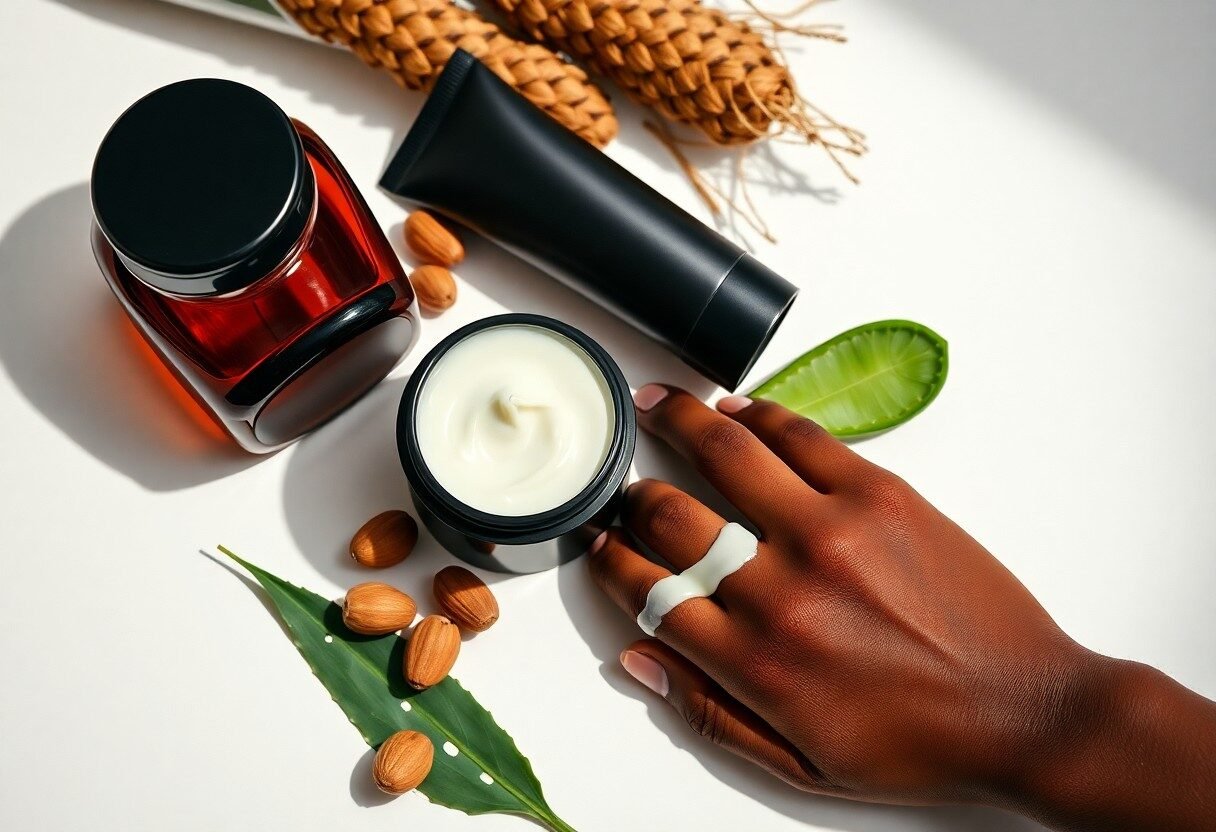
Skincare for darker tones demands products that hydrate without aggravating hyperpigmentation; I focus on moisturizers with ceramides, niacinamide, and hyaluronic acid to boost hydration and even tone, while advising you to avoid harsh acids or unprescribed topical steroids that can worsen dark spots. I’ll guide you to formulations suited for oily, dry, and combination skin so your routine protects pigmentation and strengthens the skin barrier.
Key Takeaways:
- Prioritize humectants (hyaluronic acid, glycerin) paired with occlusives like squalane or shea butter for sustained hydration.
- Niacinamide and stable vitamin C support evening of skin tone and fading of dark spots-apply daily and follow with broad‑spectrum SPF in the morning.
- Choose non‑comedogenic, lightweight formulas to reduce breakouts that can cause post‑inflammatory hyperpigmentation.
- Use broad‑spectrum sunscreens or tinted mineral moisturizers to avoid white cast while protecting against UV‑driven darkening.
- Opt for gentle, fragrance‑free, pH‑balanced products; introduce retinoids and strong acids slowly to minimize irritation and rebound pigmentation.
- Adjust texture seasonally: richer creams or occlusive layering in dry months, lighter gels/lotions in heat and humidity.
- Patch‑test new products and prioritize clinically backed ingredients; consult a dermatologist for stubborn or widespread hyperpigmentation.
Understanding Dark Skin
I observe that darker skin (Fitzpatrick IV-VI) commonly has larger, more dispersed melanosomes-often 2-3× the size of those in lighter phototypes-which gives added baseline photoprotection while increasing susceptibility to post-inflammatory hyperpigmentation (PIH); you should factor this into moisturizer choices and sun protection routines to prevent long-lasting discoloration and uneven tone.
Unique Characteristics of Dark Skin
I note structural and biochemical differences: melanosomes persist longer after inflammation, melanocytes can upregulate tyrosinase activity more readily, and variations in stratum corneum lipids make some people prone to ashiness and transepidermal moisture loss; for example, acne lesions in darker skin are far likelier to leave pigmented marks that may persist for 3-12 months without targeted care.
Common Skin Concerns
I commonly encounter PIH, keloidal or hypertrophic scarring, uneven tone, and sensitivity to harsh actives; acne and inflammation are primary drivers of dark spots, and even short-term topical irritation from over-exfoliation or potent steroids can generate persistent pigmentation, so you should choose moisturizers that soothe, restore barrier lipids, and minimize inflammatory triggers.
Mechanistically, inflammation increases melanin synthesis via elevated tyrosinase and cytokine signaling, so I recommend moisturizers with barrier-repair ingredients-ceramides, glycerin, hyaluronic acid-and actives like niacinamide (2-5%) for pigment control; introduce retinoids slowly (e.g., low-strength retinol or tretinoin 0.025%) and use chemical exfoliants cautiously (avoid high-strength AHAs/BHAs without sunscreen) to reduce the risk of treatment-induced PIH.
Key Ingredients for Moisturizers
I prioritize ingredients that rebuild the barrier and address post-inflammatory hyperpigmentation: humectants, emollients, occlusives, antioxidants and actives like niacinamide. Hyaluronic acid, peptides and ceramides support hydration and barrier repair; hyaluronic acid can hold up to 1,000× its weight in water. I avoid high denatured alcohol and heavy fragrances because they can irritate and worsen dark spots; choose formulations with measurable percentages when available.
Hydrating Agents
Humectants such as glycerin (typically 3-10%), hyaluronic acid (0.1-2%) and urea (2-10%) actively draw water into the skin. I pair these with occlusives-without a sealant humectants can pull moisture out in low humidity. Panthenol (0.5-5%) soothes irritation and reduces transepidermal water loss, which helps your skin hold hydration and prevents dark-skin-specific texture issues.
Natural Oils and Butters
Plant oils and butters supply fatty acids and emolliency your skin needs; I favor squalane and jojoba for daily use because they’re lightweight and low-comedogenic, while shea butter is excellent for very dry patches. I advise avoiding coconut oil on acne-prone areas-the comedogenic rating of 4 often clogs pores and worsens post-breakout pigment.
In practice I layer a humectant serum, then a moisturizer with 2-5% squalane or 5-10% shea in winter; at night I add 1-2% rosehip oil for linoleic acid and vitamin A support to help fade scars. Jojoba mimics sebum so it’s ideal for combination skin. For oily or acne-prone types, prioritize non-comedogenic oils and always patch-test to protect your tone.
Top Moisturizers for Dark Skin
I prioritize products that target hydration and pigmentation: look for niacinamide (2-5%) to fade dark spots, hyaluronic acid to hold moisture (it can retain up to 1,000× its weight in water), and ceramides for barrier repair. I recommend options like CeraVe (3 ceramides + HA), The Ordinary (affordable NMF formulations), and targeted creams from Augustinus Bader or La Mer when you need intensive repair. Avoid heavy coconut oil if you’re acne-prone-it’s highly comedogenic.
Budget-Friendly Options
If you want value, I reach for CeraVe Moisturizing Cream (~$12-18) for its 3 necessary ceramides and hyaluronic acid, Neutrogena Hydro Boost Gel-Cream (~$15) for lightweight HA hydration, and The Ordinary Natural Moisturizing Factors + HA (~$7-12) for barrier support. I’ve seen visible improvement in skin texture in 2-4 weeks when paired with sunscreen. Watch for fragrances and high-oleic oils-they can irritate or clog pores.
Luxury Choices
For splurges I consider Augustinus Bader The Cream (~$200-$400) for its proprietary TFC8 technology, La Mer Crème de la Mer (~$200-$500+) for rich emollients, and Drunk Elephant Lala Retro (~$60-$90) for a blend of plant oils and ceramides. I find these often deliver faster smoothing and radiance, but higher price doesn’t guarantee better results for every skin type.
When I use luxury creams I layer them thoughtfully: serum first (for example, 4-10% niacinamide or 10-15% vitamin C in the morning), then a lighter moisturizer, and the rich cream as a final seal. I advise a patch test and 2-8 week trial periods; in my experience, users report firmer texture within weeks but sensitivity can occur if combined with strong retinoids or exfoliants-always monitor for irritation.
Application Tips for Best Results
For best application I layer products thoughtfully: apply serums first, then cream, and work on damp skin to maximize absorption using 1-2 pea-sized amounts for face and neck. I favor lighter lotions by day and richer creams at night, and I patch-test new actives like 2-5% niacinamide before full-face use. Over-exfoliation can worsen hyperpigmentation. After a 60-second wait for serums to absorb, I gently press moisturizer into skin for 10-20 seconds.
- Warm product between fingers; dot and press for even spread – key: moisturizer
- Layer water-based (e.g., hyaluronic acid) before occlusive creams
- Use broad-spectrum SPF 30+ daily when using lightening actives
- Patch-test new ingredients and avoid mixing strong acids with retinoids
How to Apply Moisturizers
I warm 1-2 pea-sized amounts between my fingertips, dot across forehead, cheeks, chin and neck, then pat and press-never drag-so you avoid irritation; apply to slightly damp skin to trap moisture, and layer water-based hyaluronic acid before heavier creams. If you use targeted actives like niacinamide or exfoliants, let them absorb 30-60 seconds before moisturizing to prevent pilling and reduce irritation.
Frequency of Use
I recommend most people moisturize twice daily: a lightweight, non-comedogenic formula with morning SPF 30+, and a richer cream at night to support repair. For oily or acne-prone skin, reduce to thin layers and monitor for congestion; for very dry skin, add an occlusive at night. When starting strong actives, scale frequency to tolerance.
When introducing retinoids (0.25-1% ranges), I start applying moisturizer nightly every other night or 2-3 times weekly and increase as tolerance builds; with prescription lighteners like hydroquinone I pair nightly use with a soothing cream to limit irritation. Adjust seasonally-humid months often need lighter AM routines, while winter benefits from nightly occlusives-and always pair actives with daytime SPF 30+ to protect gains.
Signs of Effective Moisturizers
Visible signs I track include rapid absorption (typically within 30-60 seconds on damp skin), a non-greasy finish, and durable hydration lasting 8-12 hours; humectants like hyaluronic acid can deliver measurable hydration gains. I also expect improved texture within two weeks and gradual reduction in hyperpigmented patches when formulas contain niacinamide (2-5%) or replenishing ceramides.
What to Look For
When evaluating a formula, I prioritize a balance of humectants, emollients, and barrier lipids: hyaluronic acid, glycerin, ceramides, and niacinamide 2-5%. You should favor non-comedogenic labeling, pH around 5-5.5, opaque packaging for light-sensitive actives, and, when needed, SPF ≥30 to help prevent new dark spots.
Avoiding Irritants
To reduce risk of post-inflammatory hyperpigmentation, I avoid products with fragrance, denatured alcohol, and irritating vital oils; high concentrations of AHAs (>10%) or unacclimated retinoids can provoke inflammation. I always patch-test new moisturizers for 24-48 hours and discontinue use at the first sign of persistent stinging, redness, or burning.
Fragrance-related contact dermatitis is a common trigger of lasting dark marks, so I advise patch testing on the inner forearm or behind the ear: apply a pea-size amount, observe at 24 and 48 hours. For actives, I ramp up slowly-retinoids every third night for two weeks before increasing-and avoid pairing strong acids with retinoids to minimize the risk of post-inflammatory hyperpigmentation.
Additional Skincare Tips
- moisturizers for dark skin: choose non-comedogenic, fragrance-free formulas
- niacinamide 2-5%: reduces hyperpigmentation and evens tone
- sun protection: daily SPF 30+ and broad-spectrum filters
- retinoids: start low and build tolerance to avoid irritation
I keep routines minimal but targeted, pairing gentle cleansers with a hydrating moisturizer, pulse-active serums like niacinamide 2-5%, and avoiding harsh scrubs that trigger post-inflammatory hyperpigmentation. I track results over 8-12 weeks and adjust actives rather than piling them on. This preserves barrier function and reduces recurrence of dark spots.
Sun Protection
I apply SPF 30+ every morning and bump to SPF 50 when I’m outdoors; reapplication every 2 hours is non-negotiable during prolonged exposure. I favor mineral filters like zinc oxide for sensitive or melasma-prone skin, since UVA/UVI exposure directly deepens hyperpigmentation. If you’re swimming, choose water-resistant formulas and reapply immediately after toweling off.
Keeping Skin Healthy
I exfoliate gently-AHA 5-10% or BHA 0.5-2% once or twice weekly-and introduce retinoids slowly (e.g., adapalene 0.1% or tretinoin 0.025% to start) to target texture and pigmentation while avoiding irritation. I also prioritize sleep, hydration, and a consistent moisturizer to support barrier repair.
When I introduce stronger treatments I phase them: apply retinoids every third night for 2-4 weeks before increasing frequency, and avoid using AHA/BHA on the same night as retinoids to lower inflammation risk. For persistent dark spots I discuss options like in-office 20-30% glycolic peels or targeted prescription agents (e.g., 4% hydroquinone) with a dermatologist, because aggressive procedures carry a higher risk of post-inflammatory hyperpigmentation in deeper skin tones.
Conclusion
Drawing together, I recommend choosing moisturizers for dark skin that hydrate, reinforce the barrier, and address hyperpigmentation; look for ceramides, hyaluronic acid, niacinamide, antioxidants, and a broad-spectrum SPF during day. I advise lightweight, non-comedogenic formulas if you encounter congestion and richer creams for dry areas. Apply consistently and monitor your skin’s response so you can refine your routine for even tone, lasting comfort, and healthier skin.
FAQ
Q: What ingredients should I look for in moisturizers for dark skin?
A: Seek humectants like hyaluronic acid and glycerin to draw and retain moisture, ceramides to restore the skin barrier, and emollients such as squalane or lightweight esters for smoothness. Niacinamide helps fade hyperpigmentation and reduce inflammation; vitamin C (stable forms) and other antioxidants protect against environmental damage. For daytime, choose formulas that pair well with sunscreen and avoid heavy fragrances and highly comedogenic oils if you break out easily.
Q: Can moisturizers help reduce dark spots and uneven tone?
A: Moisturizers that contain active brightening ingredients-niacinamide, alpha arbutin, tranexamic acid, or low‑strength vitamin C-can support fading when used consistently. They work best alongside sunscreen and targeted serums (stronger concentrations or prescription agents). Hydration and a healthy barrier also prevent inflammation that can worsen post‑inflammatory hyperpigmentation, so a good moisturizer is a supportive part of a fading regimen, not usually a standalone cure.
Q: How do I choose a moisturizer if my skin is oily or acne-prone?
A: Opt for lightweight gel or gel‑cream textures labeled non‑comedogenic and oil‑free, with humectants like hyaluronic acid and barrier supporters such as niacinamide and ceramides. Look for ingredients that help regulate oil and clear pores-salicylic acid treatments can be layered in serum form rather than in the moisturizer if you need stronger exfoliation. Avoid thick occlusives and heavy butter‑based creams that can trap oil and lead to breakouts.
Q: What type of moisturizer is best for very dry or mature dark skin?
A: Choose richer creams containing ceramides, glycerin, squalane, and occlusives like petrolatum or heavier plant butters when needed for overnight repair. Peptides and niacinamide support firmness and tone; retinoids can be used at night to address aging but should be buffered with a nourishing moisturizer to reduce irritation. Apply richer formulations to damp skin to maximize hydration.
Q: Should people with dark skin use moisturizers that contain SPF?
A: Yes-broad‑spectrum SPF 30 or higher is crucial to prevent hyperpigmentation and protect results from brightening treatments. Many daily moisturizers with SPF are convenient, but choose tinted mineral formulas or chemical sunscreens formulated to avoid a gray or ashy cast on deeper tones. Layering a separate sunscreen over your regular moisturizer is also effective if you prefer specific treatment products.
Q: Can a moisturizer cause my skin to darken or worsen pigmentation?
A: A moisturizer itself rarely causes new pigmentation, but irritating ingredients, strong fragrances, or allergic reactions can trigger inflammation that leads to post‑inflammatory hyperpigmentation. Some heavy or glycerin‑rich formulas can trap sweat or oil and worsen breakouts, which may subsequently darken. Patch test new products on a small area and stop use if irritation or increased discoloration appears.
Q: How should I layer moisturizers with serums, retinoids, and other treatments?
A: Apply thinnest to thickest: cleanse, treat with water‑based serums (antioxidants, hyaluronic acid), then targeted actives (chemical exfoliants or prescription treatments as directed), followed by moisturizer to seal hydration. At daytime end with broad‑spectrum sunscreen. If using a potent retinoid or acid that causes sensitivity, use your moisturizer after the active to buffer irritation or apply the moisturizer first on alternate nights to build tolerance, following directions from product guidance or a clinician.
Related posts:
 Best Moisturizers for Dark Skin
 Best Moisturizers for Dark Skin
 Cleansers, Serums, and Moisturizers for Black Women
 Layering Treatments and Moisturizers in Your Skincare Routine for Maximum Effect
 Layering Treatments and Moisturizers in Your Skincare Routine for Maximum Effect
 The Illuminators: 20 Highlighters That Look Stunning (Not Ashy) on Dark Skin