Most Black women need products that balance hydration, even tone and protection, so I recommend targeting hyperpigmentation and barrier support; you should use sunscreen (SPF 30+) daily, incorporate niacinamide and hyaluronic acid for brightening and moisture, and be cautious with retinol-it can irritate if overused, so I advise patch testing and gradual introduction to avoid darkening or sensitivity.
Key Takeaways:
- Prioritize hyperpigmentation-safe actives: niacinamide, azelaic acid, vitamin C (stable derivatives) and short-term hydroquinone only under dermatologist supervision.
- Hydration first: hyaluronic acid, glycerin, ceramides and emollients like shea or squalane help prevent transepidermal water loss and reduce ashy appearance.
- Daily broad-spectrum sunscreen SPF 30+ is vital; choose tinted mineral formulas or ones with iron oxides to avoid white cast and protect against PIH.
- Gentle exfoliation improves texture and fades dark marks-favor lactic or glycolic acid for pigmentation and salicylic acid for congestion; avoid over-exfoliating.
- Non-comedogenic, lightweight oils (squalane, jojoba) and oil-free moisturizers balance higher melanin skin that can still be acne-prone or oily.
- Stable formulations and pH matter: vitamin C serums, acid exfoliants and retinoids should be layered slowly with patch testing to prevent irritation and post-inflammatory hyperpigmentation.
- Consult a dermatologist for persistent pigmentation or scarring and for prescription-strength retinoids, chemical peels, or laser options tailored to deeper skin tones.
Understanding Black Skin
Given higher melanin levels (Fitzpatrick IV-VI), your skin has built-in photoprotection yet still suffers UV damage and pigmentation shifts; I emphasize daily broad-spectrum sunscreen and targeted brightening when needed. In my practice I see melanin both protect against some sunburn and predispose to persistent hyperpigmentation, so preventative care plus gentle corrective treatments deliver the best long-term results.
Unique Characteristics
I notice Black skin often presents with more melanin, a tendency toward uneven tone, and distinct hair follicle structure that increases ingrown hairs and keloid formation risk. You benefit from emollient-rich barriers-think glycerin, ceramides-and I tailor regimens to reduce friction, inflammation, and mechanical irritation that commonly drive pigment and scar issues.
Common Skin Concerns
Many clients report post-inflammatory hyperpigmentation (PIH), acne scarring, melasma and keloids as primary concerns; I commonly use a combination of 4% hydroquinone or 10-20% azelaic acid, plus 2-5% niacinamide for tone correction. Your treatments must balance pigment reduction with anti-inflammatory strategies to avoid worsening dark spots.
When addressing PIH I start conservatively: topical brighteners, gentle chemical exfoliation and strict sun protection-improvements often appear in 8-12 weeks. I avoid aggressive resurfacing and high-fluence lasers unless prior test spots heal without darkening, because such procedures can cause worsened PIH or permanent dyspigmentation. Always use SPF 30+ year-round and monitor responses closely.
Essential Skincare Ingredients
I rely on targeted actives: hyaluronic acid (can hold ~1,000× its weight in water) and ceramides to restore the barrier, niacinamide 2-5% to fade hyperpigmentation, and L‑ascorbic acid 10-20% for antioxidant protection. For exfoliation and brightening I use AHAs/BHAs at conservative strengths, and I always pair these with daily SPF 30+ to prevent post‑inflammatory hyperpigmentation.
Moisturizers and Hydration
For my skin I prioritize humectants like glycerin and hyaluronic acid plus emollients and ceramides to rebuild lipid layers; at night I layer an occlusive (petrolatum or dimethicone) to lock in moisture. You’ll see better outcomes when you use a thicker cream in cooler months and lighter gels with 2-5% niacinamide during oily flare periods to control oil without stripping.
Exfoliants and Brightening Agents
I favor chemical exfoliants over physical scrubs: glycolic or lactic acids at 5-10% for surface renewal, salicylic acid 0.5-2% for congestion, and azelaic acid 10-20% for pigment control. Avoid harsh scrubs that can cause post‑inflammatory hyperpigmentation; note that hydroquinone (2-4%) is effective but carries a risk of ochronosis if misused.
When I introduce actives I patch test and start slowly-every 3-4 nights-then increase frequency. I don’t layer a strong AHA and a retinoid the same night until tolerance is built; instead I alternate nights or use lower concentrations (retinol 0.025-0.1% OTC). For stubborn melasma I discuss prescription options (tretinoin, hydroquinone therapy) with a dermatologist, and I emphasize daily SPF 30+ to protect results.
Recommended Skincare Products
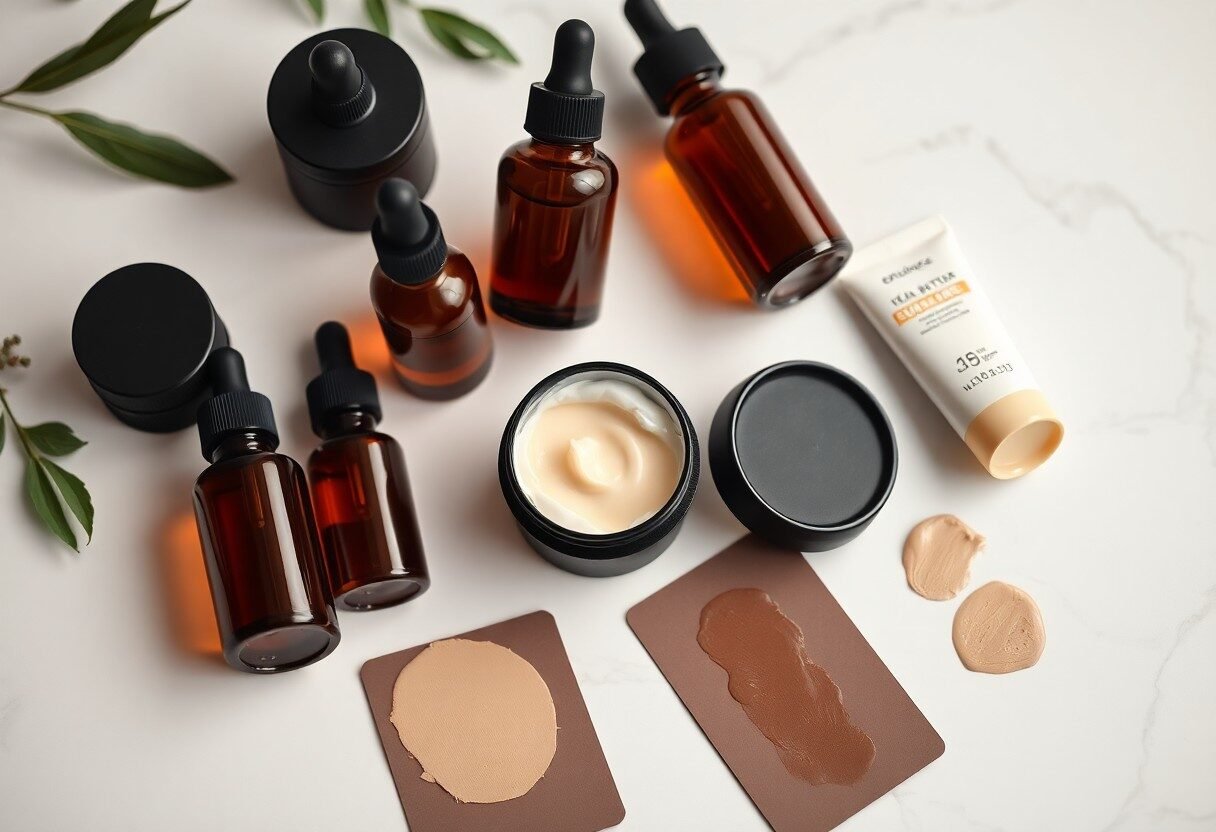
I pick products that target pigmentation while protecting the barrier: daytime antioxidants (10-20% L‑ascorbic acid), midday broad‑spectrum SPF 30+, and nighttime cell‑turnover agents like retinoids. I often suggest brands such as SkinCeuticals C E Ferulic, The Ordinary Tranexamic Acid 5% + HA, and CeraVe Hydrating Cleanser as practical examples; combining targeted serums with a gentle emollient routine gives the best results for Fitzpatrick IV-VI skin.
Cleansers and Toners
I use gentle, pH‑balanced cleansers-sulfate‑free, non‑foaming formulas-to avoid stripping melanin‑rich skin. For acne prone areas a 2% salicylic cleanser can help comedones, while hydrating toners with niacinamide (2-5%) or hyaluronic acid restore moisture. Avoid alcohol‑based toners and frequent strong glycolic peels because over‑exfoliation can cause increased PIH and chronic dryness.
Serums and Treatments
I prioritize vitamin C (L‑ascorbic 10-20%) in the morning, niacinamide 2-5% for barrier and pigmentation, azelaic acid 10-20% for inflammation and PIH, and topical tranexamic acid (about 2-5%) for stubborn melasma. Start retinoids low-OTC adapalene 0.1% or prescription tretinoin 0.025%-and titrate up because retinoids can initially irritate and worsen hyperpigmentation if overused.
I advise patch testing each actives, introducing one new serum every 2-4 weeks, and using vitamin C in the AM with SPF 30+ to lock benefits. Frequently, I recommend spacing acids and retinoids (acid nights vs retinoid nights) to minimize irritation, and I tell patients to begin with twice‑weekly retinoid use, increasing to alternate or nightly over 8-12 weeks as tolerated.
Sunscreen for Melanin-Rich Skin
When choosing sunscreen I focus on products that block UVB/UVA and visible light, because even with higher melanin your skin gets DNA damage and pigment-triggering inflammation; SPF 30+ daily reduces UVB by ~97%, and adding iron oxides helps block visible light that worsens post‑inflammatory hyperpigmentation (PIH). I recommend integrating a tinted mineral or hybrid formula into your morning routine to avoid ashy cast while maximizing broad-spectrum protection.
Importance of Sunscreen
I tell patients that sunscreen is non‑negotiable: use SPF 30 or higher every day, apply about a nickel‑sized amount (≈1/4 teaspoon) to the face, and reapply every 2 hours or after sweating/swimming. Since visible light and UVA drive PIH in Fitzpatrick IV-VI, sunscreen plus antioxidants (10-20% L‑ascorbic acid) gives additive protection and pigment control.
Best Sunscreens for Black Women
I often recommend tinted mineral sunscreens with iron oxides and modern hybrid formulas to avoid whitening: examples I use clinically include EltaMD (tinted), Colorescience Sunforgettable (brush‑on, iron oxides), Black Girl Sunscreen (sheer, cosmetic finish), La Roche‑Posay Anthelios (melt‑in textures) and Supergoop! Unseen for invisible chemical protection-choose non‑comedogenic options if you’re acne‑prone.
To expand, I prioritize products with zinc oxide or titanium dioxide micronized for minimal white cast plus iron oxides for visible‑light defense; iron oxides uniquely reduce blue‑light induced PIH. You should patch test for irritation and pick oil‑free versions if you break out, and combine sunscreen with topical antioxidants in the AM to lower cumulative photodamage and speed fading of existing dark spots.
Makeup Tips for Healthy Skin
I focus on makeup that supports skin health: choose SPF 30+ primers, non-comedogenic formulas, and water- or silicone-based foundations to prevent clogged pores and post-inflammatory hyperpigmentation, which affects up to 30-40% of blemishes in darker tones. I test shades in natural light and remove makeup nightly with a gentle cleanser to avoid buildup. Thou, always patch-test new products and prioritize ingredients that hydrate like hyaluronic acid while avoiding oxybenzone and heavy oils that can worsen breakouts.
- Foundation
- SPF
- Non-comedogenic
- Hydration
- Highlighting
Choosing the Right Foundation
I match foundation along the jawline in daylight and view it in two lighting types-natural and incandescent-to confirm undertone accuracy; I often recommend testing three nearby shades and choosing the one that disappears into your skin. For oily skin, I favor water-based or oil-free formulas; for dry skin, lightweight cream or serum foundations with hyaluronic acid work best. I also suggest choosing products labeled non-comedogenic to lower the risk of clogged pores and hyperpigmentation flare-ups.
Highlighting and Contouring for Darker Skin
I use cream contours one to two shades deeper than my skin and warm bronze tones to avoid ashy grey lines; blending upward softens effects and keeps results natural. For highlighting, I pick warm, golden or bronze shimmers rather than pearlescent whites-this preserves luminosity without emphasizing texture. I prefer creams over powders for a hydrated finish and set lightly with a translucent, non-cakey powder if needed.
For more precision I sculpt using a small, dense brush and layer product gradually-1 to 3 thin passes-so correction stays subtle and gradeable. I pay special attention to areas prone to hyperpigmentation, avoiding heavy powders that settle into creases; instead I buff and stipple to blend. Using a damp sponge to sheer products gives a skin-like, long-wearing finish that resists flashback and honors deeper tones with natural-looking depth.
The Role of Diet and Lifestyle
I emphasize that what you eat and how you live directly shape skin tone, texture and pigmentation; studies link diets rich in antioxidants to ~20-30% lower oxidative markers. I advise 5 daily servings of fruits and vegetables, 2 weekly portions of oily fish (salmon, mackerel) for omega‑3 benefits, and limiting added sugar to protect collagen.
Nutrition for Healthy Skin
For nutrition I target nutrients that support repair: vitamin C (75-90 mg/day) for collagen synthesis, zinc (8-11 mg/day) for wound healing, and omega‑3s (250-500 mg EPA/DHA daily) to reduce inflammation. I recommend berries, citrus, pumpkin seeds, and two weekly servings of oily fish; measurable skin improvements often appear within 4-8 weeks.
Importance of Hydration and Sleep
I prioritize hydration and sleep because dehydration reduces skin elasticity and worsens fine lines; drinking 2-3 liters of water daily supports barrier function, while getting 7-9 hours of sleep fuels nocturnal repair. Clinical data show skin hydration can improve within 1-2 weeks of increased water intake and consistent sleep patterns.
I observe that stress, alcohol and blue light disrupt sleep architecture and raise cortisol, which increases inflammation and risk of post‑inflammatory hyperpigmentation in darker skin tones; limiting alcohol 2 hours before bed, avoiding screens 60 minutes pre‑sleep, and practicing 20-30 minutes of relaxation lowers PIH flare‑ups and speeds visual recovery.
Conclusion
Summing up, I recommend targeted, hydrating formulations with SPF and gentle exfoliation to address hyperpigmentation and dry patches common in darker skin; you should choose products with niacinamide, vitamin C, ceramides and broad-spectrum sunscreen, patch-test for sensitivity, and build a consistent routine so your skin can stay healthy and resilient.
FAQ
Q: Which cleanser and moisturizer ingredients work best for Black skin?
A: Choose gentle, sulfate-free cleansers that remove oil without stripping. For moisturizers, seek humectants (hyaluronic acid, glycerin), barrier lipids (ceramides, fatty acids), and emollients like shea butter or squalane. Niacinamide helps barrier function and reduces uneven tone. Pick non-comedogenic formulations for acne-prone skin and richer creams or balms for dry or ashy areas on the body.
Q: How should Black women select a sunscreen to avoid white cast and protect against hyperpigmentation?
A: Use a broad-spectrum SPF 30 or higher. Tinted mineral sunscreens (zinc oxide/titanium dioxide) minimize white cast while providing physical protection; modern micronized mineral formulas also perform well. Chemical sunscreens can be comfortable for daily use-choose one that blends without residue. Apply generously and reapply every two hours when outdoors to prevent worsening of dark spots.
Q: What active ingredients are most effective for treating hyperpigmentation and dark spots?
A: Effective options include topical vitamin C (ascorbic acid) for brightening, niacinamide for reducing contrast, azelaic acid and kojic acid as alternatives to hydroquinone, and prescription-strength hydroquinone or retinoids when guided by a clinician. Combine actives cautiously, always use sunscreen, and introduce one ingredient at a time to monitor tolerance.
Q: Which acne treatments are appropriate for melanin-rich skin to minimize post-inflammatory hyperpigmentation?
A: Use salicylic acid (0.5-2%) to unclog pores and benzoyl peroxide (2.5-5%) for bacterial control, applying lower concentrations if irritation occurs. Topical retinoids speed cell turnover and help prevent scarring and dark marks. Avoid over-drying cleansers or aggressive physical exfoliation, and treat active acne early to reduce the risk of lasting pigmentation.
Q: How often should exfoliation be performed to improve texture without causing irritation?
A: Start with gentle chemical exfoliation: lactic acid or glycolic acid once per week, increasing to 2-3 times weekly as tolerated. Salicylic acid is useful for oily or acne-prone skin. Avoid daily abrasive scrubs; over-exfoliation can trigger inflammation and deepen pigmentation. If irritation appears, scale back frequency and apply a soothing, hydrating moisturizer.
Q: Are there product textures or formulations that help prevent an ashy appearance on darker skin tones?
A: Tinted moisturizers, tinted sunscreens, and pigments that match undertones prevent ashiness on the face and body. For hydration, creams and butters (shea, cocoa) or occlusive-rich balms work well on drier areas; lightweight gels or lotions suit oily skin. Choose fragrance-free and non-comedogenic labels when sensitivity or breakouts are a concern.
Q: What is a simple, safe daily skincare routine and how should new products be introduced?
A: AM: gentle cleanser, antioxidant serum (vitamin C), moisturizer, broad-spectrum SPF. PM: gentle cleanser, targeted treatment (retinoid or acid as needed), moisturizer. Patch test new products on the inner forearm for 24-48 hours, introduce one active at a time, and use lower frequencies initially (every other night). Consult a dermatologist for persistent hyperpigmentation or when prescription-strength agents are needed.
Related posts:
 Skincare Products That Are Perfect for Black Women
 Skincare Products That Are Perfect for Black Women
 Skincare Products That Are Perfect for Black Women
 The Perfect Skincare Regimen for Black Women
 The Perfect Skincare Regimen for Black Women
 Unleashing Flavor: A Comprehensive Review of the Ninja GR101 Sizzle Smokeless Indoor Grill & Griddle – Your Ultimate Guide to Perfect Indoor Cooking