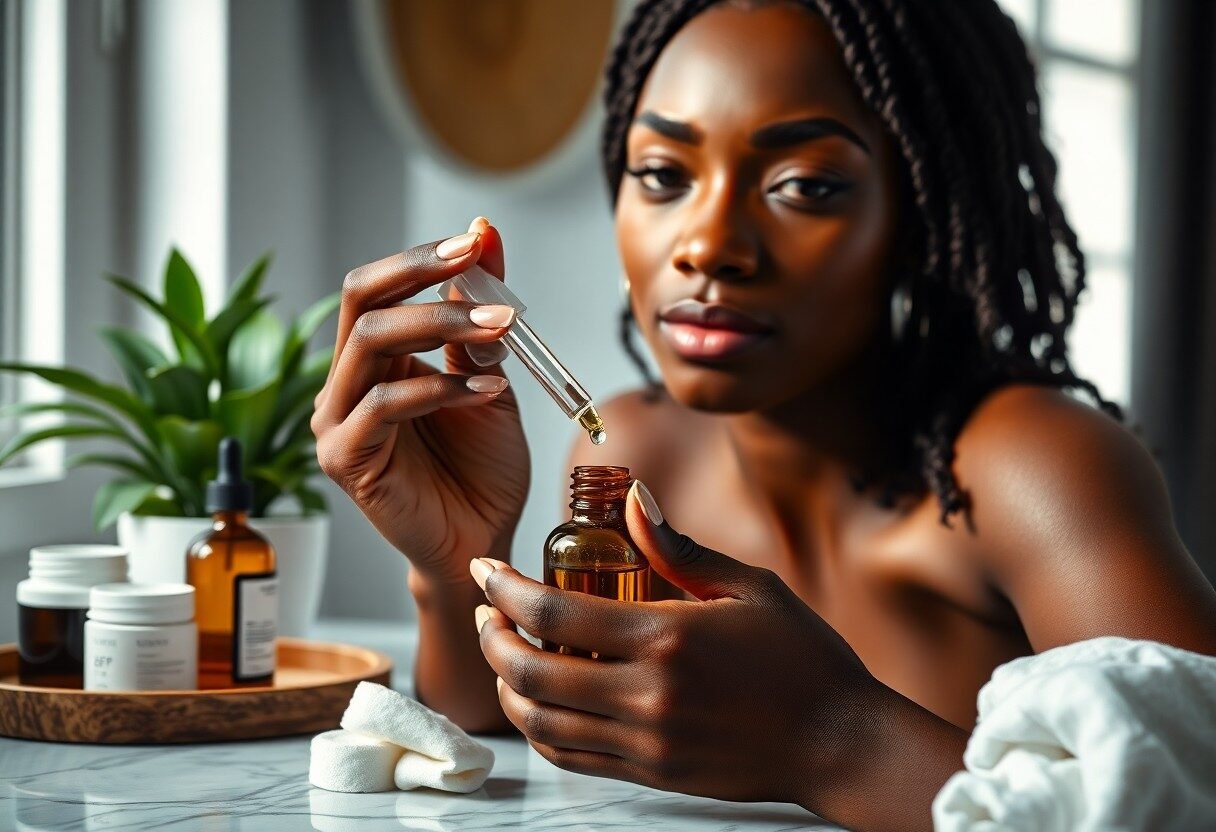
Skincare for Black women means I prioritize sun protection, targeted care for hyperpigmentation, and consistent hydration. I steer you away from over-exfoliation and harsh actives that can worsen discoloration and irritation, and I urge professional consultation before strong bleaching agents. I advocate simple, evidence-based routines-gentle cleansing, SPF, antioxidants, and rich moisturizers-to protect and enhance your skin’s melanin-rich resilience.
Key Takeaways:
- Broad-spectrum SPF 30+ daily to prevent hyperpigmentation and photoaging.
- Gentle, non-stripping cleanser to protect the skin barrier.
- Hydrating moisturizer with humectants (hyaluronic acid, glycerin) and non-comedogenic occlusives.
- Antioxidant serum (vitamin C, niacinamide) to brighten and even skin tone; layer under sunscreen.
- Target hyperpigmentation with azelaic acid, kojic acid, or prescription options (hydroquinone, topical retinoids) under medical guidance.
- Gentle chemical exfoliation (AHA/BHA) 1-2× weekly; avoid over-exfoliation to reduce post-inflammatory hyperpigmentation.
- Patch test new products, introduce actives slowly, and consult a dermatologist for persistent acne or pigmentation.
Understanding Black Skin
I note that Black skin commonly falls within Fitzpatrick types IV-VI, with higher melanin content that reduces UV penetration but does not eliminate sun damage; I still recommend SPF 30+ daily. Melanosomes are larger and more dispersed, which affects how pigmentation forms and fades. Clinically, post-inflammatory hyperpigmentation (PIH) often persists for 6-12 months without targeted treatment, so early intervention changes outcomes.
Unique Characteristics
I observe larger, more abundant melanosomes and a predominance of eumelanin, which gives photoprotection yet predisposes to uneven pigmentation. Skin barrier function can be robust but shows a tendency toward ashy appearance from impaired desquamation and visible dryness. Hair follicle structure also raises the risk of pseudofolliculitis and keloid formation after injury or aggressive procedures.
Common Skin Concerns
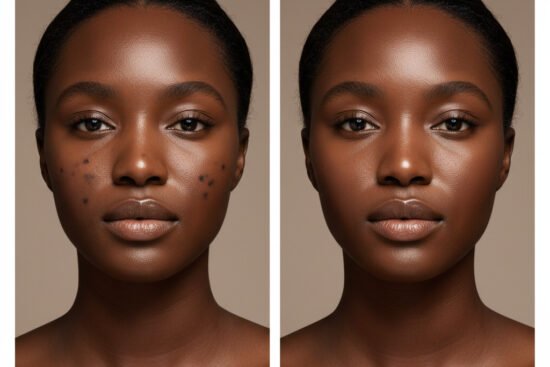
I see hyperpigmentation-especially PIH and melasma-most often after acne, waxing, or inflammation; keloids and hypertrophic scarring are more frequent after surgery or trauma. Acne and ingrown hairs commonly leave long-lasting marks. You should prioritize calming inflammation and targeted brightening rather than aggressive exfoliation that can worsen PIH.
I typically treat PIH with layered approaches: daily SPF 30+, topical retinoids (titrate to tolerance), and azelaic acid 10-20% or niacinamide 2-5% to reduce melanin transfer. For active acne I use salicylic acid 1-2% cleansers and benzoyl peroxide combinations, balancing against dryness. Keloids respond best to early intralesional corticosteroids and silicone sheeting; I warn against unsupervised high-concentration hydroquinone and prolonged use due to risk of ochronosis.
Essential Skincare Ingredients
As I select actives for hyperpigmentation and your barrier support, I prioritize niacinamide, vitamin C, ceramides and hyaluronic acid. Niacinamide at 2-5% reduces blotchiness and regulates oil; L‑ascorbic acid 10-20% brightens and neutralizes free radicals. Azelaic acid 10-15% treats melasma; retinoids (adapalene/retinol) at 0.025-0.1% boost turnover. Use hydroquinone 2-4% only short-term under clinician supervision.
Moisturizers
I favor moisturizers that combine humectants, emollients and occlusives-glycerin, hyaluronic acid and ceramides with squalane or shea butter. Apply within 60 seconds of cleansing to lock water into your barrier; doing so reduces transepidermal water loss and calms inflammation within 2-4 weeks. For acne-prone tones I choose non-comedogenic, ceramide-rich formulas like CeraVe or squalane-based lotions.
Exfoliants
I prefer chemical exfoliants over scrubs for darker skin because AHAs and BHAs address your texture without the microtears that often cause post-inflammatory hyperpigmentation. Glycolic acid at 5-10% and lactic acid 5-12% lift pigmented cells, while salicylic acid 0.5-2% penetrates pores to reduce congestion.
Start gently: I introduce a mild AHA (lactic 5%) twice weekly, increasing to three times over 6-8 weeks if your skin tolerates it. BHAs can be used nightly at low concentrations for oily skin. Avoid combining strong acids with retinoids on the same night to prevent irritation; excessive exfoliation causes barrier breakdown and worsened hyperpigmentation.
Sunscreen Importance
I stress daily sunscreen because even with higher melanin-approximately equivalent to SPF 13-you still face UV-driven hyperpigmentation and skin cancers that are often detected later in Black patients. Use SPF 30+ broad‑spectrum every morning; studies show SPF 30 blocks about 97% of UVB. Apply to face, neck, ears and hands to prevent post-inflammatory hyperpigmentation (PIH) flare-ups and uneven tone.
Myth Busting
I debunk two common myths: that dark skin doesn’t need protection and that sunscreen always leaves a white cast. Darker skin can still develop PIH and photoaging, and sunscreen markedly lowers those risks-SPF 30 reduces UVB by roughly 97%. Tinted mineral formulas or modern chemical filters now give broad protection without visible residue, so protection is practical and effective for your skin tone.
Best Practices
Apply SPF 30+ every morning as the final step in your routine, using about 1/4 teaspoon for the face and 1 ounce for full body; reapply every two hours and after swimming or heavy sweating. I recommend tinted mineral sunscreens to avoid white cast, while chemical sunscreens work well under makeup; don’t skip ears, hairline, lips and the backs of hands.
Layer strategically: put sunscreen on after serum and moisturizer, wait 15 minutes before makeup with chemical filters since they need time to bind, while minerals protect immediately. If you use retinoids or acids for hyperpigmentation, use a higher SPF and strict reapplication because those actives increase photosensitivity. Combine sunscreen with UPF clothing, a wide‑brim hat and shade between 10 a.m.-4 p.m. for far better protection than sunscreen alone.
Everyday Skincare Routine
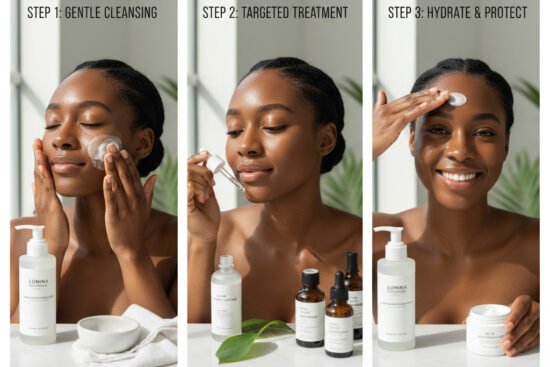
I focus on a simple, repeatable sequence: gentle cleanse, antioxidant serum, lightweight moisturizer, and broad-spectrum SPF 30+ every morning to prevent UV-driven hyperpigmentation. For targeted care I add weekly chemical exfoliation (AHA 5-10% or BHA 1-2%) and spot treatments for dark spots; these components protect the barrier and address discoloration without overloading your skin.
Morning Routine
I start with a pH-balanced cleanser (around pH 5.5), then apply a vitamin C serum at 10-20% to brighten and neutralize free radicals. After a moisturizer with ceramides or glycerin I use SPF 30+, applying about a nickel-sized amount (≈1/4 teaspoon) and reapplying every two hours outdoors; this prevents UV-triggered darkening and protects treatments you’ll use later.
Evening Routine
I remove sunscreen and makeup with an oil or balm, follow with a gentle second cleanse, and on treatment nights I layer a retinoid (start 0.25-1%) or targeted agents like azelaic acid 10-20% or hydroquinone (2% OTC, 4% prescription) for persistent spots. I limit chemical exfoliation to 2-3 times weekly because over-exfoliation can worsen PIH in darker skin.
I phase treatments slowly: I patch-test, introduce retinol every third night for 2-4 weeks before increasing frequency, and avoid using strong AHAs/BHAs the same night as retinol to minimize irritation. Expect visible improvement in pigmentation in about 8-12 weeks with consistent use, and if you notice increased redness or new darkening I stop the actives and consult a dermatologist to prevent long-term PIH.
Treatment for Specific Issues
Hyperpigmentation
I focus on targeted actives: topical hydroquinone 2-4% or azelaic acid 20%, tranexamic acid serums, and daily broad-spectrum sunscreen SPF 30-50 to protect your skin. I recommend supervised 20-30% glycolic or lactic peels and incorporate niacinamide 4-5% to reduce inflammation, but because darker skin has a higher risk of post-inflammatory hyperpigmentation, I always patch-test and start with lower concentrations.
Acne Solutions
I treat acne with a layered approach: salicylic acid 0.5-2% cleansers to unclog pores, topical benzoyl peroxide 2.5-5% for antimicrobial action, and nightly topical retinoids (tretinoin 0.025-0.1% or adapalene 0.1%) to normalize your follicular turnover. For inflammatory lesions I use oral doxycycline 50-100 mg for up to 3 months; for nodulocystic cases we discuss isotretinoin, which requires close monitoring to manage risks and reduce scarring and PIH.
Concretely, I often prescribe: morning gentle cleanser, 2.5% benzoyl peroxide, lightweight moisturizer, and SPF 50 to protect your skin; nightly start tretinoin 0.025% every other night, ramping over 4-8 weeks, adding azelaic acid 15-20% if your skin is sensitive. Expect visible improvement in 8-12 weeks; if lesions persist beyond 3 months I reassess for hormonal drivers or escalate to systemic therapy.
DIY Skincare Tips
I use targeted DIY approaches to tackle dark spots and dehydration common for Black women, blending evidence-backed actives with gentle carriers.
- Always perform a patch test before full-face use
- Maintain pH ~4.5-5.5 when using AHAs
- Apply broad-spectrum sunscreen after any exfoliation
I measure by weight-5-10% lactic or 2% salicylic weekly reduces bumps and hyperpigmentation within 6-8 weeks. The results become clearer when you avoid overconcentrating ingredients and stick to a consistent schedule.
Natural Remedies
I favor simple natural remedies like 1 teaspoon raw honey for antibacterial action and 1-2 drops of diluted tea tree on spots; clinical data links honey to faster wound healing and reduced inflammation. I advise diluting necessary oils-undiluted tea tree can cause irritation or contact dermatitis for sensitive skin. The cautious, measured use of these remedies can complement your routine without replacing proven actives.
Homemade Masks
I make homemade masks for targeted care-try 1 tsp honey + 1/4 tsp turmeric for brightening or mashed avocado + 1 tsp olive oil for deep hydration; I apply masks 1-2 times weekly and always do a patch test to check for staining or reaction. The short applications help manage tone and moisture without overloading your skin.
I prefer bentonite clay for oil control-mix 1 tablespoon with equal parts filtered water or aloe (never metal bowls), and limit wear time to 5-10 minutes if you have dry patches; leaving clay too long can strip protective lipids. I rinse with lukewarm water, follow with a hydrating serum, and advise stopping if you see redness or persistent stinging. The proper mixing, timing, and follow-up are what make homemade masks effective and safe for your skin type.
Summing up
Taking this into account, I emphasize a routine that prioritizes hydration, broad-spectrum SPF, gentle exfoliation, and targeted actives like vitamin C and niacinamide to address hyperpigmentation; you should choose formulations suited to melanin-rich skin, patch-test new products, and maintain consistency. I advise consulting a dermatologist for persistent concerns so your strategy is effective, safe, and tailored to your skin’s needs.
FAQ
Q: What makes skincare for Black women different from other skin types?
A: Skin with higher melanin often has a thicker dermis, can appear oilier, and tends to form post-inflammatory hyperpigmentation (PIH) after injury or inflammation. This means the focus should be on gentle routines that control excess oil, reduce inflammation, and address uneven tone without overstripping. Use balanced cleansing, consistent hydration with humectants and occlusives, targeted brightening ingredients when needed, sun protection, and consult a dermatologist for persistent concerns.
Q: How should I choose and use sunscreen if I have darker skin?
A: Choose a broad-spectrum SPF 30 or higher and reapply every two hours when exposed to sun; opt for tinted mineral formulas or chemical sunscreens formulated to minimize white cast. Apply sunscreen as the final step of morning skincare (after moisturizer), use enough to cover face and neck, and layer under makeup. Daily use protects against PIH and prevents premature aging, even on cloudy days and indoors near windows.
Q: Which ingredients help fade dark spots and even skin tone safely?
A: Effective, well-tolerated options include topical vitamin C (stabilized L‑ascorbic acid or derivatives), niacinamide, azelaic acid, low‑concentration hydroquinone under supervision, tranexamic acid, and gentle retinoids to speed cell turnover. Combine these with daily sunscreen to prevent recurrence. Introduce one active at a time, use lower concentrations if you have sensitivity, and avoid aggressive procedures without specialist guidance to reduce PIH risk.
Q: What types of cleansers and moisturizers work best?
A: Use a pH-balanced, sulfate-free cleanser that removes excess oil without disrupting the skin barrier. For moisturizing, favor products with humectants (hyaluronic acid, glycerin), barrier-repair lipids (ceramides, cholesterol), and emollient/occlusive agents (shea butter, squalane) to lock in moisture. Layer lightweight serums under richer creams at night if you have combination skin, and choose non-comedogenic formulations for acne-prone areas.
Q: Can people with darker skin safely use retinoids and chemical exfoliants?
A: Yes, but start slowly and build tolerance: begin with lower-strength retinoids or alternate nights, and use AHAs/BHAs at lower frequencies. Always pair these actives with moisturizer to reduce irritation and apply sunscreen daily to protect sensitized skin. If irritation or worsening PIH occurs, reduce frequency or consult a dermatologist for tailored recommendations.
Q: How should acne and resulting dark marks be treated to minimize scarring and PIH?
A: Treat active acne with proven topicals like benzoyl peroxide, salicylic acid, topical retinoids, or azelaic acid while avoiding picking or harsh physical exfoliation. For PIH, incorporate gentle brighteners (niacinamide, vitamin C, azelaic acid) and sun protection; prescription agents such as hydroquinone or combination creams may be recommended for stubborn spots. Early, consistent treatment of acne reduces the risk of long-term discoloration.
Q: Are in-office treatments like lasers and chemical peels safe for darker skin tones?
A: Many in-office options are safe when performed by clinicians experienced with darker skin: superficial chemical peels, fractional microneedling, and long‑pulse Nd:YAG lasers are often chosen to lower PIH risk. Deeper peels and certain lasers carry higher risk of pigmentation changes and should be test‑spotted first. Always seek a provider who customizes settings for melanin-rich skin and discusses risks, expected outcomes, and downtime beforehand.