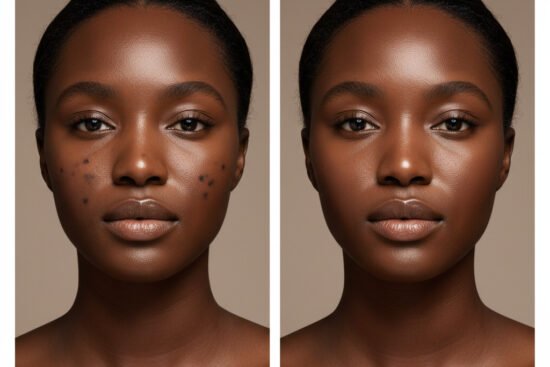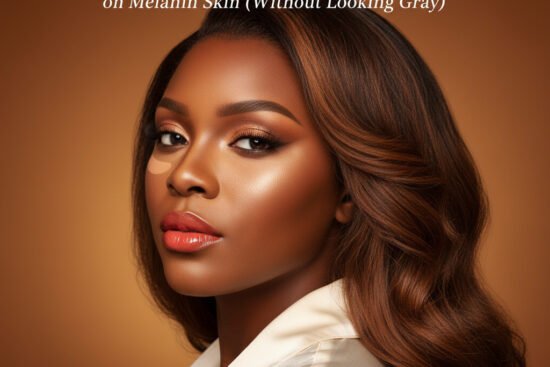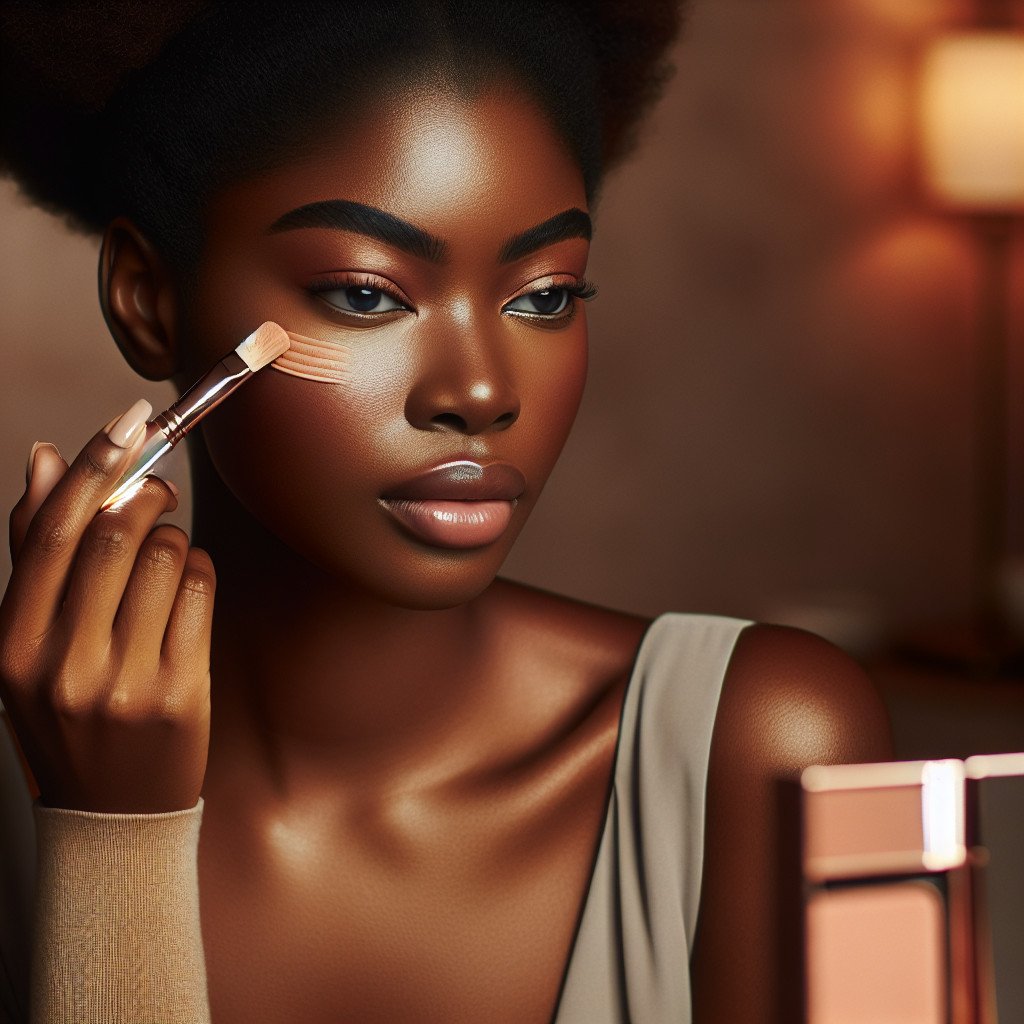
Color correcting is the secret step many Black women skip — and it makes all the difference. If you’ve ever layered concealer only to see gray or ashy tones peek through, color correcting is the missing link between makeup frustration and flawless confidence.
This guide breaks down how to properly neutralize hyperpigmentation and under-eye darkness on melanin-rich skin — without heaviness, cakiness, or flashback.
Key Takeaways
- Color correcting neutralizes darkness before concealing.
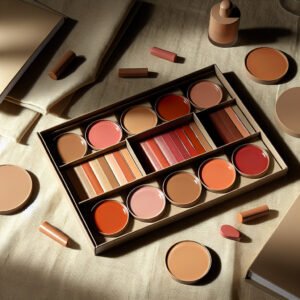
- Peach, orange, and red tones work best on melanin-rich skin.
- Less product delivers better results.
- Correct first, then conceal — always.
- The right shade prevents gray or ashy undertones.
What Is Color Correcting?
Color correcting uses opposing colors on the color wheel to neutralize discoloration. On deeper skin tones, darkness often carries blue, purple, or gray undertones — which must be canceled out before applying concealer.
Why Concealer Alone Isn’t Enough
Concealer covers, but it doesn’t neutralize. Without correction, dark areas can still appear dull or ashy, especially under the eyes or around the mouth.
Choosing the Right Color Corrector for Black Skin
| Concern | Best Corrector Shade |
|---|---|
| Under-eye darkness | Peach / Salmon |
| Deep hyperpigmentation | Orange |
| Severe darkness | Red (used sparingly) |
Shop peach color correctors |
Shop orange color correctors
How to Apply Color Corrector (Step-by-Step)
Step 1: Prep the Skin
Hydrated skin blends better. Apply lightweight eye cream before correcting.
Step 2: Apply Corrector Sparingly
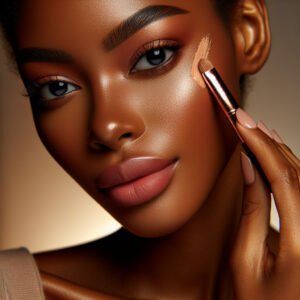
Use a tiny amount only where darkness exists. Blend gently with a brush or finger.
Step 3: Let It Set
Allow the corrector to settle for 10–15 seconds before concealer.
Step 4: Apply Concealer
Use a concealer that matches your skin tone — not lighter.
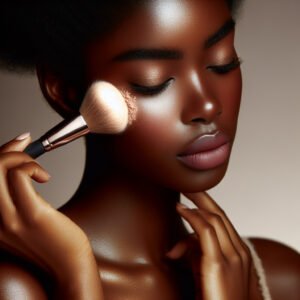
Corrected, concealed, perfected.
Common Mistakes to Avoid
- Using too much product
- Skipping setting time
- Choosing a shade too light
- Applying concealer before correcting
Setting Without Creasing or Ashiness
Use a finely milled setting powder with a yellow or golden undertone.
Shop setting powders for dark skin
Final Thoughts
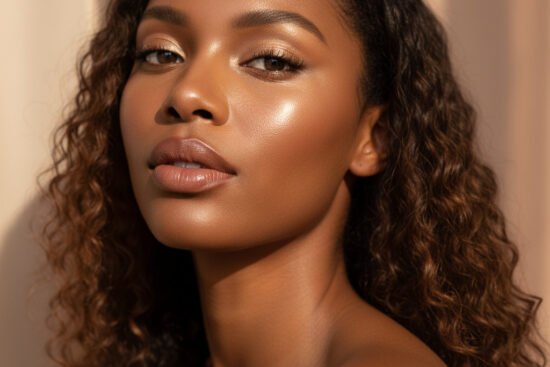
Color correcting isn’t about adding more makeup — it’s about using smarter technique. When done correctly, it creates a flawless base that looks like skin, not product.
✨ Call to Action
Ready to master your base? Add color correcting to your routine and watch your confidence level rise with every blend.
Related posts:
 Skincare Products for Reducing Pigmentation and Dark Spots in Women of Color
 Skincare Products for Reducing Pigmentation and Dark Spots in Women of Color
 How to Treat Acne on Dark Skin Without Causing Dark Spots
 Effective Ways to Treat Dark Circles with Skincare Products
 24k Gold Under Eye Patches Review
 Tackling Dark Spots with the Right Skincare Products