With dry, brittle hair you can restore softness and strength using simple pantry ingredients; I show easy, natural recipes that fit your schedule and budget. I explain which oils repair strands and which additives to avoid – avoid undiluted crucial oils and hot oil burns – and share effective, safe formulas you can try at home for visible results.
Key Takeaways:
- Natural deep conditioners restore moisture and soften dry, brittle hair using oils (coconut, olive, avocado), butters (shea), humectants (honey, glycerin) and occasional proteins (yogurt, egg, hydrolyzed protein).
- Apply to clean, damp hair from mid-shaft to ends, cover with a shower cap and add gentle heat (warm towel or steamer) for 20-45 minutes to boost penetration; rinse thoroughly with cool water to seal the cuticle.
- For very dry or damaged hair, deep condition about once a week; for maintenance, every 2-4 weeks-adjust frequency based on how your hair responds.
- Use balanced recipes (roughly 1-3 tbsp oils/butters + 1 tbsp humectant + 1 tbsp protein when needed) and avoid frequent protein-only treatments to prevent stiffness.
- Always patch-test for allergies (nuts, dairy, egg) and avoid applying hot, cooked egg mixtures; opt for unheated ingredients or commercially prepared protein products if uncertain.
- Customize by porosity: high-porosity hair benefits from heavier oils/butters and sealing, low-porosity hair responds better to lighter oils and heat to open the cuticle.
- Make small batches, store perishable blends refrigerated and discard if smell or texture changes; keep tools and containers clean to prevent contamination.
Understanding Dry, Brittle Hair
Causes of Dryness
In my experience the main drivers are chemical processing (bleach, perms, relaxers) and repeated heat styling-flat irons commonly reach 200-230°C (392-446°F), which lifts the cuticle and accelerates moisture loss. Overwashing with sulfates strips sebum, while UV exposure and low humidity dehydrate strands. Age plays a role too: after about 40 hair produces noticeably less oil. I find that overprocessing and high heat produce the most persistent brittleness.
Signs and Symptoms
You’ll spot dryness through persistent dullness, a rough, straw-like texture, increased static and tangling, and frequent split ends or breakage during brushing. Colored or lightened sections often feel the most fragile, and ends that snap rather than stretch signal structural compromise. When you see breakage instead of elasticity, that’s a clear sign your hair needs restorative care.
I recommend a couple quick at-home checks: the wet-stretch test (healthy wet hair stretches about 20-30% before breaking; dry, damaged hair snaps or stretches minimally) and the porosity float test (high-porosity strands sink). I use these to gauge whether I should focus on sealing the cuticle with protein or locking in moisture with richer emollients.
Importance of Deep Conditioning
I make deep conditioning a non-negotiable step because it rebuilds what chemical services and heat strip away: moisture, elasticity and cuticle integrity. With consistent care-typically once weekly for damaged hair or every 2-3 weeks for healthier strands-you can restore manageability, reduce tangles and lower breakage during styling, often seeing measurable improvement within 3-6 treatments.
Benefits for Hair Health
I use targeted deep treatments to boost elasticity, increase shine and improve slip for detangling; for example, protein-plus-moisture cycles often reduce breakage during combing and styling. You’ll also notice longer-lasting color and fewer split ends when you follow a schedule tailored to your porosity and damage level.
How Deep Conditioners Work
I combine humectants (glycerin, honey), emollients (shea, coconut oil) and small-protein molecules (hydrolyzed keratin, collagen) so they penetrate the cortex, swell strands and fill microscopic gaps in the cuticle. Applying moderate heat and slightly acidic formulas helps the ingredients enter and then close the cuticle, sealing benefits in; avoid protein overload which can stiffen hair.
Different hair porosity and ingredient size determine uptake: low-porosity hair benefits from 10-15 minute timed treatments with light heat, high-porosity hair often needs 20-30 minutes and heavier emollients. I recommend weekly for chemically damaged hair and every 2-4 weeks for normal hair; over-conditioning can weigh fine hair down, while too much protein can make strands brittle.
Natural Ingredients for Deep Conditioning
I pull from pantry staples and targeted butters because they deliver measurable results: coconut oil’s lauric acid penetrates the shaft and reduces protein loss (see Rele & Mohile, 2003), while shea butter seals moisture in porous strands. I balance treatments by alternating hydrating oils and occasional protein; for dry, brittle hair I recommend oil masks 1-2 times weekly and protein treatments only every 4-6 weeks to avoid stiffness.
Oils for Hydration
I use coconut, argan, jojoba, olive and castor for different needs: coconut (1-2 tbsp) for penetration, argan (1 tsp-1 tbsp) for vitamin E and shine, jojoba to mimic sebum, castor to thicken ends. Warm oils to body temperature to increase absorption, apply mostly to mid-lengths and ends, and avoid heavy oils on the scalp if you get buildup; fine hair benefits from lighter jojoba or 50/50 blends with aloe.
Other Natural Additives
I add humectants and proteins like honey (1 tsp-1 tbsp) to draw moisture, yogurt for 5-10% protein plus lactic acid to smooth cuticles, avocado for vitamins A and E, and egg yolks for concentrated lipids. Use banana or aloe for slip and elasticity. Patch-test for allergies and be cautious with whole-egg masks on colored hair-frequent protein can make brittle strands feel stiff.
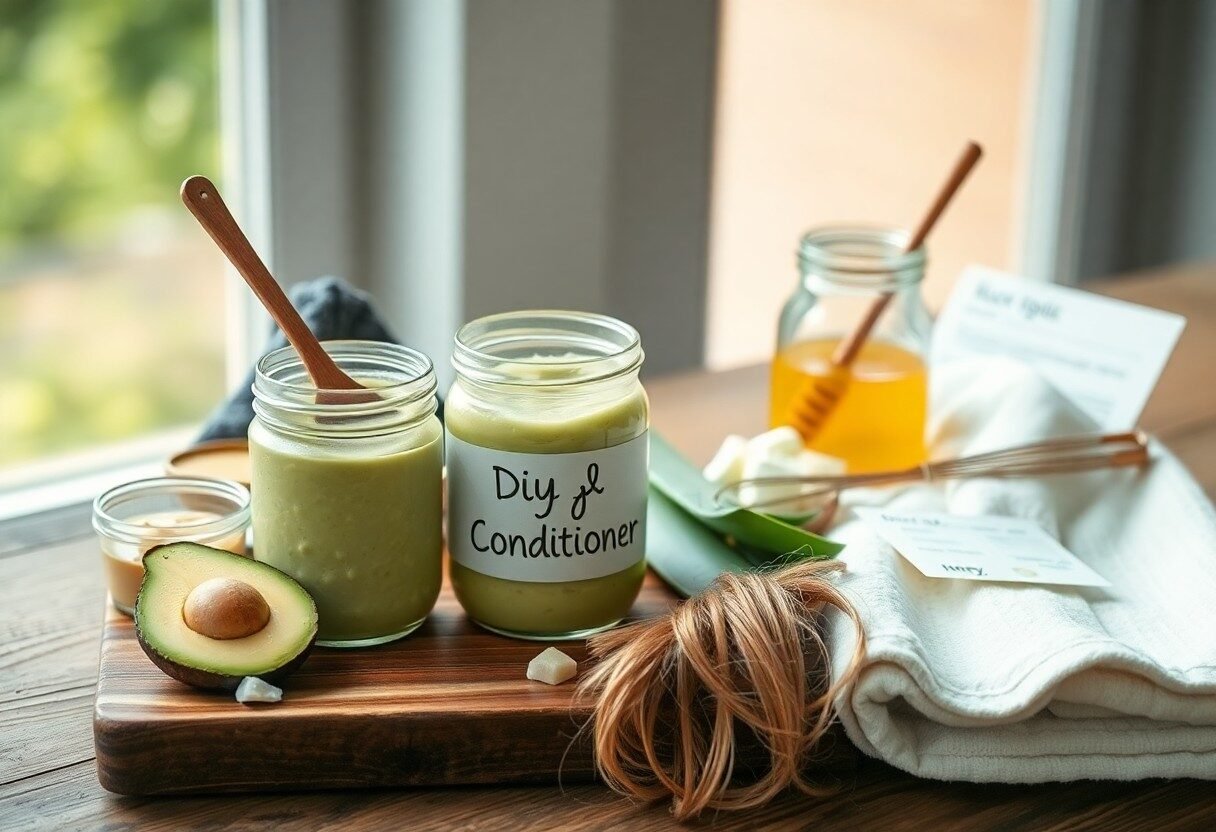
I often recommend two go-to mix formulas: for hydration mash ½ ripe avocado + 1 tbsp olive oil + 1 tsp honey, apply 20-30 minutes; for repair blend 1 egg yolk + 2 tbsp yogurt + 1 tbsp olive oil, apply 10-15 minutes and rinse with cool water. I always tell clients to do a strand test, rinse thoroughly, and limit protein treatments to every 4-6 weeks while hydrating weekly.
DIY Deep Conditioner Recipes
I share straightforward masks you can make in 5-10 minutes using pantry staples, with clear measurements, timing, and frequency. For most recipes I recommend 20-30 minutes under a shower cap and weekly application for very dry hair; adjust to every 10-14 days if your hair is fine. I also advise patch-testing oils and noting how your hair responds to avoid buildup.
Coconut Oil and Honey Mask
I mix melted coconut oil with raw honey in a roughly 1:1 ratio-about 1-2 tablespoons each for shoulder-length hair-because coconut oil penetrates the cortex while honey acts as a humectant. I apply from mid-lengths to ends, avoid a greasy scalp, warm it gently, then sit 20-30 minutes under a cap. Be aware coconut oil can solidify in cool temps and may cause build-up if overused.
Avocado and Olive Oil Treatment
I mash one ripe avocado with 1 tablespoon olive oil (add an egg yolk for extra protein if your hair is very porous). Avocado supplies vitamins A, E and fatty acids; olive oil smooths the cuticle. I apply to damp hair, cover, and leave 30-45 minutes. Avoid the egg if you have allergies and limit protein additions if your hair already feels stiff.
For best results I blend the avocado to a creamy consistency-use 1 ripe avocado + 1 tbsp olive oil for shoulder-length hair; increase to 2 tbsp oil for very coarse hair. I apply to clean, damp hair, cover with a warm towel or low-heat cap, and rinse with cool water followed by a gentle sulfate-free shampoo. If your hair is fine, I reduce leave-in time to 10-15 minutes because olive oil can weigh hair down; for high-porosity hair I add heat and keep it at 30-45 minutes.
How to Apply Deep Conditioners
After shampooing, I detangle damp hair and apply deep conditioner from mid-length to ends, avoiding roots if you have oily scalp. I section hair into at least four parts so the product reaches every strand. Then I cover with a shower cap and add heat-either a heat cap or a warm towel-for 15-30 minutes to boost penetration; without heat I leave it 30-60 minutes. Finally I rinse with cool water to seal the cuticle and enhance shine.
Step-by-Step Application
I start by parting hair into sections, then apply a nickel-to-quarter-sized amount per section depending on length and porosity. I work product through with fingers or a wide-tooth comb, concentrating on damaged ends. I cover with a cap, apply heat for 15-30 minutes for high-porosity or chemically treated hair, and rinse until water runs clear. If your scalp is oily I skip roots to prevent buildup; if low-porosity, I use slightly warmed oil to help absorption.
Application Breakdown
| Step | Action / Tip |
|---|---|
| Sectioning | Divide into 4-8 sections so product reaches all strands; shorter hair needs fewer sections. |
| Amount & Placement | Apply from mid-shaft to ends; use more on porous or chemically treated areas, less at roots. |
| Heat & Time | Use heat for 15-30 minutes (or 30-60 minutes without); warm towel works if no heat cap. |
| Rinsing | Rinse until water runs clear; finish with cool water to close the cuticle and boost shine. |
| Finishing | Detangle gently and air-dry or diffuse on low heat; avoid heavy products on the scalp to prevent buildup. |
Frequency of Use
I recommend deep conditioning 1-2 times per week for severely dry or chemically processed hair, while normal hair can usually go every 2-3 weeks. Fine or low-porosity hair should start at once every 2-3 weeks to avoid heaviness; adjust based on shine, elasticity, and breakage.
When I assess progress I look for signs: hair that snaps or has excessive split ends benefits from twice-weekly treatments for 4-8 weeks, then spacing out. Conversely, if hair feels limp or flat after sessions, reduce frequency and switch to lighter oils-over-conditioning can cause limp hair. I also recommend alternating moisture masks with protein treatments every 4-6 weeks for structural repair, and tracking changes with simple elasticity and porosity checks.
Tips for Maintaining Healthy Hair
I focus on consistent hydration, gentle handling, and product simplicity: I use a deep conditioner weekly to restore lipids, avoid overprocessing that accelerates brittle hair, and limit hot tools to prevent breakage. I also track wash frequency to suit scalp oil levels. After six weeks of steady care you should see reduced split ends and improved elasticity.
- Use a deep conditioner 1× weekly for 10-30 minutes.
- Limit heat styling to under 180°C (350°F) and always apply heat protectant.
- Avoid sulfates and denaturing alcohols that worsen dry hair.
- Trim 0.5-1 cm every 8-12 weeks to remove split ends.
Lifestyle Changes
I adjust diet and habits to support strands: I aim for 20-30 g protein per meal, eat oily fish twice weekly for omega‑3s, and drink about 2 liters of water daily to combat dry hair. I get 7-9 hours of sleep and use 10-15 minutes of daily stress relief to lower shedding rates; quitting smoking improves scalp circulation within months.
Recommended Hair Care Practices
I wash 1-2 times weekly with a sulfate‑free cleanser, apply a deep conditioner for 10-20 minutes, and detangle with a wide‑tooth comb starting at the ends. I limit chemical services and use protein treatments every 6-8 weeks for strength, balancing moisture and protein to avoid stiffness.
I focus on ingredient choices: avoid sulfates and drying alcohols because they strip moisture, choose formulas with glycerin, ceramides, or hydrolyzed proteins, and use oil pre‑treatments-coconut oil to penetrate and argan oil to seal. I recommend applying heat (steamer or warm towel) during conditioning for 15-30 minutes once weekly and tracking results; I’ve seen elasticity improve within four weeks when clients follow this protocol.
Summing up
With this in mind, I encourage you to try simple, natural deep conditioners-like avocado, coconut, honey, and olive oil blends-tailored to your hair’s porosity; they restore moisture, reduce breakage, and are easy to mix and apply at home. I advise testing a small strand, adjusting ingredient ratios for your needs, and using treatments weekly to maintain softer, stronger hair.
FAQ
Q: What does a deep conditioner do and how is it different from a regular conditioner?
A: A deep conditioner penetrates the hair shaft to restore moisture, rebuild compromised cuticles and add weight and slip for easier detangling; a regular conditioner mostly coats the surface for immediate softness and manageability. Deep treatments use richer oils, humectants (honey, glycerin), and sometimes proteins (egg, yogurt, hydrolyzed protein) that need longer contact time and often gentle heat to work. Use deep conditioning when hair feels brittle, straw-like, or snaps easily; use regular conditioner after every wash to maintain smoothness between treatments.
Q: How often should I deep condition dry, brittle hair?
A: Frequency depends on damage level and porosity: very dry or chemically/heat-damaged hair benefits from once weekly; moderately dry hair can deep condition every 1-2 weeks; low-porosity or fine hair should limit treatments to every 3-4 weeks to avoid buildup and limpness. Increase frequency for a short repair cycle (4-6 weeks), then reduce once hair improves. If you use protein-heavy masks, space them 3-6 weeks apart to prevent stiffness from protein overload.
Q: What simple natural ingredients work best, and can you give a few easy recipes?
A: Moisture + slip: 1 ripe avocado, 1 tbsp olive oil, 1 tbsp honey – mash, warm slightly, apply 20-30 minutes. Oil treatment: 2 tbsp coconut oil + 1 tbsp jojoba or olive oil – warm to liquid, apply 30-60 minutes under a cap. Protein boost: 1 egg yolk + 2 tbsp plain yogurt + 1 tsp honey – whisk, apply 15-20 minutes (avoid long heat). Hydration for color-treated hair: 3 tbsp aloe vera gel + 1 tbsp glycerin + 1 tsp argan oil – apply 20-30 minutes. For all recipes, work from mid-lengths to ends, use gentle heat (warm towel or shower cap), rinse with lukewarm/cool water. Adjust quantities for hair length and thickness.
Q: What is the best step-by-step method to apply a homemade deep conditioner at home?
A: Shampoo lightly to remove buildup, towel-blot excess water until hair is damp. Section hair and apply the mask evenly from mid-lengths to ends, avoiding the scalp if you tend to be oily. Comb gently with a wide-tooth comb to distribute. Cover with a plastic cap and add gentle heat (heated towel, warm shower, or heat cap) for the recommended time. Rinse thoroughly with lukewarm water, condition lightly if desired, then style. For maximum penetration, leave oil-based masks longer; for protein masks keep time short to prevent stiffness.
Q: Can deep conditioners repair severely damaged or chemically treated hair?
A: Deep conditioners can improve moisture balance, reduce breakage and smooth cuticles, but they cannot permanently reattach split ends or reverse severe structural loss. For chemically or heat-damaged hair, combine hydrating masks with occasional protein treatments to rebuild strength; alternate protein and moisture masks based on how hair responds. For extreme damage, trimming split ends and reducing heat/chemical exposure are necessary alongside consistent deep conditioning to see real improvement over months.
Q: How should I store homemade deep conditioners and how long do they last?
A: Store water-containing masks (yogurt, aloe, egg) in the refrigerator and use within 3-5 days to avoid bacterial growth; discard if the smell or texture changes. Oil-based blends last longer at room temperature (1-3 months) if kept in a cool, dark place in a sealed container. For longer shelf life, prepare small batches each use and avoid introducing water or fingers into the container; use clean utensils to scoop masks.
Q: What precautions should I take (allergies, important oils, and color-treated hair)?
A: Patch-test new ingredients on a small skin area 24 hours before full use if you have sensitive skin or allergies. Dilute important oils to ~0.5-1% (1-6 drops per tablespoon of carrier oil) and avoid irritants like undiluted citrus on the scalp if you’ll be in sunlight. Be cautious with acidic or bleaching agents (lemon, vinegar) on color-treated hair because they can alter tone. Stop use and rinse immediately if you feel burning or severe irritation. Trim split ends before deep treatments for best-looking results after conditioning.
Related posts:
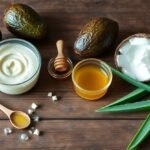 DIY Hair Masks – Natural Ingredients for Moisture and Growth
 As I Am Dry & Itchy Hair Care Shampoo and Cowash Review
 As I Am Dry & Itchy Scalp Care Olive & Tea Tree Oil Shampoo Review
 As I Am Dry & Itchy Scale Cowash (Pack of 2) Review
 As I Am Dry & Itchy Scalp Care Conditioner Review
 As I Am Dry & Itchy Scalp Care Cowash Review