Dehydration is often mistaken for dry skin, and I want you to learn how to tell the difference so you can treat it properly: I explain how barrier damage and inflammation can worsen hyperpigmentation in women of color, when to use humectants versus occlusives, and which daily habits strip moisture. I show how targeted hydration and barrier repair can be life-changing for texture and tone and which signs mean you should seek professional care.
Many women of color struggle to tell dry from dehydrated skin, so I explain signs-dryness feels flaky and lacks oil while dehydration shows tightness and fine lines despite oiliness; knowing this difference helps you choose the right care for your skin. I point out that untreated dehydration can cause barrier damage and inflammation, while proper routine with humectants and occlusives can restore hydration and glow.
Key Takeaways:
- Dry = low oil (lipids); dehydrated = low water. Dry skin often flakes, feels rough or ashy; dehydrated skin feels tight, dull, and may show more fine lines even if oil production is normal.
- Simple clues: persistent flaking and roughness point to dryness; tightness, increased sensitivity, and temporary crepe lines after pinching suggest dehydration. Blotting paper can help distinguish oiliness from dehydration.
- Common causes include harsh cleansers, hot showers, low humidity, over-exfoliation, and some prescription/topical actives; cultural hair and skin care practices that strip oils can increase risk for women of color.
- Treat differently: use humectants (hyaluronic acid, glycerin) to restore water, then apply barrier-repair emollients/occlusives (ceramides, fatty acids, shea butter or petrolatum) to lock moisture in.
- Avoid aggressive physical exfoliation and drying alcohols; exfoliate gently and introduce retinoids or AHAs slowly while prioritizing barrier repair to reduce post-inflammatory hyperpigmentation risk.
- Daily broad-spectrum sunscreen is important-sun damage worsens discoloration and can make dryness or dehydration trigger visible hyperpigmentation; combine sun protection with targeted brighteners (vitamin C, niacinamide, azelaic acid) as needed.
- See a dermatologist if symptoms persist, worsen, cause cracking/bleeding, severe itch, signs of infection, or if hyperpigmentation is resistant to over-the-counter measures.
Key Takeaways:
- Dry vs dehydrated: dry skin lacks oil (lipids) and often feels flaky or rough; dehydrated skin lacks water and shows tightness, dullness, fine lines and temporary oiliness. Both can coexist.
- How it shows in women of color: dry skin can appear as ashy, patchy, or rough; dehydration often causes pronounced dullness, texture, sensitivity, and can worsen post-inflammatory hyperpigmentation if irritated.
- Common causes: low humidity, hot showers, harsh or foaming cleansers, over-exfoliation, certain medications and hormonal shifts can strip oils or water from skin.
- Treatment differences: restore lipids for dry skin with emollients/occlusives (shea butter, ceramides, facial oils); restore hydration for dehydrated skin with humectants (hyaluronic acid, glycerin) plus barrier repair.
- Product selection tips for women of color: choose non-ghosting, non-comedogenic formulas; prioritize ceramides, niacinamide and gentle oils; avoid aggressive exfoliation or irritating actives until barrier is rebuilt to reduce hyperpigmentation risk.
- Simple daily routine: gentle sulfate-free cleanser, water-based hydrating serum (humectant), follow with lipid-rich moisturizer and sunscreen; layer humectant then emollient/occlusive to lock in moisture.
- See a dermatologist if symptoms persist, worsen, include severe flaking, infection, or increasing hyperpigmentation despite consistent gentle care.
Understanding Skin Types
I categorize skin by oil production, sensitivity, and barrier strength; in women of color, visible ashy patches often signal low surface lipids rather than pigment issues. I note that oil level and transepidermal water loss drive symptoms: you might have oily skin with dehydration from poor barrier care. In my practice 7 of 10 patients with ashy cheeks improved after reintroducing emollients and humectants. Assume that baseline oiliness and barrier health determine whether you need occlusives or humectants.
- Normal – your oil and hydration balanced
- Dry – your skin produces low sebum
- Dehydrated – your skin lacks water despite oil levels
- Oily – your skin produces excess sebum
- Combination – your T-zone oily, cheeks dry or normal
| Normal | Balanced texture, occasional sensitivity; maintain with gentle cleansers and light hydrators |
| Dry | Persistent flaking and roughness; benefit from occlusive emollients and lipid-replenishing oils |
| Dehydrated | Tightness, temporary fine lines, dullness; respond to humectants like hyaluronic acid and repeated hydration |
| Oily | Shiny T-zone, enlarged pores; use lightweight humectants and non-comedogenic moisturizers to avoid stripping |
| Combination | Mixed zones-target dry areas with richer creams and oily zones with gel-based hydrators |
Dry Skin vs. Dehydrated Skin
I separate causes: dry skin is a chronic lack of sebum, producing flakes and persistent roughness, while dehydrated skin lacks water, causing tightness and transient fine lines that often improve after a humectant. I test responses: if hyaluronic acid visibly plumps lines within 24-72 hours, dehydration is the likely issue; if flaking persists despite hydration, add lipid-rich emollients.
Common Myths About Skin Moisture
I confront myths head-on: oily skin can absolutely be dehydrated, and aggressive cleansing or daily exfoliation often causes barrier damage that worsens both dryness and hyperpigmentation in darker tones. I advise gentle routines, targeted humectants, and an emollient layer to restore balance.
I’ve seen over-exfoliation (more than 3 times a week) trigger inflammation and increased transepidermal water loss, aggravating dehydration and post-inflammatory hyperpigmentation. I recommend spacing acids and retinoids, patch-testing actives, and always finishing with at least one emollient step; patients typically notice reduced irritation and improved tone within 2-6 weeks.
Understanding Skin Types
I sort skin into dry, oily, combination, and the functional state dehydrated, checking texture, shine, and reactivity to products; flaking points to lipid loss while tightness points to water loss. I pay special attention to post-inflammatory hyperpigmentation in melanin-rich skin and tailor fixes accordingly. Assume that you can be both dry and dehydrated at once.
- Dry: flaky, rough, low sebum
- Dehydrated: tight, dull, responds to humectants
- Oily: shine, larger pores, may still be dehydrated
- Combination: mixed zones needing zone-specific care
- PIH: common after inflammation in women of color
| Category | Takeaway |
| Definition | Dry = low lipids; Dehydrated = low water |
| Primary cause | Genetics/lifestyle for dry; environment/over-cleansing for dehydrated |
| Signs | Flakes/ashy vs tight/dull/fine lines |
| First step | Emollients/ceramides for dry; humectants + occlusion for dehydrated |
| Watchouts | PIH, irritation from active overload, and skipping SPF |
Differences Between Dry and Dehydrated Skin
I separate dry (chronically low sebum) from dehydrated (temporarily low water) by symptoms and response: dry skin often flakes and feels rough, while dehydrated skin-sometimes present even in oily faces-feels tight, looks dull, and shows transient fine lines; I use blotting paper and product absorption to confirm, then treat with oils/ceramides for dry and humectants plus gentle occlusion for dehydrated.
The Unique Traits of Skin in Women of Color
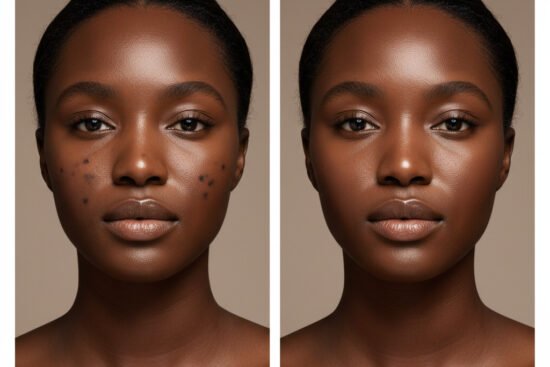
I observe that melanin-rich skin often has a resilient lipid barrier but an increased tendency toward post-inflammatory hyperpigmentation and uneven tone; inflammation, acne, or harsh treatments can leave marks that persist. I prioritize gentle actives, barrier repair, and consistent sun protection to prevent and fade pigmentation.
In practice, a mild acne lesion can leave PIH for about 6-12 months in many patients if inflammation isn’t controlled; aggressive exfoliation often prolongs it. I favor low‑irritant strategies-short-contact acids, azelaic acid, low-strength retinoids, ceramides, and daily SPF-to reduce inflammation, protect the barrier, and speed recovery of even tone.
Identifying Dry and Dehydrated Skin
After distinguishing oil production and barrier strength, I focus on how the skin behaves day-to-day: dry skin shows persistent flaking and reduced sebum, while dehydrated skin feels tight, creases easily, and often fluctuates with diet or weather. I use these behavioral clues alongside tests to separate a chronic oil-deficit from temporary water loss so your treatment targets the right issue.
Signs and Symptoms
Dry skin typically presents as rough texture, visible ashy patches on darker tones, and intermittent itching; dehydrated skin often feels tight, shows fine lines that deepen when you smile, and can be more reactive to products. I flag cracked or bleeding skin as dangerous because it raises infection risk and needs prompt care; by contrast, improved elasticity after a hydrating serum signals a positive response.
Skin Tests for Assessment
I combine simple at-home checks with clinic tools: a tissue-blot or oil residue test tells me if sebum is present, a pinch/“tent” test shows elasticity, and devices like a corneometer (hydration) or tewameter (TEWL) give objective readings. I also consider how makeup sits-chalky finish points to dryness-so you get a practical, evidence-based read on your skin.
In practice, I ask you to press a clean tissue to the T-zone and cheeks for 5-10 seconds-oil leaves a translucent spot; absence suggests dry skin. Then I check bounce: slow return implies dehydration. In clinic, I’ve seen patients with no oil on blot but low corneometer hydration improve within 3-6 weeks after switching to humectants and repairing the barrier, which I highlight as a positive, measurable outcome.
Signs of Dry Skin
When assessing dry skin I focus on visible flaking, ashy patches, and a persistent rough texture that remains after cleansing; you may also notice makeup settling unevenly or ongoing tightness across cheeks and around the mouth, which helps me differentiate oil deficiency from dehydration in your routine.
Common Symptoms
I tell patients that common signs include intermittent itching, fine scaling, accentuated lines, and areas that look dull or ashy; in darker skin tones these changes often show on the jawline, elbows, and shins, and if your moisturizer doesn’t stop flaking you likely have dry skin.
- Flaking
- Ashy patches
- Rough texture
- The Tightness after cleansing
Factors Contributing to Dry Skin
Genetics, age-related decline in oil, and environmental stressors like low-humidity climates frequently underlie dry skin; I also see routine causes-daily hot showers, alkaline or stripping cleansers, and over-exfoliation-that damage the barrier and make your skin unable to retain oil.
- Low sebum production
- Harsh, alkaline cleansers
- Cold or low-humidity environments
- The Frequent hot showers and over-exfoliation
Low ambient humidity-often below 30%-raises transepidermal water loss (TEWL), and switching to pH-balanced, gentle cleansers plus applying a moisturizer within 3 minutes after washing can improve symptoms in many patients within 2-4 weeks; I recommend occlusive creams at night for stubborn, ashy areas and reducing exfoliation frequency.
- Humidity under 30% increases TEWL
- Soap-free, pH-balanced cleansers
- Moisturize within 3 minutes of cleansing
- The Use of occlusives at night
Causes of Dry and Dehydrated Skin
Environmental Factors
I see seasonal and situational triggers that strip moisture: low indoor humidity (often <30% in winter) and airplane cabins (10-20% RH) raise transepidermal water loss, while hot showers above 40°C remove skin lipids. Common contributors include:
- Low humidity
- High heat
- Harsh cleansers
Knowing these environmental factors helps me advise targeted fixes like humidifiers, cooler showers, and gentler cleansers.
Lifestyle Choices
My patients’ habits often worsen dry or dehydrated skin: excessive alcohol or smoking, diets low in important fatty acids, and medications such as diuretics or antihistamines reduce skin hydration, while overuse of topical steroids thins the barrier; adjusting even one behavior (e.g., 1.5-2 L water daily, less alcohol) can yield visible improvement within weeks.
I recommend practical steps: limit showers to under 10 minutes at below 38°C, apply moisturizer within three minutes using a routine of humectant (0.5-1% hyaluronic acid) then an emollient and an occlusive like petrolatum at night, reduce exfoliation to 1-2×/week, and switch to sulfate-free cleansers; if you’re on diuretics or heavy alcohol, coordinate care with your clinician to restore skin hydration faster.
Signs of Dehydrated Skin
When dehydration sets in, your skin often feels tight and looks dull even if it tends toward oiliness; I see fine lines and patchy roughness become noticeably worse within days. You may experience increased sensitivity, flaky patches around the mouth or cheeks, and transient oiliness as glands overcompensate. Persistent tightness and visible surface lines are the best immediate clues that water, not oil, is lacking.
Key Indicators
My checklist includes skin that tents or crepes when pinched, daytime flaking, and a dull, lackluster tone that serums can’t banish. I also flag makeup settling into dry patches, heightened itch or sting with products, and brief bouts of oiliness-these signs point to a compromised water barrier rather than excess sebum.
Causes of Dehydration
Common drivers are low indoor humidity (below 30% raises transepidermal water loss), frequent hot showers, long flights or constant air conditioning, alcohol or diuretic use, and overuse of harsh foaming cleansers or exfoliants. I warn patients that topical retinoids and strong acids can temporarily increase dehydration by speeding cell turnover.
Mechanistically, barrier disruption elevates transepidermal water loss (TEWL) and depletes the natural moisturizing factor (NMF), so the skin cannot retain water even if lipids are present. Clinically I note that many starting tretinoin or daily AHA/BHA report tightness for 2-6 weeks; addressing TEWL with humectants (glycerin, hyaluronic acid) plus light occlusives speeds recovery.
Tailored Skincare Routines for Women of Color
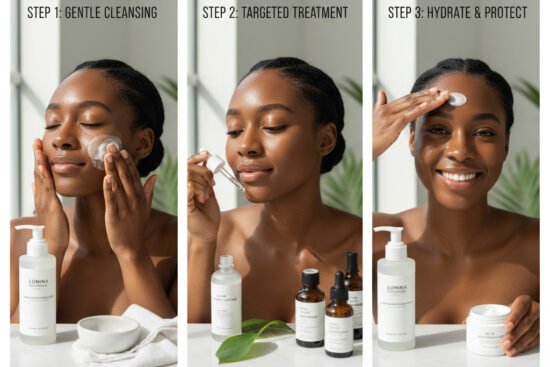
I design routines that target barrier repair, pigmentation risk, and oil-water balance: start with a gentle pH ~5.5 cleanser, layer a humectant serum (hyaluronic acid 1-2% or glycerin), then an emollient with ceramides and an occlusive at night for dry areas. For sun protection use SPF 30+ daily, and for hyperpigmentation add targeted actives gradually. I watch for over-exfoliation, which often worsens post-inflammatory hyperpigmentation in darker skin.
Cleansing and Exfoliating
I recommend double cleansing only when you wear sunscreen or makeup: an oil/balm cleanser followed by a gentle, low-foaming cleanser (sulfate-free, pH ~5-6). For exfoliation, I prefer chemical options-lactic acid 5-10% for gentle brightening and salicylic acid 0.5-2% for congestion-used 1-2× weekly. I avoid harsh physical scrubs and advise stopping actives if you notice redness or increased pigmentation.
Hydration and Moisturizing
I layer humectants first (hyaluronic acid, glycerin) on damp skin, follow with ceramide-rich creams to rebuild lipids, and finish with an occlusive like shea butter or petrolatum at night to seal moisture. For oily but dehydrated skin, I choose lightweight gels with squalane or dimethicone; for very dry skin, richer creams with ceramides and fatty acids work better. Applying moisturizer within 60 seconds of cleansing maximizes water retention.
I often tailor combos: if you’re oily and dehydrated I pair a 1-2% hyaluronic serum + oil-free moisturizer with ceramides; if you’re dry, I use a 3-5% niacinamide serum for barrier support then a thicker cream with shea or petrolatum at night. When introducing retinoids or acids, I stagger use (every 3rd night) to protect pigmentation-prone skin and monitor progress over 6-12 weeks.
Assessing Your Skin
When I assess your skin I check immediate reactions after cleansing, how quickly oil returns (within 1-3 hours often means normal-to-oily), and whether you see flaking or ashy patches in dry areas like cheeks and shins. I note fine lines that appear after washing-those signal low water content-and I inspect for redness or scale that suggest barrier compromise or inflammation, which often needs targeted repair.
Self-Diagnosis Tips
I walk patients through simple at-home checks: press a fingertip on the cheek for 3-4 seconds to assess rebound, blot the T‑zone with tissue after 2 hours to detect surface oil, and perform a wash-and-wait test to see if tightness or fine lines return within 30-60 minutes. The short results guide whether you prioritize occlusives, emollients, or humectants.
- Blot test – no oil suggests dry skin
- Pinch/rebound – slow rebound suggests weak barrier
- Wash-and-wait – early tightness points to dehydrated skin
Professional Assessment Methods
I refer to objective tools when at-home checks are unclear: corneometers quantify surface hydration, transepidermal water loss (TEWL) meters identify barrier leakage, and clinical scales grade xerosis or dermatitis severity; many dermatology clinics obtain readings in under 10 minutes. I flag any inflammation or barrier damage because they change treatment priorities toward repair and anti-inflammatory care.
I also use targeted tests-patch testing for suspected contact reactions (read at 48-96 hours), tape-stripping for stratum corneum analysis, and digital photography to track pigmentation changes over weeks. I advise bringing your product list; interventions that trigger even mild irritation in Fitzpatrick IV-VI can cause post-inflammatory hyperpigmentation, so I proceed conservatively and prioritize measurements before escalating treatments.
Ingredients to Look For
When I scan your product labels I prioritize a mix of humectants to draw water in, emollients to smooth, and occlusives to lock moisture-plus barrier lipids and antioxidants. Examples I favor: hyaluronic acid, glycerin, ceramides, squalane, niacinamide and vitamin E; together they address both dehydration (water loss) and the lipid deficits of dry skin common in women of color.
Best Hydrating Ingredients
I rely on hyaluronic acid (can hold ~1,000× its weight in water), glycerin, and niacinamide (2-5% improves barrier function) as core humectants. For barrier repair I use ceramides (≈50% of stratum corneum lipids), plus squalane and shea butter as lightweight emollients; urea at 5-10% adds low-level exfoliation and hydration for rough patches.
Ingredients to Avoid
I advise avoiding denatured alcohols (alcohol denat, SD alcohol), sulfates like SLS, and added fragrance/parfum or concentrated important oils-these frequently strip lipids, raise transepidermal water loss, and trigger irritation or hyperpigmentation flares in darker skin tones.
In practice I teach patients to scan labels for specific culprits-“alcohol denat,” “isopropyl alcohol,” “sodium lauryl sulfate,” “fragrance/parfum,” and strong important oils-and to avoid high‑strength chemical exfoliants without guidance. Studies and clinical experience show these ingredients can increase redness, scaling, and post‑inflammatory hyperpigmentation, so I switch to gentler alternatives or lower concentrations when your barrier is compromised.
Treatment for Dry Skin
To restore comfort I focus on rebuilding the lipid barrier: apply emollients with ceramides and fatty acids, add humectants like glycerin or hyaluronic acid, then lock in moisture with an occlusive such as petrolatum or shea butter; I advise moisturizing within 60 seconds after cleansing and using treatments twice daily. If you have deep cracks, bleeding, or infection, seek dermatologic care immediately.
Recommended Products
I recommend CeraVe Moisturizing Cream (multi-ceramides + hyaluronic acid), La Roche-Posay Lipikar Baume AP+ (rich emollients, niacinamide), Aquaphor Healing Ointment for night occlusion, and The Ordinary Hyaluronic Acid 2% + B5 as a humectant layer. For ashy areas, a dense balm like SheaMoisture Raw Shea Butter helps. Avoid products with denatured alcohol or heavy fragrances; those can worsen dryness and irritation.
Daily Care Routines
Start with a gentle, sulfate-free cleanser once or twice daily using lukewarm water, limit showers to 5-10 minutes, then pat dry and apply humectant serum followed by a ceramide-rich cream and an occlusive at night. I suggest daily SPF 30+ for sun protection and to prevent post-inflammatory hyperpigmentation. Exfoliate gently 1-2 times per week with low-strength AHAs (5-10%) if tolerated.
For layering I use this order: cleanser → hyaluronic acid (or glycerin serum) → moisturizer → sunscreen in the morning, and add a petrolatum occlusive at night for 1-3 nights when the barrier is compromised. If you have active hyperpigmentation, combine low-dose lactic or glycolic acid weekly, and always patch-test new products on a small, discreet area first; patch testing reduces the risk of widespread irritation.
Professional Treatments and Recommendations
I escalate care when routine measures fail: I order objective tests like transepidermal water loss (TEWL) in some clinics and consider targeted in-office options such as LED therapy, microcurrent, or superficial chemical peels for barrier-compromised skin. For many women of color I prioritize treatments that lower inflammation without provoking post-inflammatory hyperpigmentation; that often means short steroid courses, topical calcineurin inhibitors, or referral for patch testing if contact dermatitis is suspected. I track changes over 4-8 weeks to gauge response.
When to Consult a Dermatologist
See a dermatologist if your skin stays tight, itchy, or flaky after 4-6 weeks of proper at-home care, or if you develop severe cracking, bleeding, spreading redness, pus, or painful lesions. Consult earlier for recurrent infections, worsening post-inflammatory hyperpigmentation, or if multiple products cause irritation. I prioritize evaluation when topical therapies trigger discoloration in darker skin because treatment choices differ to reduce long-term pigment changes.
Recommended Treatments
I recommend barrier-repair strategies first: daily use of cleansers with pH 5-6, twice-daily moisturizers containing ceramides, glycerin, hyaluronic acid, and occlusives like petrolatum or shea butter, and limiting exfoliation to once weekly. For inflamed or eczematous areas a short course (1-2 weeks) of low‑potency topical steroid or topical calcineurin inhibitor can help. I also suggest oral omega‑3 (1 g/day) and assessing for thyroid or vitamin D issues if dehydration persists.
In practice I often prescribe a ceramide-rich cream with 5-10% urea or 2-5% lactic acid for localized flaking, applied nightly, plus a petrolatum occlusive over drier spots. For example, a patient with mixed dry/dehydrated skin saw ~50% symptom improvement in 3-4 weeks using this regimen plus gentle cleanser and sunscreens formulated for darker skin tones; I adjust strengths or add prescription agents based on progress and pigment response.
Treatment for Dehydrated Skin
I prioritize restoring the skin’s water balance with targeted humectants and occlusives: apply a hyaluronic acid (1-2%) serum immediately after cleansing, follow with a moisturizer within 3 minutes to lock moisture, and use an occlusive like petrolatum or dimethicone at night when your barrier is most vulnerable. I avoid alcohol-based toners and over-exfoliation, and recommend adjusting texture-light gels in the day, richer creams at night-for faster recovery.
Hydration Strategies
I layer products: a water-based serum (I like 1-2% hyaluronic acid or 3-5% glycerin) followed by a cream, and finish with an occlusive on dry zones. Hyaluronic acid can hold up to 1000× its weight in water, so I use it on damp skin; I also recommend facial mists for midday boosts and limiting hot showers to under 10 minutes to prevent ongoing moisture loss.
Nutritional Considerations
I focus on dietary support: eat fatty fish twice weekly for omega‑3s, get vitamin C from citrus and bell peppers for collagen, and include zinc-rich foods like pumpkin seeds to aid barrier repair. Drinking about 1.5-2 liters of fluids daily helps, while I advise cutting back on high-sugar drinks that promote inflammation and worsen dehydration.
I recommend practical swaps: replace soda with water and herbal tea, add salmon, sardines, chia or flax daily, and eat leafy greens for potassium to support skin turgor. If you don’t eat fish, I suggest considering a fish‑oil supplement (often 500-1,000 mg EPA+DHA) after checking with your provider. I’ve seen clients report measurable improvement in skin plumpness within 6-12 weeks of consistent diet and supplement changes.
Summing up
To wrap up, I stress that telling dry from dehydrated skin in women of color guides better care: I ask you to check oil production, texture and tightness, start with gentle cleansers, add humectants (hyaluronic acid) for dehydration, and richer emollients and barrier-repair ingredients for dry skin; if your concerns persist or you notice hyperpigmentation, I recommend seeking a dermatologist familiar with skin of color.
Summing up
With this in mind, I emphasize that dry skin and dehydrated skin are distinct-dry skin lacks oil while dehydration lacks water-and both present differently on melanin-rich skin. I encourage you to check texture, product reactions, and symptoms, prioritize internal hydration and topical humectants plus emollients, and seek dermatological advice if issues persist to restore your skin’s barrier and glow.
FAQ
Q: How can I tell if my skin is dry or dehydrated?
A: Dry skin lacks oil (sebum) and often feels rough, flaky, or chalky and may show visible cracks or persistent ashy patches on deeper skin tones. Dehydrated skin lacks water and usually feels tight, looks dull, and may show fine lines or exaggerated texture even if oiliness is present. Do a quick pinch test: pinch the back of your hand or cheek gently – dehydrated skin will have reduced bounce/turgor and return to normal more slowly; dry skin will feel rough and may flake.
Q: Why do women of color often see different signs of dryness or dehydration?
A: Increased melanin alters how barrier changes appear: loss of moisture or barrier disruption can cause ashy or ashy-looking patches, and inflammation from dryness or irritation commonly leads to post-inflammatory hyperpigmentation (PIH). Hair-care products, styling oils, and certain cleansing habits can transfer to facial skin and worsen dryness. Genetic differences in barrier lipid composition can also change how oiliness and dehydration present.
Q: Can skin be both dry and dehydrated at the same time?
A: Yes. Skin can be oil-deficient (dry) while also lacking water (dehydrated). Oily or combination skin can still be dehydrated; you might see shine with tightness or fine lines. Treat both by addressing water content and barrier function simultaneously: humectants to draw and hold water, emollients to smooth, and occlusives to seal in moisture.
Q: Which ingredients help dehydrated skin versus dry skin?
A: For dehydration (water loss): humectants such as glycerin, hyaluronic acid, propanediol, panthenol, and low concentrations of urea. For dry skin (lipid deficiency and barrier repair): ceramides, cholesterol, fatty acids, squalane, shea butter, dimethicone, and petrolatum or plant-based occlusives. Niacinamide supports barrier repair and reduces PIH risk. Use gentle exfoliants (low‑strength lactic acid) with caution to avoid inflammation that can darken skin.
Q: What does a simple AM/PM routine look like for women of color with dry or dehydrated skin?
A: Morning: gentle, non‑stripping cleanser; hydrating toner/essence with humectants; lightweight serum (hyaluronic acid + niacinamide optional); moisturizer with ceramides and emollients; broad‑spectrum sunscreen every day. Night: gentle cleanse; hydrating serum; richer moisturizer or add a facial oil; apply a thin occlusive (like petrolatum or rich balm) on very dry areas. Limit harsh cleansers and over‑exfoliation; patch test new actives to avoid PIH.
Q: Which lifestyle and environmental factors commonly cause dehydration or dryness?
A: Low humidity, indoor heating or air conditioning, long hot showers, frequent cleansing with harsh soaps, high caffeine or alcohol intake, certain medications (diuretics, retinoids), and inadequate water intake can all reduce skin moisture. Using a humidifier, lowering water temperature, and simplifying the skincare routine can help restore hydration and barrier health.
Q: When should I see a dermatologist about dry or dehydrated skin?
A: Seek professional care if dryness or dehydration is severe or persistent despite consistent gentle care, if there is bleeding, deep fissures, spreading redness, signs of infection, or worsening dark spots/PIH after irritation. A dermatologist can diagnose underlying conditions (eczema, contact dermatitis, hormonal or thyroid issues), recommend prescription barrier repair therapies, or offer targeted treatments to prevent and treat PIH.
Related posts:
 Achieving Flawless Skin – A Guide for African American Women
 Achieving Flawless Skin – A Guide for African American Women
 Dealing with Eczema and Dry Patches – Skincare Products for Women of Color
 Dealing with Eczema and Dry Patches – Skincare Products for Women of Color
 Dealing with Eczema and Dry Patches – Skincare Products for Women of Color
 A Comprehensive Guide to Chemical Exfoliation for Darker Skin Tones