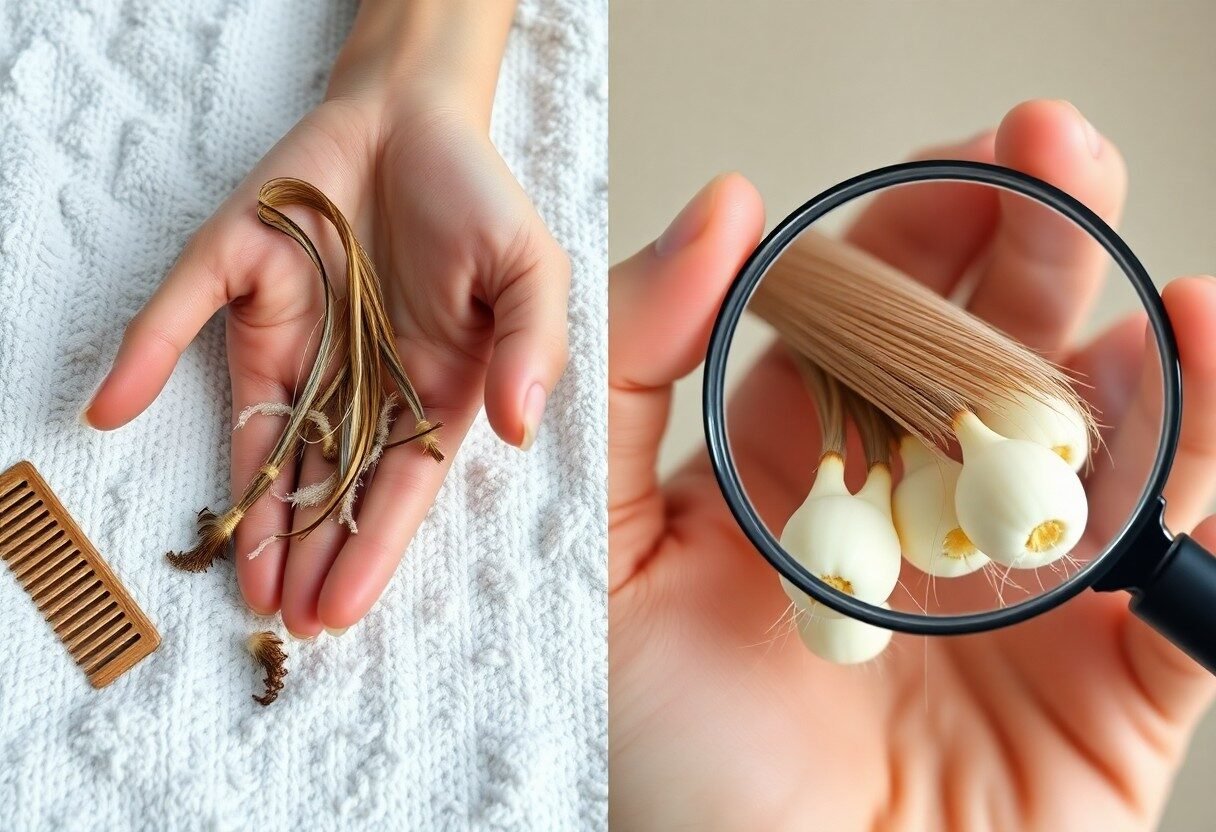
Hair that snaps off mid-shaft shows as short, jagged pieces and split ends, while hair that falls from the root usually has a small, tapered bulb; I guide you to check strands, scalp changes, and styling habits to distinguish breaking from shedding. If you notice rapid thinning or bald patches seek professional evaluation, and if it’s breakage, adopt gentle care, protein balance and reduced heat to restore strength.
Key Takeaways:
- Breakage vs. shedding: breakage shows short, uneven, frayed ends; shedding releases whole hairs with a white bulb at the root.
- Simple tests: pull test (gently tug small sections – more than a few hairs is abnormal) and count hairs lost in a single wash/brush to track trends.
- Common breakage causes: heat styling, chemical treatments, tight hairstyles, rough brushing, and inadequate moisture or protein balance.
- Common shedding causes: hormonal shifts, telogen effluvium after illness/stress, nutritional deficiencies, medications, and scalp conditions.
- Fixes for breakage: trim damaged ends, cut heat and chemical exposure, use wide-tooth combs, and balance strengthening protein treatments with regular hydration.
- Fixes for shedding: address underlying health issues with a provider, optimize diet (iron, protein, vitamin D, zinc), reduce stress, and improve sleep.
- See a professional when loss is sudden, widespread, accompanied by scalp irritation, comes out in clumps, or persists for several months.
Understanding Hair Breakage
Hair breakage occurs when the shaft snaps mid-length, leaving short, uneven, frayed ends instead of whole hairs with bulbs; I often find this concentrated at chemically treated zones or where friction and tension are greatest. In clinical observations, breakage patterns appear as irregular stubby lengths rather than uniform fallen hairs, and that distinction guides whether I focus on structural repair, reducing mechanical stress, or addressing product damage.
Causes of Hair Breakage
Chemical processing (bleach, perms), repeated heat styling above 350°F (≈180°C), tight hairstyles causing traction, aggressive wet brushing, and environmental damage (sun, chlorine) are common offenders; I also see low-protein diets and deficiencies like iron or vitamin D weaken shafts. For example, monthly full-head bleaching increases breakage risk substantially versus occasional glossing, and combined heat plus bleach multiplies damage.
Identifying Signs of Breakage
You’ll notice short, jagged stubs along part lines or ponytail areas, split or frayed cuticles under magnification, and inconsistent lengths in a banded zone-unlike shedding, these fragments lack a white bulb at the root. I check brushes and pillows: clusters of broken pieces in the same length range point to breakage rather than normal 50-100 hairs/day shedding.
In one case I treated, a client who bleached monthly and used a 200°C (≈392°F) flat iron presented with dozens of 1-2 cm stubs concentrated around the crown; inspection showed jagged edges and no white bulbs, confirming mechanical/chemical breakage. I used strand magnification and length-mapping to differentiate breakage zones, which helped prioritize protein treatments and reduce heat and tension where the hair was weakest.
Understanding Hair Shedding
When I evaluate shedding, I separate normal daily loss from pathological patterns: you typically lose 50-100 hairs per day, while sustained diffuse loss or sudden increases above 150/day warrant attention. I focus on timing-telogen effluvium appears 2-3 months after a trigger, anagen effluvium is abrupt with cytotoxic drugs-and use the hair-pull, wash counts, and photos to quantify change and decide if labs or a dermatology referral are needed.
Causes of Hair Shedding
Telogen effluvium is the most common driver, often following childbirth, major surgery, or severe illness. Medications such as anticoagulants, retinoids, and some antihypertensives can provoke shedding, as can endocrine issues like thyroid disease or low ferritin. Autoimmune alopecia produces patchy loss, while chronic traction from tight hairstyles leads to progressive thinning. I review your meds, recent health events, and styling habits to narrow the cause.
Identifying Signs of Shedding
I look for increased hair on your pillow, a widening part, diffuse thinning, and visible clumps in the shower. Objective thresholds help: a wash count of >100 hairs or a hair-pull yielding >4-6 hairs per site suggests active shedding. Pattern matters too-diffuse loss points toward systemic triggers, while localized patches or broken shafts indicate other processes-so I document photos and counts to monitor progression.
When I perform tests, I gently pull 20-30 hairs from multiple scalp zones; >4-6 hairs per site is abnormal. For a wash test I collect shed hairs over three shampoos->100 hairs is meaningful. I also inspect for miniaturized follicles, ‘exclamation mark’ hairs in alopecia areata, or loss of follicular openings suggesting scarring alopecia, which requires urgent specialist evaluation; I commonly order TSH, ferritin, CBC, and consider biopsy if the picture is unclear.
Key Differences Between Breakage and Shedding
How I tell them apart
When I assess hair loss, I check the shaft and pattern: breakage shows short, uneven lengths with frayed ends from chemical processing, repeated heat (>180°C) or traction, while shedding releases whole hairs with a white bulb and can spike to over 150 hairs/day in telogen effluvium (common 2-4 months postpartum). I note that breakage improves by stopping the damage and refining care, and shedding is often reversible once the underlying trigger is addressed.
Effective Solutions for Hair Breakage
When treating breakage I focus on three pillars: mechanical care, chemistry, and routine trimming. I have clients trim every 6-8 weeks to remove frayed ends, alternate protein and moisturizing treatments to restore elasticity, and use bond-building systems (like salon Olaplex protocols) to re-link damaged disulfide bonds. If you’ve had repeated chemical processing, be aware that excessive bleaching can cause permanent breakage, so I often recommend spacing color services to >8 weeks and consulting a professional before reprocessing.
Treatment Options
I use bond builders, targeted protein masks, and low-pH conditioners as first-line treatments: bond builders (salon No.1/No.2 + at-home No.3) once weekly for 6-12 weeks, protein masks every 3-4 weeks, and deep conditioners weekly to restore moisture; heat protection sprays and limiting tools to 350°F or lower reduce thermal damage. In my practice, clients following this protocol report noticeable strengthening within 8-12 weeks and fewer snapped hairs during styling.
Prevention Strategies
To prevent recurrence I tell clients to ditch tight elastics and use wide-tooth combs, sleep on satin, and avoid brushing wet hair aggressively-wet hair can be up to 30% weaker. You should limit chemical services, wear protective styles that reduce tension, and apply leave-in conditioners daily; these small changes cut mechanical breakage and lower risk of traction-related loss.
More on prevention: detangle from ends upward using a wide-tooth comb or a detangling brush, towel-dry with a microfiber wrap instead of rubbing, and alternate a protein mask with a hydrating mask every 2-4 weeks to maintain the protein-moisture balance; also rinse chlorine promptly after swimming and use UV-protectant products to prevent environmental weakening of the cortex.
Effective Solutions for Hair Shedding
I focus on interventions that address root causes and timelines: normal shedding is 50-100 hairs/day, telogen effluvium often improves within 3-6 months after correcting triggers, and combining medical treatment with lifestyle changes gives the best outcomes. I advise tracking shed count weekly and photographing the scalp to measure progress; if shedding persists beyond 6 months despite changes, pursue specialist testing for thyroid, ferritin, and hormonal causes.
Treatment Options
I recommend evidence-backed therapies tailored to cause: topical minoxidil for diffuse shedding (expect visible change in 3-6 months), finasteride for men under guidance, and intralesional corticosteroids for patchy alopecia areata. For persistent cases I consider PRP (commonly 3 sessions, 4-6 weeks apart) or low-level laser therapy. I warn that you should weigh benefits against side effects and cost, and I monitor response with photos and hair-counts.
Lifestyle Changes
I prioritize nutrition, sleep, and gentler hair care: test and correct iron or vitamin D deficiency, aim for 7-9 hours sleep, reduce heat and tight hairstyles, and use wide-tooth combs. I tell you that small adjustments-swapping heavy chemical treatments for protective styles and ensuring protein-rich meals-often cut shedding within weeks when medical causes are ruled out.
I expand on specifics: increase dietary iron (red meat, lentils, spinach) and check ferritin-if low, oral iron or IV per your clinician can reduce shedding within 3 months; boost vitamin D via sun exposure or supplements (typical doses 1,000-2,000 IU/day unless otherwise directed). I add targeted protein (eggs, fish) and avoid excess vitamin A. For stress-driven shedding I use CBT, regular aerobic exercise (30 minutes, 4 times/week), and relaxation apps; I’ve seen patients halve their daily shed count after 8-12 weeks of combined nutrition and stress interventions.
When to Seek Professional Help
Red flags, timelines, and tests
If you notice persistent shedding above 100 hairs per day, a rapid density loss of >30% in months, or sudden patchy bald spots, I advise booking a dermatologist or trichologist. When hair falls with scalp pain, pus, or severe itching, urgent assessment is needed. In my practice I’ve ordered bloodwork-CBC, ferritin (<50 ng/mL linked to loss), TSH-and scalp biopsy for suspected alopecia areata. If shedding lasts >3 months despite home care, seek professional diagnosis and targeted treatment.
To wrap up
Conclusively I can distinguish breakage from shedding by assessing strand appearance, location, and count; I advise gentle detangling, balanced nutrition, reduced heat and chemical stress on your hair, and targeted treatments so you can stop ongoing damage and encourage regrowth-seek a trichologist if you notice sudden, excessive loss or scalp changes.
FAQ
Q: How can I tell if my hair is breaking or shedding?
A: Breakage shows as many short, snapped pieces with blunt or frayed ends and no white bulb; it’s concentrated where hair is weakest (ends, chemically treated sections). Shedding presents as longer strands with a visible white bulb at the root and occurs across the scalp. Check length, the presence of a bulb, and where fallen hairs collect to distinguish them.
Q: What simple at-home tests reveal breakage vs shedding?
A: Do a pull test: gently tug a small bundle (about 50 hairs); losing more than a few hairs suggests shedding. Do a stretch test: hold a single strand and stretch-if it snaps easily it indicates breakage. Inspect fallen hairs under light for bulbs (shedding) or jagged short pieces (breakage).
Q: What are the most common causes of hair breakage?
A: Mechanical damage (rough detangling, tight hairstyles, friction), heat styling and chemical treatments, over-processing with color/relaxers, chronic dryness or imbalance of protein and moisture, and harsh brushing or elastic bands. Repeated exposure to these stresses weakens the cortex so strands snap.
Q: What typically causes increased hair shedding?
A: Shedding is often triggered by systemic or hormonal events: telogen effluvium from stress, illness, surgery, or sudden weight loss; postpartum hormonal shifts; thyroid disease; certain medications; iron or vitamin D deficiency; and genetic/adult pattern hair loss. Shedding often follows the trigger by weeks to months.
Q: How do I fix and prevent hair breakage?
A: Trim split ends, stop or reduce damaging chemical and heat services, use gentle detangling methods and wide-tooth combs, switch to moisturizing shampoos and conditioners, incorporate protein treatments only as needed to rebuild strength, and protect hair with low-manipulation styles and satin/silk at night. Deep-condition regularly (weekly or biweekly) and avoid styles that place constant tension on the same area.
Q: How do I manage shedding and encourage regrowth?
A: Identify and treat underlying medical or nutritional causes-get blood tests for ferritin, TSH, vitamin D, B12 and address deficiencies. Reduce stress, ensure adequate dietary protein and calories, avoid harsh styling while hair recovers, and consider evidence-based options like topical minoxidil for pattern loss after consulting a clinician. Telogen effluvium typically improves within 3-6 months once the trigger is removed; full regrowth may take longer.
Q: When should I see a doctor or dermatologist, and what can they do?
A: See a clinician if you lose a large amount of hair suddenly, notice bald patches, have scalp pain/itching, or shedding continues beyond 3-6 months. A doctor can order bloodwork (CBC, ferritin, TSH, hormones, vitamin levels), perform scalp exams or biopsy, treat underlying conditions, prescribe therapies (iron, thyroid meds, topical minoxidil, corticosteroids for autoimmune causes), or refer to a hair specialist for advanced options like PRP or hair restoration.
Related posts:
 Mielle Organics Sea Moss Anti-Shedding Curl Gel Hair Masque Review
 Managing Shrinkage – Embracing and Reducing Natural Hair Shrinkage
 Heat Styling – Tips to Minimize Damage and Maintain Healthy Hair
 Trimming Natural Hair – How Often and Why It’s Necessary
 The Impact of Diet on Hair Health – Nutrients for Stronger Strands
 The Truth About Hair Growth Oils and Supplements – What Actually Works?