Best Ingredients to Fade Dark Spots on Dark Skin (Vitamin C, Azelaic, Kojic, etc.)
If every breakout, ingrown, or flare seems to leave a dark mark that lingers on your melanin-rich skin, you are not alone. Dark spots on Black and deep-toned skin are common—and they deserve more than vague “brightening” promises or risky bleaching shortcuts.
This guide walks through the most trusted, well-studied ingredients for fading dark spots on dark skin, from vitamin C and azelaic acid to kojic acid and niacinamide. You’ll see what each one does, who it suits, how to pair them, and just as importantly, what to avoid when you’re protecting both your pigment and your barrier. Our journey together will be one of empowerment, rooted in science and cultural understanding, ensuring you approach your skincare with confidence and knowledge.
Start Here: Why Ingredients Matter More on Melanin-Rich Skin
On darker skin, the pigment-making cells (melanocytes) are more active and more responsive, which means any inflammation—acne, friction, bug bites, harsh scrubs—can trigger a surge of melanin in that area. The result is post-inflammatory hyperpigmentation, or PIH, that often lasts longer and looks more dramatic than the original bump. This heightened melanocyte activity is a beautiful evolutionary adaptation, protecting deeper skin tones from sun damage, but it also means our skin requires a more nuanced approach when addressing concerns like dark spots. The delicate balance between encouraging an even tone and provoking further hyperpigmentation is a tightrope walk that demands careful ingredient selection and application.
Because of this, the ingredients you choose to fade dark spots have two jobs: gently dial down excess pigment production and support a calm, intact barrier. Anything that burns, stings, or chronically irritates is more likely to give you new dark marks than to erase old ones, especially if it’s strong, unregulated, or not designed with skin of color in mind. We’re not just looking for ingredients that work; we’re looking for ingredients that respect and nurture the unique biology of melanin-rich skin. This means prioritizing formulations that are gentle, anti-inflammatory, and barrier-supportive, creating an environment where your skin can heal and thrive without experiencing new trauma.
Understanding the root cause of hyperpigmentation in darker skin tones is the first step toward effective treatment. PIH isn’t just a cosmetic concern; it’s a visible manifestation of inflammation. Therefore, any treatment strategy must include calming inflammation as a primary goal. Aggressive treatments, while seemingly effective in the short term, often lead to a vicious cycle of irritation, new PIH, and frustration. Our approach at Black Beauty Basics is to empower you with knowledge that leads to sustainable, healthy skin outcomes, honoring your skin’s natural resilience and beauty.
The Science of Melanin and Hyperpigmentation in Dark Skin
To truly understand why certain ingredients are superior for melanin-rich skin, we must delve deeper into the fascinating science of melanin. Melanin is the pigment responsible for skin, hair, and eye color, produced by specialized cells called melanocytes, located in the basal layer of the epidermis. There are two primary types of melanin: eumelanin (brown/black pigment) and pheomelanin (red/yellow pigment). Darker skin tones produce more eumelanin, which offers superior natural protection against UV radiation but also makes the skin more prone to hyperpigmentation.
When skin experiences inflammation, trauma, or hormonal changes, melanocytes can go into overdrive, producing an excess of melanin that is then deposited in the surrounding skin cells. This overproduction and uneven distribution result in the visible dark spots we call hyperpigmentation. The key enzyme in this process is tyrosinase, which catalyzes several steps in melanin synthesis. Many effective dark spot ingredients work by inhibiting tyrosinase activity.
Furthermore, the structure of melanocytes in darker skin is different. They are often larger, more numerous, and more responsive to stimuli compared to those in lighter skin tones. This means that even minor irritations can trigger a significant melanogenic response. This inherent sensitivity underscores the importance of gentle, well-formulated products that respect the skin barrier and minimize inflammatory triggers. Our goal is to gently persuade melanocytes to normalize their pigment production, not to aggressively suppress them, which can lead to unintended consequences.
Categories of Dark-Spot-Fading Ingredients
Most effective dark-spot ingredients fall into a few broad categories, each playing a distinct yet complementary role in the complex process of evening out skin tone. Understanding these categories helps you build a synergistic routine that targets hyperpigmentation from multiple angles, ensuring comprehensive and lasting results.
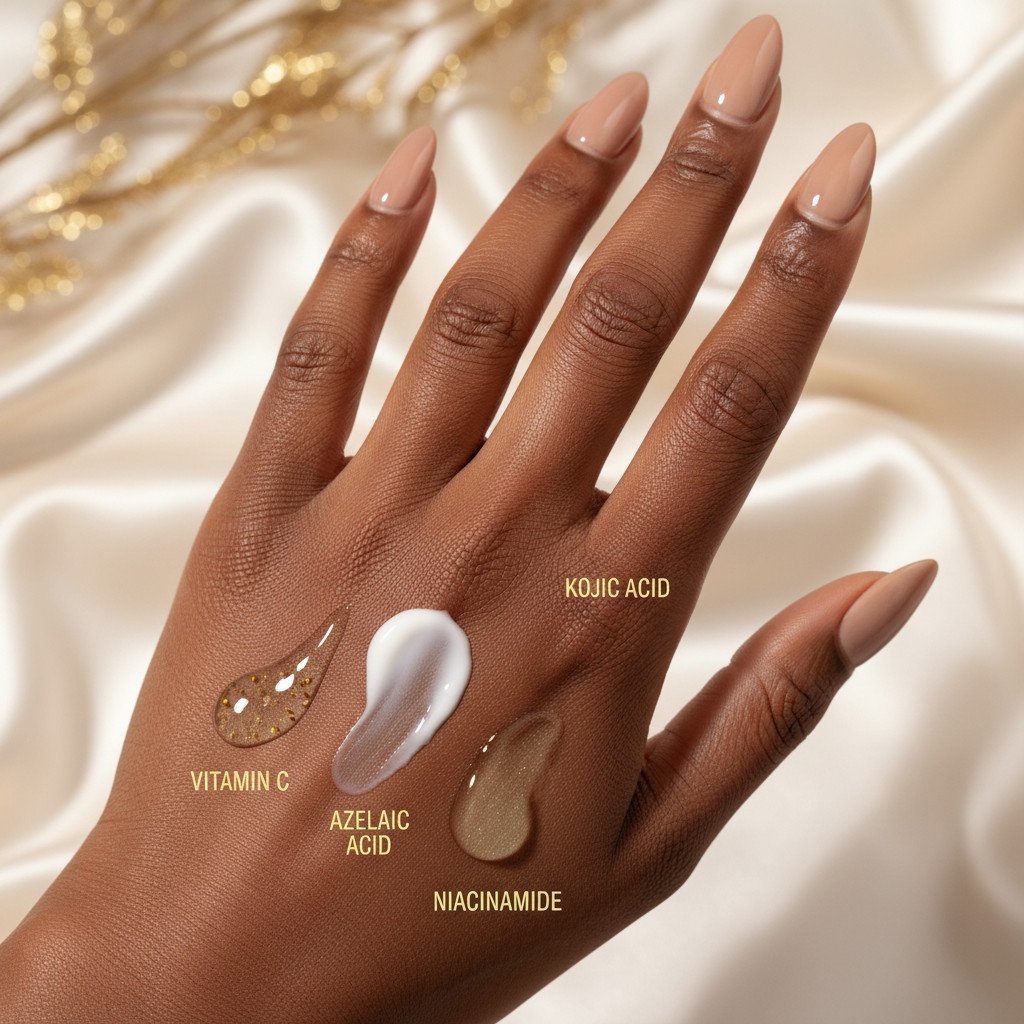
- Tyrosinase inhibitors that reduce the activity of the enzyme involved in melanin production (for example vitamin C, kojic acid, arbutin, licorice extract). These are the direct melanin suppressors, working at the source to prevent overproduction.
- Anti-inflammatory and pigment-transfer modulators that calm inflammation and interfere with how pigment moves in the skin (such as azelaic acid, niacinamide, tranexamic acid). These ingredients address the inflammatory triggers of PIH and prevent the spread of existing melanin.
- Turnover and texture agents that help skin shed discolored cells more evenly over time (retinoids, alpha hydroxy acids, beta hydroxy acids). By accelerating cell renewal, these ingredients help to exfoliate away pigmented cells, revealing fresher, more even-toned skin beneath.
Most successful routines combine a few of these roles—usually one or two brighteners plus something to support barrier and texture—rather than throwing every possible ingredient at your skin at once. This strategic layering ensures maximum efficacy with minimal irritation, a crucial consideration for melanin-rich skin.
Building a Multi-Pronged Strategy
Imagine your skin as a garden. To cultivate a beautiful, even-toned garden, you don’t just pull weeds (dark spots) from one corner; you nourish the soil, ensure proper hydration, and protect against pests. Similarly, tackling hyperpigmentation requires a holistic approach. A tyrosinase inhibitor might be your primary
Frequently Asked Questions
Do I need all of these ingredients to fade dark spots?
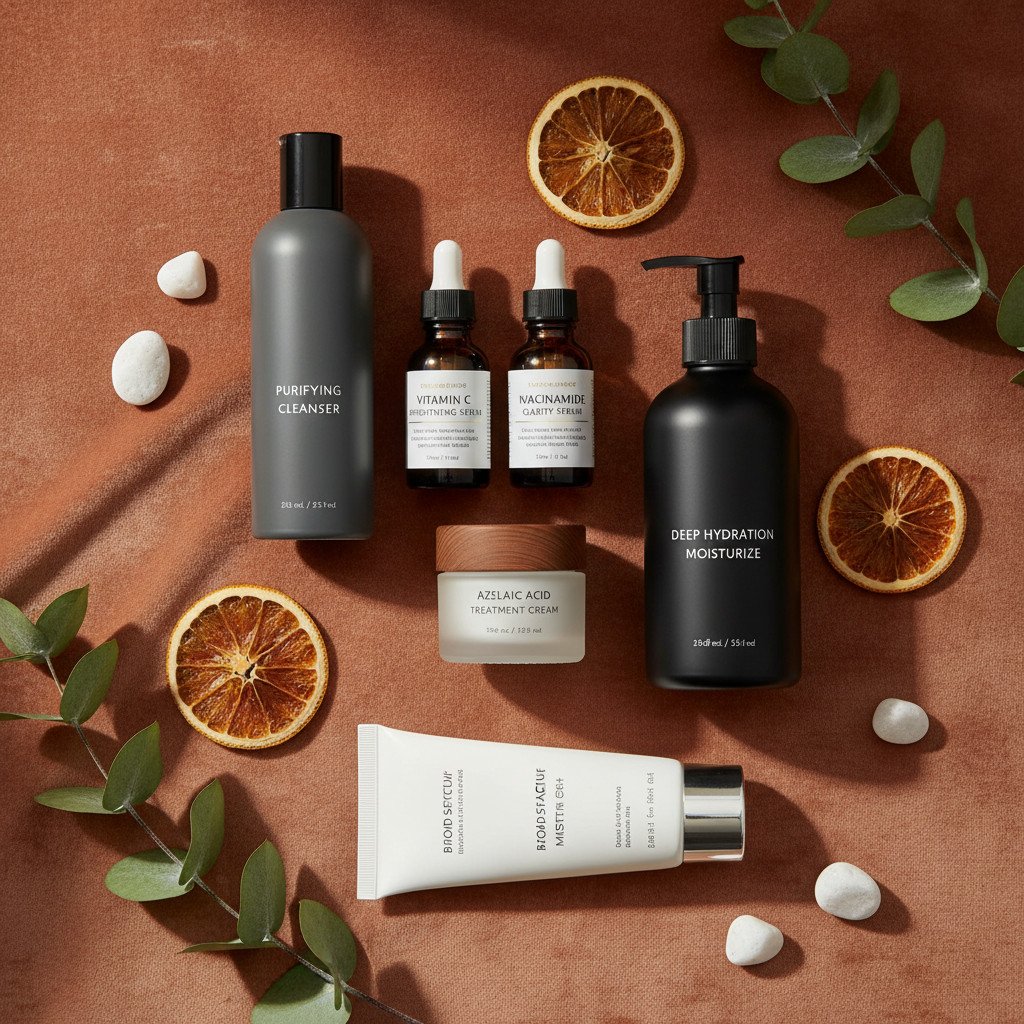
No. Most people see better results from a few well-chosen ingredients used consistently than from trying everything at once. For example, pairing niacinamide and vitamin C in the morning with azelaic acid or a retinoid at night is often enough to see meaningful change over time, especially when you wear sunscreen daily. Think of the list in this article as a menu, not a checklist: you choose what makes sense for your skin type, lifestyle, and tolerance, and build from there as needed.
Which ingredients are best for very sensitive dark skin?
For very sensitive melanin-rich skin, niacinamide, azelaic acid at lower strengths, and some gentle vitamin C derivatives tend to be the most forgiving options. Many botanical brighteners like licorice root or EGCG can also play a supporting role when formulated in soothing bases. Retinoids, strong acids, and higher-dose kojic or tranexamic acid can still be options, but they are usually second or third steps introduced cautiously, ideally with professional input if your skin is reactive.
Can I use vitamin C, niacinamide, and retinoids together?
They can all be part of the same overall routine, but they don’t all have to live in the same time slot. Many people use vitamin C and niacinamide in the morning, when antioxidant and barrier support pair naturally with sunscreen, and reserve retinoids for a few nights per week in the evening. The key is to watch your skin’s response: if you see persistent burning, flaking, or new darkening, you may need to separate actives further, reduce frequency, or temporarily simplify to give your barrier a chance to recover.
Are “natural” ingredients safer for dark spots on dark skin?
“Natural” does not automatically mean gentler or safer for melanin-rich skin. Lemon juice, undiluted essential oils, or strong DIY acid blends can be very irritating and drive more hyperpigmentation, even though they’re natural. Instead of focusing on whether something is natural or synthetic, focus on whether it has a track record in skin of color, is formulated at reasonable strengths, and feels calm on your skin when used as directed.
How long should I try a brightening ingredient before deciding if it works?
For most dark-spot-focused ingredients, you need at least 8–12 weeks of consistent use to fairly judge their impact on melanin-rich skin. Some early brightening or softening at the edges may show up sooner, but deeper marks are slow. If you see no change at all after three months—and you’ve also been diligent with sunscreen—it’s reasonable to reassess the ingredient, the formula, or the way it’s layered, ideally with professional input if the hyperpigmentation is severe or distressing.
Can I ever completely erase dark spots on dark skin?
Many dark spots on melanin-rich skin can lighten dramatically and become barely noticeable with time, protection, and the right ingredients. Some deeper or hormonally driven pigmentation may never vanish entirely but can be softened to the point that it no longer dominates how you see your face or body. Instead of chasing absolute erasure, it’s often kinder and more realistic to aim for calmer skin, fewer new marks, and a gradually more even tone—paired with a beauty standard that makes room for your real skin, not an edited version of it.
Shop vitamin C serum on Amazon
Shop niacinamide serum on Amazon
Shop azelaic acid cream on Amazon
Shop kojic acid soap on Amazon
Shop tranexamic acid serum on Amazon
Shop licorice root extract serum on Amazon
Shop gentle cleanser on Amazon
Shop lightweight moisturizer on Amazon
Shop broad-spectrum sunscreen on Amazon
Related next steps
Related posts:
 Ingredient-Based Solutions for Hyperpigmentation & Dark Spots on Melanin-Rich Skin: Vitamin C, Niacinamide, Azelaic, Tranexamic, Retinoids
 How Long Does Hyperpigmentation Take to Fade on Dark Skin? Expectations and Timelines
 Azelaic and Tranexamic Acid for Stubborn Hyperpigmentation on Melanin-Rich Skin
 How to Choose Ingredients for Facial Hyperpigmentation on Dark Skin
 HS (Hidradenitis Suppurativa) Tunnels, Scars, and Dark Spots on Dark Skin
 Niacinamide for Dark Spots and Redness on Dark Skin: Understanding Its Role and Realistic Expectations