Lifestyle Patterns (Sleep, Stress, Friction, Sun) That Influence Hyperpigmentation: Holistic Approaches to Skin Health
For many Black women, the journey with hyperpigmentation can feel like a relentless cycle. You invest in the serums, you follow the routines, you see initial progress, and then, inexplicably, those stubborn dark spots return or refuse to fade completely. It’s a frustrating experience that often leaves us wondering if we’re doing something wrong, or if our skin is simply predetermined to hold onto every mark. The truth is, while effective skincare products are crucial, the story of hyperpigmentation on melanin-rich skin is far more nuanced than what’s in your vanity. It’s a story deeply intertwined with the rhythms of our daily lives, the subtle influences of our environment, and the demands placed upon our bodies.
Many of us have been led to believe that addressing dark spots is solely about finding the right “magic” ingredient. However, this perspective often overlooks the profound impact of everyday patterns—the sun streaming through your car window, the constant friction from clothing, the quiet toll of sleep deprivation, the invisible weight of stress, or the simple inconsistency that life throws our way. These aren’t signs of personal failing; they are often unavoidable realities of modern life that can inadvertently feed inflammation and prolong the healing process, making those dark spots linger or reappear.
This guide is designed to offer a realistic, culturally grounded exploration of how these daily patterns can influence hyperpigmentation, particularly for Black women. We’ll delve into how lifestyle choices, often made out of necessity rather than negligence, can shape the inflammation, healing, and recurrence of dark spots. Our aim is not to prescribe rigid, unattainable ideals, but to empower you with knowledge and practical insights to support your skin’s health, acknowledging the complexities of work, family, hormones, and daily stressors. This article is part of our broader discussion on hyperpigmentation and dark spots, and it sits within our cluster on treatment methods, including topicals, peels, routines, and lifestyle support, offering a holistic perspective on managing this common concern.
Why Lifestyle Patterns Matter for Hyperpigmentation on Melanin-Rich Skin
Hyperpigmentation, particularly post-inflammatory hyperpigmentation (PIH), is the skin’s natural response to inflammation or injury. When melanin-rich skin experiences trauma—whether from a breakout, a scratch, a bug bite, or even excessive friction—it responds by producing extra melanin as a protective mechanism. This excess melanin then deposits in the deeper layers of the skin, resulting in the dark spots we know so well. Understanding this process is key to recognizing why lifestyle patterns are not just secondary concerns but fundamental drivers in the hyperpigmentation cycle.
It’s crucial to clarify that melanin-rich skin is not inherently “too reactive” or “flawed.” Instead, it is exquisitely designed to protect itself from UV radiation, a trait that unfortunately means it can also hold onto pigment longer after any disruption. This means that while the initial trigger might be a single event, the persistence of hyperpigmentation often reflects both that original incident and the skin’s ongoing exposure to irritation, inflammation, UV radiation, friction, or repeated injury. Our skin is constantly communicating with us, and dark spots are often a visible manifestation of these deeper, ongoing processes.
Many common myths perpetuate misunderstandings about hyperpigmentation in Black skin, often leading to ineffective or even damaging practices. One pervasive myth is that dark skin does not need daily sun protection. This is profoundly untrue; while melanin offers some natural protection, it is not a shield against UV damage, which is a primary driver of hyperpigmentation and its persistence. Another misconception is that only products matter for dark spots. While potent ingredients are vital, they operate within the context of your daily life. If external factors are constantly triggering new inflammation or preventing healing, even the best products will struggle to make lasting change. Similarly, the idea that more scrubbing helps body dark spots is a dangerous myth; aggressive exfoliation often creates more inflammation and, consequently, more hyperpigmentation. Finally, dismissing stress and poor sleep as “just excuses” ignores the profound physiological impact these factors have on skin health and its ability to heal and regulate pigment production. These myths not only misinform but also place undue blame on individuals, rather than acknowledging the complex interplay of biology and environment.
The Four Daily-Life Patterns That Most Commonly Keep Dark Spots Active
Our skin is a dynamic organ, constantly interacting with our internal and external environments. For melanin-rich skin, this interaction can significantly influence the visibility and persistence of hyperpigmentation. While we often focus on topical treatments, addressing these foundational lifestyle patterns can unlock new levels of progress and prevent recurrence. These patterns are not about perfection, but about understanding the subtle ways our daily lives can either support or hinder our skin’s healing journey.
Sun Exposure and Visible-Darkening Cycles
Sun exposure is arguably the single most significant external factor influencing hyperpigmentation, regardless of skin tone. For melanin-rich skin, this impact is often underestimated due to the common misconception that darker skin is immune to sun damage. While melanin does provide a natural SPF equivalent of roughly 13, it does not block all UV radiation. When hyperpigmented areas are exposed to UV light, the melanocytes (the cells that produce melanin) are stimulated to produce even more pigment, causing existing dark spots to darken further and new ones to form. This leads to frustrating cycles where spots seem to fade with diligent care, only to reappear or intensify after even incidental sun exposure.
Common real-life examples of this include driving in a car without window tinting, walking outdoors for short periods without protection, or even sitting near a window indoors. Many Black women may not prioritize daily sunscreen application, especially on cloudy days or when indoors, believing it’s unnecessary. This oversight can sabotage even the most rigorous skincare routine. Generic advice often fails to emphasize the critical role of consistent, broad-spectrum sun protection for dark skin, leading to a false sense of security. The cosmetic elegance of sunscreens, especially the white cast left by many mineral formulas, has historically been a significant barrier for Black women, making consistent use challenging and frustrating. This has unfortunately perpetuated the myth that sunscreen is not for us, when in reality, it is our most powerful tool against the persistence of hyperpigmentation.
A realistic support shift here is to integrate a cosmetically elegant, broad-spectrum SPF 30+ into your morning routine every single day, rain or shine, indoors or out. Think of it as the final, non-negotiable step in your AM regimen. Explore options specifically formulated for melanin-rich skin that leave no white cast. You can start by searching for sunscreen for dark skin no white cast on Amazon to find suitable options. This single change can dramatically impact the fading process and prevent new spots from forming.
Friction, Pressure, and Repeated Rubbing
Friction is a silent, often overlooked culprit in the perpetuation of hyperpigmentation, particularly on the body. Any repeated rubbing, pressure, or irritation can trigger an inflammatory response in the skin, leading to post-inflammatory hyperpigmentation. This is especially true for melanin-rich skin, which is prone to producing excess melanin in response to even minor trauma. We often associate hyperpigmentation with acne or cuts, but the subtle, persistent irritation from clothing, accessories, or even our own habits can be just as impactful.
Common real-life examples include the constant rubbing of inner thighs during walking or exercise, the pressure from tight waistbands or bra straps, the friction from shaving or waxing, or even vigorous towel drying. Black women may be especially underserved by generic advice in this area because many beauty recommendations focus solely on facial hyperpigmentation, neglecting the unique challenges of body care. Furthermore, certain cultural practices, such as wearing specific fabrics or hairstyles that involve headbands or bonnets, while beneficial for hair, can inadvertently create friction points on the skin if not managed mindfully. The assumption that body dark spots are simply “genetic” or “unfixable” often prevents a deeper look into these lifestyle triggers.
A realistic support shift is to become more mindful of areas prone to friction. This could mean opting for looser clothing in certain areas, using anti-chafing balms or powders on inner thighs, or adjusting bra straps. For areas where friction is unavoidable, such as underarms or bikini lines, ensuring gentle cleansing and moisturizing, along with careful hair removal techniques, can make a significant difference. Consider using a gentle body wash and a rich, emollient body lotion to create a protective barrier. You can explore gentle body wash for sensitive skin on Amazon to find products that minimize irritation.
Stress Load, Inflammation, and Routine Inconsistency
The connection between our mental and emotional state and our skin health is profound and undeniable. Chronic stress, whether from work, family, financial pressures, or systemic challenges, triggers a cascade of physiological responses in the body. It elevates cortisol levels, which can lead to increased inflammation throughout the body, including the skin. This systemic inflammation can exacerbate existing hyperpigmentation, make new spots more likely to form, and slow down the skin’s natural healing processes. For melanin-rich skin, which is already predisposed to hyperpigmentation in response to inflammation, chronic stress can be a significant setback.
Beyond the direct physiological effects, stress also impacts our daily habits and routines. When we are overwhelmed, our skincare routine is often one of the first things to fall by the wayside. Skipping steps, inconsistent product application, or neglecting sun protection become more common. Stress can also lead to subconscious behaviors like picking at blemishes or touching our faces more frequently, which directly contributes to new inflammation and PIH. Black women, often navigating unique societal pressures, caregiving responsibilities, and systemic inequities, may experience higher chronic stress loads, making this a particularly salient factor. Generic advice to “just relax” is not only unhelpful but dismissive of these complex realities.
A realistic support shift is to identify one small, manageable stress-reduction practice that you can consistently incorporate into your day, even for just 5-10 minutes. This could be deep breathing exercises, listening to calming music, a short walk, or journaling. The goal is not to eliminate stress entirely, which is often impossible, but to create small pockets of regulation that can mitigate its inflammatory effects. Additionally, simplifying your skincare routine during high-stress periods to focus on essential steps (cleanse, moisturize, SPF) can help maintain consistency without adding to your mental load. Remember, consistency, even with a minimalist routine, is more effective than an elaborate routine followed sporadically.
Sleep, Recovery, and Skin Healing Support
Sleep is often referred to as “beauty sleep” for a reason—it’s when our bodies, including our skin, undergo essential repair and regeneration processes. During deep sleep, the body produces growth hormones that aid in cell turnover and repair. It also regulates cortisol levels, which, as mentioned, are linked to inflammation. Insufficient or disrupted sleep can throw these processes out of balance, leading to increased inflammation, impaired barrier function, and a slower healing rate for existing skin concerns, including hyperpigmentation.
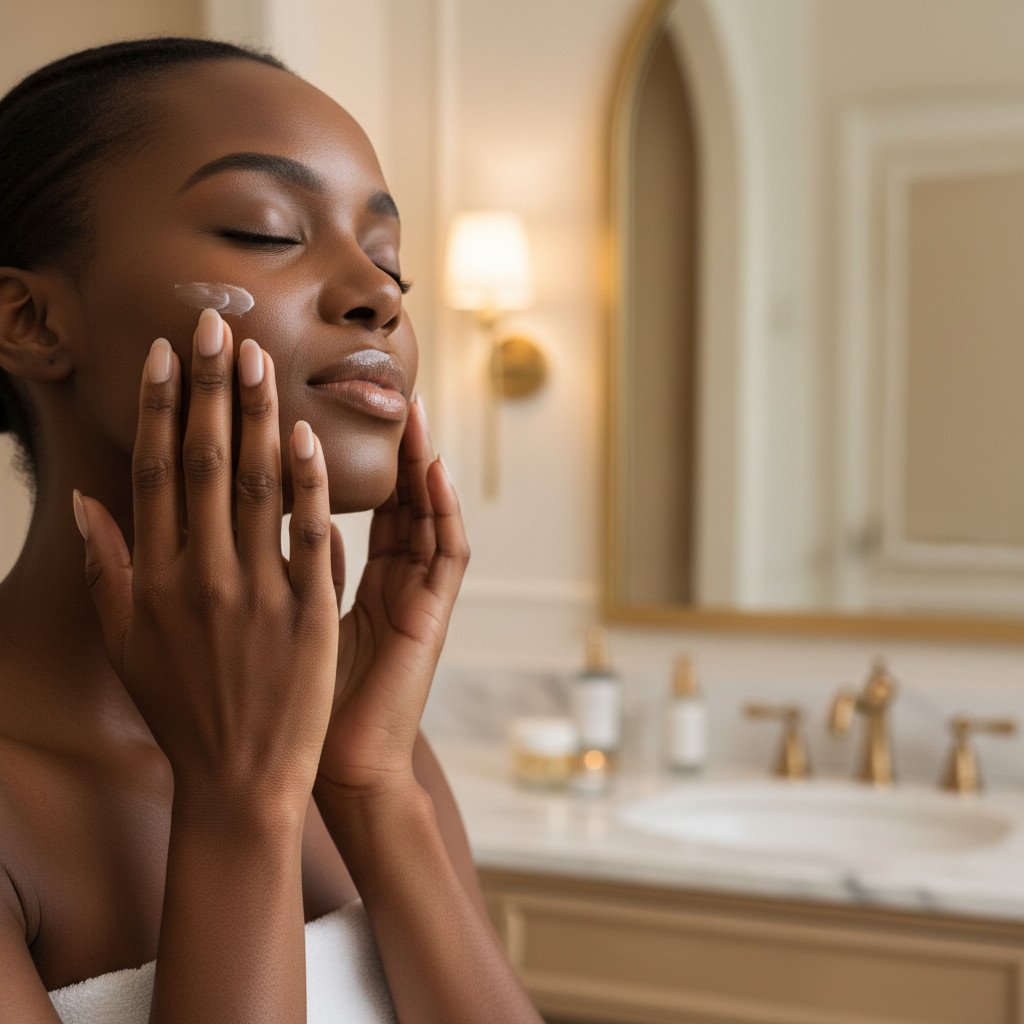
Common real-life examples include late nights working, early mornings with children, shift work, or simply struggling with sleep due to anxiety or discomfort. For Black women, who may often be primary caregivers, essential workers, or juggling multiple responsibilities, consistent, quality sleep can be a luxury rather than a given. The expectation to “power through” or sacrifice sleep for productivity is pervasive, yet it comes at a cost to our overall health and skin. Generic beauty advice often assumes an ideal sleep schedule that is simply not feasible for many, failing to acknowledge the systemic and personal barriers to adequate rest.
A realistic support shift is to prioritize sleep hygiene as much as possible, even if it means small adjustments. This could involve creating a consistent bedtime routine, making your sleep environment darker and cooler, or limiting screen time before bed. If a full 7-9 hours is consistently out of reach, focus on maximizing the quality of the sleep you do get. Even an extra 30 minutes of intentional rest can make a difference. Consider what small, actionable steps you can take to make your sleep more restorative, knowing that this directly supports your skin’s ability to heal and fade dark spots. This isn’t about shaming; it’s about acknowledging the body’s fundamental need for recovery and finding ways to honor it within your unique life circumstances.
Friction Is a Bigger Hyperpigmentation Trigger Than Many People Realize
While sun exposure and inflammation from breakouts are widely recognized causes of hyperpigmentation, the role of friction is often underestimated, particularly on the body. For melanin-rich skin, any repeated mechanical irritation can initiate an inflammatory cascade, prompting melanocytes to produce excess pigment. This means that seemingly innocuous daily activities or clothing choices can contribute significantly to stubborn dark spots in various areas, leading to frustration when topical treatments alone don’t yield desired results.
Consider the inner thighs, a common zone for hyperpigmentation. The constant rubbing of skin against skin, especially during walking, running, or even just sitting with legs crossed, creates persistent friction. This irritation can lead to darkening, often compounded by sweat and heat, which further exacerbate inflammation. Similarly, the underarms, frequently subjected to friction from clothing, deodorant application, and hair removal methods like shaving or waxing, are another prime area for PIH. The skin in these areas is delicate and easily irritated, making it highly susceptible to pigmentary changes.
Bra straps and waistbands, particularly if they are tight or made of rough materials, can exert constant pressure and rubbing on the skin, leading to dark marks along the shoulders, ribcage, or abdomen. Shaving zones, including the bikini line, legs, and underarms, are especially vulnerable. The act of shaving itself, if not done carefully, can cause micro-traumas, ingrown hairs, and subsequent inflammation, which then manifests as dark spots. This is a significant concern for many Black women, as ingrown hairs are more common in curly hair textures, and the resulting PIH can be particularly stubborn.
Beyond clothing and hair removal, everyday items like tight collars, workout clothing, bags that rub against the shoulder or hip, and even bonnets, headbands, or hair accessories can contribute. For instance, a bonnet that constantly shifts and rubs against the forehead or temples can create a line of friction-induced hyperpigmentation. Workout clothing, while beneficial for exercise, can trap heat and moisture, and its constant movement against the skin, especially in areas like the inner thighs or underarms, can lead to irritation and subsequent darkening.
The impact of friction is particularly pronounced for body hyperpigmentation, ingrown hairs, and lingering marks. When the skin is repeatedly irritated, it struggles to heal effectively, and the cycle of inflammation and pigment production continues. This is why addressing friction is a non-negotiable step in managing and preventing dark spots on the body. Generic advice often focuses on chemical exfoliants or brightening creams, which are important, but without mitigating the underlying friction, these products may only offer temporary relief or limited results. Understanding and addressing these physical triggers is paramount for achieving lasting clarity and even tone.
To illustrate the pervasive nature of friction and its impact, let’s look at a comparison table:
| Pattern | Common Zone | Why It Can Worsen Dark Spots | A Realistic Support Move |
|---|---|---|---|
| Inner Thigh Chafing | Inner Thighs | Constant skin-on-skin rubbing creates inflammation, especially with sweat and heat. | Use anti-chafing balm/stick before activity; opt for breathable, moisture-wicking shorts under dresses/skirts. |
| Tight Clothing/Undergarments | Bra straps, waistbands, underarms, bikini line | Pressure and rubbing from constrictive fabrics irritate skin, leading to PIH. | Choose well-fitting, breathable undergarments; opt for softer, natural fabrics when possible. |
| Hair Removal (Shaving/Waxing) | Underarms, bikini line, legs, face | Micro-traumas, ingrown hairs, and irritation from blades or pulling can trigger inflammation. | Use a sharp, clean razor; shave with the grain; consider gentle alternatives like sugaring or laser hair removal (if suitable); exfoliate gently before and after. |
| Vigorous Towel Drying | Face, body | Harsh rubbing can irritate delicate skin, especially after cleansing or showering. | Pat skin gently with a soft towel instead of rubbing; air dry when possible. |
| Bags/Accessories Rubbing | Shoulders, hips, forehead (from headbands/bonnets) | Repeated friction from straps or accessories can cause localized irritation and darkening. | Alternate bag shoulders; ensure headbands/bonnets are soft and not too tight; choose silk-lined options. |
| Workout Clothing | Inner thighs, underarms, bra line | Tight, synthetic fabrics combined with sweat and movement create friction and irritation. | Opt for moisture-wicking, seamless, and well-fitting activewear; shower immediately after workouts. |
Addressing friction is a foundational step in managing body hyperpigmentation on underarms, thighs, knees, and elbows, as well as intimate-area hyperpigmentation. It complements and enhances the efficacy of any topical treatments you might be using. For more detailed guidance on gentle hair removal and body care, you can refer to our article on body care and hair removal on dark skin. By consciously reducing friction, you’re not just treating symptoms; you’re removing a major inflammatory trigger, allowing your skin the opportunity to heal and even out its tone more effectively.
Sun Protection Has to Be Part of the Lifestyle Conversation
It cannot be overstated: effective hyperpigmentation care without consistent sun protection is like trying to fill a bucket with a hole in the bottom. For melanin-rich skin, where the skin’s natural response to inflammation is to produce more pigment, UV radiation acts as a constant accelerator and intensifier of dark spots. Even if you’re diligently using powerful brightening ingredients, every instance of unprotected sun exposure can undo weeks or even months of progress. The sun’s rays stimulate melanocytes, causing existing dark spots to deepen and new ones to form, creating a frustrating cycle of fading and reappearance.
This is particularly critical for melanin-rich skin, which has historically been underserved by the sun protection industry. The myth that darker skin tones don’t need SPF is not only dangerous for skin cancer prevention but is a primary reason why hyperpigmentation can be so persistent. While melanin offers some inherent protection, it is not a complete shield. Furthermore, the cosmetic elegance of many sunscreens has been a significant barrier for Black women. Traditional mineral sunscreens often leave a noticeable white cast, making them unwearable for deeper skin tones. This has led to a widespread reluctance to use SPF daily, inadvertently exacerbating hyperpigmentation concerns.
However, the landscape of sun protection has evolved dramatically. There are now numerous broad-spectrum sunscreens specifically formulated for melanin-rich skin that blend seamlessly without a white cast. These formulations prioritize cosmetic elegance, offering a comfortable and invisible finish. Reapplication is another crucial aspect of sun protection that often gets overlooked. Sunscreen needs to be reapplied every two hours when exposed to direct sunlight, or more frequently if swimming or sweating. This can feel like a chore, especially when wearing makeup, but innovative formats like SPF setting sprays, powders, and sticks can make reapplication easier and more convenient throughout the day.
Integrating sun protection into your daily lifestyle is not just about preventing sunburn; it’s about actively managing and preventing the worsening of hyperpigmentation. It means applying a broad-spectrum SPF 30 or higher every morning as the last step in your skincare routine, even on cloudy days or when you’re mostly indoors. It means being mindful of incidental sun exposure, such as driving, sitting near windows, or short walks. For a comprehensive guide to finding the right sunscreens for your skin, explore our detailed article on sunscreen for dark skin. Combining consistent sun protection with a well-structured skincare regimen, as outlined in routine frameworks that support fading dark spots, creates the most robust defense against hyperpigmentation. Consider exploring daily face sunscreen no white cast on Amazon to discover options that integrate seamlessly into your routine.
How Stress, Sleep, and Daily Overload Show Up on the Skin
The intricate connection between our internal state and external appearance is undeniable. While stress and lack of sleep may not be the sole origin of every dark mark, their profound impact on our physiology means they are significant contributors to how hyperpigmentation manifests, persists, and is managed. It’s not about blaming individuals for their life circumstances; rather, it’s about acknowledging the very real biological and behavioral consequences of chronic stress and sleep deprivation on melanin-rich skin.
When we experience chronic stress, our bodies release a cascade of hormones, most notably cortisol. Elevated cortisol levels can trigger systemic inflammation, which directly impacts the skin’s ability to heal and regulate pigment production. For melanin-rich skin, which is prone to post-inflammatory hyperpigmentation, this heightened inflammatory state means that even minor irritations or blemishes are more likely to result in darker, more persistent marks. Stress can also disrupt the skin’s barrier function, making it more susceptible to external irritants and exacerbating existing conditions. The constant demands of modern life—juggling work, family, caregiving, financial pressures, and societal expectations—create a sustained stress load that many Black women navigate daily. This isn’t a choice; it’s a lived reality that directly impacts skin health.
Similarly, sleep loss is not merely an inconvenience; it’s a profound disruption to the body’s repair mechanisms. During sleep, our skin undergoes crucial regenerative processes, including cell turnover and the production of collagen and growth hormones. Lack of adequate, restorative sleep impairs these functions, leading to a slower healing rate for existing dark spots and a reduced capacity for the skin to recover from daily stressors. Cortisol levels also remain elevated with insufficient sleep, perpetuating the inflammatory cycle. For shift workers, mothers, caregivers, students, and anyone living with high demands, consistent, quality sleep can be an elusive luxury. To suggest that “just getting more sleep” is a simple solution ignores the systemic and personal barriers that make this difficult.

Beyond the direct physiological effects, stress and sleep patterns profoundly influence our behaviors and routines. When overwhelmed or exhausted, consistency in skincare often falters. Skipping evening routines, neglecting morning SPF application, or being less diligent with product usage are common consequences. Stress can also manifest as increased skin-touching, picking at blemishes, or aggressive exfoliation in an attempt to “fix” perceived flaws, all of which directly contribute to new inflammation and hyperpigmentation. These behaviors are not signs of a lack of discipline but rather coping mechanisms or oversights that arise from an overloaded system. Moreover, the emotional toll of persistent hyperpigmentation can itself become a source of stress, creating a vicious cycle where anxiety about skin concerns exacerbates the very conditions one is trying to resolve.
It’s important to approach this topic with nuance and compassion. The goal is not to add another item to an already overwhelming to-do list, but to recognize the interconnectedness of our well-being. Understanding how these factors play a role empowers us to make small, sustainable shifts where possible, rather than feeling like we’re constantly battling our skin. While we won’t delve into specific self-care rituals here, recognizing the impact of stress and sleep is a foundational step toward a more holistic approach to skin health. For those interested in exploring broader well-being practices, our article on self-care rituals and Black-owned beauty offers further insights into nurturing oneself.
Building a More Hyperpigmentation-Supportive Lifestyle Without Turning Life Into a Project
The idea of a “hyperpigmentation-supportive lifestyle” might sound daunting, conjuring images of perfection and strict regimens. However, our aim at Black Beauty Basics is to offer realistic, low-pressure ideas that integrate seamlessly into your existing life, rather than demanding an overhaul. The goal isn’t perfection, but rather consistent, small adjustments that collectively reduce inflammation, friction, and UV exposure over time, allowing your skin to heal and thrive without adding undue stress to your already full plate.
The Easiest Change to Make First: Consistent Sun Protection. If you’re feeling overwhelmed, start here. Make applying a broad-spectrum SPF 30+ the absolute non-negotiable last step of your morning routine, every single day. Find a sunscreen that you genuinely enjoy using—one that blends seamlessly into your melanin-rich skin without a white cast and feels comfortable. This single habit has the most profound impact on preventing existing dark spots from darkening and new ones from forming. It’s a fundamental protective measure that amplifies the efficacy of all other treatments.
What to Notice Before Buying More Products: Your Skin’s Triggers. Before reaching for another brightening serum, take a moment to observe your skin. Are new dark spots appearing in specific areas? Do they coincide with certain activities, clothing, or stress levels? For instance, if you notice darkening along your bra line, it might be a friction issue. If breakouts frequently lead to stubborn marks, focusing on gentle acne management might be key. Understanding your unique triggers allows you to address the root cause, making your existing products work harder. This mindful observation is a powerful, free tool that can guide your choices more effectively than simply adding more products to your routine. It helps you understand how to best support your skin, whether that means exploring over-the-counter topicals for dark spots on melanin-rich skin or adjusting daily habits.
How to Reduce Friction and Irritation in Common Zones: Mindful Adjustments. For areas prone to friction-induced hyperpigmentation, small changes can make a big difference. For inner thighs, consider anti-chafing balms or wearing bike shorts under dresses and skirts. For underarms, evaluate your hair removal method—perhaps switching to a gentler razor, shaving with the grain, or exploring alternatives like sugaring. Opt for softer, breathable fabrics for clothing and undergarments, ensuring they aren’t too tight. For accessories like bonnets or headbands, choose silk-lined options that glide rather than rub. These aren’t grand gestures, but consistent, gentle choices that reduce chronic irritation.
How to Make Sunscreen Easier to Repeat: Strategic Placement and Format. Beyond morning application, reapplication is key, especially if you’re outdoors. Keep a travel-sized sunscreen stick, powder, or spray in your bag, car, or at your desk. This makes it easy to reapply over makeup or on the go without disrupting your day. Place your primary sunscreen bottle next to your toothbrush or moisturizer as a visual cue. The easier and more accessible it is, the more likely you are to use it consistently. This aligns with the principles of routine frameworks that support fading dark spots, emphasizing consistency and ease.
How to Support Routines During Stressful Weeks: Simplify and Prioritize. Life happens, and there will be weeks when an elaborate 10-step routine is simply not feasible. During these times, simplify your routine to the absolute essentials: a gentle cleanser, a hydrating moisturizer, and your non-negotiable SPF in the morning. In the evening, cleanse, moisturize, and perhaps apply one targeted treatment if you have the energy. The goal is to maintain basic consistency rather than abandoning your routine entirely. Remember that pacing hyperpigmentation treatments safely means listening to your skin and your body, and sometimes that means scaling back to prevent irritation and burnout. A simplified, consistent routine is far more effective than an ambitious one that you can’t maintain.
These suggestions are not about adding more pressure, but about finding sustainable ways to support your skin’s healing journey. By integrating these small, mindful shifts into your daily life, you’re creating an environment where your skin can truly thrive, allowing your natural radiance to shine through without the constant battle against stubborn dark spots.
When Lifestyle Tweaks Are Helpful but Not Sufficient
While integrating hyperpigmentation-supportive lifestyle patterns is incredibly powerful and often essential for lasting results, it’s equally important to recognize when these tweaks, however diligent, may not be enough on their own. Our skin is complex, and sometimes the underlying causes of hyperpigmentation require more targeted interventions, whether through advanced topical treatments, professional procedures, or medical evaluation. Understanding these thresholds is key to navigating your skin health journey effectively and knowing when to seek additional support.
One clear indicator that lifestyle tweaks might need reinforcement is when dark marks continue to deepen or spread despite consistent care. If you’ve diligently applied sunscreen, minimized friction, managed stress, and maintained a basic, gentle routine, yet your hyperpigmentation persists or worsens, it suggests there might be deeper factors at play. This could include a need for more potent active ingredients in your skincare, or an underlying condition that is fueling the pigment production.
Hyperpigmentation is often linked to other skin conditions, and addressing these primary issues is crucial. If your dark spots are a direct result of chronic acne breakouts, persistent eczema flares, recurring ingrown hairs, or hormonal fluctuations, then managing these conditions becomes paramount. For instance, if you’re struggling with acne and sensitive skin in Black women, addressing the breakouts themselves will be more effective than simply treating the resulting dark spots. Similarly, if you suspect your hyperpigmentation is tied to hormonal skin and hair (PCOS, pregnancy, menopause), a medical professional can help identify and manage these systemic influences. Our article on condition-linked PIH further explores these connections.
Widespread discoloration, particularly if it appears suddenly or without a clear trigger, is another sign that professional evaluation is warranted. While localized dark spots often respond well to consistent lifestyle and topical care, extensive or rapidly progressing hyperpigmentation could indicate a more complex underlying issue that requires a medical diagnosis. Similarly, if your skin is consistently irritated, inflamed, or reactive to even gentle products, it may be too compromised to effectively respond to standard hyperpigmentation treatments. In such cases, the priority shifts to calming and repairing the skin barrier before introducing any active ingredients. This is where a dermatologist can provide tailored advice and treatment plans.
When lifestyle adjustments and over-the-counter products reach their limit, it’s time to consider professional interventions. This could include prescription-strength topical medications, chemical peels, or laser treatments, all of which should be carefully selected and performed by a dermatologist experienced with melanin-rich skin to avoid adverse effects. Our article on clinic-based peels and procedures on dark skin provides valuable insights into these options. Ultimately, knowing when to see a dermatologist is a crucial part of a holistic approach to hyperpigmentation, ensuring you receive the most appropriate and effective care for your unique skin needs.
Frequently Asked Questions
Can stress make hyperpigmentation worse?
Yes, chronic stress can absolutely exacerbate hyperpigmentation. Stress elevates cortisol levels, which triggers systemic inflammation in the body, including the skin. This inflammation can stimulate melanocytes to produce more pigment, making existing dark spots darker and new ones more likely to form or persist.
Does dark skin really need sunscreen every day for dark spots?
Yes, absolutely. While melanin provides some natural protection, it is not a complete shield against UV radiation. Unprotected sun exposure stimulates melanocytes, causing existing dark spots to deepen and new ones to form, effectively undoing any progress made with other treatments. Consistent, daily broad-spectrum SPF 30+ is non-negotiable for managing hyperpigmentation on melanin-rich skin.

Why do my inner thighs or underarms stay darker even when I use brightening products?
Stubborn dark spots in areas like the inner thighs and underarms are often significantly influenced by friction, heat, and moisture, in addition to any underlying conditions or hair removal methods. Even with brightening products, if the constant irritation from rubbing or tight clothing isn’t addressed, the inflammatory cycle that causes hyperpigmentation will continue, making fading difficult.
Can lack of sleep slow fading?
Yes, lack of quality sleep can definitely slow down the fading process of dark spots. During sleep, your skin undergoes crucial repair and regeneration, including cell turnover and the regulation of inflammatory responses. Insufficient sleep impairs these healing mechanisms, leading to increased inflammation and a reduced capacity for your skin to recover and fade hyperpigmentation effectively.
Is friction really enough to cause dark marks?
Yes, friction is a significant and often underestimated cause of dark marks, especially on melanin-rich skin. Any repeated rubbing, pressure, or irritation can trigger an inflammatory response, prompting the skin to produce excess melanin as a protective measure. This process, known as post-inflammatory hyperpigmentation, can lead to stubborn dark spots in areas subjected to constant friction from clothing, accessories, or even skin-on-skin contact.
What matters more: skincare products or daily habits?
Both skincare products and daily habits are critically important and work synergistically. Effective skincare products provide the targeted ingredients needed to address hyperpigmentation, but consistent, supportive daily habits (like sun protection, minimizing friction, managing stress, and adequate sleep) create the optimal environment for those products to work. Without addressing lifestyle factors, even the best products may struggle to deliver lasting results, as triggers for new or persistent hyperpigmentation will remain active.
How quickly can I expect to see results from lifestyle changes for hyperpigmentation?
The timeline for seeing results from lifestyle changes for hyperpigmentation varies greatly depending on the individual, the severity of the hyperpigmentation, and the consistency of the changes. Generally, you can expect to see subtle improvements in skin clarity and a reduction in new spot formation within 4-8 weeks of consistent, diligent application of lifestyle adjustments, with more significant fading often taking several months. Patience and consistency are key, as skin healing and pigment regulation are gradual processes.
Final Thoughts
Navigating the journey of hyperpigmentation on melanin-rich skin is deeply personal, often complex, and rarely linear. It’s easy to fall into the trap of believing that every dark spot is a direct reflection of a product choice or a personal failing. However, as we’ve explored, the truth is far more nuanced. Hyperpigmentation is a conversation between your skin and your environment, your internal state, and your daily rhythms. It’s not about controlling every single part of your life perfectly, which is an unrealistic and often unachievable ideal for many Black women balancing numerous responsibilities and challenges.
Instead, the power lies in understanding. It’s about recognizing how seemingly small, repeatable changes—like being more mindful of sun exposure, consciously reducing friction, finding micro-moments to manage stress, or prioritizing even a little more restorative sleep—can collectively make a profound difference. These aren’t just “wellness” buzzwords; they are practical strategies that directly impact inflammation, healing, and the skin’s ability to regulate pigment over time. By reducing these underlying triggers, you’re not just treating symptoms; you’re creating a more harmonious environment for your skin to heal and thrive.
Embrace this journey with self-compassion and curiosity. Your skin is always communicating with you, and by listening to its cues and making sustainable, gentle adjustments, you empower yourself to achieve lasting radiance and confidence. Remember that every small step forward is progress, and your commitment to nurturing your skin is a powerful act of self-love. For further guidance on building an effective routine, explore our comprehensive treatment methods, including topicals, peels, routines, and lifestyle support, to continue your journey towards luminous, even-toned skin.
INTERNAL LINKING OPPORTUNITIES:
- https://blackbeautybasics.com/hyperpigmentation-and-dark-spots/
- https://blackbeautybasics.com/hyperpigmentation-and-dark-spots/treatment-methods-topicals-peels-routines-lifestyle-support/
- https://blackbeautybasics.com/hyperpigmentation-and-dark-spots/body-hyperpigmentation-underarms-thighs-knees-elbows/
- https://blackbeautybasics.com/hyperpigmentation-and-dark-spots/intimate-area-hyperpigmentation-bikini-buttocks-inner-thighs/
- https://blackbeautybasics.com/body-care-and-hair-removal-on-dark-skin/
- https://blackbeautybasics.com/sunscreen-for-dark-skin/
- https://blackbeautybasics.com/hyperpigmentation-and-dark-spots/treatment-methods-topicals-peels-routines-lifestyle-support/routine-frameworks-that-support-fading-dark-spots/
- https://blackbeautybasics.com/self-care-rituals-and-black-owned-beauty/
- https://blackbeautybasics.com/hyperpigmentation-and-dark-spots/treatment-methods-topicals-peels-routines-lifestyle-support/over-the-counter-topicals-for-dark-spots-on-melanin-rich-skin/
- https://blackbeautybasics.com/hyperpigmentation-and-dark-spots/treatment-methods-topicals-peels-routines-lifestyle-support/how-to-pace-hyperpigmentation-treatments-safely/
- https://blackbeautybasics.com/acne-and-sensitive-skin-in-black-women/
- https://blackbeautybasics.com/hormonal-skin-and-hair-pcos-pregnancy-menopause/
- https://blackbeautybasics.com/hyperpigmentation-and-dark-spots/condition-linked-pih-eczema-psoriasis-hs-injuries/
- https://blackbeautybasics.com/hyperpigmentation-and-dark-spots/treatment-methods-topicals-peels-routines-lifestyle-support/clinic-based-peels-and-procedures-on-dark-skin/
- https://blackbeautybasics.com/hyperpigmentation-and-dark-spots/medical-escalation-and-when-to-see-a-dermatologist/
Related next steps
Related posts:
 Lifestyle Triggers (Sweat, Fabric, Stress, Sleep) in Melanin-Rich Acne
 The Impact of Stress on Hair Health and Growth
 Hair Removal, Friction, and Body Hyperpigmentation on Dark Skin
 Inner Thigh and Bikini-Adjacent Darkening from Friction: Understanding and Nurturing Melanin-Rich Skin
 Combining Low-Manipulation Styling With Protective Styles and Trims: A Holistic Approach to Natural Hair Retention
 How Scarring and PIH Influence When to Seek Help for Acne on Melanin-Rich Skin