Repairing Heat Damage in Natural Hair: What’s Possible and What Isn’t
There’s a particular kind of heartbreak that comes with heat damage on natural hair. Your coils used to spring back with vibrant elasticity, a testament to their inherent strength and beauty. After a few silk presses, a season of blowouts, or perhaps just one too-hot pass with a styling tool, some sections now hang limp, refuse to revert to their natural curl pattern, or feel permanently fried. This isn’t just a cosmetic change; it’s a visible alteration to the very fabric of your hair, and it can feel like a betrayal of its natural state.
This post is here to give you clarity, not false hope. We understand the emotional weight tied to your hair’s health and appearance. We’ll walk through what heat damage actually does to natural hair, demystifying the science behind the visible changes. More importantly, we’ll distinguish between what can be genuinely improved with diligent care and what, unfortunately, cannot be reversed. Our goal is to help you build a realistic, empowering recovery plan that honors both your hair’s unique texture and your emotional investment in its journey.
Understanding the Silent Language of Your Hair: What Heat Damage Really Is (and Why Curls Change)
Heat damage isn’t just a bad hair day; it’s a structural compromise. It occurs when high temperatures—whether from flat irons, blow-dryers, curling wands, or even excessively hot water during washing—alter the delicate protein structure of your hair and disrupt its protective outer layer, the cuticle. Imagine your hair strand as a meticulously woven rope, where each fiber contributes to its strength and elasticity. When exposed to extreme heat, these fibers can become frayed, weakened, or even permanently broken. At a molecular level, the disulfide bonds and hydrogen bonds inside the hair shaft, which are responsible for its shape and strength, can be broken or rearranged. Simultaneously, the outer “shingles” of the cuticle, which normally lie flat to protect the inner cortex, can become lifted, chipped, or even completely stripped away. This leaves the hair vulnerable, porous, and unable to retain moisture or maintain its natural form.
For natural curls and coils, these internal and external changes manifest in several disheartening ways:
- Loose, limp sections that no longer match your natural curl pattern: This is often the most immediate and visible sign. Your once-tight coils or bouncy curls might appear stretched, wavy, or even straight in certain areas, particularly towards the ends or around the crown. This ‘straightening’ effect is a direct result of the permanent alteration of the hair’s protein bonds.
- Ends that feel rough, frizzy, and dry even after conditioning: The compromised cuticle layer means your hair struggles to hold onto moisture. Even after applying deep conditioners, your ends might feel perpetually parched, brittle, and prone to frizz, lacking the smooth, supple feel of healthy hair.
- Breakage, split ends, and a see-through look at the bottom of your hair: Weakened internal structure and a damaged cuticle make the hair highly susceptible to breakage. You might notice excessive shedding, an increase in split ends that travel up the hair shaft, and a general thinning or ‘see-through’ appearance, especially at the ends, as strands become too fragile to retain their length.
- Hair that stays straight or wavy when wet instead of reverting to its usual coil: This is a definitive test for heat damage. Healthy natural hair, when wet, will immediately spring back to its curl pattern. If sections of your hair remain straight or only revert to a loose wave when saturated with water, it’s a strong indicator of significant heat damage.
It’s crucial to internalize this truth: once the protein structure is permanently altered to the point where the curl pattern is lost, no mask, oil, or treatment can magically put that exact curl pattern back. The goal of “repair” in this context is not about resurrecting bonds that are gone for good, but rather about supporting the integrity of the hair you have left, improving its overall health, and fostering an environment for new, healthy growth.
The Art of the Possible: Improving the Health of Heat-Stressed Hair While Nurturing Your Spirit
Even if some strands are permanently altered, the journey of healing your hair is also a journey of self-love and patience. You can still make damaged hair behave and feel better while you patiently grow out the new, healthy hair and strategically trim away the compromised sections. The focus shifts from a futile attempt to undo the past to a proactive approach centered on replenishing moisture, rebuilding strength, and preventing further breakage. This is about nurturing your hair back to its best possible state, not pretending the damage never happened.
Replenishing Moisture and Lipids: The Elixir of Life for Parched Strands
Heat-damaged hair is typically very dry and highly porous. This means its damaged cuticle allows moisture to enter and escape rapidly, leading to constant dehydration. Deep conditioning and regular moisturizing are not just steps in a routine; they are fundamental acts of restoration that can dramatically improve the softness, flexibility, and overall feel of your hair, even if the curl pattern doesn’t fully return. Think of it as providing a consistent, loving embrace for your thirsty strands.
- Deep condition weekly with intentionality: This is non-negotiable. Use masks that are rich in humectants, which draw moisture from the air into the hair (like aloe vera, honey, glycerin, and hyaluronic acid). Pair these with emollients, which smooth the cuticle and add softness (such as shea butter, mango butter, and various plant oils). Look for ingredients like ceramides or fatty alcohols (cetyl, stearyl, cetearyl) that help fortify the hair’s lipid barrier. Apply generously to clean, damp hair, ensuring every strand is coated, especially the most damaged sections. Cover with a plastic cap and apply gentle heat (from a hooded dryer or a warm towel) for 20-30 minutes to help the ingredients penetrate deeper. This ritual is not just for your hair; it’s a moment of mindful self-care.
- Embrace leave-ins and hydrating mists as daily companions: Your heat-damaged hair will likely need more frequent moisturizing than healthy hair. After washing and deep conditioning, apply a high-quality leave-in conditioner to lock in moisture. Throughout the week, use hydrating sprays or mists, especially on dry areas or before styling, to keep your hair supple and prevent brittleness. Look for products with water as the first ingredient, followed by humectants and light oils. These products act as a continuous source of hydration, bridging the gap between wash days.
- Incorporate nourishing oils and hot oil treatments: Lightweight plant oils, such as coconut, avocado, argan, jojoba, and grapeseed oil, are excellent for sealing in moisture and can help reduce protein loss, improve elasticity, and add a healthy sheen. Use them as pre-poo treatments before shampooing to protect strands from the stripping effects of cleansing, or as hot oil treatments. Warm the oil gently, apply it to your hair, and allow it to penetrate for 15-30 minutes before washing. This helps to soften and condition the hair, making it more pliable and less prone to breakage.
Supporting Strength with Protein and Bond Builders: Fortifying from Within
While moisture is paramount, heat damage also weakens the hair’s internal structure. Moderate protein treatments and bond-building products can play a vital role in strengthening compromised hair, reducing breakage risk, and improving elasticity. They won’t magically restore a lost curl pattern, but they can make your hair feel significantly stronger and more resilient, helping it withstand daily manipulation.
- Strategic use of light to moderate protein treatments: Protein treatments work by temporarily filling in gaps in the hair’s cuticle and cortex, providing a scaffolding that strengthens the hair shaft. For heat-damaged hair, this can significantly improve elasticity and reduce breakage. However, balance is key: too much protein can make hair stiff and brittle. Start with a light protein treatment every 3-4 weeks, or a balanced protein/moisture deep conditioner. Observe how your hair responds. If it feels stronger, more elastic, and less prone to snapping, you’ve found your rhythm. If it feels stiff or dry, reduce frequency or switch to a more moisturizing option.
- Exploring bond-building treatments: These innovative treatments, often found in professional salons but increasingly available for at-home use, target the internal disulfide bonds of the hair. Brands like Olaplex, K18, and Curlsmith’s Bond Curl Rehab Salve are designed to repair and reconnect these broken bonds, which are severely compromised by heat damage. While they won’t bring back a completely lost curl pattern, they can dramatically improve the hair’s integrity, making it stronger, smoother, and less prone to breakage. They are particularly effective for moderately damaged hair, helping to restore a healthier internal structure and improve the hair’s overall resilience and manageability. These treatments can be a powerful ally in moving your hair from a state of fragility to one of functionality, especially when coupled with a commitment to reducing or eliminating further heat use.
The Hard Truth: When Only Scissors Will Help
There is a hard limit to what topical treatments can achieve. Severely heat-damaged hair—where the curl pattern is completely lost, the hair feels permanently straight or stringy, or the shaft is extensively compromised—cannot be restored to its original structure by any product, no matter how advanced or expensive. This is a difficult truth to accept, but acknowledging it is the first step toward genuine healing and progress. Trying to cling to hair that is beyond repair often leads to more frustration, more breakage, and a prolonged period of uneven texture.
These are the definitive signs that certain sections of your hair have crossed the point of no return:
- Sections that stay straight or limp no matter how much you deep condition or apply product: This is the most telling sign of permanent damage. If, even after a thorough wash, deep conditioning, and air-drying, certain sections refuse to coil or curl and remain stubbornly straight or loosely wavy, the internal bonds that dictate your curl pattern have been irrevocably altered.
- Ends that are white-tipped, frayed, or splitting far up the shaft: Healthy hair ends are typically smooth. White tips indicate severe dehydration and damage, while frayed ends and splits that travel several inches up the hair shaft are a clear sign of structural weakness that cannot be mended. These damaged ends will continue to break and cause tangles, hindering the health of the rest of your hair.
- Hair that breaks with minimal tension, even when wet and conditioned: If your hair snaps easily during gentle detangling, even when saturated with conditioner and slip, it signals a severe loss of elasticity and strength. This extreme fragility means the hair is too compromised to hold up to even the gentlest manipulation.
In these cases, the most honest, empowering, and ultimately beneficial path is a combination of strategic trims and nurturing healthy new growth. Cutting doesn’t mean you’ve “failed”; it’s an act of liberation. It’s how you remove permanently altered fiber so that your natural texture can come back in fully, vibrant, and unburdened. This decision, while sometimes emotionally challenging, paves the way for a healthier, more consistent hair journey.
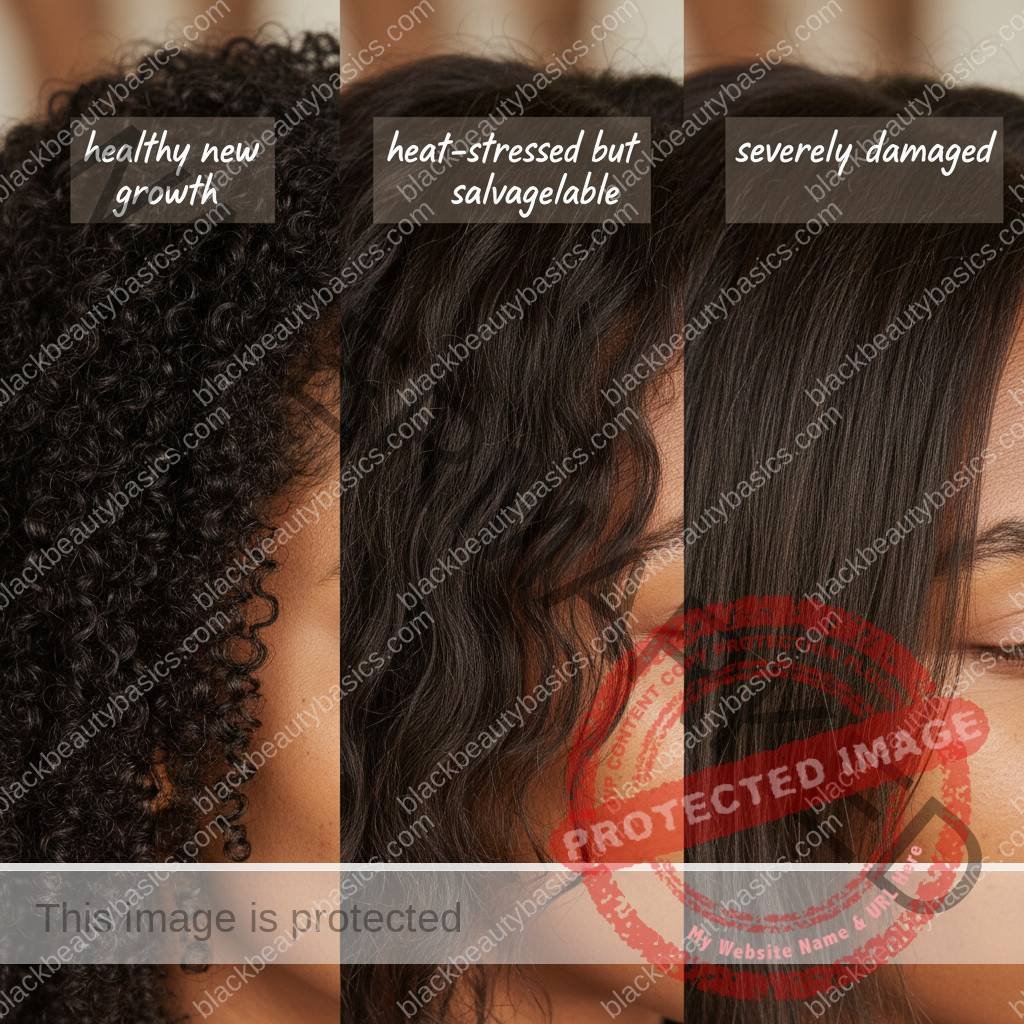
Reading Your Hair’s Story: Mild vs. Moderate vs. Severe Heat Damage
Not all heat damage is created equal. Just as every woman’s journey is unique, so is her hair’s response to stress. Understanding the degree of damage your hair has sustained is crucial for developing a realistic and effective recovery plan. This self-assessment helps you decide whether to focus on intensive rehab, gradual trimming, or a more decisive cut, allowing you to tailor your approach with precision and compassion.
Mild Heat Damage: A Gentle Nudge Towards Rejuvenation
Mild heat damage is often the easiest to address and recover from, as the structural integrity of the hair is not yet severely compromised. It’s like a gentle warning sign from your curls, asking for a little more care and attention.
- Slight looseness in curl pattern, mostly on ends or isolated sections: You might notice that your curls aren’t quite as tight or defined as they used to be, particularly at the very ends or in specific areas that received more direct heat exposure. The pattern is still there, but it’s a bit stretched or relaxed.
- Some dryness and frizz but hair still feels relatively strong: While there might be an increase in dryness and frizz, your hair doesn’t feel overly brittle or weak. It still retains some of its natural elasticity and strength, and breakage is minimal.
- Responds well to deep conditioning and protein; curls improve with consistent care: This is the hallmark of mild damage. After a good deep conditioning session, your curls show noticeable improvement in definition, softness, and bounce. They feel more hydrated and resilient, indicating that the damage is superficial enough to be significantly impacted by topical treatments.
Recovery Approach for Mild Damage: Here, consistent moisture, periodic light protein treatments, and a significant reduction in heat use can noticeably improve appearance and feel over a few months. You may not need drastic cuts, just regular dusting (small trims of the very ends) and patience. The focus is on prevention and maintenance, ensuring the damage doesn’t progress.
Moderate Heat Damage: A Call for Dedicated Intervention
Moderate heat damage signifies a more pronounced alteration to the hair’s structure. Your hair is sending a clearer message that it needs dedicated intervention, a more intensive recovery plan, and a willingness to make more significant changes.
- Noticeable pattern changes in multiple areas, especially mid-lengths and ends: The curl pattern has visibly loosened or changed in several sections, extending beyond just the very ends. Some areas might appear wavy or straight, while others retain a looser version of your natural curl. The contrast between healthy new growth and damaged sections becomes more apparent.
- Hair tangles easily, feels rough, and breaks more during styling: The compromised cuticle and weakened internal structure lead to increased friction between strands, causing tangles and knots. Your hair feels rough to the touch, lacks its usual smoothness, and you experience more breakage during detangling and styling, even with careful manipulation.
- Curls partially return in some sections, while others stay stretched or uneven: After washing, some areas might show a partial return of the curl pattern, but it’s often inconsistent, weaker, or less defined than your natural texture. Other sections might remain stubbornly stretched or uneven, highlighting the varying degrees of damage across your head.
Recovery Approach for Moderate Damage: In this zone, you can often stabilize and significantly improve your hair over 2–3 months with weekly intensive deep treatments, strategic bond repair, and extremely careful handling. However, you’ll likely need to commit to more aggressive trimming over time to gradually remove the most compromised sections. The goal is to nurture the existing hair while growing out healthier strands, creating a smoother transition.
Severe Heat Damage: Embracing a New Beginning
Severe heat damage represents a critical point where the hair’s structural integrity has been profoundly compromised. This level of damage often necessitates a more decisive approach, as topical treatments alone cannot fully restore the hair to its original state. It’s a moment to embrace a new beginning, even if it feels daunting.
- Whole sections remain straight, limp, or “stringy” when wet: This is the clearest indicator of severe, irreversible damage. If large portions of your hair, especially at the mid-lengths and ends, remain stubbornly straight, limp, or have a thin, stringy appearance even when fully saturated with water, the internal protein bonds have been permanently broken or rearranged.
- Widespread breakage, split ends, and see-through areas: You’ll observe extensive breakage throughout your hair, not just at the ends. Split ends might be rampant, traveling far up the hair shaft, and your hair might appear significantly thinner or ‘see-through’ in multiple areas due to the cumulative loss of strands.
- Hair feels rough, stiff, or mushy and does not respond much to treatments: Despite consistent deep conditioning and protein treatments, your hair might still feel rough, stiff, or even mushy and overly elastic when wet (a sign of hygral fatigue from extreme porosity). It shows minimal improvement in texture, elasticity, or curl definition, indicating that the damage is too extensive for surface-level repair.
Recovery Approach for Severe Damage: Here, no topical routine can truly restore the original curl pattern. While you can make the hair more manageable and less brittle in the short term, meaningful “repair” is fundamentally about growing new, healthy hair and gradually or decisively cutting off the damaged portions. This might involve a ‘big chop’ for a fresh start, or a long-term transition plan with consistent, significant trims. This is an opportunity to redefine your relationship with your hair, focusing on its inherent health and beauty rather than trying to salvage what is irretrievably lost.
A Practical Recovery Plan for Heat-Damaged Natural Hair: A Roadmap to Renewal
Instead of chasing miracles, it helps to anchor into a clear, actionable plan. This roadmap is designed to support what’s salvageable, remove what isn’t, and prevent new damage as your hair grows in. It’s a holistic approach that combines consistent care, strategic trims, and a shift in styling habits, all undertaken with patience and self-compassion.
1. Stop or Greatly Reduce Heat: Breaking the Cycle
Any effective recovery plan must begin by addressing the root cause of the damage. For heat-damaged hair, this means significantly reducing or completely eliminating the use of high-temperature styling tools. Continued heat use while attempting to “repair” will quietly erase your progress, creating a frustrating cycle of damage and temporary fixes.
- Pause flat irons and curling wands for several months: This is often the most critical step. Direct heat from these tools is the primary culprit for severe damage. Commit to a hiatus of at least 3-6 months, or even longer, to allow your hair a chance to heal and new, healthy growth to emerge unhindered.
- Use cool to warm water instead of very hot water when washing: Hot water can strip your hair of its natural oils, lift the cuticle, and contribute to dryness and porosity, exacerbating heat damage. Opt for lukewarm water during shampooing and conditioning, and finish with a cool rinse to help seal the cuticle and enhance shine.
- If you must blow-dry, use low heat, a diffuser or comb attachment, and a true heat protectant every time: If air-drying isn’t feasible, invest in a high-quality blow-dryer with multiple heat settings. Always use the lowest effective heat setting. A diffuser attachment helps to distribute heat more evenly and gently, preserving curl patterns, while a comb attachment can minimize direct heat exposure. Crucially, apply a dedicated heat protectant (look for ingredients like silicones, hydrolyzed wheat protein, or polyquaternium-11) generously from root to tip before any heat application. These products create a barrier that minimizes thermal damage.
2. Weekly Deep Conditioning + Moisture Routine: The Foundation of Healing
Consistency is key when it comes to moisture. Think of your hair as a delicate plant that needs regular watering and nourishment. A consistent moisture pattern, rather than random treatments, will yield the best results.
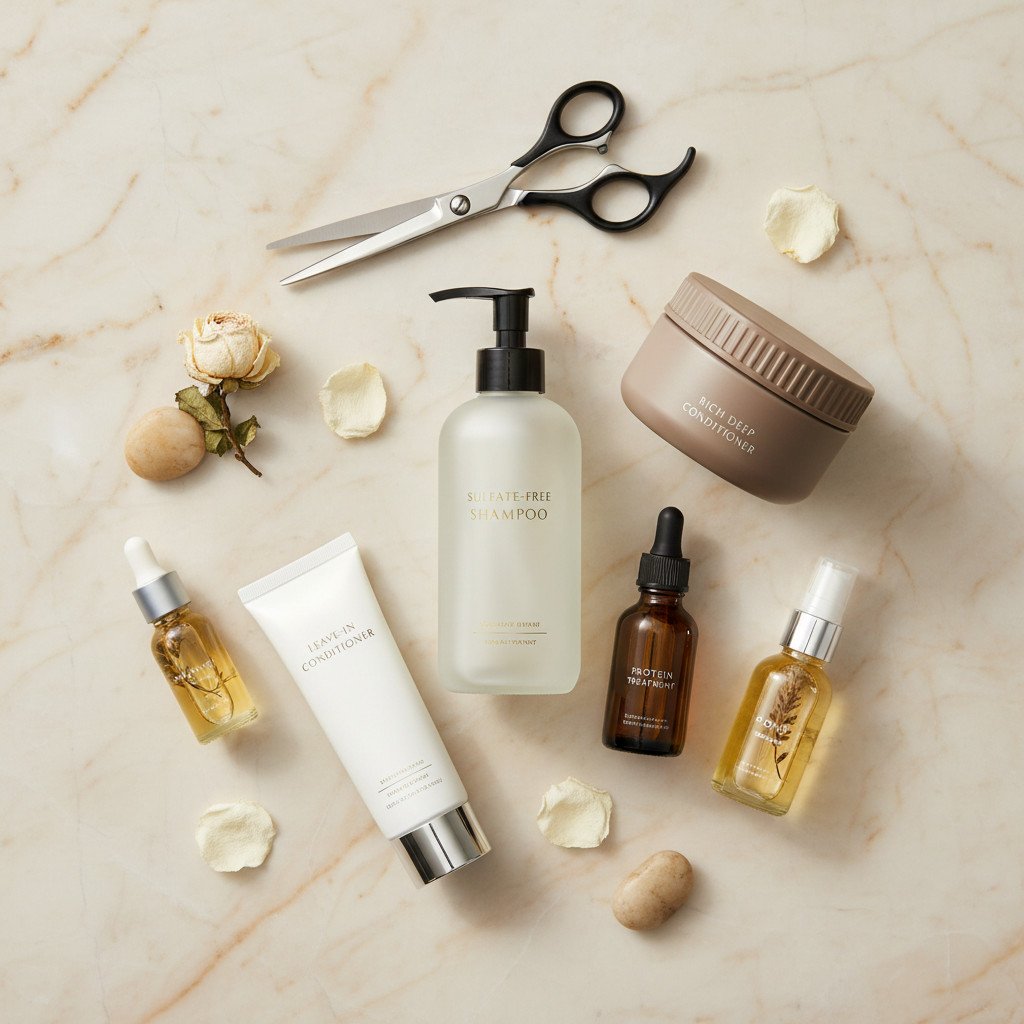
- Once a week: The Wash Day Ritual: Establish a sacred weekly wash day. Begin with a gentle, sulfate-free shampoo to cleanse without stripping. Follow with a rich deep conditioner (alternating between moisturizing and balanced protein/moisture options as needed). Apply it generously, ensuring full saturation, and allow it to process for 20–30 minutes, preferably with indirect heat (a plastic cap under a warm towel or hooded dryer) to enhance penetration. Finish with a cool rinse to seal the cuticle.
- After washing: The LOC/LCO Method (or similar): Immediately after rinsing out your deep conditioner, while your hair is still damp, apply your products using a layered approach. This typically involves a liquid (water-based leave-in conditioner or hydrating mist), an oil (a light plant oil to seal), and a cream (a rich styling cream or butter to provide hold and moisture). Focus extra attention on the ends and the most damaged zones, as these areas are the most vulnerable and porous.
- Between washes: Hydration on Demand: Don’t wait for your hair to feel parched. Use hydrating mists or leave-ins on dry areas as needed throughout the week. Spritzing your hair lightly with a water-based product can reactivate existing products and provide a fresh burst of moisture. Always protect your hair at night with a satin or silk bonnet, scarf, or pillowcase to minimize friction and prevent moisture loss.
Product Recommendations: For deep conditioners, consider options like the Mielle Rosemary Mint Strengthening Hair Masque (Shop Mielle Rosemary Mint Strengthening Hair Masque on Amazon: https://www.amazon.com/s?k=Mielle+Rosemary+Mint+Strengthening+Hair+Masque&tag=jamiesondon04-20) for a balanced approach, or the SheaMoisture Manuka Honey & Mafura Oil Intensive Hydration Hair Masque (Shop SheaMoisture Manuka Honey & Mafura Oil Intensive Hydration Hair Masque on Amazon: https://www.amazon.com/s?k=SheaMoisture+Manuka+Honey+Mafura+Oil+Intensive+Hydration+Hair-Masque&tag=jamiesondon04-20) for intense moisture. For leave-ins, the Cantu Shea Butter Leave-In Conditioning Repair Cream is a budget-friendly staple. For bond-building, look into the Olaplex No. 3 Hair Perfector for at-home use.
3. Build in Protein and Bond Repair—But Don’t Overdo It: The Delicate Balance
While moisture is the foundation, strengthening treatments are the scaffolding. Alternating moisture-rich treatments with strengthening options can help bring heat-stressed curls back to a more resilient baseline. However, it’s a delicate balance; too much protein can lead to stiffness and breakage, so listen closely to your hair’s feedback.
- Use a light to moderate protein treatment every 3–4 weeks: This frequency allows your hair to benefit from the strengthening effects without becoming overloaded. Look for treatments containing hydrolyzed proteins (like wheat, silk, or rice protein), which are small enough to penetrate the hair shaft. After applying, observe how your hair feels. If it starts feeling stiff, brittle, or snaps easily, you may be using protein too often or the concentration is too high. Adjust by increasing the time between treatments or opting for a less intense protein product.
- Consider bond-building treatments (salon or at home) for moderately damaged hair: As mentioned, products like Olaplex No. 3 or K18 can be game-changers. They work on a deeper level than traditional protein treatments by repairing the broken disulfide bonds within the hair shaft. These treatments can significantly improve strength, elasticity, and smoothness, especially when damage is not extreme. Integrate them into your routine every 4-6 weeks, or as directed by the product, alongside your regular deep conditioning. They are particularly effective when used in conjunction with reduced heat exposure, allowing the newly formed bonds to stabilize.
The Protein-Moisture Balance: If your hair starts feeling stiff and snaps easily, it’s a classic sign of protein overload. Shift your focus back toward intensive moisturizing treatments until elasticity improves. Conversely, if your hair feels overly soft, mushy, or lacks structure, it might be signaling a need for more protein. Learning to read these cues is a crucial part of your hair recovery journey.
4. Trim Strategically and Consistently: The Path to Purity
Scissors are not the enemy; they are an essential tool in your recovery arsenal. Trimming is less about losing length and more about making space for healthier hair to be the majority of what you see and style. It’s about removing the dead weight that is holding your hair back from its full potential.
- Schedule small trims every 8–12 weeks to gradually remove the most damaged ends: This approach, often called ‘dusting,’ is ideal for mild to moderate damage. It allows you to maintain length while steadily eliminating compromised sections. Regular trims prevent split ends from traveling further up the hair shaft, which would necessitate a more drastic cut later. Be sure to seek out a stylist experienced with natural hair who understands how to trim curly hair in its natural state.
- If the line between healthy and damaged hair is stark, you might opt for a more decisive “big trim” or big chop: For severe damage, or if you’re tired of managing two vastly different textures, a more significant cut might be the most liberating option. A
Frequently Asked Questions
Can I ever get my exact curl pattern back after heat damage?
If heat damage is mild, some sections of your curl pattern may bounce back noticeably with consistent moisture, protein, and reduced heat. For hair that has lost its curl or wave entirely, the internal structure is usually too altered to fully revert; no topical treatment can permanently “re-curl” those strands. In those cases, recovery is about supporting the hair you have while you grow out and gradually trim the damaged portions so your natural texture can return at the roots.
Do bond-building treatments like Olaplex or K18 fix heat-damaged curls?
Bond-building treatments can improve the strength, smoothness, and manageability of heat-damaged hair by reconnecting or reinforcing some internal bonds, especially when damage is mild to moderate. They can reduce breakage and help hair feel less rough, which is valuable in a recovery phase. However, they don’t guarantee a full return of your original curl pattern in severely damaged areas. They are best understood as powerful support, not a complete reset button.
How do I know if I should big chop or just trim gradually?
If most of your hair has lost its pattern, breaks easily, and feels unresponsive to treatments, a big chop or a significant trim may give you a cleaner slate and shorten the emotional strain of managing two completely different textures. If damage is concentrated on the ends or in a few areas and the rest of your hair still behaves well, gradual trims paired with a strong care routine can be enough. Ultimately, the decision is part practical and part emotional: it’s about how much uneven texture you’re willing to manage and how ready you feel to embrace a new length.
Can I still straighten my hair sometimes if I’m recovering from heat damage?
You can, but you’ll need stricter boundaries. That means limiting straightening to infrequent occasions, using high-quality heat protectant, choosing lower temperatures, and ensuring your hair is well-conditioned and completely dry before you apply direct heat. If you notice new limp sections or more dryness after each straight style, that’s your cue to extend your break from heat or stop it entirely for a period to protect your progress.
Is all shedding after heat damage a sign of permanent loss?
Not necessarily. Some shedding after heat damage reflects normal hair fall plus breakage from weakened areas; with better care, that breakage rate can be reduced. What’s more concerning is persistent shedding or thinning over many months, especially if accompanied by scalp symptoms or distinct patches of loss. If you see ongoing, heavy shedding or thinning despite gentle care and reduced heat, it’s wise to consult a dermatologist or trichologist to rule out other causes.
How long should I give a recovery routine before deciding it’s not working?
For mildly to moderately heat-damaged hair, you should expect to see improvements in softness and manageability within a few weeks, and clearer changes in breakage and overall health within 2–3 months of consistent care and reduced heat. If after three months of weekly deep conditioning, careful detangling, trims, and minimal heat your hair still breaks easily and shows no improvement, it may be a sign that some sections are too damaged and need more significant cutting, or that a professional evaluation could help refine your plan.
What are the best ingredients to look for in products for heat-damaged hair?
For heat-damaged hair, prioritize products rich in humectants like glycerin, hyaluronic acid, and honey for deep hydration. Emollients such as shea butter, mango butter, and various plant oils (avocado, jojoba) help to smooth the cuticle and seal in moisture. For strengthening, look for hydrolyzed proteins (wheat, rice, silk) in moderate amounts, and consider bond-building ingredients like maleic acid or bis-aminopropyl diglycol dimaleate for internal repair. Avoid harsh sulfates, silicones that cause excessive buildup, and products with high alcohol content that can further dry out compromised strands.
Can protective styles help heal heat-damaged hair?
Yes, protective styles can be incredibly beneficial for heat-damaged hair, but only if installed and removed gently. Styles like braids, twists, and wigs reduce daily manipulation, minimize exposure to environmental stressors, and allow your hair to rest and retain moisture. However, ensure they are not too tight, as excessive tension can lead to traction alopecia, and always keep your hair moisturized underneath the style. Neglecting your hair while in a protective style can worsen its condition.
How does diet and internal health affect heat-damaged hair recovery?
Hair health is a reflection of overall bodily health. A balanced diet rich in proteins, vitamins (especially A, C, D, E, and B-complex), and minerals (iron, zinc, biotin) is crucial for growing strong, healthy new hair. Hydration from within by drinking plenty of water also supports hair elasticity and moisture retention. While diet won’t repair existing damage, it provides the essential building blocks for the new, healthy hair that will eventually replace the damaged sections, making it an integral part of a holistic recovery plan.
Is there a difference in how 4C hair recovers from heat damage compared to looser curl patterns?
While the principles of recovery are universal, 4C hair can sometimes show heat damage more dramatically and may require even more diligent care. The tighter curl pattern of 4C hair makes it inherently more fragile and prone to dryness, meaning heat damage can lead to a more noticeable loss of elasticity and definition, and increased breakage. Recovery for 4C hair often emphasizes even heavier, more consistent deep conditioning, gentle detangling, and a very cautious approach to protein to avoid stiffness. The decision to big chop or transition may also feel more pronounced due to the stark contrast between damaged and healthy textures.
Shop Mielle Rosemary Mint Strengthening Hair Masque on Amazon
Shop SheaMoisture Manuka Honey & Mafura Oil Intensive Hydration Hair Masque on Amazon
Shop Cantu Shea Butter Leave-In Conditioning Repair Cream on Amazon
Shop Olaplex No. 3 Hair Perfector on Amazon
Shop heat protectant spray on Amazon
Related next steps
Start Here → Natural Hair Care And Protective Styles → Natural Hair Care 101 For Black Women Moisture Protein Length Retention → Texture Specific Routines 4c Porosity Mixed Textures → Moisture Protein And Strength Balance → Everyday Low Manipulation Styling → Hair Growth For Black Women Scalp Nutrition Routine → Hair Growth And Scalp Health →Related posts:
 Recognizing and Recovering from Heat Damage: Restoring Your Curls’ Vitality
 Heat Styling – Tips to Minimize Damage and Maintain Healthy Hair
 Repairing Your Barrier After Over-Exfoliation on Dark Skin
 How Heat Affects Natural Hair and Curl Patterns: Understanding the Science Behind the Sleek
 How to Safely Color Natural Hair Without Causing Damage
 How to Use a Hair Steamer for Natural Black Hair at Home: Deep-Condition Like a Pro With a Thermal Heat Cap