Transitioning from Relaxed to Natural: A 12‑Month Plan
Deciding to stop relaxing your hair isn’t just a styling choice; it’s a full‑body decision. You’re growing out new texture while carrying old narratives about “neatness,” “professionalism,” and what counts as “manageable.” At the same time, you’re literally managing two different heads of hair on one scalp.
If the idea of a big chop doesn’t feel right for you, a structured transition gives you another path. This 12‑month plan is designed for Black women who want to grow out their natural hair gradually: month by month, we’ll cover trims, styles, moisture, and mindset so you’re not guessing or feeling like you’re “behind.”
This journey is deeply personal, a quiet revolution unfolding on your crown. It’s an embrace of your authentic texture, a reclamation of your roots, and a testament to your patience and self-love. We understand the unique challenges and triumphs that come with this path, and this guide is crafted to walk alongside you, offering wisdom, practical advice, and unwavering encouragement. Every strand of new growth is a step closer to a deeper connection with yourself, and every choice you make during this transition is an act of intentional self-care.
Before Month 1: Setting Your Intentions and Baseline
Before you count a single month, give yourself a moment to set your terms. You’re allowed to define what “natural” looks like for you—twist‑outs, silk presses, tapered cuts, teeny afros, or locs. This is your journey, and your vision for your hair should be the guiding star. Take a deep breath, look in the mirror, and truly connect with the hair you have now, and the hair you envision for your future.
Clarify Your Starting Point
- Note your last relaxer date; that becomes your transition start date. This is a crucial marker, a ‘Day Zero’ from which all your progress will be measured.
- Assess your current hair: length, thickness, breakage, scalp health, and how often you use heat. Be honest with yourself. Understanding your hair’s current state—its strengths and its vulnerabilities—will allow you to tailor this plan to your specific needs. Pay attention to the health of your ends, the elasticity of your relaxed strands, and any areas of thinning or damage.
- Take photos of your hair now (front, sides, back) so you can track progress that mirrors don’t always show. These photos will become invaluable touchstones, reminding you of how far you’ve come, especially on days when progress feels slow. Don’t just focus on length; capture the texture, the shine, and the overall health.
There’s no rule that says you must be “fully natural” at exactly 12 months. This plan gives you structure; you can stretch, compress, or loop back based on your life. Your hair, your rules. This is not a race, but a marathon of self-discovery and hair health. Embrace the flexibility and listen to what your hair and your spirit are telling you.
Mindset Matters: Cultivating Patience and Self-Compassion
Beyond the physical steps, the mental and emotional aspects of transitioning are paramount. You are embarking on a journey that will test your patience and challenge old perceptions. It’s vital to cultivate a mindset of self-compassion and acceptance from the very beginning.
- Acknowledge the Emotional Weight: For many Black women, relaxed hair is tied to memories, social expectations, and a sense of ‘manageability.’ Releasing this can bring up complex emotions. Allow yourself to feel them without judgment.
- Practice Positive Affirmations: Speak kindly to your hair and yourself. Affirmations like “My hair is healthy and strong,” “I embrace my natural texture,” or “I am beautiful in every stage of my journey” can be powerful tools.
- Educate Yourself: Knowledge is power. The more you understand about natural hair care, the less daunting the process will feel. Read articles, watch tutorials, and connect with others on similar journeys.
- Build a Support System: Talk to friends or family who have transitioned or are currently doing so. Join online communities where you can share experiences, ask questions, and receive encouragement. You are not alone in this.
- Celebrate Small Wins: Every inch of new growth, every successful wash day, every moment you choose self-care over frustration—these are victories worth celebrating.
Your hair is a reflection of your heritage, your strength, and your unique beauty. This transition is an opportunity to deepen that connection, to honor your roots in a profound and personal way. Let this be a journey of empowerment, where every decision is made with love and intention.
Months 1–3: Gentle Reset and Learning Your New Growth
In the first few months, new growth is short but important. Your job is to stop adding new damage and start learning the feel of your natural texture at the roots. This initial phase is about laying a solid foundation for healthy hair growth and establishing new habits that will serve you throughout your transition and beyond.
Goals for Months 1–3
- Stop chemical relaxers and texturizers completely. This is the non-negotiable first step. No more chemicals that alter your natural curl pattern. This commitment is the cornerstone of your transition.
- Reduce direct heat (flat irons, curling wands) as much as possible. Heat can cause irreversible damage, especially to your delicate new growth and the fragile demarcation line. Aim for minimal or no direct heat during this period. If heat is absolutely necessary for a special occasion, use a high-quality heat protectant and the lowest effective temperature.
- Establish a consistent wash‑day and moisturizing routine. Consistency is key. Your hair thrives on routine. This means identifying products that work for your hair type and sticking to a regular schedule for cleansing, conditioning, and moisturizing.
Routine Focus
- Cleanse every 1–2 weeks: Use a gentle, sulfate-free shampoo. Sulfates can strip your hair of its natural oils, leading to dryness and breakage, which is the last thing you need during a transition. Clarify once a month if you’ve got a lot of old product buildup, but choose a gentle clarifying shampoo that won’t leave your hair feeling like straw. Focus on cleansing your scalp thoroughly, as a healthy scalp is the foundation for healthy hair growth.
- Deep condition regularly: Aim for every wash day to support both relaxed and new growth. Deep conditioning is your best friend during this phase. It provides intense moisture and nutrients, helping to maintain the elasticity of your relaxed ends and nourish your emerging natural texture. Look for deep conditioners rich in humectants (like glycerin or honey) and strengthening ingredients (like hydrolyzed protein, but use sparingly if your hair is protein-sensitive). Apply generously, cover with a plastic cap, and allow it to penetrate for at least 20-30 minutes, or even longer with gentle heat.
- Moisturize and seal: Apply leave‑in + cream (and light oil if needed) focusing on the line where new growth meets relaxed hair—the “demarcation line,” which is fragile. This line is the most vulnerable point for breakage. After deep conditioning, apply a water-based leave-in conditioner to damp hair, followed by a moisturizing cream. If your hair tends to be very dry, you can then seal in the moisture with a light natural oil like jojoba, grapeseed, or almond oil. The goal is to keep this area pliable and strong.
For styling, stick to low‑manipulation looks that don’t require daily heat: flexi‑rod sets, roller sets, bantu‑knots, or braid‑outs that blend textures. These styles allow your hair to dry naturally or with minimal heat (like a hooded dryer on a cool setting), reducing stress on your strands. They also help to create a cohesive look between your two textures, making the transition less noticeable. Experiment with different setting lotions or mousses that provide hold without stiffness or flaking. Remember, the less you manipulate your hair, the better it will fare during these crucial first months.
Product Spotlight for Months 1-3
During this foundational stage, investing in the right products can make a significant difference. You’re looking for gentle, nourishing formulas that cater to both your relaxed ends and your burgeoning natural texture.
- Sulfate-Free Shampoo: A gentle cleanser is paramount. Look for ingredients like aloe vera, coconut oil, or shea butter. A good option might be a moisturizing sulfate-free shampoo. Shop moisturizing sulfate-free shampoo on Amazon.
- Deep Conditioner: This is where you’ll spend a lot of your product budget. Seek out formulas with reparative and deeply hydrating ingredients. Look for terms like ‘restorative,’ ‘hydrating,’ or ‘strengthening.’ Ingredients like avocado oil, argan oil, and various proteins can be beneficial.
- Leave-in Conditioner: A lightweight, water-based leave-in is essential for daily moisture. It should provide slip for detangling and absorb easily without weighing down your hair.
- Moisturizing Cream: A thicker cream or butter will help seal in the moisture from your leave-in, especially at the demarcation line. Shea butter, mango butter, and cocoa butter are excellent choices.
Remember, product choice is highly personal. What works for one person may not work for another. Be prepared to experiment a little, but always prioritize gentle, hydrating, and strengthening ingredients.
Understanding Hair Porosity
As you get to know your new growth, understanding your hair’s porosity will be incredibly helpful. Porosity refers to your hair’s ability to absorb and retain moisture.
- Low Porosity: Cuticles are tightly closed, making it hard for moisture to get in, but once in, it stays. Products tend to sit on top. You might need heat (like a hooded dryer with a deep conditioner) to help products penetrate. Lighter oils and water-based products work well.
- Medium Porosity: Cuticles are slightly raised, allowing moisture to enter and leave fairly easily. This hair type is often considered the easiest to manage.
- High Porosity: Cuticles are very open (often due to damage or genetics), absorbing moisture quickly but losing it just as fast. This hair needs heavier creams, butters, and oils to seal in moisture, and protein treatments can help strengthen the cuticle.
You can do a simple strand test: drop a clean strand of hair into a glass of water. If it floats, you likely have low porosity. If it sinks slowly, medium. If it sinks quickly, high. Knowing this will guide your product choices and application techniques, making your routine more effective.
Months 4–6: Managing Two Textures and Introducing Strategic Trims
By this point, you’ll have a few inches of new growth—long enough to see your curl or coil pattern at the roots. You’ll also start to really feel that demarcation line, where your natural hair and relaxed hair meet. This can be a challenging phase, as the contrast between the two textures becomes more pronounced. Patience and gentle handling are your greatest allies.
Goals for Months 4–6
- Learn styling techniques that blend your textures without frying your roots. The goal is to make the transition between your natural roots and relaxed ends as seamless as possible, both visually and structurally. This often involves techniques that stretch or define both textures.
- Begin regular trims to slowly reduce relaxed ends. This is where you start actively removing the chemically altered hair. These aren’t ‘big chops,’ but rather consistent, small cuts that prioritize the health of your hair and the integrity of your styles.
- Explore protective styles that actually protect, not strain. As your new growth gains length, you’ll find more options for low-manipulation styles that tuck away your ends and reduce daily styling stress.
Routine Focus
- Trim schedule: Plan to trim about ¼–½ inch every 8–10 weeks, depending on how fast your hair grows and your comfort level. These trims are crucial for removing damaged, relaxed ends that can snag, split, and cause further breakage up the hair shaft. Consider a professional stylist who is experienced with natural hair or transitioning hair. They can assess your hair’s health and recommend the best trimming schedule and technique. If you’re trimming at home, invest in sharp hair shears—never use kitchen scissors!
- Protein balance: Introduce light to moderate protein treatments every 4–6 weeks if your relaxed ends feel weak or mushy, always followed by moisture. Protein helps to strengthen the hair shaft, which can be particularly beneficial for the relaxed sections and the vulnerable demarcation line. However, too much protein can make hair stiff and brittle, so it’s a delicate balance. Always follow a protein treatment with a deep moisturizing conditioner to restore elasticity and prevent dryness. Pay attention to how your hair responds; if it feels hard or straw-like, reduce protein frequency or use a lighter formula.
- Detangling: Detangle on damp, conditioned hair only, in sections, starting at the ends and working toward the roots. This is perhaps the most critical step to prevent breakage at the demarcation line. Use a generous amount of conditioner or a detangling spray to provide maximum slip. Use your fingers first to gently separate knots, then a wide-tooth comb or a detangling brush designed for curly hair. Work slowly and patiently, treating each section with care. Never detangle dry hair.
Styles that help in this phase include rod sets, twist‑outs on stretched hair, and braid‑outs. They visually smooth the transition between textures without relying on high heat. These styles use the natural shrinkage of your new growth and the longer length of your relaxed ends to create a cohesive, defined pattern. Look for techniques that stretch your roots slightly to match the length of your ends, or that create definition throughout the entire strand. Flexi-rods and perm rods are excellent for creating uniform curls, while twist-outs and braid-outs can give you beautiful waves or curls with minimal effort. Always ensure your hair is adequately moisturized before styling to prevent frizz and breakage.
Advanced Detangling Techniques for the Demarcation Line
The demarcation line is your hair’s most fragile point during transition. Mastering gentle detangling here is non-negotiable.
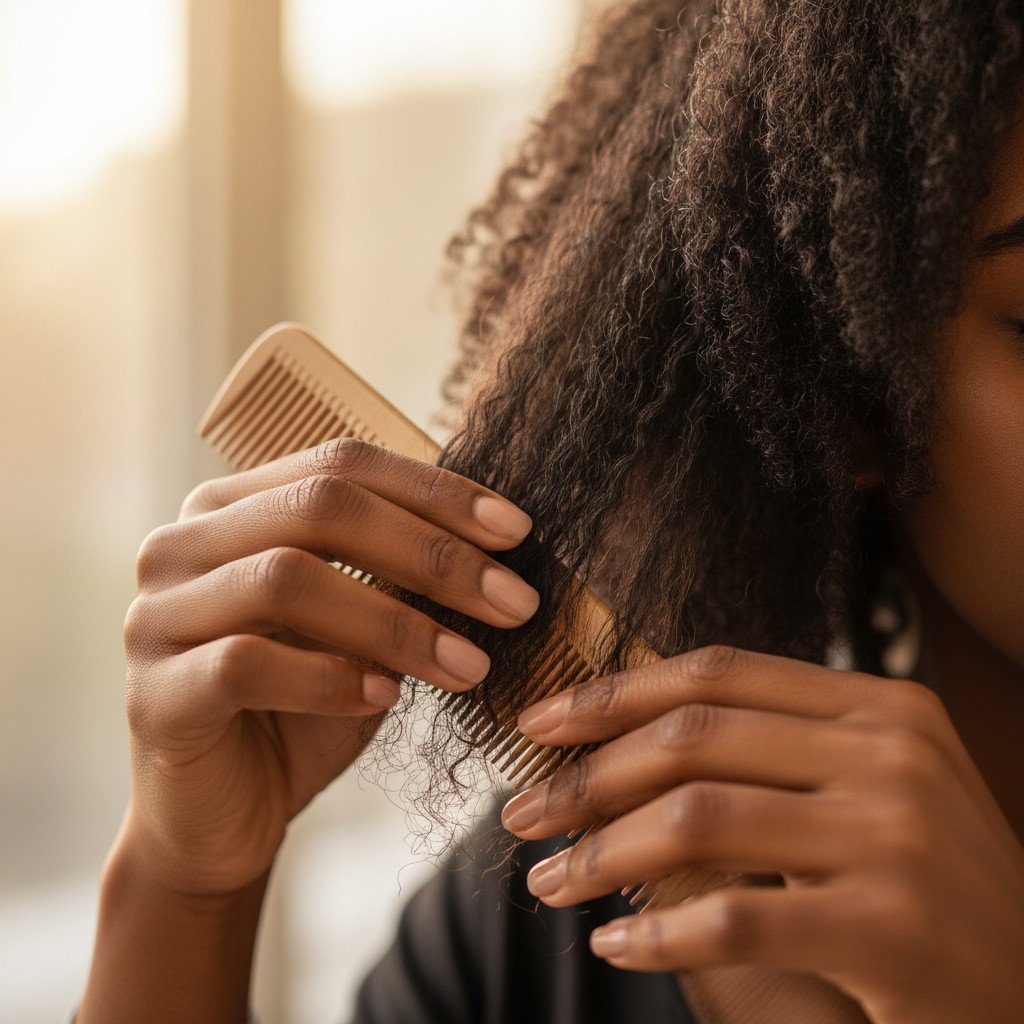
- Pre-poo with Oil: Before shampooing, apply a penetrating oil (like coconut or olive oil) to your hair, focusing on the ends and demarcation line. Let it sit for 15-30 minutes. This helps to soften the hair and provide extra slip, making detangling easier and reducing friction during washing.
- Conditioner First: On wash day, apply conditioner *before* shampooing, especially to your ends and the demarcation line. This is called ‘co-washing’ or ‘pre-conditioning’ and helps protect your hair from the stripping effects of shampoo.
- Finger Detangling: Your fingers are the gentlest tools. Use them to work through large tangles and separate strands before introducing a comb.
- Sectioning is Sacred: Always detangle in small, manageable sections. This prevents tangles from spreading and allows you to focus on each part of your hair individually.
- The Right Tools: Invest in a good quality wide-tooth comb or a flexible detangling brush (like a Denman brush or a Tangle Teezer). These are designed to glide through curls without snagging.
Remember, patience is key. If you encounter a stubborn knot, don’t force it. Add more conditioner and gently work it out with your fingers.
Embracing Stretch for Blended Styles
To make your two textures play nicely together, stretching your new growth is often necessary. This temporarily elongates your natural curl pattern to better match the length of your relaxed ends, reducing the ‘poof’ at the roots.
- Banding Method: After washing and moisturizing, divide your hair into sections. Use soft hair ties or elastic bands to gently stretch each section from root to tip. Leave them in until your hair is completely dry. This is a very gentle, heat-free way to stretch your hair.
- African Threading: Similar to banding, this ancient technique uses thread to stretch and protect hair. It’s excellent for creating elongated, defined styles.
- Braid-outs/Twist-outs on Damp Hair: As mentioned, these styles are fantastic. Ensure your hair is damp (not soaking wet) and well-moisturized. The larger the braids/twists, the looser the resulting wave/curl.
- Roller Sets/Rod Sets: These are classic for a reason. They create uniform curls that can beautifully blend textures. Use a setting lotion for hold and shine. A hooded dryer on a low-to-medium heat setting can speed up drying time without causing direct heat damage.
The goal is to minimize the stark contrast between the two textures, making your styles look more cohesive and polished. This also reduces the temptation to revert to heat styling.
Months 7–9: Leaning Into Protective Styling and Length Retention
By month 7, your natural hair at the roots has a real presence. You might start to feel impatient with the relaxed ends or tempted to “just cut it all off.” This is a common phase where many women consider the ‘big chop.’ You can, if that feels right—but you also can choose a slower, protective‑style‑heavy season. This period is about nurturing your new growth and giving it the best possible environment to flourish, while strategically managing the remaining relaxed hair.
Goals for Months 7–9
- Protect your new growth and ends from constant manipulation. Protective styles are your secret weapon during this phase. They minimize daily styling, reduce breakage, and allow your hair to rest and grow.
- Continue trimming relaxed hair gradually. Keep up with your regular trims. Each trim brings you closer to being fully natural and removes more of the fragile, relaxed ends that are prone to breakage.
- Strengthen your relationship with your natural texture, even when it’s mostly at the roots. Even though your hair might be tucked away, take moments to feel your new growth, observe its pattern, and appreciate its strength. This helps build confidence for when it’s fully revealed.
Protective Style Strategy
- Consider medium‑sized braids, twists, faux locs, or wigs with gentle braids underneath. These styles are excellent for tucking away your ends and reducing daily manipulation. Medium-sized options are generally better than very small or very large ones, as small braids can put too much tension on your scalp, and very large ones might not hold as well or look as neat.
- Install on stretched, moisturized hair and avoid heavy tension at the roots and edges. This is critical. Hair that is stretched before braiding or twisting will be less prone to tangling and will blend better. Ensure your hair is thoroughly moisturized before installation. The most common mistake with protective styles is allowing them to be installed too tightly. This can lead to traction alopecia (hair loss around the edges and temples). Communicate clearly with your stylist about tension, and don’t hesitate to speak up if it feels too tight.
- Wear each style for 4–8 weeks, max, with proper scalp cleansing and moisturizing underneath. While protective styles are low-maintenance, they are not no-maintenance. Your scalp still needs to be cleansed and moisturized. Use a diluted shampoo or apple cider vinegar rinse to clean your scalp, and follow up with a light oil or leave-in conditioner applied directly to the scalp and any exposed hair. Leaving styles in for too long can lead to matting, dryness, and breakage upon takedown.
Between installs, give your hair breaks with simple, stretched own‑hair styles (twists, low buns) and use those “off” weeks for trims and deep conditioning. This ‘rest period’ is vital. It allows your scalp to breathe, your hair to be thoroughly cleansed and treated, and gives you an opportunity to assess its health before the next protective style. Think of it as a reset button for your hair and scalp.
Deep Dive into Protective Styles
Protective styles are a cornerstone of a successful transition, but they must be chosen and maintained thoughtfully. Here’s how to maximize their benefits:
- Box Braids/Twists: Classic and versatile. Opt for medium sizes and ensure the stylist does not braid too tightly, especially around your hairline. Use human hair extensions if possible, or high-quality synthetic hair that is not too heavy.
- Faux Locs/Goddess Locs: A beautiful, long-term option. Again, prioritize light weight and gentle installation.
- Wigs: Wigs offer incredible versatility and protection. Ensure your natural hair underneath is neatly braided (cornrows are ideal), moisturized, and not too tightly compressed. A satin wig cap can further protect your hair. This allows you to experiment with different looks without manipulating your own hair daily.
- Crochet Braids/Twists: These involve crocheting hair extensions into cornrows. They are often lighter than traditional braids and can be quicker to install. Ensure the cornrows underneath are not too tight.
Maintenance while in Protective Styles:
- Scalp Care: Use a spray bottle with a mix of water, leave-in conditioner, and a few drops of essential oils (like peppermint or tea tree) to refresh your scalp daily. For cleansing, use a diluted astringent or witch hazel on a cotton ball to gently wipe your scalp, or a specialized braid spray shampoo.
- Moisturize Exposed Hair: If you have any leave-out or exposed ends, make sure to moisturize them regularly.
- Sleep Protection: Always wear a satin bonnet or use a silk pillowcase to prevent friction and frizz.
- Don’t Overextend: Adhere to the 4-8 week maximum wear time. Any longer, and you risk product buildup, matting, and stress on your hair.
The Importance of a Break
After taking down a protective style, resist the urge to immediately install another. Your hair needs a break. This is the perfect time for:
- Clarifying Shampoo: To remove all product buildup from the protective style.
- Intense Deep Conditioning: To replenish moisture and nutrients.
- Protein Treatment (if needed): To strengthen any weakened strands.
- Trimming: To snip away any lingering relaxed ends.
- Scalp Massage: To stimulate blood flow and promote healthy growth.
During this break, simple styles like loose twists, buns, or even just letting your hair air dry can be beneficial. It’s a chance for your hair to breathe and for you to reconnect with its natural state.
Months 10–12: Preparing for Your First Mostly‑Natural Cut
At a year, many Black women have enough new growth that they can cut off most or all of their relaxed ends and still feel like they have some length to shape. The exact month depends on your growth rate, your starting length, and your comfort level. This is a significant milestone, a culmination of your patience and dedication. It’s a moment of transformation, where your natural texture truly takes center stage.
Goals for Months 10–12
- Decide what “natural enough” looks like for you (all relaxed ends gone, or just most). This is a deeply personal decision. Some women prefer to remove all relaxed hair in one go, while others opt for a gradual approach, trimming off the last few inches over several more months. There’s no right or wrong answer, only what feels best for you and your hair goals.
- Plan a shaping cut that suits your face and lifestyle. This is your opportunity to embrace a new silhouette, one that celebrates your natural texture. Consider what kind of shape you want—a tapered cut, a rounded afro, layers for volume, or something else entirely.
- Solidify your wash‑day and moisturizing routine for your mostly natural texture. With most or all of your relaxed ends gone, your hair care routine will shift. You’ll be caring primarily for natural hair, which has different needs than transitioning hair.
Shaping the Cut
- Book with a stylist experienced in natural cuts on coils and curls, if possible. This is paramount. A stylist who understands the unique characteristics of natural hair—its shrinkage, its curl pattern, and how it behaves when dry—will be able to give you a cut that truly enhances your texture. Don’t be afraid to ask for their portfolio or references.
- Bring photos of shapes you like (tapered cut, rounded afro, layered curls, etc.). Visuals are incredibly helpful for communicating your desired look to your stylist. Be realistic about what your current length and density can achieve, but also be open to their professional suggestions.
- Decide whether you want to remove all the relaxed ends at once or leave a bit and trim the rest over the next few months. This is the ‘big trim’ or ‘mini chop’ moment. If you’ve been consistently trimming, you might only have a few inches of relaxed hair left. Your stylist can help you determine the best approach for a healthy, beautiful shape.
Your “12‑month plan” doesn’t end at the salon. It evolves into a maintenance routine now that your natural texture is leading the show instead of hiding at the roots. This is the beginning of a new chapter, one where you fully embrace and celebrate your natural crown. You’ve done the hard work of transitioning; now it’s time to enjoy the fruits of your labor and cultivate a thriving, healthy head of natural hair.
Embracing Your New Identity
This final phase isn’t just about the physical cut; it’s about a mental and emotional shift. You’ve shed the relaxed hair, and with it, perhaps some old ideas about beauty, manageability, and self-worth. This is a powerful moment of liberation and self-acceptance.
- Experiment with New Styles: With your relaxed ends gone, you have a whole new canvas. Explore wash-and-gos, defined twist-outs, puff styles, and more. Your natural hair will behave differently, and it’s exciting to discover its full potential.
- Refine Your Product Stash: While many of your transitioning products will still be useful, you might find that your hair now responds better to certain ingredients or product types. For instance, if you had high porosity relaxed ends, you might now have low porosity natural roots, requiring a shift in product weight.
- Continue to Learn: The natural hair journey is lifelong. Stay curious, keep learning about your hair, and adapt your routine as your hair changes (which it will, with seasons, age, and even diet).
- Connect with Your Community: Share your journey, inspire others, and draw inspiration from the vibrant natural hair community.
The ‘big chop’ or ‘final trim’ is not an end, but a glorious beginning. It’s a declaration of self-love and an affirmation of your unique beauty. Celebrate this moment, for it represents not just a change in hairstyle, but a profound step in your journey of self-discovery.
Month‑by‑Month Snapshot
| Months | Main Focus | Core Actions |
|---|---|---|
| 1–3 | Reset & foundation | Stop relaxers, reduce heat, establish wash day, start deep conditioning. Focus on gentle cleansing, consistent deep conditioning, and diligent moisturizing at the demarcation line. Begin to understand your natural texture at the roots. |
| 4–6 | Blend textures | Introduce trims, learn sets/braid‑outs, balance moisture and protein. Master detangling techniques, especially at the fragile demarcation line. Experiment with heat-free stretching methods. |
| 7–9 | Protect & retain | Use gentle protective styles, trim between installs, moisturize consistently. Prioritize low-tension styles and rigorous scalp care. Take breaks between styles for deep treatments and trims. |
| 10–12 | Shape & transition out | Plan cut, remove most/all relaxed ends, refine routine for natural texture. Consult with a natural hair stylist for a shaping cut. Embrace your fully natural texture and adjust your product regimen accordingly. |
Key Challenges (and How to Navigate Them)
The transition journey, while rewarding, is not without its hurdles. Anticipating these challenges and having strategies to overcome them will make your path smoother and more enjoyable.
The Demarcation Line: Where Breakage Happens
The point where new growth meets relaxed hair is fragile. Those are two different materials joined at one spot, and they respond differently to tension and moisture. The natural hair is strong and resilient, while the relaxed hair is chemically altered and weaker. This junction is highly susceptible to breakage if not handled with extreme care.

- Always detangle with slip (conditioner or leave‑in), starting at the ends. Never detangle dry hair. Apply a generous amount of a slippery conditioner or detangling spray to thoroughly wet hair. Work in small sections, using your fingers first to gently separate tangles, then a wide-tooth comb or a flexible detangling brush. Always start at the very ends of your hair and slowly work your way up to the roots, being extra careful around the demarcation line.
- Avoid aggressive combing or brushing near the roots; work slowly in sections. The temptation to rush through detangling can lead to significant breakage. Slow down. Be patient. Treat your hair like the delicate fabric it is. If you encounter a knot, add more conditioner and gently work it out rather than pulling or forcing the comb through.
- Keep that line well‑moisturized; dryness plus tension equals breakage. Dry hair is brittle hair. Ensure the demarcation line is consistently moisturized with a good leave-in conditioner and sealed with a cream or light oil. This keeps the hair pliable and less likely to snap under tension. Consider applying a little extra product to this area on non-wash days.
Product Recommendations for Demarcation Line Care
To specifically address the fragility of the demarcation line, consider products that offer maximum slip and strengthening properties without being harsh.
- Detangling Conditioner: Look for conditioners with excellent slip, often containing ingredients like marshmallow root, slippery elm, or aloe vera. These make detangling a breeze. Shop detangling conditioner on Amazon.
- Protein-Moisture Balance Deep Conditioner: A deep conditioner that offers a good balance of protein and moisture can help fortify the relaxed ends and the demarcation line. Use these every 4-6 weeks, always followed by a moisturizing deep conditioner if it’s a protein-heavy formula.
- Leave-in Conditioner with Humectants: A leave-in that draws moisture from the air (humectants like glycerin or honey) will keep the demarcation line hydrated throughout the day.
The Emotional Curve: “My Hair Looks Confusing” Season
There will be days when your hair feels in‑between and you feel in‑between with it. That is normal. This phase, often around months 4-9, can be emotionally taxing. Your hair might not look like your ideal natural hair, nor does it look like your relaxed hair. It’s a mix, and that can be frustrating.
Styles that help during this phase include headwraps, half‑wigs, clip‑ins, and braid‑outs that stretch and disguise texture differences. These are your allies for those days when you need a break from managing the two textures. Headwraps are incredibly versatile and stylish, allowing you to express your personality while protecting your hair. Half-wigs and clip-ins offer instant length and volume, providing a temporary escape from the transition look. Braid-outs and twist-outs, as discussed, are excellent for blending textures and creating a cohesive style.
It also helps to unfollow or mute content that makes you feel like your texture is a “before” picture. Curate your feed so you see people whose hair and journey actually resemble yours. Social media can be a double-edged sword. While it offers inspiration, it can also create unrealistic expectations. Focus on celebrating your own unique journey and finding joy in the process, rather than comparing yourself to others. Seek out content creators who are genuinely supportive of all stages of the natural hair journey, and who showcase diverse hair types and textures.
Overcoming Frustration: Practical and Emotional Tools
- Journaling: Write down your feelings about your hair. This can be therapeutic and help you process any negative emotions.
- Hair Affirmations: Regularly affirm your hair’s beauty and strength. “My hair is growing beautifully,” “I love my unique texture,” “I am patient with my journey.”
- Experiment with Accessories: Headbands, scarves, hair jewelry—these can elevate any in-between style and make you feel more put-together.
- Focus on Health, Not Just Length: Remind yourself that the primary goal is healthy hair. Length will come with time, but health is paramount.
- Connect with Your ‘Why’: Revisit your initial reasons for transitioning. What motivated you? Holding onto that ‘why’ can provide strength during challenging moments.
Patience is a Virtue, and a Necessity
The journey from relaxed to natural is a marathon, not a sprint. There will be moments of doubt, frustration, and perhaps even regret. But remember, every single day, your natural hair is growing, strong and vibrant, from your scalp. Every trim, every deep condition, every gentle detangling session is an act of love and commitment to your authentic self. Trust the process, trust your hair, and most importantly, trust yourself.
Transition‑Friendly Styles Across the 12 Months
Having a repertoire of go-to styles is essential for navigating the transition period with confidence and ease. These styles are chosen for their ability to blend two textures, minimize manipulation, and protect your fragile hair.
Heat‑Free or Low‑Heat Styles
These styles are your bread and butter during the transition. They allow you to achieve polished looks without the damaging effects of high direct heat, which is crucial for preserving the health of your new growth and the integrity of the demarcation line.
- Flexi‑rod and perm‑rod sets. These are excellent for creating uniform curls and waves that can beautifully blend your relaxed ends with your natural roots. Apply a setting lotion or foam to damp, moisturized hair, wrap sections around the rods, and allow to air dry completely or sit under a hooded dryer on a cool or low-heat setting. Once dry, carefully unravel the rods, separate the curls with a light oil on your fingertips, and fluff to your desired volume.
- Braid‑outs and twist‑outs on stretched hair. These are incredibly versatile and effective for blending textures. After washing and deep conditioning, apply a leave-in and a styling cream or butter to damp, stretched hair. Divide your hair into sections and create two-strand twists or braids. The size of the twists/braids will determine the definition and size of your resulting waves/curls. Allow to air dry completely, then gently unravel. For stretched hair, you can use the banding method or African threading before twisting/braiding.
- Bantu knots and knot‑outs. Bantu knots create beautiful, defined curls. Take small sections of damp, moisturized hair, twist each section tightly from root to tip, and then coil it around itself to form a small knot. Secure with a bobby pin if needed. Allow to dry completely, then unravel for a bouncy, defined curl pattern.
- Roller sets under a hooded dryer (with heat protectant, on moderate heat). While this involves heat, it’s indirect heat, which is less damaging than direct heat from a flat iron or curling wand. Use a good quality heat protectant spray before setting your hair on rollers. A hooded dryer ensures even drying and helps to set the style without excessive heat exposure. This can create smooth, bouncy curls that camouflage the texture difference.
Protective Styles (Used Thoughtfully)
Protective styles are invaluable for giving your hair a break from daily manipulation and for retaining length. However, they must be installed and maintained correctly to truly be protective, not damaging.
- Medium‑sized box braids or twists (installed with low tension). These are classic protective styles. Ensure that the braids or twists are not too small (which can cause tension) or too large (which can be heavy). The key is low tension at the roots and edges. Communicate clearly with your stylist about this. Use lightweight extensions if possible.
- Wigs with flat, gentle braids underneath. Wigs offer the ultimate versatility and protection. Your natural hair should be braided into flat cornrows underneath, and these braids should be moisturized regularly. A satin wig cap provides an extra layer of protection against friction. This allows you to experiment with different lengths, colors, and styles without manipulating your own hair.
- Crochet styles that don’t overload your roots. Crochet braids or twists involve crocheting hair extensions into cornrows. They are often lighter than traditional braids and can be quicker to install. Again, ensure the cornrows underneath are not too tight, and choose lightweight crochet hair to avoid putting excessive strain on your scalp and roots.
Protective styles are most helpful when they’re part of a cycle: proper prep, gentle wear, careful takedown, then a reset period before the next install. Never neglect your hair underneath a protective style. Your scalp still needs to be cleansed and moisturized, and your hair needs periodic deep conditioning during the ‘rest’ phases. The goal is to protect and nourish, not to hide and forget.
Styling Products for Blending Textures
To achieve these transition-friendly styles, you’ll need a few key styling products:
- Setting Lotion/Foam: For rod sets and roller sets, a good setting lotion or foam will provide hold, definition, and shine without making your hair stiff or flaky. Look for alcohol-free formulas.
- Styling Cream/Butter: For braid-outs and twist-outs, a rich styling cream or butter will provide moisture, definition, and help to smooth the demarcation line. Shea butter, mango butter, and avocado oil are excellent ingredients.
- Edge Control: To keep your edges smooth and neat, especially when wearing protective styles or up-dos. Choose an alcohol-free formula that doesn’t flake or leave residue.
- Lightweight Oil: For unraveling sets and breaking the cast of styling products, a lightweight oil (like jojoba, argan, or grapeseed) will add shine and reduce frizz without weighing down your hair.
The Art of the Up-Do
Up-dos are another fantastic way to manage transitioning hair, particularly as your new growth gets longer. They keep your ends tucked away and can look incredibly elegant.
- Low Buns: Simple, chic, and protective. Gather your hair into a low ponytail, twist it into a bun, and secure with a hair tie or bobby pins. You can leave out a few pieces in the front to frame your face.
- High Puffs: A classic natural hair style that can work well for transitioning hair, especially if you’ve stretched your roots. Use a soft elastic band or a shoelace to gather your hair into a high ponytail, then fluff out the ends.
- Pinned Up Styles: Use bobby pins to create intricate or simple pinned-up looks. You can twist sections of hair and pin them up, or create a faux hawk by pinning the sides up and leaving the center full.
- Headband Up-Dos: Use a stylish headband to pull your hair back, then gather the ends into a bun or tuck them under the headband. This is a quick and easy way to look polished.
When creating up-dos, always ensure you’re not pulling your hair too tightly, especially around the edges. Use soft hair ties and avoid excessive tension to prevent breakage and traction alopecia.
Embracing Headwraps and Scarves
Headwraps and scarves are not just for bad hair days; they are fashion statements and powerful tools for transitioning hair. They offer:
- Protection: Shield your hair from environmental elements like sun, wind, and cold.
- Style: Instantly elevate any outfit and express your personal style.
- Convenience: Quickly cover up an in-between style or a day when you simply don’t have time to style your hair.
- Versatility: There are countless ways to tie a headwrap, from full coverage to partial wraps that show off your edges or a bun.
Invest in a variety of fabrics and patterns to match your wardrobe. Satin or silk scarves are particularly beneficial as they reduce friction and help retain moisture. Learning a few basic wrapping techniques can open up a world of styling possibilities.
The Power of the Silk Press (Used Sparingly)
While the goal is to reduce heat, some women occasionally opt for a silk press during their transition. A silk press is a heat-based straightening method that aims to achieve a smooth, silky finish without the use of harsh chemicals. If you choose this option, it must be done with extreme caution and only on rare occasions.

- Professional Stylist is Key: Seek out a stylist who specializes in natural hair and is known for healthy silk presses. They will use the right heat protectants, techniques, and temperatures.
- Heat Protectant is Non-Negotiable: Always use a high-quality heat protectant.
- Low Heat, Single Pass: A good stylist will use a lower heat setting and aim for a single pass with the flat iron to minimize damage.
- Deep Condition Before and After: Prepare your hair with an intense deep conditioning treatment before the silk press, and follow up with another moisturizing treatment after your hair reverts to its natural state.
- Understand the Risk: Even with the best precautions, excessive heat can lead to heat damage, where your natural curl pattern is permanently altered. This can set back your transition. Use this option very, very sparingly, if at all.
For most of the transition, focusing on heat-free or low-heat styles will be the safest and most effective path to healthy, thriving natural hair. The occasional silk press should be a rare treat, not a regular part of your routine.
Final Thoughts
Transitioning from relaxed to natural hair is a year of saying yes to your texture in small, consistent ways. Some of those yeses look like wash days and deep conditioners; others look like choosing a low‑heat set instead of reaching for the flat iron or honoring your need to go slowly instead of chopping on someone else’s timeline.
This journey is a profound act of self-love, a declaration of independence from societal pressures, and a celebration of your unique heritage. It’s about reclaiming your crown, one healthy strand at a time. The path may have its challenges, its moments of doubt, and its periods of impatience, but each step forward is a testament to your resilience and commitment to your authentic self.
Whether you arrive at month 12 with a full big chop, a shaped cut with a bit of relaxed hair left, or a decision to keep transitioning, you’re already doing the work: giving your hair a chance to grow in on its own terms, and giving yourself time to learn what it feels like to live with it. That is the heart of the plan—more than any exact date or length number. This is your personal hair revolution, and it’s a beautiful thing to witness and experience.
Embrace every stage, celebrate every inch of new growth, and extend yourself the same grace and patience you would offer a loved one. Your hair is an extension of you, and its journey is a reflection of your own growth and transformation. May your crown always be a source of pride, strength, and joy.
Frequently Asked Questions
How long does it really take to transition from relaxed to natural?
It depends on your goals and growth rate. At an average growth rate of about half an inch per month, 12 months gives you around 6 inches of new growth. Some people feel comfortable cutting remaining relaxed ends at that point; others prefer 18–24 months before a major cut. There is no “too slow” if your pace works for your life.
Do I have to stop using heat completely while I transition?
You don’t have to, but minimizing direct heat (especially high‑temperature flat irons) will keep your new growth healthier and reduce the risk of heat damage that mimics relaxer effects. If you use heat, keep it occasional, use a heat protectant, and stick to lower temperatures. Styles like roller sets and hooded‑dryer sets can give you smooth looks with less direct heat.
How often should I trim while transitioning?
A common rhythm is every 8–12 weeks, removing ¼–½ inch at a time. If your ends are very damaged or breaking, you may choose more frequent or larger trims. You can also do a “big trim” every six months if you prefer bigger, fewer cuts. The aim is to steadily reduce relaxed hair while keeping your shape and mental comfort intact.
Can I still relax my edges or leave‑out while transitioning?
Some people do, but it creates more demarcation lines and can make your transition more complicated. Relaxed edges or leave‑out are also vulnerable to breakage and thinning over time. If possible, consider blending with edge control, gels, or setting techniques instead of new relaxer applications. If you do relax any portion, treat that hair as especially fragile.
What products do I need specifically for transitioning hair?
You don’t need a separate “transitioning” line, but you do need products that support both textures: a gentle shampoo, a solid deep conditioner, a slip‑rich leave‑in, a moisturizer/cream, and a light oil if your hair responds well to sealing. Focus on slip for detangling and balanced moisture; avoid anything that leaves your hair feeling hard or stripped.
What if I get to 12 months and still don’t feel ready to cut?
You’re not on a timer. If you reach a year and still want to keep some length, continue your transition. You can maintain your routine, keep trimming gradually, and set a new milestone (18 months, 24 months, or “when it feels right”). Your hair journey is not a race; it’s a relationship, and relationships move at different speeds.
Shop moisturizing sulfate-free shampoo on Amazon
Shop detangling conditioner on Amazon
Shop heat protectant spray on Amazon
Related next steps
Related posts:
 Transitioning from Relaxed to Natural Hair – A Step-by-Step Guide
 Basic Scalp-Care Routines for Loose Natural and Relaxed Hair
 Dark Spots from Acne on Dark Skin: Step-by-Step Treatment Plan
 Strawberry Legs on Dark Skin: Exfoliation and Treatment Plan
 Aligning Makeup With Your Hyperpigmentation and Acne Treatment Plan
 Designing a Village-Based Self-Care Plan: Cultivating Community for Sustainable Well-being