Self‑Care Rituals & Black‑Owned Beauty
For Black women, beauty has never just been about products. It lives in wash‑day marathons, Sunday facials before the week starts, getting ready with friends before a night out, and the “kitchen‑beauty” wisdom passed down at bathroom mirrors and salon chairs. Beauty can be soothing, political, joyful, and complicated all at once—especially when you are navigating colorism, texturism, Eurocentric standards, and an industry that still treats Black consumers as an afterthought while relying on Black trends for inspiration.
This pillar on Self‑Care Rituals & Black‑Owned Beauty looks at beauty as a whole ecosystem, not just a haul. It centers the emotional impact of rituals, the way identity and bias shape our choices, the power of curated Black‑owned routines, and the role of community and intergenerational wisdom in making beauty feel like home instead of performance.
What This Pillar Covers
This pillar follows five big threads that keep showing up in Black women’s beauty stories:
- Beauty rituals and emotional wellbeing (reset routines, pre‑event rituals, wash day as care).
- Identity, colorism, and texturism in beauty choices (who you feel allowed to look like).
- Curated Black‑owned beauty ecosystems (skincare, haircare, makeup you can build around).
- Luxury and prestige beauty narratives for Black women (who “deserves” the splurge).
- Community‑driven beauty practices and intergenerational wisdom (mothers, aunties, group chats).
Clusters in This Pillar
Each cluster works as its own mini‑guide with focused articles that go deeper into one part of the story.
- Beauty rituals and emotional wellbeing (reset routines, pre‑event rituals)
- Identity, colorism and texturism in beauty choices
- Curated Black‑owned beauty ecosystems (skincare, haircare, makeup)
- Luxury and prestige beauty narratives for Black women
- Community‑driven beauty practices and intergenerational wisdom
Quick Map of Clusters & Focus
Use this table to pick where to start based on what you want most from beauty right now.
| Your main question | Cluster to start with | Core focus | Example next stop |
|---|---|---|---|
| “I want my routine to feel like an exhale, not one more task.” | Beauty rituals & emotional wellbeing | Reset routines, pre‑event rituals, and wash day as nervous‑system care. | Community‑driven beauty & wisdom |
| “I’m unlearning colorism/texturism and it’s changing how I want to look.” | Identity, colorism & texturism | How bias shows up in routines and how to choose from a freer place. | Curated Black‑owned ecosystems |
| “I want a mostly Black‑owned routine that actually works, not just looks good on a shelf.” | Curated Black‑owned ecosystems | Skincare, haircare, and makeup capsules built around Black‑owned brands. | Luxury & prestige narratives |
| “I’m curious about luxury but rarely feel truly seen by prestige spaces.” | Luxury & prestige narratives | Redefining “treat yourself” and finding luxury that honors your melanin. | Beauty rituals & emotional wellbeing |
| “Most of what I know came from my mom, aunties, and group chats—I want to honor that and update it.” | Community‑driven beauty & intergenerational wisdom | Blending ancestral, family, and online wisdom with modern safety and science. | Identity, colorism & texturism |
Beauty Rituals & Emotional Wellbeing: Nurturing Your Inner Radiance
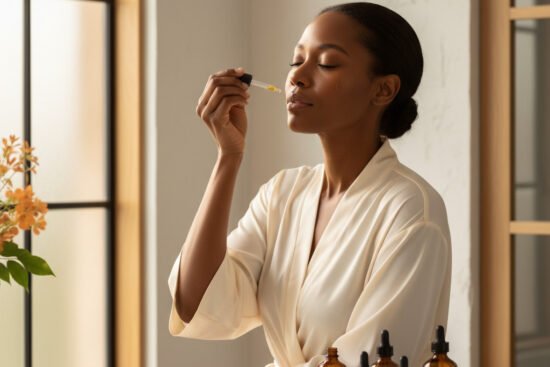
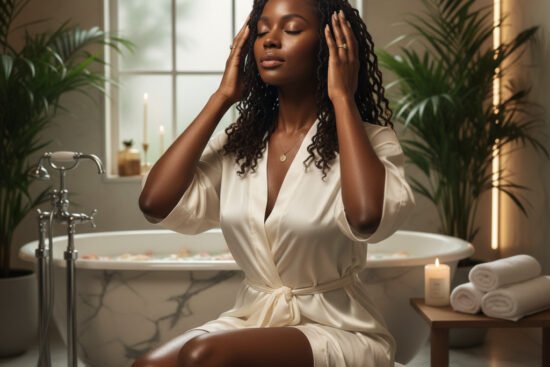
In the whirlwind of daily life, our beauty routines often become just another item on a never-ending to-do list. But for Black women, these moments hold a deeper significance, offering a sacred space for emotional grounding and self-reclamation. Reset showers after a draining day, slow wash days, and unhurried “get ready with me” nights can act like mini therapy sessions: they anchor you in your body, give your nervous system predictable steps, and create small pockets of control when the rest of life feels loud. This isn’t just about cleansing your skin or styling your hair; it’s about cleansing your spirit and styling your confidence. For Black women specifically, hair and skin rituals also carry history and politics—your coils, locs, braids, and bare face exist in a world that constantly misreads them—so making care feel kind rather than punitive matters. This cluster explores how to turn practical routines into rituals that leave you more grounded than when you started.
The Power of Intentionality: Transforming Routine into Ritual
What distinguishes a routine from a ritual? Intentionality. A routine is something you do; a ritual is something you feel and experience. It’s about being present in the moment, connecting with your body, and infusing each step with meaning. Imagine your wash day, not as a chore, but as a deliberate act of nurturing your crown. Each strand you detangle, each product you apply, becomes a moment of gratitude and self-love. This mindful approach can transform even the simplest acts into powerful self-care practices.

- Wash Day as Nervous-System Care: For many Black women, wash day can be an hours-long affair. Instead of rushing, embrace it as a dedicated time for self-care. Put on your favorite playlist, light a candle, and let the process be meditative. The rhythmic motions of washing, conditioning, and styling can be incredibly soothing, helping to regulate your nervous system and reduce stress. Consider using a scalp massager to enhance circulation and relaxation, turning a necessary task into a luxurious treat.
- Pre-Event Rituals for Confidence: Before a big meeting, a special occasion, or even just a night out, cultivate a pre-event beauty ritual. This isn’t about masking yourself, but about enhancing your natural beauty and boosting your self-assurance. It could be a hydrating face mask, a carefully applied makeup look that makes you feel powerful, or a specific hair style that embodies your desired energy. These rituals prepare you not just outwardly, but inwardly, helping you step into any space with grace and confidence.
- Reset Routines for Emotional Grounding: After a particularly challenging day or week, a reset routine can be invaluable. This might involve a long, warm bath infused with essential oils, a thorough skincare regimen, or a deep conditioning treatment. The goal is to shed the day’s stresses and return to a state of calm. These routines serve as a powerful reminder that you deserve to feel good, to feel cherished, and to reclaim your peace.
By approaching your beauty practices with this level of intention, you transform them from mere tasks into vital components of your emotional and mental wellbeing. They become moments where you consciously choose to pour back into yourself, reinforcing your worth and resilience.
Identity, Colorism & Texturism in Beauty Choices: Reclaiming Your Authentic Self
Our beauty choices are deeply intertwined with our identity, often shaped by societal narratives that can be both subtle and pervasive. Messages about “good hair,” “good skin,” and “professional” looks seep into everything: which textures you feel comfortable wearing to work, how light or deep your foundation can be before you worry about being perceived as “too much,” how much you chase porelessness and softness as proof of being “put together.” This cluster gives language and examples for how colorism, featurism, and texturism show up in product, hair, and even procedure choices, then offers ways to gently unpick those scripts so more of your routine feels chosen rather than inherited.
Unpacking the Legacy of Bias in Beauty
For generations, Black women have navigated a beauty landscape that often celebrated Eurocentric ideals while marginalizing or demonizing Black features. This has led to internalized biases that can unconsciously influence our choices. Understanding these influences is the first step toward liberation.
- Colorism: The Shade of Self-Worth: Colorism, the prejudice or discrimination against individuals with a darker skin tone, typically among people of the same ethnic or racial group, has a profound impact on beauty standards. It can manifest in the desire for lighter foundation shades, the avoidance of sun exposure, or even the perception of certain skin conditions as more problematic on darker skin. Unlearning colorism involves celebrating the full spectrum of Black skin tones, finding makeup that truly matches and enhances your complexion, and embracing the richness of your melanin. It means recognizing that every shade of Black is beautiful, powerful, and deserving of reverence.
- Texturism: The Politics of Hair: Texturism, discrimination based on hair texture, has historically pushed Black women towards chemically straightened or relaxed hair, deeming natural textures as
Frequently Asked Questions
Why are self-care rituals particularly important for Black women?
For Black women, self-care rituals are more than just pampering; they are acts of resistance and reclamation. In a world that often marginalizes and misunderstands Black beauty, these rituals provide a sacred space for emotional grounding, self-affirmation, and nurturing one’s identity. They transform routine tasks into intentional moments of self-love, helping to counteract the stresses of navigating societal biases like colorism and texturism, and reinforcing personal worth and resilience.
How can I identify and unlearn biases like colorism and texturism in my beauty choices?
Identifying biases begins with conscious reflection. Ask yourself why you prefer certain shades, textures, or styles. Are these preferences truly yours, or influenced by external standards? Unlearning involves celebrating the full spectrum of Black skin tones and hair textures, seeking out diverse representation, and choosing products that truly enhance your natural features rather than attempting to conform to Eurocentric ideals. Engage with content that champions Black beauty in all its forms and challenge internalized narratives about ‘good hair’ or ‘good skin’.
What does it mean to build a ‘curated Black-owned beauty ecosystem’?
Building a curated Black-owned beauty ecosystem means intentionally selecting Black-owned brands for your skincare, haircare, and makeup routines, not just as isolated purchases, but as interconnected components. It’s about creating a cohesive collection of products that work well together, address your specific needs, and align with your values. This approach ensures that your routine is not only effective but also supports the Black economy and reflects a conscious commitment to community.
How can Black women redefine ‘luxury beauty’ on their own terms?
Luxury for Black women should be defined by products and experiences that truly see, celebrate, and serve their unique needs and aesthetics, rather than adhering to traditional, often Eurocentric, prestige narratives. It means prioritizing quality, efficacy, and ingredients that cater to melanin-rich skin and textured hair. Redefining luxury involves choosing brands that offer inclusive shade ranges, culturally relevant formulations, and a sense of belonging, making ‘treat yourself’ an act of genuine self-honor, not just following trends.
How can I incorporate intergenerational wisdom into my modern beauty routine?
Intergenerational wisdom is a treasure trove of knowledge passed down through families and communities. Start by reflecting on the beauty practices, remedies, and advice shared by your mother, grandmother, or aunties. Research the ingredients they used and understand their benefits. Then, blend this ancestral knowledge with modern scientific understanding and safe practices. For example, if your grandmother used natural oils, research their contemporary benefits and integrate them into a routine with scientifically-backed products. This honors your heritage while ensuring effectiveness and safety.
Why is ‘wash day’ often highlighted as a significant ritual for Black women?
Wash day is significant because it’s typically a multi-step, time-intensive process for caring for textured hair, often taking several hours. This extended time offers a unique opportunity to slow down, be present, and engage in a deeply nurturing act for one’s crown. It can become a meditative, grounding experience that fosters a strong connection to one’s hair and identity, transforming a necessary maintenance task into a profound self-care ritual.
How does Black Beauty Basics support Black women in their beauty journey?
Black Beauty Basics supports Black women by providing a comprehensive, empowering, and culturally resonant platform that addresses their unique beauty needs. We offer detailed insights into self-care rituals, guide the navigation of biases like colorism and texturism, map out Black-owned beauty ecosystems, redefine luxury, and honor community-rooted practices. Our content is designed to help Black women make informed, confident choices that celebrate their melanin-rich skin and textured hair, fostering a journey of self-love and authentic expression.
Related next steps