Raising Children With Anti-Colorist, Anti-Texturist Beauty Messages
Children are remarkably observant, absorbing the world around them like sponges. Long before they can articulate complex societal biases, they are already internalizing messages about beauty, worth, and desirability. These messages aren’t always delivered through formal lectures; more often, they seep in through the subtle currents of everyday life: the way a grandparent praises a lighter-skinned cousin, the jokes made about “nappy” hair, the products advertised on TV, the dolls they play with, or simply who gets called “pretty” most often. These seemingly innocuous interactions, repeated over time, build a foundational understanding of beauty hierarchies – hierarchies that, for Black children, too often reflect the painful realities of colorism and texturism.
As parents, caregivers, aunties, uncles, and mentors, we hold a profound power to shape these early perceptions. Our words, our actions, and the environments we create can either perpetuate harmful biases or dismantle them, fostering an unwavering sense of self-worth and appreciation for the full spectrum of Black beauty. This isn’t about shaming anyone for past language or expecting perfection; it’s about conscious, consistent effort to counteract deeply ingrained societal norms. It’s about recognizing that our children don’t need to be explicitly told that lighter skin or straighter hair is better; they infer it from the world around them, making our intentional counter-messaging all the more vital.
This guide is designed to equip you with practical, loving, and specific strategies to build a home environment where every shade of melanin is celebrated, every curl pattern revered, and every feature cherished. We’ll explore how to infuse anti-colorist and anti-texturist messages into daily language, routines, praise, and media choices, ensuring our children grow up knowing their inherent beauty is non-negotiable, unranked, and unequivocally magnificent. It’s a journey of intentionality, self-reflection, and profound love, aimed at nurturing confident, secure, and self-loving Black children who see their beauty reflected everywhere.
What This Post Covers
This comprehensive guide delves into the multifaceted ways we can proactively instill anti-colorist and anti-texturist beauty messages in children. We will explore the subtle yet powerful impact of everyday language, examining how seemingly innocent comments can inadvertently reinforce harmful hierarchies. We’ll provide actionable strategies for offering praise that celebrates individuality and effort, rather than ranking physical attributes. A significant portion will be dedicated to curating media, toys, and books that authentically reflect and celebrate the diverse beauty of the Black diaspora, ensuring children see themselves and their peers represented positively. Furthermore, we’ll address the delicate but crucial topic of responding to colorist or texturist comments from family members, offering guidance on how to protect children while fostering understanding. Finally, we’ll emphasize the critical role of adult modeling, demonstrating how our own self-talk and beauty routines profoundly influence the messages our children internalize. This post aims to be a practical toolkit for parents, caregivers, and all adults invested in raising children with an unshakeable foundation of self-love and appreciation for the rich tapestry of Black beauty.
Why Anti-Bias Beauty Messages Need to Start Early
The notion that children are too young to understand complex social issues like colorism and texturism is a common misconception. In reality, children begin to categorize and form preferences based on visual cues at a very tender age. Studies in developmental psychology indicate that by the age of three or four, children are already noticing differences in skin tone and hair texture, and they start to associate these differences with positive or negative attributes based on the societal messages they absorb. This absorption isn’t about explicit lessons; it’s about observation. They see who is praised, who is featured in media, who is deemed “pretty” or “good,” and who is overlooked or subtly criticized. These early observations, even without full comprehension, lay the groundwork for their developing self-image and their perceptions of others.
If we wait until children are older to address these biases, we risk allowing harmful narratives to take root and solidify. Once a child has internalized the idea that lighter skin is inherently “better” or “prettier,” or that certain hair textures are “good” while others are “bad,” it becomes significantly harder to dislodge those beliefs. These biases can manifest in various ways: a child might express a preference for lighter-skinned dolls, make comments about their own skin being “too dark,” or wish their hair was “straighter.” They might even internalize these messages to the point of self-hatred, leading to diminished self-esteem, anxiety, and a lifelong struggle with their identity.
Starting early means proactively inoculating our children against these societal poisons. It means building a robust foundation of self-love and cultural pride before the world has a chance to chip away at it. By consistently affirming the beauty of all skin tones and hair textures from infancy, we equip our children with the internal resilience to recognize and reject biased messages when they encounter them. It’s about creating a protective shield of affirmation and celebration, ensuring that their earliest experiences with beauty are expansive, inclusive, and deeply rooted in the truth of their own magnificent existence. This proactive approach isn’t about forcing an agenda; it’s about nurturing an authentic, unshakeable sense of self-worth that will serve them throughout their lives.
The Language Children Hear: Skin Tone, Hair Texture, and Feature Comments
The words we use, and the words children hear from others, are powerful architects of their self-perception. Even seemingly innocuous comments can carry hidden messages that reinforce colorist and texturist biases. Children are incredibly attuned to the nuances of language, picking up on implied meanings, tones, and patterns of praise. When certain skin tones are consistently described with adjectives like “fair,” “bright,” or “pretty,” while darker skin is merely “dark” or “strong,” a hierarchy is subtly established. Similarly, hair described as “soft,” “long,” or “manageable” implicitly contrasts with hair that is “nappy,” “kinky,” or “hard to deal with.” These linguistic patterns, often unconscious, shape a child’s understanding of what is valued and what is not.
Unpacking Common Phrases and Their Hidden Meanings
Consider phrases like, “Oh, she’s so pretty, she has good hair,” or “He’s so handsome, he has such light skin.” While intended as compliments, these statements inadvertently link beauty to specific, often Eurocentric, features. They teach children that “good hair” is a texture that approximates straightness, and that lighter skin is a prerequisite for handsomeness. The child with kinky hair or deep brown skin may hear these compliments directed at others and internalize the message that their own features fall short. Even comments like, “She’s pretty for a dark-skinned girl,” are deeply damaging, implying that dark skin is an obstacle to beauty that must be overcome by other features. These phrases, often rooted in historical biases, communicate that certain traits are superior, creating an internal ranking system for beauty.
How to Identify and Reframe Biased Language
The first step is awareness. Pay attention to the language used around children, both by yourself and others. Are compliments disproportionately given to children with lighter skin or looser curl patterns? Are certain features described with more enthusiasm or positive adjectives? Once identified, the goal is not to silence compliments, but to reframe them. Instead of focusing on immutable physical traits that align with biased ideals, shift the focus to actions, character, or unique expressions of self. For example, instead of “You’re so pretty with your light skin,” try “Your smile lights up the room,” or “I love the way you express yourself.” For hair, instead of “You have such good hair,” try “Your braids are so creative!” or “I love how soft and bouncy your curls are when you take care of them.” This reframing celebrates the child’s whole self and their efforts, rather than reinforcing a narrow, biased definition of beauty.
Building a Vocabulary of Affirmation for All Black Beauty
Actively introduce and use a rich, descriptive vocabulary that celebrates the full spectrum of Black beauty. Talk about “melanin-rich skin,” “glowing complexions,” “deep brown eyes,” and “gorgeous caramel tones.” For hair, use terms like “coils,” “kinks,” “curls,” “waves,” “locs,” “braids,” “crown,” and “texture.” Emphasize the strength, versatility, and unique beauty of every hair pattern. Teach children to appreciate the intricate patterns of their own hair and the diverse textures of their friends’ and family’s hair. Use positive adjectives like “vibrant,” “radiant,” “strong,” “unique,” “lustrous,” “bouncy,” “soft,” and “beautiful” for all features, without attaching them to specific skin tones or hair textures. The goal is to create a linguistic environment where every aspect of Black identity is affirmed and celebrated as inherently beautiful, dismantling the subtle hierarchies that language can inadvertently build.
This intentional shift in language requires ongoing vigilance and practice, but its impact on a child’s developing self-esteem and cultural pride is immeasurable. It teaches them that their beauty is not conditional, but an inherent part of who they are.
How to Praise Without Reinforcing Hierarchy
Praise is a powerful tool in shaping a child’s self-esteem and values. However, not all praise is created equal. When praise consistently focuses on physical attributes that align with colorist or texturist ideals—such as light skin, “soft” hair, or “mixed” features—it inadvertently teaches children that their worth and beauty are tied to these specific traits. This can be deeply damaging, leading to insecurity in children who don’t possess these features, and fostering a superficial understanding of beauty in those who do. The key is to shift from evaluative, appearance-based praise that ranks children, to descriptive, effort-based praise that celebrates their uniqueness, character, and actions.
Avoiding Praise That Ranks by Shade, Softness, or Features
It’s crucial to be mindful of compliments that subtly rank children. Phrases like “You’re so pretty, just like your light-skinned auntie,” or “She has such good hair, doesn’t she?” or “He’s so handsome, he has those mixed features” are problematic. They imply that beauty is contingent on proximity to whiteness or specific, often Eurocentric, characteristics. Similarly, praising a child by saying they are “pretty for a dark-skinned girl” is incredibly harmful, as it suggests dark skin is a deficit that needs to be overcome. These comments, even if well-intentioned, create an internal hierarchy where some children are deemed “more beautiful” than others based on superficial traits they cannot change. Such praise can make children feel that their inherent value is conditional, rather than absolute.
Encouraging Specific Praise for Creativity, Style, Care, and Uniqueness
Instead of ranking, focus on specific, descriptive praise that highlights a child’s individuality, effort, and character. This type of praise is empowering because it acknowledges their agency and unique expression. For instance, rather than “You’re so pretty,” try “I love how you chose those vibrant colors for your outfit today – you have such a creative eye!” For hair, instead of “You have good hair,” say, “Your coils are so beautifully defined today! I can tell you took great care styling them,” or “Your braids are so intricate and neat; you must have sat so patiently while they were done.” This kind of praise not only builds self-esteem but also teaches children to appreciate the process of self-care and self-expression. It shifts the focus from an outcome (being “pretty” based on a biased standard) to the effort, skill, and personal choice involved in presenting oneself.
Examples of Affirming and Empowering Praise
Here’s a simple table illustrating the shift from potentially harmful to affirming praise:
| Common Comment (Hidden Message) | Healthier, Affirming Response |
|---|---|
| “You’re so pretty, you have such light skin.” (Lighter skin is superior.) | “Your smile is so warm and bright, it makes everyone around you happy!” |
| “She has such good hair, so soft and straight.” (Straight/loose hair is superior.) | “Your intricate braids are amazing! I love how strong and versatile your hair is.” |
| “He’s so handsome, he has those mixed features.” (Mixed features are more desirable.) | “Your strong features are so distinctive and handsome. You have such a confident look!” |
| “You’re pretty for a dark-skinned girl.” (Dark skin is a barrier to beauty.) | “Your beautiful, rich skin glows! It’s so radiant and unique.” |
| “Look at her long, flowing hair!” (Length/flow is the ultimate hair goal.) | “Your hair has such beautiful volume and bounce! I love how you’ve styled your gorgeous coils.” |
| “You’re so cute, you have such a tiny nose.” (Smaller, Eurocentric features are better.) | “Your face has such a beautiful, strong profile. You have such a kind and expressive face.” |
By consistently offering praise that is specific, descriptive, and focused on character, effort, and unique expression, we teach children to value themselves and others for who they are, rather than for how closely they conform to narrow, biased beauty standards. This fosters a deeper, more resilient sense of self-worth that is not dependent on external validation or comparison.
Media, Dolls, Books, and Beauty Examples That Widen the Mirror
Children learn about the world and their place in it through the images and narratives they consume. If their media, toys, and literature predominantly feature a narrow range of beauty, especially one that excludes or marginalizes Black children, they internalize the message that their own beauty is not valued or seen. To counteract colorism and texturism, it is imperative to intentionally curate an environment rich with diverse, affirming representations of Black beauty. This means actively seeking out and surrounding children with images, stories, and examples that reflect the full spectrum of their identity.
Curating Diverse Media Consumption
Be intentional about the television shows, movies, and online content your children watch. Seek out programs that feature Black characters in lead roles, showcasing a variety of skin tones, hair textures, and body types. Look for shows that celebrate Black culture, history, and joy, rather than just trauma or stereotypes. For instance, animated series like “Doc McStuffins,” “Karma’s World,” or “Princess Tiana” (from Disney’s “The Princess and the Frog”) offer positive representation. As they get older, introduce them to documentaries, films, and series that highlight Black excellence and diverse narratives. Discuss what they see: “Isn’t it wonderful how many different kinds of beautiful hair we see in this show?” or “Look at all the beautiful brown skin tones in this movie!” This active engagement helps them process and internalize the positive messages.
The Power of Dolls and Toys
Dolls are often a child’s first mirror. Ensure your child’s doll collection reflects the diversity of the Black community. Look for dolls with various skin tones, from rich ebony to warm caramel, and with a range of authentic hair textures—kinky, coily, curly, braided, and loc’d. Brands like “Healthy Roots Dolls,” “Positively Perfect Dolls,” and “Creatively Cute Dolls” are excellent examples that prioritize diverse representation. Beyond dolls, seek out action figures, puzzles, and art supplies (like multi-cultural crayons or skin-tone paint sets) that allow children to see themselves and others represented accurately. When a child plays with a doll that looks like them, it sends a powerful message of validation and belonging. It normalizes their features and affirms their beauty.
Books as Windows and Mirrors
Children’s literature is a cornerstone of early learning and identity formation. Fill your home library with books that feature Black protagonists and celebrate Black culture and experiences. Look for stories that depict a wide range of skin tones and hair textures positively and naturally. Books like “Hair Love” by Matthew A. Cherry, “I Am Enough” by Grace Byers, “Sulwe” by Lupita Nyong’o, and “Brown Boy Joy” by Thomishia Booker are excellent starting points. These books not only provide mirrors for Black children to see themselves but also serve as windows for all children to appreciate the beauty and diversity of the Black diaspora. Read these books aloud, pointing out the beautiful illustrations and discussing the empowering messages within them. Encourage children to draw themselves and their families, using a variety of skin tone colors.
Real-Life Beauty Examples and Role Models
Beyond media and toys, highlight real-life examples of Black beauty. Point out the beautiful skin tones and hair textures of family members, friends, and community leaders. Talk about the versatility of Black hair, the richness of Black skin, and the strength of Black features. Celebrate public figures, artists, and activists who embody diverse Black beauty. Attend cultural events, art exhibits, or performances that showcase Black talent and aesthetics. The more children see diverse Black beauty affirmed in their daily lives and in the broader world, the more deeply they will internalize its magnificence. This holistic approach ensures that the anti-colorist and anti-texturist messages are reinforced across multiple touchpoints, building a robust and unwavering sense of self-love.
What to Say When Family Members Make Colorist or Texturist Comments
One of the most challenging aspects of raising children with anti-bias beauty messages is navigating comments from well-meaning, yet sometimes misinformed, family members. These comments, often rooted in their own upbringing and societal conditioning, can inadvertently undermine the positive messages you’re working so hard to instill. It’s crucial to address these situations with a balance of protection for your child, respect for the family relationship, and a firm commitment to your values. The goal is not to shame or alienate, but to educate and redirect, ensuring your child’s self-esteem remains paramount.
Protecting Your Child’s Self-Esteem in the Moment
When a colorist or texturist comment is made in front of your child, your immediate priority is to shield your child from its negative impact. This doesn’t always require a confrontation. Sometimes, a simple, immediate counter-affirmation directed at your child is most effective. For example, if a family member says, “Oh, her hair is so nappy, you should straighten it,” you can immediately turn to your child and say, “Your hair is absolutely beautiful and strong! I love your gorgeous coils just the way they are.” This direct affirmation validates your child’s beauty and implicitly refutes the harmful comment without directly engaging the family member in a public debate. Your child hears your voice as the authoritative one on their beauty and worth.
Strategies for Gentle Correction or Education
For comments that are less direct or less immediately damaging, or if you feel comfortable addressing the family member directly, a gentle, educational approach can be effective. This often works best in a private conversation, away from the child. You might say, “I know you mean well, but when you say [comment], it can make [child’s name] feel like their [skin/hair] isn’t as beautiful as others. We’re really trying to teach them that all shades of brown and all hair textures are equally beautiful and special.” You could also share resources, like an article from Black Beauty Basics, or simply explain the history of colorism and texturism in a non-confrontational way. The aim is to raise awareness without causing defensiveness, though some defensiveness may be unavoidable.
Setting Boundaries with Love and Firmness
If comments persist or are particularly egregious, it may be necessary to set firmer boundaries. This could involve saying, “I understand you have your opinions, but in our home, we celebrate all Black beauty. Please refrain from making comments about [skin tone/hair texture] that could make [child’s name] feel less than.” In more extreme cases, you might need to limit exposure to individuals who consistently undermine your efforts, or at least ensure you are always present to counteract their messages. It’s important to communicate that while you love and respect them, protecting your child’s emotional well-being and self-esteem is your primary responsibility. This boundary-setting is an act of love—both for your child and for the family member, as it encourages them to reflect on their own biases.

Empowering Older Children to Respond
For older children, you can equip them with tools to respond to such comments themselves. Practice phrases like, “My hair is beautiful just the way it is,” or “I love my skin tone.” This empowers them to advocate for themselves and reinforces their internal sense of worth. Discuss with them why people might make such comments (often due to their own conditioning) and how to respond with confidence and self-love, rather than anger or shame. This prepares them for a world where they will inevitably encounter bias, giving them the resilience to stand firm in their truth. Ultimately, navigating these situations requires patience, consistency, and an unwavering commitment to fostering a child’s unshakeable self-love.
How Adults Can Model the Message Through Their Own Routines and Self-Talk
Children are not just listening to what we say; they are watching everything we do. Our actions, our self-talk, and our own relationship with our beauty and identity are perhaps the most powerful teachers. If we preach anti-colorist and anti-texturist messages but then complain about our own “nappy” hair, wish our skin was lighter, or meticulously hide our natural features, our children will pick up on the dissonance. Modeling self-love, acceptance, and celebration of our own Black beauty is fundamental to instilling these values in the next generation. Our routines and self-talk become living lessons, demonstrating how to embrace and cherish every aspect of our Blackness.
Embracing Your Own Hair and Skin Care Routines with Joy
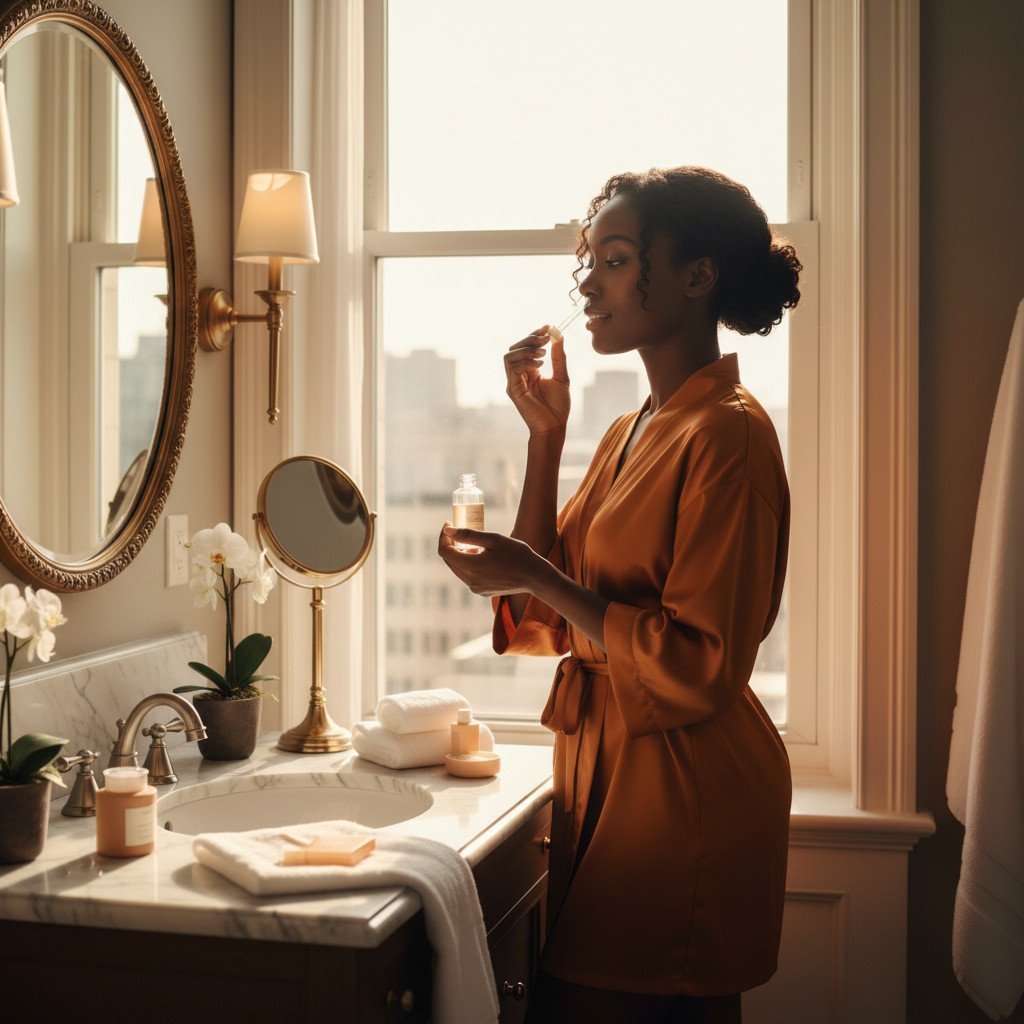
Show your children that caring for Black hair and skin is a joyful, nourishing ritual, not a chore or a battle. Let them see you lovingly moisturize your skin, appreciating its richness and glow. Engage in your hair care routine with enthusiasm, talking about the beauty of your coils, kinks, or locs. Instead of sighing about “wash day,” narrate it as a time for pampering and strengthening your crown. “Look how strong and beautiful my hair is getting!” or “I love how soft my skin feels after I use this shea butter.” If you wear protective styles, explain their benefits and beauty. If you wear your hair natural, explain why you love its texture and versatility. This positive framing transforms routine into ritual, imbuing it with self-love and cultural pride. This is also a perfect opportunity to introduce them to self-care rituals and Black-owned beauty products that celebrate their unique needs.
Conscious Self-Talk and Body Positivity
Pay close attention to your own internal and external self-talk about your appearance. Do you criticize your skin tone, wish your hair was different, or express dissatisfaction with your features? Children absorb these messages. Replace negative self-talk with affirmations. Instead of “Ugh, my hair is so unmanageable today,” try “My hair has a mind of its own, and I love its unique spirit!” Instead of “I wish my skin was clearer,” try “My skin is doing its best, and I appreciate its strength and resilience.” Actively celebrate your own features: “I love the richness of my skin tone,” or “My strong nose is a beautiful part of my heritage.” This conscious shift in language demonstrates genuine self-acceptance and teaches children to speak kindly to and about themselves.
Celebrating Diversity in Your Own Social Circle and Media Choices
Extend your modeling beyond your own appearance. Ensure your social circle and the media you consume also reflect and celebrate diverse Black beauty. Do your friends represent a range of skin tones and hair textures? Do you praise their beauty in inclusive ways? When watching TV or scrolling through social media, point out and celebrate the diverse beauty you see: “Look at that beautiful woman with the deep brown skin!” or “Her locs are absolutely stunning!” This reinforces the message that beauty is expansive and multifaceted, not confined to a narrow ideal. By actively seeking out and appreciating diverse beauty in others, you teach your children to do the same, fostering an inclusive worldview.
Addressing Your Own Internalized Biases
Modeling also requires self-reflection. We all grow up in a world steeped in colorism and texturism, and it’s likely we’ve internalized some of these biases ourselves. Take time to examine your own preferences, assumptions, and language. Are there subtle ways you might still be valuing certain features over others? Unlearning these biases is an ongoing journey, and demonstrating this journey to your children—even if it’s just through your evolving language and choices—shows them that growth and self-awareness are lifelong pursuits. This authentic modeling of continuous learning and self-acceptance is one of the most profound gifts you can give your child, empowering them to navigate their own identity with confidence and grace.
How to Navigate This Topic
Approaching the complex and often sensitive topic of colorism and texturism with children requires careful thought and a nuanced strategy. It’s not about delivering a single, formal lecture, but rather about weaving these crucial messages into the fabric of daily life through consistent, age-appropriate conversations and actions. The goal is to build a robust foundation of self-love and critical thinking, empowering children to recognize and challenge bias without feeling overwhelmed or shamed. This navigation involves understanding developmental stages, choosing the right moments, and fostering an open, trusting environment where questions are welcomed and validated.
Age-Appropriate Conversations and Explanations
- Toddlers (1-3 years old): At this age, focus on simple, positive affirmations. Point out and name different skin tones and hair textures in a celebratory way. “Look at your beautiful brown skin!” “Your coils are so bouncy!” Introduce diverse dolls and books. The message is purely celebratory: all Black features are beautiful.
- Preschoolers (3-5 years old): Continue with positive affirmations. When they notice differences, explain them matter-of-factly and positively. “Yes, your skin is a beautiful warm brown, and Auntie’s skin is a beautiful deep brown. We all have different, wonderful shades!” Introduce books like “Sulwe” that directly address skin tone. You can start to gently introduce the idea that some people might have unfair ideas about beauty, but emphasize that those ideas are wrong.
- Early Elementary (6-8 years old): Children at this age are more aware of social dynamics. You can start to explain the concept of “fairness” and “unfairness” in relation to beauty. “Sometimes, people are taught to think that lighter skin or straighter hair is better, but that’s not true. It’s an unfair idea, and we know that all skin tones and hair textures are amazing.” Discuss media representation and why it’s important to see all kinds of Black people. Empower them to identify biased messages.
- Late Elementary/Pre-Teens (9-12 years old): This is a crucial stage where social pressures intensify. You can delve deeper into the historical roots of colorism and texturism, explaining how these biases developed. Discuss how media and advertising can perpetuate these ideas. Encourage them to articulate their feelings and observations. Equip them with strategies for responding to biased comments from peers or adults. Reinforce their critical thinking skills.
Creating a Safe Space for Questions and Feelings
It is paramount to establish an environment where children feel completely safe to ask questions, express confusion, or share experiences related to colorism and texturism. When a child asks, “Why is my skin darker than hers?” or “Why do some people say ‘nappy’ hair is bad?”, avoid dismissive answers. Instead, validate their curiosity and feelings. “That’s a really good question. Let’s talk about it.” Listen attentively to their concerns without judgment. Reassure them that their feelings are valid and that it’s okay to be confused or even angry about unfairness. This open dialogue reinforces that you are a trusted source of information and support, and that their identity is a topic worthy of thoughtful discussion.
Consistency and Repetition Over Time
Anti-bias messaging is not a one-time conversation; it’s an ongoing, consistent effort. Children need to hear these messages repeatedly, in various contexts, to truly internalize them. Integrate affirmations into daily routines: “Good morning, beautiful brown skin!” or “Let’s make your amazing coils shine today!” Point out positive representations in books, TV, and real life regularly. Address biased comments or situations as they arise, using them as teachable moments. This consistent reinforcement builds a strong, internal narrative of self-love and resilience that can withstand external pressures. It’s about creating a constant hum of affirmation that becomes the background music of their lives.
Centering Black Joy and Resilience
While acknowledging the realities of colorism and texturism is important, the overarching message should always be one of Black joy, strength, and resilience. Focus on the celebration of Black beauty in all its forms, the richness of Black culture, and the power of self-love. Frame these conversations not as a burden, but as an empowerment—a way to understand and navigate the world with confidence and pride. By centering joy, you ensure that children associate their Black identity not with struggle, but with profound beauty, strength, and an unshakeable sense of belonging.
Where to Go Next
Cultivating an environment that actively dismantles colorism and texturism is a continuous journey, one that involves ongoing learning and intentionality. As you deepen your understanding and refine your approach to raising children with anti-bias beauty messages, there are many resources and further explorations available to support you. Black Beauty Basics is dedicated to providing comprehensive insights into the multifaceted world of Black beauty, identity, and wellness. We encourage you to continue exploring our content to enrich your knowledge and empower your family.
To further understand the foundational concepts discussed here, we highly recommend revisiting our cluster hub on Identity, Colorism, and Texturism in Beauty Choices. This central page provides a holistic view of how these biases manifest and impact our community. From there, you can delve into specific articles that offer deeper dives into related topics, helping you build a more robust framework for discussion and action within your family.
Consider exploring these sibling articles within the cluster for more detailed insights:
- Defining Colorism, Featurism, and Texturism in Black Beauty: Gain a clear understanding of the terminology and historical context of these biases.
- How Bias Shapes Routines, Procedures, and Hair Choices: Understand the practical implications of these biases on beauty practices and how to counteract them.
- Unlearning “Good Hair” and “Good Skin” Myths: Equip yourself with strategies to deconstruct and challenge these pervasive, harmful narratives.
Beyond this specific cluster, Black Beauty Basics offers a wealth of information to support your journey. You might find value in exploring articles on sensory beauty rituals for self-soothing, which can help both you and your children connect with beauty practices in a mindful, affirming way. Our main Self-Care Rituals and Black-Owned Beauty pillar page is also an excellent resource for holistic well-being. Additionally, our comprehensive section on Skincare for Black Women provides expert advice tailored to the unique needs of melanin-rich skin, further reinforcing the message of valuing and caring for all aspects of Black beauty.
By continuing to engage with these resources, you empower yourself to be an even more effective guide for the children in your life, fostering a legacy of self-love, confidence, and unwavering appreciation for the magnificent diversity of Black beauty.
Quick Principles
Raising children with anti-colorist and anti-texturist beauty messages is a continuous, intentional effort. Here are the core principles to guide your approach:
- Start Early and Be Consistent: Children absorb messages about beauty hierarchies from a very young age. Proactively and consistently affirm all Black beauty from infancy to build a strong foundation of self-love.
- Mind Your Language: Be hyper-aware of the words you and others use to describe skin tones, hair textures, and features. Replace biased language with descriptive, affirming vocabulary that celebrates the full spectrum of Black beauty.
- Praise Thoughtfully: Shift praise from ranking physical attributes (like light skin or “good hair”) to celebrating effort, creativity, character, and unique expression. Focus on what children do and who they are, not just how they look based on biased standards.
- Curate Their World: Actively seek out and provide diverse media, dolls, books, and real-life examples that positively reflect the full range of Black skin tones, hair textures, and features. Ensure children see themselves and their community celebrated.
- Address Bias Directly (and Lovingly): When family members or others make colorist or texturist comments, protect your child’s self-esteem with immediate affirmations. Later, consider gentle, private conversations to educate and set boundaries.
- Model the Message: Your own self-talk, beauty routines, and acceptance of your own Black beauty are powerful lessons. Show joy in caring for your hair and skin, and speak kindly about your own appearance.
- Foster Open Dialogue: Create a safe space where children feel comfortable asking questions about beauty, skin tone, hair, and fairness. Validate their feelings and provide age-appropriate explanations.
- Center Black Joy and Resilience: While acknowledging bias, always frame these conversations around the celebration of Black beauty, culture, strength, and unwavering self-love. Empower them, don’t burden them.
- Continuous Learning: Recognize that unlearning bias is a lifelong journey for everyone. Stay informed, reflect on your own biases, and adapt your approach as your children grow and the world changes.
Frequently Asked Questions
How do I explain colorism and texturism to a young child without making them feel bad about their identity?
For young children, focus on the concept of fairness and celebration. You can say, “Sometimes, people have unfair ideas about what is beautiful, but we know that all skin tones and all hair textures are beautiful and special. Everyone’s beauty is unique and wonderful!” Keep it simple, positive, and always reinforce their inherent beauty. The goal is to empower them, not to burden them with complex societal issues too early.
What if my child expresses a preference for lighter skin or straighter hair?
Acknowledge their feelings without judgment. You might say, “I hear you. Sometimes the world shows us a lot of lighter skin or straighter hair, and it can make us think that’s the only kind of beautiful. But look at your beautiful [skin/hair] – it’s so strong and unique, and it’s a part of what makes you, you!” Then, double down on exposing them to diverse positive representations in books, dolls, and media, and consistently affirm the beauty of their own features and those of their family members.
How can I address colorist comments from grandparents who might not understand?
Approach with love and patience, but also firmness. In private, explain that while you know they mean well, certain comments can inadvertently hurt your child’s self-esteem. You could say, “We’re really trying to teach [child’s name] that all shades of brown and all hair textures are equally beautiful. Could you help us by focusing on their kindness or creativity, or by celebrating their unique hair and skin just as it is?” Offer alternative ways to praise and share resources if appropriate.
Are there specific books or shows you recommend for reinforcing anti-colorist/anti-texturist messages?
Absolutely! For books, “Sulwe” by Lupita Nyong’o, “Hair Love” by Matthew A. Cherry, “I Am Enough” by Grace Byers, and “Brown Boy Joy” by Thomishia Booker are excellent. For shows, “Doc McStuffins,” “Karma’s World,” and “Princess Tiana” (from Disney’s “The Princess and the Frog”) offer positive representation. Look for content that naturally showcases diverse Black characters in lead roles, celebrating their skin tones and hair textures without making it a central issue, or directly addressing it in an empowering way.
How do I encourage my child to embrace their natural hair if they want to straighten it?
Focus on education and appreciation for versatility. Explain the strength and beauty of their natural texture, the history of Black hair, and the many ways it can be styled. You can say, “Your natural hair is so beautiful and strong! We can explore different styles that celebrate its coils, or maybe try a protective style. If you want to try straightening it sometimes, we can talk about how to do it safely to protect your hair’s health, but always remember how magnificent your natural hair is.” The goal is to empower choice from a place of self-love, not self-rejection.
Should I specifically point out differences in skin tone and hair texture, or just let them notice naturally?
It’s beneficial to proactively point out and celebrate these differences in a positive, matter-of-fact way, especially with young children. This normalizes diversity and attaches positive language to it from the start. For example, “Look at your beautiful deep brown skin, and Auntie has a lovely caramel skin tone. Isn’t it wonderful how many different shades of beautiful brown there are?” This prevents them from internalizing societal biases before you’ve had a chance to frame the conversation positively.
What if my child is being teased about their skin tone or hair texture at school?
First, validate their feelings and assure them that their beauty is not the problem, but the teasing person’s unkindness or misunderstanding is. Empower them with phrases like, “My skin/hair is beautiful just the way it is, and I love it.” Work with the school to address the bullying. At home, reinforce their self-esteem through consistent affirmations, diverse media, and open conversations, ensuring they have a strong internal shield against external negativity. Remind them that their worth is not determined by others’ opinions.
INTERNAL LINKING OPPORTUNITIES
https://blackbeautybasics.com/self-care-rituals-and-black-owned-beauty/identity-colorism-and-texturism-in-beauty-choices/
https://blackbeautybasics.com/self-care-rituals-and-black-owned-beauty/
https://blackbeautybasics.com/self-care-rituals-and-black-owned-beauty/identity-colorism-and-texturism-in-beauty-choices/defining-colorism-featurism-and-texturism-in-black-beauty/
https://blackbeautybasics.com/self-care-rituals-and-black-owned-beauty/identity-colorism-and-texturism-in-beauty-choices/how-bias-shapes-routines-procedures-and-hair-choices/
https://blackbeautybasics.com/self-care-rituals-and-black-owned-beauty/identity-colorism-and-texturism-in-beauty-choices/unlearning-good-hair-and-good-skin-myths/
https://blackbeautybasics.com/self-care-rituals-and-black-owned-beauty/beauty-rituals-and-emotional-wellbeing/sensory-beauty-rituals-for-self-soothing/
https://blackbeautybasics.com/self-care-rituals-and-black-owned-beauty/
https://blackbeautybasics.com/skincare-for-black-women/
Related next steps
Related posts:
 Common Flare Patterns and Body Areas in Black Women and Children
 Online Sisterhoods & Beauty Community: Navigating Digital Spaces for Melanin-Rich Beauty
 Defining Colorism, Featurism & Texturism in Black Beauty
 Unlearning “Good Hair” & “Good Skin” Myths: Reclaiming Our Beauty Narratives
 Incorporating Anti-Pollution Skincare Products in Your Routine as a Black Woman
 Retinoids for Black Women: Anti‑Aging and Hyperpigmentation Without Irritation