
For many of us, the idea of “hot weather skincare” immediately conjures images of managing excess oil and shine. We’re often told that heat means our skin will be naturally dewy, perhaps even a little greasy, and that our routines should focus on mattifying and stripping away oil. But for Black women, and others with melanin-rich skin living in or traveling to hot, dry climates, this common narrative often misses the mark entirely. The reality is that intense heat, coupled with low humidity, relentless sun, and constant exposure to air conditioning, can leave our skin feeling anything but comfortable and balanced.
Instead of a glowing, hydrated complexion, you might find your skin feeling tight, looking dull, or developing an unexpected ashiness. It can feel rough to the touch, sting when you apply products, or even appear simultaneously dehydrated and oily. This unique combination of environmental stressors demands a nuanced approach, one that recognizes the specific ways melanin-rich skin responds to arid conditions. It’s about understanding that your skin’s needs in a dry desert heat are fundamentally different from its needs in a humid tropical climate, and that generic advice simply won’t suffice. This article is part of our broader discussion on Seasonal Routines: Summer, Winter & Climate-Specific, designed to help you navigate these unique challenges.
Our skin, rich in melanin, offers natural protection against some aspects of sun damage, but it is by no means impervious to the harsh realities of a hot, dry environment. In fact, these conditions can exacerbate concerns like post-inflammatory hyperpigmentation (PIH), compromise the skin’s delicate barrier, and lead to a persistent feeling of discomfort. This isn’t just about surviving the heat; it’s about thriving in it, ensuring your skin remains healthy, radiant, and resilient. At Black Beauty Basics, we believe in culturally authentic, education-first beauty content that centers Black women’s experiences, and this guide is crafted with your unique needs in mind.
What This Post Covers
In this comprehensive guide, we’ll delve deep into the specific challenges and solutions for maintaining healthy, vibrant melanin-rich skin in hot, dry climates. We’ll dismantle common myths and provide practical, actionable advice.
- How hot, dry climates uniquely impact melanin-rich skin, from the feeling of tightness to unexpected dullness.
- Why your skin might feel oily and dehydrated at the same time, and how to address this paradox without over-stripping.
- Adjusting your cleansing and moisturizing routines to support your skin’s barrier in arid heat.
- Navigating sunscreen choices in bright, high-exposure climates to prevent dark marks and irritation.
- Strategies to reduce irritation and inflammation without overwhelming your skin with heavy products.
- The often-overlooked connection between dry heat, barrier compromise, and the worsening of hyperpigmentation.
- Realistic morning and evening skincare routines tailored for hot, dry weather, designed for comfort and efficacy.
- Common mistakes to avoid that can exacerbate dryness, irritation, and hyperpigmentation in these conditions.
- How to distinguish between balanced hydration and the “heavy product panic” that can happen when skin feels stressed.
Why Hot, Dry Weather Can Stress Dark Skin
When the air is hot and dry, it acts like a sponge, constantly drawing moisture from everything it touches – including your skin. This phenomenon, known as transepidermal water loss (TEWL), is significantly accelerated in low-humidity environments. For melanin-rich skin, which already has a slightly higher TEWL rate compared to lighter skin tones, this can be particularly challenging. The constant evaporation of water from the skin’s surface can lead to a cascade of issues, making it feel less supple and more vulnerable.
Beyond low humidity, other environmental factors in hot, dry climates conspire to stress your skin. The intense sun exposure, often coupled with higher UV indices, is a primary culprit. While melanin provides some inherent photoprotection, it doesn’t offer complete immunity from UV damage. UV radiation can break down collagen, impair barrier function, and, critically for dark skin, trigger inflammation that leads to post-inflammatory hyperpigmentation. The wind, a common companion in arid regions, further exacerbates moisture loss by constantly sweeping away the thin layer of water vapor that naturally sits on the skin’s surface.
Even our attempts to find relief indoors can contribute to skin stress. Air conditioning, while a welcome respite from the heat, significantly reduces indoor humidity, creating an artificial dry environment that mirrors the outdoors. This constant back-and-forth between dry outdoor air and dry indoor air leaves the skin little chance to recover and replenish its moisture reserves. The result is skin that feels perpetually thirsty, even if it appears shiny. This continuous assault on the skin’s natural barrier can manifest as dullness, tightness, a grey cast, or an overall feeling of irritation and reactivity, signaling a need for a more protective and hydrating approach.
How Dry Heat Often Shows Up on Melanin-Rich Skin
The signs of skin stress in hot, dry climates on melanin-rich skin can be subtle and often misinterpreted. Unlike lighter skin tones that might show obvious redness or peeling, our skin often communicates distress through changes in texture, tone, and sensation. It’s crucial to learn to read these signals as valuable feedback, rather than dismissing them as mere cosmetic concerns.
One of the most common complaints is a feeling of tightness after washing. This isn’t just a fleeting sensation; it’s a clear indicator that your skin’s natural moisture barrier has been compromised, and it’s struggling to retain water. This tightness can persist throughout the day, making your skin feel uncomfortable and inflexible. Coupled with this, you might notice a surface roughness, where your skin feels less smooth and more textured than usual. This rough texture can make your complexion appear dull, lacking its usual vibrant glow, and can even contribute to an ashiness that makes your skin look desaturated or grey.
Midday dehydration is another hallmark. Even if your skin started the day feeling adequately moisturized, by afternoon, it might feel parched, almost shriveled, especially around the cheeks and forehead. This can be accompanied by a fine, flaky texture that isn’t as obvious as peeling, but rather a subtle shedding that makes your skin look uneven. Paradoxically, despite these signs of dryness, your skin might still get shiny, particularly in the T-zone. This shine can be misleading, as it often prompts the use of harsher, oil-stripping products, further exacerbating the underlying dehydration. It’s a cycle that many Black women find themselves in, mistaking surface oil for true hydration.
Because visible redness is often subtle or absent on melanin-rich skin, we must pay closer attention to these other cues. A stinging sensation when applying products, a persistent feeling of discomfort, or a sudden increase in the visibility of fine lines can all point to a compromised barrier and dehydration. Understanding these unique manifestations allows us to tailor our skincare approach more effectively, moving beyond generic advice that often overlooks the specific needs of dark skin in arid conditions.
Why Skin Can Feel Oily, Dehydrated, and Irritated at Once
The experience of having skin that feels simultaneously oily, tight, and irritated in a hot, dry climate can be incredibly confusing and frustrating. It’s a common paradox that many Black women encounter, and it stems from a fundamental misunderstanding of the difference between oil (lipids) and water (hydration) in the skin. Your skin needs both to be healthy and balanced, but they are distinct components.
When the air is hot and dry, your skin is constantly losing water through evaporation. This leads to dehydration, which is a lack of water in the skin cells. In response to this water loss, your skin’s natural defense mechanism often kicks in: it ramps up oil production. Your sebaceous glands, sensing the dryness and potential barrier compromise, produce more sebum in an attempt to create a protective oily layer to prevent further water loss. This is why your skin can feel tight and parched, yet appear shiny and even greasy on the surface.
This increased oil production, while a natural response, can lead to clogged pores and breakouts, especially if the excess sebum mixes with dead skin cells that aren’t shedding efficiently due to dehydration. The combination of dehydration, excess oil, and potential breakouts can then lead to irritation. A compromised skin barrier, weakened by constant water loss, becomes more susceptible to environmental aggressors and can react poorly to products that might normally be fine. This irritation, for melanin-rich skin, is a direct pathway to post-inflammatory hyperpigmentation – those stubborn dark marks that linger long after the initial irritation has subsided.
Many of us, seeing the shine and feeling the oiliness, instinctively reach for harsh cleansers, astringents, and mattifying products. This is a common mistake that perpetuates the cycle. These products often strip away not just excess oil, but also essential lipids and what little water content remains, further dehydrating the skin and prompting it to produce even more oil. It’s a vicious cycle where we inadvertently make the problem worse by mistaking dehydration for pure oiliness. The key is to understand that addressing the underlying dehydration and barrier compromise is paramount, even when shine is present.
The Core Goals of a Hot, Dry Climate Routine
When crafting a skincare routine for hot, dry climates on dark skin, our objectives shift from simply managing oil to a more holistic approach focused on protection, hydration, and barrier support. The goal isn’t to fight the climate, but to help your skin adapt and thrive within it. Here are the core principles that should guide your choices:
- Cleanse Gently: Aggressive cleansing strips the skin of vital oils and moisture, exacerbating dehydration and barrier compromise. The aim is to remove sweat, dirt, and sunscreen without leaving your skin feeling tight or stripped.
- Reduce Water Loss (TEWL): The dry air is constantly pulling moisture from your skin. Your routine should focus on creating a protective barrier that minimizes transepidermal water loss, keeping precious hydration locked in.
- Support Hydration Without Suffocating the Skin: While hydration is key, heavy, occlusive products can feel uncomfortable and lead to congestion in warm weather. The goal is to provide ample water-based hydration through lightweight, breathable textures that don’t feel greasy or occlusive.
- Protect Against UV-Driven Dark Marks: Intense sun exposure in arid climates is a major trigger for post-inflammatory hyperpigmentation (PIH). Consistent, effective sun protection is non-negotiable to prevent new dark spots and keep existing ones from worsening.
- Lower the Chance of Irritation Spiraling into PIH: Melanin-rich skin is prone to hyperpigmentation whenever inflammation occurs. By minimizing irritation through gentle products and barrier support, we actively reduce the risk of developing dark marks.
- Keep Routines Realistic for Heat, Sweat, and Daily Life: A complex, multi-step routine is often unsustainable in hot, active conditions. Simplicity, efficacy, and comfort are paramount. Your routine should be easy to maintain, even when you’re sweating or on the go.
Morning Routine for Hot, Dry Climates
Your morning routine in a hot, dry climate is all about setting your skin up for protection and hydration throughout the day. It needs to be effective yet lightweight, preparing your skin to face the sun, wind, and dry air without feeling heavy or greasy.
Cleanse lightly and avoid starting stripped
In the morning, your skin doesn’t need a deep cleanse unless you’ve been particularly active overnight. The goal is to refresh and remove any overnight buildup without stripping your skin. Opt for a splash of cool water, a gentle micellar water, or a very mild, non-foaming cleanser. Think of it as a gentle reset. Aggressive cleansing at this stage will only compromise your barrier from the start, making your skin more vulnerable to dehydration throughout the day. You want your skin to feel clean and comfortable, not tight or squeaky. For gentle cleansers suitable for dark skin, you can explore formulas on Amazon.
Layer hydration without turning greasy
This is where strategic layering comes into play. After a light cleanse, apply a hydrating toner or essence. Look for ingredients like hyaluronic acid, glycerin, polyglutamic acid, or aloe vera. These humectants draw moisture into the skin. Follow this with a lightweight serum, perhaps one containing niacinamide to support barrier function, or another hydrating serum. The key is to apply these to slightly damp skin to help lock in the moisture. For your moisturizer, choose a gel-cream, a fluid lotion, or a milk texture. These provide essential lipids and occlusives in a breathable format that won’t feel heavy or occlusive in the heat. The aim is to build hydration through multiple thin layers, rather than relying on one heavy cream.
Finish with sunscreen that works in real heat
Sunscreen is your most critical step in a hot, dry climate. The intense UV exposure can trigger hyperpigmentation and accelerate aging, even on melanin-rich skin. Choose a broad-spectrum SPF 30 or higher that you genuinely enjoy wearing. Look for formulas designed for active use or those with a lightweight, non-greasy finish. Mineral sunscreens with zinc oxide or titanium dioxide can be excellent choices, but ensure they are micronized or tinted to avoid a white cast. Chemical sunscreens are also viable, provided they offer stable protection and don’t feel irritating. Apply generously as the last step in your routine, before makeup. Don’t forget your neck, ears, and hands. To find a good sunscreen that won’t leave a white cast on dark skin, check current prices on Amazon.
Evening Routine for Recovery After Heat, Sun, and Dry Air
The evening routine is your skin’s opportunity to recover, repair, and replenish after a day spent battling the elements. It’s a time for gentle removal of the day’s accumulation and thoughtful nourishment to restore balance.
Remove buildup without over-cleansing
After a day in hot, dry air, your skin has accumulated sweat, sunscreen, environmental pollutants, and potentially makeup. A thorough, yet gentle, cleanse is essential. Consider a double cleanse: start with an oil-based cleanser, balm, or micellar water to effectively dissolve sunscreen, makeup, and sebum without stripping. Follow with a creamy, hydrating, or gel-based cleanser to remove any remaining residue. The goal is to ensure your skin is perfectly clean, but still feels soft and comfortable, never tight or dry. Over-cleansing at night can undo all the good work of your morning routine and leave your skin more vulnerable overnight.
Use treatment steps thoughtfully
This is the time to incorporate any targeted treatments. If you use retinoids, alpha hydroxy acids (AHAs), or beta hydroxy acids (BHAs), consider using them less frequently than you might in a more temperate climate, especially if your skin feels sensitive or irritated. Dry heat can make your skin more reactive to active ingredients. Focus on ingredients that support barrier repair and hydration, such as ceramides, peptides, or antioxidants. If you’re dealing with hyperpigmentation, a gentle brightening serum with ingredients like niacinamide, alpha arbutin, or vitamin C can be beneficial. Always listen to your skin; if it feels compromised, scale back on actives and prioritize soothing and barrier-repairing products. Remember, irritation can often lead to hyperpigmentation on dark skin, so gentleness is key.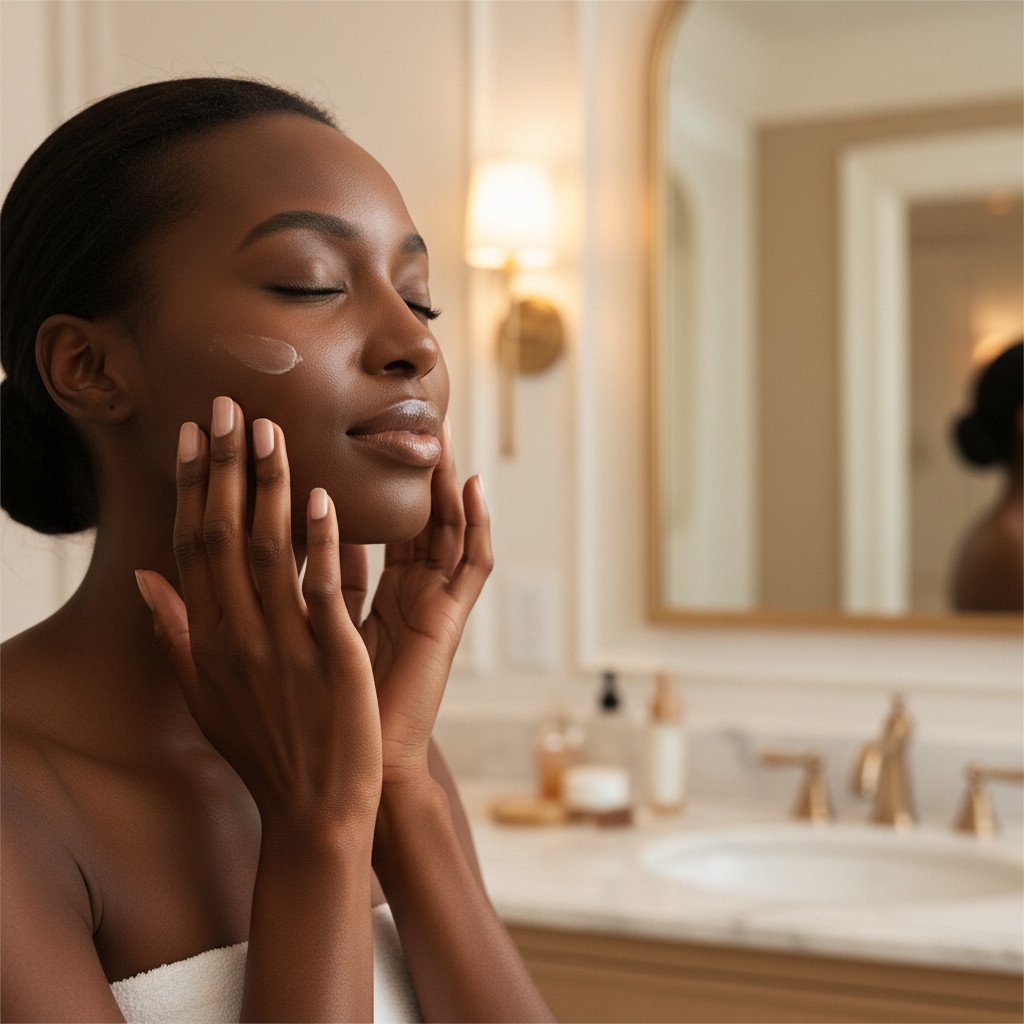
Rebuild comfort overnight
The final step is to lock in moisture and support your skin’s recovery while you sleep. After your treatment step, apply a nourishing, yet breathable, moisturizer. In hot, dry climates, even your night cream doesn’t necessarily need to be heavy and occlusive. Look for formulas rich in ceramides, fatty acids, and cholesterol to rebuild the skin barrier. Ingredients like squalane, shea butter, or hyaluronic acid can also be excellent. If you’re spending significant time indoors with air conditioning that can dry out your skin, consider adding a hydrating sleeping mask once or twice a week to provide an extra boost of moisture. The aim is to wake up with skin that feels plump, soft, and recovered, not tight or parched.
The Best Texture Types for Hot, Dry Climates on Dark Skin
In hot, dry climates, the textures of your skincare products become just as important as their ingredients. Heavy, occlusive creams that might feel luxurious in a cold, damp environment can feel suffocating and lead to congestion when the air is hot and dry. The key is to seek out textures that provide ample hydration and barrier support without feeling greasy, sticky, or occlusive.
Hydrating Gels and Gel-Creams: These are often a godsend in arid heat. Their water-rich formulations deliver intense hydration without the weight of traditional creams. They absorb quickly, leaving a refreshing, non-tacky finish. Look for those packed with humectants like hyaluronic acid and glycerin, and perhaps some light emollients to seal in moisture. They are excellent for layering and can provide a cooling sensation.
Lightweight Lotions and Fluid Serums: These textures offer a good balance of hydration and light moisturization. Fluid serums, often thinner than traditional serums, can deliver concentrated active ingredients in a very spreadable, fast-absorbing format. Lightweight lotions provide a touch more emollience than gels but are still far less heavy than creams. They are ideal for those who need a bit more nourishment but still want a breathable feel.
Milk Textures: Skincare milks, whether cleansers, toners, or moisturizers, are gaining popularity for their elegant feel. They are typically emulsions that are lighter than creams but richer than essences, providing a comforting, nourishing feel without heaviness. They are particularly good for sensitive or barrier-compromised skin in dry heat, offering a gentle touch and effective hydration.
Breathable Creams: While the word “cream” might sound heavy, many modern formulations are designed to be breathable. These creams often have a whipped or aerated texture, providing barrier support and hydration without feeling occlusive. They are a good choice for those with truly dry skin in arid climates, or for evening routines when a bit more nourishment is desired. The key is to ensure they melt into the skin rather than sitting on top.
It’s important to remember that “lightweight” doesn’t mean “inadequate.” These textures should still be formulated with ingredients that support your skin’s barrier function, such as ceramides, fatty acids, and antioxidants. The goal is to provide effective care in a format that feels comfortable and allows your skin to breathe, preventing the feeling of being suffocated or weighed down, which can lead to further irritation or breakouts.
Cleansing in Dry Heat Without Making Things Worse
Cleansing in hot, dry climates requires a delicate touch. The instinct to aggressively foam, scrub, or wash frequently because of sweat and perceived oiliness is a common pitfall that can severely compromise your skin’s health. In arid conditions, your skin is already fighting an uphill battle against moisture loss, and harsh cleansing only exacerbates this challenge.
Why aggressive foaming backfires: Many foaming cleansers, especially those that promise a “squeaky clean” feel, contain harsh surfactants that strip away not only dirt and excess oil but also the vital natural moisturizing factors (NMFs) and lipids that make up your skin’s protective barrier. This leaves your skin feeling tight, dry, and vulnerable. In a dry climate, this feeling of tightness is a direct signal of barrier damage and increased transepidermal water loss. Instead of feeling refreshed, your skin feels stripped, which can trigger it to produce even more oil in an attempt to compensate, leading to the oily-but-dehydrated cycle.
Washing too often: While sweat can feel uncomfortable, washing your face multiple times a day with a traditional cleanser can be detrimental. Each wash, even with a gentle cleanser, removes some of your skin’s natural protective layer. If you feel the need to refresh during the day, consider a quick splash of cool water, a hydrating mist, or a gentle wipe with micellar water, rather than a full cleanse. Save your thorough, yet gentle, cleansing for morning and evening.
Chasing a squeaky-clean feel: This sensation is often equated with cleanliness, but in reality, it’s a sign that your skin’s barrier has been compromised. Healthy skin should feel soft, supple, and comfortable after cleansing, not tight or dry. Prioritize cleansers that leave your skin feeling hydrated and balanced. Look for creamy, milky, or gel-based formulas that are sulfate-free and pH-balanced. These types of cleansers effectively remove impurities without stripping essential moisture. For those with acne-prone or sensitive skin, this gentle approach is even more critical to prevent irritation that can trigger breakouts and subsequent hyperpigmentation.
The difference between feeling refreshed and feeling stripped is profound. A truly refreshed feeling comes from skin that is clean, calm, and hydrated. A stripped feeling is one of discomfort, tightness, and vulnerability. By choosing gentle, hydrating cleansers and limiting washing frequency, you support your skin’s natural defenses and prevent the cycle of dehydration and irritation. You can find a wide range of gentle cleansers specifically formulated for dark skin by browsing options on Amazon.
Why Dullness and Ashiness in Heat Are Useful Information
In hot, dry climates, the appearance of dullness and ashiness on melanin-rich skin can be particularly disheartening. These are often perceived as cosmetic flaws, but in the context of skin health, they are incredibly useful pieces of information. They are your skin’s way of communicating that it needs attention, often signaling underlying dehydration, barrier stress, or an imbalance in your routine.
Ashiness, in particular, is a visual manifestation of dry, flaky skin cells that are not shedding efficiently. When the skin is dehydrated, its natural desquamation process (the shedding of dead skin cells) slows down. These dead cells accumulate on the surface, scattering light rather than reflecting it evenly, which results in a dull, greyish, or ashy appearance. This is not a flaw in your skin; it’s a direct consequence of insufficient moisture and a compromised barrier struggling to maintain its integrity against the dry environment.
Dullness, similarly, indicates that your skin’s surface isn’t smooth and hydrated enough to reflect light optimally. Healthy, well-hydrated skin has a natural luminosity. When it’s parched and stressed, the texture becomes uneven, and the cells are shriveled, leading to a loss of radiance. This can happen even if you’re sweating or your skin feels oily, because as we’ve discussed, oil production doesn’t equate to water hydration.
Instead of viewing dullness and ashiness as something to be aggressively scrubbed away, consider them as valuable feedback. They are telling you that your skin’s barrier needs reinforcement, that it’s thirsty for water, or that your current cleansing method might be too harsh. Responding to these signals with gentle hydration, barrier-supporting ingredients, and appropriate sun protection is far more effective than trying to mask them. This perspective shift allows you to approach your skincare with compassion and understanding, working with your skin rather than against it, and ultimately leading to a healthier, more radiant complexion.
Hot Climate Sensitivity and Quiet Irritation on Dark Skin
Melanin-rich skin can experience irritation and sensitivity in hot, dry climates, but these signs often manifest differently than on lighter skin tones. Instead of overt redness, which can be subtle or absent, the irritation often presents as sensations and textural changes. Recognizing these “quiet” signs is crucial for preventing further damage and, importantly, avoiding post-inflammatory hyperpigmentation (PIH).
Tightness after sweating and washing
This is perhaps the most common and immediate sign of sensitivity and barrier compromise. When you sweat in a dry climate, the moisture rapidly evaporates, taking with it some of your skin’s natural hydration. If you then cleanse, especially with a harsh product, the feeling of tightness can be profound. This isn’t just a fleeting sensation; it’s your skin’s barrier screaming for help. It indicates that the protective lipid layer has been disrupted, making your skin vulnerable to further moisture loss and environmental aggressors. This chronic tightness can lead to micro-fissures in the skin, making it more prone to irritation and inflammation.
Stinging when simple products go on
Have you ever applied a seemingly innocuous product—like a basic moisturizer or even just water—and felt a sudden stinging or burning sensation? This is a clear indicator that your skin’s barrier is compromised and it’s highly sensitized. Healthy skin should not sting when basic, non-active products are applied. This stinging means that ingredients are penetrating too deeply and irritating nerve endings, a direct consequence of a weakened barrier. It’s a sign to immediately scale back on any active ingredients and focus entirely on soothing, hydrating, and barrier-repairing products until the stinging subsides.
Rough or flaky-looking texture that makes tone look uneven
As discussed, rough texture and subtle flakiness are often signs of dehydration and impaired cell turnover. However, they can also be a manifestation of chronic, low-grade irritation. When the skin is constantly battling dryness and environmental stress, its natural exfoliation process becomes disorganized. Dead skin cells accumulate unevenly, leading to a rough, bumpy texture that can make your overall skin tone appear uneven and dull. This texture can be a precursor to hyperpigmentation, as the constant irritation and inflammation can trigger melanin production. It’s important not to confuse this with a need for aggressive exfoliation; often, gentle hydration and barrier repair are what’s truly needed to restore smoothness and evenness.
Why Sunscreen Matters Even More in Hot, Dry Climates
For Black women, the conversation around sunscreen can sometimes be fraught with misconceptions. There’s a persistent myth that melanin-rich skin doesn’t need sunscreen because it “doesn’t burn” or is naturally protected. While it’s true that our skin has a higher innate SPF (around 13-15) compared to lighter skin tones, and we are less prone to sunburn, this does not mean we are immune to sun damage. In hot, dry climates with intense sun exposure, daily sunscreen becomes even more critical for several reasons.
Firstly, the sun’s UV rays, particularly UVA, are present year-round and can penetrate clouds and windows. These rays contribute to premature aging, breakdown of collagen, and, most significantly for dark skin, trigger and worsen hyperpigmentation. Intense sun exposure in arid climates can lead to more frequent and persistent dark marks, making it harder to achieve an even skin tone. Sunscreen acts as a vital shield, helping to prevent the inflammation that can lead to these stubborn spots.
Secondly, the combination of intense sun, dry air, and wind can further compromise your skin’s barrier. A weakened barrier is more susceptible to UV damage, creating a vicious cycle. Sunscreen helps to protect the skin from this environmental assault, allowing your barrier to function more effectively. Many individuals, especially those with darker skin, may avoid sunscreen because traditional formulas can feel heavy, greasy, or leave an unsightly white cast, which is particularly noticeable on deeper skin tones. This is why it’s crucial to seek out modern formulations that are lightweight, blend seamlessly, and are designed for comfortable wear in the heat. Brands have made significant strides in creating elegant, non-whitening sunscreens that feel good on the skin, even in arid conditions.
Consistent daily SPF application isn’t just about preventing sunburn; it’s about protecting against the cumulative effects of UV exposure that lead to lingering dark marks, uneven tone, and preventable irritation. It’s an essential step in preserving the health and radiance of your melanin-rich skin, especially when facing the relentless sun of hot, dry climates. For more in-depth information on choosing the right protection, you can explore our guide on Sunscreen for Dark Skin. When shopping for sun protection, remember that you can browse options on Amazon for formulas that won’t leave a white cast.
Heat, Dryness, and Hyperpigmentation
The connection between hot, dry climates and hyperpigmentation on melanin-rich skin is profound and often underestimated. For us, any form of irritation or inflammation can trigger melanocytes (the cells that produce melanin) to go into overdrive, resulting in post-inflammatory hyperpigmentation (PIH) – those stubborn dark spots and patches that linger long after the initial issue has resolved. In arid environments, several factors conspire to heighten this risk.
Firstly, the constant battle against dryness and a compromised skin barrier makes our skin more susceptible to irritation. When the barrier is weakened, it’s less able to defend against environmental aggressors, leading to low-grade inflammation that might not be visible as redness but still triggers melanin production. Over-cleansing, using harsh products, or even friction from sweat and clothing can all contribute to this irritation in a vulnerable barrier.
Secondly, intense UV exposure in hot, dry climates is a primary driver of hyperpigmentation. While our melanin offers some protection, it doesn’t block all UV rays. UVA rays, in particular, penetrate deeply and can stimulate melanin production, leading to new dark spots or darkening existing ones. The dry heat itself can also exacerbate inflammatory responses, making the skin more reactive to sun exposure. This is why consistent and adequate sun protection is not just about preventing sunburn, but fundamentally about preventing and managing hyperpigmentation.
Finally, the cycle of dehydration leading to increased oil production, which can then lead to breakouts, creates another pathway to PIH. Each breakout, especially if picked or improperly treated, leaves behind a dark mark. In a climate where the skin is already stressed, these marks can be more persistent and harder to fade. Understanding this intricate relationship allows us to prioritize strategies that soothe, protect, and hydrate the skin, thereby reducing the triggers for hyperpigmentation. For a deeper dive into managing dark spots, refer to our comprehensive guide on Hyperpigmentation and Dark Spots. Additionally, our article on Preventing Seasonal Hyperpigmentation in Dark Skin offers further insights tailored to climate-specific challenges.
How Air Conditioning Can Change the Whole Routine
It’s easy to focus solely on the outdoor environment when discussing skincare for hot, dry climates. However, for many of us, the indoor environment plays an equally significant, if not more insidious, role in how our skin behaves. Air conditioning, while a necessary comfort in scorching temperatures, is a major culprit in exacerbating skin dryness and dehydration, effectively creating a “winter-like” environment indoors.
Air conditioning units work by removing heat and humidity from the air. While this cools the space, it also drastically lowers the moisture content, creating an artificially dry atmosphere. Spending hours each day in an air-conditioned office, home, or car means your skin is constantly exposed to this dehydrating environment. This continuous cycle of moving from hot, dry outdoor air to cool, dry indoor air can be incredibly taxing on your skin’s barrier, leading to persistent transepidermal water loss.
This indoor dryness means that even if you’ve meticulously applied hydrating products in the morning, your skin can still feel parched and tight by midday. It can make your skin feel worse indoors than out, prompting confusion about why your routine isn’t working. The implications for your skincare routine are significant: you can’t just focus on managing the outdoor heat and sun; you must also actively counteract the dehydrating effects of indoor cooling.
This might mean incorporating a hydrating mist throughout the day, especially if you’re in a constantly air-conditioned space. It could also mean using a humidifier in your bedroom at night to replenish moisture while you sleep. Your evening routine, in particular, should heavily emphasize barrier repair and deep hydration to help your skin recover from the day’s constant exposure to dry air. Understanding that your hot-climate routine must respond to both outdoor heat and indoor dryness is key to maintaining skin comfort and health. For a more detailed look at this topic, refer to our article on How Indoor Heating and AC Affect Dark Skin.
Skincare for Hot, Dry Climates by Skin Pattern
While the principles of hydration and barrier support are universal, how you apply them can vary slightly depending on your specific skin pattern. Hot, dry climates can amplify existing tendencies, so tailoring your approach is essential.
Dry or easily sensitized skin
If your skin is naturally dry or prone to sensitivity, the hot, dry climate will likely push it to its limits. Your primary focus should be on gentle, consistent barrier support and intensive hydration. Avoid any harsh ingredients, fragrances, or excessive exfoliation. Opt for creamy, non-foaming cleansers and layer multiple hydrating steps: a hydrating toner, a ceramide-rich serum, and a breathable, yet nourishing, moisturizer. Ingredients like ceramides, cholesterol, fatty acids, squalane, and colloidal oatmeal will be your best friends. Sunscreen is paramount, as compromised skin is more susceptible to UV damage and irritation. Consider a hydrating sleeping mask a few times a week to provide extra overnight recovery.
Oily or combination skin in arid heat
This is where the “oily but dehydrated” paradox is most pronounced. Your skin might feel shiny and produce excess oil, but also feel tight and uncomfortable. The mistake here is to strip the skin further. Instead, focus on balancing oil production by providing ample water-based hydration. Use a gentle, gel-based cleanser. Incorporate hydrating toners and lightweight serums with ingredients like hyaluronic acid, niacinamide, and panthenol. Your moisturizer should be a lightweight gel-cream or fluid lotion that provides hydration without feeling heavy or occlusive. Avoid heavy oils that might feel suffocating. Consistent, non-comedogenic sunscreen is still crucial. The goal is to signal to your skin that it doesn’t need to overproduce oil to compensate for dehydration.
Acne-prone and PIH-prone skin
For those prone to acne and post-inflammatory hyperpigmentation, the dry heat can be a double-edged sword. Dehydration can exacerbate breakouts by impairing cell turnover, while any irritation from the environment or harsh products can immediately lead to dark marks. Your routine needs to be incredibly gentle and focused on preventing inflammation. Use a very mild, non-stripping cleanser. Incorporate soothing and anti-inflammatory ingredients like niacinamide, centella asiatica, and green tea extract. Salicylic acid (BHA) can be beneficial for managing breakouts, but use it sparingly and in low concentrations, as dry skin can be more sensitive to it. Prioritize non-comedogenic, lightweight hydration and, most importantly, diligent, broad-spectrum sunscreen to prevent existing dark marks from worsening and new ones from forming. Any active treatment should be introduced slowly and monitored closely.
Skin that feels dull, tight, and unpredictable
If your skin is giving you mixed signals – dullness, tightness, occasional breakouts, or just general unpredictability – it’s likely a sign of a compromised barrier and chronic dehydration. Your routine should focus on resetting and rebalancing. Strip back to basics: a gentle cleanser, a hydrating toner or serum, a barrier-supporting moisturizer, and sunscreen. Avoid any harsh exfoliants, strong actives, or new products until your skin feels calm and comfortable again. Introduce new products one at a time, very slowly. Focus on ingredients that repair and strengthen the skin barrier, such as ceramides, peptides, and antioxidants. The goal is to stabilize your skin and restore its natural resilience, allowing it to better adapt to the challenging climate.
What a Realistic Hot-Climate Routine Can Look Like
Building a skincare routine for hot, dry climates doesn’t mean you need a dozen steps or expensive products. It’s about smart choices and consistency. Here are some realistic examples:
A Minimal Morning Routine
This is for days when you’re short on time or prefer a very streamlined approach, but still need protection.
- Rinse: Splash face with cool water or use a damp cloth.
- Hydrate: Apply 3-4 drops of a hydrating serum (e.g., hyaluronic acid or niacinamide) to damp skin.
- Protect: Follow immediately with a lightweight, non-whitening SPF 30+ sunscreen.
This routine ensures your skin is refreshed, gets a boost of hydration, and is critically protected from UV rays, all in under 5 minutes.
An Evening Recovery Routine
This routine focuses on cleansing away the day and providing essential hydration and repair.
- Double Cleanse: Start with an oil cleanser or micellar water to remove sunscreen and makeup. Follow with a gentle, hydrating cream or gel cleanser.
- Hydrate & Treat: Apply a hydrating toner or essence. If using a treatment (e.g., gentle retinoid, brightening serum), apply it now.
- Moisturize: Finish with a breathable, barrier-supporting moisturizer (gel-cream or lightweight lotion).
This allows your skin to recover from environmental stressors and replenish moisture overnight without feeling heavy.
A “Skin Feels Hot, Tight, and Irritated” Reset Version
When your skin is truly stressed, less is often more. This routine focuses on soothing and repairing.
- Gentle Cleanse: Use only a creamy, non-foaming cleanser, or just micellar water.
- Soothe & Hydrate: Apply a simple hydrating serum with ingredients like centella asiatica, panthenol, or hyaluronic acid. Avoid any actives.
- Barrier Repair: Use a rich, yet breathable, moisturizer packed with ceramides and fatty acids.
- Protect (AM only): If it’s morning, a mineral sunscreen is often best for irritated skin, but ensure it’s a comfortable formula.
This reset helps calm inflammation, rebuild the barrier, and bring your skin back to a state of comfort before reintroducing any actives.
Common Mistakes in Hot, Dry Climate Skincare for Dark Skin
Navigating skincare in hot, dry climates can be tricky, and it’s easy to fall into common traps, especially when generic advice doesn’t account for the unique needs of melanin-rich skin. Avoiding these mistakes is crucial for maintaining a healthy, balanced complexion.
- Assuming all heat means oily-skin routines: This is perhaps the most pervasive and damaging misconception. The belief that hot weather automatically equates to excess oil often leads to over-stripping, which only exacerbates dehydration and barrier issues in dry heat.
- Cleansing too often because of sweat: While sweat can feel uncomfortable, constant washing, especially with harsh cleansers, will strip your skin of its protective barrier, leading to increased dryness and irritation.
- Skipping moisturizer because the weather is hot: This is a direct path to dehydration. Even in hot weather, your skin needs moisture to function optimally and prevent transepidermal water loss. The key is choosing the right lightweight, breathable textures.
- Skipping sunscreen because deeper skin “doesn’t burn”: As discussed, melanin-rich skin is still highly susceptible to UV damage, which triggers hyperpigmentation and accelerates aging. Sunscreen is non-negotiable, regardless of skin tone.
- Using strong exfoliants on already tight or stingy skin: If your skin feels tight, dry, or stings when products are applied, it’s a clear sign of a compromised barrier. Strong exfoliants will only worsen this, leading to more irritation and potential hyperpigmentation.
- Treating shine as proof that the skin is fully hydrated: Surface oiliness can often mask underlying dehydration. Don’t let shine trick you into thinking your skin has enough water; it might be producing more oil to compensate for water loss.
- Ignoring indoor AC as part of the problem: Air conditioning is a major dehydrator. Failing to account for its effects in your routine means you’re only addressing half the problem, leaving your skin constantly battling dryness.
Balanced Hydration vs Heavy Product Panic
When skin feels stressed in a hot, dry climate, there’s a natural tendency to either strip it aggressively or, conversely, to layer on every heavy product imaginable in a “panic.” Neither approach is ideal. The goal is balanced hydration and barrier support, not product overload or deprivation. Let’s compare these approaches:
| Aspect | Balanced Hot-Dry Climate Routine | Stripping/Overloaded Routine |
|---|---|---|
| Cleansing | Gentle, hydrating, non-foaming cleansers; 1-2 times daily. Skin feels soft, comfortable. | Harsh, foaming, “squeaky clean” cleansers; multiple times daily. Skin feels tight, dry, irritated. |
| Hydration Layers | Multiple lightweight layers (toner, serum, gel-cream) to build water content. | Either skipped entirely (due to heat) or one very heavy, occlusive cream. |
| Moisturizer Texture | Lightweight gel-creams, fluid lotions, milk textures; breathable and non-comedogenic. | Heavy, thick creams that feel suffocating or no moisturizer at all. |
| Sunscreen Wear | Daily, broad-spectrum SPF 30+; lightweight, non-whitening formula. | Skipped or used inconsistently; heavy, uncomfortable formulas. |
| Treatment Load | Thoughtful use of actives (e.g., retinoids, AHAs) 2-3 times/week, adjusted for sensitivity. Focus on soothing. | Aggressive use of strong actives daily, leading to irritation; or no targeted treatments. |
| How Skin Feels | Comfortable, supple, hydrated, calm, with a healthy glow. | Tight, rough, dull, irritated, simultaneously oily and dry, prone to breakouts/PIH. |
The balanced approach prioritizes consistent, gentle care that respects your skin’s natural barrier. It acknowledges that even in hot weather, your skin needs water and light emollients to thrive. The stripping/overloaded approach, on the other hand, often leads to a cycle of reactivity, discomfort, and persistent concerns like hyperpigmentation. Listening to your skin and choosing products that feel comfortable and support its natural functions is always the most effective strategy.
How to Transition Between Humid Heat and Dry Heat
It’s a common misconception that “summer skincare” or “hot weather skincare” is a monolithic category. In reality, the demands placed on your skin by humid heat are vastly different from those posed by dry heat. Recognizing this distinction is crucial, especially for Black women who may travel or live in areas with varying climates. Transitioning your routine effectively can prevent skin stress and maintain balance.
In humid heat, the air is saturated with moisture, which typically reduces transepidermal water loss. Your skin might feel naturally dewy, and the primary concerns often revolve around managing excess oil, preventing congestion, and dealing with sweat-induced breakouts. Routines in humid climates might lean towards lighter, gel-based cleansers, mattifying toners, and very minimal, non-occlusive moisturizers, or even just a hydrating serum followed by sunscreen. The air itself provides a lot of ambient moisture, so heavy occlusives are often unnecessary and can feel suffocating.
Conversely, in dry heat, as we’ve extensively discussed, the air actively pulls moisture from your skin. Dehydration and barrier compromise become the main battlegrounds. While you still want lightweight textures, these textures need to be more focused on preventing water loss and reinforcing the barrier. This means incorporating more humectants, ceramides, and light emollients. Cleansing needs to be even gentler, and skipping moisturizer entirely is a recipe for disaster. The emphasis shifts from mattifying to maintaining hydration and protecting against environmental aggressors that strip moisture.
When transitioning from a humid climate to a dry one (or vice versa), here’s what to consider:
- Cleansing: If moving from humid to dry, switch from a potentially more active or foaming cleanser to a creamy, hydrating, non-stripping one.
- Hydration: In dry heat, you’ll likely need to layer more hydrating steps (toners, essences, serums) and ensure your moisturizer provides barrier support. In humid heat, you might streamline these.
- Moisturizer Texture: Opt for gel-creams, fluid lotions, or milk textures in dry heat that still provide some occlusive benefits. In humid heat, you might prefer even lighter gels or simply a hydrating serum.
- Actives: Be more cautious with strong exfoliants or retinoids in dry heat, as your skin barrier is more vulnerable. You might tolerate them better in humid conditions.
- Sunscreen: Always essential, but in dry heat, ensure your sunscreen also offers some moisturizing benefits and is comfortable for daily wear without feeling heavy.
Understanding these distinctions allows you to make informed choices that truly support your skin, rather than blindly following generic seasonal advice. For a deeper dive into humid climate care, explore our article on Summer Skincare for Melanin-Rich Skin in Humid Climates.
How to Navigate This Topic
This article, “Skincare for Hot, Dry Climates on Dark Skin,” is an integral part of our broader Seasonal Routines: Summer, Winter & Climate-Specific cluster. We understand that your skin’s needs are dynamic, shifting not only with the seasons but also with the specific climate you inhabit or travel to. Our goal is to provide you with tailored, culturally relevant information that empowers you to care for your melanin-rich skin effectively, no matter the environmental challenges.
If you’re dealing with the unique demands of hot, dry weather, this article has provided a comprehensive framework. However, your skincare journey may lead you to explore other climate-specific concerns. Depending on your current needs, here’s what to read next:
- If you’re transitioning out of the dry heat or moving between different climates, our guide on Transition Routines Between Seasons for Melanin-Rich Skin will help you adjust seamlessly.
- For those in colder regions or experiencing winter dryness, our article on Winter Skincare Routines for Dry, Cold Weather offers essential advice.
- If you’re dealing with the opposite challenge – humid summer oiliness and congestion – then Summer Skincare for Melanin-Rich Skin in Humid Climates is your next stop.
- To understand the pervasive impact of indoor environments, whether heated or air-conditioned, delve into How Indoor Heating and AC Affect Dark Skin.
- And for persistent concerns about dark marks that seem to worsen with seasonal changes, our piece on Preventing Seasonal Hyperpigmentation in Dark Skin offers targeted solutions.
Ultimately, all these resources are here to support your journey towards healthier, more confident skin, reinforcing the foundational knowledge found in our main Skincare for Black Women pillar.
Quick Principles for Hot, Dry Climate Skincare
To distill the essence of caring for melanin-rich skin in hot, dry climates, remember these core principles. They serve as a compass for navigating the unique challenges of arid environments, ensuring your skin remains resilient and radiant.
- Shine does not always mean hydration: Surface oil can be a compensatory mechanism for underlying dehydration. Don’t let a shiny T-zone fool you into thinking your skin has enough water.
- Hot weather can still dry your skin out: Low humidity and constant evaporation mean your skin is constantly losing water, regardless of the temperature. Prioritize replenishing this lost moisture.
- Lightweight textures can still be barrier-supportive: You don’t need heavy creams to protect your barrier. Modern gel-creams, fluid lotions, and serums can deliver ceramides, fatty acids, and humectants effectively without feeling occlusive.
- Sunscreen matters in arid heat: Intense UV exposure in dry climates is a major trigger for hyperpigmentation and barrier damage on dark skin. Consistent, comfortable SPF is non-negotiable.
- Too much cleansing can create its own problems: Aggressive or frequent washing strips the skin, exacerbating dryness, irritation, and potentially leading to more oil production and hyperpigmentation.
- Steady hydration beats panic layering: Consistent, gentle hydration throughout the day and night is more effective than sporadically layering heavy products when your skin feels parched.
- Melanin-rich skin often shows climate stress through dullness, texture, and pigment changes first: Learn to read these subtle cues as signals of dehydration or irritation, rather than waiting for overt redness or peeling.
Frequently Asked Questions
What is the best skincare routine for hot, dry climates on dark skin?
The best routine focuses on gentle cleansing, layering lightweight hydration, reinforcing the skin barrier with ingredients like ceramides, and diligent use of broad-spectrum, non-whitening sunscreen. It prioritizes comfort and protection over heavy or stripping products, addressing dehydration even when skin feels oily.
Why does my skin feel tight even though it is hot outside?
Your skin feels tight because the hot, dry air constantly pulls moisture from its surface, leading to dehydration and a compromised skin barrier. This sensation is a clear sign of water loss and a need for more gentle, hydrating care, rather than a signal to strip away oil.
Can dark skin get dehydrated in desert or dry climates?
Absolutely. Melanin-rich skin is susceptible to dehydration in dry climates, often experiencing higher rates of transepidermal water loss. The lack of humidity in the air means moisture is constantly evaporating from your skin, making consistent hydration crucial.
Do Black women need sunscreen more consistently in hot, dry weather?
Yes, consistent sunscreen use is vital for Black women in hot, dry weather. While melanin offers some natural protection, intense UV exposure in arid climates can still trigger hyperpigmentation, accelerate aging, and cause inflammation, making daily broad-spectrum SPF essential.
Should I use lighter or richer products in arid heat?
You should generally opt for lighter textures like gel-creams, fluid lotions, and hydrating serums in arid heat. However, these “lighter” products must still be rich in barrier-supporting and hydrating ingredients to effectively combat dryness without feeling heavy or suffocating.
Why does my face get shiny but still feel dry?
This paradox occurs because your skin, sensing dehydration (lack of water), increases oil production (sebum) in an attempt to create a protective barrier and prevent further moisture loss. So, you experience surface oiliness while still feeling tight and dry underneath.
What if every hot-weather routine makes my skin feel stripped?
If your skin consistently feels stripped, it’s a strong indicator that your cleansing method is too harsh or your products are too aggressive for the dry climate. Focus on ultra-gentle, non-foaming cleansers, avoid strong actives, and prioritize soothing, barrier-repairing hydration until your skin feels comfortable and balanced.
Final Thoughts
Navigating skincare in hot, dry climates for melanin-rich skin is a journey of understanding and adaptation. It’s about shedding the misconception that all heat demands an oily-skin routine and embracing a nuanced approach that centers on hydration, barrier protection, and gentle care. Your skin is a remarkable organ, constantly communicating its needs, and in arid environments, those needs often revolve around combating relentless moisture loss and preventing irritation that can lead to stubborn dark marks.
The true goal isn’t to fight the climate or achieve an unrealistic ideal, but to cultivate skin that feels supported, protected, and resilient. It’s about reducing the likelihood of dullness, tightness, and lingering hyperpigmentation, allowing your natural radiance to shine through. By making thoughtful choices about your cleansers, hydrators, and sun protection, you empower your skin to thrive, even under the most challenging conditions. Remember, your beauty is inherent, and with the right knowledge, your skincare routine can be a source of confidence and comfort, no matter where life takes you. We invite you to continue exploring our Seasonal Routines and the broader Skincare for Black Women pillar for more insights tailored to your unique needs.
IMAGE SUGGESTIONS
Image Label: Hero Image
Image Purpose: To immediately convey the article’s focus on skincare for Black women in hot, dry, sunny environments, setting an editorial yet practical tone.
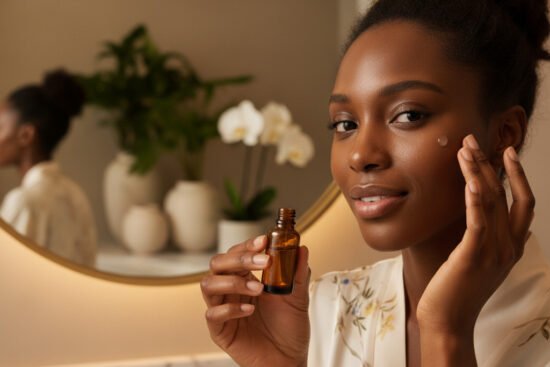
Visual Description: A Black woman, mid-20s to mid-30s, with radiant, visible skin texture, standing in bright, sunlit conditions (e.g., desert landscape, bright urban setting with strong sun). She is applying a lightweight serum or sunscreen to her face with a soft, confident expression. Minimal, natural makeup. The overall mood is elevated, warm, and sophisticated, suggesting comfort and ease in the heat.
Suggested Alt Text: Black woman applying lightweight skincare in a bright, hot, dry climate, showcasing radiant melanin-rich skin.
Image Label: In-Post Image
Image Purpose: To visually demonstrate the feeling of lightweight hydration and comfort on melanin-rich skin.
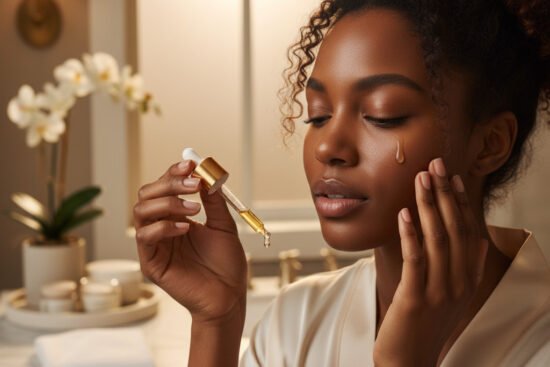
Visual Description: A close-up shot of melanin-rich skin (e.g., cheek or forehead area) being gently pressed with fingertips, showing a lightweight hydrating serum or gel-cream absorbing. The skin looks plump, dewy, and comfortable, with no greasy residue. Focus on healthy skin texture and a feeling of relief.
Suggested Alt Text: Close-up of melanin-rich skin absorbing a lightweight hydrating serum, showing comfortable, non-greasy hydration.
Image Label: Flat Lay Image
Image Purpose: To showcase the types of products recommended for hot, dry climates in an aesthetically pleasing, editorial manner.
Visual Description: A flat lay arrangement of a gentle, non-foaming cleanser, a hydrating serum (perhaps in a dropper bottle), a lightweight gel-cream or fluid moisturizer, and a non-whitening sunscreen. These products are artfully arranged on a warm-toned surface like sand, light stone, or a cream-colored linen, evoking a clean, minimalist hot-climate aesthetic.
Suggested Alt Text: Flat lay of essential skincare products for hot, dry climates: gentle cleanser, hydrating serum, lightweight moisturizer, and sunscreen on a warm, sandy surface.
INTERNAL LINKING OPPORTUNITIES
https://blackbeautybasics.com/skincare-for-black-women/seasonal-routines-summer-winter-climate-specific/
https://blackbeautybasics.com/skincare-for-black-women/
https://blackbeautybasics.com/acne-and-sensitive-skin-in-Black-women/
https://blackbeautybasics.com/skincare-for-black-women/seasonal-routines-summer-winter-climate-specific/how-indoor-heating-and-ac-affect-dark-skin/
https://blackbeautybasics.com/sunscreen-for-dark-skin/
https://blackbeautybasics.com/hyperpigmentation-and-dark-spots/
https://blackbeautybasics.com/skincare-for-black-women/seasonal-routines-summer-winter-climate-specific/preventing-seasonal-hyperpigmentation-in-dark-skin/
https://blackbeautybasics.com/skincare-for-black-women/seasonal-routines-summer-winter-climate-specific/summer-skincare-for-melanin-rich-skin-in-humid-climates/
https://blackbeautybasics.com/skincare-for-black-women/seasonal-routines-summer-winter-climate-specific/transition-routines-between-seasons-for-melanin-rich-skin/
https://blackbeautybasics.com/skincare-for-black-women/seasonal-routines-summer-winter-climate-specific/winter-skincare-routines-for-dry-cold-weather/
https://blackbeautybasics.com/skincare-for-black-women/seasonal-routines-summer-winter-climate-specific/how-indoor-heating-and-ac-affect-dark-skin/
https://blackbeautybasics.com/skincare-for-black-women/seasonal-routines-summer-winter-climate-specific/preventing-seasonal-hyperpigmentation-in-dark-skin/
Related next steps
Related posts:
 Summer Skincare for Melanin-Rich Skin in Humid Climates
 Morning Skincare Routine for Black Women by Skin Type (Oily, Dry, Combo)
 Is My Dark Skin Oily, Dry, or Combination? Understanding Your Melanin-Rich Complexion
 Combatting Dry Skin with Nourishing Skincare Products
 Combatting Dry Skin with Nourishing Skincare Products
 Building Routines for Oily, Dry, and Combination Dark Skin