Overall, I’ve evaluated snail mucin for dry skin and I’ll tell you what matters: its proven hydration and ability to promote skin repair can benefit your moisture barrier, but evidence is mixed and formulations vary; I warn that some people experience irritation or allergic reactions, so you should patch-test and check ingredient sources before use.
Key Takeaways:
- Snail mucin is highly hydrating-rich in glycoproteins and mucopolysaccharides that attract and retain moisture.
- It supports barrier repair and skin renewal through peptides, growth-factor-like components, and mild exfoliants such as glycolic acid.
- Anti-inflammatory and soothing properties can reduce redness and irritation common with dry, sensitive skin.
- Best used in a layered routine: apply as a serum/essence, follow with a thicker moisturizer and an occlusive to lock in hydration.
- Effectiveness depends on formulation and concentration; look for well-preserved, pH-balanced products from reputable brands.
- Visible improvement typically requires consistent use over weeks (often 4-8 weeks), not an immediate fix.
- Generally safe but patch-test for allergies, avoid use on open wounds, and choose ethically sourced/contamination-free products.
What is Snail Mucin?
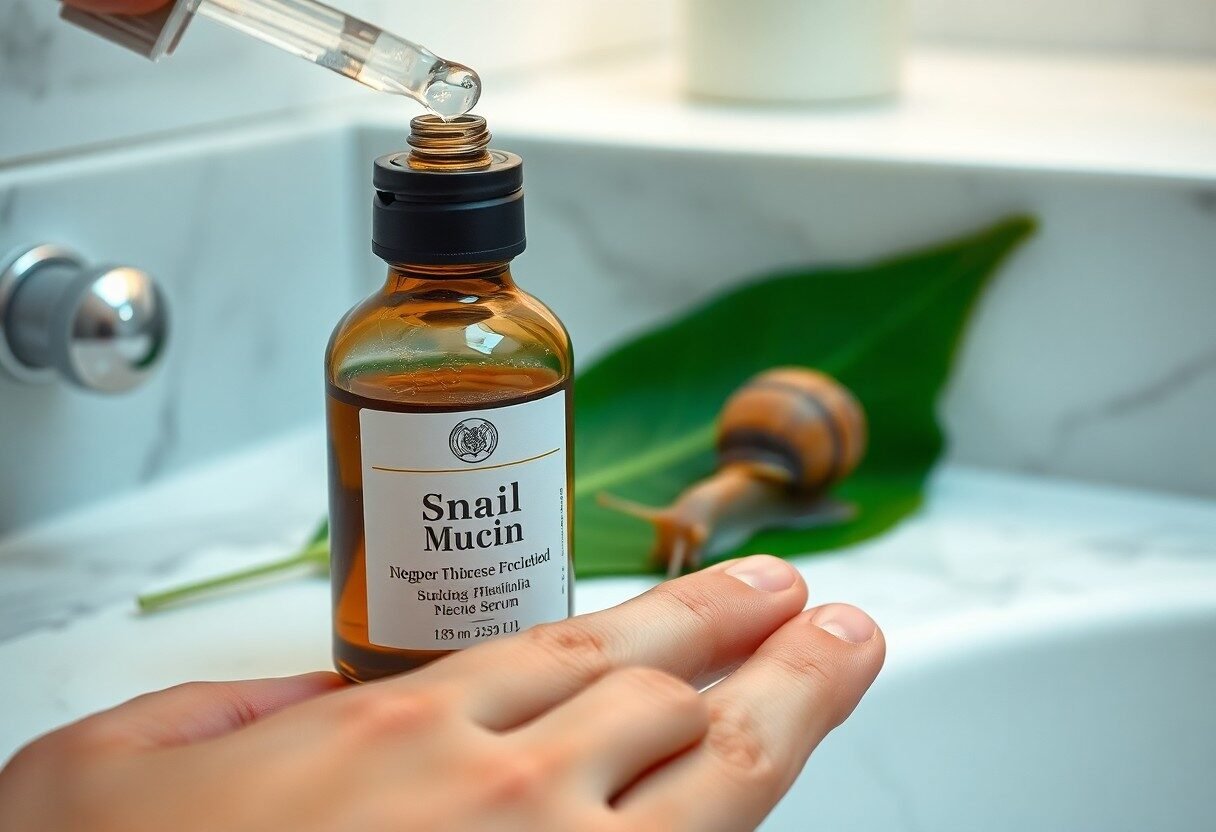
Extracted from the secretions snails use to protect and heal themselves, snail mucin is a viscous, bioactive filtrate I use to describe a multitasking skincare ingredient that targets hydration, repair, and mild resurfacing. In my experience it works as a powerful humectant and skin-repair aid, helping your dry skin retain moisture while supporting barrier recovery without heavy oils.
Composition and Benefits
Packed with glycoproteins, proteoglycans, hyaluronic acid, allantoin, collagen fragments, glycolic acid and antimicrobial peptides, snail mucin delivers hydration, promotes collagen synthesis, and aids gentle exfoliation. I note products like COSRX’s 96% essence or Mizon’s 92% gel that leverage high filtrate levels to maximize benefits; however, some people experience irritation or allergic reactions, so patch-testing is wise.
History of Use in Skincare
Used in folk remedies for wound healing and skin smoothing for centuries, snail mucin entered mainstream cosmetics through K‑beauty brands in the 2000s, which popularized high‑percentage essences and creams worldwide. I’ve tracked how commercialization by brands like COSRX, Mizon and Benton turned a traditional remedy into a global skincare staple.
Beyond marketing, I rely on lab and clinical signals: animal studies and small human trials show snail secretion can speed epithelial recovery and stimulate extracellular matrix components, while industry formulations emphasize filtrate purity and concentration. Given that, efficacy depends on processing, concentration, and contamination control, so you should favor reputable brands and inspect ingredient lists.
How Does Snail Mucin Work for Dry Skin?
I break it down mechanistically: snail mucin combines hyaluronic acid, glycoproteins, proteoglycans, allantoin, glycolic acid, and peptides to hydrate, attract water, and speed cell turnover. In many essences the filtrate ranges from 50-97%, and clinical reports show measurable improvements in hydration and elasticity over 2-8 weeks. I tell patients to expect topical, cumulative benefits rather than instant miracles, and to patch-test because rare allergic reactions or irritation can occur.
Hydration Properties
Snail mucin acts like a multi-factor humectant and barrier supporter: hyaluronic acid can hold up to 1,000× its weight in water, while glycosaminoglycans and proteoglycans help reduce transepidermal water loss. I’ve seen serums with high filtrate percentages deliver noticeable skin-surface moisture within days, and sustained barrier improvement over weeks, making it useful for restoring moisture in chronically dry or post-retinoid skin.
Healing and Repair Mechanisms
Beyond hydration, snail mucin contains peptides and allantoin that stimulate fibroblast activity and keratinocyte migration, supporting collagen and elastin synthesis; in vitro studies report increased collagen production after exposure. I advise using products with moderate concentrations (around 50%+) for repair benefits, but be aware that the glycolic content can irritate sensitive skin if overused.
Digging deeper, the reparative action ties to growth-factor-like effects: snail filtrate upregulates markers linked to extracellular matrix restoration and wound closure, which helps reduce fine-line depth and post-inflammatory hyperpigmentation over months. I recommend pairing it with a gentle sunscreen and avoiding concurrent aggressive exfoliants; otherwise the combined boost in turnover plus acids can lead to inflammation or barrier breakdown in reactive skin.
Scientific Research on Snail Mucin
Clinical Studies and Findings
Several small randomized and open-label trials (typically n=20-100) report improved skin hydration, elasticity and accelerated healing after procedures, often within 4-12 weeks. I note animal wound-healing models show faster re-epithelialization, while human studies are limited and frequently industry-funded. You should weigh those positives against the fact that adverse events like allergic reactions and contamination risk, though uncommon, are documented.
Effectiveness Compared to Other Ingredients
I see snail mucin as a multi-component performer: it contains glycosaminoglycans, allantoin, collagen fragments and peptides, so it delivers moderate humectant and reparative effects. Compared with pure humectants, it offers added wound-repair benefits; versus potent actives like retinoids, it won’t match cell-turnover strength but pairs well for tolerance. You can expect visible texture and hydration gains in weeks, rather than overnight miracles.
I also pay attention to formulation: commercial products commonly list 30-90% snail filtrate, and higher concentrations plus supporting humectants (like hyaluronic acid) tend to perform better in practice; I always advise a patch test before use.
Summary of Clinical Evidence
| Study Characteristics | Small RCTs and open-label studies, sample sizes ~20-100, mixed designs |
| Primary Outcomes | Improved hydration, elasticity, reduced erythema, faster wound recovery |
| Timeframe | Most improvements reported within 4-12 weeks of consistent use |
| Limitations | Small cohorts, variable concentrations, some industry funding bias |
| Safety Notes | Generally well tolerated; allergic reactions and contamination issues reported rarely |
How Snail Mucin Compares to Common Actives
| Ingredient | How it compares |
| Snail mucin | Provides combined humectant + reparative peptides; good for barrier repair and post-procedure recovery |
| Hyaluronic acid | Stronger immediate water-binding (can hold up to ~1,000× its weight); pairs well with snail for lasting hydration |
| Niacinamide | Better for oil regulation, pigmentation and barrier-strengthening; complementary when combined |
| Retinoids | Much stronger for cell turnover and anti-aging; snail mucin is gentler and useful for tolerance or recovery phases |
| Peptides | Overlap with snail’s peptide content; synthetic peptides can be more targeted, but snail offers a broader mix of actives |
Choosing Snail Mucin Products
When dicking out snail mucin for dry skin, I prioritize formulas that combine high mucin content with humectants and low‑irritant profiles. Many essences list 30-96% snail secretion filtrate-I favor higher concentrations like COSRX’s 96% for mucopolysaccharide benefit, but I balance that with added glycerin or hyaluronic acid. You should avoid heavy fragrances and denatured alcohol, target a pH around 5-6, and prefer airtight packaging and robust preservative systems. Always patch-test to reduce the risk of allergic reactions.
What to Look For
I look for “snail secretion filtrate” near the top of the INCI list and clear concentration claims, plus complementary actives such as niacinamide, hyaluronic acid, or ceramides for barrier repair. Prefer fragrance‑free, alcohol‑free formulas, airless packaging, and pH in the 5-6 range. Given the small clinical trials (n=20-100), I give extra weight to brands that publish ingredient percentages, safety data, or third‑party testing. Patch‑test before regular use.
Recommended Brands
I recommend COSRX Advanced Snail 96 Mucin Power Essence (claims 96%) for layering, Benton Snail Bee High Content Essence for soothing formulations, and Mizon All In One Snail Repair Cream for overnight barrier repair. These brands offer transparency, consistent availability, and affordable price points-typically around $10-30-so you can trial and repurchase without a big commitment. Match product type (essence vs cream) to your routine.
For practical use, I apply essences after toner and before moisturizer, while creams act as the final occlusive step. If you have bee or shellfish sensitivities, avoid Benton-bee venom allergy can be severe. Pair snail mucin with niacinamide or hyaluronic acid for hydration, but separate strong acids or retinoids to minimize irritation. I buy from authorized retailers or brand sites and check batch codes to ensure freshness and authenticity.
Potential Side Effects and Considerations
I weigh benefits against a few real risks: contact allergy or irritation in a minority of users, possible increased sensitivity when combined with retinoids or acids, and the small but real risk of microbial contamination in poorly preserved formulas; I advise a 48-hour patch test, gradual introduction, and stopping use if you develop significant redness, swelling, or pain.
Allergies and Sensitivities
I’ve seen case reports and user surveys showing allergic contact dermatitis and irritation from snail mucin-likely because it contains proteins and glycoproteins that can sensitize some people; I recommend you patch-test on the inner forearm for at least 48 hours, avoid combining with active exfoliants at first, and consult a dermatologist if you have a history of eczema or multiple product sensitivities.
Ethical Considerations in Sourcing
I look closely at how mucin is collected: many reputable suppliers advertise non-lethal “milking” methods and on-site processing to reduce contamination, while others provide no transparency; I prioritize brands that publish supply-chain details, third-party audits (GMP/ISO), or cruelty-free certification, since sourcing practices affect both animal welfare and product safety.
I also watch for environmental impacts and wild-harvest risks-overharvesting can pressure local snail populations and ecosystems-so I ask brands for a Certificate of Analysis, details on farm conditions, and whether mucin is from farmed versus wild snails; if a company won’t share this, I assume lower ethical and quality standards and avoid their products.
To wrap up
As a reminder, I find snail mucin provides humectant hydration, barrier-repair support and gentle skin-healing effects that often benefit dry skin; you may see improved moisture, texture and resilience when you use well-formulated, fragrance-free products with meaningful extract levels, but results depend on concentration, complementary ingredients and consistent use-patch-test first and stop if you experience irritation. It’s not a miracle, but I believe it’s worth trying as a targeted addition to your dry-skin routine.
FAQ
Q: What is snail mucin?
A: Snail mucin (also called snail secretion filtrate) is a complex biological fluid secreted by snails that cosmetic manufacturers filter and formulate for topical use. It contains glycosaminoglycans (including hyaluronic-acid-like molecules), proteoglycans, peptides, allantoin, glycolic acid, and antioxidants-components that support hydration, gentle exfoliation, and tissue-repair processes. In commercial products the raw secretion is purified, stabilized with preservatives, and blended with other humectants or emollients to create serums, essences, and creams.
Q: How does snail mucin help dry skin?
A: Snail mucin acts as a humectant and film-former: it attracts and holds moisture at the skin surface while contributing to a lightweight protective layer that reduces transepidermal water loss. Its glycosaminoglycans and peptides support skin barrier repair and collagen production, while allantoin and mild glycolic components promote gentle exfoliation and smoother skin texture-useful for flaky or rough patches. Combined, these effects improve hydration, softness, and the appearance of dryness-related fine lines.
Q: Is there scientific evidence that snail mucin works?
A: Laboratory and small clinical studies report benefits such as improved hydration, faster wound healing, reduced redness, and enhanced skin texture, but many trials are limited in size, short in duration, or industry-funded. In vitro studies show stimulation of fibroblasts and collagen synthesis; human studies show measurable improvement in moisture and elasticity when well-formulated products are used. Overall evidence is promising but not definitive, and real-world outcomes depend heavily on concentration, formulation, and adjunct ingredients.
Q: How do I choose a snail mucin product for dry or sensitive skin?
A: Favor products that list a high percentage of snail secretion filtrate near the top of the ingredient list if the product claims to rely on mucin for results; many essences range from ~50% to over 90% filtrate. Look for formulations that include complementary hydrators (hyaluronic acid, glycerin, ceramides, fatty acids) and avoid high levels of denaturing alcohol, strong fragrances, or unnecessary exfoliating acids if your skin is very dry or reactive. Check packaging (airtight pumps or dark bottles reduce contamination and oxidation) and review preservative systems and third-party testing when available.
Q: How should I use snail mucin in my skincare routine for best results?
A: Apply snail mucin after cleansing and toning on slightly damp skin to maximize absorption, then follow with a moisturizer and, if needed, an occlusive oil to lock in hydration. It can be used once or twice daily depending on tolerance; begin with once nightly if you have sensitive skin and increase as tolerated. When combining with active treatments (retinoids, strong AHAs/BHAs), either layer with a protective moisturizer or alternate nights to minimize irritation.
Q: Are there side effects or people who should avoid snail mucin?
A: Most users tolerate topical snail mucin well, but allergic reactions or irritation can occur-especially from added fragrances, preservatives, or poorly processed filtrates. Those with known severe allergies to mollusks should consult a clinician before use; anyone experiencing persistent redness, stinging, swelling, or acne flare-ups should stop use and seek advice. Avoid unpreserved homemade preparations, as contamination risk is higher, and choose reputable brands to reduce contamination and formulation variability.
Q: How long does it take to see improvement and what can I do to maximize benefits?
A: Immediate improvements in skin feel and surface hydration are common right after application; measurable changes in barrier function, texture, and fine lines typically appear over 4-12 weeks of consistent use. To maximize benefits, pair snail mucin with barrier-repairing ingredients (ceramides, fatty acids), protect skin with daily sunscreen, avoid over-exfoliation, and maintain a regular routine. Store products according to label instructions, discard past their expiration or if smell/texture changes, and patch-test new formulations to confirm tolerance.
Related posts:
 Self-Love Journal for Women: Boost Confidence, Self-Worth, and Self-Care
 Combatting Dry Skin with Nourishing Skincare Products
 Combatting Dry Skin with Nourishing Skincare Products
 Dealing with Eczema and Dry Patches – Skincare Products for Women of Color
 Dealing with Eczema and Dry Patches – Skincare Products for Women of Color
 Dealing with Eczema and Dry Patches – Skincare Products for Women of Color