Building Sustainable SPF Habits on Melanin-Rich Skin: A Guide to Consistent, Comfortable Protection
For many Black women, the journey to consistent sunscreen use is less a straightforward path and more a winding road of unlearning, discovery, and adaptation. We’ve often been told, implicitly or explicitly, that our melanin provides all the protection we need, or that SPF is primarily for preventing sunburn—a concern that felt distant for those of us who tan rather than burn. This historical narrative, coupled with formulations that left an unsightly white cast or felt heavy on our skin, created a significant barrier to adoption. Now, as we embrace a deeper understanding of skin health, longevity, and the true benefits of broad-spectrum protection, we find ourselves navigating a new landscape. The advice often feels rigid, guilt-heavy, or disconnected from our real lives, making it challenging to integrate SPF into our daily routines in a way that truly sticks.
This isn’t about perfection; it’s about progress, understanding, and self-compassion. Building sustainable SPF habits on melanin-rich skin isn’t about shaming ourselves into compliance or adhering to an unrealistic, one-size-fits-all regimen. It’s about finding comfort, consistency, and a routine that genuinely works for you. It’s about recognizing that our skin, while resilient and beautiful, is still susceptible to sun damage—from premature aging and hyperpigmentation to, yes, even skin cancer. This guide is designed to empower you with practical strategies, gentle encouragement, and a realistic perspective, helping you weave SPF into the fabric of your daily life without the pressure or the frustration.
We understand the skepticism, the habit fatigue, and the desire for skincare that genuinely serves our unique needs. This piece is grounded in the lived experience of Black women, acknowledging the cultural wisdom we carry while integrating modern scientific understanding. We’ll explore why building these habits can feel uniquely challenging for us, what truly makes an SPF habit sustainable, and how to navigate the practicalities of texture, routine fit, and occasional forgetfulness. Consider this your invitation to build a relationship with SPF that is empowering, effective, and deeply aligned with your self-care journey, ensuring your radiant skin is protected for years to come.
Why Sunscreen Habits Can Feel Harder to Build on Dark Skin
The path to consistent sunscreen use for Black women and other individuals with melanin-rich skin is often paved with unique obstacles, making the habit-building process feel particularly challenging. It’s not just about finding a product that works; it’s about overcoming decades of cultural messaging, product limitations, and a general lack of targeted education.
The Myth of Melanin as Complete Protection
Perhaps the most pervasive and damaging myth is the belief that melanin provides complete, impenetrable protection from the sun. While it’s true that melanin offers a natural SPF equivalent of roughly 7-13, this is far from sufficient for comprehensive protection against UVA and UVB rays. This misconception has been passed down through generations, leading to a widespread belief that sunscreen is simply unnecessary for dark skin. For many, the idea of applying sunscreen daily feels counter-intuitive, almost like admitting a vulnerability that was previously denied. Unlearning this deep-seated belief requires a conscious effort and a shift in perspective, moving from a place of perceived invulnerability to one of proactive skin health.
This myth isn’t just anecdotal; it has historically influenced medical advice and public health campaigns, which often focused on fair-skinned populations as the primary demographic at risk for sun damage. The lack of visible sunburn on darker skin tones further reinforced the idea of immunity, masking the underlying damage from UV exposure, such as hyperpigmentation, collagen degradation, and increased risk of certain skin cancers. To build a sustainable habit, we first have to dismantle this foundational misunderstanding and embrace the scientific reality that all skin needs sun protection.
Lack of Inclusive Product Formulations
For a long time, the beauty industry largely overlooked the needs of melanin-rich skin, especially when it came to sunscreen. Early formulations, particularly mineral sunscreens containing zinc oxide and titanium dioxide, were notorious for leaving a stark, ghostly white cast on darker complexions. This cosmetic drawback was a significant deterrent. Who wants to start their day with a purple or ashy hue, especially when trying to achieve a flawless makeup look?
The frustration of trying countless products only to be met with disappointment led many to abandon the search altogether. This experience created a deep-seated distrust in the market’s ability to cater to our needs, making us wary of new products and skeptical of claims. Even chemical sunscreens, while often sheerer, sometimes presented issues with texture, oiliness, or irritation. The journey to finding a truly invisible, comfortable, and effective sunscreen for dark skin has only recently become less arduous, thanks to advancements in formulation and a growing demand for inclusivity. However, the legacy of past failures still impacts our willingness to experiment and commit.
Focus on Sunburn Prevention Over Broader Skin Health
Traditional sunscreen messaging has heavily emphasized sunburn prevention, often using images of red, peeling skin. For Black women, who are less prone to visible sunburn but highly susceptible to hyperpigmentation (dark spots) and uneven skin tone, this messaging felt irrelevant. Our primary concerns regarding sun exposure are often related to exacerbating existing hyperpigmentation, developing new dark spots, and accelerating the signs of aging like fine lines and loss of elasticity.
When the benefits presented don’t align with our most pressing skin concerns, the motivation to adopt a habit diminishes. The realization that SPF is crucial for preventing and managing hyperpigmentation, maintaining an even skin tone, and protecting against photoaging—all common concerns for melanin-rich skin—is a more recent understanding for many. Shifting the narrative from “preventing sunburn” to “preserving skin health, preventing hyperpigmentation, and maintaining youthful radiance” is essential for fostering a deeper commitment to daily SPF use.
Habit Fatigue and Overwhelm from Skincare Routines
In the age of elaborate multi-step skincare routines, adding yet another product can feel like an overwhelming burden. Many Black women are already managing complex routines to address concerns like hyperpigmentation, acne, or dryness. The thought of adding a non-negotiable step, especially one that might require reapplication, can lead to habit fatigue even before starting.
The pressure to achieve “perfect” skin, combined with the sheer volume of products and advice available, can make integrating SPF feel like another chore rather than an act of self-care. This is compounded by the fact that SPF application often requires a bit more care than a simple moisturizer, needing to be applied generously and evenly. The mental load of remembering, applying correctly, and potentially reapplying throughout the day can be a significant barrier to consistency, especially when life gets busy. This is why simplicity, comfort, and seamless integration are paramount for building sustainable habits.
What Makes an SPF Habit More Sustainable in Real Life
Building a sustainable SPF habit isn’t about rigid rules or perfection; it’s about creating a routine that feels natural, comfortable, and genuinely beneficial. For melanin-rich skin, where the historical context has often been one of skepticism or neglect, sustainability hinges on several key pillars that prioritize ease, efficacy, and personal resonance.
Comfort Over Perfection
The pursuit of perfection often leads to abandonment. When it comes to SPF, aiming for “perfect” application every single day, in every single situation, can be exhausting and unrealistic. A sustainable habit prioritizes comfort and consistency over an idealized, often unattainable, standard. This means accepting that some days your application might be less than ideal, or you might miss a reapplication. The goal is to do something consistently, rather than striving for everything perfectly and then giving up when you fall short.
Comfort extends to the product itself. If a sunscreen feels heavy, greasy, or causes breakouts, you won’t use it. If it leaves a white cast, you’ll avoid it. Finding a formulation that feels good on your skin, blends seamlessly, and integrates effortlessly into your existing routine is paramount. This might mean trying several products until you find your holy grail, but that initial investment in finding comfort will pay dividends in long-term adherence. Remember, the best sunscreen is the one you will actually use.
Realism and Flexibility
Life is unpredictable, and our skincare routines need to be able to bend without breaking. A sustainable SPF habit is realistic about daily demands and offers flexibility. This means understanding that your SPF needs might vary depending on your activities, the weather, or even your mood. On a busy morning, a quick application of a tinted SPF might be more realistic than a multi-step layering process.
Flexibility also means having different SPF options for different scenarios. A lightweight fluid for daily office wear, a water-resistant cream for outdoor activities, or a convenient stick for reapplication on the go. It’s about having tools in your arsenal that adapt to your lifestyle, rather than trying to force your lifestyle to adapt to a single, rigid SPF rule. Acknowledge that some days will be better than others, and that’s perfectly okay. The habit is built through consistent effort, not flawless execution.
Integration, Not Addition
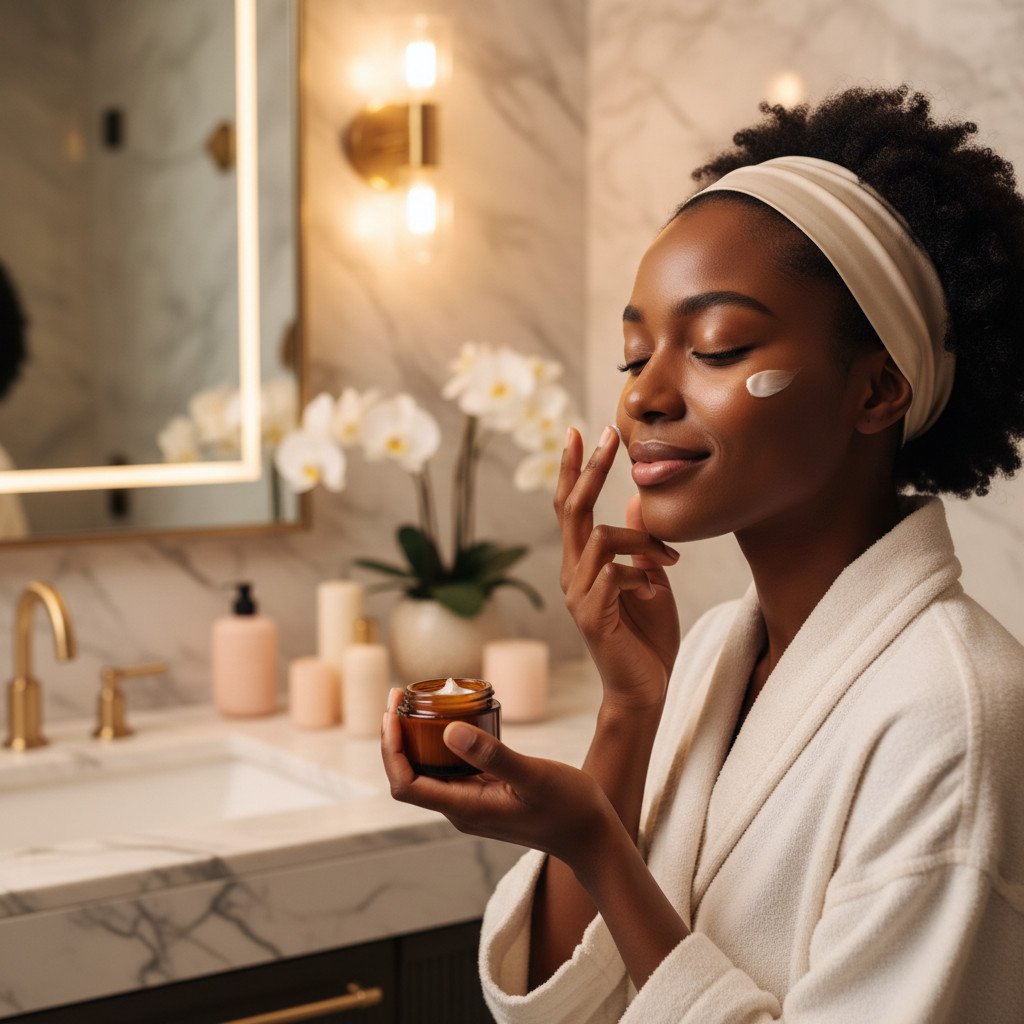
The most sustainable habits are those that don’t feel like an extra chore but rather a seamless part of an existing routine. Instead of viewing SPF as an “add-on,” think about how to integrate it into steps you already perform. Can your moisturizer have SPF? Can your foundation or tinted moisturizer include it? While these aren’t substitutes for dedicated SPF, they can be excellent starting points or supplementary layers for low-exposure days.
Ideally, SPF should become as automatic as brushing your teeth or applying your morning moisturizer. Place your sunscreen next to your toothbrush, or right after your serum. Make it the last step in your morning skincare routine before makeup, or the final step if you’re going bare-faced. The less friction there is to apply it, the more likely you are to do it consistently. This mental shift from “another step” to “the final protective layer” can significantly boost adherence.
Understanding Your “Why”
For Black women, the “why” behind SPF use often extends beyond just preventing sunburn. It’s about preserving the evenness of our complexions, preventing and fading hyperpigmentation, maintaining skin elasticity, and protecting against the often-overlooked risk of skin cancer on darker skin. Connecting your SPF habit to these deeply personal and significant skin goals provides a powerful intrinsic motivation.
When you understand that consistent SPF use is a critical tool in managing post-inflammatory hyperpigmentation (PIH) from acne, or that it helps maintain the youthful glow you cherish, it transforms from a chore into an act of self-love and proactive care. Regularly reminding yourself of these benefits can reinforce the habit, especially on days when motivation wanes. This deeper understanding moves SPF from a superficial application to a foundational element of your overall skin health strategy.
Positive Reinforcement and Self-Compassion
Building any new habit requires patience and self-compassion. Instead of berating yourself for missed days or imperfect applications, celebrate your successes. Acknowledge the effort you’re making to prioritize your skin health. When you do forget, simply pick up where you left off the next day without guilt. This non-shaming approach is crucial for long-term adherence.
Positive reinforcement can also come from seeing the tangible benefits over time – clearer skin, fewer new dark spots, or simply the peace of mind that comes with consistent protection. Share your journey with friends, or track your progress if that motivates you. The goal is to foster a supportive internal dialogue that encourages continuation, rather than a critical one that leads to abandonment.
How Comfort, Texture, and Routine Fit Affect Consistency
The journey to consistent SPF use on melanin-rich skin is often less about willpower and more about finding products and practices that genuinely feel good and integrate seamlessly into daily life. Discomfort, unsuitable textures, and a poor fit within an existing routine are among the biggest culprits for habit abandonment. Let’s delve into these critical factors.
The Paramount Importance of Comfort
Comfort is non-negotiable when it comes to daily skincare, especially for a product like sunscreen that you’re meant to apply generously and consistently. For Black women, “comfort” encompasses several dimensions:
- No White Cast: This is arguably the most significant comfort factor. Historically, mineral sunscreens left a noticeable white or purple film on darker skin, making them cosmetically unacceptable. Even some chemical sunscreens could leave a slightly ashy appearance. Modern formulations, particularly those with micronized zinc oxide or titanium dioxide, or well-formulated chemical filters, are designed to be truly invisible. If your sunscreen leaves any tint of white, it’s a barrier to consistent use.
- Feel on the Skin: Sunscreen should feel like a luxurious extension of your skincare, not a heavy, greasy, or sticky layer. A comfortable sunscreen should absorb well, feel lightweight, and ideally provide a pleasant finish—whether that’s dewy, natural, or matte—without pilling or feeling occlusive.
- Lack of Irritation: Some sunscreen filters, particularly certain chemical ones, can cause stinging, redness, or breakouts for sensitive skin. Finding a formula that doesn’t irritate your skin is crucial for daily use. This might involve patch testing or opting for mineral formulations if you have known sensitivities.
When a sunscreen feels good, looks good, and doesn’t cause adverse reactions, you’re far more likely to reach for it every single day. This foundational comfort transforms SPF from a chore into a pleasant, integral step in your routine.
Navigating Texture Preferences
Texture is a deeply personal preference, and the right texture can make all the difference in adherence. For melanin-rich skin, which can range from oily to dry, and often deals with concerns like hyperpigmentation, the ideal texture varies widely:
- Lightweight Fluids and Serums: These are often preferred by those with oily or combination skin, or anyone who dislikes the feeling of heavy products. They absorb quickly and feel almost imperceptible on the skin, making them excellent for layering under makeup.
- Creams and Lotions: A good middle ground, these offer more hydration and a comfortable feel for normal to dry skin types. They should still absorb without greasiness.
- Gels: Increasingly popular, gel sunscreens offer a refreshing, often cooling sensation, and tend to be very lightweight and non-comedogenic, suitable for many skin types, especially those prone to breakouts.
- Sticks: Ideal for targeted application, reapplication, or on-the-go use. They are usually thicker but can be very convenient for areas like the ears, neck, and around the eyes. Shop sunscreen stick dark skin routine on Amazon.
- Sprays: While convenient for body application, face sprays can be tricky to apply adequately and evenly. If using a spray on the face, it’s often recommended to spray into hands first and then apply.
Experimenting with different textures is key. What works for one person might not work for another. The goal is to find a texture that you genuinely enjoy applying and that complements your skin type and the other products in your routine.
Seamless Routine Fit
The best SPF is one that doesn’t disrupt your existing skincare or makeup routine. This means considering where it fits in the sequence of your products and how it interacts with them:
- Layering Compatibility: Your sunscreen should layer well over your serums and moisturizers without pilling, balling up, or feeling heavy. It should also create a smooth canvas for makeup, not interfere with its application or longevity. Some sunscreens are designed to act as a primer, offering a dual benefit.
- Integration into Existing Steps: Can you find a sunscreen that doubles as your morning moisturizer? Or one that offers a slight tint, replacing your need for foundation on lighter makeup days? While dedicated SPF is always recommended, finding multi-tasking products can simplify your routine and make adherence easier.
- Morning Ritual: Make SPF the final step of your morning skincare routine, right before makeup application. This establishes a clear, consistent sequence. Placing it prominently on your vanity or in your bathroom can serve as a visual cue.
- Reapplication Strategy: For reapplication, especially over makeup, consider products like SPF setting sprays, powders, or sticks. These are designed to be convenient and mess-free, making the often-dreaded reapplication step more feasible. Learn more about when and how to reapply SPF on dark skin.
A sunscreen that fits effortlessly into your daily rhythm is far more likely to become a sustainable habit. It reduces friction, saves time, and ensures that protecting your skin doesn’t feel like an extra burden, but rather a natural and essential part of your self-care ritual.
Small Ways to Make Sunscreen Easier to Remember and Use
Building new habits, especially one as crucial as daily SPF, often comes down to making small, consistent changes rather than grand, unsustainable overhauls. For melanin-rich skin, where the habit might be new or re-established, these subtle shifts can make all the difference in fostering long-term adherence.
Strategic Placement and Visual Cues
Out of sight, out of mind is a powerful deterrent to habit formation. Make your sunscreen impossible to ignore:
- Bathroom Vanity: Place your daily face sunscreen directly next to your toothbrush, your morning moisturizer, or your serum. If it’s the last product you see before you leave the bathroom, you’re more likely to remember it.
- Makeup Bag/Drawer: If you wear makeup, keep your face SPF with your foundation or primer. This ensures it’s part of that pre-makeup routine.
- Entryway/Door: For body sunscreen, especially if you’re heading out, consider a small basket by the door with your keys, sunglasses, and a travel-sized body SPF. This serves as a final reminder before you step out. Shop body sunscreen daily use dark skin on Amazon.
- Car Console/Purse: Keep a travel-sized SPF stick or small tube in your car or purse for easy reapplication throughout the day, especially for hands, neck, and décolletage.
These visual cues act as gentle nudges, integrating the habit into your environment rather than relying solely on your memory.

“Stacking” with Existing Habits
Habit stacking is a powerful technique where you pair a new habit with an existing, established one. This leverages the momentum of an already automatic behavior:
- After Moisturizer: “After I apply my morning moisturizer, I will apply my SPF.” This makes SPF the logical next step in your skincare sequence.
- Before Makeup: “After I finish my skincare, I will apply my SPF before starting my makeup.” This positions SPF as a primer for your makeup.
- Before Getting Dressed: “After I shower and moisturize my body, I will apply body SPF before getting dressed.” This ensures your exposed skin is protected.
- Before Leaving the House: “After I grab my keys, I will apply a quick swipe of SPF stick to my hands and neck.”
By linking SPF to something you already do without thinking, you create a natural trigger for the new behavior, significantly increasing the likelihood of consistency.
Choosing User-Friendly Formats
The format of your sunscreen can heavily influence how easy it is to use and remember:
- Pump Bottles: These are often more hygienic and dispense a consistent amount, making it easy to get the right dosage without thinking.
- Sticks: Excellent for targeted areas like the lips, ears, neck, and for mess-free reapplication. They’re also great for kids or for quick touch-ups.
- Tinted Formulas: If you wear minimal makeup, a tinted SPF can combine two steps into one, offering light coverage and sun protection simultaneously. This can be a great way to simplify your morning. Shop daily face sunscreen dark skin on Amazon.
- SPF-Infused Products (with caution): While not a substitute for dedicated SPF, products like SPF-infused moisturizers or foundations can offer a baseline of protection on low-exposure days or act as an additional layer. Just be mindful that you likely won’t apply enough to get the stated SPF, so a dedicated sunscreen underneath is always best.
The easier a product is to use, the less mental effort is required, and the more likely you are to use it consistently.
Setting Reminders (Digital and Physical)
Don’t underestimate the power of a simple reminder, especially when you’re first building the habit or trying to remember reapplication:
- Phone Alarms: Set a daily alarm on your phone for your morning SPF application. You can even label it “SPF Time!”
- Calendar Alerts: If you have a particularly busy day with outdoor activities planned, schedule a calendar alert for reapplication.
- Sticky Notes: A simple sticky note on your mirror or computer screen can be a surprisingly effective reminder.
These external prompts help bridge the gap until the habit becomes ingrained and automatic. They are particularly useful for reapplication throughout the day, which can be harder to remember than the initial morning application. For more on reapplication, see our guide on face sunscreen under makeup on melanin-rich skin.
The “Two-Finger Rule” and Other Application Hacks
Ensuring you apply enough sunscreen is just as important as remembering to apply it. The “two-finger rule” is a simple visual guide: squeeze a line of sunscreen onto your index and middle fingers. This is generally considered the right amount for your face and neck. For body application, use about a shot glass full for exposed areas.
Other hacks include:
- Dotting Method: Dot sunscreen onto different areas of your face (forehead, cheeks, nose, chin) before blending. This ensures even distribution.
- Mirror Check: After applying, quickly check in the mirror to ensure no areas were missed and there’s no white cast.
- Pre-Portioning: If you’re really struggling with consistency, consider pre-portioning your sunscreen into small containers for the week, or using products with measured pumps.
These small, practical tips reduce the mental load and make the act of applying sunscreen less daunting and more effective, paving the way for a truly sustainable habit.
How to Recover When the Habit is Inconsistent Without Starting Over Emotionally
Building any new habit is rarely a linear process. There will be days, weeks, or even months when your SPF routine falters. For Black women, who are often navigating a new relationship with sunscreen after years of different messaging, these inconsistencies can easily lead to feelings of guilt, frustration, or the temptation to abandon the habit altogether. The key to sustainability lies not in flawless execution, but in how you recover from these lapses without emotional burnout or the feeling of “starting over.”
Acknowledge and Validate, Don’t Shame
The first and most crucial step in recovery is to practice self-compassion. When you miss a day or a reapplication, acknowledge it without judgment. Instead of thinking, “I’m so bad at this,” or “I’ve ruined all my progress,” try a more gentle approach: “I missed my SPF today, and that’s okay. Life happens.”
Remember the historical context: you’re likely unlearning years of cultural messaging that minimized the importance of SPF for dark skin. This isn’t just about forgetting a step; it’s about re-patterning a deep-seated belief system. Be patient with yourself. Shaming yourself only creates negative associations with the habit, making it harder to pick up again. Validate your effort, even if it’s imperfect.
Identify the “Why” Without Dwelling
Once you’ve acknowledged the lapse, take a moment to gently reflect on why it happened, but don’t dwell on it. Was it a particularly busy morning? Did you run out of your favorite sunscreen? Was the product uncomfortable? Were you simply tired or stressed?
Understanding the trigger for inconsistency can help you adjust your strategy for the future. For example, if you ran out of product, you know to reorder sooner. If you were too rushed, perhaps you need a quicker application method or a multi-tasking product for those days. This reflection is about problem-solving, not self-criticism.
The Power of “Just One Day” and “Next Time”
The beauty of habit formation is that every single day is a new opportunity. If you missed today, commit to applying it tomorrow. Don’t let one missed day snowball into a week or a month of abandonment. The “just one day” mentality means focusing on the immediate next opportunity to get back on track.
Similarly, adopt a “next time” mindset for reapplication. If you forgot to reapply at lunch, don’t despair. Make a mental note to try and remember next time you’re out for an extended period. This forward-looking perspective prevents you from getting bogged down by past failures and keeps your motivation focused on future success.

Simplify to Re-engage
When consistency falters, it’s often a sign that the routine might be too complex or demanding. This is an excellent opportunity to simplify. If your current SPF routine feels like too much, strip it back to the absolute basics:
- Use the Easiest Product: Grab the most comfortable, sheer, and easy-to-apply sunscreen you own, even if it’s not your absolute favorite. The goal is to get any SPF on.
- Focus on Face and Neck Only: If body SPF feels overwhelming, just commit to your face and neck for a few days to rebuild momentum.
- Combine Steps: For a brief period, rely on an SPF-infused moisturizer or tinted SPF to reduce the number of products, even if it’s not ideal for full protection. The aim is to get back into the habit of applying something.
Once you’ve re-established a consistent baseline, you can gradually reintroduce more comprehensive steps or products.
Reframe “Failure” as “Data”
Instead of viewing a lapse as a failure, reframe it as valuable data. Every time you miss an application, you’re learning something about your triggers, your environment, or your product preferences. This data can inform adjustments to your strategy, making your habit more robust in the long run.
For example, if you consistently forget SPF on weekends, perhaps you need a different reminder system or a more casual product for those days. If you find yourself skipping because your current sunscreen pills under makeup, it’s data telling you to find a different formulation. This objective, analytical approach removes the emotional weight from inconsistencies.
Celebrate Small Wins
When you do get back on track, even for a single day, celebrate it! Acknowledge your resilience and commitment. Positive reinforcement is a powerful motivator. This could be a mental pat on the back, a small treat, or simply the satisfaction of knowing you’re taking care of your skin. These small celebrations build a positive feedback loop, making the habit more enjoyable and sustainable.
Remember, building sustainable SPF habits on melanin-rich skin is a marathon, not a sprint. It’s about showing up for yourself most days, learning from your experiences, and approaching your skin health with grace and understanding. Every step forward, no matter how small, is progress.
Frequently Asked Questions
What SPF level is truly necessary for melanin-rich skin?
For daily, consistent protection, an SPF of 30 or higher is generally recommended for melanin-rich skin. While darker skin has some natural protection, an SPF 30 blocks about 97% of UVB rays, significantly reducing the risk of hyperpigmentation, premature aging, and skin cancer. For extended outdoor activities or high sun exposure, an SPF 50+ is advisable.
How much sunscreen should I apply to my face and neck?
A common guideline is the “two-finger rule”: squeeze a line of sunscreen onto your index and middle fingers. This amount typically provides sufficient coverage for your face and neck to achieve the stated SPF on the label. Ensure you blend it evenly, and don’t forget areas like the ears and hairline.
Do I need to wear sunscreen indoors or on cloudy days?
Yes, you absolutely should wear sunscreen indoors if you are near windows, as UVA rays (which contribute to aging and hyperpigmentation) can penetrate glass. Similarly, up to 80% of UV rays can penetrate clouds, meaning your skin is still vulnerable on overcast days. Consistent protection is key regardless of visible sunshine. Learn more about winter and cloudy day SPF on dark skin.
How often should I reapply sunscreen, especially over makeup?
Sunscreen should generally be reapplied every two hours, or immediately after swimming, sweating heavily, or towel drying. If wearing makeup, consider using an SPF setting spray, an SPF powder, or a sunscreen stick to reapply without disturbing your look. These methods offer convenient ways to boost protection throughout the day. For body application, especially during intense activities, refer to our guide on body SPF reapplication for beach, sports, and outdoor work.
Can I rely solely on makeup with SPF for sun protection?
While makeup with SPF offers some protection, it’s generally not enough on its own. To achieve the SPF listed on the label, you would need to apply a much thicker layer than most people typically use. It’s best to consider SPF in makeup as a bonus layer of protection, always applying a dedicated broad-spectrum sunscreen underneath.
What’s the difference between mineral and chemical sunscreens for dark skin?
Mineral sunscreens (zinc oxide, titanium dioxide) sit on top of the skin and physically block UV rays. Modern formulations are often micronized to reduce white cast. Chemical sunscreens (oxybenzone, avobenzone, octinoxate, etc.) absorb UV rays and convert them into heat. Both can be effective for dark skin, but the best choice depends on your preference for texture, finish, and potential sensitivities.
How can I find a sunscreen that won’t leave a white cast on my dark skin?
Look for sunscreens specifically marketed as “sheer,” “clear,” “invisible,” or “no white cast” for dark skin. Many brands now offer tinted mineral sunscreens or chemical sunscreens that are formulated to be transparent on deeper skin tones. Reading reviews from other Black women and checking swatches online can also be very helpful in finding suitable options.
Where to Go Next
Your journey to radiant, protected skin is a continuous one, and building sustainable SPF habits is a cornerstone of that commitment. We hope this guide has provided you with the encouragement, practical strategies, and grace needed to integrate consistent sun protection into your daily life. Remember, this isn’t about perfection, but about progress, understanding, and self-love.
As you continue to refine your SPF routine, explore other facets of sun protection and skin health tailored for melanin-rich skin. Dive deeper into understanding the science behind sun protection and debunking common myths by visiting our comprehensive resource on SPF education and myth-busting about SPF and dark skin. For a broader perspective on nurturing your unique beauty, our skincare for Black women section offers a wealth of knowledge and curated advice.
For more specific guidance on integrating SPF into your daily life, especially concerning reapplication, wearing it under makeup, and protecting your skin in various conditions, we invite you to explore our cluster on SPF Usage Behavior: Reapplication, Under Makeup, in Winter. This comprehensive section covers all the nuances of making SPF a seamless and effective part of your routine. Your beautiful, melanin-rich skin deserves the best care, and consistent SPF is a powerful act of self-preservation and love. Keep learning, keep protecting, and keep glowing.
INTERNAL LINKING OPPORTUNITIES
- https://blackbeautybasics.com/sunscreen-for-dark-skin/spf-usage-behavior-reapplication-under-makeup-in-winter/
SPF Usage Behavior: Reapplication, Under Makeup, in Winter
This is the cluster hub, and the article is about building sustainable habits within that cluster. Linking to it provides a broader context for the reader. - https://blackbeautybasics.com/sunscreen-for-dark-skin/
sunscreen for dark skin
This is the parent pillar for all sunscreen-related content. Linking back provides a foundational resource for readers interested in the overarching topic. - https://blackbeautybasics.com/sunscreen-for-dark-skin/spf-usage-behavior-reapplication-under-makeup-in-winter/when-and-how-to-reapply-spf-on-dark-skin/
when and how to reapply SPF on dark skin
The article discusses reapplication as a challenge and offers solutions. This sibling article provides detailed guidance on that specific topic. - https://blackbeautybasics.com/sunscreen-for-dark-skin/spf-usage-behavior-reapplication-under-makeup-in-winter/face-sunscreen-under-makeup-on-melanin-rich-skin/
face sunscreen under makeup on melanin-rich skin
The article touches on integrating SPF with makeup and reapplication over makeup. This sibling article offers in-depth advice on that specific use case. - https://blackbeautybasics.com/sunscreen-for-dark-skin/spf-usage-behavior-reapplication-under-makeup-in-winter/winter-and-cloudy-day-spf-on-dark-skin/
winter and cloudy day SPF on dark skin
The FAQ section addresses the need for SPF on cloudy days, making this sibling article a relevant resource for further reading. - https://blackbeautybasics.com/sunscreen-for-dark-skin/spf-usage-behavior-reapplication-under-makeup-in-winter/body-spf-reapplication-for-beach-sports-and-outdoor-work/
body SPF reapplication for beach, sports, and outdoor work
The FAQ section mentions body SPF reapplication during intense activities, and this sibling article provides specific guidance. - https://blackbeautybasics.com/sunscreen-for-dark-skin/education-and-myth-busting-about-spf-and-dark-skin/
SPF education and myth-busting about SPF and dark skin
The article discusses unlearning myths about melanin and SPF. This cross-pillar link offers a deeper dive into the educational aspect. - https://blackbeautybasics.com/skincare-for-black-women/
skincare for Black women
This is a general cross-cluster link to the broader skincare pillar, providing a holistic resource for the target audience.
Related next steps
Related posts:
 Helping Teens With Melanin-Rich Skin Build SPF Habits
 Sun Protection for Babies and Young Kids With Dark Skin: Nurturing Healthy Habits from the Start
 Body SPF Reapplication for Beach, Sports, and Outdoor Work: Real-World Protection for Melanin-Rich Skin
 Stylish and Comfortable: Women’s Pointed Toe Ankle Boots with Chunky Block Heel
 Prep for Locs and Retwists: Cultivating a Foundation for Sustainable Loc Journeys
 Designing a Village-Based Self-Care Plan: Cultivating Community for Sustainable Well-being