
Finding Non-Ashy Sunscreen Textures for Melanin-Rich Skin
For far too long, the quest for effective sun protection for melanin-rich skin has been overshadowed by a single, persistent frustration: the dreaded white cast. We’ve all been there – diligently applying a sunscreen, only to find our beautiful brown skin transformed into a ghostly, ashy, or dull version of itself. It’s a disheartening experience that often leads to skipping SPF altogether, despite knowing its critical importance for skin health and vitality. The beauty industry has made strides, with many brands now claiming “no white cast” formulas, and we’ve learned to scrutinize ingredients, often favoring chemical filters over mineral ones, or seeking out tinted options.
Yet, even with these advancements and our growing knowledge, the problem persists for many. You might pick up a sunscreen that promises to be invisible, apply it, and initially, it seems to blend in. But then, as the day progresses, or under different lighting conditions – perhaps stepping outside into natural light, or catching a glimpse in a mirror under harsh fluorescent bulbs – a subtle, yet undeniable, dullness or grey film appears. Your skin looks muted, disconnected, or simply not as vibrant as it should. This isn’t always about a stark white residue; sometimes, it’s a more insidious issue of texture and how a product truly integrates with the unique luminescence of melanin-rich skin.
This article delves beyond the simple “white cast” debate to explore a more nuanced aspect of sunscreen efficacy for us: texture. We’ll uncover how the physical properties of a sunscreen – its spreadability, dry-down, and ultimate finish – play a pivotal role in whether it truly disappears or leaves behind an undesirable, ashy appearance. It’s about understanding that an “invisible” sunscreen isn’t just about the absence of titanium dioxide or zinc oxide; it’s about a formulation that respects and enhances the natural beauty of melanin-rich skin, allowing its inherent glow to shine through without compromise. Join us as we navigate the world of sunscreen textures, empowering you to make informed choices that truly serve your skin.
Why Sunscreen Can Still Look Ashy Even When It Seems to Blend at First
The initial application of a sunscreen can often be deceptive. Many formulas, especially those marketed as “sheer” or “invisible,” might appear to blend seamlessly into melanin-rich skin upon first contact. You rub it in, and for a moment, you breathe a sigh of relief, thinking you’ve finally found “the one.” However, the true test of a sunscreen’s compatibility with darker skin tones often comes hours later, or under different environmental conditions. This delayed or subtle ashy appearance can be incredibly frustrating, leading many to question if they’re doing something wrong or if truly invisible sun protection is an unattainable myth.
The phenomenon of sunscreen appearing to blend initially but later revealing an ashy or dull cast is multifaceted. It’s not always a blatant white residue, but rather a subtle alteration of your skin’s natural tone and luminosity. One primary culprit is the interaction of certain ingredients with the skin’s surface over time. Even chemical sunscreens, which are generally less prone to white cast than their mineral counterparts, can sometimes contain emollients or film-formers that, as they dry down, create a slight haze or dullness. This can be exacerbated by the skin’s natural oils, which can interact with the sunscreen film and alter its optical properties, leading to a less vibrant appearance.
Furthermore, the way light interacts with the dried sunscreen film plays a significant role. Melanin-rich skin naturally possesses a beautiful depth and warmth. When a sunscreen leaves even a microscopic film that scatters light differently than natural skin, it can create a desaturated, greyish, or chalky effect. This is particularly noticeable in bright sunlight or under artificial lighting that highlights texture and surface irregularities. What might look acceptable in dim indoor lighting can become a glaring issue outdoors, where the full spectrum of light reveals the subtle disconnect between the sunscreen and your skin’s true tone. It’s a testament to the fact that “blending” isn’t just about color matching, but about achieving optical harmony with your complexion.
The Deceptive “Disappearance” and Its Aftermath
Many sunscreens give the illusion of disappearing because their initial application is wet and reflective. When a product is first applied, the liquid medium allows for easy spread and can temporarily mask any pigment issues. However, as the volatile components evaporate and the sunscreen film sets, the true nature of its texture and interaction with your skin becomes apparent. This dry-down process is critical. A sunscreen that dries down to a powdery, matte finish might initially seem appealing, especially for those with oily skin, but if that matte finish is achieved through ingredients that create a slight opacity or light-scattering effect, it can translate into a dull or ashy look on deeper skin tones. The skin loses its natural luminosity, appearing flat and lifeless, rather than protected and radiant.
Another factor is the cumulative effect of layering. If you apply multiple skincare products before your sunscreen – serums, moisturizers, oils – the sunscreen needs to interact harmoniously with all of them. A sunscreen that might perform well on bare skin could pill, streak, or settle unevenly when applied over other products, leading to an inconsistent film that catches light poorly and emphasizes an ashy tone. This is why the entire routine matters, not just the sunscreen in isolation. The way a sunscreen sits on top of your existing skincare, and how it dries down in conjunction with those layers, can significantly impact its final appearance on melanin-rich skin. This subtle shift from blended to dull is a common frustration, highlighting the need for sunscreens that truly integrate with, rather than merely sit upon, our complexions.
The Texture Traits That Usually Wear Better on Melanin-Rich Skin
When seeking sun protection that truly complements melanin-rich skin, focusing on texture can be a game-changer. Beyond just avoiding a white cast, the ideal sunscreen should enhance your skin’s natural radiance, not diminish it. Certain texture traits tend to perform exceptionally well, ensuring that your skin looks vibrant, healthy, and protected without any unwelcome dullness or ashiness. Understanding these characteristics can guide your selection process, moving you closer to that elusive “perfect” SPF.
Generally, sunscreens with a lightweight, fluid, or serum-like consistency are often preferred. These textures tend to spread effortlessly across the skin, allowing for even application without excessive rubbing or tugging. The ease of spread reduces the likelihood of product accumulation in certain areas, which can contribute to an uneven, ashy finish. Such formulations often absorb quickly, minimizing the feeling of a heavy layer on the skin. This quick absorption is crucial because it allows the product to integrate more seamlessly, rather than sitting on the surface and creating a visible film. Think of textures that feel like a second skin – hydrating, breathable, and virtually undetectable once applied. These fluid formulations often contain a higher water content or lighter emollients, which contribute to their sheer feel and less opaque appearance.
Another highly desirable trait is a non-greasy, non-sticky feel that still provides a healthy, natural glow. While a matte finish might seem appealing to some, an overly matte or powdery dry-down can sometimes strip melanin-rich skin of its natural luminosity, making it appear flat or even grey. Instead, look for sunscreens that dry down to a satin, natural, or slightly dewy finish. This allows the skin’s inherent glow to peek through, giving a fresh, hydrated look. Products that offer a subtle luminosity without being overtly shiny tend to be the most flattering. These textures often employ finely milled ingredients or specific film-formers that create a smooth, even surface that reflects light beautifully, enhancing the skin’s natural warmth and depth rather than obscuring it. The goal is to achieve protection that looks and feels like a natural extension of your skin, not a separate layer.
Embracing Slip and Avoiding Drag
The concept of “slip” in a sunscreen refers to how easily it glides across the skin. A good slip means the product spreads smoothly and evenly with minimal effort, allowing for a thin, uniform layer of protection. This is particularly important for melanin-rich skin, as uneven application can lead to patchy protection and an inconsistent finish that highlights any ashy tendencies. Sunscreens with good slip often contain ingredients like silicones (e.g., dimethicone) or lightweight esters that create a silky, frictionless feel. They allow the product to be distributed thoroughly without leaving behind streaks or concentrated areas of white pigment, which are common culprits for an ashy appearance.
Conversely, “drag” occurs when a sunscreen feels thick, tacky, or resistant to spreading. Products with too much drag require more rubbing to blend, which can not only be irritating to the skin but also lead to an uneven application. This vigorous rubbing can also disturb other skincare layers, causing pilling and further compromising the smooth finish. Thick, pasty sunscreens, often mineral-based with high concentrations of zinc oxide or titanium dioxide, are notorious for drag. While some advancements have been made in micronizing these mineral filters, the base texture still plays a huge role. When selecting a sunscreen, pay attention to the initial feel – if it feels like you’re fighting the product to spread it, it’s likely to cause issues with blending and leave an undesirable finish on deeper skin tones. Prioritizing slip ensures a more effortless and aesthetically pleasing application.
The Role of Thickness and Residue
The perceived “thickness” of a sunscreen is another critical texture trait. While some might equate thickness with higher protection, for melanin-rich skin, a thick, heavy formula often translates to a greater likelihood of an ashy or suffocating feel. Thicker sunscreens tend to sit more heavily on the skin’s surface, creating a more opaque film that can obscure the natural skin tone. They also take longer to absorb, increasing the chances of the product settling into fine lines or pores and creating an uneven texture.
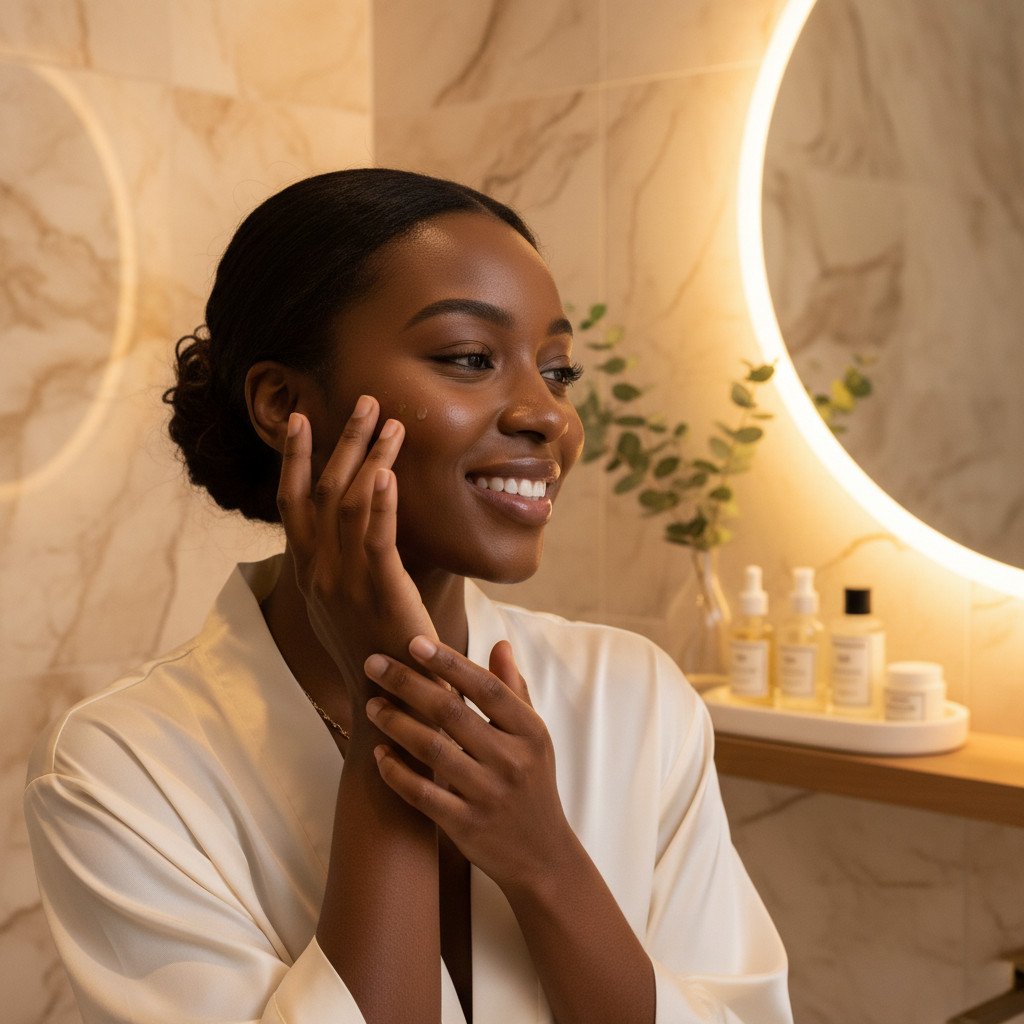
Closely related to thickness is the issue of “residue.” This refers to any perceptible film, stickiness, or greasiness left on the skin after the sunscreen has dried down. Even if a sunscreen doesn’t leave a visible white cast, a sticky or greasy residue can still be uncomfortable, interfere with makeup application, and attract dust or environmental pollutants. More importantly, a residue can subtly alter the way light reflects off the skin, leading to a duller, less vibrant appearance. For melanin-rich skin, which thrives on a clear, luminous canvas, any residue that detracts from this natural glow is undesirable. Look for sunscreens that promise a “dry touch” or “velvet finish” without being overly matte, indicating a formula designed to absorb well and leave minimal tactile residue. The ideal is a sunscreen that you can truly forget you’re wearing, both in feel and in appearance.
How Spread, Dry-Down, and Finish Change the Final Look
The journey of a sunscreen from the bottle to its final appearance on your skin is a complex dance of formulation and interaction. It’s not just about the ingredients, but how those ingredients behave during application and throughout the day. Three critical stages—spread, dry-down, and finish—collectively determine whether a sunscreen truly integrates with melanin-rich skin or leaves it looking dull, grey, or chalky. Understanding these stages empowers you to predict a product’s performance and make more informed choices.
Spreadability: The First Impression. The initial spread of a sunscreen is your first clue to its potential performance. A highly spreadable formula glides effortlessly across the skin, allowing for a thin, even layer without much effort. This is crucial for melanin-rich skin because it minimizes the chance of product accumulating in certain areas, which can lead to visible streaks or patches of ashiness. Sunscreens with good slip (as discussed earlier) ensure uniform distribution, which is foundational to an invisible finish. If a sunscreen feels thick, tacky, or requires significant rubbing to blend, it’s a red flag. Excessive rubbing can not only irritate the skin but also disrupt the evenness of the product, making it harder for it to truly disappear. A sunscreen that spreads like a dream sets the stage for a flawless, non-ashy application.
Dry-Down: The Transformation. The dry-down phase is where the magic (or the misery) truly happens. This is the period after application when the volatile components of the sunscreen evaporate, and the active ingredients and film-formers settle onto the skin. For melanin-rich skin, a successful dry-down means the sunscreen becomes virtually undetectable, both visually and tactilely. If a sunscreen dries down too slowly, it can feel greasy or sticky, attracting dust and potentially interfering with makeup. If it dries down too quickly, it might not have enough time to be fully blended, leading to a patchy or streaky appearance. The ideal dry-down is smooth and gradual, allowing the product to fully integrate without leaving a noticeable film or residue. Many sunscreens that initially appear clear can develop a subtle haze or dullness during dry-down if their film-formers or pigments don’t fully disappear into the skin’s natural contours and reflect light harmoniously.
Finish: The Lasting Impression. The final finish is what you see and feel hours after application. This is where the difference between a truly invisible sunscreen and one that leaves a subtle ashy cast becomes most apparent. For melanin-rich skin, a natural, satin, or slightly dewy finish is often most flattering. An overly matte finish, while sometimes desired for oil control, can strip the skin of its natural luminosity, making it appear flat, grey, or even chalky. The goal is a finish that mimics healthy, bare skin – radiant, hydrated, and vibrant. Sunscreens that achieve this often contain humectants and emollients that keep the skin feeling supple, preventing the tight, dry sensation that can accompany some formulations. The finish should enhance your natural complexion, allowing its inherent warmth and depth to shine through, rather than creating an opaque mask. This ultimate finish is the culmination of good spreadability and a seamless dry-down, ensuring your skin looks its best while being fully protected.
The interplay of these three elements is critical. A sunscreen might spread beautifully, but if its dry-down leaves a sticky residue or its finish is too matte, it won’t be ideal for melanin-rich skin. Conversely, a product with a great finish might be impossible to apply evenly if its spreadability is poor. It’s about finding a harmonious balance across all stages, ensuring that the sunscreen not only protects but also truly respects and enhances the natural beauty of your complexion. This holistic view of texture is essential for navigating the world of sunscreen textures and finishes.
The Nuance of “Clear” vs. Truly Invisible
The term “clear” in sunscreen marketing can be misleading, especially for melanin-rich skin. A sunscreen might appear clear in the bottle, or even clear upon initial application, but this doesn’t automatically guarantee an invisible finish. Many chemical sunscreens are inherently clear liquids, but their base formulation – the combination of solvents, emollients, and film-formers – can still leave a subtle film that affects how light interacts with the skin. This film, even if not overtly white, can create a slight haze or dullness that desaturates the natural vibrancy of darker skin tones. It’s the difference between a product that is transparent in its raw form and one that truly integrates with the skin’s optical properties.
Truly invisible sunscreens for melanin-rich skin go beyond mere transparency. They are formulated to mimic the skin’s natural texture and light reflection, ensuring that no perceptible layer sits on the surface. This often involves very lightweight, volatile silicones or esters that evaporate quickly, leaving behind only the active filters and beneficial skincare ingredients. The goal is for the skin to look like skin, not like it has a product on it. This is where the dry-down and finish become paramount. A sunscreen might be clear but dry down to a slightly tacky or powdery finish that subtly mutes the skin’s glow. For a truly invisible effect, the product must not only lack visible pigment but also integrate seamlessly, allowing the skin’s natural depth and warmth to shine through unimpeded. This is a key distinction when choosing between tinted vs. clear SPF on dark skin.
The Impact of Lighting on Perceived Ashiness
One of the most frustrating aspects of finding a non-ashy sunscreen is its chameleon-like behavior under different lighting conditions. A sunscreen that looks perfectly fine in the soft, diffused light of your bathroom mirror might reveal its true ashy nature when you step outside into bright sunlight. Similarly, harsh office fluorescent lights or the unforgiving flash of a camera can expose a subtle dullness or grey cast that was previously imperceptible. This isn’t just an illusion; it’s a real phenomenon rooted in how light interacts with the sunscreen film on your skin.
Different light sources emit different spectrums of light. Natural sunlight, especially direct sunlight, is broad-spectrum and intense, making any surface irregularities or light-scattering films much more apparent. The subtle opacity of a sunscreen that might be masked in dim, warm indoor lighting becomes glaringly obvious outdoors. Similarly, artificial lights, particularly those with a cooler color temperature, can emphasize grey undertones. Camera flashes, designed to provide a burst of intense, direct light, are notorious for highlighting any reflective or opaque particles on the skin, often resulting in a ghostly appearance in photographs, even if the sunscreen looked fine in person. This variability underscores the importance of testing sunscreens in various lighting conditions before committing to them, especially if you spend a lot of time outdoors or in environments with diverse lighting. A truly non-ashy sunscreen will maintain its invisible finish regardless of the light source, allowing your melanin-rich skin to glow authentically.
What to Notice Before Calling a Sunscreen “Invisible”
The claim of “invisible” sunscreen has become ubiquitous, but for melanin-rich skin, this term often requires a more rigorous definition. It’s not enough for a product to simply lack a stark white cast; true invisibility means the sunscreen integrates so seamlessly that it becomes one with your skin, enhancing its natural beauty rather than masking it. To truly assess if a sunscreen lives up to its “invisible” promise, you need to go beyond the initial application and observe several key factors over time and under various conditions.
First, pay close attention to the initial spread and absorption. Does the sunscreen glide on effortlessly, or do you have to work it into your skin? A product that requires excessive rubbing is more likely to leave an uneven finish or subtle streaks. Observe how quickly it absorbs. If it sits on the surface for an extended period, it might indicate a heavier formulation that could eventually lead to a dull or greasy appearance. A truly invisible sunscreen will feel lightweight and almost disappear into the skin within minutes, leaving no tacky or heavy sensation. This quick integration is vital for maintaining the skin’s natural texture and preventing any surface film that could scatter light poorly.
Next, scrutinize the dry-down and immediate finish. After the sunscreen has had a few minutes to set, examine your skin in natural daylight. Does it still look vibrant and luminous, or has it taken on a subtle dullness or greyish tint? Even a slight desaturation of your natural skin tone is a sign that the sunscreen isn’t truly invisible. Look for a finish that is natural, satin, or slightly dewy – anything overly matte or powdery can flatten the complexion. A truly invisible sunscreen will allow your skin’s inherent glow to shine through, making it look like you’ve applied nothing at all, or perhaps just a very lightweight moisturizer. It should enhance, not diminish, your skin’s natural radiance.

Finally, and perhaps most importantly, assess the long-term wear and performance under different lighting. This is where many sunscreens fail the “invisible” test. Wear the sunscreen for several hours, engaging in your normal daily activities. Check your skin periodically in various lighting conditions: bright sunlight, indirect natural light, indoor artificial light, and even under a camera flash if you’re prone to photos. Does the sunscreen maintain its seamless finish, or does it start to look chalky, patchy, or oily as the day progresses? Does it pill or separate, especially if you’ve applied other skincare or makeup over it? A truly invisible sunscreen will remain undetectable throughout the day, adapting to your skin’s natural changes without compromising its appearance. It should never make your skin look disconnected or less vibrant than its natural state. This thorough observation process is essential for discerning genuine invisibility from mere transparency.
The “Chalk Test” and Optical Harmony
The “chalk test” is a simple yet effective way to gauge a sunscreen’s potential for ashiness. While not a scientific term, it refers to the visual effect of a sunscreen making your skin look like it’s been dusted with a fine layer of chalk. This isn’t always a stark white, but rather a subtle desaturation, a flattening of your skin’s natural depth and warmth. To perform your own chalk test, apply a small amount of sunscreen to a section of your face or neck, blend it in, and then observe it under various lighting conditions, especially bright natural light. If your skin looks even slightly paler, duller, or less vibrant than the surrounding unprotected skin, it’s likely failing the chalk test.
Beyond the chalk test, consider the concept of “optical harmony.” This refers to how well the sunscreen integrates with your skin’s natural light-reflecting properties. Melanin-rich skin has a unique way of absorbing and reflecting light, contributing to its rich, multi-dimensional appearance. A sunscreen that achieves optical harmony doesn’t just sit on top; it allows your natural skin tone to shine through, enhancing its inherent glow. This means the formulation’s refractive index (how much it bends light) is close to that of your skin, and it doesn’t contain particles that scatter light in a way that creates a white or grey haze. Sunscreens that truly achieve optical harmony are the ones that are genuinely invisible, making your skin look like your skin, only better protected. This is particularly relevant when considering matte, natural, and dewy finishes on melanin-rich skin.
Compatibility with Other Skincare and Makeup
A sunscreen’s invisibility isn’t just about how it looks on bare skin; it’s also about how it performs with the rest of your beauty routine. Many of us layer multiple products – serums, moisturizers, primers, foundation, concealer – and the sunscreen needs to play well with all of them. A sunscreen that pills, streaks, or causes your makeup to separate is far from invisible, regardless of its initial appearance. This is a common frustration, as a perfectly good foundation can be ruined by an incompatible SPF layer underneath.
To assess compatibility, apply your full morning skincare routine, including any serums and moisturizers, and then apply the sunscreen. Wait a few minutes for it to set, then apply your makeup as usual. Observe if the sunscreen causes any pilling (small balls of product forming), streaking, or if it alters the texture or longevity of your foundation. A truly invisible and compatible sunscreen will act as a smooth base for makeup, allowing it to apply evenly and wear beautifully throughout the day. It should not create a barrier that prevents your makeup from adhering properly or cause it to look patchy. This is a critical consideration for anyone who wears makeup regularly, as the sunscreen must integrate seamlessly into the entire routine to be truly effective and aesthetically pleasing. For more on this, consider how sunscreen finish works with makeup on dark skin.
How to Shop for Texture, Not Just Claims on the Label
Navigating the crowded market of sunscreens can feel like a minefield, especially when every bottle promises “no white cast” or “invisible finish.” For melanin-rich skin, these claims often fall short, leading to wasted money and continued frustration. To truly find a sunscreen that works, you need to become a savvy shopper, looking beyond the marketing hype and focusing on the tangible aspects of texture, feel, and real-world performance. This means developing a critical eye and understanding what specific characteristics to seek out, and what to avoid.
1. Prioritize Lightweight, Fluid Formulations: When you pick up a bottle, pay attention to the consistency. Look for sunscreens described as lotions, serums, fluids, or gels. These tend to be less viscous and more spreadable than creams or pastes. If possible, dispense a small amount onto your hand in the store (if testers are available) or immediately upon purchase. Observe how easily it spreads. Does it glide across your skin with minimal effort, or does it feel thick and resistant? A good slip is paramount. Avoid anything that feels heavy, gloopy, or requires significant rubbing to blend, as these are often indicators of a formula that will sit on top of your skin and potentially leave an ashy finish. Think of textures that feel almost watery or milky, rather than dense or rich. You can often find lightweight options by searching for lightweight sunscreen melanin-rich skin on Amazon.
2. Assess the Dry-Down and Finish: This is where the true test lies. After applying a small amount, wait a few minutes for the product to dry down. Does it absorb completely, or does it leave a tacky, greasy, or powdery residue? For melanin-rich skin, a natural, satin, or slightly dewy finish is generally most flattering, as it allows your skin’s natural luminosity to shine through. An overly matte or powdery finish can often make darker skin tones look flat and dull. Pay attention to how your skin feels – it should feel hydrated and comfortable, not tight or suffocated. If you can, try to observe the dry-down in different lighting conditions, especially natural light, to catch any subtle dullness or grey undertones that might not be visible indoors. The goal is for the sunscreen to become imperceptible, both visually and tactilely, once it has set.
3. Look for Specific Ingredient Cues (But Don’t Rely Solely on Them): While texture is key, ingredients can offer clues. For mineral sunscreens, look for “non-nano” or “micronized” zinc oxide and titanium dioxide, as these are formulated to be less visible. However, even micronized minerals can leave a cast if the base formula isn’t well-designed for darker skin. For chemical sunscreens, the active filters themselves are usually clear, but the overall formulation still dictates the texture. Ingredients like silicones (e.g., dimethicone, cyclopentasiloxane) can contribute to a silky, non-greasy feel and good spreadability. Humectants like hyaluronic acid or glycerin can help maintain a hydrated, non-ashy finish. While ingredient lists are helpful, always prioritize how the product feels and looks on your skin, as the synergy of ingredients is more important than any single component.
4. Patch Test Extensively and Observe in Varied Light: Never commit to a full bottle without a thorough patch test. Apply a small amount to a discreet area of your face or neck – perhaps along your jawline or behind your ear – and wear it for a full day. Observe it throughout the day in various lighting conditions: indoors, outdoors in direct sunlight, and even under flash photography if you plan on taking pictures. This is the most reliable way to determine if a sunscreen will truly be invisible and non-ashy on your unique complexion. Pay attention to how it interacts with your natural skin oils, how it wears over time, and if it causes any pilling or dullness when layered with your other products. This meticulous testing process is the best defense against purchasing sunscreens that ultimately disappoint. Remember, the best sunscreen is the one you’ll actually wear consistently, and that means one that looks and feels good on your skin. You can start your search by looking for sunscreen dark skin no white cast on Amazon.
5. Consider Tinted Options as a Strategic Choice: If finding a truly invisible clear sunscreen proves challenging, don’t shy away from tinted sunscreens. For many with melanin-rich skin, a well-formulated tinted SPF can be the ultimate solution. The tint, often derived from iron oxides, can help to counteract any potential white cast from mineral filters and even out minor skin discolorations, providing a subtle, natural-looking coverage. However, just like clear sunscreens, the texture of tinted options matters. Look for tints that blend seamlessly into your skin tone without looking orange, grey, or too opaque. The goal is a sheer tint that enhances your complexion, not a full-coverage foundation. Apply a small amount and blend it out to see if the shade truly disappears or if it leaves a noticeable color difference. A good tinted sunscreen should melt into your skin, leaving a healthy, even-toned finish without any visible product. You might want to explore clear face sunscreen dark skin on Amazon options as well, but keep tinted in mind as a backup.
Reading Between the Lines of Marketing Claims
Sunscreen marketing is rife with buzzwords designed to attract consumers. Terms like “sheer,” “transparent,” “weightless,” and “quick-absorbing” are common. While these can be helpful starting points, they should never be taken at face value, especially for melanin-rich skin. A brand’s definition of “sheer” might be perfectly adequate for lighter skin tones but still leave a noticeable cast on deeper complexions. “Transparent” might refer to the liquid state of the product, not its final appearance on the skin. Your personal experience is the only true measure.
Instead of relying solely on these claims, use them as a filter to narrow down your options, then apply the texture assessment techniques outlined above. Pay attention to reviews from other individuals with similar skin tones, but even then, remember that individual skin chemistry can vary. What works for one person might not work for another. The most reliable approach is to physically test the product whenever possible, even if it means purchasing smaller travel sizes or samples. This proactive, hands-on approach to shopping for texture will save you time, money, and frustration in your quest for the perfect non-ashy sunscreen.

Adjusting Preferences by Season or Environment
Just as our skin’s needs change with the seasons, so too might our ideal sunscreen texture. What works perfectly in the humid heat of summer might feel too heavy or greasy in the dry, cold air of winter. Conversely, a lightweight fluid that disappears seamlessly in cooler months might not provide enough hydration or feel substantial enough when your skin is craving more moisture. This adaptability is key to consistent sun protection. For instance, in summer, you might gravitate towards ultra-light, gel-like, or fluid sunscreens that offer a refreshing feel and a matte-to-satin finish to combat excess oil and sweat. These textures are less likely to feel occlusive or contribute to a greasy shine in high humidity.
In contrast, during colder, drier months, your skin might benefit from sunscreens with a slightly richer, more emollient texture. These formulations can provide an extra layer of hydration, preventing the dry, tight feeling that often accompanies winter weather. Look for sunscreens that offer a dewy or natural finish, as these can counteract the dullness that dry skin sometimes exhibits. The key is to listen to your skin and observe how different textures perform under varying environmental conditions. What constitutes “non-ashy” can also shift; a product that looks perfectly clear on well-hydrated skin might appear dull on dry, parched skin. Being flexible with your texture preferences allows you to maintain optimal protection and a beautiful complexion year-round. This dynamic approach is explored further in adjusting texture preferences by season or environment.
Frequently Asked Questions
What is “ashy” sunscreen and why does it happen on melanin-rich skin?
Ashy sunscreen refers to the undesirable grey, dull, or chalky appearance that some sunscreens leave on darker skin tones. This happens when the sunscreen’s ingredients, particularly mineral filters like zinc oxide and titanium dioxide, are not finely milled enough or the base formula creates a film that scatters light in a way that desaturates the natural warmth and depth of melanin-rich skin, making it look pale or ghostly.
Are mineral sunscreens always ashy on dark skin?
Not always, but they are more prone to it. Older formulations of mineral sunscreens often left a significant white cast. However, modern advancements have led to micronized or non-nano mineral filters that are much smaller and less likely to leave a visible residue. The key is to find mineral sunscreens specifically formulated with a sheer base or a tint designed for deeper skin tones.
Can chemical sunscreens also look ashy or dull on melanin-rich skin?
Yes, even chemical sunscreens, which are typically clear, can sometimes leave a subtle dullness or greyish cast. This is usually due to the overall texture and finish of the formulation, rather than the active filters themselves. If a chemical sunscreen dries down to an overly matte or powdery finish, or if it contains film-formers that create a slight haze, it can still mute the natural vibrancy of melanin-rich skin.
What does “dry-down” mean in the context of sunscreen texture?
Dry-down refers to the process where a sunscreen settles and dries on the skin after application. It’s when the volatile ingredients evaporate, and the active filters and film-formers form a protective layer. A good dry-down for melanin-rich skin means the sunscreen becomes imperceptible, non-tacky, and maintains the skin’s natural luminosity without leaving a visible film or residue.
Why does sunscreen look fine indoors but ashy outdoors?
Different lighting conditions affect how we perceive the sunscreen on our skin. Indoor lighting, especially softer or warmer light, can mask subtle ashiness. However, bright natural sunlight, with its full spectrum of light, is much more revealing. It highlights any opaque films or light-scattering particles on the skin’s surface, making a previously unnoticed dullness or grey cast much more apparent.
Should I choose a tinted sunscreen to avoid ashiness?
Tinted sunscreens can be an excellent option for melanin-rich skin, as the added pigments (often iron oxides) can help to counteract any potential white cast and provide a subtle, natural-looking coverage. However, it’s crucial to find a tint that truly blends seamlessly with your skin tone without looking orange, grey, or too opaque. Always patch test to ensure a perfect match.
How can I test a sunscreen’s texture before buying a full bottle?
If possible, try to get samples or use in-store testers to apply a small amount to your jawline or the back of your hand. Observe how it spreads, how quickly it dries down, and its final finish. Crucially, check it in various lighting conditions over several hours. If samples aren’t available, consider purchasing travel-sized versions first to test before investing in a full-sized product.
Where to Go Next
Finding the perfect sunscreen for your melanin-rich skin is a journey, not a destination. It requires patience, discernment, and a willingness to look beyond surface-level claims. By understanding the nuances of texture – from spread and dry-down to the final finish – you are now equipped with the knowledge to make more informed choices that truly honor your skin’s unique beauty. Remember, the goal is not just protection, but protection that enhances your natural radiance, allowing your skin to glow authentically without compromise.
As you continue your quest for optimal sun protection, remember that Black Beauty Basics is here to guide you every step of the way. We believe that self-care, including sun protection, is an act of self-love, deeply rooted in cultural wisdom and supported by modern science. Our commitment is to empower you with the knowledge and confidence to make choices that serve your highest good, ensuring your skin remains vibrant, healthy, and beautifully protected for years to come.
To further deepen your understanding of sun protection and skincare tailored for melanin-rich skin, we invite you to explore more resources on our site. Dive into the Sunscreen for Dark Skin pillar page for a comprehensive overview of all things SPF. For foundational knowledge, visit our Face Sunscreen Fundamentals for Dark Skin. And for a broader perspective on nurturing your skin, explore our general Skincare for Black Women section. Your radiant skin deserves nothing less than the best, and with Black Beauty Basics, you have a trusted partner in your beauty journey.
INTERNAL LINKING OPPORTUNITIES
https://blackbeautybasics.com/sunscreen-for-dark-skin/texture-and-finish-preferences-tinted-clear-matte-dewy/
navigating the world of sunscreen textures and finishes
This article is part of the “Texture and Finish Preferences” cluster, so linking back to the cluster hub provides a broader context for the reader.
https://blackbeautybasics.com/sunscreen-for-dark-skin/
Sunscreen for Dark Skin pillar page
This article is a child of the main “Sunscreen for Dark Skin” pillar, so linking to the parent pillar provides a comprehensive resource for the reader.
https://blackbeautybasics.com/sunscreen-for-dark-skin/texture-and-finish-preferences-tinted-clear-matte-dewy/tinted-vs-clear-spf-on-dark-skin/
tinted vs. clear SPF on dark skin
The article discusses the nuances of “clear” sunscreens and suggests tinted options, making this sibling article highly relevant for further exploration.
https://blackbeautybasics.com/sunscreen-for-dark-skin/texture-and-finish-preferences-tinted-clear-matte-dewy/matte-natural-and-dewy-finishes-on-melanin-rich-skin/
matte, natural, and dewy finishes on melanin-rich skin
The article frequently references different finishes and their impact on melanin-rich skin, making this sibling article a natural next step for readers.
https://blackbeautybasics.com/sunscreen-for-dark-skin/texture-and-finish-preferences-tinted-clear-matte-dewy/how-sunscreen-finish-works-with-makeup-on-dark-skin/
how sunscreen finish works with makeup on dark skin
The article discusses compatibility with makeup, making this sibling article directly relevant for readers interested in layering SPF with cosmetics.
https://blackbeautybasics.com/sunscreen-for-dark-skin/texture-and-finish-preferences-tinted-clear-matte-dewy/adjusting-texture-preferences-by-season-or-environment/
adjusting texture preferences by season or environment
The article includes a section on adjusting preferences by season, making this sibling article a perfect follow-up for readers seeking more detailed guidance.
https://blackbeautybasics.com/sunscreen-for-dark-skin/face-sunscreen-fundamentals-for-dark-skin/
Face Sunscreen Fundamentals for Dark Skin
This is a cross-pillar link providing foundational knowledge about face sunscreens, which complements the texture discussion in this article.
https://blackbeautybasics.com/skincare-for-black-women/
Skincare for Black Women
This is a cross-cluster link that offers a broader context for overall skincare for the target audience, connecting sunscreen to a larger skincare routine.
Related next steps
Related posts:
 Matte, Natural, and Dewy Finishes on Melanin-Rich Skin: Finding Your Perfect SPF Glow
 Sculpted, Not Ashy: The Best Contour & Highlight Products for Melanin-Rich Skin
 SPF for Acne-Prone Melanin-Rich Skin: Breakouts, Bumps, and Non-Comedogenic Choices
 Finding and Verifying Foundation Matches Online for Deep Skin Tones
 Beginner’s Guide to Natural Hair for Kids with Coily/Curly Textures: Cultivating Confidence and Care
 Choosing Textures and Finishes That Respect Texture