
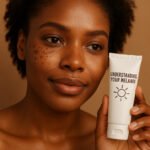
Let’s talk about those dark spots that seem to appear out of nowhere and overstay their welcome. If you’ve ever felt frustrated watching a small blemish turn into a months-long reminder, you’re not alone—and more importantly, you’re not powerless. For women with melanin-rich skin, hyperpigmentation—the darkening of skin patches—is often our most persistent skincare concern. It can feel like a constant battle to maintain an even, luminous complexion.
But here at Black Beauty Basics, we believe in empowering you with knowledge that respects the unique physiology of our skin. Hyperpigmentation is not a flaw; it is a natural, protective response of our powerful melanocytes. Understanding this response is the first step toward managing it effectively and celebrating the beauty of your naturally rich tone.
This comprehensive guide will walk you through the science, the most effective ingredients, and the strategic routine adjustments needed to fade those dark spots and reveal the radiant, even skin tone you deserve.
Understanding Melanin: Why Dark Spots Happen
Melanin is a magnificent pigment, responsible for our beautiful range of complexions and providing natural protection against UV radiation. However, the very mechanism that protects us also makes us more prone to hyperpigmentation. Our melanocytes (the cells that produce melanin) are highly reactive and easily stimulated.
What Causes Hyperpigmentation in Melanin-Rich Skin?
When the skin experiences trauma or inflammation, the melanocytes go into overdrive, producing excess melanin as a protective measure. Because our skin contains more active melanocytes, this response is more pronounced and often lasts longer than in lighter skin tones.
- Inflammation and Injury: This is the number one culprit. Anything that causes inflammation—acne, insect bites, harsh scrubs, waxing, or even aggressive facials—can trigger the melanin response.
- Sun Exposure: UV rays are the primary stimulators of melanin production. Even if you don’t burn easily, sun exposure deepens existing dark spots and triggers new ones.
- Hormonal Shifts: Fluctuations caused by pregnancy, birth control, or thyroid issues can stimulate melanocytes, leading to conditions like melasma.
- Medications: Certain medications can increase photosensitivity or trigger pigment production.
Types of Hyperpigmentation: Knowing Your Enemy
While all dark spots look similar, treating them effectively requires identifying the specific type you are dealing with.
Post-Inflammatory Hyperpigmentation (PIH)
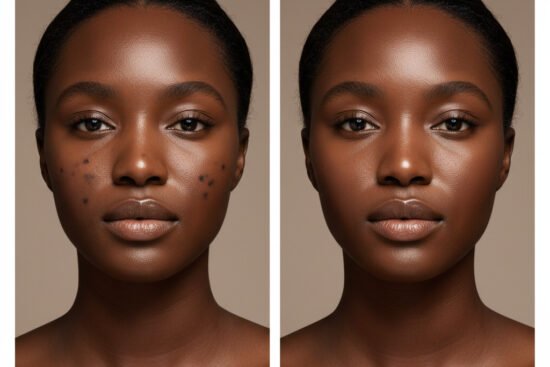
PIH is the most common form we encounter. It appears as flat patches of brown, black, or gray discoloration left behind after an inflammatory event (like a pimple or rash) has healed. PIH is often treatable with topical ingredients because the pigment is usually located in the upper layers of the skin (epidermis).
Melasma
Often called the ‘mask of pregnancy,’ melasma appears as symmetrical, large patches, usually on the cheeks, forehead, upper lip, and chin. It is primarily triggered by internal factors (hormones) combined with sun exposure. Melasma is notoriously stubborn because the pigment often lies deeper in the dermis.
Solar Lentigines (Sun Spots or Age Spots)
These are small, distinct spots caused by chronic sun exposure. While less common than PIH in younger women, they become more prevalent with age.
A Note on Color: PIH spots that are brown or black are typically epidermal (easier to treat). Spots that have a grayish or bluish hue often indicate dermal hyperpigmentation (deeper and harder to treat).
The Power Players: Ingredients That Actually Work
Treating hyperpigmentation requires a multi-pronged approach: blocking melanin production, speeding up cell turnover, and calming inflammation. Here are the gold-standard ingredients for melanin-rich skin:
The Brightening and Inhibiting Agents
- Hydroquinone (HQ): The most potent skin-lightening agent. It works by inhibiting the enzyme (tyrosinase) needed to produce melanin. Use under medical guidance and cycle on and off to prevent paradoxical darkening (ochronosis).
- Kojic Acid: Derived from fungi, this powerhouse also inhibits tyrosinase. It works synergistically with other brighteners and is generally well-tolerated.
- Azelaic Acid: Excellent for both acne and pigment. It calms inflammation, reduces redness, and directly inhibits tyrosinase. It is safe for use during pregnancy (consult your doctor).
- Arbutin (Alpha-Arbutin): A gentler, natural derivative of hydroquinone, offering effective brightening without the irritation risk.
- Niacinamide (Vitamin B3): This ingredient prevents the transfer of melanin from the melanocytes to the surrounding skin cells (keratinocytes). It also strengthens the skin barrier and reduces inflammation.
The Exfoliating and Renewing Agents
These ingredients help lift existing pigment by speeding up cell turnover, bringing new, unpigmented cells to the surface.
- Retinoids (Retinol, Tretinoin): The gold standard for cellular renewal. They push new skin cells to the surface faster, effectively fading spots. Start slowly, as irritation can trigger new PIH.
- Vitamin C (L-Ascorbic Acid): A powerful antioxidant that brightens the skin, neutralizes free radicals (which trigger pigment), and mildly inhibits tyrosinase. Look for stable formulations.
- Alpha Hydroxy Acids (AHAs): Glycolic and Lactic acids gently exfoliate the surface layer of the skin, helping to shed pigmented cells. Lactic acid is often preferred for dark skin as it is larger and less irritating.
Building Your Strategic Treatment Routine
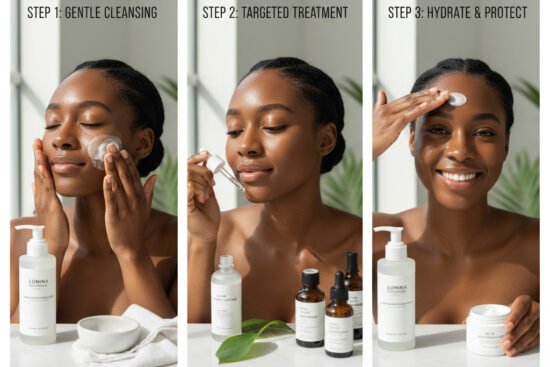
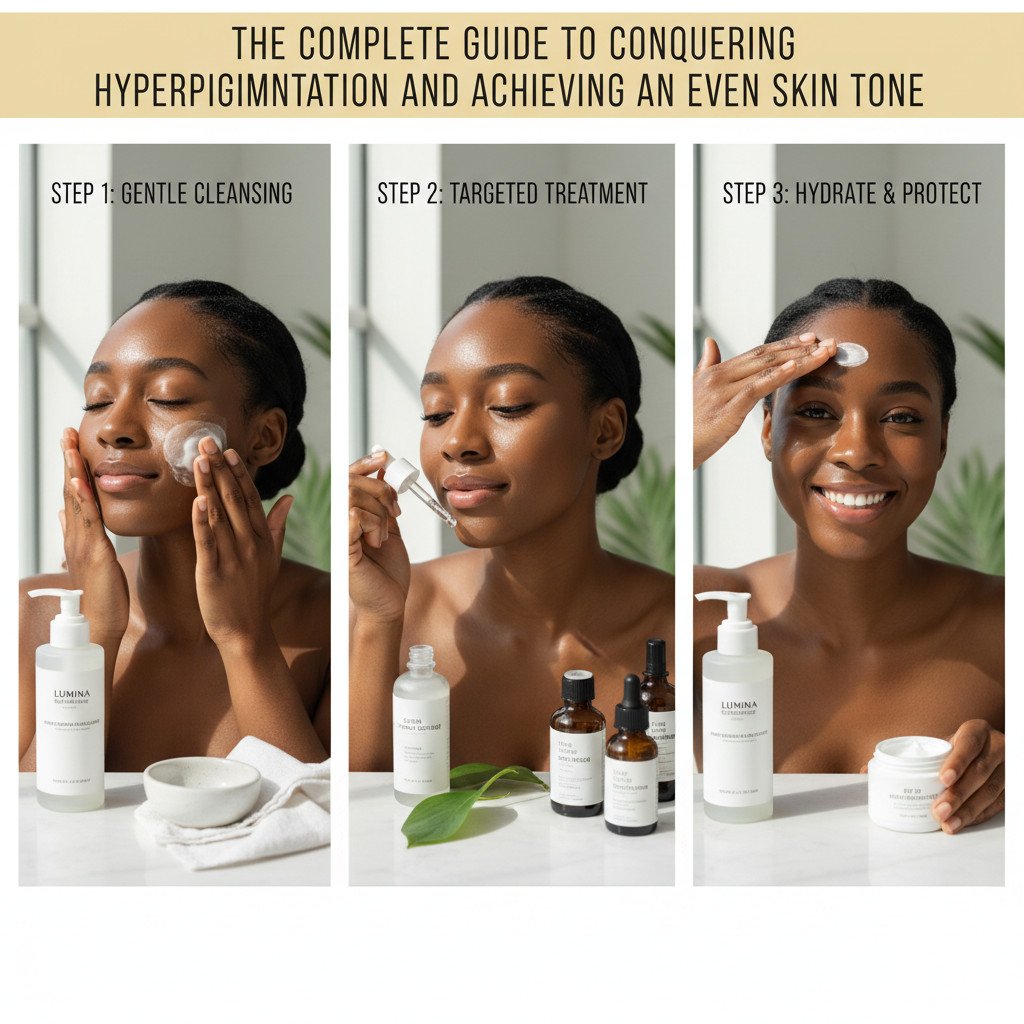
A successful hyperpigmentation routine is consistent, layered, and focused on protection and repair.
The Morning Routine: Protection is Paramount
- Gentle Cleanser: Use a non-stripping cleanser. Avoid harsh scrubs or abrasive tools that cause micro-trauma. (Product Mention: Hydrating Cream Cleanser“>Hydrating Cream Cleanser)
- Antioxidant Serum (Vitamin C): Apply a stable Vitamin C serum to fight free radicals and boost sun protection. (Product Mention: Vitamin C Serum)
- Brightening Layer: Apply a serum containing Niacinamide or Alpha-Arbutin to target existing spots.
- Moisturizer: Use a lightweight, barrier-supporting moisturizer. (Product Mention: Ceramide Moisturizer“>Ceramide Moisturizer)
- Sunscreen (Non-Negotiable): This is the single most important step. Use a broad-spectrum SPF 30 or higher, 365 days a year. Look for chemical sunscreens that blend seamlessly or mineral sunscreens with micronized zinc oxide to avoid the white cast. (Product Mention: Broad Spectrum SPF 50“>Broad Spectrum SPF 50)
The Evening Routine: Repair and Renewal
- Double Cleanse: If you wear makeup or heavy sunscreen, start with an oil cleanser to break down products, followed by your gentle cleanser. (Product Mention: Oil Cleanser)
- Targeted Treatment: Apply your primary pigment inhibitor (e.g., Kojic Acid serum, Azelaic Acid, or prescription Hydroquinone).
- Retinoid Application: Apply a pea-sized amount of your retinol or Tretinoin. If you are new to retinoids, use the sandwich method (moisturizer, retinoid, moisturizer) to minimize irritation. (Product Mention: Gentle Retinol Serum“>Gentle Retinol Serum)
- Deep Hydration: Finish with a rich, occlusive moisturizer to support barrier repair overnight.
Strategic Ingredient Cycling
To prevent irritation and maximize results, avoid applying all active ingredients at once. A strategic rotation is key:
- Monday/Wednesday/Friday: Retinoids and Brightening Agents (Niacinamide, Kojic Acid).
- Tuesday/Thursday: Gentle Exfoliation (Lactic or Mandelic Acid toner/serum).
- Saturday/Sunday: Barrier Repair and Hydration only (No actives).
Comparison Table: Top Brightening Ingredients
| Ingredient | Mechanism of Action | Best For | Considerations for Dark Skin |
|---|---|---|---|
| Hydroquinone | Inhibits tyrosinase (melanin production) | Severe PIH, Melasma | Highly effective but must be cycled (max 4-5 months) to avoid ochronosis. Prescription strength is best. |
| Azelaic Acid | Inhibits tyrosinase, reduces inflammation | Acne-prone PIH, Sensitive skin, Melasma | Excellent tolerance, safe long-term use, addresses both cause and effect. |
| Niacinamide | Blocks melanin transfer, reduces inflammation | General brightening, barrier support | Essential supporting ingredient, very low irritation risk. |
| Kojic Acid | Inhibits tyrosinase, antioxidant | PIH, overall brightening | Works well in combination products; generally stable and effective. |
Professional Treatments Worth Considering
When topical products reach a plateau, professional intervention can accelerate results. However, for melanin-rich skin, it is crucial to choose treatments that minimize heat and trauma.
Safe Chemical Peels
Peels work by exfoliating the top layers of skin. The key is using superficial peels with low pH and high concentration, or medium-depth peels formulated specifically for dark skin. Always seek a board-certified dermatologist experienced with Fitzpatrick Scale IV-VI.
- Lactic Acid Peels: Very gentle and hydrating, ideal for first-time peel users.
- Mandelic Acid Peels: Large molecular structure penetrates slowly, making it excellent for preventing PIH post-peel.
- Jessner’s Solution/TCA Peels (Low Concentration): Can be effective for deeper pigment, but require careful pre- and post-care using hydroquinone and retinoids.
Laser and Light Therapies
Lasers carry a higher risk of heat-induced PIH in dark skin. Treatments must be approached cautiously. Look for technologies that target pigment without causing bulk heating.
- Pico Lasers: These use ultra-short pulses (picoseconds) to shatter pigment without relying on heat, making them safer for darker skin tones than traditional Q-switched or fractional lasers.
- Low-Dose, Low-Density Fractional Resurfacing: Can be used to treat stubborn melasma and PIH, but requires expert application and strict adherence to sun avoidance protocols.
Crucial Rule: Never undergo a chemical peel or laser treatment without at least 2-4 weeks of pre-treating the skin with a pigment inhibitor (like hydroquinone or kojic acid) and strict SPF use. This prepares the melanocytes and significantly reduces the risk of rebound hyperpigmentation.
Prevention Strategies: Stopping Spots Before They Start
The best treatment for hyperpigmentation is prevention. Since inflammation is our skin’s trigger, minimizing irritation is essential for maintaining an even tone.
- Commit to Sunscreen Daily: Reapply every two hours when outdoors. Use the correct amount—a nickel-sized dollop for the face and neck.
- Treat Acne Aggressively, But Gently: Address breakouts immediately to minimize inflammation time. Use spot treatments with ingredients like benzoyl peroxide or salicylic acid, but avoid picking or squeezing blemishes at all costs.
- Avoid Friction and Trauma: Be gentle when washing, drying, and applying products. Avoid harsh towels or abrasive brushes. Friction from clothing (e.g., tight collars) can also cause PIH on the neck and body.
- Manage Stress: Chronic stress increases cortisol, which promotes inflammation throughout the body, potentially worsening conditions like melasma. Incorporate stress-reducing practices into your daily life.
Realistic Timeline Expectations
Fading hyperpigmentation is a marathon, not a sprint. Because the skin renewal cycle takes time, patience is paramount. If you are dealing with PIH, expect the following timeline:
- 4–8 Weeks: You should begin to see subtle brightening and improvement in overall skin clarity.
- 3–6 Months: Significant fading of epidermal (surface) PIH. This is when most people feel satisfied with topical results.
- 6–12 Months: Necessary for treating deeper, dermal PIH and stubborn melasma. Consistency is vital here, often requiring professional treatments combined with home care.
If you see no improvement after 3 months of consistent use of high-quality, active ingredients, it is time to consult a dermatologist for prescription-strength options or professional procedures.
Conclusion: Embracing the Journey to Radiance
Conquering hyperpigmentation is a journey that requires consistency, strategic product selection, and a deep understanding of how your melanin works. Remember that every dark spot faded is a testament to your dedication and self-care.
You possess a skin tone that is rich, resilient, and inherently beautiful. By treating your skin with the nurturing care it deserves—protecting it from the sun and arming it with proven actives—you are not just fading spots; you are cultivating confidence and celebrating the luminous radiance that is uniquely yours. Start your strategic routine today, and watch your even, glowing complexion emerge.
Ready to transform your routine? Consult with a trusted dermatologist to tailor a plan that respects the power and beauty of your melanin.
Related posts:
 The Ultimate Glow Routine: A Comprehensive Guide to Fading Hyperpigmentation and Achieving Radiant Melanin Skin
 The Glow Up Secret: Medicube Deep Vita C Toner Pads Review for Melanin-Rich Skin – Fading Hyperpigmentation and Achieving Luminous Clarity
 Achieving Flawless Skin – A Guide for African American Women
 Achieving Flawless Skin – A Guide for African American Women
 Understanding Hyperpigmentation – Causes and Treatments for Darker Skin Tones
 Understanding Hyperpigmentation – Causes and Treatments for Darker Skin Tones