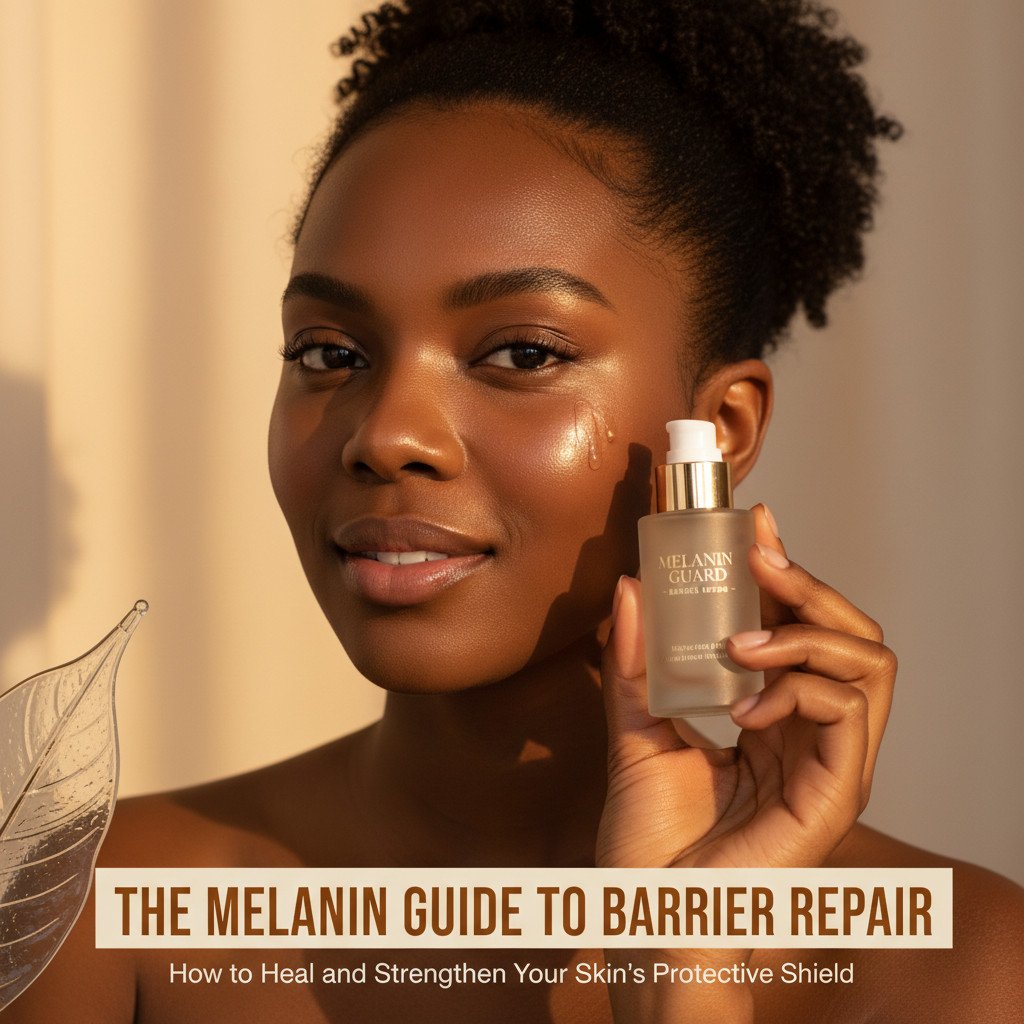
Your skin has been trying to tell you something. That tightness after cleansing, the sudden sensitivity to products you’ve used for years, the dullness that no amount of exfoliation seems to fix—these are all whispers from a barrier in distress. For women of color, especially those blessed with melanin-rich skin, a compromised skin barrier isn’t just uncomfortable; it can lead to heightened inflammation, post-inflammatory hyperpigmentation (PIH), and a cycle of reactivity that feels impossible to break.
We often focus on treating the symptoms—the acne, the dark spots, the dryness—but the root cause is frequently a weakened foundation: the skin barrier. Think of your skin barrier (the stratum corneum) as the elegant, protective brick wall of your complexion. The ‘bricks’ are your skin cells, and the ‘mortar’ is a rich blend of lipids, ceramides, and fatty acids. When this wall is intact, it locks moisture in and keeps irritants, pollutants, and bacteria out. When it cracks, chaos ensues.
This comprehensive guide is your roadmap to not just repairing that wall, but strengthening it for enduring radiance and resilience. It’s time to listen to your skin and give it the gentle, nourishing care it deserves.
1. Decoding the Distress: Signs Your Skin Barrier is Compromised
Recognizing the signs of a damaged barrier is the first step toward healing. Because melanin-rich skin is prone to hyperpigmentation when inflamed, identifying these issues early is crucial for preventing lasting dark spots.
H3: Subtle Signs of Barrier Damage
- Persistent Dryness and Flakiness: Even after moisturizing, your skin feels tight or parched. The barrier can’t hold onto water effectively.
- Increased Sensitivity and Redness: Products that never bothered you suddenly sting, burn, or cause irritation.
- Unexplained Breakouts: A damaged barrier allows bacteria and irritants to penetrate more easily, leading to random, persistent acne or bumps.
- Dull or Lackluster Appearance: When the outermost layer is disrupted, light doesn’t reflect evenly, making the skin look flat and tired.
- Itching and Inflammation: Chronic, low-grade itching that isn’t related to an allergic reaction.
- Heightened Reactivity to Temperature: Your skin feels overly sensitive to hot showers, cold weather, or wind.
2. The Culprits: What Damages the Skin Barrier?
Understanding the causes helps us eliminate the triggers and prevent future damage. Often, we are unintentionally sabotaging our own skin health in the pursuit of ‘perfect’ skin.
H3: Over-Exfoliation and Harsh Cleansing
This is perhaps the most common offender. In an effort to achieve smoothness or fade dark spots quickly, we often overuse physical scrubs or high concentrations of chemical exfoliants (AHAs, BHAs).
- Overuse of Acids: Using high-percentage glycolic acid or multiple exfoliating products daily strips away the protective lipid layer.
- Harsh Cleansers: Foaming cleansers containing strong surfactants (like SLS/SLES) can dissolve the natural oils that make up the ‘mortar’ of the barrier.
H3: Environmental Stressors
- Extreme Weather: Dry winter air, low humidity, and harsh winds pull moisture directly from the skin.
- UV Exposure: Sun damage is inflammatory and directly degrades the lipids and proteins essential for barrier function. (A non-negotiable for melanin-rich skin!)
- Pollution: Airborne particulate matter generates free radicals that attack the skin’s structure.
H3: Lifestyle and Internal Factors
Stress, poor diet, lack of sleep, and certain medications can all trigger inflammatory responses that weaken the barrier from the inside out.
3. The Science of Barrier Repair: What Your Skin Needs
Repairing the barrier is fundamentally about replenishing the essential components that have been lost and calming inflammation. This process requires patience and a focused, minimalist approach.
H3: The Lipid Trio: Ceramides, Cholesterol, and Fatty Acids
The ‘mortar’ of the skin barrier is composed of a specific ratio of three key lipids. Effective barrier repair products mimic this natural composition.
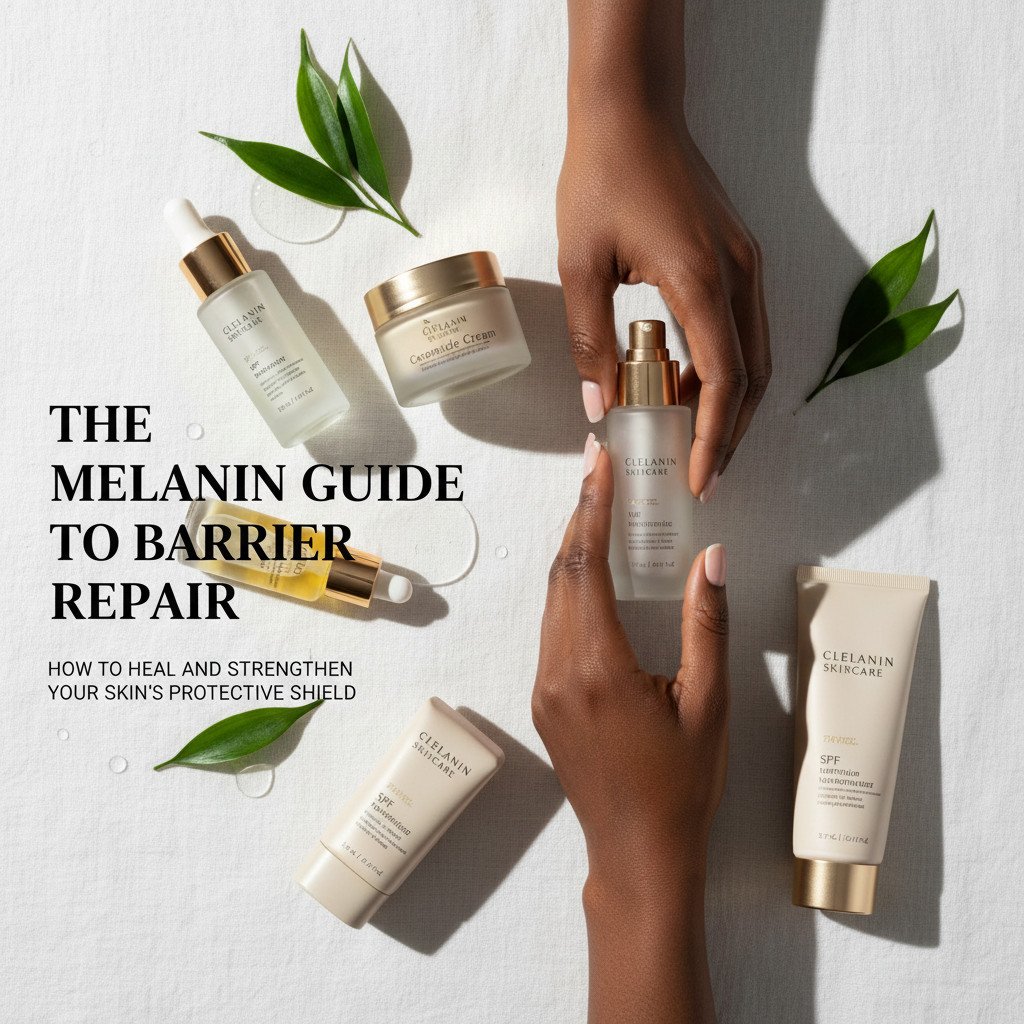
- Ceramides: These waxy lipid molecules make up about 50% of the skin’s natural barrier. They are the primary water-retaining agents and help bind cells together. Look for products containing Ceramide NP, AP, or EOP.
- Cholesterol: Provides fluidity and structure to the barrier.
- Fatty Acids: Such as linoleic acid, which are crucial for maintaining skin integrity and reducing inflammation.
Melanin Insight: Because inflammation is the precursor to PIH (dark spots) in darker skin tones, barrier repair is a critical step in any hyperpigmentation treatment plan. If the barrier is inflamed, any active ingredient you use to fade spots (like hydroquinone or retinoids) will likely cause more irritation and counterproductively worsen the PIH.
4. Essential Ingredients for Healing and Soothing
During a repair phase, focus on ingredients that are known for their restorative and soothing properties, minimizing potential irritants.
H4: Hydrators and Humectants
- Hyaluronic Acid (HA): A powerful humectant that draws moisture into the skin. Use it on damp skin for best results. (Product suggestion: The Ordinary Hyaluronic Acid 2% + B5)
- Glycerin: A gentle, effective humectant that is well-tolerated by almost all skin types.
H4: Barrier Builders and Emollients
- Ceramides: The cornerstone of repair. Look for formulas that contain multiple types of ceramides. (Product suggestion: CeraVe Moisturizing Cream)
- Niacinamide (Vitamin B3): Excellent for strengthening the barrier, reducing redness, and improving the production of natural ceramides. Keep concentrations below 5% during the repair phase to avoid irritation. (Product suggestion: Paula’s Choice 10% Niacinamide Booster)
- Squalane/Jojoba Oil: Biomimetic oils that closely resemble the skin’s natural sebum, offering deep emollience without clogging pores.
H4: Anti-Inflammatories and Soothers
- Centella Asiatica (Cica): Known for its powerful wound-healing and anti-inflammatory properties, excellent for calming irritated skin.
- Oatmeal/Colloidal Oats: A classic remedy for soothing itching, redness, and irritation.
- Panthenol (Pro-Vitamin B5): Acts as both a humectant and an emollient, promoting skin healing.
| Ingredient Category | Function | Ideal for Melanin-Rich Skin Because… |
|---|---|---|
| Ceramides | Replenishes lipid ‘mortar’ | Directly rebuilds the protective layer, reducing sensitivity. |
| Niacinamide | Boosts natural ceramide production, calms redness | Addresses inflammation, a key trigger for PIH. |
| Cica/Oatmeal | Soothes and reduces irritation | Rapidly calms reactive skin, preventing the cascade that leads to dark spots. |
5. The Gentle Repair Routine: A 4-Week Reset
During the repair phase, simplicity is your superpower. Strip your routine down to the absolute essentials. Aim for a maximum of four products.
H4: Morning Routine (Focus: Protection and Hydration)
- Cleanse: Use lukewarm water and a gentle, non-foaming, pH-balanced cleanser. Look for cream or milk textures. (Product suggestion: La Roche-Posay Toleriane Hydrating Gentle Cleanser)
- Hydrate/Soothe: Apply a hydrating serum (HA or B5) or a few drops of a calming facial oil (Squalane).
- Moisturize: Use a rich, ceramide-heavy moisturizer. Apply while skin is still slightly damp. (Product suggestion: Vanicream Moisturizing Cream)
- Protect (Non-Negotiable): Apply a broad-spectrum mineral sunscreen (zinc oxide or titanium dioxide) with an SPF of 30 or higher. Look for tinted formulas to minimize the white cast often seen on darker skin. (Product suggestion: Black Girl Sunscreen SPF 30)
H4: Evening Routine (Focus: Repair and Seal)
- Cleanse: Double cleanse if you wear makeup or heavy sunscreen. Start with a gentle cleansing balm or oil, followed by your cream cleanser.
- Repair Serum: Apply a dedicated barrier repair serum containing ceramides, cholesterol, and fatty acids, or a low-concentration Niacinamide serum (2-3%).
- Moisturize & Seal: Apply your rich ceramide moisturizer. If your skin is extremely dry or compromised, apply a thin layer of an occlusive balm (like petrolatum or shea butter) over your moisturizer to seal everything in.
H4: Practical Tips for Rapid Recovery
- Cool Down: Avoid excessively hot water on your face, which strips natural oils.
- Pat, Don’t Rub: Gently pat your skin dry with a clean, soft towel instead of rubbing.
- Humidify: Use a cool-mist humidifier in your bedroom, especially during dry months, to keep ambient moisture levels high.
- Patience is Power: Give your skin at least 4 weeks of this minimalist routine before reintroducing any active ingredients.
6. Products to Avoid During the Recovery Phase
To allow your barrier to heal, you must temporarily eliminate anything that causes friction, stripping, or excessive stimulation. This is a time for quiet healing, not aggressive treatment.
- Physical Scrubs: Walnut shells, sugar, or microbeads create micro-tears and worsen damage.
- High-Potency Actives: Stop using retinoids (retinol, tretinoin), high-concentration Vitamin C (L-Ascorbic Acid above 10%), and strong exfoliating acids (Glycolic, Salicylic, Lactic) until the barrier is fully healed.
- Astringent Toners: Avoid toners containing high amounts of alcohol or witch hazel, which are drying and irritating.
- Essential Oils and Fragrance: These are common irritants that can trigger contact dermatitis in sensitized skin. Opt for fragrance-free products.
7. Maintaining a Healthy Barrier Long-Term
Once your skin feels calm, hydrated, and resilient again, you can slowly reintroduce active ingredients. The key is balance and moderation.
H4: Smart Reintroduction of Actives
When you are ready to address concerns like hyperpigmentation or texture, introduce only one active ingredient at a time, starting with the lowest concentration, and using it only 1-2 nights per week.
- Start with Retinoids: Begin with a gentle retinaldehyde or low-dose retinol (0.1-0.3%). Use the ‘sandwich method’ (moisturizer, retinoid, moisturizer) to buffer the intensity.
- Add Exfoliation: Reintroduce a gentle chemical exfoliant (like Mandelic acid, which is excellent for darker skin) 1-2 times a week, separate from your retinoid nights.
- Monitor Closely: If you notice any tightness, redness, or stinging, pull back immediately and return to your repair routine for a few days.
H4: The Long-Term Barrier Maintenance Strategy
- Consistent Sun Protection: Daily sunscreen is the single most effective barrier protector.
- Cycle Your Actives: Do not use every active ingredient every night. Alternate between retinoids, exfoliants, and recovery nights. Dedicate 2-3 nights per week to pure barrier support (cleanser, ceramide moisturizer).
- Listen to the Seasons: Increase the richness of your moisturizer and use a humidifier in winter; lighten up slightly in summer, but never skip hydration.
The Confidence of Resilience
A damaged skin barrier is not a failure; it is simply a signal that your skin needs a moment of grace and focused nourishment. By embracing this gentle, repair-focused approach, you are not just treating a temporary issue—you are investing in the long-term health, resilience, and radiant confidence of your melanin-rich skin.
Take a deep breath, simplify your routine, and watch as your skin transforms from reactive and fragile to strong, supple, and beautifully affirmed. Your most resilient glow awaits.
Action Step: Check the ingredients of your current cleanser and moisturizer. If they lack ceramides or contain harsh sulfates, commit to replacing them with barrier-friendly options today.
Related posts:
 Protective Styles That Actually Protect: The Ultimate Guide to Natural Hair Health and Growth
 The Melanin Guide: Mastering Skincare for African American Women (That Protect Your Glow)
 Kopari Sun Shield Body Glow Review
 Force Shield Superlight Sunscreen SPF 30 Review
 Protective Hairstyles – Benefits and Best Practices
 Protective Styling 101 – How to Choose Styles That Retain Length Without Damaging Your Edges