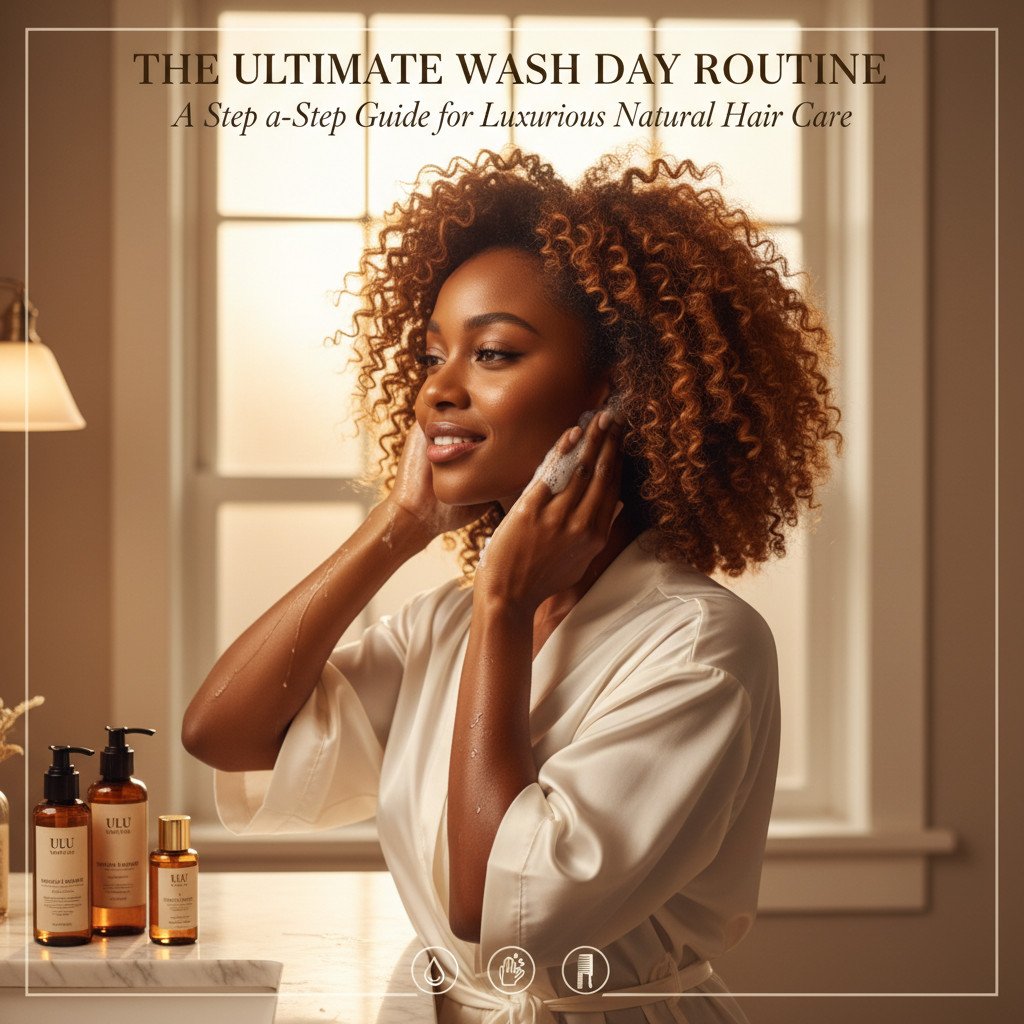
The Ultimate Wash Day Routine: A Step-by-Step Guide for Luxurious Natural Hair Care
Wash day used to feel like a marathon—hours of detangling, products everywhere, and arms that ached for days. For years, we’ve treated it as a chore, a necessary evil in the journey of maintaining our beautiful crowns. But what if I told you that wash day is not just maintenance? It’s sacred self-care. It’s the foundation of healthy hair growth, moisture retention, and ultimate confidence.
At Black Beauty Basics, we believe your natural hair routine should be a ritual of elegance and empowerment. This comprehensive guide transforms the grueling process into a luxurious experience, ensuring your coils, curls, and kinks receive the deep nourishment they deserve. Get ready to redefine your wash day.
Step 1: The Essential Foundation – Pre-Poo (Why It Matters)
The Pre-Poo (pre-shampoo) is the unsung hero of the natural hair routine. It’s the crucial step that prepares your strands for cleansing, minimizing friction, and preventing the stripping of essential moisture that harsh shampoos can cause.
The Science of Slip and Protection
When you apply a moisturizing oil or conditioner before shampooing, you coat the hair shaft. This protective barrier reduces hygral fatigue (the swelling and shrinking of the hair cuticle when wet) and provides excellent slip for preliminary detangling.
How to Execute a Perfect Pre-Poo:
- Choose Your Agent: Opt for penetrating oils like Coconut Oil or Olive Oil or use a lightweight, inexpensive conditioner like Tresemmé Botanique Nourish & Replenish Conditioner.
- Application: Divide dry or slightly dampened hair into 4-6 manageable sections. Work the pre-poo agent thoroughly from root to tip, focusing on the ends, which are the oldest and most fragile parts of your hair.
- Detangle Gently: Using your fingers or a wide-tooth comb, gently remove large knots while the hair is saturated with slip.
- Heat & Time: Cover your hair with a plastic cap and allow the treatment to penetrate for at least 30 minutes. For maximum benefit, sit under a hooded dryer or steamer for 15-20 minutes.
Step 2: Cleansing – Choosing the Right Shampoo
Cleansing is non-negotiable, but the method matters. The goal is to remove product buildup, dirt, and excess sebum without leaving your hair feeling like straw.
Understanding Cleanser Types
Not all shampoos are created equal. Your choice should depend on your hair’s current needs and how often you cleanse.
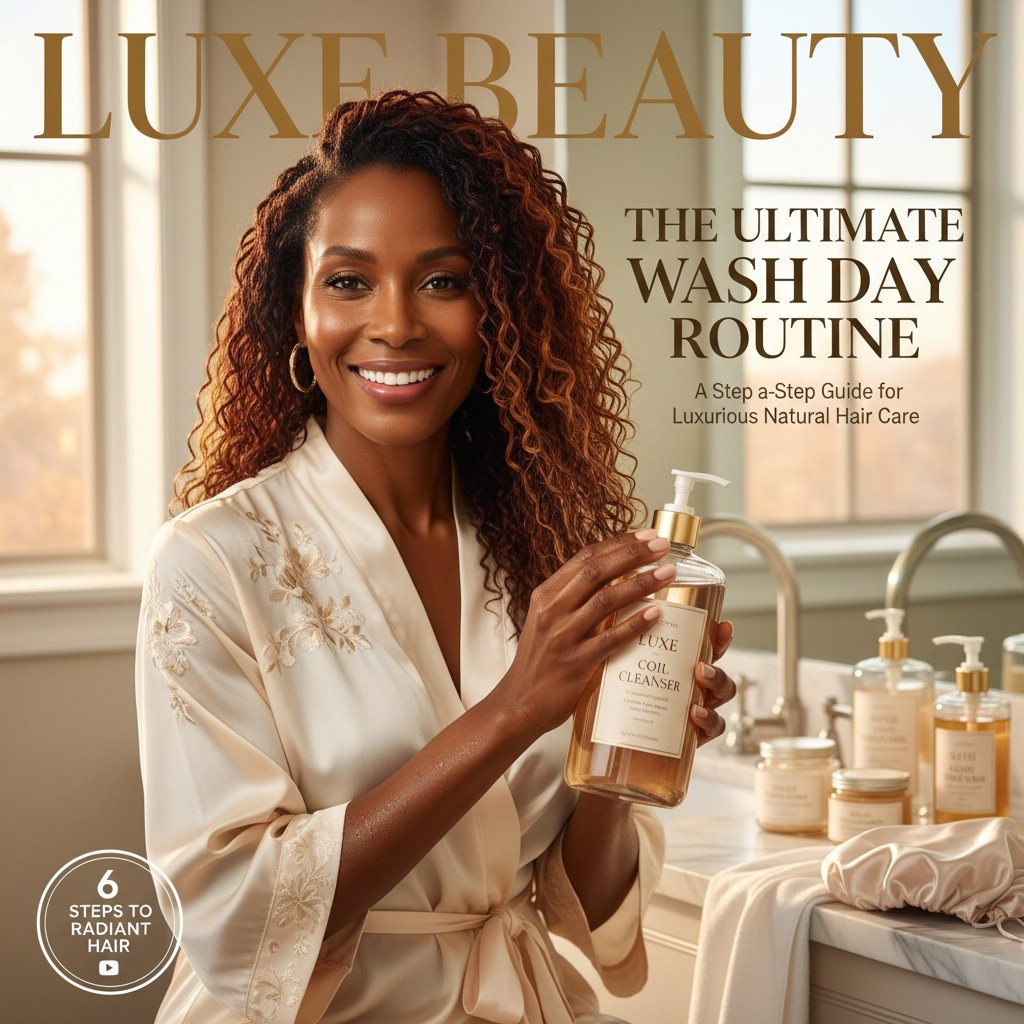
- Clarifying Shampoo: Contains stronger surfactants (often sulfates) designed to remove heavy buildup, mineral deposits, and silicones. Use sparingly (once a month) if you use heavy butters or gels. Try: Kinky-Curly Come Clean Natural Moisturizing Shampoo (jamiesondon04-20).
- Moisturizing/Sulfate-Free Shampoo: Ideal for weekly use. These use gentler cleansing agents that clean the scalp and hair without stripping natural oils. Try: SheaMoisture Coconut & Hibiscus Curl & Shine Shampoo (jamiesondon04-20).
- Co-Wash (Conditioner Wash): A conditioner formulated with mild cleansing ingredients. Excellent for very dry hair or for refreshing between full washes. Use: As I Am Coconut CoWash Cleansing Conditioner (jamiesondon04-20).
The Cleansing Technique:
Focus the shampoo primarily on your scalp. Use the pads of your fingers (not your nails) to massage the scalp vigorously. Allow the lather to run down the length of your hair; there is no need to aggressively scrub the ends.
Step 3: Deep Conditioning Techniques – The Heart of Hair Care
If pre-pooing is the foundation, deep conditioning is the structure. This is where moisture is sealed, protein bonds are strengthened, and elasticity is restored. Never skip this step in your natural hair routine.
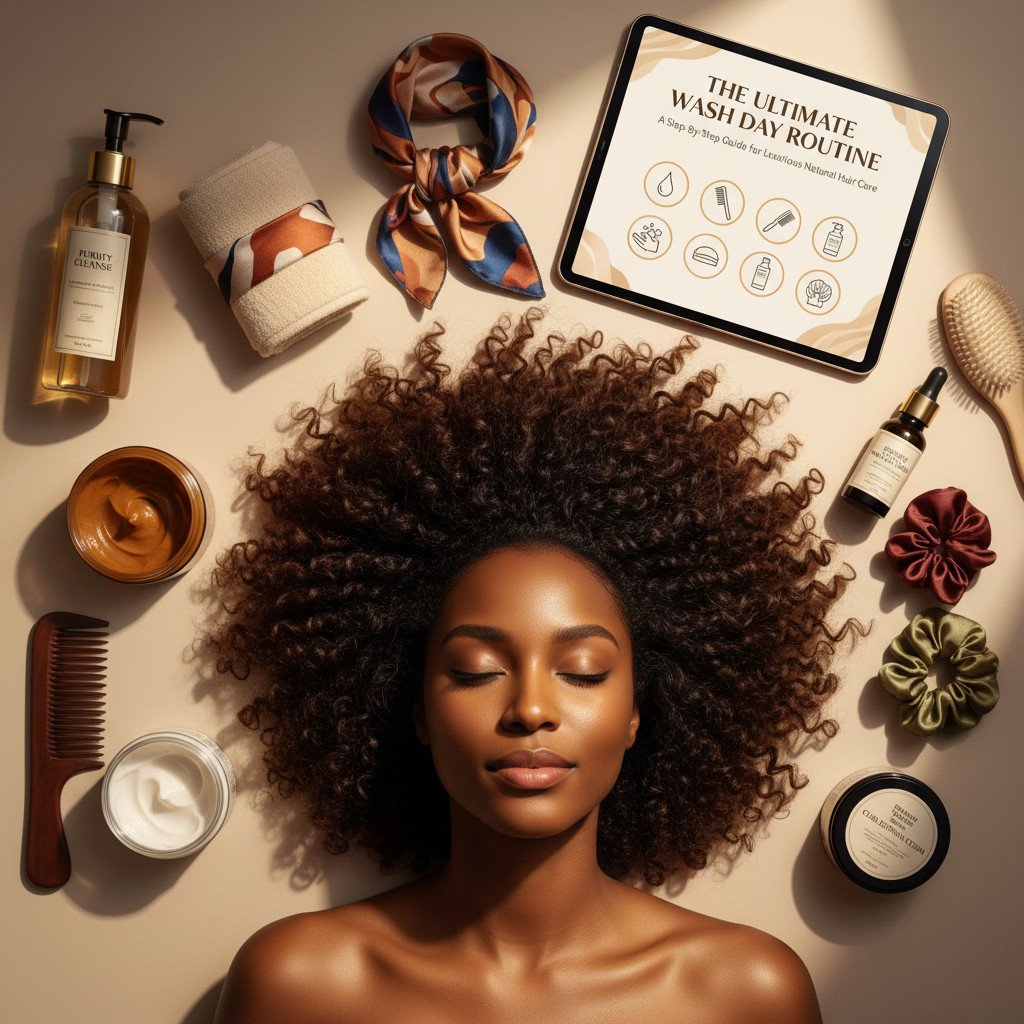
Moisture vs. Protein: Finding Your Balance
Healthy hair requires a balance. Too much moisture leads to limp, mushy hair (hygral fatigue); too much protein leads to stiff, brittle hair.
| Conditioner Type | Primary Benefit | Signs You Need It |
|---|---|---|
| Moisture Deep Conditioner | Hydration, softness, elasticity | Dry, rough, dull hair; tangles easily. |
| Protein Deep Conditioner | Strength, structure, damage repair | Limp, mushy, overly stretchy hair; excessive breakage. |
Recommendation: Use a moisture deep conditioner weekly. Incorporate a protein treatment (like Aphogee Two-Step Protein Treatment (jamiesondon04-20)) every 4-6 weeks, or whenever you notice excessive breakage.
The Deep Penetration Method:
After rinsing the shampoo, apply your deep conditioner generously to small sections. Twist or braid each section. Cover with a plastic cap and apply heat for 20-30 minutes. Heat opens the cuticle layer, allowing the conditioning agents to penetrate deeper into the hair shaft. Rinse thoroughly with cool water to help seal the cuticle.
Step 4: Detangling Without Damage
Detangling is often the most time-consuming and potentially damaging part of wash day. Patience is paramount. Always detangle with a moisturizing agent present—never on dry or bare hair.
The Golden Rules of Detangling
- Use Slip: Ensure your hair is saturated with conditioner (a rinse-out or leave-in works well here).
- Sectioning is Key: Work in small, defined sections (the smaller the section, the easier the detangling).
- Start at the Ends: Always begin detangling at the very tips and work your way up to the root.
- Tools: Use your fingers first to feel for knots, then follow up with a wide-tooth comb or a flexible detangling brush like the Denman Brush (jamiesondon04-20) or a Tangle Teezer (jamiesondon04-20).
Pro Tip: If you encounter a stubborn knot, apply a little extra oil or conditioner directly to the knot, let it sit for a minute, and gently pick it apart with your fingers before using a tool.
Step 5: Sealing the Deal – The LOC/LCO Method Explained
Once your hair is clean, conditioned, and detangled, the mission shifts to locking in that moisture until your next wash day. This is achieved through layering products using the LOC (Liquid, Oil, Cream) or LCO (Liquid, Cream, Oil) method.
Understanding the Layers:
The choice between LOC and LCO often depends on your hair porosity and density.
- L (Liquid): Water or a water-based leave-in conditioner. This provides the primary moisture source. Try: Mielle Organics White Peony Leave-In Conditioner (jamiesondon04-20).
- O (Oil): A sealing oil to slow down moisture evaporation. Use lighter oils (Jojoba, Grapeseed) for low porosity hair, and heavier oils (Castor, Shea) for high porosity hair.
- C (Cream): A heavier, moisturizing cream or butter that acts as a secondary sealant and styling base. Try: Camille Rose Naturals Curl Love Moisture Milk (jamiesondon04-20).
Which Method Is Right for You?
LOC Method (Liquid, Oil, Cream): Best for high porosity hair, which easily absorbs moisture but loses it quickly. The oil provides a light barrier before the heavier cream seals the deal.
LCO Method (Liquid, Cream, Oil): Best for low porosity hair, which struggles to absorb moisture but holds onto it once absorbed. The cream helps the liquid penetrate, and the oil provides the final, light seal without causing buildup.
Step 6: Drying Methods Compared
How you dry your hair dramatically impacts definition, frizz, and overall health. Avoid rough towel drying at all costs, as the friction causes breakage and frizz.
- Microfiber Towel or T-Shirt (The Plop): Gently squeeze excess water using a microfiber towel or an old cotton T-shirt. This minimizes friction and helps maintain curl pattern integrity.
- Air Drying: The gentlest method, but can take hours, potentially leading to hygral fatigue if the hair stays wet too long. Best for warm climates or thinner hair.
- Diffusing: Using a diffuser attachment on a low-heat, medium-speed setting is the fastest way to dry hair while preserving definition and volume. Hold the diffuser still at the roots for several seconds before moving to the next section.
Step 7: Styling Fresh Wash Day Hair
Your hair is now clean, nourished, and sealed. The final step is styling, which is often done simultaneously with the sealing process (Step 5).
Popular Wash Day Styles:
Twist-Outs and Braid-Outs:
These styles are excellent for stretching the hair slightly and offering beautiful, defined waves or curls once dry. Apply your styling cream or gel (like Eco Styler Gel (jamiesondon04-20)) to small, detangled sections, twist or braid tightly, and allow to dry completely before unraveling.
Wash-and-Go:
This style relies heavily on the natural curl pattern. It requires excellent product application (often a strong gel or custard) on soaking wet hair to encourage the curls to clump. Ensure you apply the product evenly and use the “shingling” method (smoothing the product down the length of the curl clump) for maximum definition.
Remember, the success of any style begins with the health achieved during the pre-poo, cleanse, and deep condition phases. Treat your hair with the reverence it deserves, and it will reward you with resilience and radiant beauty.
Related posts:
 Transitioning from Relaxed to Natural Hair – A Step-by-Step Guide
 Effortless Winter Haircare: A Step-by-Step Guide for African American Women
 Step-by-Step Guide To Applying Clip-In Hair Extensions
 Step-by-Step Winter Skincare Guide for African American Women
 The Ultimate Winter Body Care Guide for African American Women: Radiance Redefined
 The Ultimate Winter Haircare Guide for African American Women: Tailored to Hair Type, Texture, and Concerns