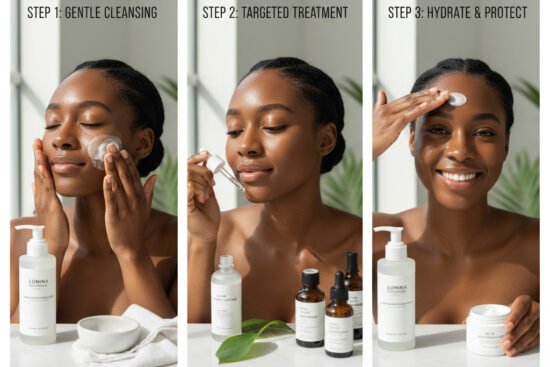
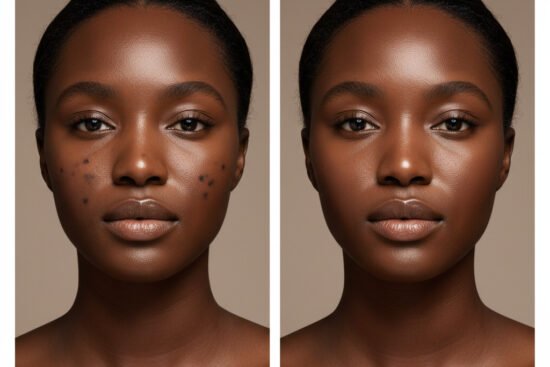
Many people with dark skin experience acne that often leads to post-inflammatory hyperpigmentation, so I emphasize gentle, targeted care to clear blemishes without creating new dark spots. I advise you to use a mild cleanser, non-comedogenic moisturizer, and azelaic acid or retinoids as tolerated, avoid picking which raises the risk of permanent darkening, and apply broad-spectrum SPF daily to protect your skin tone; patch-test products and see a dermatologist for persistent or severe cases.
Key Takeaways:
- Use a gentle, fragrance-free cleanser twice daily and a non-comedogenic moisturizer to protect the skin barrier.
- Treat active inflammation early with benzoyl peroxide or topical antibiotics at low concentrations to reduce irritation risk.
- Incorporate azelaic acid or topical retinoids to treat acne and fade post-inflammatory hyperpigmentation; introduce them slowly.
- Use chemical exfoliants (salicylic acid or mild AHAs) rather than physical scrubs, and limit frequency to avoid irritation that causes dark spots.
- Wear broad-spectrum SPF 30+ daily and reapply; sun exposure worsens hyperpigmentation and delays fading.
- Avoid picking, squeezing, or aggressive procedures at home-mechanical trauma increases the chance of dark marks.
- Consult a dermatologist for persistent acne or PIH; prescription topicals, peels, or device-based treatments can be safer and more effective for dark skin tones.
Understanding Acne and Dark Skin
I note that acne on darker skin often presents with less visible redness but a higher risk of post-inflammatory hyperpigmentation (PIH) and deeper keloidal scarring. You should expect discoloration to linger for months; studies show PIH prevalence is substantially higher in Fitzpatrick IV-VI. I prioritize limiting inflammation and sun exposure early because treating active lesions promptly reduces long-term pigmentary damage.
Unique Challenges for Dark Skin
I find that standard acne therapies can provoke irritation that worsens PIH, and aggressive manual extraction raises the likelihood of keloid formation. You often need slower escalation, patch testing, and consistent sunscreen use to protect healing skin. For example, topical retinoids usually improve comedones in 8-12 weeks but may require lower starting concentrations to avoid flare reactions in darker phototypes.
- PIH-long-lasting brown marks after inflammation
- Keloidal scarring-raised, fibrotic scars following deep injury
- Photosensitivity-sun worsens pigment after lesions heal
- Assume that gentle protocols and stepwise treatment lower the risk of permanent dark spots
| Issue | Impact on dark skin |
| Post-inflammatory hyperpigmentation | Brown/gray marks lasting months to years |
| Keloids | Raised scars from deep nodular inflammation |
| Treatment irritation | Can trigger new pigment if barrier is compromised |
| Sun exposure | Amplifies pigment deposition after lesions heal |
Types of Acne Common in Dark Skin
I typically see comedonal acne (open/closed comedones), inflammatory papules and pustules, and deeper nodulocystic lesions that are most likely to cause PIH and scarring. You may notice less erythema and more residual brown or purple marks; early control of inflammatory lesions is the key to preventing long-term pigment changes.
I expand on this by noting that comedones often respond to topical retinoids within 8-12 weeks, while persistent papules/pustules indicate active inflammation that predicts PIH; nodules and cysts frequently require systemic therapy and are associated with higher rates of permanent pigment and keloid scarring. You should escalate care for lesions lasting beyond 6 weeks because duration correlates with pigment risk. Assume that early, measured intervention reduces the likelihood of permanent discoloration.
- Comedonal acne-superficial, treatable with retinoids
- Inflammatory papules/pustules-lead to most PIH cases
- Nodulocystic acne-higher scar and pigment risk, often needs oral therapy
- Assume that lesions >6 weeks require reassessment to prevent long-term marks
| Type | Clinical note |
| Comedones | Respond to topical retinoids; lower initial concentrations advised |
| Papules/Pustules | Signal active inflammation and predict PIH |
| Nodules/Cysts | Penetrate deep dermis; higher scarring risk |
| Duration | Lesions >6 weeks more likely to leave pigment or scars |
Effective Treatment Options
I prioritize strategies that control inflammation and protect your barrier to prevent new post-inflammatory hyperpigmentation (PIH). I usually start with combination topical regimens-benzoyl peroxide (2.5-5%) or salicylic acid (0.5-2%) for comedones and azelaic acid (15-20%) plus a gentle retinoid (tretinoin 0.025-0.05%) to reduce both lesions and pigment; if nodules or widespread disease persist, I escalate to systemic therapy with careful monitoring.
Topical Treatments
I recommend starting with targeted topicals: benzoyl peroxide 2.5-5% or salicylic acid 0.5-2% to reduce bacteria and unclog pores, azelaic acid 15-20% to fade PIH while limiting irritation, and a low‑strength retinoid (tretinoin 0.025-0.05%) used every other night. I advise pairing with a non‑comedogenic moisturizer and daily SPF; excessive irritation raises the risk of worsened PIH.
Oral Medications
I use oral options when topicals fail or for inflammatory acne: doxycycline 100 mg (often 100 mg BID initial, then 100 mg daily) for 3 months, or spironolactone 50-100 mg/day for hormonally driven acne in women. For severe, scarring disease I consider isotretinoin at 0.5-1 mg/kg/day. I always counsel about teratogenic risk with isotretinoin and the need for contraception.
I monitor systemic therapy closely: limit oral antibiotics to ~3 months to reduce resistance, check pregnancy tests before spironolactone or isotretinoin, and target a cumulative isotretinoin dose around 120 mg/kg. I watch for doxycycline photosensitivity and rare minocycline-induced hyperpigmentation, order baseline LFTs/lipids for isotretinoin, and adjust dosing to balance clearance with minimal post‑inflammatory pigment changes.
Natural Remedies for Acne
I use targeted natural approaches-green tea extract, aloe vera, and honey-to calm inflammation without worsening PIH. Applying a 2-3% green tea extract serum or a thin layer of aloe twice daily lowers sebum and redness; a 10-15 minute manuka honey mask once weekly helps clear bacteria. For dark skin I keep treatments short and gentle to avoid post-inflammatory hyperpigmentation (PIH).
Herbal Solutions
Green tea (EGCG) at 2-3% reduces inflammation and sebum, while licorice extract (glabridin) helps fade dark spots; I often recommend a topical with 1-2% licorice alongside azelaic acid 10-15% for combined acne and PIH benefits. Clinical use of 10% azelaic acid shows lesion reduction and pigment improvement within 8-12 weeks. Use patch testing and introduce one product at a time.
Essential Oils
Tea tree oil has the strongest evidence-5% gel reduced inflammatory lesions comparably to benzoyl peroxide over 6 weeks-so I use it cautiously. Start with a low dilution and patch test; undiluted oils can cause irritation and trigger PIH on dark skin. Limit application to spots or dilute into a carrier for short-term use.
For safety I dilute crucial oils into non-comedogenic carriers like jojoba or squalane: aim for 0.5-2% for full-face products (about 1-4 drops per teaspoon) and up to 5% for targeted spot treatment. Conduct a 48-hour patch test behind your ear, stop if you get stinging, blistering, or increased darkness, and avoid mixing multiple active oils at once. Lavender and helichrysum show limited benefit; prioritize tea tree for inflammation control.
Preventing Dark Spots from Treatments
While treating acne aggressively can clear lesions, I focus on steps that stop treatment-induced PIH before it starts: minimize inflammation, patch-test new actives, and avoid overlapping strong exfoliants. I advise using a gentle cleanser, adding a ceramide-rich moisturizer, and applying SPF 30+ daily-especially when using retinoids or chemical peels. In practice, spacing powerful actives and monitoring skin for irritation reduces dark-spot risk and keeps your regimen effective without trading acne for hyperpigmentation.
Importance of Sun Protection
I insist on broad-spectrum sunscreen because UV exposure amplifies PIH; apply SPF 30-50 every morning and reapply about every 2 hours when outdoors. Tinted mineral sunscreens (zinc oxide/titanium dioxide) or chemical formulas that don’t leave a white cast work well on darker skin tones. Wearing UPF clothing and a wide-brimmed hat during peak hours (10:00-16:00) further limits UV-driven darkening while you’re on active treatments.
Moisturizers and Their Role
I prioritize barrier repair to prevent PIH: choose a non-comedogenic, fragrance-free moisturizer with ceramides, glycerin or hyaluronic acid and, when needed, niacinamide to reduce inflammation and regulate pigment. Apply moisturizer twice daily and immediately after cleansing to seal moisture; this lowers irritation from benzoyl peroxide, retinoids, or acids and helps treatments work without provoking additional dark spots.
For more detail, I tailor moisturizer choice to your skin type: lightweight gel-creams for oily, emollient creams or occlusives (petrolatum or dimethicone) at night for very dry skin. If you’re sensitive, try buffering actives by applying moisturizer first or waiting 10-20 minutes after moisturizing before putting on a retinoid-both approaches reduce redness and flaking. In my experience, patients who commit to consistent barrier repair see fewer flares and faster fading of existing PIH. Strong positives are ceramide support and consistent twice-daily use.
Lifestyle Changes to Support Skin Health
Small, consistent habits amplify treatment results: I advise 30 minutes of moderate exercise 4-5 times weekly to boost circulation, aim for 7-9 hours of sleep to support repair, and always use SPF 30+ daily to prevent PIH. You should stop picking lesions-this single behavior is one of the most dangerous triggers of new dark spots-and I often track triggers (diet, stress, products) to reduce flare frequency by measurable amounts.
Diet and Nutrition
I recommend a low-glycemic approach-swapping white bread and sugary snacks for whole grains, legumes, and vegetables-since trials report lesion count reductions of roughly 20-50% with low‑GI diets. Include anti-inflammatory omega-3s (fatty fish twice weekly or 1 tbsp flaxseed daily), boost vitamin C-rich foods for pigmentation repair, and try to limit dairy to under one serving per day if you notice flares after milk or yogurt.
Stress Management Techniques
When stress rises, elevated cortisol can increase sebum production and inflammatory responses that worsen acne and PIH; I suggest brief daily practices-10-20 minutes of mindfulness or breathwork-which studies show can lower cortisol by about 15-25% and reduce flare frequency in many patients.
Practical tools I use with clients include diaphragmatic breathing (4-6 slow breaths for 5-10 minutes), progressive muscle relaxation for 10-15 minutes before bed, CBT-based journaling for 10 minutes to reframe stressors, and guided mindfulness apps for an 8‑week program-one small RCT linked such programs to reduced inflammatory markers and clinical improvement in acne severity. Implementing these consistently often translates to fewer breakouts and less post‑inflammatory darkening.
When to Seek Professional Help
If your acne causes pain, new scars, or dark spots that worsen despite 6-8 weeks of consistent OTC care, I advise you to see a dermatologist. I tell patients to seek help when they have >20 inflammatory lesions, persistent nodules, or acne on the chest/back covering a large area, since these signs raise the risk of long-term post-inflammatory hyperpigmentation and permanent damage.
Identifying Severe Cases
I look for deep nodules or cysts (>5 mm), clusters of painful lesions, rapid onset of widespread inflammatory acne, or any evidence of active scarring. If acne persists beyond 6-8 weeks on appropriate topical therapy or produces tender nodules and textural depressions, that’s severe enough to warrant systemic options and in-office interventions to prevent permanent pigment changes.
Dermatologist Recommendations
I often recommend targeted regimens for darker skin: topical azelaic acid 15-20% to reduce inflammation and PIH, a retinoid (adapalene 0.1% or tretinoin), and benzoyl peroxide 2.5-5% as tolerated; for moderate-to-severe disease I consider oral doxycycline 100 mg twice daily for 6-12 weeks, hormonal therapy (spironolactone 50-100 mg/day in women), or isotretinoin (0.5-1 mg/kg/day) for nodulocystic acne with strict pregnancy prevention.
For procedures, I perform in-office intralesional triamcinolone (commonly 5-10 mg/mL for nodules), superficial chemical peels (glycolic 20-35% or salicylic ~20% with caution), and conservative laser or light therapies suited to Fitzpatrick IV-VI skin. I always do a test spot first and schedule follow-ups every 6-12 weeks to monitor response and reduce the risk of new dark spots.
Final Words
To wrap up I emphasize a gentle, consistent routine to treat acne on dark skin without causing dark spots: I recommend cleansing, targeted topical treatments like azelaic acid or low‑strength retinoids, sun protection every day, and avoiding harsh picking or over‑exfoliation so your skin can heal; if hyperpigmentation appears I advise you to consult a dermatologist for tailored therapies, and I monitor progress patiently to adjust care while protecting your skin’s tone and barrier.
FAQ
Q: What causes dark spots (post-inflammatory hyperpigmentation) after acne on darker skin tones?
A: When acne inflames the skin, pigment-producing cells (melanocytes) can be overstimulated, leaving flat brown, red-brown, or bluish marks as the lesion heals. The risk increases with inflammatory pimples, picking or popping, and treatments that irritate the skin. PIH is different from atrophic scarring (pits) and can persist for months without proper care.
Q: How do I treat active acne without triggering new dark spots?
A: Use a gentle, consistent approach: cleanse twice daily with a mild, non-drying cleanser; apply targeted topical treatments (see next Q) rather than harsh scrubs; avoid picking, popping, or aggressive exfoliation; protect skin daily with broad-spectrum sunscreen; and introduce active ingredients slowly to minimize irritation. If using drying agents, balance with a non-comedogenic moisturizer to maintain the skin barrier.
Q: Which over-the-counter ingredients are effective and safe for acne-prone dark skin?
A: Benzoyl peroxide (2.5-5%) reduces bacteria and inflammation; salicylic acid (0.5-2%) helps unclog pores; azelaic acid (10-20%) treats acne and fades pigmentation safely for darker tones; niacinamide (2-5%) reduces inflammation and hyperpigmentation; and short-contact alpha-hydroxy acids (such as lactic acid) can help gentle exfoliation. Use one active at a time and patch-test to watch for irritation, which can worsen pigmentation.
Q: How should I use retinoids and chemical exfoliants to avoid irritation and subsequent dark spots?
A: Start low and slow: begin with a low-strength retinoid (over-the-counter adapalene 0.1% or prescription tretinoin at low concentration) applied once or twice weekly, increasing frequency as tolerated. Use moisturizers and apply retinoids to dry skin to reduce irritant reactions. For acids (AHAs/BHAs), use low concentrations and avoid combining with retinoids on the same night until tolerance builds. If irritation, scale back frequency rather than increasing potency.
Q: How important is sunscreen, and what types work best on dark skin to prevent PIH?
A: Daily broad-spectrum SPF 30+ is vital to prevent darkening of healing acne marks. Physical sunscreens containing zinc oxide or titanium dioxide (micronized formulations that don’t leave a heavy white cast) or tinted mineral sunscreens blend more naturally into darker skin. Reapply every two hours when outdoors, and use sun-protective clothing and shade to reduce UV-driven pigment formation.
Q: Which in-office treatments are safe and effective for acne and post-inflammatory hyperpigmentation on darker skin?
A: Dermatologists may offer options tailored for darker skin: chemical peels with lower-strength glycolic or trichloroacetic acid and azelaic acid peels, non-ablative lasers such as Nd:YAG, and microneedling under experienced hands. Procedures that cause significant thermal damage or aggressive resurfacing carry higher risk of new PIH and should be performed by clinicians experienced with dark skin. Pre- and post-procedure topical regimens (e.g., hydroquinone or azelaic acid under supervision) and strict sun protection reduce complications.
Q: How long will dark spots take to fade, and when should I see a dermatologist?
A: Mild post-inflammatory hyperpigmentation can improve over 3-6 months with consistent topical treatment and sun protection; deeper or longstanding marks may take longer or need procedural help. See a dermatologist if marks persist beyond several months, if acne is moderate to severe, if you experience frequent inflammation or scarring, or before starting stronger agents (like prescription hydroquinone or laser) so a safe, personalized plan can be made.
Related posts:
 How to Safely Color Natural Hair Without Causing Damage
 Effective Ways to Treat Dark Circles with Skincare Products
 Tackling Dark Spots with the Right Skincare Products
 Skincare Products for Reducing Pigmentation and Dark Spots in Women of Color
 Skincare Products for Reducing Pigmentation and Dark Spots in Women of Color
 African American Acne Skin Care Products?