Bringing App Results Into Derm & Aesthetic Visits
In our increasingly digital world, the allure of app-based skin analysis is undeniable. For Black women and others with melanin-rich skin, these tools promise a personalized approach to skincare, offering insights into concerns like hyperpigmentation, texture, and hydration. You’re not alone if you’ve found yourself meticulously tracking changes, snapping selfies, and noting app scores, hoping to gain a clearer picture of your skin’s journey. The intention is often pure: to be a more informed participant in your skincare, to walk into appointments with clearer records and stronger language, rather than to replace the invaluable expertise of a professional.
However, the journey from app data to meaningful clinical conversation can be fraught with misunderstanding. While these apps can be powerful tools for personal observation and documentation, their diagnostic capabilities, especially for diverse skin tones, are still evolving and often limited. The challenge lies in translating your diligently collected app findings into a language that supports, rather than distracts from, real clinical care. It’s about leveraging the patterns and personal insights you’ve gathered without asking your clinician to validate an app’s score as absolute truth.
This guide is designed to empower you to bridge that gap. We understand that your motivation isn’t to self-diagnose or challenge professional expertise, but to enhance communication and ensure your unique skin concerns are seen and addressed. We’ll explore how to harness the observational power of these apps—tracking, selfies, timelines, and symptom notes—in a way that fosters a more productive dialogue with your dermatologist or aesthetician. The goal is to transform your app data from a potential point of contention into a valuable asset, helping your care provider understand your skin’s story more comprehensively and collaboratively.
What This Post Covers
This comprehensive guide delves into the nuanced art of integrating your personal skin tracking data, particularly from AI and app-based analysis tools, into your professional dermatology and aesthetic consultations. We will navigate the delicate balance between leveraging self-observation and respecting clinical expertise, ensuring your efforts contribute positively to your care. Our discussion will cover:
- The specific types of app results that hold genuine utility in a clinical setting, moving beyond superficial scores to actionable insights.
- Strategies for distinguishing the valuable tracking capabilities of apps from their often-limited diagnostic claims, especially for melanin-rich skin.
- Best practices for presenting visual documentation, such as screenshots, consistent selfies, and detailed timelines, to your clinician effectively.
- Crafting language that frames your app findings as observational patterns and personal experiences, rather than definitive diagnoses, to encourage a focused clinical discussion.
- Approaches to take when your app’s assessment diverges significantly from your lived experience or clinical observations, ensuring your voice is heard.
- How app-generated data can serve as a supportive element in aesthetic consultations, providing context without overstating its precision.
- A dedicated section on “Quick Principles” to distill key takeaways for immediate application.
- A robust “Frequently Asked Questions” section to address common concerns and provide clear, concise answers.
Our aim is to equip you with the knowledge and confidence to transform your personal skin tracking into a powerful tool for advocacy and collaboration, ultimately leading to more personalized and effective skincare outcomes for your beautiful, melanin-rich skin.
What App Results Are Actually Useful for in a Visit
When you walk into a dermatologist’s office or an aesthetician’s clinic, the primary goal is to receive expert, professional care. While AI and app-based skin analysis tools offer a fascinating glimpse into your skin’s condition, it’s crucial to understand which aspects of their output truly hold value in a clinical context. The utility of these apps isn’t in their ability to diagnose or prescribe treatments, but rather in their capacity to help you document and articulate your skin journey over time. For Black women, whose skin concerns like hyperpigmentation, melasma, and certain inflammatory conditions often manifest uniquely, this documentation can be particularly empowering.
Documenting Trends and Patterns, Not Scores
Clinicians are primarily interested in observable changes, patterns, and your subjective experience. An app score that claims your “skin age” is 35 when you’re 45 might be interesting to you, but it offers little clinical insight. What is useful is if the app consistently highlights a specific area of concern, like increased redness around your chin, or a persistent patch of dryness. This consistent flagging, when paired with your own observations, can point to a pattern that warrants further investigation. For example, if the app consistently notes increased pore visibility on your T-zone over several weeks, and you’ve also noticed more breakouts in that area, this correlation is a valuable piece of information to share.
Think of the app as a sophisticated journaling tool. It helps you track the ebb and flow of your skin’s condition in a more structured way than simply relying on memory. This is especially beneficial for chronic conditions or concerns that fluctuate, such as hormonal acne or eczema. By presenting a timeline of these observed patterns, you provide your clinician with a richer historical context, which is often crucial for accurate diagnosis and effective treatment planning. The app’s ability to record and present these trends visually can be far more impactful than a single snapshot assessment.
Visual Evidence: Consistent Selfies and Timelines
One of the most powerful contributions of app-based tracking is the ability to generate a visual history of your skin. Consistent selfies, taken under similar lighting conditions and angles, can objectively demonstrate changes that might be subtle to the naked eye or easily forgotten over time. This visual documentation can be invaluable for tracking the progression of hyperpigmentation, the fading of post-inflammatory erythema (PIE) or post-inflammatory hyperpigmentation (PIH), or the response to a new product or treatment. For instance, a series of photos showing the gradual lightening of a dark spot over three months provides concrete evidence of progress that a clinician can readily interpret.
Compiling these images into a timeline allows your clinician to quickly grasp the duration and evolution of your concerns. This is particularly helpful for conditions that are cyclical or have a delayed response to treatment. Instead of saying, “My acne has been bad for a while,” you can show, “Here’s how my breakouts have appeared and resolved over the past six months, especially around my menstrual cycle.” This level of detail, supported by visual proof, significantly enhances the quality of information you provide, enabling your clinician to make more informed decisions. It transforms anecdotal evidence into a structured narrative of your skin’s journey.
Correlating App Findings with Lived Experience and Symptom Notes
While app scores might be abstract, your lived experience is concrete. The true utility of app results emerges when you correlate them with your personal observations, sensations, and lifestyle factors. If an app highlights “texture irregularities,” but you’ve also been experiencing persistent itching and flaking in that area, the combination of these two pieces of information is far more compelling than either one alone. Your symptom notes—details about how your skin feels (e.g., tight, burning, itchy, sensitive), what triggers flare-ups, and how long symptoms last—are paramount. For Black women, describing symptoms accurately, especially when inflammation or irritation presents differently on darker skin tones, is critical. For example, redness might appear as purple or brown discoloration, and an app might not always accurately interpret this nuance.
Therefore, use the app as a prompt for deeper self-reflection and detailed note-taking. If the app flags increased oiliness, consider if you’ve also noticed more shine, makeup slippage, or larger pores. If it points to dehydration, think about whether your skin feels tight or looks dull. By combining the app’s objective (though sometimes biased) analysis with your subjective experience, you create a holistic picture that is much more valuable to a clinician. This integrated approach ensures that while you’re utilizing modern tools, you’re also centering your own body’s signals and experiences, which are ultimately the most reliable indicators of your skin’s health.
How to Separate Tracking Value from Diagnostic Claims
The proliferation of AI and app-based skin analysis tools has blurred the lines between personal tracking and professional diagnosis. Many apps offer “diagnostic” features, claiming to identify skin conditions or assess the severity of issues like acne, wrinkles, or hyperpigmentation. While these features can be engaging and provide a sense of control, it’s critical for users, especially Black women, to understand that these are not substitutes for a clinical diagnosis. The true value of these apps lies in their tracking and documentation capabilities, not their often-unreliable diagnostic claims.
Understanding the Limitations of App Diagnostics
Firstly, most consumer-grade skin analysis apps are not regulated medical devices. This means they haven’t undergone the rigorous testing and validation required for medical diagnostics. Their algorithms, while sophisticated, are often trained on datasets that are disproportionately skewed towards lighter skin tones, leading to significant biases and inaccuracies when analyzing melanin-rich skin. This bias can result in misidentification of concerns, underestimation of severity, or even complete oversight of issues that are common in Black skin, such as specific presentations of inflammation or certain types of hyperpigmentation. Relying on an app’s “diagnosis” can lead to unnecessary anxiety, inappropriate self-treatment, or a delay in seeking professional help for genuinely concerning conditions.
Moreover, a clinical diagnosis involves far more than just a visual assessment. Dermatologists consider a patient’s medical history, lifestyle, genetics, and often conduct physical examinations, biopsies, or other tests. Apps simply cannot replicate this comprehensive approach. Their “diagnoses” are typically based on pattern recognition from images, which can be easily misinterpreted without the broader context. For example, an app might flag a dark spot as “sun damage” when it could be post-inflammatory hyperpigmentation from a healed breakout, a distinction that is crucial for effective treatment.
Leveraging Apps for Observational Tracking
Instead of focusing on an app’s diagnostic labels, shift your attention to its observational tracking features. These are where the real utility lies. Apps can help you consistently monitor:
- Changes in texture: Is your skin feeling rougher or smoother in certain areas?
- Variations in tone: Are dark spots lightening, darkening, or spreading? Is overall skin tone becoming more even or patchy?
- Appearance of breakouts: Are they increasing, decreasing, or changing in type (e.g., from small bumps to cystic lesions)?
- Hydration levels: While apps might not measure true hydration, they can track visual indicators like dullness, flakiness, or fine lines that suggest dehydration.
- Response to products: By consistently tracking, you can see if a new serum is truly reducing redness or improving clarity over time.
These observations, when combined with your own notes on how your skin feels and reacts, form a powerful narrative. For instance, if an app consistently identifies “fine lines” around your eyes, instead of taking that as a definitive sign of aging, use it as a prompt to note if you’ve also been feeling dryness in that area or if your makeup creases more. This correlation between the app’s visual assessment and your subjective experience is what makes the data valuable. It’s about using the app as a magnifying glass for your own observations, not as an oracle.
Framing App Data as a Conversation Starter
When you prepare for your visit, frame the app’s findings as observations you’ve made with the help of a tool, rather than as definitive statements. Instead of saying, “My app says I have severe acne,” you might say, “I’ve been using an app to track my skin, and it’s consistently highlighted an increase in breakouts on my jawline, which aligns with the painful cysts I’ve been experiencing.” This approach respects the clinician’s expertise while still bringing your collected data to the table.
The app’s tracking capabilities can also help you identify triggers or patterns you might otherwise miss. For example, if the app shows increased inflammation around your cheeks every time you use a particular product, and you’ve also noticed itching or burning, this correlation is a significant piece of information to share. It allows you to present a documented history of your skin’s behavior, which is far more helpful than a vague recollection. By focusing on the “what” and “when” of changes, rather than the app’s “why” or “what it is,” you empower your clinician to connect the dots and provide accurate, personalized care for your melanin-rich skin.
The Best Way to Bring Screenshots, Selfies, and Timelines
Bringing visual documentation to your dermatology or aesthetic appointment can be incredibly helpful, but it needs to be done strategically to be effective. A disorganized collection of random photos or a flood of app scores can overwhelm your clinician and detract from the core purpose of your visit. The goal is to present a clear, concise, and relevant visual narrative that supports your verbal descriptions and helps your provider understand your skin’s journey. For Black women, whose skin concerns can present subtly or uniquely, well-organized visual evidence is particularly valuable.
Curating Your Visual Evidence: Quality Over Quantity
Before your appointment, take the time to review and select your most pertinent visuals. Avoid bringing every single screenshot or selfie you’ve ever taken. Instead, focus on images that clearly demonstrate:
- The onset of a new concern: A photo from when a dark spot first appeared or a rash began.
- Progression or regression: A series of photos showing how a condition has changed over time (e.g., hyperpigmentation lightening, acne worsening).
- Response to treatment/products: Before-and-after shots if you’ve been trying something new.
- Key moments: Photos taken during a flare-up or when symptoms were at their worst.
- Consistent issues: Images that repeatedly highlight a particular area or concern identified by your app.
When selecting images, prioritize those taken under consistent conditions. This means similar lighting (natural daylight is often best), the same angle, and ideally, the same distance from your face. Inconsistent lighting can make a dark spot appear lighter or darker, leading to misinterpretation. High-resolution images are also preferable, as they allow your clinician to zoom in and observe details more clearly. If using app-generated images, ensure they are clear and the relevant areas are visible.
Creating a Digital Timeline or Folder
The most effective way to present your visuals is in an organized, chronological format. Instead of scrolling through your entire photo gallery, consider creating a dedicated album on your phone or tablet. Label the photos with dates and brief descriptions. For example, “Jan 15 – Dark spot onset,” “Feb 1 – After 2 weeks of new serum,” “March 10 – Flare-up.”
Alternatively, you can compile your selected images into a simple document (like a PDF or PowerPoint) with accompanying notes. This allows you to present a cohesive story. For instance, you could have a slide showing a series of selfies tracking hyperpigmentation, with bullet points detailing the date, any products used, and your subjective experience (e.g., “felt itchy,” “no change”). This structured approach helps your clinician quickly grasp the timeline and context of your concerns without having to piece together fragmented information.
How to Present During the Visit
When it’s time to share your visuals, introduce them clearly. You might say, “I’ve been tracking my skin with an app and taking consistent photos. I’ve put together a few key images that I think illustrate what I’ve been experiencing.” Offer to hand your device to your clinician or show them on your screen, allowing them to examine the images at their own pace. Be prepared to explain the context of each image – what it shows, when it was taken, and why you included it.
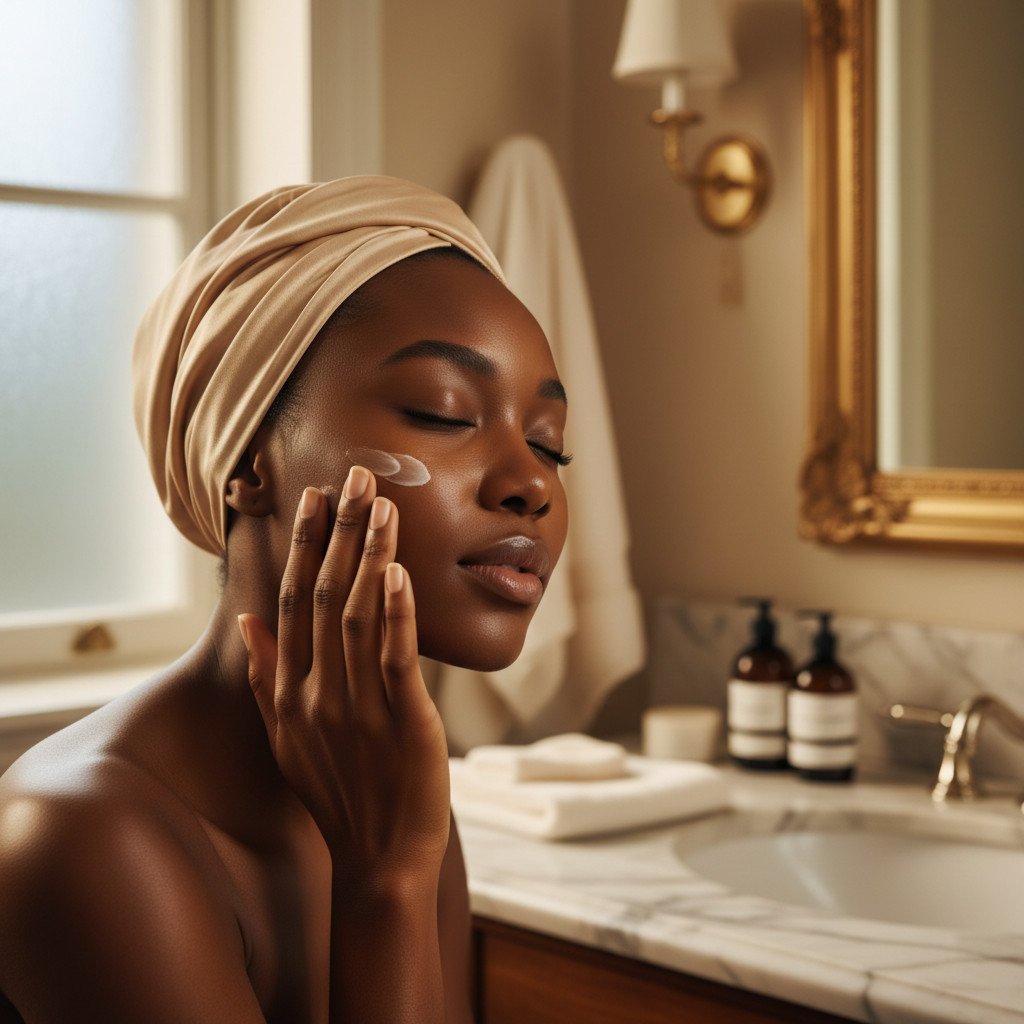
Focus on using the images to support your verbal description of patterns and symptoms, rather than letting them speak for themselves entirely. For example, “This photo from six weeks ago shows how prominent the dark spots were, and as you can see in this more recent one, they’ve lightened somewhat, but I’m still concerned about their persistence.” This approach frames the visuals as evidence supporting your narrative, reinforcing your observations rather than presenting them as standalone diagnostic claims. Remember, the goal is to facilitate a richer conversation, not to dictate a diagnosis based on an app’s interpretation.
By curating and presenting your visual evidence thoughtfully, you transform a potentially overwhelming amount of data into a powerful tool that aids your clinician in understanding your unique skin concerns and developing the most effective treatment plan for your melanin-rich skin.
How to Phrase App Findings So Clinicians Focus on the Pattern, Not the Gimmick
Bringing app findings into a clinical visit requires careful communication. The way you phrase your observations can significantly impact how your clinician receives and interprets the information. The key is to present the app’s output as supplementary evidence for your personal observations and patterns, rather than as a definitive diagnosis or a challenge to their expertise. For Black women, whose experiences with healthcare bias can be particularly acute, this nuanced communication is even more crucial to ensure your concerns are heard and taken seriously.
Shifting from “The App Says” to “I’ve Noticed”
One of the most effective strategies is to reframe the app’s findings through your own lived experience. Instead of starting with “My app says I have X,” try phrases that center your observations and sensations, using the app as a supporting tool. This approach empowers you and grounds the discussion in your body’s reality, which is what clinicians are trained to assess.
Example phrases:
- “I’ve been using an app to track my skin’s changes, and it’s consistently highlighted increased redness/discoloration in this area [point to area]. What I’ve also noticed is that it feels warm and itchy, especially after cleansing.”
- “The app kept flagging this area [point to area] for texture irregularities, but what matters most to me is that it burns and darkens after irritation. I’ve documented this in my notes, and the app’s visuals seem to capture the surface changes.”
- “I’m not asking you to trust the app’s ‘score’ or diagnosis; I’m showing you the pattern I’ve been tracking. For instance, it frequently points out dryness around my cheeks, and I’ve personally felt a persistent tightness and flakiness there for the past few months.”
- “I’ve used an app to monitor my hyperpigmentation. While I don’t rely on its exact measurements, it’s helped me see that these spots [point to spots] appear to be darkening more rapidly than others, which aligns with my concern about their progression.”
This phrasing demonstrates that you are using the app as a tool for observation and documentation, not as a diagnostic authority. It shows you are engaged in understanding your skin but are ultimately seeking professional interpretation and guidance.
Focusing on Observable Changes and Symptoms
Clinicians are trained to look for objective signs and listen to subjective symptoms. When discussing app findings, translate them into these terms. If an app identifies “clogged pores,” describe what you observe: “The app consistently points out what it calls ‘clogged pores’ on my forehead. I’ve noticed more small bumps and a rougher texture there, and I’m concerned about increasing breakouts.”
If the app highlights “uneven skin tone,” explain your experience: “My app often notes ‘uneven skin tone,’ and I’ve personally been struggling with post-inflammatory hyperpigmentation that lingers for months after a breakout. I’ve used the app to track how slowly these dark spots fade.” This helps the clinician connect the app’s abstract assessment to concrete, clinically relevant observations and your personal distress.
Presenting Timelines and Visuals as Evidence of Patterns
When showing screenshots or selfies, frame them as evidence of a pattern or progression. “These photos, which I’ve been taking with the help of an app’s consistent lighting feature, show how this patch of discoloration [point to area] has gradually spread over the last three months. I’ve also noticed it becomes more prominent when I’m stressed.”
The goal is to use the app’s data to illustrate your story, not to replace it. Your personal narrative, combined with your clinician’s expertise, is the most powerful tool for effective care. By carefully choosing your words, you can ensure that your app findings contribute positively to your consultation, allowing your clinician to focus on the real patterns and symptoms that matter for your melanin-rich skin.
What to Ask When the App and Your Lived Experience Do Not Match
It’s not uncommon for the “insights” provided by a skin analysis app to feel disconnected from your actual lived experience. This discrepancy can be particularly frustrating for Black women, given the inherent biases in many AI algorithms that often misinterpret or overlook concerns specific to melanin-rich skin. When your app’s assessment doesn’t align with what you see, feel, or know about your skin, it’s crucial to address this gap constructively during your professional visit. This is an opportunity to advocate for yourself and ensure your clinician understands your unique reality.
Acknowledging the Discrepancy and Seeking Clarification
The first step is to openly acknowledge the mismatch without dismissing the app entirely or becoming defensive. You can frame it as a point of confusion that you’re seeking professional insight on. This approach invites your clinician to educate you and provide their expert perspective.
Example phrases:
- “I’ve been using a skin analysis app, and it consistently tells me my skin is ‘highly hydrated,’ but I experience persistent tightness and flakiness, especially after showering. Could you help me understand why there might be such a difference between what the app suggests and how my skin actually feels?”
- “My app frequently flags my skin as having ‘minimal hyperpigmentation,’ but I’m deeply concerned about these dark spots [point to them] that have been bothering me for months. Is there something about how these apps analyze darker skin tones that might lead to this kind of discrepancy?”
- “The app suggests my ‘skin age’ is significantly older than my chronological age, which is disheartening. However, my primary concern is actually this persistent irritation and uneven texture. Could we focus on what’s truly happening with my skin’s health rather than the app’s numerical assessment?”
- “I brought some app screenshots that show it identifying ‘redness’ in certain areas, but on my skin, these areas appear more purple or brownish. Is this a common misinterpretation for darker skin, and what should I be looking for instead?”
These questions invite your clinician to explain the limitations of such apps, particularly concerning diverse skin tones, and to re-center the conversation on your actual symptoms and concerns. It also provides an opportunity for them to educate you on how certain conditions present on melanin-rich skin, which might differ from what generic apps are programmed to detect.
Emphasizing Your Lived Experience and Symptoms
When the app’s assessment diverges from your experience, always prioritize your subjective symptoms and observations. Your body’s signals are the most reliable indicators of its health. If an app says your barrier is strong but your skin feels constantly irritated, trust your feeling and articulate it clearly.
Focus on:
- Sensations: “It feels itchy/burning/tight/sensitive.”
- Visuals: “I see flakiness/bumps/discoloration that wasn’t there before.”
- Triggers: “It gets worse after using X product/in certain weather/during stress.”
- Impact on quality of life: “This condition is causing me discomfort/affecting my confidence/making it hard to sleep.”
For example, if an app rates your acne severity as low, but you’re experiencing painful cystic breakouts that leave significant post-inflammatory hyperpigmentation, articulate that. “While the app might not rate my acne as severe, these painful cysts [point to them] are deeply affecting me, and the dark marks they leave behind are a major concern. I’ve tracked their appearance and the slow fading of the PIH with photos, which I can show you.” This approach validates your experience and ensures your clinician understands the true impact of your condition, regardless of what an algorithm suggests.
Seeking Professional Interpretation and Guidance
Ultimately, your clinician’s expertise is paramount. Use the discrepancy as an opportunity to gain a deeper understanding of your skin from a professional perspective. Ask them to perform a thorough visual examination and to explain their findings in relation to what you’ve observed and what the app has suggested. This collaborative approach ensures that your concerns are addressed with the highest level of professional care, tailored specifically to your melanin-rich skin.
How App Data Can Support Aesthetic Consults Without Overselling Precision
Aesthetic consultations, whether for injectables, laser treatments, or advanced facials, are highly personalized experiences. While AI and app-based skin analysis tools might seem like a natural fit for quantifying skin concerns, it’s crucial to approach their data with a realistic understanding of their limitations, especially for melanin-rich skin. The goal is to use app data to support your aesthetic goals and provide a historical context, not to dictate treatment or oversell the app’s diagnostic precision.
Providing a Visual History for Targeted Concerns
One of the most valuable contributions of app data in an aesthetic consult is its ability to provide a visual timeline of specific concerns. For example, if you’re seeking treatment for hyperpigmentation, a series of consistent selfies taken over several months can show the aesthetician the onset, progression, and any previous attempts at lightening the spots. This helps them understand the longevity and recalcitrance of the pigmentation, informing their treatment recommendations.
Similarly, if you’re concerned about fine lines or texture, a timeline of images can illustrate how these concerns have evolved. This objective visual evidence is far more helpful than relying solely on memory. It allows the aesthetician to see patterns that might not be immediately apparent in a single consultation, helping them tailor a treatment plan that addresses your specific, long-term concerns rather than just a snapshot of your skin.
Documenting Responses to Previous Treatments or Products
Many individuals seeking aesthetic treatments have already tried various products or procedures. App tracking can help document the skin’s response to these previous interventions. For instance, if you’ve tried a particular serum for brightening, and your app’s tracking shows no significant change in skin tone over two months, this information can guide your aesthetician away from similar ingredients or approaches. Conversely, if an app’s hydration scores briefly improved with a specific moisturizer, it might suggest a product category that works well for your skin.
This historical data helps your aesthetician understand your skin’s reactivity and what it has responded to (or not responded to) in the past. It reduces guesswork and allows for a more informed discussion about potential treatment pathways, minimizing the risk of recommending treatments that have already proven ineffective for you. It also helps manage expectations by showing how quickly or slowly your skin tends to respond to changes.
Framing App Data as a Conversation Starter, Not a Prescription
When presenting app data in an aesthetic consult, always frame it as a tool that helped you observe your skin, rather than a definitive assessment. Avoid phrases like “The app says I need X treatment” or “My app shows I have Y problem.” Instead, use language that invites discussion and professional interpretation.

Example phrases for aesthetic consults:
- “I’ve been using an app to track my skin’s texture, and it consistently highlights roughness around my jawline. I’m interested in treatments that could help refine this area.”
- “These app-generated images show how my post-inflammatory hyperpigmentation tends to linger for a long time. I’m hoping to explore options for faster and more effective dark spot correction.”
- “The app has helped me monitor the appearance of fine lines around my eyes. I’m curious about what aesthetic treatments might be suitable for addressing these concerns while maintaining a natural look.”
- “I’ve noticed, and the app’s tracking seems to confirm, that my skin tends to get quite oily in the T-zone. What aesthetic treatments or professional products would you recommend for managing oiliness and improving pore appearance?”
This approach respects the aesthetician’s expertise and allows them to integrate your observations into their comprehensive assessment. They can then cross-reference the app’s data with their professional eye, palpation, and understanding of your skin type and concerns, particularly for melanin-rich skin where common aesthetic issues like PIH and melasma require specialized approaches. The app becomes a supportive tool that enriches the conversation, helping you and your aesthetician collaborate on achieving your desired aesthetic outcomes.
How to Navigate This Topic
Navigating the conversation around app-based skin analysis with your dermatologist or aesthetician can feel like walking a tightrope. On one hand, you’ve invested time and effort into tracking your skin, and you want that data to be useful. On the other, you want to ensure your clinician takes your concerns seriously without feeling like you’re challenging their expertise or relying on unvalidated technology. For Black women, who often face unique challenges in healthcare settings, mastering this navigation is key to effective advocacy for your skin.
Preparation is Key
Before your appointment, take time to organize your thoughts and your data. Don’t just show up with your phone and start scrolling. Identify the most relevant screenshots, selfies, and notes. Think about the specific patterns or changes you want to highlight. Prepare a concise summary of your main concerns and how the app data supports your observations. This pre-work demonstrates respect for your clinician’s time and shows that you’ve put thought into your visit.
Consider writing down a few key points or questions. This can help you stay on track during the appointment, especially if you feel nervous or rushed. Remember, the goal is to use the app data to illustrate your personal experience and observations, not to present it as a definitive diagnostic report. Focus on how the app helped you notice a trend, track a symptom, or document a change over time.
Be Respectful and Collaborative
Approach the conversation with an attitude of collaboration, not confrontation. Start by stating your primary concerns, and then introduce the app data as supplementary information. For example, “My main concern today is this persistent hyperpigmentation on my cheeks. I’ve also been using a skin tracking app, and it’s helped me document how slowly these spots fade over several months. I have some photos if that would be helpful.”
Listen actively to your clinician’s response. They may explain the limitations of such apps, especially for melanin-rich skin, or how they interpret visual data. Be open to their professional perspective. If they dismiss the app entirely, try to pivot back to your subjective experience and objective observations. “I understand the app isn’t a diagnostic tool, but it did help me notice that this area feels particularly rough and looks dull. What are your thoughts on that?”
Prioritize Your Symptoms and Clinical History
Always remember that your clinical history, your current symptoms, and a thorough visual and physical examination by a professional are the gold standard for diagnosis and treatment planning. While app data can provide a useful context, it should never overshadow these critical elements.
If your clinician seems hesitant about the app data, gently steer the conversation back to what truly matters: “I appreciate your insights on the app. My main goal is to understand what’s causing this persistent itching and to find an effective solution for these breakouts. Based on what you see and what I’ve told you about my symptoms, what do you recommend?” This re-focuses the discussion on your health and well-being, leveraging their expertise to address your specific needs. By navigating this topic thoughtfully, you empower yourself to be a more effective advocate for your skin’s health.
| Material to Bring | Why It Helps the Clinician | How to Frame It (Example Phrases) |
|---|---|---|
| Consistent Selfies/Photos (from app or phone) | Shows objective changes, progression/regression of concerns, and response to treatments over time. Visual evidence is powerful. | “I’ve been taking consistent photos, and these show how this dark spot has gradually lightened/darkened over the past X weeks/months.” “These images illustrate the pattern of breakouts I’ve been experiencing, especially around my jawline.” |
| App-generated Timelines/Graphs (focused on trends) | Provides a structured overview of changes in specific metrics (e.g., texture, tone, ‘inflammation’ indicators) over time, highlighting patterns. | “The app helped me compile this timeline showing how my skin’s ‘texture score’ has fluctuated, which aligns with when I feel my skin is rougher.” “This graph shows a trend of increased ‘redness’ in this area, which I’ve noticed corresponds with periods of irritation.” |
| Symptom Notes (from app or personal journal) | Connects visual changes with subjective experience (itching, burning, tightness, pain), triggers, and impact on daily life. | “Alongside the app’s visual tracking, I’ve noted that this area feels intensely itchy and tight, especially after using X product.” “I’ve been tracking my symptoms, and these breakouts are often painful and leave significant post-inflammatory hyperpigmentation.” |
| Product History/Routine Log | Helps identify potential irritants, allergens, or effective ingredients. Provides context for skin changes. | “I’ve kept a log of my skincare products, and I noticed this flare-up occurred shortly after introducing this new serum.” “Here’s my current routine; I’m curious if any of these ingredients might be contributing to my concerns.” |
| Selected App Screenshots (highlighting specific areas/concerns) | Draws attention to particular areas of concern identified by the app, which you also observe. | “The app consistently flags this area for what it calls ‘uneven tone,’ and I’ve also been concerned about the persistent dark patches here.” “This screenshot shows the app’s analysis of my pore visibility, and I’ve personally noticed my pores seem larger in this zone.” |
Where to Go Next
Understanding how to effectively leverage AI and app-based skin analysis tools is just one piece of the larger puzzle of navigating your skincare journey, especially for Black women and those with melanin-rich skin. Your skin is unique, and advocating for its specific needs requires a comprehensive approach that combines self-awareness with informed engagement with healthcare professionals. This journey involves not only tracking your skin but also understanding how to communicate your concerns, prepare for appointments, and interpret professional advice.
To further empower yourself on this path, consider exploring other resources that delve into the nuances of skincare for darker skin tones. These resources can help you build a more robust understanding of your skin, prepare for various consultations, and ensure you receive the equitable and effective care you deserve. The more informed you are, the better equipped you will be to collaborate with your clinicians and achieve your desired skin health outcomes.
Quick Principles
Navigating the integration of app results into your clinical visits can be distilled into a few core principles. These guidelines will help you maximize the utility of your personal tracking while ensuring a productive and respectful dialogue with your dermatologist or aesthetician, especially when advocating for your melanin-rich skin.
- Apps are Tools, Not Diagnosticians: Remember that consumer apps are for personal tracking and observation, not medical diagnosis. Their algorithms often have biases, particularly for diverse skin tones. Your clinician’s expertise is paramount.
- Focus on Patterns, Not Scores: Clinicians care about trends, changes, and your lived experience. An app’s numerical “score” is less important than its ability to help you track consistent issues like persistent dryness, spreading hyperpigmentation, or recurring breakouts.
- Prioritize Your Lived Experience: Your subjective symptoms (itching, burning, tightness, pain) and objective observations (flaking, discoloration, bumps) are the most valuable pieces of information. Use app data to support and illustrate these, not to replace them.
- Curate Your Visuals: Select only the most relevant, clear, and consistently taken photos or screenshots. Organize them chronologically to show progression or regression. Avoid overwhelming your clinician with disorganized data.
- Frame Findings as Observations: Use language that centers your experience and uses the app as a supporting tool. Instead of “The app says I have X,” try “I’ve noticed Y, and the app’s tracking seems to confirm this pattern.”
- Be Prepared for Discrepancies: If the app’s findings don’t match your experience, use it as an opportunity to ask questions and seek professional clarification. This helps you understand the app’s limitations and gain deeper clinical insight.
- Collaborate, Don’t Confront: Approach the conversation with respect for your clinician’s expertise. The goal is to work together to understand and address your skin concerns, using all available information, including your diligently collected personal data.
- Educate Yourself: Continue to learn about how skin conditions present on melanin-rich skin. This knowledge empowers you to better interpret your own observations and communicate effectively with your care providers.
By adhering to these principles, you transform your app-based tracking from a potential source of confusion into a powerful asset for informed self-advocacy and collaborative care for your beautiful, melanin-rich skin.
Frequently Asked Questions
What is the main benefit of bringing app results to a derm or aesthetic visit?
The main benefit is providing your clinician with a documented timeline and visual history of your skin concerns, helping them understand patterns, progression, and your responses to previous treatments. It acts as supplementary evidence to your verbal descriptions, enhancing the depth of the consultation.
Should I trust an app’s diagnosis for my skin condition?
No, you should not trust an app’s diagnosis as definitive. Consumer apps are not medical devices and their algorithms often have biases, especially for melanin-rich skin. Always seek a professional diagnosis from a qualified dermatologist or aesthetician, who considers your full medical history and performs a comprehensive examination.
How can I present app screenshots without seeming like I’m self-diagnosing?
Frame app screenshots as visual aids that helped you track personal observations. For example, say, “I’ve been using an app to track my skin, and these screenshots helped me notice a consistent pattern of [concern] in this area, which aligns with what I’ve been feeling.” This emphasizes your observation, not the app’s interpretation.
What kind of app data is most useful for a clinician?
The most useful app data includes consistent selfies showing progression or regression of concerns, timelines of changes in texture or tone, and notes correlating app findings with your subjective symptoms (e.g., itching, burning). Data that highlights patterns over time is far more valuable than single “scores” or generic diagnostic labels.
What if my app results contradict my personal experience?
If app results contradict your personal experience, prioritize your lived experience and symptoms. Use the discrepancy as a talking point with your clinician, asking them to explain why the app might show one thing while you feel another. This can help uncover biases in the app or provide valuable clinical insights.
Can app data help with aesthetic treatments for dark skin?
Yes, app data can support aesthetic consultations by providing a visual history of concerns like hyperpigmentation or texture changes. This helps the aesthetician understand the longevity and specific presentation of your issues, guiding them in recommending appropriate and safe treatments for melanin-rich skin, without overselling the app’s precision.
Is it better to print out app data or show it on my phone?
Showing app data on your phone or tablet is often preferred, as it allows for zooming in on details and easy navigation through timelines. However, ensure your device is charged and your selected visuals are organized in a dedicated album or document for quick access, demonstrating respect for your clinician’s time.
Shop skincare journals on Amazon.
Shop melanin skincare products on Amazon.
Shop facial cleansing devices on Amazon.
INTERNAL LINKING OPPORTUNITIES
AI and App-Based Skin Analysis: Bias, Limitations, & Best Practices
Beauty Devices and Treatments for Dark Skin
How AI Sees Skin: Why Dark Tones Are Underrepresented
Dermatology AI on Dark Skin: What the Research Shows
Beauty and Skin Age Apps: How Bias Shows Up for Black Women
Using AI Skin Tools Safely on Melanin-Rich Skin
Preparing for Skin Appointments: Photos, Timelines, and Priorities
Asking About Diagnoses, Tests, and Treatment Options
Describing Symptoms on Dark Skin So Clinicians Hear Severity