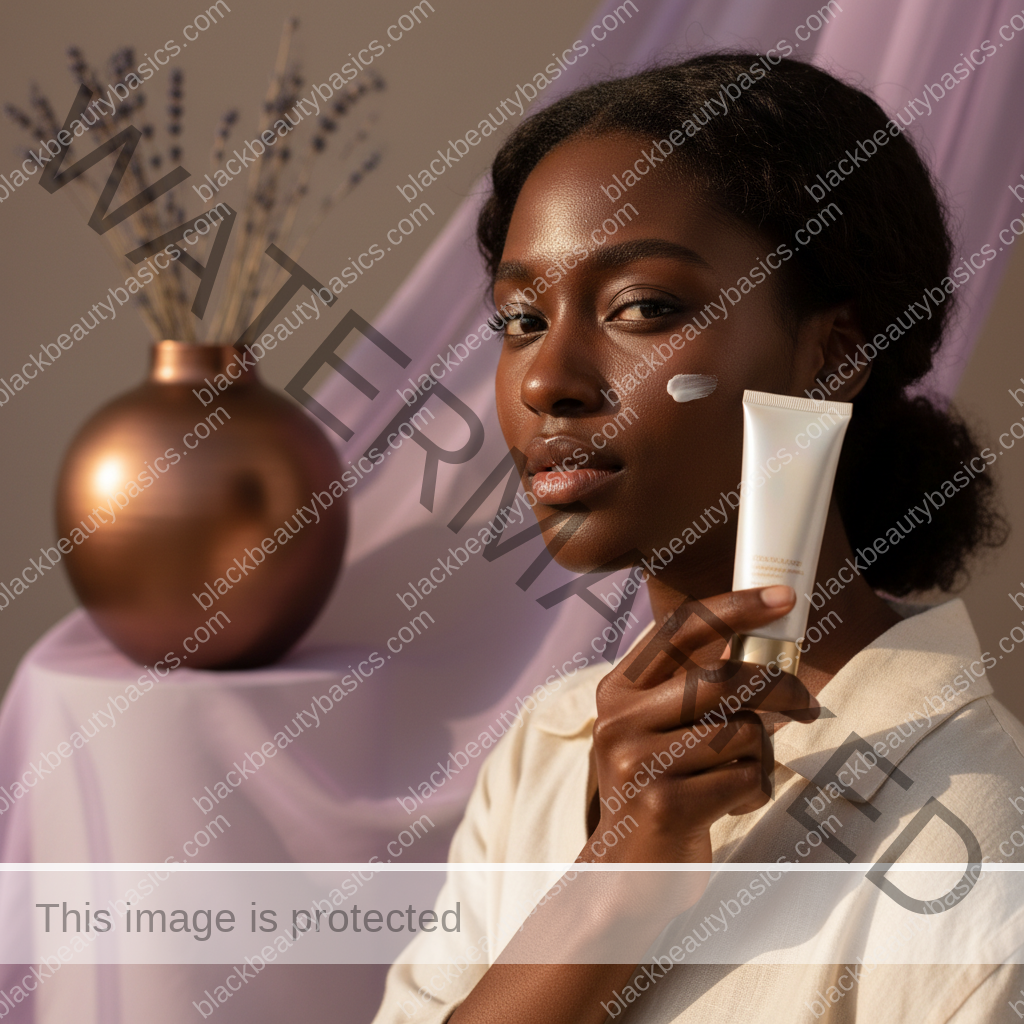
For the woman of color, our skin is a canvas of rich, nuanced beauty, a testament to resilience and grace. Yet, navigating the world of skincare often presents unique challenges, especially when it comes to the essential step of sun protection. The quest for a sunscreen that not only safeguards our precious melanin but also disappears seamlessly under the scrutiny of photography lighting has long been a source of frustration, threatening to obscure our radiance with an unwelcome ghostly veil.
The Unseen Barrier: Understanding Sunscreen Flashback and White Cast on Dark Skin
The luminous glow of melanin-rich skin is a masterpiece, deserving of protection that enhances, rather than diminishes, its inherent beauty. For too long, the beauty industry has overlooked the specific needs of African American women, leading to sunscreens that leave behind a tell-tale white cast or, even worse, create a phenomenon known as “flashback” under camera flashes. This isn’t just an aesthetic inconvenience; it’s a barrier to consistent sun protection, as many women opt to skip sunscreen altogether on days they anticipate being photographed, leaving their skin vulnerable to sun damage, hyperpigmentation, and premature aging.
Let’s demystify these terms and understand why they disproportionately affect darker skin tones, ensuring you’re equipped with the knowledge to make informed choices for your skin’s health and photographic perfection.
What is White Cast? The Visible Residue
White cast refers to the chalky, ashy, or grayish film that some sunscreens leave on the skin’s surface. This is primarily associated with physical (or mineral) sunscreens, which contain active ingredients like zinc oxide and titanium dioxide. These minerals work by sitting on top of the skin and physically blocking UV rays by reflecting them away. On lighter skin tones, this reflective quality might be less noticeable, but on darker complexions, these white particles stand out starkly against the natural pigment, creating an undesirable pallor.
The Science Behind the Sheen: Zinc Oxide and Titanium Dioxide
- Zinc Oxide: A broad-spectrum UV filter, zinc oxide is highly effective at blocking both UVA and UVB rays. Historically, it was known for its thick, pasty texture and prominent white cast. Modern formulations, however, have made significant strides, utilizing micronized or non-nano particles to reduce visibility.
- Titanium Dioxide: Also a broad-spectrum filter, titanium dioxide is particularly effective against UVB rays. Like zinc oxide, its reflective nature can leave a white residue.
The challenge lies in the particle size and formulation. Larger particles are more reflective and thus more prone to leaving a white cast. While micronized (smaller) particles help, they can sometimes reduce the sunscreen’s SPF efficacy if not formulated correctly. The goal for formulators catering to dark skin is to create products where these particles are so finely milled or encapsulated that they become virtually invisible.
What is Flashback? The Photographic Foe
Flashback is a specific photographic phenomenon where certain ingredients in skincare or makeup products reflect light from a camera flash, resulting in bright, white patches on the skin in photographs. While white cast is visible in natural light, flashback only appears under the harsh glare of a flash. It can make your face look ghostly, uneven, or even like you’ve applied powder only in certain areas.
The Culprits of Camera Flashback
- Zinc Oxide and Titanium Dioxide: These mineral filters are the primary culprits. Their light-reflecting properties, which are beneficial for sun protection, become a photographic liability under a flash.
- Silica: Often used in primers, setting powders, and some sunscreens to absorb oil and create a matte finish, silica is also highly reflective under flash photography.
- Mica: A common ingredient for adding shimmer or glow, mica can also cause flashback, especially in larger concentrations.
It’s important to note that while chemical sunscreens (which absorb UV rays rather than reflecting them) are generally less prone to flashback, some formulations might still contain reflective ingredients like silica or mica for other purposes. Therefore, vigilance is key when selecting any product you plan to wear under photographic lighting.
The Quest for Invisible Protection: Chemical vs. Mineral Sunscreens
Understanding the fundamental differences between chemical and mineral sunscreens is crucial for navigating the world of sun protection without the fear of white cast or flashback. Each type offers distinct advantages and disadvantages, particularly for melanin-rich skin.
Chemical Sunscreens: The Absorbers
Chemical sunscreens work by absorbing UV radiation and converting it into heat, which is then released from the skin. Their active ingredients include compounds like oxybenzone, avobenzone, octinoxate, octisalate, and homosalate. These ingredients are typically clear and blend seamlessly into all skin tones, making them a popular choice for those concerned about white cast.
Advantages for Dark Skin:
- No White Cast: The primary benefit is their ability to disappear completely on the skin, leaving no visible residue.
- Smooth Finish: Often formulated to be lightweight and non-greasy, providing a comfortable feel under makeup.
- Less Prone to Flashback: Since they absorb light rather than reflect it, chemical sunscreens are generally safer for photography.
Potential Considerations:
- Sensitivity: Some individuals, particularly those with sensitive skin, may experience irritation or allergic reactions to certain chemical filters.
- Environmental Concerns: Certain chemical filters (like oxybenzone and octinoxate) have raised environmental concerns regarding coral reefs, leading to bans in some regions.
- Heat Absorption: While minimal, the conversion of UV light to heat might be a concern for those with conditions like melasma, which can be exacerbated by heat.
Mineral Sunscreens: The Reflectors
As discussed, mineral sunscreens (also known as physical sunscreens) use zinc oxide and titanium dioxide to create a physical barrier on the skin that reflects UV rays. While traditionally associated with white cast, advancements in formulation have led to more cosmetically elegant options.
Advantages for Dark Skin (Modern Formulations):
- Gentle on Skin: Generally well-tolerated by sensitive skin types, as they sit on the skin’s surface rather than being absorbed.
- Immediate Protection: They offer immediate protection upon application, unlike chemical sunscreens which require about 15-20 minutes to become effective.
- Broad-Spectrum Protection: Both zinc oxide and titanium dioxide provide excellent broad-spectrum protection.
Challenges for Dark Skin (Traditional Formulations):
- White Cast: The most significant hurdle, though greatly reduced in modern, micronized formulations.
- Flashback: Still a concern, especially with higher concentrations or larger particle sizes of zinc oxide and titanium dioxide.
- Texture: Can sometimes feel thicker or heavier than chemical sunscreens.
Hybrid Sunscreens: The Best of Both Worlds?
Some sunscreens combine both chemical and mineral filters. These “hybrid” formulations aim to leverage the benefits of both types – the broad-spectrum protection and gentleness of minerals with the cosmetic elegance and invisible finish of chemical filters. For dark skin, a well-formulated hybrid can be an excellent compromise, offering robust protection with minimal white cast or flashback.
Comparison: Chemical vs. Mineral Sunscreens for Dark Skin & Photography
| Feature | Chemical Sunscreens | Mineral Sunscreens (Modern) |
|---|---|---|
| White Cast | Rarely, if ever | Significantly reduced with micronized/non-nano particles; some may still show a slight tint on very dark skin |
| Flashback | Generally low risk (unless other reflective ingredients are present) | Higher risk due to reflective zinc oxide/titanium dioxide, even micronized versions |
| Mechanism | Absorbs UV rays and converts to heat | Reflects UV rays off the skin’s surface |
| Active Ingredients | Oxybenzone, Avobenzone, Octinoxate, Octisalate, Homosalate, etc. | Zinc Oxide, Titanium Dioxide |
| Skin Feel | Often lightweight, non-greasy | Can be slightly thicker, but many modern formulas are elegant |
| Sensitivity | Potential for irritation in sensitive individuals | Generally well-tolerated by sensitive skin | Environmental Impact | Some filters raise concerns (e.g., coral reefs) | Generally considered reef-safe |
Strategies for a Flawless Finish: Avoiding White Cast and Flashback
Achieving invisible sun protection for melanin-rich skin under photographic lighting is entirely possible with the right knowledge and techniques. It’s about being discerning with your product choices and strategic with your application.
Product Selection: Your First Line of Defense
Opt for Tinted Mineral Sunscreens
If you prefer mineral sunscreens, tinted versions are a game-changer for dark skin. These formulations incorporate iron oxides or other pigments to match a range of skin tones, effectively canceling out the white cast. Look for brands that offer a diverse shade range for their tinted sunscreens, ensuring a true match for your complexion. A well-matched tinted mineral sunscreen can even double as a light foundation or primer, streamlining your routine.
Shop Tinted Mineral Sunscreen on Amazon
Embrace Chemical Sunscreens (with Caution)
For guaranteed invisibility and minimal flashback risk, chemical sunscreens are often the safest bet. Look for formulations specifically designed for daily wear and under makeup. Pay attention to reviews from other women with dark skin to gauge their performance. If you have sensitive skin, patch test new chemical sunscreens before full application.
Shop Chemical Sunscreen on Amazon
Seek Out “No White Cast” or “Invisible” Formulations
Many brands are now explicitly marketing sunscreens as “no white cast” or “invisible” for darker skin tones. These often feature advanced micronized mineral filters or innovative chemical blends. Always check the ingredient list for zinc oxide and titanium dioxide, and if present, ensure they are described as “non-nano” or “micronized.”
Shop Invisible Sunscreen for Dark Skin on Amazon
Avoid Reflective Ingredients in Other Products
Remember that flashback isn’t solely caused by sunscreen. Check your primers, setting powders, and foundations for ingredients like silica, mica, or excessive shimmer, especially if you know you’ll be photographed with flash. Opt for matte or satin finishes for photography days.
Shop Flashback-Free Setting Powder on Amazon
Application Techniques: Mastering the Blend
Apply in Layers
Instead of applying a thick layer all at once, apply your sunscreen in thin, even layers. This allows the product to absorb and blend more effectively, reducing the likelihood of a visible cast. Wait a few minutes between layers for optimal absorption.
Warm the Product
Dispense a small amount of sunscreen onto your fingertips and rub them together briefly to warm the product. This can help it spread more smoothly and melt into the skin more easily, especially for thicker mineral formulations.
Blend Thoroughly and Evenly
Use gentle, upward strokes to blend the sunscreen into your skin, paying extra attention to the hairline, jawline, and around the ears. Ensure there are no unblended patches. A damp beauty sponge can also help press the product into the skin for a seamless finish.
Shop Beauty Sponges on Amazon
Allow Time to Set
Give your sunscreen ample time (at least 10-15 minutes) to fully set and absorb before applying makeup. This prevents pilling and ensures the sunscreen has settled into an invisible finish.
Set with a Translucent or Colored Powder (Carefully)
If you’re still concerned about a slight cast or wish to mattify, use a very finely milled, translucent setting powder or a powder that matches your skin tone. Apply sparingly with a fluffy brush, focusing on areas prone to oiliness. Avoid powders with high silica content if flash photography is a concern.
Shop Translucent Setting Powder for Dark Skin on Amazon
Beyond the Face: Sunscreen for the Body and Special Occasions
While our faces often receive the most attention, protecting the skin on our bodies is equally important, especially during events or photoshoots where more skin might be exposed. The same principles apply, but with a few additional considerations.
Body Sunscreens for Dark Skin
For the body, the challenge of white cast can be even more pronounced due to larger surface areas. Look for body sunscreens that are:
- Lightweight Lotions or Gels: These tend to blend more easily than thicker creams.
- Sprays (Non-Aerosol): A convenient option for quick application, but ensure even coverage and rub in thoroughly.
- Tinted Body Sunscreens: Some brands offer tinted body lotions with SPF that can provide a subtle glow while protecting.
Shop Body Sunscreen on Amazon
Special Occasions and Photography
When you know you’ll be under intense photography lighting (e.g., weddings, professional shoots, red carpet events), meticulous planning is key:
- Test Your Products: Always do a “flash test” at home with your chosen sunscreen and makeup. Take a photo with a flash in varying light conditions to see how your products perform.
- Communicate with Your Makeup Artist: If you’re hiring a professional, discuss your concerns about white cast and flashback. A skilled artist will know which products to use and how to apply them to ensure a flawless finish.
- Consider SPF in Makeup: While makeup with SPF is a good bonus, it rarely provides sufficient protection on its own. It’s best used as a supplemental layer over a dedicated sunscreen.
- Reapply Thoughtfully: If you need to reapply sunscreen throughout the day, especially over makeup, consider using a sunscreen mist or a powder sunscreen that won’t disturb your look. Again, test these for flashback.
Shop Sunscreen Mist on Amazon
Tips for Flawless Sunscreen Application Under Photography
| Tip Category | Actionable Advice | Why It Works |
|---|---|---|
| Product Choice | Opt for chemical sunscreens or tinted mineral sunscreens formulated for dark skin. | Chemicals absorb, tinted minerals blend; both minimize visible cast. |
| Ingredient Check | Avoid high concentrations of zinc oxide, titanium dioxide, silica, and mica in products for photography days. | These ingredients are highly reflective under flash. |
| Application Technique | Apply sunscreen in thin, even layers, blending thoroughly. | Prevents product buildup and ensures seamless absorption. |
| Setting Time | Allow 10-15 minutes for sunscreen to fully set before applying makeup. | Ensures product stability, reduces pilling, and allows for invisible finish. |
| Makeup Pairing | Use matte or satin finish foundations and powders; avoid overly luminous products. | Reduces overall reflectivity that can contribute to flashback. |
| The “Flash Test” | Always take a photo with flash at home to test your full face of products. | Identifies potential flashback issues before a crucial event. |
| Professional Help | Consult with your makeup artist about flashback concerns for important events. | Leverages expert knowledge and specialized products. |
FAQ: Your Sunscreen and Photography Questions Answered
Q1: Why is sunscreen so important for dark skin, even though we don’t burn as easily?
A1: While melanin provides some natural protection against UV radiation, it does not block all harmful rays. Darker skin tones are still susceptible to sun damage, including premature aging, sunspots, and an increased risk of skin cancer. Crucially, sun exposure can exacerbate hyperpigmentation (dark spots) and melasma, which are common concerns for African American women. Consistent sunscreen use is vital for maintaining an even skin tone and preventing these issues.
Q2: Can I rely on makeup with SPF for adequate sun protection?
A2: Generally, no. While makeup with SPF offers a beneficial layer of protection, it’s rarely sufficient on its own. To achieve the SPF listed on a product, you typically need to apply a much thicker layer than most people use for makeup. It’s always best to apply a dedicated sunscreen with an SPF of 30 or higher as your primary sun protection, then layer SPF makeup on top for added benefits.
Q3: Are there any specific sunscreen ingredients I should look for or avoid for dark skin?
A3: For dark skin, look for chemical sunscreens (e.g., with avobenzone, octinoxate) for guaranteed invisibility. If you prefer mineral sunscreens, seek out those with “micronized” or “non-nano” zinc oxide and titanium dioxide, or even better, tinted mineral formulas. Avoid traditional, untinted mineral sunscreens with larger particle sizes if white cast is a concern. For photography, be mindful of products containing high levels of silica or mica, which can cause flashback.
Q4: How much sunscreen should I apply to ensure adequate protection without a white cast?
A4: For the face, the general recommendation is about a quarter teaspoon, or two finger-lengths worth. For the body, use about a shot glass full for exposed areas. The key is to apply this amount in thin, even layers, blending thoroughly, rather than trying to apply it all at once. This allows the product to absorb and settle without leaving a visible residue.
Q5: What’s the best way to reapply sunscreen over makeup without disturbing my look or causing flashback?
A5: Sunscreen mists or sprays designed to be applied over makeup are excellent for reapplication. Look for lightweight, non-aerosol formulas that dry quickly and don’t contain flashback-inducing ingredients. Alternatively, a powder sunscreen with a brush applicator can work, but again, check for reflective ingredients like silica. Always do a quick flash test at home if you’re unsure.
Q6: Does sunscreen prevent tanning on dark skin?
A6: Sunscreen significantly reduces the skin’s ability to tan by blocking UV radiation. While it won’t completely stop all tanning (especially if you’re exposed for prolonged periods or not reapplying), it will help prevent excessive darkening, uneven skin tone, and sun damage. For those who wish to maintain their current complexion or prevent hyperpigmentation, sunscreen is essential.
Q7: Can sunscreens cause breakouts on dark skin?
A7: Yes, like any skincare product, certain sunscreens can cause breakouts, especially if you have acne-prone skin. Look for sunscreens labeled “non-comedogenic” (meaning they won’t clog pores) and “oil-free.” Gel or fluid formulations are often lighter and less likely to cause congestion than thick creams. Always cleanse your face thoroughly at the end of the day to remove all traces of sunscreen and makeup.
The journey to finding the perfect sunscreen for melanin-rich skin, one that offers robust protection without the dreaded white cast or photographic flashback, is a testament to our unwavering commitment to self-care and confidence. With the right knowledge and a discerning eye, you can confidently step into any light, knowing your skin is not only safeguarded but also celebrated in its full, unblemished glory. Let your radiant beauty shine through every frame, protected and proud, for you deserve nothing less than absolute perfection.
Photo lighting can reveal what bathroom lighting hides
A sunscreen can look fine in the mirror and still flash gray in photos. That does not mean your skin is the problem. It usually means the formula, lighting, makeup, or powder combination is reflecting light in a way that shows up more strongly on deep skin. Flashback is frustrating because it can make rich brown skin look dull, ashy, or mismatched in pictures where you wanted to feel confident.
Mineral filters, pale tints, heavy powder, and certain matte finishes can all contribute. So can applying too much product in one thick layer, not letting sunscreen settle, or layering a base that does not agree with SPF. Photography lighting is less forgiving than real life. Direct flash, event lighting, and phone cameras can exaggerate cast that is barely visible in person.
The solution is testing before the important day. Try the sunscreen with your actual makeup, take a flash photo, take a window-light photo, and check the neck and hairline. If the cast shows, change one variable at a time. A different SPF texture, better tint, less powder, or more settling time may fix the issue without abandoning sun protection.
Before-photo SPF checklist
- Test sunscreen with flash before weddings, events, shoots, or vacations.
- Check cast around the hairline, brows, nose, and jaw.
- Avoid stacking pale mineral SPF with heavy pale setting powder.
- Choose a tint or clear formula that respects your undertone.
What to do next
Keep this guide connected to the rest of the Sunscreen for Dark Skin series. The goal is not to treat SPF like a one-size-fits-all rule. The goal is to build sun protection that works with deep skin, real schedules, makeup, body care, outdoor plans, and hyperpigmentation goals.
A realistic SPF habit is allowed to be simple
The camera should not get the final word on your skin. Test the routine before the moment matters. The best sunscreen routine is the one that protects your skin without turning your morning into a test of discipline. For Black women and people with richly melanated skin, that also means the formula has to look right, feel comfortable, and fit the life you actually live. If the routine only works on quiet days, it is not finished yet.
Give yourself permission to adjust by season, setting, and skin mood. A beach day, a winter commute, a teen’s school morning, a beard-care routine, and a makeup day do not need the exact same texture or reapplication plan. The through-line is steady protection, less shame, and choices that respect your skin barrier.
Related next steps
Related posts:
 Testing Shades in Store and Under Real-Life Lighting for Deep Skin Tones
 Setting Powders and Sprays for Melanin-Rich Skin (No Flashback)
 Makeup for Photos and Video on Deep Skin: Lighting and Products
 Face Sunscreen Under Makeup on Melanin-Rich Skin
 Sunscreen for Black Women: No White Cast, No Breakouts – Your Melanin-Rich Skin Guide
 Mineral vs. Chemical SPF on Dark Skin: Cast, Comfort, and Choice