For generations, the radiant glow of melanin-rich skin has been a testament to enduring beauty, a canvas kissed by the sun. Yet, for too long, the essential act of sun protection has been marred by a frustrating, often disheartening, white or gray cast, leaving many of us to choose between safeguarding our skin and preserving its natural, luminous vibrancy. This is not merely a cosmetic inconvenience; it’s a barrier to holistic skin health that we, as women of color, deserve to overcome with grace and informed choice.
The Melanin Myth: Unveiling the Truth About Sunscreen and Dark Skin
For too long, a pervasive myth has lingered: that melanin-rich skin does not need sun protection. This misconception is not only dangerous but deeply rooted in a lack of understanding about how UV radiation impacts all skin tones. While our beautiful melanin does offer some inherent protection, it is by no means a complete shield against the sun’s harmful rays. Ignoring sun protection can lead to a myriad of concerns, from hyperpigmentation and premature aging to, most critically, an increased risk of skin cancer.
The journey to embracing daily SPF has been a complex one for many Black women. The beauty industry, for decades, largely overlooked the unique needs of deeper skin tones, particularly when it came to formulations that wouldn’t leave an ashy, ghostly residue. This oversight created a significant barrier, forcing us to compromise our skin’s health for its aesthetic integrity. But times are changing, and with informed choices and the right products, we can seamlessly integrate sun protection into our daily rituals, ensuring our skin remains healthy, radiant, and beautifully uncompromised.
Understanding the science behind the “white cast” is the first step towards banishing it. It’s not a flaw in your skin; it’s a formulation challenge that modern skincare has begun to address. By delving into the types of sunscreens and their ingredients, we can empower ourselves to make choices that celebrate, rather than diminish, our natural brilliance.
Why Do Some Sunscreens Leave a Gray or White Cast on Dark Skin?
The infamous white or gray cast, often referred to as “ghosting,” is primarily a phenomenon associated with certain types of sunscreens, specifically mineral or physical sunscreens. To understand why, we must look at their active ingredients and how they function on the skin.
Mineral Sunscreens: Zinc Oxide and Titanium Dioxide
Mineral sunscreens utilize zinc oxide and titanium dioxide as their active ingredients. These natural minerals work by sitting on the surface of the skin, creating a physical barrier that reflects and scatters UV radiation away from the skin. Think of them as tiny mirrors. While incredibly effective and generally well-tolerated by sensitive skin, the challenge lies in their particulate nature. When these white mineral particles are not finely milled or properly formulated, they can leave a visible white residue, especially on skin tones with more melanin.
- Zinc Oxide: A broad-spectrum blocker, meaning it protects against both UVA and UVB rays. It’s known for its soothing properties and is often recommended for sensitive or acne-prone skin. However, its natural white pigment can be pronounced in traditional formulations.
- Titanium Dioxide: Primarily blocks UVB rays and some UVA rays. It’s also gentle and effective but can contribute significantly to the white cast if not micronized or tinted.
The size of these mineral particles plays a crucial role. Older or less sophisticated formulations often use larger particles, which are more visible. Newer, advanced mineral sunscreens use micronized or nano-sized particles, which are much smaller and thus less likely to leave a noticeable cast. Some also incorporate tints to counteract the whiteness.
Chemical Sunscreens: The Invisible Alternative?
Chemical sunscreens, on the other hand, absorb UV radiation rather than reflecting it. Their active ingredients, such as oxybenzone, avobenzone, octinoxate, and octisalate, undergo a chemical reaction on the skin that converts UV rays into heat, which is then released from the skin. Because these ingredients are absorbed into the skin and do not sit on the surface as visible particles, they typically do not leave a white cast. This makes them a popular choice for those seeking an invisible finish.
However, chemical sunscreens have their own considerations. Some individuals may experience sensitivity or irritation to certain chemical filters. There have also been ongoing discussions and research regarding the absorption of these chemicals into the bloodstream and their potential environmental impact. For these reasons, many prefer mineral sunscreens, prompting brands to innovate and improve their mineral formulations for deeper skin tones.
The Art of Selection: Choosing the Right Sunscreen for Melanin-Rich Skin
The quest for the perfect sunscreen for deep skin tones is no longer a futile search; it’s an informed selection process. The market has evolved, offering a plethora of options designed with us in mind. The key is knowing what to look for and understanding the nuances of different formulations.
Embrace the New Era of Mineral Sunscreens
If you prefer mineral sunscreens for their gentle nature and broad-spectrum protection, rejoice! Formulators have made incredible strides. Look for terms like “micronized,” “nano-particle,” “sheer,” “transparent zinc oxide,” or “tinted mineral sunscreen.”
- Micronized or Nano-Particle Formulas: These refer to mineral particles that have been ground down to an incredibly small size. This allows them to spread more evenly and become virtually invisible on the skin, significantly reducing the white cast. Ensure the brand explicitly states these features.
- Tinted Mineral Sunscreens: This is a game-changer. By incorporating iron oxides or other pigments, these sunscreens are tinted to match various skin tones, effectively neutralizing the white base of the minerals. Many brands now offer a range of shades, from light to deep, to ensure a seamless blend. This is often the most reliable way to avoid a cast with mineral formulations.
- Invisible Zinc Oxide: Some brands have developed proprietary technologies to make zinc oxide appear clear on the skin. While still mineral-based, these formulations are designed to be truly transparent.
Shop Tinted Mineral Sunscreen on Amazon
Exploring the Benefits of Chemical Sunscreens
For those who prioritize an absolutely invisible finish and have no sensitivities to chemical filters, modern chemical sunscreens are an excellent choice. They are inherently designed not to leave a white cast because their active ingredients are absorbed, not reflected.
- Lightweight Textures: Chemical sunscreens often come in very fluid, serum-like, or gel textures that absorb quickly and feel weightless on the skin, making them ideal for layering under makeup or for those with oily skin.
- No White Cast: This is their primary advantage in this discussion. They blend seamlessly into all skin tones, leaving no visible residue.
When selecting a chemical sunscreen, look for “broad-spectrum” protection (UVA/UVB) and an SPF of 30 or higher. Pay attention to ingredients if you have sensitivities. Newer chemical filters like Tinosorb S and M (though not yet FDA-approved in the US for over-the-counter sunscreens, found in many international formulations) are known for their stability and broad-spectrum protection with excellent cosmetic elegance.
Shop Lightweight Chemical Sunscreen on Amazon
Hybrid Sunscreens: The Best of Both Worlds?
Hybrid sunscreens combine both mineral and chemical filters. This approach aims to leverage the benefits of both: the broad-spectrum protection and gentleness of minerals, with the cosmetic elegance and invisible finish of chemical filters. These can be a fantastic option for those who want some mineral protection but struggle with the white cast.
The balance of ingredients in hybrid formulas can vary, so it’s still important to patch test and observe how they perform on your skin.
Shop Hybrid Sunscreen on Amazon
Key Ingredients to Look For Beyond SPF
Beyond the active sun-blocking ingredients, the overall formulation matters immensely. Look for sunscreens that are:
- Hydrating: Ingredients like hyaluronic acid, glycerin, and ceramides can help the sunscreen spread more smoothly and prevent it from looking chalky on dry skin.
- Antioxidant-Rich: Vitamins C and E, ferulic acid, green tea extract, and niacinamide offer additional protection against environmental damage and can enhance the efficacy of your sunscreen.
- Non-Comedogenic: Especially important for those prone to breakouts, these formulas are designed not to clog pores.
- Fragrance-Free: If you have sensitive skin, fragrance can be an irritant.
- Water-Resistant: Essential for active lifestyles or humid climates, ensuring your protection lasts.
Shop Hydrating Sunscreen with Antioxidants on Amazon
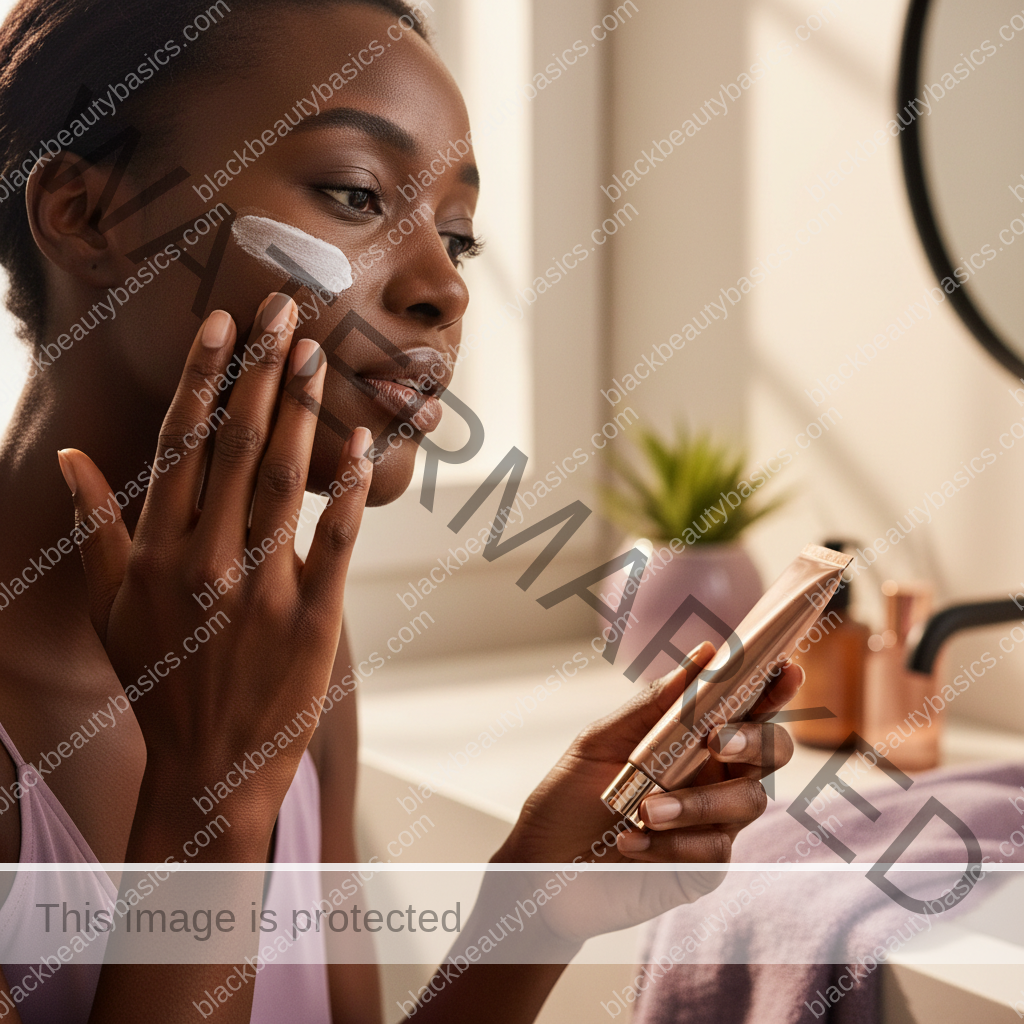
Application Alchemy: Techniques for a Flawless Finish
Even with the perfect sunscreen, application technique can make all the difference between a radiant glow and a visible cast. It’s an art, a ritual that, when mastered, ensures your skin is protected beautifully.
The Prep is Paramount: A Clean and Hydrated Canvas
Before any product touches your skin, it must be properly prepared. This foundational step is often overlooked but is critical for seamless sunscreen application.
- Cleanse Gently: Start with a clean face. Use a gentle, hydrating cleanser to remove impurities without stripping your skin’s natural oils. A clean canvas allows for better product absorption and an even finish. Shop Gentle Hydrating Cleanser on Amazon
- Tone and Treat: Apply any toners, serums, or treatments you typically use. Allow each product to fully absorb before moving to the next step. This prevents pilling and ensures your active ingredients can work effectively. Shop Hydrating Facial Serum on Amazon
- Moisturize Adequately: This is a non-negotiable step, especially for mineral sunscreens. A well-moisturized skin surface provides a smoother base, allowing the sunscreen to glide on and blend more easily. Choose a moisturizer that suits your skin type – a lightweight lotion for oily skin, a richer cream for dry skin. Give your moisturizer a few minutes to sink in completely before applying sunscreen. Shop Daily Face Moisturizer on Amazon
The Dot-and-Blend Method for Even Coverage
Applying a large dollop of sunscreen all at once can lead to uneven distribution and a more noticeable cast. The “dot and blend” method ensures even, sheer coverage.
- Dispense in Sections: Instead of squeezing a large amount onto your palm, dispense small dots of sunscreen onto different areas of your face – forehead, cheeks, nose, chin, and neck.
- Work in Small Sections: Gently blend each dot outwards using your fingertips. Use light, circular, or patting motions. Don’t rub vigorously, as this can disrupt the sunscreen’s protective film.
- Layer if Necessary: If you’re using a mineral sunscreen, applying a thinner layer first and allowing it to set, then applying a second thin layer, can often yield a more transparent finish than one thick layer. This allows the product to absorb and adapt to your skin tone more gradually.
- Don’t Forget the Edges: Extend your application to your hairline, ears, and neck, blending thoroughly to avoid any demarcation lines.
Warmth is Your Friend: Emulsifying for Seamlessness
For thicker mineral sunscreens, a little warmth can go a long way in making them more pliable and easier to blend.
- Warm in Palms: Dispense the desired amount of sunscreen onto your fingertips or the palm of your hand. Rub your hands together gently for a few seconds. The warmth from your skin will slightly emulsify the product, making it smoother and more spreadable.
- Press and Pat: Instead of just rubbing, try pressing and patting the warmed sunscreen onto your skin. This technique helps the product melt into the skin rather than sitting on top, reducing the likelihood of a white cast.
The Makeup Marriage: Layering with Cosmetics
If you wear makeup, your sunscreen should be the last step in your skincare routine and the first step in your makeup routine.
- Allow to Absorb: Give your sunscreen at least 5-10 minutes to fully absorb and settle on your skin before applying any makeup. This prevents your foundation or concealer from disturbing the sunscreen layer and causing pilling or streaking.
- Tinted Primers or Foundations: If you’re still experiencing a slight cast, a tinted primer or a foundation with a warm undertone can help neutralize any residual whiteness. Some foundations also contain SPF, but remember that makeup SPF is often not enough on its own; it should complement your dedicated sunscreen. Shop Tinted Primer on Amazon
- Setting Powder: A translucent or color-correcting setting powder can help to further mattify and blend any lingering sheen or slight cast, especially around the T-zone. Shop Translucent Setting Powder on Amazon
Don’t Forget to Reapply!
Sunscreen is only effective if reapplied. The general recommendation is every two hours, or immediately after swimming or excessive sweating. Reapplication can be tricky over makeup, but there are solutions:
- Sunscreen Sprays or Mists: These are excellent for on-the-go reapplication over makeup. Look for non-aerosol, fine mist formulas that won’t disturb your makeup. Shop Sunscreen Mist on Amazon
- Sunscreen Sticks or Powders: These offer targeted reapplication and can help absorb oil. Ensure you choose a stick or powder that is translucent or tinted to match your skin tone. Shop Sunscreen Stick on Amazon
Black Beauty Basics Approved Sunscreen Picks
Navigating the vast world of sunscreens can be daunting, but we’ve curated a selection of tried-and-true favorites that consistently perform beautifully on melanin-rich skin. These brands have demonstrated a commitment to inclusive formulations, ensuring that protection doesn’t come at the cost of your natural radiance.
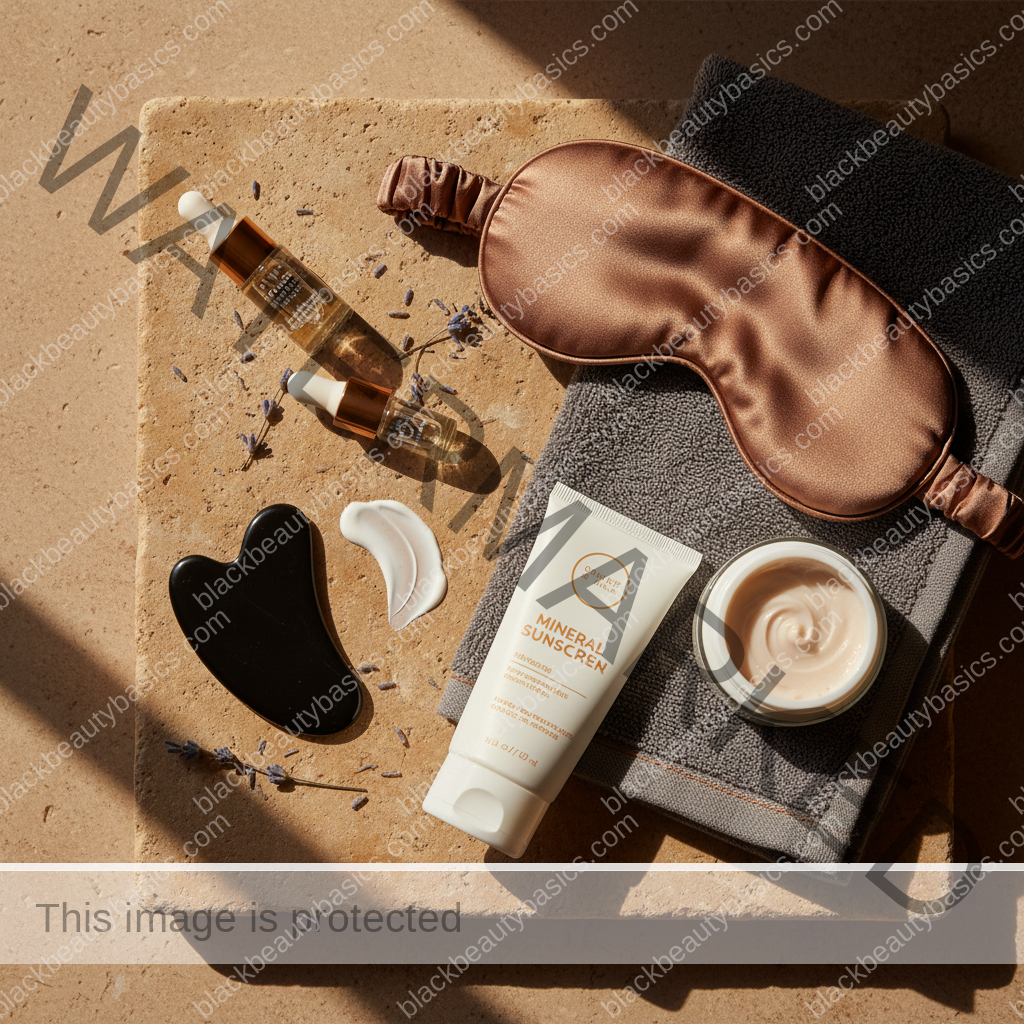
Top Mineral Sunscreens for an Invisible Finish
For those who prefer the gentle power of mineral protection, these formulations have mastered the art of disappearing into deeper skin tones.
| Product Name (Example) | Key Features for Dark Skin | Why We Love It |
|---|---|---|
| Black Girl Sunscreen Make It Matte SPF 45 | Tinted, matte finish, broad-spectrum, infused with natural ingredients. | Specifically formulated by and for Black women, this product understands the assignment. It blends seamlessly, leaving no white cast, and offers a beautiful matte finish perfect for oily skin or under makeup. |
| Supergoop! Mineral Sheerscreen SPF 30 | Sheer, lightweight, non-nano zinc oxide, blue light protection. | This innovative formula boasts a silky, sheer texture that truly disappears on most skin tones. It feels luxurious and offers additional protection against blue light, a modern-day concern. |
| Isdin Eryfotona Ageless Tinted Mineral Sunscreen SPF 50 | Tinted, DNA repairsomes, antioxidants, broad-spectrum. | A high-performance option that combines robust mineral protection with a subtle tint that adapts to many deeper skin tones. The added DNA repair enzymes and antioxidants make it a powerful anti-aging treatment. |
| EltaMD UV Clear Broad-Spectrum SPF 46 (Tinted) | Tinted, niacinamide, hyaluronic acid, non-comedogenic. | A cult favorite, the tinted version of this beloved sunscreen is a godsend for acne-prone and sensitive skin. The tint helps neutralize the mineral base, and the niacinamide calms inflammation. |
Shop Mineral Sunscreen for Dark Skin on Amazon
Invisible Chemical Sunscreens for a Weightless Feel
If you prioritize an utterly undetectable feel and finish, these chemical sunscreens are celebrated for their seamless integration into deep skin tones.
| Product Name (Example) | Key Features for Dark Skin | Why We Love It |
|---|---|---|
| Paula’s Choice RESIST Youth-Extending Daily Hydrating Fluid SPF 50 | Fluid texture, antioxidants, broad-spectrum, no white cast. | This ultra-lightweight fluid feels like nothing on the skin, making it perfect for layering. It’s packed with antioxidants to boost skin health and offers robust protection without any residue. |
| Unseen Sunscreen SPF 40 by Supergoop! | Velvet finish, oil-free, primer-like texture, broad-spectrum. | A true pioneer in invisible sun protection, this sunscreen glides on clear, leaving a velvety, pore-blurring finish that doubles as an excellent makeup primer. It’s truly undetectable on all skin tones. |
| Kiehl’s Super Fluid Daily UV Defense SPF 50+ | Lightweight, non-comedogenic, antioxidant-rich, matte finish. | This silky, non-greasy formula absorbs quickly, leaving a smooth, matte finish. It’s ideal for those who dislike the feeling of sunscreen and want reliable, invisible protection. |
| La Roche-Posay Anthelios Melt-in Milk Sunscreen SPF 60 | Velvety texture, water-resistant, broad-spectrum, Cell-Ox Shield Technology. | A luxurious “melt-in” texture that spreads effortlessly and disappears on the skin. It’s highly water-resistant, making it perfect for active days, and its proprietary technology offers enhanced antioxidant protection. |
Shop Invisible Chemical Sunscreen for Dark Skin on Amazon
Sunscreen Tips for Melanin-Rich Skin
Beyond product selection, these practical tips will elevate your sun protection game and ensure your skin remains luminous and healthy.
- Patch Test New Products: Always test a new sunscreen on a small, inconspicuous area of your skin (like behind your ear or on your jawline) for a few days before applying it all over your face. This helps check for sensitivity and, crucially, for any white or gray cast.
- The “Two-Finger Rule”: For adequate protection, apply a generous amount of sunscreen. A common guideline is to squeeze a line of sunscreen onto your index and middle fingers, from the base to the tip. This amount should be sufficient for your face and neck.
- Don’t Skip the Neck and Decolletage: These areas are often exposed to the sun and are prone to showing signs of aging. Treat them with the same care as your face.
- Year-Round Protection: UV rays are present even on cloudy days and during winter. Make sunscreen a non-negotiable part of your daily routine, 365 days a year.
- Consider Indoor Protection: If you spend significant time near windows, consider wearing sunscreen indoors, as UVA rays can penetrate glass.
- Combine with Other Protective Measures: Sunscreen is one tool in your sun protection arsenal. Complement it with wide-brimmed hats, sunglasses, and seeking shade during peak sun hours (10 AM – 4 PM). Shop Wide Brim Hats on Amazon
- Exfoliate Regularly: Gentle exfoliation 1-2 times a week can help remove dead skin cells, creating a smoother surface for sunscreen application and enhancing product absorption. Shop Gentle Facial Exfoliator on Amazon
- Stay Hydrated Internally: Drinking plenty of water keeps your skin hydrated from within, contributing to a healthy skin barrier and a smoother canvas for all your skincare products.
FAQ: Your Sunscreen Questions Answered
Q: Do I really need SPF if I have dark skin?
A: Absolutely, yes! While melanin provides some natural protection (equivalent to an SPF of about 13-15), it is not enough to fully shield your skin from harmful UVA and UVB rays. Darker skin tones are still susceptible to sun damage, including hyperpigmentation (dark spots), premature aging (fine lines, wrinkles, loss of elasticity), and, most importantly, skin cancer. In fact, skin cancers in people of color are often diagnosed at later, more dangerous stages due to the misconception that dark skin is immune to sun damage. Daily broad-spectrum SPF 30 or higher is crucial for everyone, regardless of skin tone.
Q: What is the difference between “broad-spectrum” SPF and just “SPF”?
A: SPF (Sun Protection Factor) primarily measures a sunscreen’s ability to protect against UVB rays, which are the main cause of sunburn. “Broad-spectrum” means the sunscreen protects against both UVB rays and UVA rays. UVA rays penetrate deeper into the skin and are responsible for premature aging (wrinkles, fine lines) and contribute to skin cancer. For comprehensive protection against all types of sun damage, always choose a sunscreen labeled “broad-spectrum.”
Q: Can I mix my sunscreen with my moisturizer or foundation to avoid a white cast?
A: It is generally not recommended to mix your sunscreen directly with other products like moisturizer or foundation. Doing so can dilute the sunscreen’s active ingredients, reduce its efficacy, and compromise its ability to form an even, protective film on your skin. This can lead to uneven protection and a lower SPF than stated on the bottle. Instead, apply your moisturizer first, allow it to absorb fully, then apply your dedicated sunscreen as the last step in your skincare routine. If you use foundation, apply it after your sunscreen has settled.
Q: How much sunscreen should I apply to my face and neck?
A: The general recommendation for adequate protection on the face and neck is about a quarter teaspoon, or roughly the amount that fits on your index and middle fingers when squeezed from the base to the tip (the “two-finger rule”). Most people apply far less than this, which significantly reduces the stated SPF. It’s better to apply slightly more than too little to ensure you’re getting the full benefit of the product.
Q: How often should I reapply sunscreen?
A: Sunscreen should be reapplied at least every two hours, especially if you are outdoors. If you are swimming, sweating heavily, or towel drying, you should reapply immediately after these activities, even if it’s been less than two hours. For daily, indoor wear with minimal sun exposure, a morning application might suffice, but if you’re near windows or stepping outside, reapplication is key. Many beauty brands now offer convenient sunscreen mists, sticks, or powders for easy reapplication over makeup.
Q: What about sunscreens with SPF in my makeup? Is that enough?
A: While SPF in makeup (foundations, BB creams, powders) offers some level of protection, it is generally not sufficient on its own. The reason is twofold: first, you typically don’t apply enough makeup to achieve the stated SPF on the label (which is based on a much thicker application than most people use). Second, makeup SPF often doesn’t provide broad-spectrum protection against both UVA and UVB rays. It’s best to use a dedicated broad-spectrum sunscreen with an SPF of 30 or higher as your primary sun protection, and consider makeup with SPF as an added layer of defense, not a replacement.
Q: Can sunscreen cause acne or clog pores on dark skin?
A: Yes, some sunscreens, particularly those with heavier, oil-rich formulations, can potentially clog pores and contribute to breakouts, especially for individuals prone to acne. This is not exclusive to dark skin. To avoid this, look for sunscreens labeled “non-comedogenic” (meaning they are formulated not to clog pores) and “oil-free.” Gel, fluid, or serum-like textures are often a good choice for acne-prone or oily skin types. It’s also crucial to cleanse your face thoroughly at the end of the day to remove all traces of sunscreen and makeup.
Q: I have sensitive skin; which type of sunscreen is best for me?
A: For sensitive skin, mineral sunscreens (containing zinc oxide and/or titanium dioxide) are often recommended. These ingredients sit on the skin’s surface and physically block UV rays, making them less likely to cause irritation compared to chemical sunscreens, which are absorbed into the skin. When choosing a mineral sunscreen for sensitive skin, look for formulas that are also fragrance-free, alcohol-free, and paraben-free. Always patch test a new product before full application to ensure it doesn’t cause any adverse reactions.
The journey to embracing daily sun protection for melanin-rich skin has evolved from a frustrating compromise to an empowering act of self-care. No longer must we choose between the health of our skin and the integrity of its beautiful, inherent glow. With a deeper understanding of formulations, precise application techniques, and a discerning eye for products crafted with our unique needs in mind, we can confidently step into the light, knowing our skin is not just protected, but celebrated in all its radiant glory. Let your melanin shine, beautifully and safely, always.
A White Cast Is Not Something You Have to Accept
Too many Black women were taught that sunscreen simply looks bad on deep skin. That is not a reflection of your complexion. It is a reflection of formulas that were not built with you in mind. The right SPF should not make your skin look dusty, purple, gray, or disconnected from the rest of your body.
Mineral filters can leave a cast if the particles are not well dispersed, if the formula is too pale, or if too much product sits on top instead of blending. Chemical formulas are often more invisible, but some can sting sensitive skin. Tinted mineral formulas can help, but the tint needs to match your undertone closely enough. The point is choice, not compromise.
No-cast troubleshooting
- Test in daylight: bathroom lighting can hide cast.
- Blend in sections: forehead, cheeks, nose, chin, then neck.
- Check undertone: a tint that is too pink, orange, or beige can still look off.
- Try another filter family: clear chemical or hybrid formulas may suit you better.
What to do next
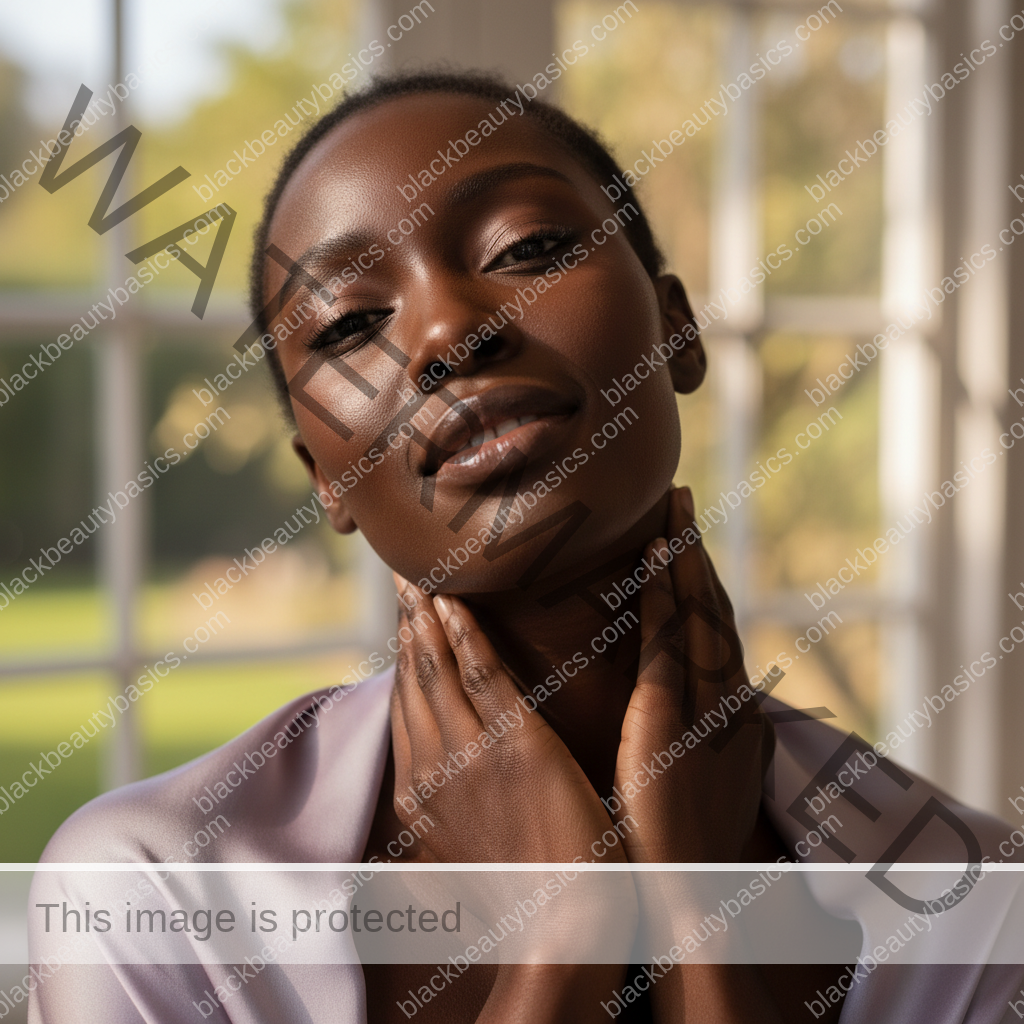
Keep this SPF step connected to the rest of the Sunscreen for Dark Skin series. The goal is not a perfect routine that only works on quiet days. The goal is a sunscreen habit that still works with makeup, sweat, body care, texture preferences, and real Black women’s lives.
- tinted versus clear sunscreen on dark skin
- mineral versus chemical sunscreen
- how to find a daily sunscreen
Related next steps
Related posts:
 Making Family-Wide SPF Routines Feel Manageable
 Color Correcting 101: How to Neutralize Dark Circles & Hyperpigmentation on Melanin Skin (Without Looking Gray)
 Matte Sunscreen vs Dewy Sunscreen on Deep Skin
 Tinted Sunscreen vs Clear Sunscreen on Dark Skin
 How to Reapply Sunscreen Over Makeup on Deep Skin
 How Sunscreen Finish Works With Makeup on Dark Skin