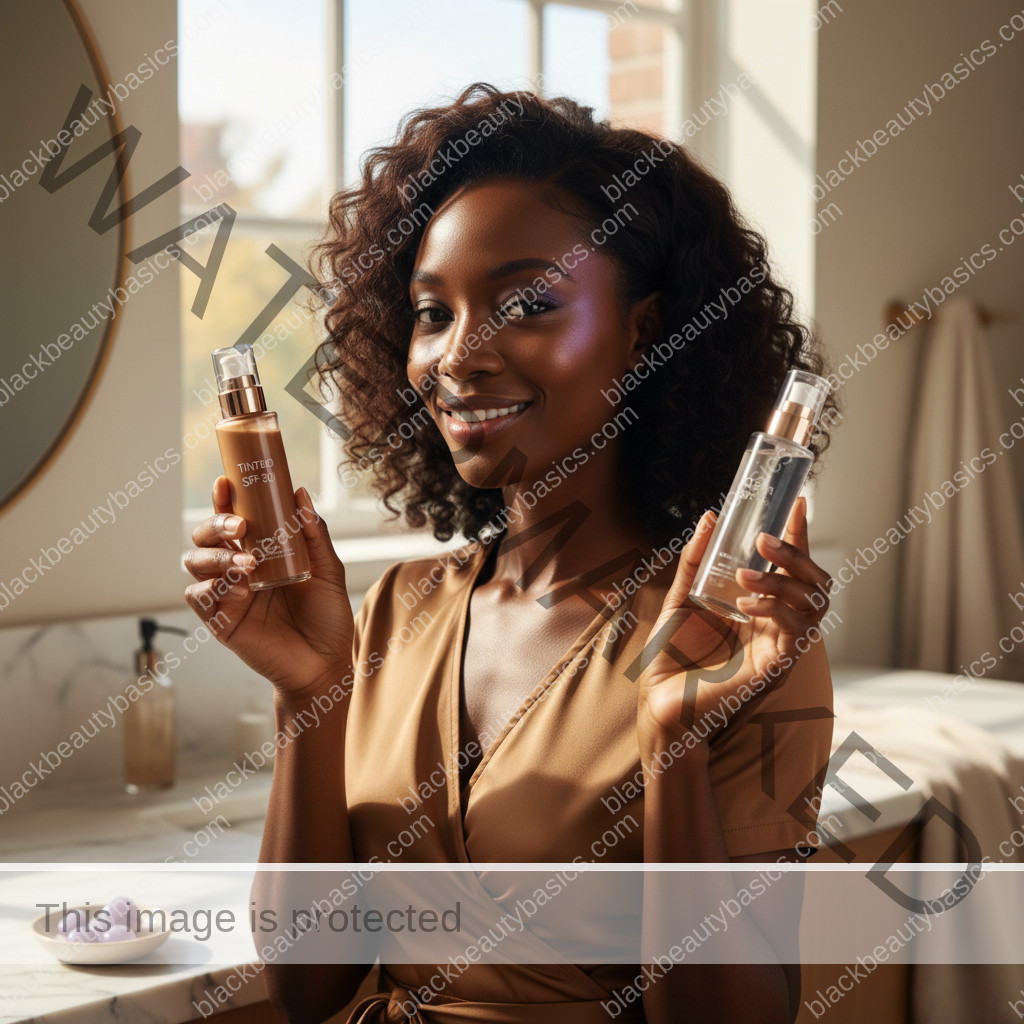
For generations, the narrative around sunscreen for melanin-rich skin was often one of dismissal, a silent assumption that our inherent glow offered impenetrable protection. But as wisdom and science converge, we now understand that our beautiful complexions, while resilient, are not immune to the sun’s powerful embrace. The journey to truly embrace sun protection, however, often brings us to a pivotal question: should we opt for the seamless finish of a tinted sunscreen or the invisible shield of a clear formula?
At Black Beauty Basics, we believe in empowering you with knowledge that celebrates and protects your unique radiance. This comprehensive guide delves deep into the nuances of tinted versus clear sunscreens, ensuring your choice is informed, effective, and perfectly aligned with your skin’s needs and your aesthetic desires.
The Unwavering Importance of Sun Protection for Melanin-Rich Skin
Let’s dismantle the myth once and for all: dark skin needs sunscreen. While melanin provides a natural SPF of approximately 7-13, it is not a complete block against harmful UV radiation. Prolonged sun exposure can lead to a myriad of concerns for Black skin, from accelerated aging to hyperpigmentation, and yes, even skin cancer.
Beyond the Burn: Understanding UV Damage on Dark Skin
The visible signs of sun damage on darker skin tones often differ from those on lighter complexions. We may not experience the same degree of sunburn, but the insidious effects of UV rays are still at play. The primary concerns for melanin-rich skin include:
- Hyperpigmentation: This is arguably the most common and frustrating consequence of sun exposure for Black women. UV radiation stimulates melanocytes, leading to an overproduction of melanin, resulting in dark spots, uneven skin tone, and the exacerbation of post-inflammatory hyperpigmentation (PIH) from acne or other skin traumas.
- Premature Aging: While we are blessed with skin that often ages gracefully, UV rays still break down collagen and elastin, contributing to fine lines, wrinkles, and a loss of firmness over time.
- Melasma: A common skin condition characterized by brown or gray-brown patches, often on the face, melasma is significantly worsened by sun exposure.
- Skin Cancer: Though less common in people of color, skin cancer, including melanoma, can be more aggressive and often diagnosed at a later stage in darker skin tones, making early and consistent protection paramount.
Consistent, daily sunscreen application is not just a recommendation; it’s a non-negotiable pillar of a healthy skincare regimen for every Black woman. It’s an act of self-love, a commitment to preserving your skin’s health, vitality, and even tone for years to come.
The Science Behind the Shield: Mineral vs. Chemical Sunscreens
Before we dive into tinted versus clear, it’s crucial to understand the two main types of sunscreen filters: mineral and chemical. This foundational knowledge will inform your choice, especially when considering how they interact with melanin-rich skin.
Mineral Sunscreens: The Physical Blockers
Mineral sunscreens, also known as physical sunscreens, use natural minerals – zinc oxide and titanium dioxide – to create a physical barrier on the skin’s surface. They work by reflecting and scattering UV rays away from the skin. Shop Mineral Sunscreen on Amazon
- Zinc Oxide: A broad-spectrum blocker, effective against both UVA and UVB rays. It’s known for being gentle and suitable for sensitive skin.
- Titanium Dioxide: Primarily blocks UVB rays and some UVA rays. Often used in combination with zinc oxide for broader protection.
Pros for Dark Skin:
- Gentle: Less likely to cause irritation, making them ideal for sensitive or acne-prone skin.
- Immediate Protection: They work immediately upon application; no waiting period required.
- Less Irritating: Generally considered safer for those with conditions like rosacea or eczema.
Cons for Dark Skin:
- White Cast: The infamous “white cast” is the primary concern for mineral sunscreens on darker skin. The minerals, being white powders, can leave a ghostly, ashy film, especially with higher SPF formulations or if not properly blended. This is where tinted mineral sunscreens truly shine.
- Thicker Texture: Can sometimes feel heavier or thicker on the skin compared to chemical formulas.
Chemical Sunscreens: The Absorbers
Chemical sunscreens work by absorbing UV rays as they penetrate the skin and converting them into heat, which is then released from the skin. Common active ingredients include oxybenzone, avobenzone, octinoxate, and octisalate. Shop Chemical Sunscreen on Amazon
Pros for Dark Skin:
- No White Cast: This is their biggest advantage. Chemical sunscreens are designed to be completely clear and invisible on all skin tones, making them a popular choice for those who prioritize a seamless finish.
- Lighter Texture: Often formulated to be thinner, more elegant, and easier to blend into the skin.
- Water-Resistant Options: Many chemical sunscreens offer excellent water and sweat resistance, making them suitable for active lifestyles.
Cons for Dark Skin:
- Potential Irritation: Some individuals, especially those with very sensitive skin, may experience irritation or allergic reactions to certain chemical filters.
- Waiting Period: They need about 15-20 minutes to fully absorb and become effective before sun exposure.
- Environmental Concerns: Certain chemical filters (like oxybenzone and octinoxate) have raised environmental concerns regarding coral reefs, leading to bans in some regions.
The Allure of Tinted Sunscreen: A Game Changer for Dark Skin
For years, finding a sunscreen that didn’t leave a ghastly white cast was a significant challenge for Black women. Enter tinted sunscreens – a revolutionary solution that has transformed the daily sun protection ritual. Shop Tinted Sunscreen on Amazon
What is Tinted Sunscreen?
Tinted sunscreens are typically mineral-based formulas (containing zinc oxide and/or titanium dioxide) that have added iron oxides and sometimes other pigments to match a range of skin tones. These pigments counteract the white cast of the mineral filters, allowing the sunscreen to blend seamlessly into the skin.
The Benefits of Tinted Sunscreen for Melanin-Rich Skin
The advantages of incorporating a tinted sunscreen into your routine are manifold, especially for those with darker complexions:
- No White Cast, Finally: This is the paramount benefit. The added pigments neutralize the chalky appearance of mineral filters, ensuring your skin looks natural and radiant, not ashy or ghostly.
- Evens Skin Tone: The tint provides a sheer wash of color, offering light coverage that can subtly blur imperfections, reduce the appearance of hyperpigmentation, and create a more uniform complexion. For many, it can replace a light foundation or tinted moisturizer on “no-makeup” days.
- Enhanced Protection Against Visible Light: This is a crucial, often overlooked benefit for darker skin. Iron oxides, the pigments used in tinted sunscreens, have been shown to protect against visible light (including blue light) in addition to UVA/UVB rays. Visible light can exacerbate hyperpigmentation and melasma in melanin-rich skin, making tinted sunscreens a superior choice for those prone to these concerns.
- Simplified Routine: Combining sun protection with a touch of coverage streamlines your morning routine, offering a multi-tasking product that saves time and effort.
- Gentle Formulation: Since most tinted sunscreens are mineral-based, they are generally well-tolerated by sensitive, acne-prone, or reactive skin types.
Choosing the Right Tinted Sunscreen Shade
Just like foundation, finding the perfect shade of tinted sunscreen can be a journey. Here’s how to navigate it:
- Swatch Test: Always swatch the product on your jawline or neck, not just your hand. Allow it to dry down completely to see the true color.
- Undertones Matter: Consider your skin’s undertone (warm, cool, or neutral). Many brands are now offering a wider range of tints that cater to the diverse undertones found in Black skin.
- Sheer Coverage: Remember, tinted sunscreens offer sheer coverage. Don’t expect full foundation-level opacity. The goal is to blend, not to cover completely.
- Read Reviews: Look for reviews from other Black women with similar skin tones to get real-world feedback on shade matching and finish.
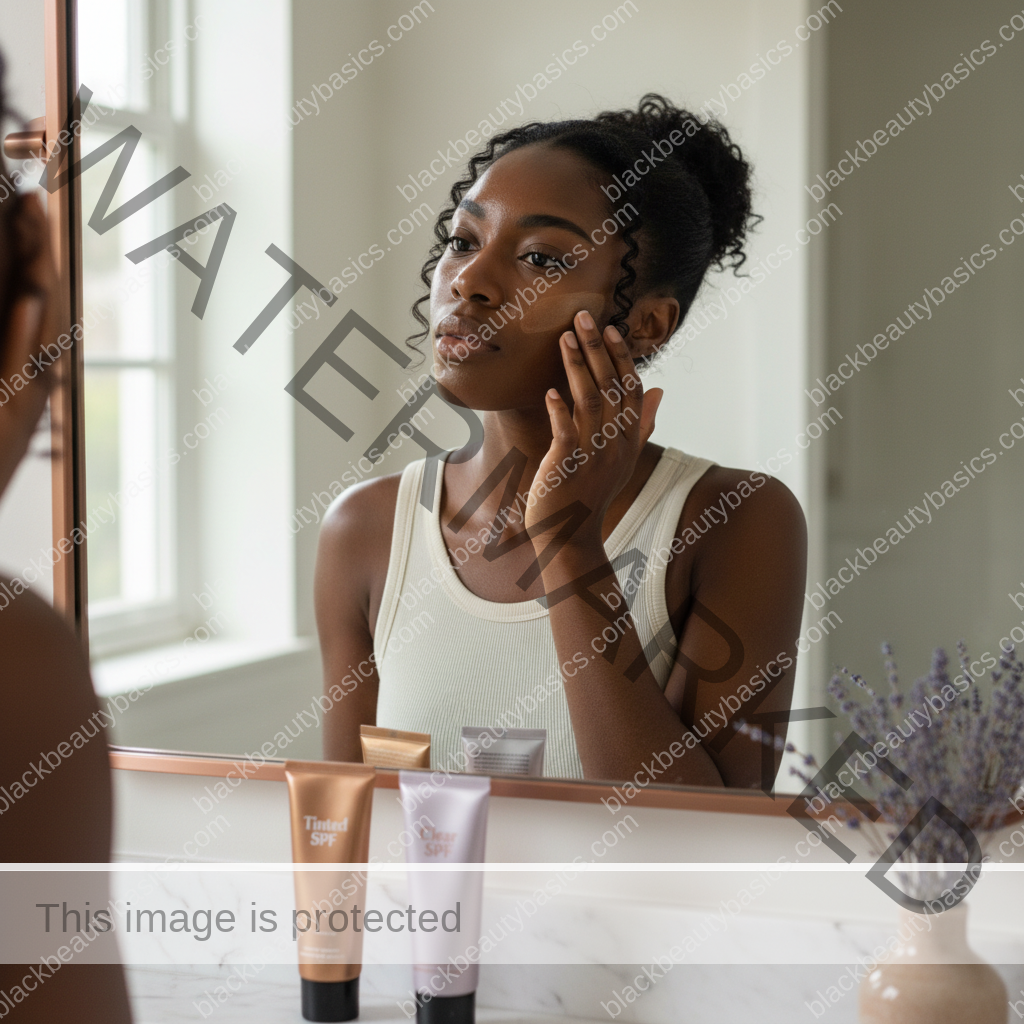
The Clarity of Clear Sunscreen: Invisible Protection
While tinted sunscreens have garnered significant attention, clear sunscreens still hold a vital place in our sun protection arsenal. They offer an invisible shield, perfect for those who prefer no added coverage or have specific skin needs. Shop Clear Sunscreen on Amazon
What is Clear Sunscreen?
Clear sunscreens can be either chemical or mineral-based. The key distinction is their transparency on the skin. Chemical sunscreens are inherently clear. Mineral sunscreens, on the other hand, achieve a clear finish through advanced micronization or nanotechnology, where the zinc oxide and titanium dioxide particles are milled to an ultra-fine size, making them virtually invisible on the skin.
The Benefits of Clear Sunscreen for Melanin-Rich Skin
- Truly Invisible Finish: For those who desire absolutely no visible product on their skin, clear sunscreens are the undisputed champion. They leave no residue, no tint, and no white cast, making them ideal for layering under makeup or for a completely natural look.
- Versatility: Clear sunscreens are incredibly versatile. They work well for all skin tones and can be used on the face, neck, and body without concern for shade matching.
- Lightweight Feel: Many clear formulas, especially chemical ones, are designed to be lightweight, non-greasy, and quickly absorbed, making them comfortable for daily wear, even in humid climates.
- Ideal for Layering: If you prefer to use a separate foundation or tinted moisturizer, a clear sunscreen provides a perfect, undetectable base without altering the color or finish of your makeup.
- Great for Active Lifestyles: Many clear chemical sunscreens offer excellent water and sweat resistance, making them a go-to for workouts, swimming, or outdoor activities where reapplication is frequent and an invisible finish is preferred.
Considerations When Choosing Clear Sunscreen
- Potential for Irritation: If opting for a chemical clear sunscreen, be mindful of potential sensitivities to ingredients like oxybenzone or avobenzone. Patch testing is always recommended.
- “Clear” Mineral Sunscreens: While many mineral sunscreens claim to be “clear” or “sheer,” some may still leave a slight sheen or a barely perceptible cast on very deep skin tones, especially if applied generously. Reading reviews and testing samples can help.
- No Visible Light Protection: Unlike tinted sunscreens with iron oxides, clear sunscreens (unless specifically formulated with additional visible light blockers) typically do not offer protection against visible light. If hyperpigmentation or melasma is a primary concern, this is a significant factor to weigh.
Tinted vs. Clear: A Direct Comparison for Dark Skin
To help you make an informed decision, let’s break down the key differences and considerations between tinted and clear sunscreens specifically for melanin-rich skin.
Comparison Table: Tinted vs. Clear Sunscreen for Dark Skin
| Feature | Tinted Sunscreen (Mineral-based) | Clear Sunscreen (Mineral or Chemical) |
|---|---|---|
| White Cast | None, due to added pigments (iron oxides) | None (chemical) or minimal/sheer (micronized mineral) |
| Coverage | Sheer, light coverage; evens skin tone | None; completely invisible |
| Visible Light Protection | Yes, due to iron oxides (beneficial for hyperpigmentation/melasma) | Generally no (unless specified with additional ingredients) |
| Texture/Feel | Can be slightly thicker; often blends like a light foundation | Typically lighter, more fluid; absorbs quickly |
| Ingredient Base | Mostly mineral (zinc oxide, titanium dioxide + iron oxides) | Mineral (micronized) or Chemical (oxybenzone, avobenzone, etc.) |
| Sensitivity | Generally very gentle (mineral base) | Mineral options are gentle; chemical options may cause irritation for some |
| Layering with Makeup | Can replace light foundation/tinted moisturizer; may affect makeup shade | Excellent base for makeup; won’t alter makeup shade |
| Best For | Daily wear, hyperpigmentation concerns, “no-makeup” days, sensitive skin | Active lifestyles, layering under full makeup, those who prefer no coverage, sensitive skin (mineral clear) |
When to Choose Tinted Sunscreen
- You struggle with hyperpigmentation or melasma: The iron oxides offer crucial visible light protection.
- You prefer a “no-makeup” makeup look: The sheer tint can even out your complexion and provide a subtle glow.
- You want to streamline your routine: It combines sun protection with light coverage.
- You have sensitive or acne-prone skin: Most tinted formulas are mineral-based and less likely to cause irritation.
- You want to avoid the white cast of traditional mineral sunscreens.
When to Choose Clear Sunscreen
- You prefer absolutely no coverage: You want your natural skin to shine through, unadulterated.
- You wear a full face of makeup daily: A clear sunscreen provides an invisible base that won’t interfere with your foundation’s color or finish.
- You have an active lifestyle: Many clear chemical sunscreens offer superior water and sweat resistance.
- You want a lightweight, undetectable feel: Especially for those who dislike the feel of thicker products.
- You’re looking for a body sunscreen: Clear formulas are often easier to apply evenly over larger areas without leaving a trace.
Expert Tips for Optimal Sunscreen Application on Dark Skin
Regardless of whether you choose tinted or clear, proper application is key to receiving the full spectrum of protection. Here are our expert tips:
Black Beauty Basics: Sunscreen Application Ritual
- The Two-Finger Rule: For your face and neck, squeeze a line of sunscreen onto your index and middle fingers. This generally provides the recommended quarter teaspoon amount for adequate coverage.
- Apply Generously: Don’t be shy! Most people apply far less sunscreen than needed. A thin layer won’t provide the advertised SPF.
- Blend Thoroughly: Work the sunscreen into your skin using gentle, upward strokes until fully absorbed. For tinted formulas, ensure an even blend to avoid streaks.
- Don’t Forget Key Areas: Extend sunscreen to your ears, neck, chest, and the back of your hands. These areas are often neglected but highly susceptible to sun damage.
- Reapply, Reapply, Reapply: Sunscreen isn’t a one-and-done product. Reapply every two hours, or immediately after swimming, sweating heavily, or towel drying.
- Layering is Key: Sunscreen should always be the last step in your skincare routine (after serums and moisturizers) and before makeup.
- Year-Round Protection: UV rays are present 365 days a year, rain or shine, indoors or out. Make sunscreen a non-negotiable daily habit.
- Check the Expiration Date: Sunscreen efficacy diminishes over time. Always use products within their expiration window.
Beyond the Bottle: Holistic Sun Protection
While sunscreen is paramount, it’s just one component of a comprehensive sun protection strategy:
- Seek Shade: Especially during peak sun hours (10 AM to 4 PM).
- Wear Protective Clothing: Wide-brimmed hats, sunglasses, and UPF-rated clothing offer an additional layer of defense. Shop UPF Clothing on Amazon
- Be Mindful of Reflective Surfaces: Sand, water, and snow can reflect UV rays, intensifying exposure.
Tinted and Clear Sunscreens Solve Different Problems
Clear sunscreen can be beautiful for deep skin because it avoids the classic white cast problem. It is often easier under makeup, especially when the texture is lightweight. But clear does not always mean perfect. Some clear chemical formulas sting, feel too shiny, or slide on oily skin. That is why texture matters as much as visibility.
Tinted sunscreen can be helpful if mineral formulas usually look gray on you, or if you want a soft complexion effect without foundation. The challenge is undertone. A tint that works for one deep complexion may look too red, too orange, too beige, or too light on another. If a tinted SPF makes your face look separate from your neck and chest, it is not your fault; it is not your shade.
Choose by need
- Choose clear: if you want invisibility, easy layering, or makeup flexibility.
- Choose tinted: if you want cast control, mineral filters, or light complexion evening.
- Check undertone: tint should blend into your skin, not sit on top.
- Keep comfort first: the best finish still needs to feel wearable.
What to do next
Keep this SPF step connected to the rest of the Sunscreen for Dark Skin series. The goal is not a perfect routine that only works on quiet days. The goal is a sunscreen habit that still works with makeup, sweat, body care, texture preferences, and real Black women’s lives.
- stop sunscreen from looking gray
- matte versus dewy sunscreen on deep skin
- daily sunscreen routine with makeup
Frequently Asked Questions About Sunscreen for Dark Skin
Q1: Do I really need SPF 30 or higher if I have dark skin?
A: Absolutely. While melanin offers some natural protection, it’s not enough. Dermatologists recommend a broad-spectrum SPF 30 or higher for all skin tones, including dark skin. An SPF 30 blocks about 97% of UVB rays, while SPF 50 blocks about 98%. The difference may seem small, but that extra percentage provides significant protection over time, especially against hyperpigmentation and premature aging.
Q2: Can I skip sunscreen if my foundation has SPF?
A: It’s generally not recommended to rely solely on the SPF in your foundation. Foundations with SPF typically don’t provide sufficient protection for a few reasons: 1) You usually don’t apply enough foundation to reach the advertised SPF level. 2) The SPF in foundation often isn’t broad-spectrum, meaning it may not protect against both UVA and UVB rays. 3) Foundation can wear off unevenly throughout the day. Always apply a dedicated broad-spectrum sunscreen underneath your makeup for optimal protection.
Q3: Will tinted sunscreen clog my pores or cause breakouts?
A: Not necessarily. Many tinted sunscreens are formulated to be non-comedogenic, meaning they are designed not to clog pores. Since most are mineral-based, they tend to be gentler on the skin and less likely to cause irritation or breakouts compared to some chemical sunscreens. However, as with any skincare product, individual reactions vary. Look for formulas labeled “non-comedogenic” or “oil-free” if you have acne-prone skin, and always cleanse your face thoroughly at the end of the day.
Q4: How often should I reapply sunscreen, especially if I’m wearing makeup?
A: Sunscreen should be reapplied every two hours, or more frequently if you’re swimming, sweating, or towel drying. Reapplying over makeup can be tricky, but there are solutions. Consider using a brush-on mineral powder sunscreen, a sunscreen spray or mist, or a beauty blender to gently pat on a liquid sunscreen without disturbing your makeup too much. Some brands also offer compact cushion sunscreens for easy on-the-go reapplication.
Q5: Is visible light protection really that important for dark skin?
A: Yes, it’s incredibly important, especially if you’re prone to hyperpigmentation or melasma. Recent research shows that visible light (the light we see, including blue light from screens) can trigger and worsen dark spots in melanin-rich skin, even without significant UV exposure. Tinted sunscreens containing iron oxides offer superior protection against visible light, making them a highly recommended choice for addressing and preventing these concerns.
Q6: Can I use the same sunscreen on my face and body?
A: You certainly can, as long as it’s a broad-spectrum SPF 30 or higher. However, many people prefer different formulations for their face and body. Facial sunscreens are often formulated to be lighter, non-comedogenic, and cosmetically elegant for daily wear under makeup. Body sunscreens might be thicker, more water-resistant, and come in larger sizes for more economical application over broader areas. It’s a matter of personal preference and what feels best on your skin.
Q7: What about sunscreen for children with dark skin?
A: Children with dark skin need sunscreen just as much as adults. Their skin is often more delicate and susceptible to sun damage. For infants under six months, shade and protective clothing are the primary recommendations. For children six months and older, a broad-spectrum mineral sunscreen (zinc oxide and titanium dioxide) is generally preferred due to its gentle nature. Apply generously and reapply frequently, especially during outdoor play.
The choice between tinted and clear sunscreen ultimately comes down to your personal preferences, skin concerns, and lifestyle. Whether you opt for the subtle perfecting touch of a tinted formula or the invisible shield of a clear one, the most crucial step is consistent, daily application. At Black Beauty Basics, we celebrate your melanin-rich beauty in all its glory, and empowering you with the knowledge to protect that glow is our privilege. May your skin forever radiate health, confidence, and the undeniable elegance that is uniquely yours.
Think about finish, undertone, and lifestyle together
The tinted-versus-clear choice is not only about color. It is also about where you are going, how much makeup you wear, and what kind of finish makes you feel like yourself. A clear sunscreen can be beautiful on deep skin when the formula truly disappears and does not leave a blue or gray veil. A tinted sunscreen can be helpful when you want a little evening effect or when mineral filters need help blending, but a tint that is too pink, too beige, or too orange can be just as distracting as a white cast.
If you wear foundation most days, test sunscreen underneath the makeup you already trust. If the SPF changes the shade of your base or makes it separate, it may not be the best daily partner even if it looks good alone. If you prefer bare skin, test the sunscreen in daylight, not only under bathroom lighting. Richly melanated skin can reveal undertone mismatches clearly in natural light, and that honest check is kinder than trying to convince yourself a poor match is fine.
A simple decision shortcut
- Choose clear when you want the least visible layer and the formula truly dries down invisible.
- Choose tinted when the tint matches your undertone and helps mineral SPF look more natural.
- Keep testing gentle and realistic; the right sunscreen should support your routine, not take it over.
Related next steps
Related posts:
 Tinted vs Clear SPF on Dark Skin: What Actually Shows Up
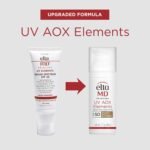 EltaMD UV Elements Tinted Sunscreen Moisturizer Review
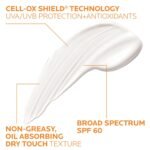 La Roche-Posay Anthelios Clear Skin Sunscreen Review
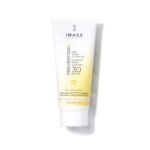 IMAGE Skincare PREVENTION+ Daily Tinted Moisturizer SPF 30 Sunscreen Review
 Matte Sunscreen vs Dewy Sunscreen on Deep Skin
 Neutrogena Clear Face Sunscreen Review