For far too long, the narrative around sunscreen for deep skin tones has been fraught with misunderstanding and frustration. We’ve been told it’s essential, yet often left to navigate a sea of chalky, ashy formulations that betray the very radiance we seek to protect. At Black Beauty Basics, we believe that protecting your precious melanin should never come at the expense of your luminosity or your confidence. It’s time to demystify sunscreen application for our rich complexions, ensuring you embrace sun protection with grace, efficacy, and an undeniable glow.
The Undeniable Truth: Why Sunscreen is Non-Negotiable for Deep Skin
Let’s dispel the myth once and for all: melanin, while offering some natural protection, does not render deep skin immune to sun damage. Our beautiful complexions are susceptible to UVA and UVB rays, leading to concerns like hyperpigmentation (dark spots), uneven skin tone, premature aging, and yes, even skin cancer. Sunscreen isn’t just about preventing sunburn; it’s about preserving the health, vibrancy, and youthful resilience of your skin.
Melanin’s Protective Power: A Double-Edged Sword
While individuals with deep skin tones have a higher concentration of melanin, which provides an estimated natural SPF of 13.4, this protection is insufficient for comprehensive sun defense. Melanin helps to scatter and absorb UV radiation, reducing the immediate risk of sunburn compared to lighter skin tones. However, it doesn’t block all UV rays, meaning damage can still occur silently and cumulatively. The visible signs might be different – less redness, more hyperpigmentation – but the underlying cellular damage is just as real.
Beyond Sunburn: The Real Concerns for Melanin-Rich Skin
- Hyperpigmentation: This is arguably the most common and frustrating sun-induced concern for deep skin. UV exposure triggers melanocytes to produce more melanin, leading to post-inflammatory hyperpigmentation (PIH) from acne or injury, and worsening conditions like melasma and sun spots. Consistent sunscreen use is paramount in preventing and managing these concerns.
- Premature Aging: UV radiation breaks down collagen and elastin, leading to fine lines, wrinkles, and loss of skin elasticity over time. While deep skin often shows signs of aging later, sun exposure can accelerate this process.
- Skin Cancer: Though less common in deep skin tones, skin cancer can be more aggressive and diagnosed at later stages due to delayed detection. Melanoma, basal cell carcinoma, and squamous cell carcinoma can all affect melanin-rich skin, often appearing in less sun-exposed areas like the palms of hands, soles of feet, or under nails. Regular sunscreen use is a vital preventative measure.
- Uneven Skin Tone: Chronic sun exposure can lead to a patchy, uneven complexion, diminishing the natural luminosity of deep skin.
Understanding these risks underscores the importance of daily, diligent sunscreen application, not as a seasonal ritual, but as a year-round cornerstone of your skincare regimen.
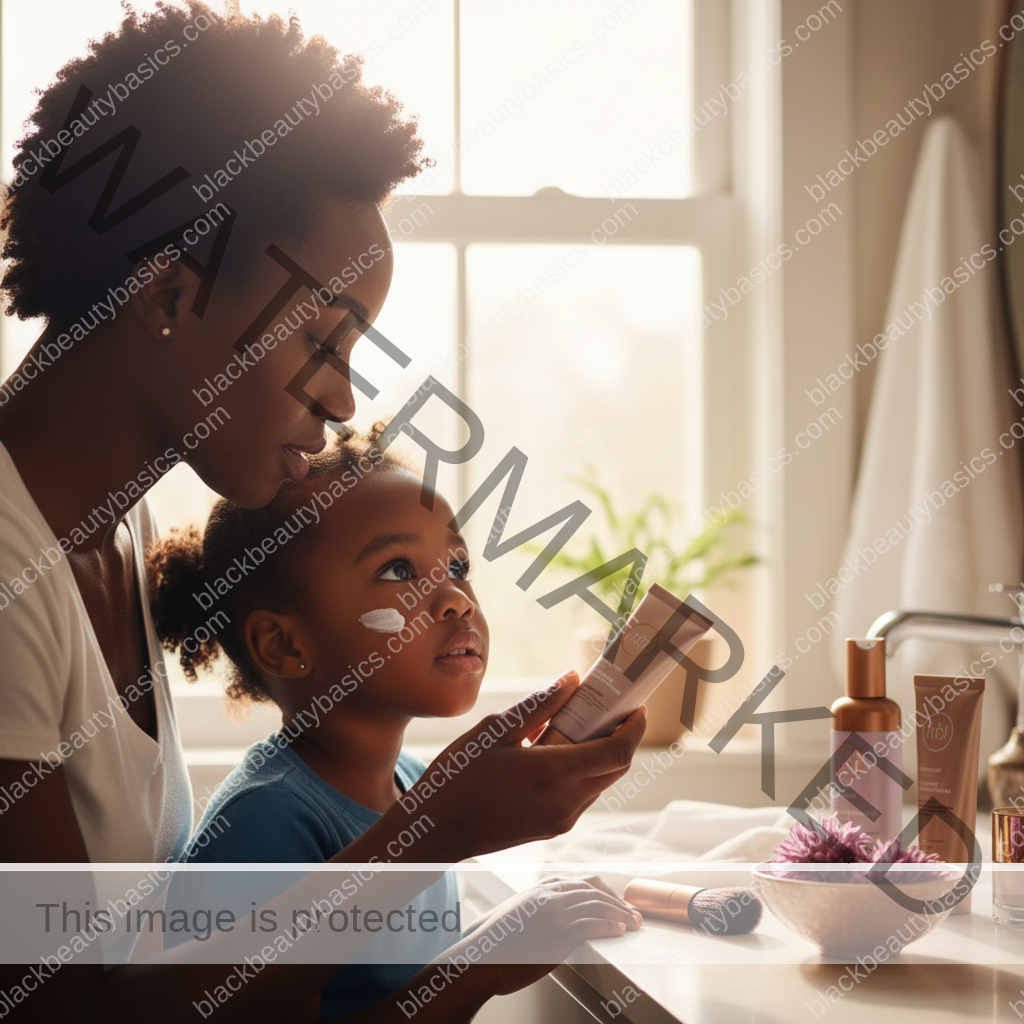
The Gold Standard: How Much Sunscreen is Truly Enough?
This is the million-dollar question, isn’t it? The biggest mistake many make, regardless of skin tone, is simply not using enough sunscreen. The SPF rating on a bottle is determined by applying a specific amount of product per square centimeter of skin – an amount far more generous than most people typically use.
The “Two-Finger Rule” and Beyond
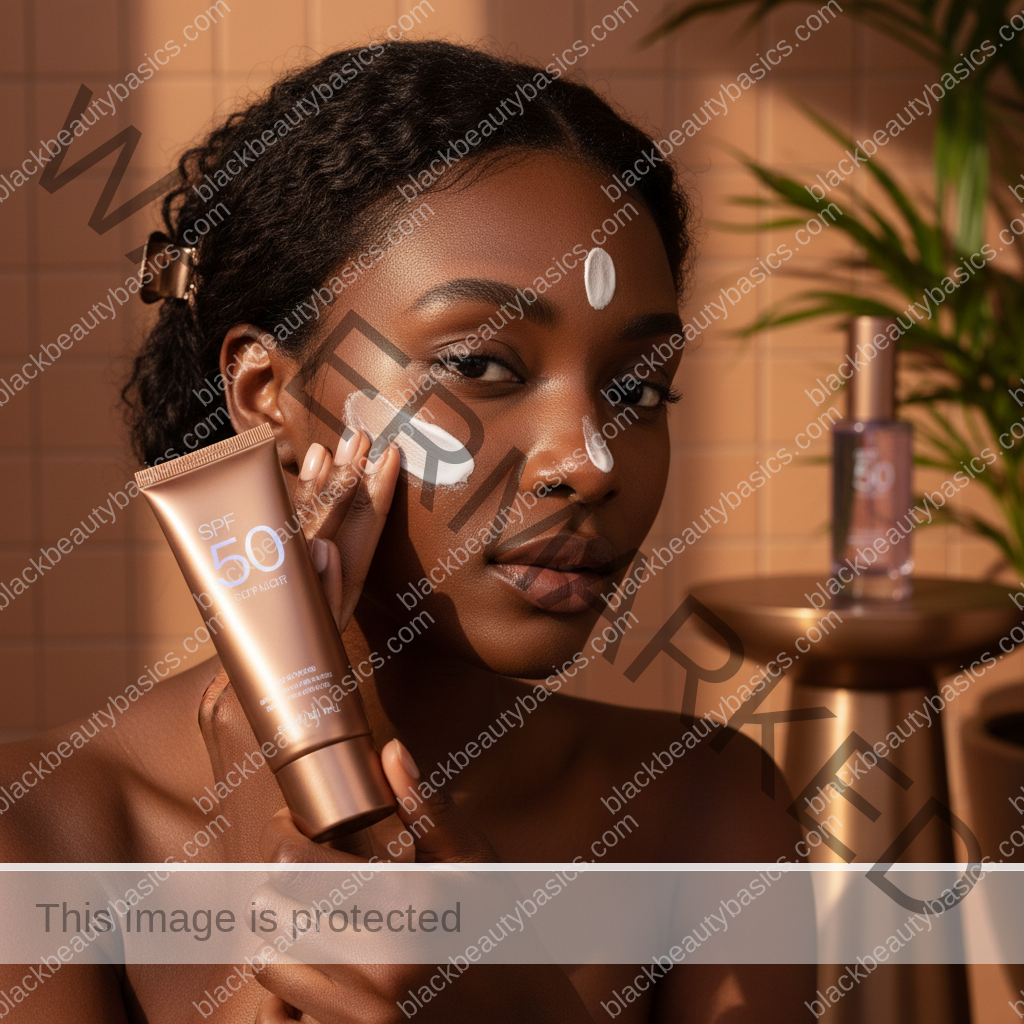
For the face and neck alone, the universally accepted guideline is approximately 1/4 teaspoon, or roughly the amount that fits on two full fingers. This “two-finger rule” is a practical visual cue that helps ensure adequate coverage.
Applying the Two-Finger Rule:
- Squeeze a line of sunscreen along the entire length of your index finger.
- Repeat for your middle finger.
- This combined amount is generally sufficient for your face and neck.
For the rest of your body, a good rule of thumb is about one ounce (a shot glass full) for all exposed areas. This might seem like a lot, but remember, protection hinges on sufficient coverage.
Why Under-Application is a Common Pitfall
Many factors contribute to under-application, especially for those with deep skin:
- Fear of White Cast: Historically, mineral sunscreens left a noticeable white or purple cast on deep skin, leading users to apply less to avoid this aesthetic concern.
- Heavy/Greasy Feel: Some formulations can feel thick or occlusive, prompting users to use a smaller amount for comfort.
- Cost: Sunscreen can be an investment, and using less might seem like a way to conserve product.
- Lack of Awareness: Many simply don’t realize how much is truly needed for effective protection.
By understanding the correct amount, you empower yourself to achieve the SPF protection stated on the label, without compromising your skin’s appearance or comfort.
Tips for Even Application on Deep Skin
- Work in Sections: Instead of applying one large dollop, dispense smaller amounts and gently pat or blend into sections of your face (forehead, cheeks, chin, nose).
- Layering is Key: If you find a single application of the “two-finger” amount feels too heavy, apply half, let it absorb for a minute, then apply the second half. This builds up coverage without overwhelming the skin.
- Don’t Forget Edges: Pay special attention to your hairline, ears, and the back of your neck. These are often missed but highly susceptible to sun exposure.
- Blend Downwards: Extend sunscreen slightly down your neck and décolletage for a seamless transition.
- Pat, Don’t Rub Vigorously: Gentle patting helps the product melt into the skin, especially with thicker formulas, reducing the likelihood of pilling or streaking.
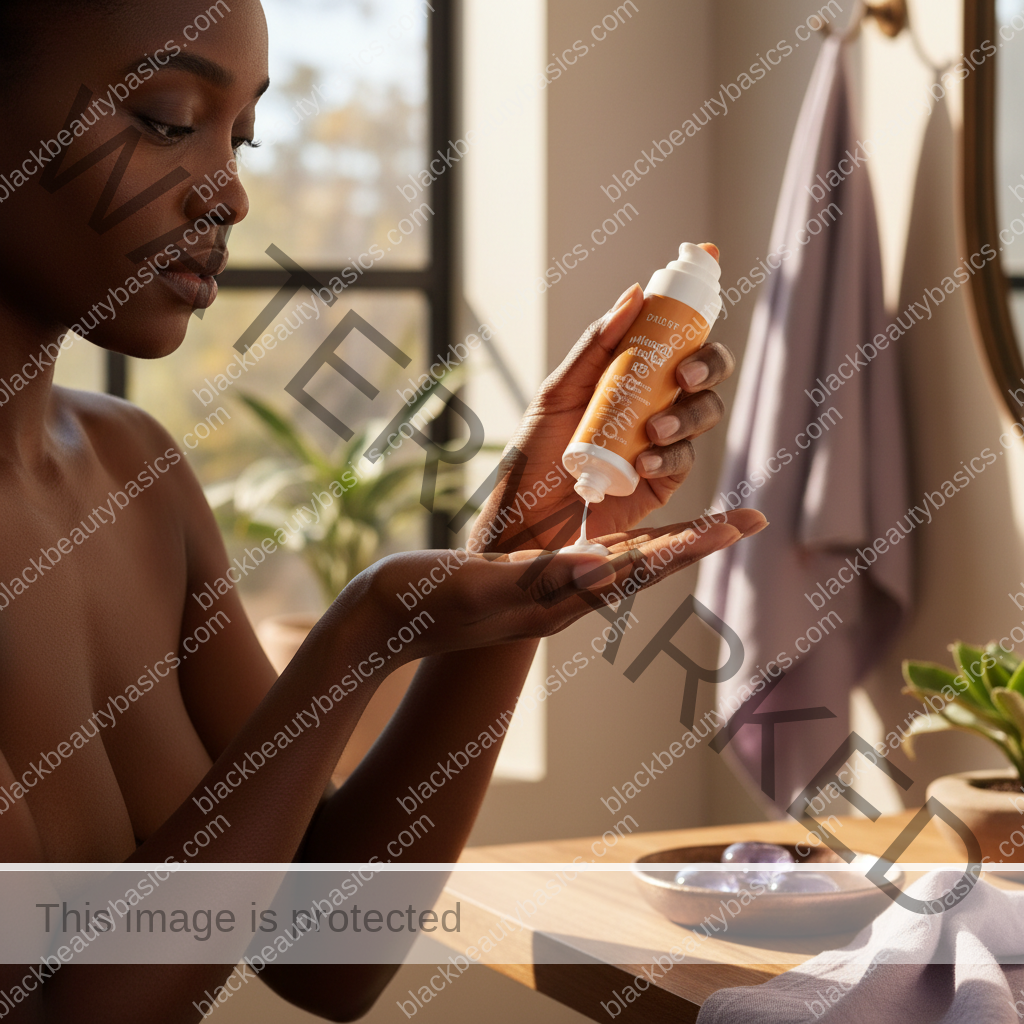
The Art of Choosing: Sunscreens That Vanish on Deep Skin
The beauty industry has made significant strides in creating sunscreens that cater to deep skin tones. The key lies in understanding the different types of sunscreens and what to look for.
Mineral vs. Chemical: Understanding the Difference
There are two primary types of sunscreens, each with its own mechanism of action:
Mineral Sunscreens (Physical Blockers)
- Active Ingredients: Zinc Oxide and Titanium Dioxide.
- How They Work: They sit on top of the skin, creating a physical barrier that reflects and scatters UV rays.
- Pros: Generally considered gentler for sensitive skin, immediate protection upon application, broad-spectrum.
- Cons (Historically): Often left a noticeable white cast, especially with higher concentrations of zinc oxide.
- Modern Advancements: Many brands now use micronized or nano-sized zinc oxide and titanium dioxide, or incorporate tints, to minimize the white cast, making them much more suitable for deep skin.
Shop Mineral Sunscreens on Amazon
Chemical Sunscreens (Organic Filters)
- Active Ingredients: Oxybenzone, Avobenzone, Octinoxate, Octisalate, Homosalate, Octocrylene, etc.
- How They Work: They absorb UV radiation, convert it into heat, and release it from the skin.
- Pros: Typically sheer, lightweight, and blend seamlessly into all skin tones without a white cast.
- Cons: Can sometimes cause irritation for very sensitive skin, requires about 15-20 minutes to become effective after application.
Shop Chemical Sunscreens on Amazon
Key Ingredients and Formulations to Seek Out
When selecting your sunscreen, look for these characteristics to ensure a flawless finish on deep skin:
- Broad-Spectrum SPF 30 or Higher: This protects against both UVA (aging) and UVB (burning) rays. SPF 30 blocks about 97% of UVB rays; higher SPFs offer marginally more protection.
- “No White Cast” or “Sheer” Formulas: Many brands specifically formulate their sunscreens to be invisible on deeper complexions. Read reviews from individuals with similar skin tones.
- Tinted Mineral Sunscreens: These are a game-changer! Mineral sunscreens infused with iron oxides or other pigments can counteract the white cast and even offer a subtle, perfecting tint.
- Gel, Serum, or Fluid Textures: These lighter formulations tend to absorb more quickly and feel less heavy than traditional creams.
- Hydrating Ingredients: Look for ingredients like hyaluronic acid, glycerin, ceramides, or squalane. A well-hydrated canvas helps sunscreen blend more smoothly and prevents a dry, chalky appearance.
- Antioxidants: Ingredients like Vitamin C, Vitamin E, or Niacinamide can offer additional protection against environmental damage and help with hyperpigmentation.
- Non-Comedogenic: Especially important for those prone to breakouts, this ensures the product won’t clog pores.
Shop Tinted Mineral Sunscreens on Amazon
Comparison: Sunscreen Types for Deep Skin
| Feature | Mineral Sunscreens (Modern Formulas) | Chemical Sunscreens | Tinted Mineral Sunscreens |
|---|---|---|---|
| Active Ingredients | Zinc Oxide, Titanium Dioxide | Avobenzone, Oxybenzone, Octinoxate, etc. | Zinc Oxide, Titanium Dioxide + Iron Oxides |
| Mechanism | Reflects/Scatters UV rays | Absorbs UV rays, converts to heat | Reflects/Scatters UV rays + color correction |
| White Cast Potential | Low to None (with micronized/nano tech) | Virtually None | Virtually None (color-correcting) |
| Feel on Skin | Can be slightly thicker, but often sheer | Lightweight, often undetectable | Often lightweight, can offer light coverage |
| Sensitivity | Excellent for sensitive skin | May irritate very sensitive skin | Excellent for sensitive skin |
| Application Time | Immediate protection | Effective after 15-20 mins | Immediate protection |
| Best For | Sensitive skin, those preferring physical blockers | Everyday wear, active lifestyles, sheer finish | Sensitive skin, those wanting light coverage/even tone |
Shop Facial Sunscreens on Amazon
Mastering the Application: Achieving a Weightless Finish
Beyond choosing the right product and applying enough, the technique of application is crucial for ensuring your sunscreen melts seamlessly into your deep skin, leaving no heavy residue or unwanted sheen.
Prepping Your Canvas: The Foundation for Flawless Sunscreen
A well-prepped skin is key to effortless sunscreen application. Think of it as preparing a smooth, hydrated canvas.
- Cleanse Gently: Start with a clean face. Use a gentle cleanser that doesn’t strip your skin of its natural oils.
- Hydrate Thoughtfully: Apply your usual hydrating serum and moisturizer. Allow these products to fully absorb for a few minutes before moving to sunscreen. If your skin is still damp or sticky, the sunscreen might not spread evenly. For deep skin, look for moisturizers that offer deep hydration without feeling heavy.
- Prime (Optional, but Recommended for Texture): If you use a primer, apply it after your moisturizer and before sunscreen. A blurring or hydrating primer can create an even smoother surface.
Shop Hydrating Serums on Amazon
Shop Moisturizers for Dark Skin on Amazon
Techniques for a Seamless Blend
- Warm It Up: Dispense the recommended amount (two-finger rule) into the palm of your hand. Gently rub your palms together for a few seconds. This warms the product, making it more pliable and easier to spread.
- Dot and Distribute: Instead of applying a large blob, dot the sunscreen evenly across your face – forehead, cheeks, nose, chin, and neck. This ensures even distribution from the start.
- Gentle Patting and Pressing: Using your fingertips or the pads of your hands, gently pat and press the sunscreen into your skin. Avoid vigorous rubbing, especially with mineral sunscreens, as this can sometimes lead to pilling or a streaky appearance. The warmth from your hands helps the product melt in.
- Blend Outwards: Start blending from the center of your face outwards, using light, circular motions. Ensure you blend all the way to your hairline, ears, and down your neck.
- Allow Absorption Time: Give your sunscreen a few minutes (3-5 minutes) to fully absorb and settle into your skin before applying makeup. This prevents makeup from disrupting the sunscreen layer or causing it to pill.
- Sheer Layers (If Needed): If you’re using a thicker formula or feel the “two-finger” amount is too much at once, apply half, let it absorb, then apply the second half. This builds up protection without feeling heavy.
Shop Facial Cleansers on Amazon
Post-Application Perfection: Setting and Mattifying
If you find your sunscreen leaves a slight sheen that you prefer to minimize, these steps can help:
- Blotting Papers: Gently press blotting papers onto areas prone to shine (T-zone) after your sunscreen has absorbed.
- Translucent Setting Powder: Lightly dust a finely milled, translucent setting powder over your face. Choose one that doesn’t leave a white cast on deep skin.
- Setting Spray: A mattifying setting spray can help reduce shine and lock everything in place.
Shop Translucent Setting Powders on Amazon
Shop Mattifying Setting Sprays on Amazon
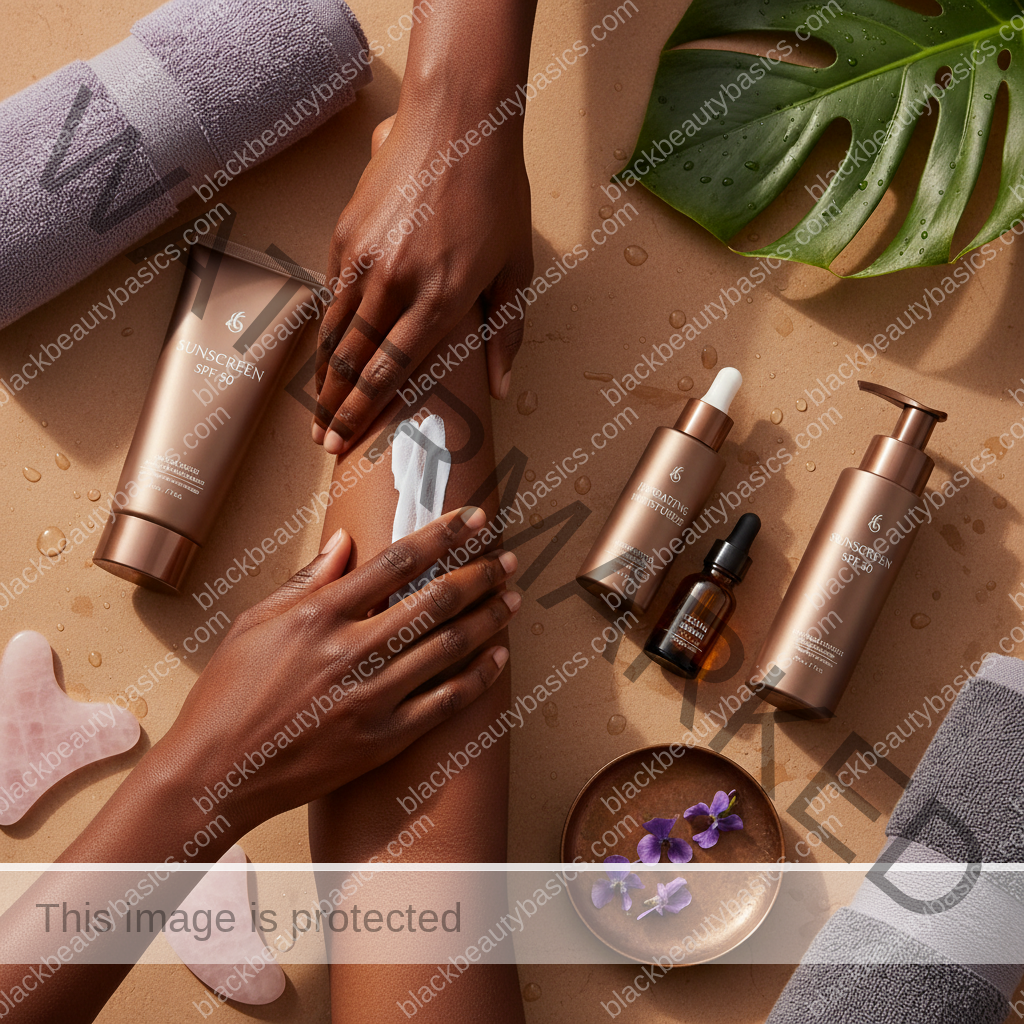
Beyond the Face: Full Body Sun Protection for Deep Skin
While we often focus on facial sunscreen, comprehensive sun protection extends to every exposed part of your body. Your arms, legs, chest, and hands are just as susceptible to sun damage and hyperpigmentation.
Tips for Body Sunscreen Application
- Generous Application: Remember the “shot glass” rule for your entire body. Don’t skimp!
- Spray Sunscreens for Convenience: For hard-to-reach areas or quick reapplication, spray sunscreens can be helpful. Ensure you rub them in thoroughly to guarantee even coverage. Avoid spraying directly onto the face; spray into hands first, then apply.
- Don’t Forget Often-Missed Areas:
- Ears: Especially the tops and backs.
- Neck and Décolletage: These areas show signs of aging quickly.
- Hands: Prone to sun spots and premature aging.
- Feet: If wearing open-toed shoes or sandals.
- Scalp/Hairline: For those with thinning hair or exposed scalp, consider a scalp-specific SPF spray or wear a hat.
- Water-Resistant Formulas: If swimming or sweating, opt for water-resistant sunscreens and reapply every 40 or 80 minutes as directed.
Shop Body Sunscreens on Amazon
Shop Spray Sunscreens on Amazon
The Power of Protective Clothing and Accessories
Sunscreen is a vital tool, but it’s part of a broader sun protection strategy. Incorporating protective clothing and accessories offers an additional layer of defense, especially during peak sun hours.
- UPF Clothing: Look for clothing with a Ultraviolet Protection Factor (UPF) rating. A UPF of 30-49 offers very good protection, while UPF 50+ offers excellent protection.
- Wide-Brimmed Hats: A hat with a brim of at least 3 inches all around provides excellent shade for your face, ears, and neck.
- Sunglasses: Protect the delicate skin around your eyes and prevent sun-induced damage to your eyes themselves. Choose sunglasses that block 99-100% of UVA and UVB rays.
- Seek Shade: Whenever possible, especially between 10 AM and 4 PM, seek shade under trees, umbrellas, or awnings.
Shop UPF Clothing on Amazon
Shop Wide-Brimmed Hats on Amazon
Sun Protection Checklist for Deep Skin
| Action | Recommendation for Deep Skin | Why It Matters |
|---|---|---|
| Daily Sunscreen | Broad-spectrum SPF 30+, “no white cast” formula | Prevents hyperpigmentation, premature aging, and skin cancer. |
| Application Amount | 1/4 teaspoon for face/neck (two-finger rule); 1 oz for body | Ensures stated SPF protection is achieved. |
| Reapplication | Every 2 hours, or after swimming/sweating | Maintains continuous protection throughout the day. |
| Product Type | Sheer chemical, micronized mineral, or tinted mineral | Blends seamlessly without a white cast. |
| Protective Clothing | UPF clothing, wide-brimmed hats, sunglasses | Adds an extra layer of physical protection, especially during peak hours. |
| Seek Shade | Prioritize shade between 10 AM – 4 PM | Minimizes direct UV exposure during the strongest sun. |
| Hydration | Apply to well-hydrated skin | Helps sunscreen blend smoothly and prevents a chalky finish. |
| Consistency | Year-round, rain or shine | UV rays are present even on cloudy days and indoors near windows. |
Enough sunscreen should not mean a heavy-looking face
The amount question is where a lot of sunscreen routines fall apart. Use too little and you may not get the protection on the label. Use too much of the wrong texture and deep skin can look gray, greasy, or overloaded. The answer is not to under-apply forever. It is to choose a formula that can be built to the right amount and applied in sections so the face still looks like skin.
For the face and neck, many professionals use the two-finger guideline as a simple visual cue, but face size, product texture, and neck coverage can change what feels right. The practical BBB approach is to apply enough to cover every exposed area evenly, then use a second light pass where needed instead of dumping one thick layer in the center of the face. The hairline, ears, neck, and around the mouth often get missed.
If the correct amount looks heavy, evaluate the formula before blaming your skin. Some mineral sunscreens leave more cast at adequate amounts. Some rich creams are beautiful on dry skin but too much for oily areas. Some formulas need more settling time. A wearable SPF should let you use a protective amount without making your complexion look dull.
Application that keeps the finish lighter
- Apply in sections instead of one large smear.
- Use a second thin layer for missed areas rather than rubbing aggressively.
- Let sunscreen settle before makeup or powder.
- Switch texture if the needed amount always looks gray or greasy.
What to do next
Keep this guide connected to the rest of the Sunscreen for Dark Skin series. The goal is not to treat SPF like a one-size-fits-all rule. The goal is to build sun protection that works with deep skin, real schedules, makeup, body care, outdoor plans, and hyperpigmentation goals.
Frequently Asked Questions About Sunscreen for Deep Skin
Q1: Do I really need sunscreen every single day, even if I’m indoors or it’s cloudy?
A: Absolutely, yes! UVA rays, which are responsible for aging and hyperpigmentation, can penetrate clouds and windows. While UVB rays (burning) are less intense indoors or on cloudy days, UVA rays are consistently present. Daily, year-round sunscreen application is crucial for preventing cumulative damage, managing hyperpigmentation, and maintaining overall skin health for deep skin tones.
Q2: My skin rarely burns. Does that mean I don’t need a high SPF?
A: While deep skin tones are less prone to visible sunburn, this doesn’t mean your skin isn’t experiencing sun damage. The damage often manifests as hyperpigmentation, uneven skin tone, and premature aging, rather than redness. An SPF 30 or higher is still recommended as it blocks 97% of UVB rays, and it’s essential for protecting against UVA rays which contribute to these concerns. Consistent application of sufficient SPF is key.
Q3: How can I reapply sunscreen over makeup without disturbing it?
A: Reapplying sunscreen over makeup can be tricky but is entirely possible.
- SPF Setting Sprays/Mists: These are excellent for a quick refresh. Hold the bottle about 6-8 inches from your face and mist evenly. Be generous and allow it to dry.
- SPF Powders: A translucent powder with SPF can be dusted over your face with a brush. This also helps to mattify.
- SPF Sticks: Gently pat or dab an SPF stick onto areas like your cheeks, forehead, and nose, then lightly blend with your fingertips or a beauty sponge.
- Tapping with a Sponge: You can also dispense a small amount of liquid sunscreen onto a damp beauty sponge and gently tap it over your face.
Remember, these methods are best for touch-ups; a full application before makeup is always the most effective.
Q4: Are there any natural oils that can replace sunscreen for deep skin?
A: No. While some natural oils like red raspberry seed oil or carrot seed oil may have a very low, inherent SPF (often estimated to be around SPF 5-8), they do not offer broad-spectrum protection, nor do they provide sufficient and consistent sun protection to replace a dedicated sunscreen. Relying solely on natural oils leaves your skin vulnerable to sun damage. Always use a scientifically formulated broad-spectrum sunscreen for effective protection.
Q5: I have oily skin. How can I use enough sunscreen without looking greasy?
A: For oily skin, look for sunscreens specifically labeled “mattifying,” “oil-free,” “gel-based,” or “fluid.” These formulations are designed to be lightweight and absorb quickly without adding excess shine. After applying your sunscreen, allow it to fully set for a few minutes, then you can gently blot any excess oil with blotting papers or lightly dust a translucent setting powder over your T-zone to achieve a more matte finish.
Q6: What’s the difference between SPF 30 and SPF 50, and which is better for deep skin?
A: SPF (Sun Protection Factor) primarily measures protection against UVB rays. SPF 15 blocks about 93% of UVB rays, SPF 30 blocks about 97%, and SPF 50 blocks about 98%. The difference in protection between SPF 30 and SPF 50 is minimal (only 1%). For deep skin, an SPF 30 or higher is generally recommended. The most important factor is consistent, generous application and reapplication, rather than chasing the highest SPF number. Both SPF 30 and SPF 50 offer excellent protection when used correctly.
Q7: Can sunscreen help fade existing dark spots or hyperpigmentation?
A: Yes, absolutely! While sunscreen doesn’t directly fade existing dark spots, it is the most critical step in preventing them from getting darker and preventing new ones from forming. Hyperpigmentation is often exacerbated by sun exposure. By consistently protecting your skin from UV rays, you create an environment where your skin can heal, and other brightening ingredients (like Vitamin C or Niacinamide) in your routine can work more effectively to fade existing spots. Without daily sunscreen, any efforts to lighten hyperpigmentation will be undermined.
Finding the right combination for your skin might take a little trial and error.
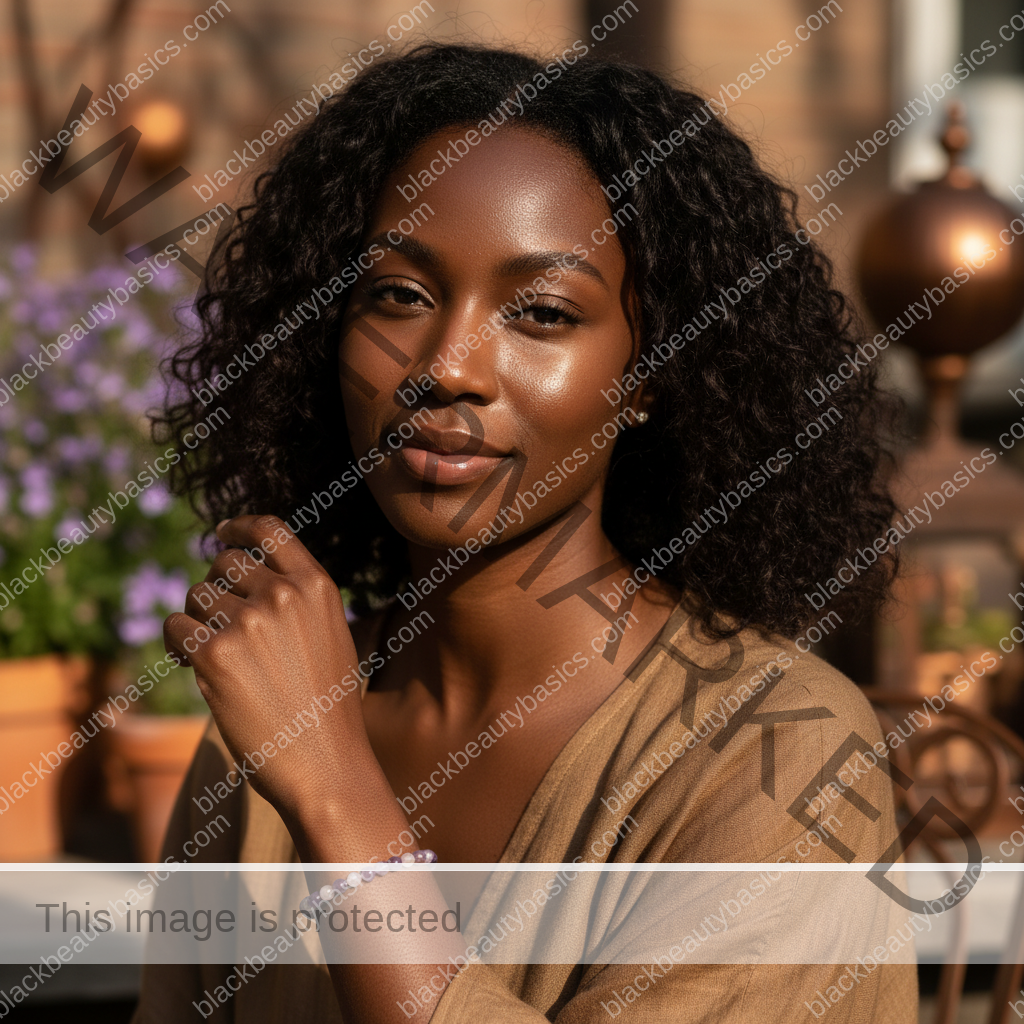
Embracing sunscreen is not just a skincare step; it’s an act of self-love, a testament to the reverence you hold for your radiant, melanin-rich skin. With the right knowledge, the perfect products, and a refined application technique, you can confidently step into the light, knowing your skin is protected, luminous, and undeniably beautiful. Let your glow be your guide, unburdened by fear of ashiness or heaviness, and forever protected by the wisdom you now possess. Your journey to impeccable skin health, steeped in elegance and efficacy, begins and continues with this vital daily ritual.
Related next steps
Related posts:
 Contour and Highlight on Deep Skin Without Looking Ashy
 Color Correcting 101: How to Neutralize Dark Circles & Hyperpigmentation on Melanin Skin (Without Looking Gray)
 Matte Sunscreen vs Dewy Sunscreen on Deep Skin
 Highlighters That Flatter Deep Skin Without Going Ashy
 Sunscreen for Teens With Deep Skin
 How to Stop Sunscreen From Making Deep Skin Look Gray