In the exquisite tapestry of melanin-rich skin, every hue, every curve, every pore tells a story of resilience and radiant beauty. Yet, sometimes, our journey of self-care is punctuated by moments of frustration – the irresistible urge to pick, the fleeting satisfaction of a pop, and the lingering shadow of post-inflammatory hyperpigmentation (PIH) that follows. This isn’t just about blemishes; it’s about the emotional landscape of our skin, and the profound desire to nurture it with understanding and grace.
At Black Beauty Basics, we believe in arming you with knowledge that empowers, transforming moments of concern into opportunities for profound self-love and informed action. Let’s delve into the intricate dance of picking, popping, and PIH, understanding why our skin reacts the way it does, and how we can cultivate a regimen that celebrates its inherent brilliance.
The Temptation of the Touch: Understanding Picking and Popping
That tiny bump, that lurking whitehead, that deep-seated cyst – they call to us, don’t they? The impulse to pick or pop a blemish is almost primal, driven by a desire for immediate gratification and the illusion of control. But for melanin-rich skin, this seemingly innocuous act carries a weightier consequence: the heightened risk of lasting discoloration.
Our skin is a marvel of biological engineering, equipped with melanocytes that produce melanin, the pigment responsible for our beautiful range of tones. While melanin offers natural protection against UV radiation, it also means our skin is more prone to hyperpigmentation when inflammation or trauma occurs. Picking and popping are direct invitations to inflammation, setting the stage for PIH.
Why We Pick: The Psychology Behind the Habit
The act of picking isn’t always about vanity; it can be a complex interplay of psychological factors. For many, it’s a stress response, a way to cope with anxiety, boredom, or even perfectionism. The temporary relief or satisfaction derived from “clearing” a blemish can reinforce the habit, creating a cycle that’s difficult to break.
- Stress and Anxiety: Picking can be a self-soothing mechanism, a physical outlet for emotional tension.
- Perfectionism: The desire for flawless skin can lead to obsessive examination and intervention.
- Boredom or Habit: Sometimes, it’s an unconscious act performed while distracted.
- Misinformation: Believing that popping a pimple will make it disappear faster.
Understanding these triggers is the first step toward breaking the cycle. It’s about acknowledging the emotional roots of the habit and replacing it with healthier coping mechanisms.
The Dangers of DIY Extraction for Melanin-Rich Skin
While a professional aesthetician might perform extractions safely, attempting to pop pimples at home often leads to more harm than good, especially for our skin. Here’s why:
- Increased Inflammation: Squeezing a pimple can push bacteria deeper into the pore, rupturing the follicle wall and intensifying inflammation. This inflammatory response is a direct precursor to PIH.
- Bacterial Spread: Your fingers carry bacteria. Introducing these to an open lesion can lead to secondary infections, worsening the breakout and prolonging healing.
- Scarring: Aggressive picking or popping can damage the surrounding skin tissue, leading to textural scars (atrophic or hypertrophic) in addition to discoloration.
- Prolonged Healing: What might have been a short-lived blemish can become a persistent wound, taking longer to heal and leaving a more pronounced mark.
The temporary satisfaction of a pop is rarely worth the long-term consequences for our skin. Patience and proper care are always the more elegant path.
The Lingering Shadow: Understanding Post-Inflammatory Hyperpigmentation (PIH)
Post-inflammatory hyperpigmentation, or PIH, is the unwelcome souvenir left behind after skin trauma or inflammation. For Black women, PIH is not just a common concern; it’s often the primary concern, overshadowing the initial breakout itself. Those dark spots, ranging from light brown to deep purplish-black, are a testament to our skin’s robust melanocyte activity.
What is PIH and Why is it Prevalent in Melanin-Rich Skin?
PIH occurs when inflammation or injury to the skin (from acne, cuts, burns, or even aggressive scrubbing) triggers melanocytes to produce an excess of melanin. This surplus melanin is then deposited into the deeper layers of the skin, resulting in a persistent dark spot. Because melanin-rich skin has more active and larger melanocytes, it is inherently more reactive to inflammation, making PIH a frequent and often frustrating consequence.
- Inflammation is Key: Any inflammatory event – a pimple, a scratch, a rash – can initiate the PIH process.
- Melanocyte Activity: Our melanocytes are highly responsive. When they sense trauma, they go into overdrive, producing more pigment as a protective mechanism.
- Depth of Pigment: The deeper the pigment is deposited in the skin, the longer it takes to fade, and the more challenging it can be to treat.
Distinguishing PIH from Other Forms of Hyperpigmentation
While PIH is a specific type of dark spot, it’s important to differentiate it from other forms of hyperpigmentation that can affect melanin-rich skin:
Comparison Table: PIH vs. Other Hyperpigmentation
| Characteristic | Post-Inflammatory Hyperpigmentation (PIH) | Melasma | Sunspots (Lentigines) |
|---|---|---|---|
| Cause | Skin inflammation or injury (acne, cuts, rashes, burns) | Hormonal fluctuations (pregnancy, birth control), sun exposure, genetics | Cumulative sun exposure |
| Appearance | Irregularly shaped dark spots, follow pattern of original injury | Symmetrical patches, often on cheeks, forehead, upper lip, chin | Well-defined, flat, round or oval spots |
| Color | Light brown to dark brown, purplish-black | Tan to dark brown, often blotchy | Light brown to black |
| Location | Anywhere on the body where inflammation occurred | Face (cheeks, forehead, upper lip, chin) | Sun-exposed areas (face, hands, décolletage) |
| Trigger | Inflammation, trauma | Hormones + UV exposure | UV exposure |
Understanding the specific type of hyperpigmentation you’re dealing with is crucial for effective treatment. A dermatologist can provide an accurate diagnosis.
Cultivating a Healing Sanctuary: Prevention and Treatment Strategies
The most effective approach to PIH is prevention. By nurturing our skin and avoiding triggers, we can significantly reduce the likelihood of these persistent marks. When PIH does appear, a consistent, gentle, and targeted treatment plan is key.
The Golden Rule: Hands Off!
This cannot be emphasized enough: do not pick, squeeze, or pop blemishes. It’s the single most impactful step you can take to prevent PIH. When you feel the urge, pause. Take a deep breath. Remind yourself of the potential consequences. Instead, redirect your energy towards gentle care.
Tips for Breaking the Picking Habit
- Identify Triggers: Keep a journal to note when and why you pick. Is it stress? Boredom? Certain mirrors?
- Keep Hands Busy: Engage in activities that require both hands, like knitting, writing, or using a stress ball.
- Barrier Method: Place hydrocolloid patches (Shop Hydrocolloid Patches on Amazon) over active blemishes. They protect the skin, absorb fluid, and prevent picking.
- Mindful Breathing: When the urge strikes, practice deep breathing exercises to calm your nervous system.
- Seek Support: If picking feels compulsive and significantly impacts your life, consider speaking with a therapist or dermatologist.
Gentle Cleansing and Hydration: The Foundation of Healthy Skin
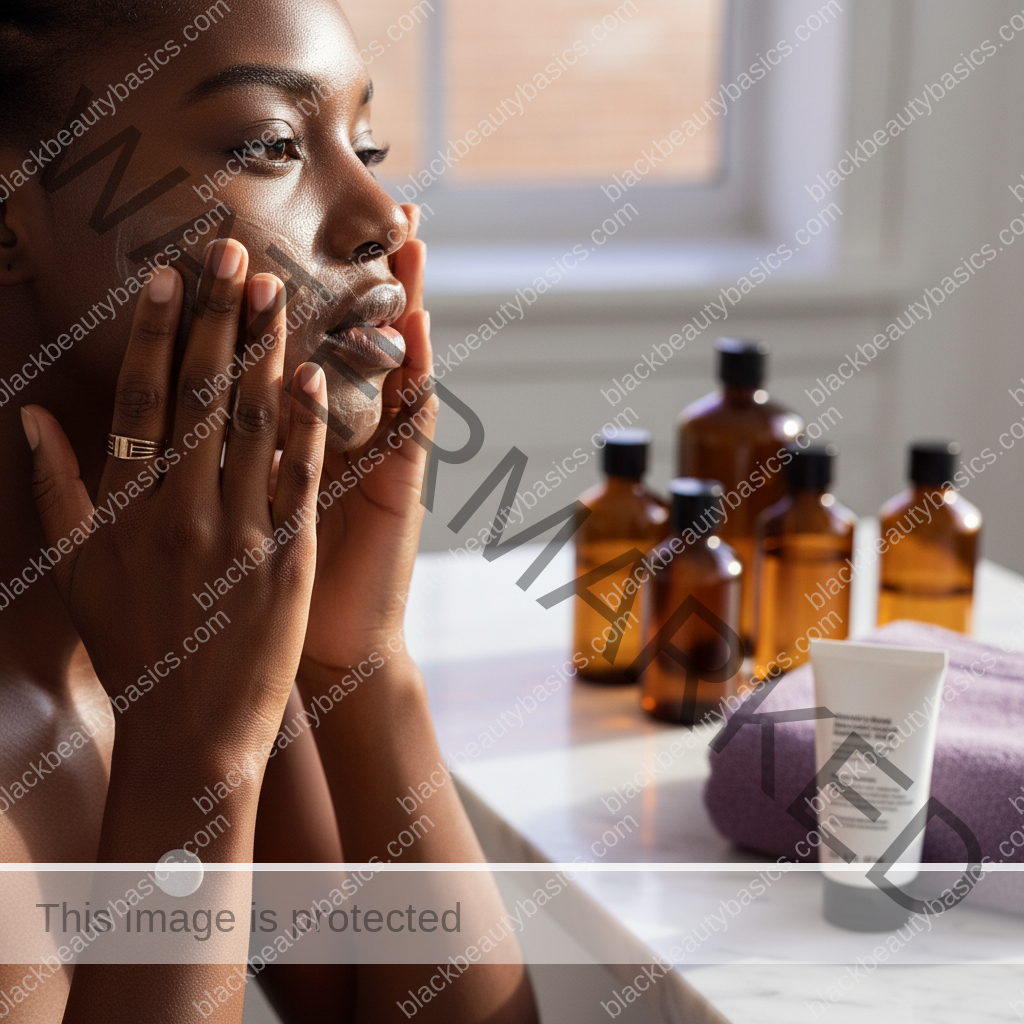
A consistent, gentle skincare routine is paramount for preventing breakouts and supporting the skin’s healing process. Aggressive scrubbing or harsh products can strip the skin, compromise its barrier, and ironically, trigger more inflammation and PIH.
- Cleansing: Use a mild, hydrating cleanser (Shop Hydrating Cleansers on Amazon) twice daily. Look for ingredients like ceramides, hyaluronic acid, or glycerin. Avoid harsh physical scrubs, which can micro-tear the skin.
- Moisturizing: Even oily skin needs moisture. A non-comedogenic moisturizer (Shop Non-Comedogenic Moisturizers on Amazon) helps maintain a healthy skin barrier, which is crucial for healing and preventing further irritation.
- Sun Protection: This is non-negotiable for melanin-rich skin, especially when dealing with PIH. UV exposure darkens existing PIH and can trigger new spots. Use a broad-spectrum SPF 30+ sunscreen (Shop Broad-Spectrum SPF 30+ Sunscreens on Amazon) daily, even on cloudy days. Tinted mineral sunscreens can offer an added layer of protection against visible light, which also contributes to hyperpigmentation in darker skin tones.
Targeted Ingredients for PIH Treatment
Once PIH has set in, a strategic approach with specific active ingredients can help to fade the marks and restore an even tone. Patience is key, as fading PIH can take weeks to months.
Key Ingredients for Fading PIH
| Ingredient | Mechanism of Action | Product Examples | Considerations for Melanin-Rich Skin |
|---|---|---|---|
| Niacinamide (Vitamin B3) | Reduces inflammation, inhibits melanosome transfer to keratinocytes, strengthens skin barrier. | Serums, moisturizers (Shop Niacinamide Serums on Amazon) | Well-tolerated, excellent for reducing redness and improving overall skin tone. |
| Vitamin C (L-Ascorbic Acid) | Antioxidant, inhibits tyrosinase (enzyme for melanin production), brightens skin. | Serums (Shop Vitamin C Serums on Amazon) | Choose stable forms. Can be irritating in high concentrations; start low and go slow. Essential for sun protection synergy. |
| Alpha Arbutin | Natural derivative of hydroquinone, inhibits tyrosinase activity. | Serums, creams (Shop Alpha Arbutin Serums on Amazon) | Gentler alternative to hydroquinone, good for sensitive skin. |
| Kojic Acid | Inhibits tyrosinase, antioxidant. | Cleansers, serums, creams (Shop Kojic Acid Serums on Amazon) | Effective but can be irritating for some; patch test first. |
| Azelaic Acid | Reduces inflammation, antibacterial, inhibits tyrosinase. | Creams, gels (Shop Azelaic Acid Creams on Amazon) | Excellent for both acne and PIH, generally well-tolerated by darker skin tones. |
| Retinoids (Retinol, Tretinoin) | Increases cell turnover, exfoliates, helps distribute pigment more evenly. | Serums, creams (Shop Retinol Serums on Amazon) | Start with low concentration, use sparingly, and always with sunscreen. Can cause initial irritation and purging. Prescription tretinoin is more potent. |
| AHAs (Glycolic, Lactic Acid) | Exfoliate surface skin cells, promoting new cell growth and pigment shedding. | Toners, serums, masks (Shop AHA Toners on Amazon) | Use with caution; over-exfoliation can cause irritation and worsen PIH. Start with lower concentrations and infrequent use. Lactic acid is generally gentler. |
| Hydroquinone (Prescription) | Potent tyrosinase inhibitor, bleaches skin. | Creams (prescription only) | Most effective for severe PIH. Use strictly under dermatological supervision due to potential side effects (e.g., ochronosis with prolonged, unsupervised use). Short-term use (3-4 months) is typically recommended. |
It’s often beneficial to combine ingredients that work through different mechanisms (e.g., an antioxidant with a tyrosinase inhibitor and an exfoliant). However, introduce new products gradually to avoid overwhelming your skin.
Professional Treatments for Stubborn PIH
For more persistent or severe PIH, professional treatments offered by a dermatologist or licensed aesthetician can provide significant improvement. It’s crucial to seek out professionals experienced with treating melanin-rich skin to avoid adverse effects.
- Chemical Peels: Superficial peels containing lactic acid, glycolic acid, or salicylic acid can help exfoliate the top layers of skin and encourage new cell turnover. Medium-depth peels may also be considered, but require careful selection and application for darker skin tones to prevent further PIH or scarring. (Shop Chemical Peel Kits on Amazon – for at-home, superficial use only, consult professional for stronger peels)
- Microneedling: This procedure creates controlled micro-injuries in the skin, stimulating collagen production and improving the penetration of topical treatments. When performed correctly, it can be very effective for PIH and textural issues. However, improper technique or aggressive treatment can worsen PIH.
- Lasers and Light Therapies: Certain lasers, such as Q-switched Nd:YAG or picosecond lasers, can be used to target pigment. These treatments require extreme caution and expertise when used on melanin-rich skin due to the risk of post-inflammatory hyperpigmentation or hypopigmentation (loss of pigment). Always consult a board-certified dermatologist with extensive experience in treating skin of color.
Holistic Wellness: Beyond the Topical Treatments
Our skin is a reflection of our internal health. Addressing PIH and preventing breakouts isn’t solely about what we apply topically; it’s also about nurturing our bodies from within.
Diet and Lifestyle: Fueling Your Skin’s Radiance
- Anti-Inflammatory Diet: Incorporate foods rich in antioxidants and anti-inflammatory properties. Think colorful fruits and vegetables, lean proteins, and healthy fats (avocado, nuts, olive oil). Reduce processed foods, excessive sugar, and dairy, which can sometimes exacerbate inflammation for some individuals.
- Hydration: Drink plenty of water throughout the day to support skin function and overall health.
- Stress Management: Chronic stress can trigger hormonal fluctuations that lead to breakouts. Practice stress-reducing techniques like meditation, yoga, deep breathing, or spending time in nature.
- Adequate Sleep: Your skin repairs and regenerates while you sleep. Aim for 7-9 hours of quality sleep each night.
- Clean Habits: Regularly clean your phone screen, pillowcases, and makeup brushes to minimize bacterial transfer to your face.
The Emotional Impact of PIH and Self-Compassion
Living with PIH can be emotionally challenging, impacting self-esteem and confidence. It’s important to practice self-compassion throughout your skin journey.
- Patience is a Virtue: Remember that fading PIH takes time. Be consistent with your routine and celebrate small improvements.
- Focus on Overall Health: Shift your focus from “flaws” to nurturing your skin’s health and vitality.
- Community and Support: Connect with others who share similar experiences. Knowing you’re not alone can be incredibly empowering.
- Professional Guidance: Don’t hesitate to seek the advice of a dermatologist who understands the unique needs of melanin-rich skin. They can provide tailored advice and support.
Picking is often emotional, not just a bad habit
Telling someone to “just stop picking” rarely helps. Picking can happen when a bump feels painful, visible, stressful, or impossible to ignore. For melanin-rich skin, the consequence can be post-inflammatory hyperpigmentation that lasts far longer than the original breakout.
The goal is not shame. The goal is interruption. Hydrocolloid patches, keeping nails short, using a mirror less often, treating pain early, and having a plan for inflamed bumps can reduce the urge. If picking feels compulsive, support from a professional can help.
Popping can also increase inflammation, infection risk, and scarring. Deep or cystic acne should not be forced.
Picking interruption tools
- Cover tempting bumps when appropriate.
- Reduce mirror checking during high-stress moments.
- Treat tenderness early instead of squeezing.
- Seek professional support for compulsive picking or scarring acne.
What to do next
Keep this guide connected to the rest of the Acne & Sensitive Skin in Black Women series. Acne care on deep skin works best when product choices, makeup habits, body routines, stress patterns, and PIH prevention are treated as one connected system.
Keep the routine protective after the breakout
Picking is not a moral failure. But your skin deserves tools that make it easier to stop. For Black women and people with richly melanated skin, acne care is rarely only about making the bump smaller. It is also about lowering inflammation, protecting the skin barrier, and reducing the chance that every flare leaves a new dark mark. That means the routine has to be effective without becoming harsh.
When the skin starts feeling raw, tight, hot, itchy, or unusually tender, treat that as useful feedback. Pause the extras, return to a gentle cleanser and moisturizer, keep sunscreen steady in the morning, and restart actives only when the skin feels calmer. A routine that your skin can tolerate for months will usually serve you better than a dramatic routine that creates a setback in a week.
Frequently Asked Questions About Picking, Popping, and PIH
Q1: How long does it typically take for PIH to fade on melanin-rich skin?
A1: The fading time for PIH varies greatly depending on the depth of the pigment, the intensity of the initial inflammation, and the consistency of your treatment. Superficial PIH can fade in a few weeks to a few months, while deeper, more stubborn marks can take 6-12 months, or even longer, to significantly lighten. Consistent use of sun protection and targeted lightening ingredients is crucial for speeding up the process.
Q2: Is it ever safe to pop a pimple?
A2: Generally, no. For melanin-rich skin, the risk of triggering PIH or infection far outweighs any perceived benefit. If you have a very superficial whitehead that is ready to come out, a professional aesthetician might perform a sterile extraction. However, attempting this at home almost always leads to more inflammation, potential scarring, and prolonged PIH. It’s best to leave extractions to the experts or use targeted spot treatments and hydrocolloid patches.
Q3: Can PIH turn into permanent scars?
A3: PIH itself is a discoloration, not a textural scar. However, aggressive picking or popping can damage the skin’s collagen and elastin, leading to permanent textural scars (like ice pick, boxcar, or rolling scars) in addition to the PIH. While PIH can eventually fade, textural scars are much more challenging to treat and often require professional interventions like microneedling, subcision, or laser resurfacing.
Q4: What’s the difference between PIH and post-inflammatory erythema (PIE)?
A4: PIH refers to dark spots (brown, black, or purplish) caused by excess melanin production after inflammation. PIE, on the other hand, refers to red or pink spots that remain after a blemish, caused by damage to small blood vessels near the skin’s surface. PIE is more common in lighter skin tones, while PIH is predominant in melanin-rich skin. Some individuals can experience both simultaneously.
Q5: Can I use multiple active ingredients for PIH at once?
A5: While combining ingredients can be effective, it requires caution, especially for melanin-rich skin which can be prone to irritation. It’s best to introduce one new active ingredient at a time to see how your skin reacts. If combining, choose ingredients that complement each other (e.g., Vitamin C in the morning, Retinol at night). Avoid using multiple strong exfoliants (like high-concentration AHAs and retinoids) simultaneously, as this can lead to over-exfoliation, irritation, and potentially worsen PIH. Always patch test new products and consult with a dermatologist for a personalized regimen.
Q6: Are natural remedies effective for PIH?
A6: Some natural ingredients have mild skin-lightening or anti-inflammatory properties, such as licorice root extract, turmeric, and aloe vera. While they can be supportive, they are generally less potent than scientifically-backed active ingredients like niacinamide, alpha arbutin, or retinoids. For significant PIH, a combination of evidence-based topical treatments and professional guidance is usually more effective. Always be cautious with DIY remedies, as some can cause irritation or allergic reactions.
Q7: How important is sunscreen for PIH treatment?
A7: Sunscreen is arguably the single most important product for treating and preventing PIH. UV radiation stimulates melanin production, which will darken existing PIH and make it much harder to fade. It can also trigger new spots. Use a broad-spectrum SPF 30+ daily, reapplying every two hours when outdoors. For melanin-rich skin, tinted mineral sunscreens containing iron oxides can also help protect against visible light, which contributes to hyperpigmentation.
A8: It’s advisable to see a dermatologist if your PIH is widespread, persistent, or significantly impacting your quality of life. A dermatologist can accurately diagnose the type of hyperpigmentation, prescribe stronger medications (like hydroquinone or prescription retinoids), and recommend in-office procedures (like professional peels or microneedling) that are safe and effective for melanin-rich skin. They can also help you develop a comprehensive, personalized skincare plan.

Our journey with melanin-rich skin is one of continuous discovery, a beautiful testament to our heritage and resilience. By understanding the intricate dynamics of picking, popping, and the subsequent emergence of PIH, we empower ourselves to make choices that honor and protect our skin’s inherent luminosity. Embrace the wisdom of gentle care, the power of informed choices, and the unwavering belief in your skin’s capacity to heal and radiate its natural, magnificent glow.
Create distance between the urge and your hands
The most useful anti-picking plan is usually physical, not motivational. If you wait until the urge is strong, willpower has to do too much. Create distance earlier: cover a tempting bump with a patch when appropriate, move away from magnifying mirrors, keep skincare short when you are stressed, and give your hands something else to do while you are watching TV, working, or scrolling.
It also helps to treat tenderness early. A painful bump is harder to ignore than a calm one. Gentle spot care, professional treatment for cystic acne, and fewer irritating products can reduce the kind of discomfort that invites squeezing. The goal is not to shame yourself into stopping. It is to build a routine where stopping becomes easier.
After picking happens, avoid turning the moment into more punishment. Do not scrub the area or stack acids to “fix” it overnight. Cleanse gently, keep the spot protected, moisturize, and use sunscreen on exposed skin during the day. If the area is open, painful, or worsening, get medical guidance instead of experimenting. The goal is to reduce inflammation quickly so the mark left behind has less reason to deepen.
Related next steps
Related posts:
 Retinoids on Melanin-Rich Skin: Navigating Acne and PIH with Grace
 How Scarring and PIH Influence When to Seek Help for Acne on Melanin-Rich Skin
 How PIH and Acne Scars Show Up on Melanin-Rich Skin
 When PIH and Scarring May Need Professional Support on Melanin-Rich Skin
 Bikini-Line and Intimate Shaving for PIH-Prone Skin: A Gentle Approach for Melanin-Rich Skin
 How Texture and PIH Show Up on Deep, Melanin-Rich Skin