Basic AM and PM Routines for Acne-Prone Melanin-Rich Skin
For many of us with melanin-rich skin, the journey to clear, calm skin can feel like navigating a labyrinth designed by an overzealous product marketer. We’ve all been there: standing in front of the mirror, a cabinet overflowing with half-used serums, spot treatments, and cleansers, each promising to be the magic bullet for our acne. The frustration is palpable, especially when each new addition seems to bring not relief, but more irritation, more dryness, and, most dishearteningly, more dark spots – those stubborn reminders of past breakouts that linger long after the blemish itself has faded. It’s a cycle that can leave us feeling defeated, questioning every product choice and wondering if clear skin is an unattainable dream.
This feeling is amplified for Black women and others with melanin-rich skin. Our skin, while resilient and beautiful, is also uniquely prone to post-inflammatory hyperpigmentation (PIH) – those dark marks that seem to appear with the slightest irritation or breakout. This means that a skincare routine that might work for someone with lighter skin tones could actually exacerbate our issues, leading to more PIH even as it attempts to clear acne. The aggressive, “nuke it from orbit” approach often recommended for acne can strip our skin’s delicate barrier, triggering a cascade of inflammation that makes PIH worse and can even lead to more breakouts. It’s a delicate balance, and finding the right path requires not just knowledge, but also a deep understanding of our skin’s specific needs and sensitivities.
The truth is, acne-prone skin, especially melanin-rich skin, doesn’t need an elaborate, multi-step regimen to heal and thrive. In fact, often, less is truly more. What it craves is consistency, gentleness, and a thoughtful approach that prioritizes barrier health and minimizes the risk of PIH. This article is your guide to building a foundational, yet powerful, AM and PM routine – a calm, repeatable structure that supports your skin’s natural healing processes without overwhelming it. We’ll strip away the noise and focus on the essentials, helping you cultivate a routine that is both effective and sustainable, paving the way for the clear, radiant skin you deserve.
Why Acne-Prone Melanin-Rich Skin Often Does Better with Structure
When dealing with acne, especially on melanin-rich skin, the impulse to attack every blemish with a potent cocktail of ingredients is strong. We see an active breakout, and our first thought is often to apply a drying spot treatment, an exfoliating acid, and perhaps even a clay mask, all in rapid succession. This “more is better” mentality, while understandable given the frustration acne can cause, often backfires spectacularly for our skin. Our skin’s natural protective barrier, a delicate shield against environmental aggressors and moisture loss, is particularly vulnerable to this kind of assault. When this barrier is compromised, it becomes less effective at keeping irritants out and moisture in, leading to increased sensitivity, redness, and a heightened risk of inflammation. For melanin-rich skin, inflammation is the direct precursor to post-inflammatory hyperpigmentation (PIH), those stubborn dark spots that can take months, or even years, to fade.
A structured, minimalist routine, on the other hand, provides a stable and predictable environment for your skin. It allows your skin to focus its energy on healing and maintaining its barrier, rather than constantly reacting to new and potentially irritating ingredients. Think of it like a carefully planned diet for your skin: instead of bombarding it with every trendy superfood, you’re providing a balanced, nutritious meal that supports its overall health. This approach is particularly crucial for melanin-rich skin because our melanocytes (the cells responsible for producing pigment) are highly reactive. Any form of irritation, whether from harsh products, excessive exfoliation, or even picking at blemishes, can trigger these cells to overproduce melanin, resulting in those unwelcome dark marks. By keeping your routine simple and consistent, you minimize the opportunities for irritation, thereby significantly reducing your risk of PIH.
Moreover, a structured routine helps you identify what truly works for your skin. When you introduce too many new products at once, it becomes impossible to pinpoint which ingredient is causing a positive (or negative) reaction. Is it the new serum, the new cleanser, or the combination of both? A minimalist framework allows you to introduce new products one at a time, giving your skin ample time to adjust and allowing you to observe its response clearly. This methodical approach is not about deprivation; it’s about empowerment through clarity and control. It’s about respecting your skin’s unique physiology and giving it the gentle, consistent care it needs to thrive, without the chaos and confusion of an overstuffed regimen. This foundational approach sets the stage for healthy skin, allowing you to later consider how to add actives without overwhelming PIH-prone skin, should your skin require it.
The Foundational Pillars: Cleansing, Moisturizing, and Protecting
At the heart of any effective skincare routine, especially for acne-prone melanin-rich skin, are three non-negotiable pillars: cleansing, moisturizing, and protecting. These three steps, when executed thoughtfully and consistently, form the bedrock upon which healthy skin is built. They are the essential nutrients your skin needs daily to function optimally, manage breakouts, and minimize PIH.
- Cleansing: This isn’t just about removing makeup or dirt; it’s about gently clearing away impurities, excess oil, and dead skin cells that can clog pores and contribute to breakouts. For melanin-rich skin, the emphasis is on gentle cleansers for acne-prone dark skin that cleanse effectively without stripping the skin of its natural oils or disrupting its barrier. Harsh cleansers can lead to dryness, irritation, and rebound oil production, all of which can worsen acne and increase PIH risk.
- Moisturizing: Often misunderstood for acne-prone skin, moisturizing is absolutely critical. When skin is dry or dehydrated, it can produce more oil to compensate, leading to more breakouts. A good moisturizer helps to maintain the skin’s barrier function, keeping it supple, hydrated, and less prone to irritation. For melanin-rich skin, choosing a non-comedogenic moisturizer for dark skin acne is key to ensuring it won’t clog pores while providing essential hydration.
- Protecting (Sunscreen): This is arguably the most crucial step for preventing and managing PIH. UV radiation can darken existing dark spots and trigger new ones, making the healing process significantly longer. Daily, consistent use of a broad-spectrum sunscreen is non-negotiable for melanin-rich skin, even on cloudy days or indoors near windows. Look for sunscreen with no white cast for acne-prone dark skin that offers both UVA and UVB protection.
These three steps, performed consistently morning and night (with sunscreen being a morning-only application), create a stable and supportive environment for your skin. They address the fundamental needs of cleansing, hydration, and protection, allowing your skin’s natural healing mechanisms to work more effectively. By mastering these basics, you lay a strong foundation for managing acne and minimizing PIH, setting the stage for a healthier, more radiant complexion.
The Pitfalls of Over-Treating and Product Overload
The allure of quick fixes and miracle products is strong, especially when you’re grappling with persistent acne. The beauty industry, unfortunately, often capitalizes on this desperation, flooding the market with an endless array of “acne solutions” that promise rapid results. This can lead to a phenomenon we call “product overload” or “over-treating,” where individuals, in their earnest quest for clear skin, layer on multiple potent actives, often without understanding their synergistic effects or potential for irritation. For melanin-rich skin, this approach is not just ineffective; it can be actively detrimental, paving the way for heightened sensitivity, barrier damage, and exacerbated post-inflammatory hyperpigmentation.
Consider the common scenario: you might be using a salicylic acid cleanser, followed by a glycolic acid toner, then a benzoyl peroxide spot treatment, and perhaps a retinoid serum at night. Each of these ingredients, in isolation and used correctly, can be beneficial for acne. However, when combined indiscriminately, they can create a perfect storm of irritation. Salicylic acid and glycolic acid are both exfoliants; using them together can lead to over-exfoliation, stripping the skin’s protective barrier. Adding benzoyl peroxide, known for its drying effects, further compromises this barrier, leaving the skin raw, red, and highly sensitive. A retinoid, while excellent for acne and anti-aging, can also be irritating, especially when first introduced. The cumulative effect is often a compromised skin barrier, characterized by dryness, flakiness, tightness, and increased redness. For melanin-rich skin, this inflammation is a direct trigger for PIH, turning minor breakouts into long-lasting dark spots.
Beyond the physical irritation, product overload also creates mental fatigue and confusion. It becomes impossible to discern which product is helping, which is harming, and which is simply redundant. This lack of clarity can lead to an endless cycle of trial and error, where new products are constantly introduced in the hope of finding “the one,” often making the problem worse. Moreover, the financial cost of purchasing and discarding numerous products can be significant. By embracing a structured, minimalist approach, we step away from this chaotic cycle. We give our skin the space to breathe, to heal, and to respond predictably to a few carefully chosen, gentle products. This allows us to observe genuine progress, identify true triggers, and build a sustainable routine that respects our skin’s unique needs without overwhelming it. It’s about choosing wisdom over impulse, and patience over instant gratification, for long-term skin health and radiance.
A Simple Morning Routine for Acne-Prone Dark Skin
The morning routine for acne-prone melanin-rich skin is all about preparing your skin for the day ahead: gently cleansing away any nighttime buildup, providing essential hydration, and, most importantly, protecting it from environmental aggressors, especially the sun. This routine should be quick, efficient, and focused on prevention and maintenance, without adding unnecessary layers that could lead to pilling or heaviness under makeup. The goal is to create a fresh, protected canvas that can confidently face the day.
Step 1: Gentle Cleansing
Upon waking, your skin doesn’t typically require a harsh, deep cleanse. Unless you’ve had a particularly sweaty night or applied heavy occlusives, a gentle approach is best. The purpose of morning cleansing is to remove any residual skincare products from the night before, excess oil that may have accumulated, and any environmental impurities that settled on your skin while you slept. For melanin-rich skin, preserving the skin barrier is paramount, as any irritation can lead to PIH.
Recommendation: Opt for a gentle, hydrating cleanser. This could be a cream cleanser, a milky cleanser, or a low-foaming gel cleanser. Look for ingredients like ceramides, hyaluronic acid, glycerin, or colloidal oatmeal, which help to maintain moisture and soothe the skin. Avoid harsh sulfates (like Sodium Lauryl Sulfate) and strong fragrances, which can be irritating. If your skin is particularly sensitive or dry, simply rinsing with cool water can be sufficient. The key is to cleanse without stripping your skin of its natural oils, leaving it feeling soft and comfortable, not tight or squeaky clean. Pat your face dry with a clean, soft towel rather than rubbing, to minimize friction and irritation.
Step 2: Hydration and Barrier Support (Moisturizer)
After cleansing, the next crucial step is to replenish moisture and support your skin’s barrier. Even if your skin is oily or acne-prone, hydration is non-negotiable. Dehydrated skin can actually produce more oil to compensate, leading to more breakouts. A good moisturizer helps to lock in hydration, soothe the skin, and provide a protective layer.
Recommendation: Choose a lightweight, non-comedogenic moisturizer. Look for formulations labeled “oil-free,” “non-comedogenic,” or “for acne-prone skin.” Ingredients like hyaluronic acid, glycerin, ceramides, niacinamide, and squalane are excellent for providing hydration and barrier support without clogging pores. Niacinamide, in particular, is a powerhouse ingredient for melanin-rich skin, as it can help reduce inflammation, minimize the appearance of pores, and even improve skin tone over time, addressing concerns like PIH. Apply a small amount evenly over your face and neck, gently patting it in until absorbed. Allow a minute or two for it to fully sink in before moving to the next step.
Step 3: Sun Protection (Non-Negotiable)
This is arguably the most vital step in any morning routine for melanin-rich skin, especially when dealing with acne and PIH. UV radiation is a primary trigger for darkening existing dark spots and creating new ones. Consistent daily sunscreen use is the single most effective way to prevent PIH from worsening and to allow existing marks to fade more quickly.
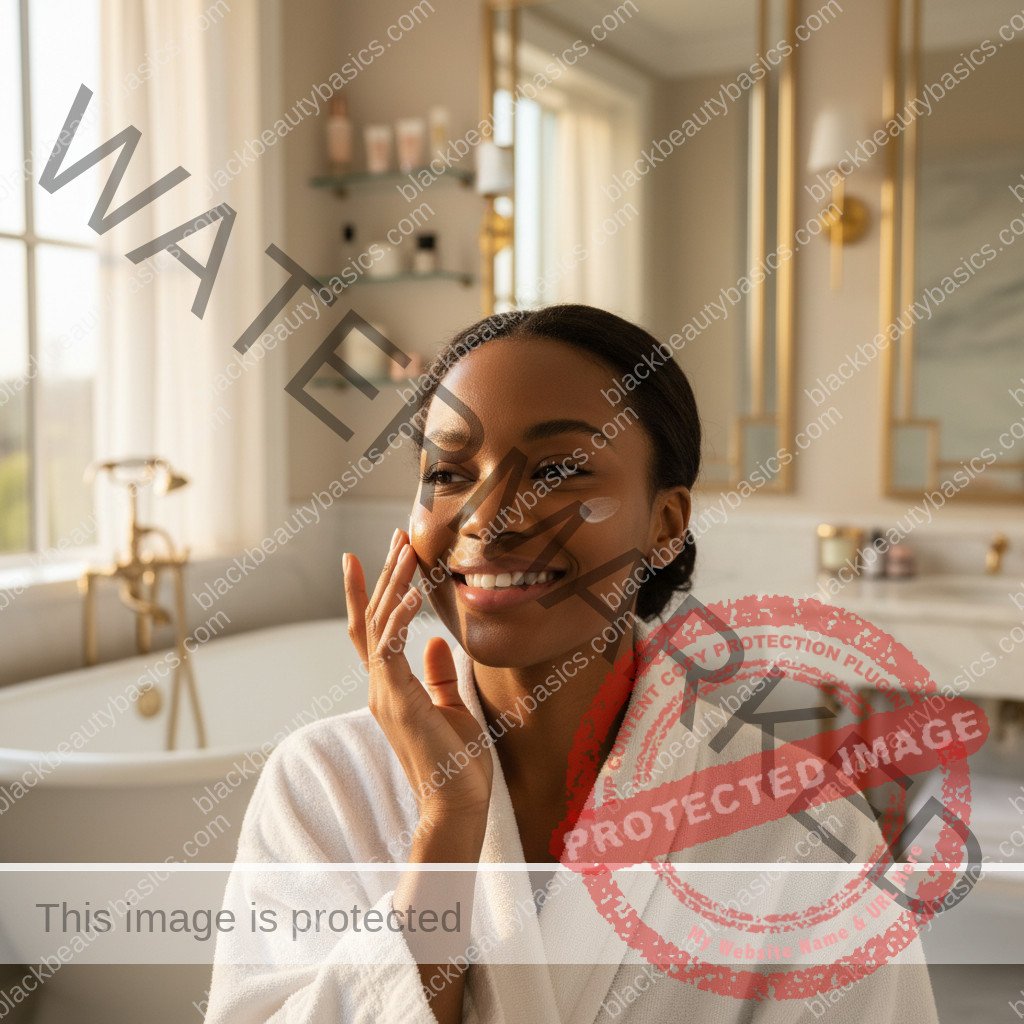
Recommendation: Apply a broad-spectrum sunscreen with an SPF of 30 or higher, every single day, rain or shine, indoors or out. For melanin-rich skin, the primary concern is often the dreaded white cast. Thankfully, formulations have come a long way. Look for sunscreens designed for darker skin tones or those that are chemical-based (containing ingredients like avobenzone, octinoxate, octisalate, oxybenzone) which typically blend invisibly. Mineral sunscreens (zinc oxide, titanium dioxide) are also excellent, especially for sensitive skin, but require careful selection to avoid a white cast; tinted mineral sunscreens can be a great option. Apply a generous amount – about a quarter-sized dollop for your face and neck – ensuring full coverage. Reapply every two hours if you are outdoors, sweating, or swimming. This step is not optional; it is the cornerstone of protecting your skin and preserving your even tone.
Optional Step: Targeted Treatment (If Recommended and Tolerated)
For a truly basic routine, the three steps above are sufficient. However, if you have a specific, mild acne concern and your skin is not overly sensitive, you might consider a very gentle, targeted treatment. This should be introduced only after your skin has acclimated to the basic routine for several weeks and shows no signs of irritation.
Recommendation: A very mild antioxidant serum (like Vitamin C) can offer additional protection against environmental damage and help brighten skin over time, which can subtly assist with PIH. Alternatively, a very low concentration of an active ingredient like azelaic acid (known for its anti-inflammatory and anti-bacterial properties, and safe for PIH-prone skin) could be considered. Apply this after cleansing and before moisturizing. However, for a truly basic and barrier-first approach, it’s often best to save active treatments for the evening or to consult with a dermatologist before introducing them. Remember, the goal is simplicity and gentleness to avoid irritation or over-exfoliation.
A Simple Evening Routine for Acne-Prone Dark Skin
The evening routine is your skin’s time to repair, regenerate, and address concerns more actively, without the immediate need for sun protection. It’s about thoroughly cleansing away the day’s accumulation, nourishing your skin, and applying any targeted treatments that work best overnight. This routine can be slightly more involved than the morning one, but still prioritizes gentleness and efficacy to support healing and prevent PIH.
Step 1: Double Cleansing (If Wearing Makeup/Sunscreen)
After a full day, your skin has accumulated a mix of makeup, sunscreen, environmental pollutants, sweat, and excess oil. A single cleanse might not be enough to thoroughly remove all these impurities, especially waterproof formulas. This is where double cleansing becomes invaluable, particularly for acne-prone skin, as it ensures pores are clear without harsh scrubbing.
Recommendation:
First Cleanse (Oil-Based): Start with an oil cleanser, cleansing balm, or micellar water designed to dissolve makeup and sunscreen. Apply to dry skin, gently massage for 60 seconds to break down impurities, then add a little water to emulsify (if using an oil/balm) and rinse thoroughly. This step is crucial for lifting oil-based debris without stripping the skin.
Second Cleanse (Water-Based): Follow with your gentle, hydrating cleanser, similar to your morning choice. This ensures any remaining residue is washed away, leaving your skin truly clean but not tight. This two-step process is incredibly effective at preventing clogged pores, which are a primary cause of acne, while still being gentle on your skin barrier. Pat dry with a clean towel.
Step 2: Targeted Treatment (If Applicable and Tolerated)
The evening is the ideal time to introduce a targeted treatment, as these products often work best when left on the skin undisturbed overnight. For acne-prone melanin-rich skin, the focus should be on ingredients that address breakouts while also being mindful of PIH prevention.
Recommendation:
For Active Breakouts: A gentle retinoid (like adapalene or a mild retinol) is often recommended by dermatologists for acne. Start with a very low concentration and use it 2-3 times a week, gradually increasing frequency as tolerated. Retinoids help to regulate cell turnover, prevent clogged pores, and can also improve skin texture and tone over time. Apply a pea-sized amount to dry skin after cleansing.
For Inflammation/PIH Concern: Azelaic acid is another excellent choice for melanin-rich skin. It’s anti-inflammatory, antibacterial, and helps to reduce hyperpigmentation, making it a powerful ally against both acne and PIH. It’s generally well-tolerated and can be used daily.
For Mild Breakouts/Maintenance: A salicylic acid serum or toner (BHA) can help to exfoliate inside the pores. However, be cautious not to overdo it, especially if also using a retinoid. Consider using it on alternate nights or as a spot treatment.
Important Note: When introducing any active treatment, especially retinoids, start slowly. Use it 2-3 times a week initially and observe your skin’s reaction. Look for signs of irritation like redness, excessive dryness, or stinging. If irritation occurs, reduce frequency or stop and allow your skin to recover. It’s often best to choose one primary active ingredient for your evening routine to avoid overwhelming your skin and increasing the risk of PIH. For guidance on how to add actives without overwhelming PIH-prone skin, refer to our dedicated article.
Step 3: Hydration and Barrier Repair (Moisturizer)
After any treatment, it’s essential to follow up with a nourishing moisturizer to seal everything in, provide deep hydration, and support your skin’s overnight repair processes. This step helps to counteract any potential dryness from active ingredients and reinforces your skin barrier.
Recommendation: Use a slightly richer, yet still non-comedogenic moisturizer than your morning one. Look for ingredients like ceramides, hyaluronic acid, glycerin, squalane, and fatty acids. These ingredients are crucial for barrier repair and maintaining skin hydration throughout the night. If you’re using a retinoid, applying moisturizer before or after (the “sandwich method”) can help buffer its effects and reduce irritation, especially when starting out. Apply a generous amount to your face and neck, gently massaging it in. This step is vital for calming the skin and ensuring it remains supple and hydrated, minimizing the risk of irritation that can lead to PIH.
Optional Step: Occlusive (For Dryness/Barrier Support)
If your skin is feeling particularly dry, sensitive, or if you’re using strong actives, an occlusive layer can provide an extra boost of barrier support and moisture retention.
Recommendation: After your moisturizer has fully absorbed, apply a thin layer of a non-comedogenic occlusive ointment (like plain petroleum jelly or a balm with ceramides and petrolatum) to areas prone to dryness or irritation. This creates a protective seal, preventing transepidermal water loss and aiding in barrier repair. Be mindful not to apply too thick a layer, especially if you’re prone to clogged pores, and ensure the product is truly non-comedogenic. This step is particularly helpful during colder months or when your skin is recovering from irritation or over-exfoliation.
Morning vs. Evening Routine: A Quick Comparison
Understanding the distinct roles of your morning and evening routines can help you optimize your skincare for acne-prone melanin-rich skin. While both routines share the fundamental goals of cleansing and moisturizing, their specific emphasis shifts to align with your skin’s needs throughout the day and night.
Here’s a simple table to illustrate the core differences:
| Routine Aspect | Morning Routine (AM) | Evening Routine (PM) |
|---|---|---|
| Primary Goal | Prepare, Hydrate, Protect | Cleanse, Treat, Repair, Regenerate |
| Cleansing | Gentle cleanse to remove overnight buildup. | Thorough cleanse (often double cleanse) to remove makeup, sunscreen, pollutants, and oil. |
| Treatment Focus | Minimal or gentle antioxidants (optional). | Targeted actives for acne, PIH, and barrier repair (e.g., retinoids, azelaic acid). |
| Hydration | Lightweight, non-comedogenic moisturizer. | Nourishing, slightly richer non-comedogenic moisturizer; occlusive (optional). |
| Protection | Non-negotiable broad-spectrum SPF 30+. | No SPF needed; focus on barrier repair and environmental damage reversal. |
| Key Ingredients | Hyaluronic acid, glycerin, niacinamide, antioxidants, SPF filters. | Retinoids, azelaic acid, salicylic acid, ceramides, fatty acids, squalane. |
| Pace/Complexity | Quick, efficient, minimal layering. | More deliberate, allows for active absorption and deeper hydration. |
By understanding these distinctions, you can ensure that each step in your routine serves a specific, beneficial purpose, preventing product overlap and maximizing effectiveness for your acne-prone melanin-rich skin.
What to Keep Out of a Beginner Acne Routine for Now
When you’re starting a new skincare journey, especially for acne-prone melanin-rich skin, the temptation to throw everything at the problem can be overwhelming. However, a “less is more” approach is often the most effective and safest path, particularly to avoid irritation and the dreaded post-inflammatory hyperpigmentation (PIH). Certain products and practices, while potentially beneficial in a more advanced, well-established routine, can be counterproductive or even harmful when your skin is already compromised or trying to adapt. For now, let’s focus on what to gently set aside.
Harsh Physical Exfoliants (Scrubs)
The immediate gratification of a scrub can be deceptive. While they feel like they’re “scrubbing away” impurities and dead skin, most physical exfoliants, especially those with large, irregular particles (like apricot pits or sugar), create microscopic tears in the skin’s surface. This mechanical damage compromises your skin barrier, leading to increased sensitivity, inflammation, and a heightened risk of PIH. For acne-prone skin, these tears can also spread bacteria, potentially worsening breakouts. For melanin-rich skin, any inflammation is a direct trigger for melanocytes to overproduce pigment, resulting in dark spots that linger long after the initial irritation has healed.
Why avoid: Causes micro-tears, compromises barrier, increases inflammation, high PIH risk.
Instead: Rely on gentle chemical exfoliants (like salicylic acid or azelaic acid, introduced slowly in the evening routine) or simply let your retinoid (if using) handle cell turnover. Your gentle cleanser will remove surface debris without abrasion.

Multiple Potent Actives Used Simultaneously
It’s easy to fall into the trap of thinking that if one active ingredient is good, three or four must be better. Combining multiple potent ingredients like retinoids, alpha hydroxy acids (AHAs like glycolic or lactic acid), beta hydroxy acids (BHAs like salicylic acid), and benzoyl peroxide all at once can be a recipe for disaster. Each of these ingredients has the potential to cause irritation, dryness, and sensitivity, especially when your skin is not accustomed to them. When used together, their effects can amplify, leading to a severely compromised skin barrier, extreme dryness, peeling, and significant inflammation.
Why avoid: Overwhelms skin, causes severe irritation, barrier damage, high PIH risk.
Instead: Choose one primary active for your evening routine (e.g., a retinoid or azelaic acid) and introduce it slowly. Allow your skin weeks to adjust before considering another active, and even then, consider alternating nights or using them in different routines (e.g., BHA in AM, retinoid in PM, but only if your skin is robust). Our guide on how to add actives without overwhelming PIH-prone skin provides more detailed guidance.
Alcohol-Based Toners and Astringents
Many traditional acne products, particularly toners, contain high concentrations of denatured alcohol (often listed as “alcohol denat.” or “SD alcohol”). While these products might initially provide a satisfying “clean” or “tight” feeling, they achieve this by stripping the skin of its natural oils and moisture. This leads to excessive dryness, irritation, and can trigger a rebound effect where your skin produces even more oil to compensate, potentially worsening acne. For melanin-rich skin, this dryness and irritation are direct pathways to increased PIH.
Why avoid: Strips natural oils, causes dryness, irritation, rebound oiliness, high PIH risk.
Instead: Focus on hydrating toners or essences that contain ingredients like hyaluronic acid, glycerin, or niacinamide. These provide beneficial hydration and soothing properties without the harsh effects of alcohol.
“Natural” Ingredients Without Research
The term “natural” can be misleading in skincare. While some natural ingredients are incredibly beneficial, others, especially essential oils or highly concentrated plant extracts, can be potent irritants or allergens. For acne-prone, sensitive, melanin-rich skin, introducing a myriad of unresearched “natural” ingredients, often found in DIY recipes or less regulated products, can lead to unexpected reactions, contact dermatitis, and increased inflammation, which again, translates to PIH.
Why avoid: Potential allergens/irritants, unpredictable reactions, inflammation, PIH risk.
Instead: Stick to well-researched, evidence-backed ingredients, whether synthetic or naturally derived. When exploring new ingredients, patch test them first and introduce them one at a time. Always prioritize products from reputable brands with transparent ingredient lists.
Over-Exfoliation (Chemical and Physical)
This point echoes some of the above, but it’s crucial enough to emphasize on its own. Whether through harsh scrubs, too-frequent use of chemical exfoliants, or combining multiple exfoliating acids, over-exfoliation is a common pitfall. Signs include redness, stinging, peeling, extreme dryness, increased sensitivity, and a shiny, “raw” appearance to the skin. For melanin-rich skin, over-exfoliation is a direct fast-track to severe PIH that can be incredibly difficult to fade. It compromises your skin’s protective barrier, leaving it vulnerable to everything.
Why avoid: Destroys skin barrier, causes extreme sensitivity, inflammation, severe PIH.
Instead: If using a chemical exfoliant, start with a low concentration, use it infrequently (2-3 times a week max), and listen to your skin. Prioritize barrier repair and hydration above all else. If you suspect over-exfoliation, immediately strip back your routine to just cleanser, moisturizer, and sunscreen, and allow your skin to heal.
By consciously avoiding these common pitfalls, you create a safer, more effective environment for your acne-prone melanin-rich skin to heal and thrive. Simplicity and gentleness are your allies in this journey.
How Long to Keep a Basic Routine Steady Before Changing It
Patience is perhaps the most underrated virtue in skincare, especially when dealing with acne-prone melanin-rich skin. In our fast-paced world, we’re conditioned to expect immediate results, and the beauty industry often fuels this expectation with promises of “overnight transformations.” However, real skin change takes time, and rushing the process by constantly introducing new products or altering your routine too frequently can be counterproductive, leading to irritation, confusion, and ultimately, more frustration and post-inflammatory hyperpigmentation (PIH). So, once you’ve established your basic AM and PM routines, how long should you stick with them before considering any changes?
The “Minimum 4-6 Weeks” Rule
As a general rule of thumb, you should commit to a new basic routine for a minimum of 4-6 weeks, and ideally 8-12 weeks, before making any significant changes or introducing new active ingredients. This timeframe is not arbitrary; it’s based on the natural cycle of skin cell turnover. It takes approximately 28-40 days for new skin cells to migrate from the basal layer to the surface and shed. This means that any product designed to influence cell behavior (like those targeting acne or PIH) needs at least one full cell turnover cycle, if not two or three, to show its true effects. For melanin-rich skin, which can take longer to heal and fade PIH, this patience is even more critical.
Why this timeframe is crucial:
- Allows for Adaptation: Your skin needs time to adjust to new products, even gentle ones. Introducing too many changes too quickly doesn’t give your skin a chance to acclimate, making it harder to distinguish between a product’s true effect and initial irritation.
- Reveals True Efficacy: Many active ingredients, especially retinoids, take weeks to months to show their full benefits for acne and texture. Stopping too soon means you might miss out on the positive changes that were just around the corner.
- Prevents Confusion: If you change products every week, you’ll never know what’s truly working or causing issues. A consistent routine provides a clear baseline against which you can evaluate any future additions.
- Minimizes PIH Risk: Constant product cycling and irritation are major triggers for PIH in melanin-rich skin. A stable, gentle routine reduces this risk significantly, allowing your skin to heal and fade existing marks without creating new ones.
Listening to Your Skin: When to Adjust Sooner (Carefully)
While patience is key, it’s also important to listen to your skin. There are instances where an adjustment might be necessary sooner than the 4-6 week mark, but these should be for clear signs of distress, not simply a lack of immediate “perfection.”
- Immediate Irritation: If a new product causes immediate stinging, burning, excessive redness, itching, or a rash, discontinue it immediately. This is a clear sign of an adverse reaction, and continuing use will only worsen the issue and increase PIH risk. This is a situation where you might need to reset your routine after irritation or over-exfoliation.
- Worsening Breakouts (Beyond Purging): Some active ingredients, like retinoids, can cause an initial “purging” phase where breakouts temporarily worsen as skin cell turnover increases. This typically subsides within 2-4 weeks. However, if breakouts are becoming significantly worse, more inflamed, or appearing in new areas after several weeks, and you’re not using a known purging ingredient, the product might be clogging your pores or causing irritation.
- Excessive Dryness/Flaking: While some dryness can be expected with certain actives, extreme dryness, flaking, or tightness that persists despite consistent moisturizing indicates your skin barrier is compromised. You might need to reduce the frequency of your active, use less product, or temporarily pause it to allow your barrier to recover.
In these cases, the adjustment should be to remove the offending product and simplify your routine even further, focusing solely on gentle cleansing, hydrating, and barrier repair. It’s not about adding another new product to “fix” the problem, but rather giving your skin a break.
When to Consider Adding or Modifying
Once you’ve consistently followed your basic routine for 4-6 weeks (or longer) and your skin is stable, calm, and showing some initial improvements (even if subtle), then you can consider gradual modifications. This might involve:
- Introducing One New Active: If you haven’t already, you might consider adding a single, well-chosen active ingredient for acne or PIH (e.g., a retinoid, azelaic acid, or a gentle BHA) into your evening routine, starting slowly (1-2 times a week) and observing your skin’s reaction. Remember our guidance on how to add actives without overwhelming PIH-prone skin.
- Adjusting Product Consistency: Perhaps you need a slightly richer moisturizer in winter or a lighter one in summer.
- Addressing Specific Concerns: Once acne is more controlled, you might introduce a Vitamin C serum in the morning for brightening and antioxidant benefits.
Always introduce new products one at a time, giving each new addition at least 2-4 weeks to settle before introducing another. This methodical approach is key to understanding your skin’s responses and building a truly effective, personalized routine that supports its long-term health and radiance. Remember, the journey to clear, calm skin is a marathon, not a sprint. Consistency and patience will be your most powerful tools.
Frequently Asked Questions
What is the most important step in an acne routine for melanin-rich skin?
For melanin-rich skin, the most critical step is consistent daily sun protection with a broad-spectrum SPF 30+. This is vital for preventing post-inflammatory hyperpigmentation (PIH) from darkening and allowing existing dark spots to fade more effectively, as UV exposure significantly worsens PIH.
Can I use a retinoid every night if I have acne-prone dark skin?
While retinoids are highly effective for acne, it’s generally best to start slowly, using them 2-3 times a week, and gradually increasing frequency as your skin tolerates it. Melanin-rich skin is prone to irritation and PIH, so building tolerance slowly is crucial to avoid dryness, redness, and new dark spots.
How do I know if my skin is purging or breaking out from a new product?
Purging typically occurs with active ingredients (like retinoids or AHAs) and involves existing clogged pores coming to the surface as small, temporary breakouts in areas you usually break out. A true breakout from a new product often presents as new, inflamed blemishes in unusual areas, persistent irritation, or worsening of your acne beyond the typical 2-4 week purging window.
Is double cleansing necessary for acne-prone melanin-rich skin?
Double cleansing is highly recommended for acne-prone skin, especially if you wear makeup or sunscreen daily. It ensures thorough removal of oil-based impurities, preventing clogged pores, without stripping the skin. This gentle yet effective cleansing method helps maintain a healthy skin barrier and reduces PIH risk.
What ingredients should I look for in a moisturizer for acne-prone dark skin?
Look for non-comedogenic moisturizers containing hydrating and barrier-supporting ingredients like hyaluronic acid, glycerin, ceramides, niacinamide, and squalane. These help to hydrate, soothe, and strengthen the skin barrier without clogging pores, which is crucial for managing acne and preventing PIH.
How can I tell if my skin barrier is compromised?
Signs of a compromised skin barrier include persistent dryness, flakiness, redness, stinging or burning sensations when applying products, increased sensitivity, and a feeling of tightness. If you experience these, simplify your routine to just a gentle cleanser, moisturizer, and sunscreen, and allow your skin to heal.
Should I pop my pimples if I have melanin-rich skin?
No, it is strongly advised not to pop pimples, especially if you have melanin-rich skin. Picking or squeezing blemishes can introduce bacteria, increase inflammation, and significantly raise the risk of developing more severe and longer-lasting post-inflammatory hyperpigmentation (PIH) or even scarring.
Where to Go Next
Embarking on a journey to clearer, calmer skin is an act of self-love and patience, especially for those of us with melanin-rich skin. By establishing these basic, gentle AM and PM routines, you’ve laid a powerful foundation for healing and maintaining your skin’s health. You’ve embraced the wisdom of simplicity, prioritized barrier integrity, and committed to protecting your skin from the factors that can exacerbate acne and lead to stubborn PIH. This isn’t just about skincare; it’s about cultivating a deeper relationship with your skin, understanding its needs, and responding with thoughtful, consistent care.
Remember, your skin is a living, breathing organ, and its journey is unique. There will be good days and challenging ones, but with this foundational framework, you have the tools to navigate them with grace and confidence. Resist the urge to chase every new trend or to overload your skin with too many products. Instead, trust in the power of consistency, gentleness, and the profound ability of your skin to heal when given the right support. Celebrate the small victories, and know that each day you commit to this mindful routine, you’re investing in long-term radiance and well-being.
As you continue on this path, you might find yourself ready to explore more nuanced aspects of managing acne and maintaining skin health. We encourage you to delve deeper into our resources, designed specifically for melanin-rich skin:
- To understand how to tailor your routine further based on your specific skin type, explore our guide on Building Routines for Oily, Dry, and Combination Dark Skin.
- If you’re dealing with breakouts beyond your face, our article on Adapting Face Routines for Chest and Back Acne on Dark Skin offers practical advice.
- When you feel ready to strategically incorporate more potent ingredients, learn How to Add Actives Without Overwhelming PIH-Prone Skin.
- Should your skin ever feel overwhelmed or irritated, our guide on Resetting Your Routine After Irritation or Over-Exfoliation will be an invaluable resource.
- For a broader understanding of acne patterns specific to melanin-rich skin, refer to Face, Chest, and Back Acne Patterns in Dark Skin.
- And for comprehensive insights into managing acne and sensitive skin, visit our main Acne and Sensitive Skin in Black Women pillar page.
Your journey to radiant, healthy skin is a continuous evolution. Embrace the process, trust your instincts, and know that Black Beauty Basics is here to support you every step of the way.
INTERNAL LINKING OPPORTUNITIES
Routine Frameworks for Acne-Prone Dark Skin, Gentle and PIH-Safe
Acne and Sensitive Skin in Black Women
Building Routines for Oily, Dry, and Combination Dark Skin
Adapting Face Routines for Chest and Back Acne on Dark Skin
How to Add Actives Without Overwhelming PIH-Prone Skin
Resetting Your Routine After Irritation or Over-Exfoliation
Face, Chest, and Back Acne Patterns in Dark Skin
Prevention of Scarring and PIH After Acne
Related next steps
Related posts:
 Basic Scalp-Care Routines for Loose Natural and Relaxed Hair
 Pre-Makeup Skin Prep for Acne-Prone Melanin-Rich Skin
 Sulfur-Based Options for Acne-Prone Melanin-Rich Skin
 SPF for Acne-Prone Melanin-Rich Skin: Breakouts, Bumps, and Non-Comedogenic Choices
 Choosing Foundation and Concealer for Acne-Prone Dark Skin
 Adapting Face Routines for Chest and Back Acne on Dark Skin