Face, Chest and Back Acne Patterns in Dark, Melanin‑Rich Skin
On dark, melanin‑rich skin, acne rarely stays neatly on the face. You might see breakouts on your jawline and cheeks, along your bra strap, or across your shoulders and upper back—and the marks they leave can look and feel different than on lighter tones. This cluster focuses on how acne shows up on the face, chest and back in Black women, inside the wider Acne & Sensitive Skin in Black Women pillar, so you can map patterns instead of feeling like everything is random.
Instead of treating “bacne” or chest acne as an afterthought, we look at how oil, sweat, friction, fabrics, hormones, and products interact with melanin‑rich skin across these areas. You will find language for what you are seeing, ideas about overlapping triggers, and clear links to routines, ingredients, and professional‑support content that respect both your melanin and your sensitivity.
What This Cluster Covers
This cluster is about recognizing face, chest and back acne patterns on dark skin and connecting them to helpful next steps.
- Common face acne patterns in Black women, including jawline and chin flares, cheek and forehead congestion, and how they can look on melanin‑rich skin.
- Chest acne patterns, where sweat, sports bras, fragrance, and hair or body products often play a role.
- Back and shoulder acne (“bacne”) on dark skin, including how clothing, backpacks, uniforms, and gym habits interact with oil and sweat.
- How face vs truncal (chest/back) acne can share triggers but need slightly different tactics.
- Where these patterns connect to acne types & triggers specific to Black women, routine frameworks, and the Hyperpigmentation & Dark Spots pillar.
Articles in This Cluster
These are working topic descriptors for articles inside this cluster. Final titles can change, but the URLs and focus areas stay similar.

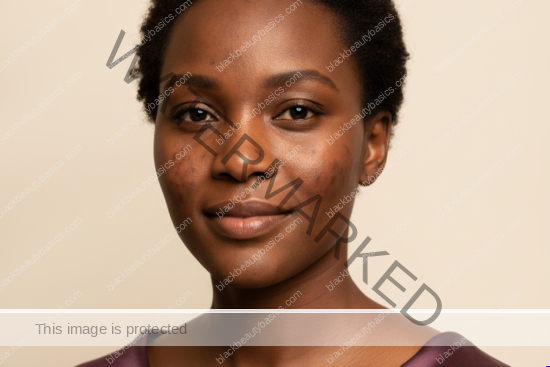
- Face acne patterns on melanin‑rich skin: forehead, cheeks, jawline
- Chest acne on dark skin: sweat, fabric, and fragrance
- Back and shoulder acne (bacne) on melanin‑rich skin
- How face and body acne overlap and differ on dark skin
- Spotting PIH and scarring patterns after acne on face, chest and back
Mapping Your Breakout Areas to Next Steps
This table helps you connect where your acne shows up on melanin‑rich skin to likely factors and first places to read next. It is not a diagnosis tool, just a map.
| Where breakouts show up most | Common patterns in dark skin | First focus or adjustment | Where to read more |
|---|---|---|---|
| Jawline, chin, lower cheeks on the face. | Often hormonal‑pattern acne, sometimes overlapping with mask friction or product issues. | Track timing against your cycle or other hormonal shifts; pair gentle cleansing with PIH‑safe routines while you learn more about hormonal triggers. | Hormonal‑pattern acne on melanin‑rich skin |
| Forehead and hairline, sometimes with tiny, similar bumps. | Can reflect fungal‑like patterns, occlusive hair products, sweat, or hats and headbands on dark skin. | Notice links with hairstyles, headwear, and sweat; consider adjusting hair product placement and how soon you cleanse after heavy sweating. | Fungal‑like acne patterns article |
| Central cheeks, nose, and chin (T‑zone) with shine and visible pores. | Often oil‑driven congestion and inflammatory acne; on dark skin, redness may be subtle, but dark marks show clearly. | Focus on consistent, gentle cleansing and oil‑balanced routines rather than harsh scrubs that worsen PIH and sensitivity. | Face acne patterns on melanin‑rich skin |
| Upper chest, between or under breasts, where necklaces, bras, or tops sit. | Common chest acne area on melanin‑rich skin, influenced by sweat, tight fabrics, fragrance, and body products. | Look at fabrics, fit, and how long sweat sits on your skin; simplify heavily fragranced or oily products on the chest. | Chest acne on dark skin |
| Shoulders and upper back, especially under straps, uniforms, or backpacks. | Often truncal acne (“bacne”) on dark skin, driven by oil, sweat, friction, and sometimes product transfer from hair. | Adjust post‑workout cleansing, fabrics, and hair product placement; avoid harsh body scrubs on PIH‑prone areas. | Back and shoulder acne on melanin‑rich skin |
| Face, chest and back all at once, with marks that linger long after bumps fade. | Mixed face + truncal acne on a PIH‑prone baseline, common on melanin‑rich skin. | Prioritize a simple, repeatable routine for each area and consistent SPF, then layer in ingredient strategy and, if needed, medical input. | How face and body acne overlap and differ |
Why Face, Chest and Back Acne Deserve Equal Attention on Dark Skin
In many spaces, acne talk centers the face and lighter skin, leaving chest and back breakouts on melanin‑rich skin out of the picture. On dark tones, though, truncal acne can leave long‑lasting dark spots and texture changes on areas that are visible in everyday clothing, at the gym, or at the beach. Painful bumps and marks on the chest and back are not “less serious” just because they are easier to cover; they can affect comfort, clothing choices, intimacy, and self‑image.
This cluster treats face and body as part of one system, not separate problems. It helps you understand how patterns on your chest and back may share triggers with your face—like hormones, product choices, or sweat—while still needing their own tactics for cleansing, fabrics, and routines. It also links you to the Hyperpigmentation & Dark Spots pillar, where you will find more support for PIH on the chest, shoulders, and back.

From Patterns to Routines, Ingredients, and PIH Support
Knowing where your acne shows up is step one; step two is choosing routines and ingredients that respect those areas. The routine frameworks for acne‑prone dark skin cluster helps you build gentle, PIH‑safe routines that can be adapted for face and truncal skin—recognizing that backs and chests may tolerate or need different textures than your face. For actives like retinoids, acids, benzoyl peroxide, and sulfur, the active ingredient strategy cluster looks at how to use them thoughtfully on larger body areas as well as the face.
Because dark marks and scarring can be especially distressing on chest and back, this cluster connects directly to the prevention of scarring & PIH after acne cluster and key parts of the Hyperpigmentation & Dark Spots pillar. You will also see links to the Sunscreen for Dark Skin pillar, since consistent SPF on exposed areas helps protect any progress you make on fading marks.
When Face, Chest or Back Patterns Suggest More Support
Some patterns are particularly important to pay attention to: painful, deep nodules or cysts on the jawline or back; clusters that feel infected or very tender; sudden widespread breakouts on face and body; or scars that thicken or form keloid‑like bumps. On melanin‑rich skin, these patterns may be under‑recognized or minimized, especially if redness is subtle. If you notice these signs, it may be worth exploring the when acne requires professional intervention cluster to think through whether to seek medical support.

Even without red‑flag signs, you are allowed to want help if your face, chest or back acne is affecting your daily life. Moving between this cluster, the acne types & triggers cluster, and the medical escalation & when to see a dermatologist cluster can help you bring clearer language, photos, and questions to any appointment.
How to Navigate This Cluster
If you are overwhelmed, start by choosing the area that bothers you most—face, chest, or back—and read that specific article from this cluster. Then visit the acne types & triggers specific to Black women cluster to see how location overlaps with hormonal, fungal‑like, product‑linked, or lifestyle triggers. From there, step into the routine frameworks cluster to build a gentle routine that you can repeat.
If lingering dark marks on the chest and back are your main concern, combine this cluster with the PIH & scarring prevention cluster, the Hyperpigmentation & Dark Spots pillar, and the Sunscreen for Dark Skin pillar. Next reads might include the main Acne & Sensitive Skin in Black Women pillar hub, the Skincare for Black Women pillar for barrier basics, and the when acne requires professional intervention cluster if pain, scarring, or spread are worrying you.
Quick Face, Chest & Back Acne Principles for Dark, Melanin‑Rich Skin
- Acne on the chest and back is as real and valid as acne on the face; it deserves care, not minimization.
- On dark skin, watching where breakouts appear and how they feel can be more useful than waiting for obvious redness.
- Fabrics, sweat, and hair or body products often shape chest and back patterns; small changes here can matter.
- Gentle, PIH‑safe routines plus consistent SPF help protect face and truncal skin from long‑lasting marks.
- You are allowed to seek support—routine tweaks, ingredient strategy, or medical care—based on how your face, chest, and back acne actually impact your life.
Your skin tells a story, and every chapter—from your face to your back—deserves to be understood and cherished. Explore our articles, empower your routine, and embrace the journey to confident, radiant skin.
Frequently Asked Questions
Why is it important to understand acne patterns specifically on dark, melanin-rich skin?
Melanin-rich skin responds to inflammation differently, often leading to post-inflammatory hyperpigmentation (PIH) or dark spots that can linger for months or even years. Redness, a common indicator of acne on lighter skin, can be subtle or absent on dark skin, making it crucial to recognize other patterns like texture changes, bumps, and the location of breakouts to effectively treat and prevent lasting marks.
How do face, chest, and back acne differ on dark skin, and what are common triggers for each?
While all areas can experience acne, their triggers often vary. Face acne, especially around the jawline, is frequently hormonal. Forehead acne can be linked to hair products or sweat. Chest acne often involves friction from clothing (like bras), sweat, or fragranced body products. Back acne (bacne) is commonly triggered by sweat, friction from backpacks or tight clothing, and product transfer from hair. Understanding these distinctions helps tailor effective treatment strategies.
What is PIH, and why is it a significant concern for acne on the face, chest, and back in Black women?
PIH, or Post-Inflammatory Hyperpigmentation, refers to the dark spots or patches left on the skin after an inflammatory injury, such as acne. Melanin-rich skin is more prone to PIH because it contains more active melanocytes. These dark spots can be more distressing than the acne itself and require specific, gentle, and consistent treatment strategies to fade without causing further irritation or new marks.
Are there specific ingredients or routines that are particularly effective and safe for treating acne on dark skin across these body areas?
Yes. Gentle, non-comedogenic cleansers and moisturizers are foundational. For active treatment, ingredients like salicylic acid, azelaic acid, niacinamide, and certain retinoids can be effective, but often need to be introduced slowly and carefully to avoid irritation that could worsen PIH. Consistent use of broad-spectrum SPF is non-negotiable to prevent existing dark spots from darkening further and to protect healing skin.
When should I consider seeking professional help for face, chest, or back acne?
You should consider professional help if your acne is painful, persistent, spreading rapidly, forming deep cysts or nodules, or if it’s significantly impacting your quality of life. If you notice scarring (especially keloids or hypertrophic scars), or if over-the-counter treatments aren’t providing relief after several weeks, a dermatologist can offer prescription-strength treatments, in-office procedures, and personalized guidance.
Can lifestyle factors influence acne on my face, chest, and back?
Absolutely. Lifestyle factors play a significant role. Diet, stress, sleep patterns, exercise habits (and post-workout hygiene), clothing choices (breathable fabrics vs. tight synthetic materials), and even hair care products can all contribute to acne on different areas of the body. Identifying and adjusting these factors can be a powerful step in managing breakouts.
How can I prevent dark spots and scarring after acne breakouts on my body?
Prevention is key. Avoid picking or squeezing pimples, as this increases inflammation and the risk of PIH and scarring. Use gentle, PIH-safe skincare routines. Incorporate ingredients known to help with dark spots, like niacinamide or vitamin C, once the active breakout has calmed. Most importantly, apply broad-spectrum sunscreen daily to all exposed areas, even on cloudy days, to prevent dark spots from worsening.