The journey to silky-smooth skin is a deeply personal one, often marked by a desire for liberation from daily routines and a celebration of our natural radiance. For melanin-rich skin, laser hair removal offers a transformative path, promising lasting smoothness while demanding a nuanced approach to aftercare. This isn’t just about avoiding irritation; it’s about nurturing your skin with precision, ensuring its health, and preserving its luminous beauty. Start with the related BBB body-care cluster guide if you want the broader map.
At Black Beauty Basics, we understand that every step of your beauty ritual should honor the unique needs of dark skin. Post-laser body care isn’t merely a set of instructions; it’s an opportunity to embrace a regimen that champions healing, prevents hyperpigmentation, and enhances the exquisite canvas you possess. Join us as we unveil the definitive guide to a safe, effective, and luxurious body-care routine designed exclusively for you.
Embracing Laser Hair Removal: A Melanin-Rich Perspective
Laser hair removal has revolutionized hair management, offering a semi-permanent solution to unwanted hair. For women with dark skin, the technology has evolved significantly, moving past earlier concerns about hyperpigmentation and efficacy. Modern lasers, particularly Nd:YAG lasers, are specifically designed to safely target hair follicles without damaging the surrounding melanin-rich skin, making this treatment a viable and often preferred option for our community.
Choosing laser hair removal is an investment in time, comfort, and confidence. It frees us from the cycle of shaving, waxing, and ingrown hairs, which can often lead to irritation, bumps, and post-inflammatory hyperpigmentation (PIH) on darker skin tones. By opting for laser, we are choosing a path that can ultimately lead to smoother skin with fewer concerns about discoloration and texture issues. However, the success and safety of this journey hinge significantly on diligent aftercare.
The period immediately following a laser session is critical. Your skin, though resilient, is in a vulnerable state. The heat from the laser targets the hair follicle, and while advanced technology minimizes surface damage, the skin’s natural barrier can be temporarily compromised. This makes it more susceptible to environmental stressors, potential irritation, and, if not properly cared for, unwanted pigmentation changes. Our focus, therefore, is on calming, healing, protecting, and nourishing.
Understanding Your Skin Post-Treatment: The Immediate Aftermath
Immediately after a laser hair removal session, it’s common to experience some temporary side effects. These are usually mild and indicative of the treatment working effectively. Recognizing these normal reactions helps you respond appropriately and avoid unnecessary concern:
- Redness and Swelling: The treated area may appear red and slightly swollen, similar to a mild sunburn. This is due to the heat absorbed by the follicles and the skin’s natural inflammatory response.
- Follicular Edema: You might notice small, red bumps around the hair follicles. This “perifollicular edema” is a sign that the laser has successfully targeted the follicles.
- Mild Tenderness or Itching: The skin may feel tender to the touch or mildly itchy as it begins to heal.
- Temporary Pigmentation Changes: While rare with appropriate laser settings for dark skin, some individuals might experience very subtle and temporary darkening or lightening. This underscores the importance of proper aftercare to prevent these from becoming permanent.
These reactions typically subside within a few hours to a couple of days. Your body-care routine during this time is paramount to ensuring a smooth recovery and optimizing the results of your treatment.
The Golden Rules of Post-Laser Body Care for Dark Skin
Navigating the post-laser period requires a gentle yet strategic approach. Our core philosophy centers on soothing, protecting, and preventing complications that are particularly relevant to melanin-rich skin. Adhering to these golden rules will safeguard your skin’s integrity and enhance its natural glow.
Rule 1: Gentle Cleansing & Hydration – The Foundation of Healing
Your skin’s barrier is delicate after laser treatment. Harsh cleansers can strip natural oils, exacerbate dryness, and increase irritation. Opt for ultra-gentle, pH-balanced formulas that cleanse without compromise.
Choosing Your Cleanser
- Sulfate-Free Formulas: Sulfates can be drying and irritating. Look for cleansers that explicitly state “sulfate-free.”
- Fragrance-Free: Artificial fragrances are common irritants. Avoid them, especially during the healing phase.
- Hypoallergenic: Products labeled hypoallergenic are formulated to minimize allergic reactions, making them ideal for sensitive post-laser skin.
- Creamy or Oil-Based Cleansers: These types of cleansers are often more moisturizing and less stripping than foaming gels.
Application: Use lukewarm water, not hot, which can further irritate the skin. Gently apply the cleanser with your fingertips, using light, circular motions. Rinse thoroughly and pat dry with a soft, clean towel. Avoid rubbing or scrubbing.
Shop Gentle Body Cleansers on Amazon
The Power of Hydration
Hydration is non-negotiable. It supports the skin’s natural healing process, maintains barrier function, and prevents dryness, which can lead to itching and potential scratching – a major no-no for post-laser skin. Look for emollients and humectants that draw moisture into the skin and seal it in.
- Hyaluronic Acid: A powerful humectant that attracts and holds up to 1000 times its weight in water, providing intense hydration without feeling heavy.
- Ceramides: Essential lipids that make up a significant portion of the skin barrier. Replenishing ceramides helps to repair and strengthen this barrier, reducing moisture loss and protecting against irritants.
- Shea Butter & Cocoa Butter: Rich emollients that provide deep nourishment and form a protective layer on the skin. Ensure they are pure and free of added fragrances.
- Glycerin: Another excellent humectant that helps to keep the skin hydrated and supple.
Application: Apply your chosen moisturizer generously to the treated areas immediately after cleansing, while the skin is still slightly damp, to lock in moisture. Reapply throughout the day as needed, especially if you feel any dryness or tightness.
Shop Ceramide-Rich Body Lotions on Amazon
Rule 2: Soothe and Calm – The Antidote to Irritation
Post-laser skin can feel warm, tender, or itchy. Incorporating soothing ingredients is crucial to alleviate discomfort and prevent inflammation, which can be a precursor to hyperpigmentation in dark skin.
Key Soothing Ingredients
- Aloe Vera: Known for its cooling and anti-inflammatory properties, pure aloe vera gel can provide immediate relief. Ensure it’s 100% pure, without alcohol or added fragrances.
- Centella Asiatica (Cica): A powerhouse ingredient revered for its healing, anti-inflammatory, and collagen-boosting properties. It helps to calm redness and accelerate skin repair.
- Oatmeal (Colloidal Oatmeal): An excellent anti-itch and anti-inflammatory agent, colloidal oatmeal can be found in lotions or used in a soothing bath.
- Bisabolol: Derived from chamomile, bisabolol is a potent anti-inflammatory and soothing compound.
Application: Apply soothing gels or lotions as needed, especially in the first 24-48 hours post-treatment. For persistent itching, a cool compress can also provide relief.
Shop Pure Aloe Vera Gel on Amazon
Rule 3: Sun Protection – Your Melanin’s Best Friend
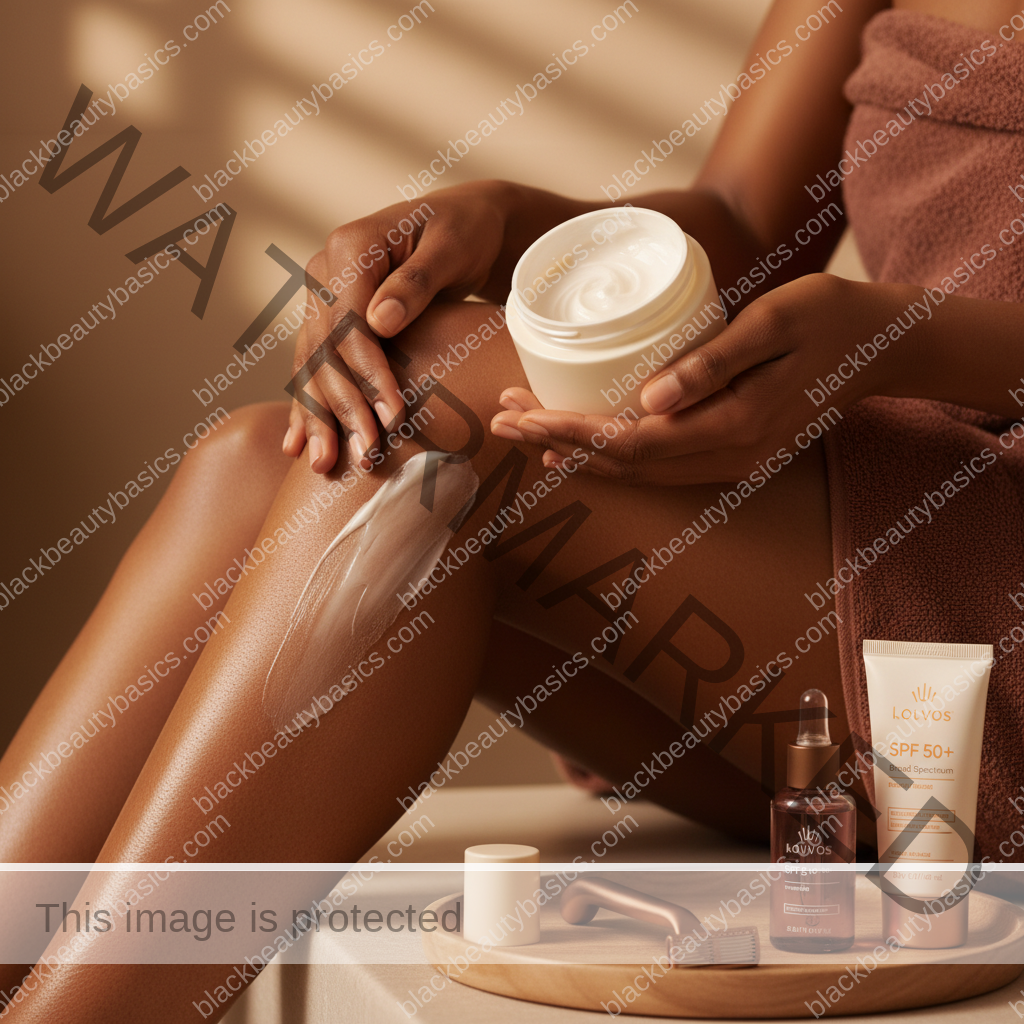
This is perhaps the most critical rule for dark skin after laser hair removal. While melanin offers some natural protection, laser treatment temporarily makes the skin more vulnerable to UV radiation. Sun exposure on compromised skin can lead to post-inflammatory hyperpigmentation (PIH), where dark spots appear in the treated areas.
Your Sunscreen Arsenal
- Broad-Spectrum SPF 30+: Always choose a broad-spectrum sunscreen that protects against both UVA and UVB rays, with an SPF of 30 or higher.
- Mineral Sunscreens (Zinc Oxide & Titanium Dioxide): These physical blockers sit on top of the skin and reflect UV rays. They are generally less irritating than chemical sunscreens and are often preferred for sensitive or post-procedure skin. Look for tinted mineral sunscreens to avoid a white cast on darker skin tones.
- Reapplication: Apply sunscreen generously 15-20 minutes before sun exposure and reapply every two hours, or more frequently if swimming or sweating.
Beyond Sunscreen:
- Protective Clothing: Wear loose-fitting, long-sleeved clothing and wide-brimmed hats to shield treated areas from direct sunlight.
- Seek Shade: Avoid peak sun hours (10 AM to 4 PM) and seek shade whenever possible.
Shop Tinted Mineral Sunscreen SPF 30+ on Amazon
Rule 4: Avoid Irritants & Aggressors – The Path to Uninterrupted Healing
Certain activities and products can hinder healing and provoke adverse reactions. Knowing what to avoid is as important as knowing what to use.
What to Steer Clear Of:
- Hot Showers, Baths, Saunas, and Steam Rooms: For at least 48 hours post-treatment, avoid excessive heat, which can increase inflammation and irritation. Opt for lukewarm showers.
- Strenuous Exercise: Activities that cause excessive sweating and friction should be avoided for 24-48 hours, as sweat can irritate the treated skin.
- Tight Clothing: Friction from tight clothing can irritate the skin and potentially lead to ingrown hairs or bumps. Opt for loose, breathable fabrics like cotton.
- Exfoliants (Physical & Chemical): Avoid scrubs, loofahs, retinoids, AHAs, and BHAs on the treated area for at least 5-7 days, or until your skin has fully recovered. Premature exfoliation can cause irritation and hyperpigmentation.
- Fragrances, Dyes, and Harsh Chemicals: As mentioned, these can be significant irritants. Check product labels carefully.
- Picking or Scratching: Resist the urge to pick at any scabs or scratch itchy areas. This can lead to scarring, infection, and hyperpigmentation.
- Other Hair Removal Methods: Do not shave, wax, tweeze, or use depilatory creams between laser sessions on the treated area. Shaving is generally permitted a few days after treatment once the skin has calmed, but consult your technician.
Crafting Your Post-Laser Body Care Routine: A Step-by-Step Guide
Here’s a structured routine to follow, ensuring your melanin-rich skin receives the utmost care after each laser hair removal session.
Immediately After Treatment (First 24-48 Hours)
- Cool Compress: If experiencing significant warmth or swelling, apply a cool, damp cloth or an ice pack wrapped in a soft towel to the treated area for 10-15 minutes at a time.
- Soothing Gel: Apply a generous layer of pure aloe vera gel or a Cica-infused soothing balm to calm the skin and reduce redness.
- Loose Clothing: Wear soft, loose-fitting clothing to prevent friction and allow the skin to breathe.
- Avoid Heat & Sweat: No hot showers, baths, saunas, or strenuous exercise.
Daily Routine (For the Next 5-7 Days)
Morning:
- Gentle Cleanse: In the shower, use a Shop Fragrance-Free Body Wash on Amazon with lukewarm water. Pat dry.
- Hydrate & Soothe: Apply a rich, Shop Unscented Body Cream with Ceramides on Amazon to the treated areas. If needed, layer a soothing gel underneath.
- Sun Protection: Liberally apply a Shop Mineral Sunscreen for Dark Skin SPF 50 on Amazon to all exposed treated areas.
Evening:
- Gentle Cleanse: If you’ve been active or feel the need, gently cleanse the treated areas again.
- Hydrate & Repair: Apply your Shop Restorative Body Balm for Sensitive Skin on Amazon to support overnight healing and barrier repair.
Ongoing Care (Between Sessions)
Once the initial sensitivity subsides (typically after a week), you can gradually reintroduce some elements, but always prioritize gentleness and sun protection.
- Continue Hydration: Maintain a consistent routine of moisturizing with nourishing, non-comedogenic lotions or creams.
- Sun Protection is Year-Round: Make broad-spectrum SPF a daily habit, regardless of the weather or whether you’ve just had a session.
- Gentle Exfoliation (Optional, after 1-2 weeks): If you are prone to ingrown hairs, very gentle chemical exfoliation (e.g., lotions with lactic acid or glycolic acid at low concentrations) can be introduced *after* the skin has fully healed, usually 1-2 weeks post-treatment. Always patch test and start slowly. Avoid physical scrubs.
- Address Hyperpigmentation (If it occurs): If you notice any darkening, consult your laser technician or a dermatologist. They may recommend ingredients like niacinamide, alpha arbutin, or azelaic acid to help fade discoloration.
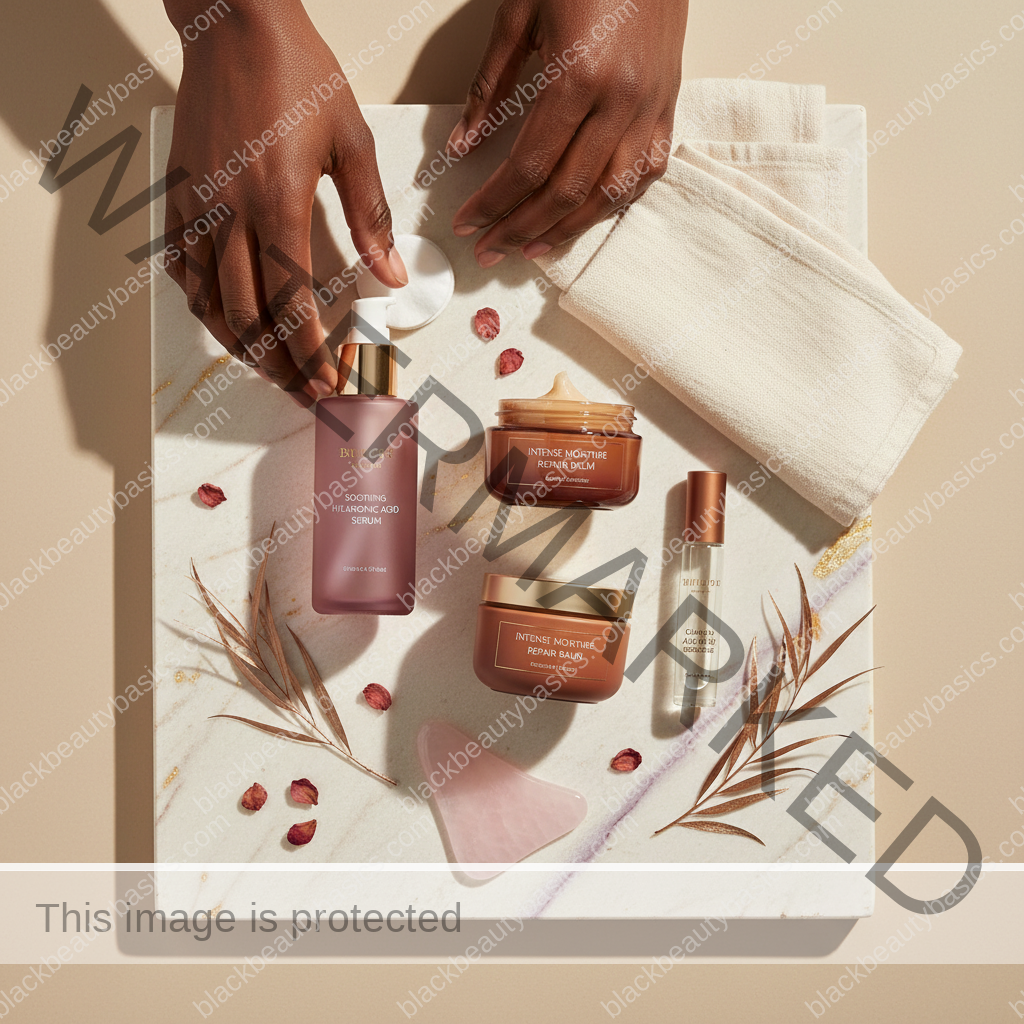
Essential Product Picks for Melanin-Rich Skin After Laser Hair Removal
Selecting the right products is paramount. Here’s a curated list of product types and ingredients that align with the needs of dark skin post-laser, focusing on efficacy and safety.
Comparison Table: Soothing & Hydrating Ingredients
| Ingredient | Benefit for Dark Skin Post-Laser | Product Type Examples |
|---|---|---|
| Hyaluronic Acid | Intense, lightweight hydration; plumps skin, aids healing without clogging pores. | Serums, lotions, gels |
| Ceramides | Repairs and strengthens skin barrier; prevents moisture loss, reduces irritation. Crucial for sensitive skin. | Creams, lotions, balms |
| Aloe Vera (Pure) | Cooling, anti-inflammatory, soothing; reduces redness and discomfort. | Gels, after-sun lotions |
| Centella Asiatica (Cica) | Accelerates healing, calms inflammation, reduces redness, supports collagen. Excellent for preventing PIH. | Creams, balms, serums |
| Niacinamide (Vitamin B3) | Reduces inflammation, improves skin barrier, helps fade hyperpigmentation. Introduce after initial healing. | Serums, lotions |
| Shea Butter/Cocoa Butter | Deeply moisturizing, emollient, protects skin barrier. Ensure unscented. | Thick creams, body butters |
Tip List: What to Look For on Product Labels
- “Fragrance-Free” / “Unscented”: Essential to avoid irritants.
- “Hypoallergenic”: Formulated to minimize allergic reactions.
- “Non-Comedogenic”: Won’t clog pores, reducing the risk of breakouts.
- “Dermatologist Tested”: Indicates products have undergone testing by skin specialists.
- “For Sensitive Skin”: Often indicates a gentler formulation.
- “Sulfate-Free”: For cleansers, prevents stripping natural oils.
- “Mineral Sunscreen” / “Zinc Oxide” / “Titanium Dioxide”: For sun protection, especially for post-procedure skin.
Shop Hypoallergenic Fragrance-Free Body Lotion on Amazon
Addressing Specific Concerns for Dark Skin
While laser hair removal is generally safe for dark skin with the right technology, certain concerns require particular attention in aftercare.
Preventing Post-Inflammatory Hyperpigmentation (PIH)
PIH is the primary concern for dark skin tones after any inflammatory process, including laser treatments. It manifests as dark spots or patches where the skin was irritated or injured. Prevention is key:
- Strict Sun Protection: As emphasized, this is your strongest defense.
- Avoid Irritation: Follow all rules about avoiding heat, friction, and harsh products.
- Calm Inflammation: Use soothing ingredients consistently.
- Early Intervention: If you notice any darkening, consult your technician or dermatologist immediately. They may recommend topical treatments containing ingredients like hydroquinone (short-term use), arbutin, kojic acid, azelaic acid, or niacinamide to help fade the discoloration.
Shop Niacinamide Body Serum on Amazon
Managing Ingrown Hairs (Post-Shedding)
After laser treatment, hair follicles shed over 1-3 weeks. Sometimes, hairs can get trapped under the skin, leading to ingrown hairs. While laser significantly reduces ingrowns long-term, they can still occur during the shedding phase.
- Gentle Exfoliation (After Healing): Once your skin has fully recovered (typically 1-2 weeks post-treatment), you can introduce very gentle chemical exfoliants (e.g., lotions with low concentrations of lactic or salicylic acid) a few times a week to help prevent ingrowns. Do NOT use physical scrubs.
- Moisturize Consistently: Keeping the skin hydrated and supple helps hair grow out smoothly.
- Avoid Picking: Never pick or squeeze ingrown hairs, as this can lead to infection and PIH.
Shop Lactic Acid Body Lotion on Amazon
FAQ: Your Post-Laser Hair Removal Queries Answered
Q1: Can I shave between laser hair removal sessions?
Yes, you can shave between sessions once the initial redness and sensitivity have subsided, usually a few days after your treatment. Shaving is the only approved method of hair removal between sessions as it does not disrupt the hair follicle, which the laser needs to target. Avoid waxing, plucking, or using depilatory creams, as these methods remove the hair from the follicle, making the next laser session ineffective.
Q2: How long do I need to avoid sun exposure after laser hair removal?
Strict sun avoidance is crucial for at least 1-2 weeks post-treatment. During this period, your skin is more susceptible to hyperpigmentation. Beyond this initial phase, consistent daily use of a broad-spectrum SPF 30+ (preferably mineral-based) and protective clothing is recommended for the entire duration of your laser treatment series and beyond, especially for melanin-rich skin, to prevent PIH.
Q3: What should I do if my skin feels very itchy after the treatment?
Mild itching is common. You can apply a pure aloe vera gel or a soothing cream containing ingredients like Cica or colloidal oatmeal. A cool compress can also provide relief. If the itching is severe, persistent, or accompanied by a rash or blistering, contact your laser technician or dermatologist immediately, as it could indicate an allergic reaction or other complication.
Q4: When can I resume my normal skincare routine, including exfoliation?
It’s best to wait at least 5-7 days, or until all redness and sensitivity have completely subsided, before reintroducing any active ingredients like retinoids, AHAs, BHAs, or physical exfoliants. When you do reintroduce them, start slowly and observe your skin’s reaction. Always prioritize gentle, hydrating, and soothing products during the entire course of your laser treatments.
Q5: Can I use makeup or self-tanner on the treated areas?
Avoid applying makeup or self-tanner to the treated areas for at least 24-48 hours, or until any redness and irritation have resolved. These products can clog pores, irritate sensitive skin, or interfere with the healing process. When you do resume, ensure your makeup is non-comedogenic and applied with clean tools. Self-tanners should be avoided as they can make it harder for your technician to assess your skin and hair for subsequent treatments.
Q6: What are the signs of a complication that require professional attention?
While most side effects are mild and temporary, be vigilant for signs of complication. These include severe pain, blistering, crusting, persistent swelling or redness lasting more than 2-3 days, signs of infection (pus, warmth, increasing pain), or significant and sudden changes in pigmentation (darkening or lightening). If you experience any of these, contact your laser technician or a dermatologist immediately.
Q7: How often should I moisturize after laser hair removal?
Moisturizing is crucial and should be done generously and frequently. Apply moisturizer immediately after cleansing while your skin is still damp, and reapply throughout the day whenever your skin feels dry, tight, or itchy. For the first few days, this might mean moisturizing 2-3 times a day or more, especially on larger body areas. Consistent hydration supports healing and maintains skin barrier function.
Your journey with laser hair removal is an investment in the enduring beauty of your melanin-rich skin. By embracing this meticulous aftercare routine, you’re not just preventing complications; you’re actively participating in the healing process, ensuring optimal results, and preserving the magnificent canvas that is uniquely yours. This commitment to gentle care, profound hydration, and unwavering sun protection is a testament to the respect and love you hold for your skin.
At Black Beauty Basics, we celebrate every facet of your beauty. Let this guide empower you to navigate your post-laser experience with confidence and grace, emerging with skin that is not only smooth and hair-free but also vibrant, healthy, and exquisitely luminous. Continue to nurture your skin with intention, for it is a reflection of your inherent strength and unparalleled elegance. Your glow is our mission.
How to think through this body-care concern without overcorrecting
For Black women and people with richly melanated skin, body care works best when it starts with the real pattern. This guide focuses on keeping post-laser body care calm, simple, sun-aware, and professional-guidance aligned, while keeping the related BBB body-care cluster as the home base. The goal is not a perfectly poreless or one-shade body. The goal is comfort, less irritation, fewer preventable marks, and a routine you can repeat.
The most protective first move is usually to reduce the thing that keeps restarting the problem. That may be friction, pressure, fragrance, shaving too closely, exfoliating too often, skipping moisture, or exposing fresh marks to daylight without protection. Products can help, but they work better when the routine stops creating new irritation every week.
Melanin-rich skin can hold onto evidence of irritation. A bump, nick, rash, or raw patch may fade slowly, especially on areas that rub against clothing or get shaved often. That does not mean your skin is doing something wrong. It means the routine needs to respect inflammation, barrier support, and time.
A gentler decision framework
- Name the main issue before adding a new product.
- Reduce friction and pressure where you can.
- Keep moisture steady, especially after cleansing or hair removal.
- Use exfoliation as a measured tool, not a daily punishment.
- Seek professional care for painful, spreading, infected-looking, or scar-forming concerns.
What usually makes this harder
One common mistake is stacking too many corrective steps. Shaving, scrubbing, acids, fragrance, tight clothing, and sweat can pile up quickly. When the skin starts to sting, burn, peel, or mark more easily, simplify the routine instead of adding another active.
Another mistake is treating darker areas as if they are dirty. Knees, elbows, underarms, thighs, bikini lines, and areas with hair removal can all be deeper in tone. Care can help with comfort and irritation, but the language matters. The goal is not to bleach your body into sameness.
The third issue is judging too fast. Body skin often needs several weeks of less irritation before it looks calmer. Track comfort first: less itching, less tenderness, fewer bumps, and less rawness. Visible tone changes usually follow after the irritation cycle quiets down.
What to do next

Keep this article connected to the Body Care & Hair Removal on Dark Skin system. Choose the next guide based on whether your main issue is bumps, hair removal, friction, texture, body SPF, or post-care.
- Body Care & Hair Removal on Dark Skin
- The related body-care cluster guide
- permanent and semi-permanent hair removal
- pre- and post-hair removal care
- SPF and hyperpigmentation
Related next steps
Related posts:
 Laser Hair Removal Basics for Dark, Melanin-Rich Skin
 Laser Hair Removal for Dark Skin: What to Ask Before You Book
 Unveiling Smoothness: The LYSMOSKI IPL Laser Hair Removal Device for Melanin-Rich Skin
 At‑Home Hair Removal Devices for Dark Skin: Which Are Actually Safe?
 Hair Removal Routine for Sensitive Underarms on Deep Skin
 IPL vs. True Laser on Dark Skin: What You Absolutely Need to Know