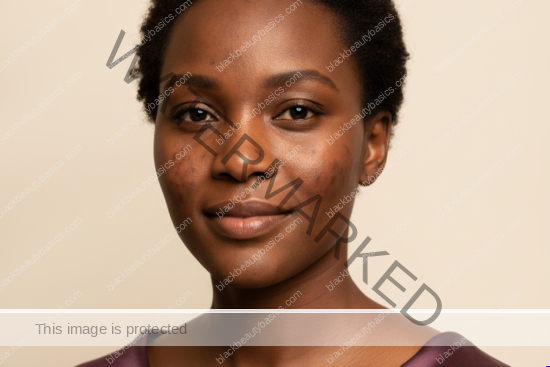
A chemical peel can feel like a thoughtful next step when dark spots have been hanging around for months or years. So when your skin looks darker afterward, the disappointment can be sharp. You may feel frustrated, embarrassed, angry at the provider, or tempted to start layering on every brightening product you can find. None of those feelings mean you were careless. And darker skin after a peel does not mean you have failed at skincare.
For many Black women and people with melanin-rich skin, the hard part is not simply finding a treatment. It is finding care that respects the fact that inflammation can leave a visible mark. A peel is designed to create controlled exfoliation. But when the skin becomes overly irritated, injured, infected, exposed to sun, or pushed beyond what it can comfortably tolerate, that inflammation can contribute to post-inflammatory hyperpigmentation, often called PIH. PIH is darkening that follows inflammation or injury. It is not dirt, poor hygiene, or proof that your skin is “too sensitive.”
Black skin is not one single skin type, and no one can predict every person’s response to a chemical peel from skin tone alone. Still, melanin-rich skin deserves careful planning, conservative decision-making, and follow-up that takes discoloration seriously rather than dismissing it as something you should simply wait out. The goal is not lighter skin. The goal is healthy, comfortable skin and a more even appearance if that is important to you.
If dark spots appeared after a peel, this guide can help you slow down, protect your skin barrier, recognize when to contact a clinician, and avoid the common “fixes” that can make discoloration harder to manage. For broader context, visit our hyperpigmentation and dark spots guide.
Why dark spots can appear after a chemical peel
A chemical peel uses an exfoliating solution to remove or loosen layers of skin in a controlled way. Peels vary widely. Some are light and superficial, while others work more deeply. Their effects also depend on the specific ingredient, concentration, application method, contact time, skin preparation, aftercare, and the person’s individual skin response.
Dark spots after a peel are often discussed as post-inflammatory hyperpigmentation. This means pigment becomes more noticeable after the skin has been inflamed or injured. Inflammation can come from the peel itself, but it can also be amplified by burning, prolonged redness, swelling, picking, friction, sun exposure, allergic reactions, or using irritating products while the skin is trying to recover.
PIH may look brown, deep brown, gray-brown, or darker than the surrounding skin. It may show up exactly where the peel was applied, around active acne, along the jawline, or in patches where the skin became particularly irritated. It can be uneven. It can also be emotionally heavy, especially when the peel was meant to address existing dark marks.
Not every color change after a peel is automatically PIH. Some peeling, temporary redness, dryness, and short-term unevenness may be part of the recovery process described by your provider. But severe pain, blistering, marked swelling, oozing, crusting, a spreading rash, or a dramatic change in skin color deserves prompt professional guidance. A clinician needs to assess whether the skin is experiencing a complication, an infection, contact dermatitis, a burn, or another issue that cannot be identified safely through a mirror or social media post.
The risk conversation matters because procedures can sometimes worsen PIH in skin of color. That does not mean no person with dark skin should ever have a peel. It means the decision should be individualized, performed by someone who understands pigmentary concerns, and followed by appropriate aftercare. The American Academy of Dermatology’s chemical peel guidance also emphasizes provider selection, risks, and following aftercare instructions.

What not to do when a peel seems to have backfired
When new darkening appears, urgency can make aggressive skincare sound reasonable. It usually is not. The skin may already be inflamed, and adding more irritation can create another cycle of discoloration. A calm response is not passive. It is protective.
Do not apply another peel, exfoliating acid, scrub, cleansing brush, or at-home resurfacing treatment in an effort to “lift” the darker area. Avoid experimenting with a stronger acid because a lower strength seemed ineffective. More exfoliation is not automatically more correction, particularly when the skin is already reacting.
Do not pick loose skin, scratch flakes, rub peeling areas with a towel, or pull at crusted spots. This can extend injury and may leave additional marks. If you are tempted to touch the area because it feels rough or uneven, keep your routine simple and use your hands gently.
Do not add several new brightening serums at once. A product may be popular, expensive, or marketed as safe for dark spots and still be wrong for compromised skin. Trying multiple active ingredients makes it harder to know what is irritating you. It also creates a greater chance of contact irritation, which can worsen visible discoloration.
Do not use unregulated bleaching creams, harsh spot treatments, or products with unclear ingredients. Avoid relying on a friend’s prescription or a social-media protocol designed for someone else. Prescription treatments are individualized. If you were given one by a clinician, follow that prescriber’s instructions and contact them if you have concerns; do not stop, restart, or change a prescription on your own.
Do not assume that intense discomfort is the price of effective treatment. Stinging, burning, itching, swelling, and persistent tenderness are useful signals. “Pushing through” may be especially risky when pigment changes are already your concern.
Finally, do not shame yourself for getting a peel. Many people seek peels because they want help with acne marks, uneven tone, melasma, texture, or dullness. The responsibility for informed consent, appropriate treatment selection, and clear aftercare should not be placed entirely on the client.
A gentle, protective plan for the days after unexpected darkening
The safest immediate approach is usually to reduce unnecessary variables and focus on the instructions from the professional who performed the peel. Contact that office and describe what changed, when it began, where it is located, and whether you have pain, blisters, swelling, drainage, or a rash. Clear photographs taken in consistent lighting can be helpful for the clinician, but photographs do not replace an examination when symptoms are concerning.
Keep cleansing gentle. Use lukewarm rather than hot water and avoid washcloth friction if your skin feels raw or tender. Pat dry instead of rubbing. Choose a bland moisturizer that you already know your skin tolerates, unless your provider instructed you to use something specific. The aim is comfort and barrier support, not active correction.
Sun protection is part of protecting against further visible darkening. The American Academy of Dermatology recommends choosing a sunscreen that is broad-spectrum, SPF 30 or higher, and water-resistant when sunscreen is appropriate for your routine and exposure. Shade, hats, and clothing can provide additional practical protection. If sunscreen stings freshly treated skin, ask your treating clinician what they recommend rather than forcing a product that causes burning.
Avoid heat-heavy situations if your provider advised against them, and be mindful of friction from masks, helmet straps, headbands, phones, or pillowcases. Friction does not explain every dark mark, but repeatedly aggravating tender skin is not helpful. Keep makeup and skincare minimal until the peeling area is no longer actively irritated or until your provider gives individualized direction.
It may help to keep a short skin diary rather than checking your face repeatedly throughout the day. Note the date of the peel, the treatment name if known, the day symptoms started, products used, sun exposure, and any pain or itch. This information can make a follow-up appointment more productive. It can also keep you from making a panicked product purchase every time the color looks different under different lighting.
If the peel was performed by a dermatologist or licensed clinician, contact that practice first. If you are not comfortable with their response, if they do not have experience treating darker skin tones, or if your symptoms are worsening, seek another qualified dermatologist. Our guide on talking to a dermatologist about hyperpigmentation on Black skin can help you prepare focused questions and document your concerns.
When professional assessment matters most
A peel can produce expected short-term changes, but there are situations where it is important to seek timely medical advice rather than trying to troubleshoot alone. Contact the treating clinician promptly if you have severe or worsening pain, extensive swelling, blistering, pus or drainage, fever, a spreading rash, open areas, or signs that the skin may be infected. Seek urgent care when symptoms feel severe, rapidly progress, or you cannot reach the treating provider.
You should also request assessment if the darkening is extensive, continues to spread, appears alongside significant irritation, or is affecting your confidence and daily life. You do not need to wait until a problem feels “bad enough” to deserve care. Pigment changes can be challenging to manage, and earlier professional review may help prevent additional irritation from well-intentioned self-treatment.
A dermatologist or other appropriately trained clinician may ask about your treatment history, acne, eczema, allergies, medications, hormonal changes, prior reactions to procedures, and sun exposure. They may also examine whether the change is likely related to inflammation, whether there are signs of another skin condition, and whether any prescribed treatment is appropriate. The exact plan depends on your skin, your symptoms, and the type of peel you received.
Be honest about everything applied after the peel, including home remedies, over-the-counter acids, fragranced oils, makeup, and products borrowed from family or friends. This is not a confession. It is useful clinical information. A good clinician should meet that information with problem-solving, not judgment.
For melasma, a clinician-led approach is especially important. Melasma can be influenced by multiple factors and can be difficult to distinguish from other forms of facial hyperpigmentation without an assessment. Avoid trying to treat post-peel changes with DIY melasma regimens or additional procedures. Read more in our guide to melasma on dark skin without panic.
Professional care should also include a conversation about whether more procedures make sense for you at all. A provider who is experienced with darker skin tones should be able to discuss benefits, limitations, risk reduction, alternatives, and what they would do if pigment changes recur. “Everyone gets this peel” is not the same as personalized care.
Real-life reasons recovery can look different from person to person
It is tempting to compare your recovery with someone else’s before-and-after video. But chemical peel outcomes are not interchangeable. Two people may use the same named peel and have very different experiences because their skin conditions, prep routines, prior irritation, treatment settings, post-care, and exposure patterns differ.
Acne is one common complication in the larger sense that it can complicate the picture. A peel may be done to address acne marks, yet active breakouts can create new inflammation while old areas are healing. That does not mean you caused the discoloration. It means your clinician may need to consider both the ongoing inflammation and the marks it leaves behind.
Existing eczema, sensitive skin, allergies, or a history of product reactions can matter too. Skin that becomes irritated easily may need a more conservative plan. Tell a provider if you have ever developed burning, itching, rash, swelling, or dark marks after skincare products, hair products, waxing, threading, lasers, or other facial treatments.
Skin tone is part of the conversation, but it is not the whole story. Black people have varied undertones, pigment responses, skin conditions, medical histories, and treatment goals. A careful provider will not make assumptions based only on race, nor will they minimize the particular concern that inflammation can lead to visible pigment changes in melanin-rich skin.
Location matters as well. The face is not the same as the chest, back, underarms, bikini line, or neck. These areas experience different levels of friction, sweat, hair removal, product exposure, and healing stress. A dark or velvety patch on the neck can have different causes and should be assessed rather than diagnosed from appearance or treated as a simple cosmetic issue. Our resource on dark neck concerns, friction, and when to get help offers a careful starting point.

Your life conditions count, too. It can be difficult to avoid sun, heat, makeup, commuting, work uniforms, or mask friction when you are working, caregiving, traveling, or dealing with a busy household. The answer is not perfection. It is making the most protective choices available to you, asking for practical aftercare guidance before a procedure, and choosing treatments that fit your actual life rather than an idealized routine.
Troubleshooting common post-peel situations without escalating the problem
“The area looks darker, but it does not hurt.”
Color change without pain can still be upsetting. Resist the urge to start a strong dark-spot routine immediately. Keep the area protected, avoid new actives, and contact the provider who performed the peel for individualized guidance. Ask whether the change is expected for the treatment you received and what signs should prompt an in-person evaluation. If the darkening persists or you are unsure of the cause, a dermatologist experienced with skin of color can assess it.
“My skin is burning, itchy, or very tight.”
Burning and itching can signal irritation. Stop introducing nonessential products and contact the treating clinician for advice. Do not apply more acids, scrubs, retinoids, fragranced products, or home remedies to force peeling or fade the area. If there are blisters, swelling, drainage, open skin, or significant pain, seek prompt medical evaluation. A damaged barrier needs professional guidance, not a challenge to endure.
“I peeled more than I expected, so I want to remove the flakes.”
Do not pull or scrub off peeling skin. Removing it manually may create more inflammation and increase the chance of additional discoloration. Follow the aftercare plan you were given. If the flaking is uncomfortable or you are unsure whether it is normal, ask the provider what cleansing and moisturizing approach is appropriate for your specific peel.
“My existing acne marks look worse.”
Skin can look temporarily uneven while it is recovering, and active acne can create new marks at the same time. Do not treat every darker area as proof that you need a stronger exfoliant. Ask a clinician to help separate active acne, PIH, possible irritation, and any other concern. For a broader look at marks after skin injury, see our guide to dark spots after burns, cuts, and scratches on Black skin.
“A creator says I need to use a fading cream right away.”
Online advice often leaves out the person’s diagnosis, procedure details, and prescription history. A product that is appropriate for one person can irritate another person’s recently peeled skin. If you have a prescribed treatment, ask the prescriber when and how to use it after the procedure. If you do not, seek guidance before starting a strong active ingredient. The safest choice is not always the fastest-looking one online.
How to make future treatment decisions with more protection and less pressure
If a peel left you with dark spots, you are allowed to decide that you do not want another peel. You do not owe your face another procedure because someone says it is the only way to improve your complexion. Topical care, acne management, camouflage makeup, watchful waiting, and clinician-guided alternatives may all be part of a broader conversation depending on your goals.
If you are considering another procedure in the future, bring your complete history. Tell the provider what kind of peel you had, where it was done, how your skin reacted, how long the irritation lasted, and what aftercare you used. If you have photos from before, during, and after, share them. Ask what they believe happened, whether a peel is appropriate again, and how they would reduce the risk of another pigmentary response.
Useful questions include: What type and depth of peel are you recommending? Why is it suitable for my skin concerns? What are the pigment-related risks for someone with my history? What preparation and aftercare do you expect? What should I avoid? Who do I contact if I develop burning, blisters, or unexpected darkening? What are the non-procedure options?
A careful answer may include uncertainty. That is not necessarily a red flag. No responsible provider can promise a peel will erase dark spots or guarantee that pigment changes will not happen. Be cautious with anyone who treats your concern about PIH as overreacting, promises dramatic results without discussing risk, or pressures you to purchase a package before you understand the plan.
For everyday maintenance, the most useful routine is often the least dramatic one you can use consistently without irritation. Consider a gentle cleanser, a moisturizer your skin tolerates, and sun protection that fits your complexion and daily life. If you later discuss a dark-spot active with a clinician, introduce only what they recommend and use it as directed. For a balanced overview of options and limits, explore our guide to dark-spot treatment methods, topicals, peels, routines, and lifestyle support.
What to Do Next
First, pause the urge to correct the darkening with more exfoliation. Follow the aftercare instructions from the person who performed your peel, keep your routine gentle, and protect your skin from additional irritation and sun exposure.
Second, contact the provider who performed the treatment and clearly describe the change. Mention pain, itching, swelling, blisters, drainage, rash, or any open skin. If you feel dismissed, if symptoms worsen, or if you do not trust the care plan, arrange an evaluation with a dermatologist experienced in treating melanin-rich skin.
Third, write down what happened. Include the peel name if you know it, the date, products used before and after, and when the color change began. This record can help you make more informed decisions and advocate for yourself at a follow-up appointment.
Finally, give yourself permission to step away from the pressure to “fix” your face immediately. Your skin does not need punishment for reacting. Your worth is not reduced by a darker patch, an uneven recovery, or a treatment outcome you did not expect. The best next move is the one that protects your health, respects your skin, and leaves room for qualified support.

Frequently Asked Questions
Can a chemical peel cause dark spots on Black skin?
Yes. Dark spots can develop after inflammation or injury, and chemical peels can create irritation that contributes to post-inflammatory hyperpigmentation. This is a concern for many people with melanin-rich skin, though no person’s response can be predicted solely from race or skin tone. Risk depends on factors such as the peel, how it was performed, your skin history, aftercare, and whether significant irritation occurred. If you notice unexpected darkening, contact the treating provider rather than trying to exfoliate it away at home.
Should I keep peeling my skin if the dark area seems stuck?
No. Do not use another peel, scrub, acid, or rough cloth to force the area to shed. Picking or over-exfoliating can prolong inflammation and may create more discoloration. Follow the aftercare instructions for the procedure you received. If the area is uncomfortable, unusually dark, painful, blistered, or not improving as expected, ask the treating clinician for guidance. A dermatologist can help determine whether you are seeing routine recovery, irritation, PIH, or another concern that needs different care.
How long will post-peel dark spots take to fade?
There is no reliable timeline that applies to everyone. Pigment changes can fade gradually, but the course varies based on the cause of the darkening, your skin’s inflammatory response, ongoing irritation, sun exposure, acne activity, and the care plan recommended by a clinician. Be cautious of anyone promising a fixed number of days or weeks. The practical priority is preventing additional inflammation, using sun protection as tolerated and advised, and getting professional guidance when the change is extensive, persistent, or distressing.
Can I use my prescription dark-spot treatment after a chemical peel?
Use prescription treatment only according to the instructions from the clinician who prescribed it or the clinician managing your peel aftercare. Some prescriptions may need specific timing around procedures, and recently treated skin can be more vulnerable to irritation. Do not independently stop, restart, increase, or combine prescriptions because your skin looks darker. Contact the prescriber, explain that you had a peel, and ask exactly when and how they want you to use the medication. That protects both your skin barrier and your treatment plan.
Is sunscreen still important if I mostly stay indoors?
Sun protection can be an important part of a pigment-conscious routine, especially if you spend time near windows, commute, run errands, or are outdoors at any point. The American Academy of Dermatology recommends broad-spectrum, SPF 30 or higher, water-resistant sunscreen as part of sun-protection practices, alongside shade and protective clothing. After a peel, ask your provider what is appropriate for your healing skin. If a sunscreen burns or causes a reaction, do not keep forcing it; contact the treating clinician for individualized advice.
What if the peel was done at a spa and I cannot get clear aftercare help?
Document what you know about the service, including the date, products used if available, symptoms, and photographs in consistent lighting. If you have significant pain, blistering, swelling, drainage, a spreading rash, or open skin, seek prompt medical assessment. Even without severe symptoms, a dermatologist experienced with darker skin tones can evaluate unexpected pigment changes and advise on safe next steps. Avoid trying to recreate professional aftercare through online tutorials or buying strong corrective products without guidance.
Does darkening after a peel mean I can never have procedures again?
Not necessarily, but it does mean future decisions deserve more caution and a detailed conversation with a qualified clinician. A past reaction is important information. Share what procedure you had, how your skin changed, how long symptoms lasted, and what products or medications were involved. A clinician can discuss whether another procedure is appropriate, whether a different approach may be safer, and what realistic risks remain. You are also allowed to choose no further procedures. Healthy skin and self-respect do not require chasing a treatment that made you feel unsafe.
Related next steps
Related posts:
 Clinic-Based Peels and Procedures on Dark Skin: Questions to Ask for Confident Care
 Hyperpigmentation Treatment Methods for Melanin-Rich Skin: Topicals, Peels, Routines, and Lifestyle Support
 Over-the-Counter Topicals for Dark Spots on Melanin-Rich Skin
 At‑Home Peels for Dark Skin: What’s Safe and What to Avoid
 Dark spots after picking pimples on melanin-rich skin
 Questions to Ask Before a Chemical Peel on Melanin-Rich Skin