
Picking a pimple can feel like a quick fix in the mirror: one small squeeze, one rough edge removed, one spot that seems impossible to ignore. Then comes the part many Black women know too well—the bump may flatten, but a deeper-looking mark can linger long after the active pimple is gone. That mark is not a sign that your skin is “dirty,” that you lack discipline, or that you have failed at skincare. It is often your skin responding to inflammation and injury.
On melanin-rich skin, irritation can leave behind visible uneven tone, often called post-inflammatory hyperpigmentation, or PIH. “Post-inflammatory” simply means it happens after inflammation. A picked pimple creates more inflammation than the pimple alone, which can make a dark mark more likely or more noticeable. Black skin is not one single skin type, and every person’s acne, sensitivity, undertone, and healing pattern can differ. Still, many people with deeper skin tones find that the aftermath of a breakout deserves as much care as the breakout itself.
The goal is not to make your skin lighter. It is to interrupt the pick-mark cycle: notice the urge, protect the spot, calm the skin, prevent new irritation, and give your complexion practical support while it recovers. That can be frustratingly unglamorous, but it is often kinder and more effective than chasing a harsh “spot remover.” Start with the wider context in our hyperpigmentation and dark spots guide, then use this page as a steady plan for the days when your hands keep reaching for your face.
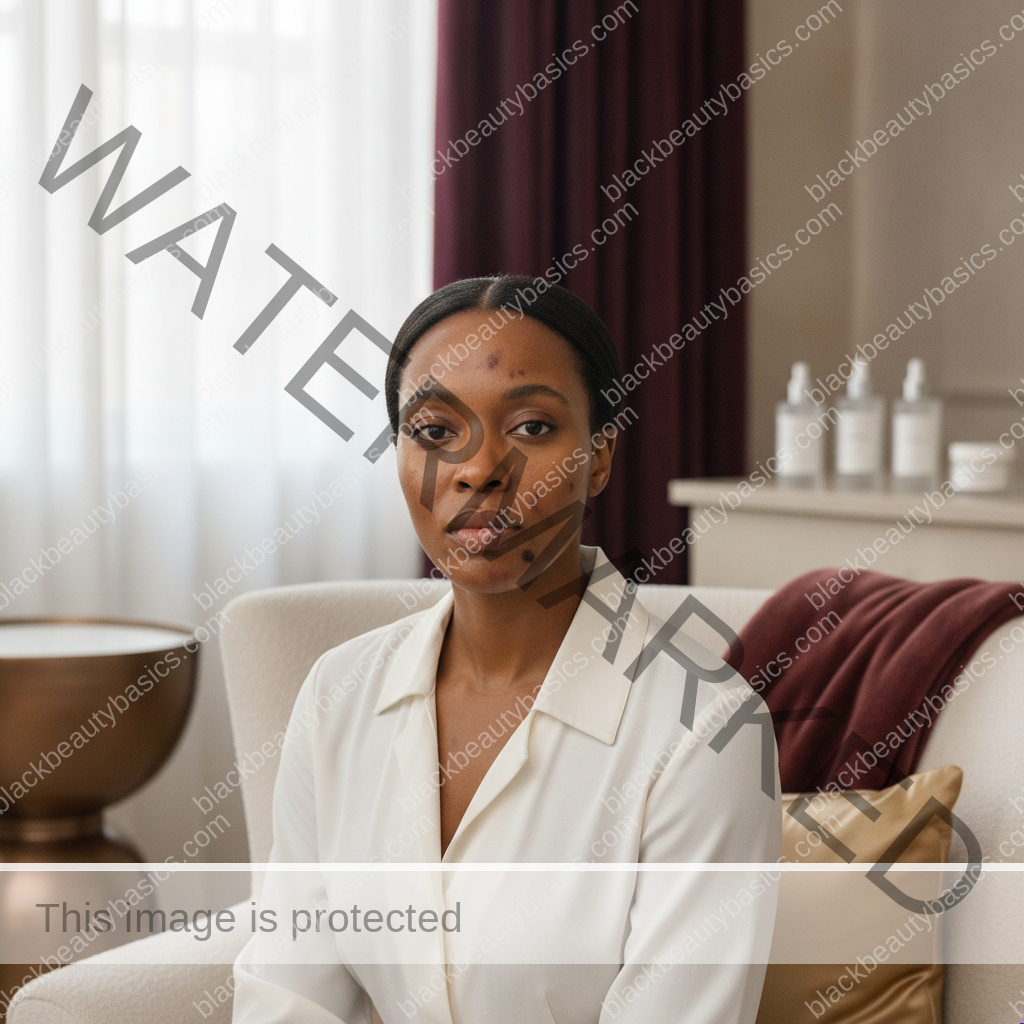
Why picked pimples can leave darker marks on melanin-rich skin
A pimple is already an inflammatory event. The pore can become blocked, oil and dead skin cells can collect, and the area may become swollen, tender, or filled with pus. Picking, squeezing, scratching, or repeatedly pressing on that area adds mechanical trauma. It can damage the skin barrier, prolong redness or tenderness, and increase the inflammation your skin has to settle.
When skin is inflamed or injured, pigment production can become uneven as the area heals. That lingering discoloration is commonly called post-inflammatory hyperpigmentation. It may look brown, deep brown, gray-brown, purple-brown, or darker than the surrounding skin, depending on your complexion and the depth of the pigment change. A mark can be flat even when it looks intense. Flat color change and a raised, indented, or otherwise textured scar are not the same thing, although they can occur together.
This is why treating a picked spot as though it needs more force can backfire. Scrubbing, drying it out aggressively, or applying several strong products may keep the irritation going. The mark is not “stubborn” because your skin needs punishment. It may simply be responding to repeated inflammation.
There is also a practical emotional layer. Picking can happen during a rushed morning, while removing makeup, in the car mirror, during a stressful week, or while trying to make a bump look less obvious before an event. Some people pick without fully realizing it until afterward. Others know they are doing it and feel embarrassed, frustrated, or ashamed. Shame rarely stops a habit. A plan that makes picking less convenient and less rewarding is more useful than scolding yourself.
Acne can also be harder to read on deeper skin tones. A pimple may not always look bright red. It may feel sore, look slightly darker, appear purple-brown, or show up mainly as swelling or texture. The American Academy of Dermatology notes that acne in skin of color can leave dark spots, which makes early, gentle acne care especially important. That does not mean every new mark can be prevented. It means protecting active spots matters because prevention is part of dark-mark care.
It is worth separating three things that can look similar in a bathroom mirror. First, an active breakout may still feel tender, swollen, or have a visible head. Second, a healing mark is often flat and no longer painful. Third, a scar changes the skin’s texture, such as a dent, a firm bump, or an uneven surface. If you are unsure which you are seeing, avoid treating it as an emergency. A clinician can help distinguish acne, pigment changes, and scarring when the pattern is persistent or distressing.
For a fuller explanation of how inflammation affects deeper skin tones, read our guide to hyperpigmentation after inflammation in Black skin. The key point here is simple: a picked pimple is not just a cosmetic nuisance. It is an inflamed spot that benefits from less touching, less friction, and more time to recover.
What to avoid when you are trying to stop the pick-mark cycle
The first rule is not perfection. It is reducing extra injury. You may still touch your face sometimes. You may still have a breakout that leaves a mark despite your best effort. The useful question is: what can make this one spot calmer from today forward?
Avoid squeezing, digging, or using tools at home. Fingernails, tweezers, extractors, and repeated “gentle” pressing can all add trauma. Trying to remove a bump before it is ready can push inflammation deeper or break the skin. If you have a pimple that feels large, painful, or deep, home extraction is not the answer. A dermatologist can advise you on the safest options for your specific situation.
Avoid scrubs, rough washcloths, and exfoliating brushes on healing spots. Physical friction can feel satisfying because it creates an immediate sensation, but it does not erase pigment. It can keep a damaged spot irritated. Use your fingertips and a gentle touch when cleansing. Pat dry rather than rubbing with a towel.
Avoid turning one dark mark into a full-face experiment. Layering several acids, retinoid products, strong acne treatments, spot treatments, and fragranced products at once makes it difficult to know what your skin tolerates. It can also lead to stinging, peeling, and more inflammation. “More active ingredients” is not the same as a better routine.
Avoid picking at peeling skin. A flaky spot can invite another round of touching. If skin is visibly raw, cracked, or scabbed, simplify. Do not try to exfoliate the flakes away. Keep the area protected from friction and allow it to close and calm. If there are signs of infection, such as spreading redness, worsening pain, warmth, swelling, pus, or fever, seek timely medical care.
Avoid hiding the evidence from yourself with harsh lighting and constant checking. Magnifying mirrors can be useful for makeup or contact lenses, but they can turn normal texture into a crisis. If your mirror routine leads to picking, change the setup. Step back from the mirror, use softer lighting, set a short timer for skincare, or keep magnifying tools out of the bathroom for a while.
Avoid copying someone else’s “dark spot hack.” Lemon juice, abrasive DIY mixtures, undiluted essential oils, and strong home peels can irritate skin and may worsen discoloration. Procedures and peel decisions deserve particular care for deeper skin tones because irritation and procedural complications can contribute to PIH. If you are considering a peel, laser, microneedling, or another procedure, discuss it with a clinician experienced in treating darker skin tones rather than trying a DIY version.
Finally, avoid blaming your complexion for needing a careful approach. Dark marks may be more visible or longer lasting for some people with melanin-rich skin, but your skin is not defective. Protecting it from unnecessary inflammation is not vanity. It is basic care.
A gentle plan for active pimples, picked spots, and lingering marks
A good plan has two jobs: reduce the chance that you will pick the next breakout, and keep your routine calm enough that healing skin is not constantly being provoked. You do not need an elaborate shelf. You need steps you can repeat when you are tired, busy, hormonal, stressed, or discouraged.
Step 1: Pause before your hands reach your face. Build a small interruption between urge and action. You might put a note on your mirror that says “hands down,” keep a fidget object near the couch, wear short nails, or apply a simple pimple patch only if it is appropriate for your skin and does not irritate you. The point is not to make your face inaccessible. It is to give your brain another option during the few seconds when picking usually starts.
If you notice that you pick when you are anxious, bored, or trying to make a spot look “even,” name that pattern without judgment. You might say: “I want this bump gone, but squeezing it may create a mark that stays longer.” That is not a moral lecture. It is a practical reminder of your goal.
Step 2: Cleanse gently. Wash with a mild cleanser that your skin tolerates, using lukewarm water and your fingertips. Cleanse after sweating if that is useful for you, but do not repeatedly wash in an effort to strip away oil. Over-cleansing can leave skin feeling tight or irritated. Makeup, sunscreen, and daily grime should come off; your skin barrier does not need to be punished in the process.
Step 3: Treat active acne thoughtfully. If you already use an over-the-counter acne treatment that your skin tolerates, use it according to its label and give it a fair, consistent place in your routine. Introduce only one new active product at a time when possible. If a product causes ongoing burning, intense stinging, swelling, or a rash-like reaction, stop using that non-prescription product and seek guidance from a clinician or pharmacist as appropriate.
If you use a prescription acne treatment, follow your prescriber’s instructions. Do not independently stop, increase, decrease, or combine prescription treatments because of a new dark mark. Contact the prescriber if you are struggling with irritation, have questions about how to use it, or feel the treatment is not manageable. They can help you adjust the plan safely.
Step 4: Support the barrier around the spot. Healing skin often does better with a plain moisturizer that feels comfortable and does not sting. Moisturizer is not a failure to “dry out” acne; it can be part of maintaining a tolerable routine. Look for a texture that works with your skin’s needs and makeup habits, whether that is a lotion, cream, or gel-cream. If a product leaves your skin burning or itchy, it is not automatically a sign that it is working.
Step 5: Use sun protection as part of discoloration care. Sun exposure can make uneven tone harder to manage. The American Academy of Dermatology recommends broad-spectrum sunscreen with SPF 30 or higher; water resistance can be useful when you are sweating or swimming. Choose a formula you are realistically willing to use, including one that feels comfortable on deeper skin without an unwanted cast or residue. Hats, shade, and protective clothing can also be helpful parts of sun protection.
Daily sunscreen is not a bleaching product, and it does not ask you to pursue lighter skin. It is one way to protect skin from additional environmental exposure while you care for visible marks. Apply it as directed on the package and reapply when needed based on the product instructions and your time outdoors.
Step 6: Add dark-mark-focused care carefully, not urgently. Some people choose ingredients such as azelaic acid or niacinamide as part of a routine for acne-prone skin and uneven tone. These are not instant erasers, and tolerance matters more than stacking every option. Our guide on layering niacinamide, azelaic acid, and sunscreen for dark spots can help you think through a simpler order of use.
Start low and slow with any new non-prescription active. Use a small amount, avoid applying it to broken skin unless the product directions specifically say otherwise, and do not introduce multiple new treatments in the same week. If your face begins to feel increasingly tender, itchy, tight, or persistently stingy, return to a gentler basic routine and get professional guidance if needed.
Step 7: Make your routine easy to repeat. A morning routine might be cleanse if needed, moisturize, then apply sunscreen. An evening routine might be cleanse, use your one chosen treatment as tolerated, then moisturize. If that sounds almost too simple, good. Consistency is easier when your routine does not require negotiating with ten products every night.

Keep your expectations grounded. A flat dark mark often changes gradually, not overnight, and a new breakout can restart the cycle. Instead of checking for daily transformation, notice whether you are picking less, whether new pimples are being left alone more often, whether your skin feels less irritated, and whether your routine is sustainable. For a realistic discussion of variation in fading, see our guide to the PIH timeline in deep skin tones.
Real-life variations that can make picking and dark marks harder
No two pick-mark cycles look exactly alike. Your plan should account for the real conditions around your skin, not an imaginary life where you sleep eight hours, never sweat, and have time for a 12-step routine.
If you wear makeup often: Makeup can be a creative tool, a professional preference, a source of joy, or simply part of getting dressed. You do not have to stop wearing it because you have dark marks. Focus on removing it gently at the end of the day and choosing products that do not seem to aggravate your acne. Avoid aggressive rubbing with wipes or repeated cleansing because you are trying to get every trace off. A patient, gentle cleanse is more protective than friction.
If you wear protective styles, wigs, headbands, or helmets: Pay attention to where hair products, edges, straps, or repeated friction meet your forehead, temples, jawline, and hairline. This is not an instruction to abandon your style or your life. It is an invitation to notice patterns. If breakouts repeatedly cluster in one area, consider whether product transfer, pressure, sweat, or rubbing may be contributing, and discuss persistent acne with a dermatologist.
If your acne changes around your cycle: Hormonal shifts can affect acne for many people. A monthly pattern does not mean you caused the breakout or that a stronger scrub will solve it. It may be helpful to track when breakouts occur, where they appear, what feels tender, and what treatments you used. That record can make a dermatology appointment more productive.
If your skin is sensitive: Your best routine may be more restrained than what you see online. Sensitive skin does not need to earn results through burning, peeling, or tightness. A gentle cleanser, moisturizer, sunscreen, and one carefully selected acne or pigment-focused step can be enough to start. Read our practical guide to a dark-mark routine for sensitive skin for a calmer framework.
If you have darker areas beyond old pimples: Do not assume every area of uneven tone is PIH. A dark or velvety patch on the neck, for example, can have different causes and should be assessed by a qualified clinician. It cannot be reliably diagnosed from an online description or a mirror check. The same caution applies to new widespread discoloration, rapidly changing spots, or a pattern that does not match your usual acne marks.
If you are dealing with melasma or post-procedure changes: Melasma is a distinct pigment condition, and post-peel or post-procedure discoloration needs individualized judgment. Do not use DIY peels, at-home procedures, or copied treatment schedules in an attempt to correct these concerns. Decisions about treatment are best made with a clinician experienced with darker skin tones, especially when your skin is already irritated or has recently undergone a procedure.
If the urge to pick feels bigger than skincare: Sometimes skin picking is tied to anxiety, stress, sensory discomfort, perfectionism, or a habit that feels difficult to interrupt. You deserve support without embarrassment. Consider telling a trusted healthcare professional or mental health professional that you are struggling with picking. Behavioral support can be just as relevant as cleanser choice. You do not have to wait until your skin is severely injured to ask for help.
Troubleshooting when the marks keep coming back
If you feel stuck, resist the urge to replace your whole routine at once. Troubleshooting works best when you identify the repeating trigger: new acne, picking, irritation from treatment, friction, inconsistent sun protection, or a combination of several factors.
Problem: “Every mark fades, but another pimple appears.” In this situation, focusing only on discoloration can feel like mopping while the tap is still running. Give acne prevention equal attention. A dermatologist can help if breakouts are frequent, painful, leaving scars, or not improving with a routine you can tolerate. The goal is not flawless skin; it is fewer inflammatory cycles and less need to pick.
Problem: “My dark spot products sting.” Stinging is not a required stage of progress. Check whether you added too many active ingredients, used them too often, applied them after scrubbing, or used them on raw skin. Simplify to gentle cleansing, moisturizer, and sun protection while the irritation settles, then seek advice before restarting a complicated routine. If you are using prescription treatment, contact the prescriber for instructions rather than changing it on your own.
Problem: “I only pick at night.” Make nighttime protection practical. Do your routine before you are exhausted. Move close-up mirrors away from where you unwind. Keep your hands occupied during television or scrolling. Covering the mirror temporarily, using softer lighting, or setting a ten-minute “no face touching” timer can sound small, but small environmental changes often matter more than willpower lectures.
Problem: “I can’t tell whether it is a mark or a scar.” Check texture in natural light, but do not repeatedly press or inspect the area. A flat patch of color is more consistent with a pigment change; a dent, thickened bump, or persistent textural change may need clinical assessment. A clinician can discuss options based on what is actually present and your skin’s tendency toward PIH.
Problem: “I am tempted by a peel or aggressive procedure.” Pause before booking based on a social-media result. Procedures can be helpful in selected circumstances, but evidence reviews note that procedures may also exacerbate PIH, particularly when skin is irritated or the approach is not well matched to the person. Ask a dermatologist or qualified clinician about their experience treating deeper skin tones, the specific concern being treated, potential risks, aftercare, and what alternatives exist.
Problem: “I am doing everything and still feel self-conscious.” That feeling is valid. Dark marks can be visible, and beauty standards often punish Black women for ordinary skin texture and uneven tone while selling impossible smoothness as “polished.” You are allowed to use complexion makeup, skip makeup, seek treatment, or do nothing beyond basic care. None of those choices determines your worth or cleanliness.
Take photographs only if they help you see change more fairly over time. Use similar lighting, avoid daily comparison, and do not let a camera roll become another picking trigger. If photos increase anxiety, skip them. Your routine should serve you, not create another surveillance project.
What to Do Next
Today, choose one action that makes picking less likely: trim your nails, move the magnifying mirror, set out a fidget object, or write a reminder where you do skincare. Then return to the basics: gentle cleansing, a comfortable moisturizer, and broad-spectrum SPF 30 or higher during the day.
This week, avoid adding several new products. If you want to address both acne and marks, choose one manageable question to solve first: “How can I leave active pimples alone?” or “Which step is irritating my skin?” A simpler routine gives you clearer information.
If acne is painful, widespread, scarring, or emotionally burdensome—or if dark marks are making you feel stuck—schedule a visit with a board-certified dermatologist or another qualified clinician. Ask directly about their experience caring for melanin-rich skin and about approaches that prioritize preventing irritation and PIH. Bring a list of products, prescriptions, and your main concerns.

Frequently Asked Questions
Why do my pimples turn dark after I pick them?
Picking can add injury and inflammation to an already inflamed pimple. As skin heals after inflammation or trauma, it can develop post-inflammatory hyperpigmentation, often called PIH. On melanin-rich skin, this may appear as a brown, deep brown, gray-brown, or purple-brown flat mark. The color change does not mean you did permanent damage every time, but repeated squeezing, scratching, and irritation can make the healing process harder. The most useful next move is usually to stop touching the area, keep the routine gentle, and focus on preventing new breakouts and new injury.
Are dark pimple marks the same as acne scars?
Not always. A dark pimple mark is often a flat change in color after inflammation. An acne scar involves a change in texture, such as an indentation, a raised area, or a firm bump. It is possible to have both color change and textural scarring in the same place. Looking closely every day can make the distinction harder, especially under harsh lighting. If you notice persistent dents, raised scars, or marks that concern you, a dermatologist can assess the area and explain options appropriate for your skin tone and skin history.
Should I pop a whitehead so it does not leave a mark?
It is understandable to want a whitehead gone quickly, especially before work, photos, or an event. But home popping can break the skin and increase inflammation, which may raise the chance of a lingering mark. Instead, cleanse gently, avoid pressing on it, and use an acne treatment only as directed and only if your skin tolerates it. If you have frequent deep, painful, or stubborn breakouts, professional care may be more useful than repeated home extraction. A clinician can help you address the acne pattern without adding unnecessary trauma.
How long do dark marks after pimples last on deep skin tones?
There is no reliable one-size-fits-all timeline. A mark’s course can vary with the depth of inflammation, your individual skin response, whether new irritation occurs, sun exposure, acne control, and the products or treatments you use. It is reasonable to expect gradual rather than overnight change. Try not to judge progress day by day. If you are concerned that marks are not changing, if acne continues to create new marks, or if you are unsure whether you are seeing PIH or scarring, a clinician can provide more individualized guidance.
Can sunscreen help if my dark marks came from acne, not the sun?
Yes, sunscreen can still be a useful part of a dark-mark routine. Acne may have triggered the original inflammation, but sun exposure can make uneven tone more difficult to manage. Choose a broad-spectrum sunscreen with SPF 30 or higher that you can use comfortably and consistently. Sunscreen is not a treatment that lightens your natural complexion, and it does not replace acne care. Think of it as one protective step alongside gentle cleansing, moisture support, leaving pimples alone, and appropriate treatment for active breakouts.
What should I do if my acne medication is making my skin peel?
Do not assume that severe dryness or peeling is something you simply have to endure. Follow the instructions from the clinician who prescribed the medication, and contact that prescriber if irritation is difficult to manage, worsening, or making you want to quit treatment. Do not independently stop, change the dose, or alter the schedule of a prescription. In the meantime, avoid scrubs and additional strong actives unless your prescriber has advised them. A plain moisturizer and gentle cleansing may help support comfort, but personalized medical guidance matters here.
When should I see a dermatologist about picked pimples and dark spots?
Consider seeing a dermatologist if your acne is painful, deep, widespread, scarring, or not responding to a routine you can tolerate. It is also reasonable to seek care if dark marks are affecting your confidence, if you are unsure whether a spot is PIH or a scar, or if picking feels difficult to control. Seek timely medical attention for signs of possible infection, including worsening pain, warmth, spreading redness, swelling, pus, or fever. Ask for care that takes melanin-rich skin seriously and prioritizes reducing irritation as well as treating acne.
Related next steps
Related posts:
 Picking, Popping, and PIH on Melanin-Rich Skin
 Dark spots after chemical peels on melanin-rich skin
 Exploring Natural Remedies for Body Dark Spots on Melanin-Rich Skin
 Over-the-Counter Topicals for Dark Spots on Melanin-Rich Skin
 Ingredient-Based Solutions for Hyperpigmentation & Dark Spots on Melanin-Rich Skin: Vitamin C, Niacinamide, Azelaic, Tranexamic, Retinoids
 Daily Routines That Support Fading Facial Dark Spots