Layering Base Products for Everyday vs. Occasion Looks on Melanin-Rich Skin
We’ve all seen the stunning transformations on social media: a bare face evolves into a flawlessly sculpted masterpiece, ready for the camera. What often isn’t shown, however, is the strategic thought process behind that transformation. For women with deep, melanin-rich skin, the journey from a fresh-faced glow to a full-glam moment isn’t about applying more product indiscriminately. It’s about a nuanced understanding of how to layer base products—foundation, concealer, powder, and correctors—with intention, precision, and a deep respect for our skin’s natural beauty.
The distinction between an everyday base and an occasion base is rarely about using entirely different products, but rather about adjusting their placement, intensity, and the techniques used to apply them. It’s about structure, not simply volume. A well-executed everyday look can still be polished and refined, while an occasion look should enhance your features without ever feeling mask-like or heavy. This guide is designed to demystify the art of layering, empowering you to build flexible base routines that seamlessly shift from a subtle, natural radiance to a captivating, camera-ready finish, all while honoring the unique needs and beauty of deep skin tones.
Our goal at Black Beauty Basics is to provide you with the knowledge to make informed choices that celebrate your complexion. We understand that melanin-rich skin often requires a different approach to product selection and application, particularly when it comes to avoiding ashy undertones, flashback, or a flat, one-dimensional appearance. By mastering the principles of strategic layering, you gain control over your look, ensuring that whether you’re heading to the office or a special event, your base makeup is harmonious, believable, and utterly radiant.
What This Post Covers
This comprehensive guide will walk you through the essential techniques and considerations for layering base products on deep skin, differentiating between the needs of an everyday look and a more structured occasion look. We will explore:
- The fundamental difference between strategic layering and simply applying more product.
- The core components and application methods for an effective everyday base.
- The additional elements and intensified techniques typically incorporated into an occasion base.
- Detailed strategies for layering foundation, concealer, powder, and correctors to maintain dimension and vibrancy.
- How to ensure your base remains flexible, believable, and camera-aware, regardless of the setting.
- Practical tips for navigating product choices and application to achieve your desired outcome.
Why Layering Matters More Than Product Quantity
The misconception that “more product equals better coverage” is a common pitfall, especially for those with deep skin tones. When too much product is applied without intention, it can lead to a flat, dull, or even ashy appearance, obscuring the natural warmth and dimension of melanin-rich complexions. True mastery of base makeup lies not in the volume of product used, but in the strategic application of layers. Layering, when done correctly, is about building coverage and effect precisely where it’s needed, allowing your skin to breathe and its natural beauty to shine through elsewhere.
Think of layering as an architectural process. Each product serves a specific purpose, and its placement contributes to the overall structure and finish of your base. For deep skin, this approach is particularly crucial because our complexions often have natural variations in tone and depth that we want to preserve, not mask. Over-application can easily lead to a monochromatic look that lacks vitality. Instead, by using thinner, more targeted layers, you can address specific concerns like hyperpigmentation or unevenness, while still allowing the beautiful nuances of your skin to remain visible. This technique ensures that your makeup looks like skin, only better – more refined, more even, and more radiant.
Furthermore, strategic layering enhances the longevity and wear of your makeup. When products are applied in thin, interlocking layers, they adhere better to the skin and to each other, reducing the likelihood of creasing, caking, or fading throughout the day or night. This approach also gives you greater control over the final finish, whether you desire a soft, diffused glow for daytime or a more perfected, matte canvas for an evening event. It’s about building a resilient, beautiful base that moves with you, rather than sitting heavily on top of your skin. This mindful application transforms makeup from a mere covering to an art form, celebrating and enhancing the unique canvas that is your melanin-rich skin.
What an Everyday Base Usually Needs
An everyday base for melanin-rich skin is all about enhancing your natural beauty with minimal effort and maximum impact. The goal is to create a polished, even-toned canvas that looks fresh, healthy, and effortless, without feeling heavy or overdone. It’s about looking like yourself, but on your best day. This approach prioritizes skin health and comfort, making it suitable for long hours, varying lighting conditions, and the demands of daily life.
Minimal Correction and Targeted Coverage
For an everyday look, the focus is typically on spot-correcting and evening out the complexion where necessary, rather than applying a full face of foundation. This might involve using a color corrector only on areas of significant discoloration, such as under the eyes or around the mouth, using a shade that neutralizes without completely erasing your natural skin tone. Following this, a lightweight foundation or a tinted moisturizer can be applied sparingly, often just in the center of the face and blended outwards, allowing your natural skin to show through on the perimeter. The aim is to unify the complexion, not to create a new one. This selective application prevents a “mask-like” effect and ensures your skin’s natural radiance is preserved.
Lightweight Concealer for Brightening and Spot Treatment
Concealer plays a crucial role in an everyday base, but its application is precise. Instead of sweeping it across large areas, it’s used to brighten the under-eye area subtly and to cover any blemishes or areas of hyperpigmentation that the foundation didn’t fully address. Choose a concealer that matches your skin tone for spot concealing, and one that is one to two shades lighter with a warm, peachy or golden undertone for brightening, applied sparingly in the inner and outer corners of the under-eye area. The key is to blend meticulously with a damp sponge or your finger, tapping the product into the skin rather than rubbing it, to achieve a seamless finish that doesn’t crease or settle into fine lines.
Strategic, Minimal Setting with Powder
Powder application for an everyday look is about control, not coverage. Its primary function is to set liquid or cream products in areas prone to shine, such as the T-zone, and to lock in concealer under the eyes to prevent creasing. A finely milled, translucent setting powder or a very sheer, skin-toned powder is ideal. Apply it with a fluffy brush or a powder puff, pressing lightly only where needed. Avoid dusting powder all over your face, as this can diminish the natural glow of melanin-rich skin and potentially lead to an ashy appearance. The goal is to maintain a natural, healthy finish with just enough mattification to ensure longevity.
Emphasizing Skin-Like Finishes
The overall aesthetic of an everyday base leans towards skin-like, natural, or satin finishes. Products that offer a subtle glow without being overtly dewy are often preferred. This allows your skin’s natural texture and luminosity to come through. The beauty of melanin-rich skin is its inherent warmth and depth, and an everyday base should celebrate this, not conceal it. By opting for lighter textures and strategic placement, you create a base that feels comfortable, looks authentic, and enhances your inherent beauty without demanding constant touch-ups.
What an Occasion Base Usually Adds
When preparing for an occasion, whether it’s a special event, a photoshoot, or an evening out, the base makeup needs to offer more structure, longevity, and a refined finish that holds up under various lighting conditions and scrutiny. An occasion base isn’t about applying a thick, heavy layer of makeup; rather, it’s about building a more perfected, yet still believable, canvas through enhanced precision, coverage, and setting techniques. The goal is to create a look that is polished, camera-ready, and exudes confidence, without sacrificing the natural dimension of deep skin.
Enhanced Correction and Fuller Coverage Foundation
For an occasion, the approach to color correction might be more comprehensive, addressing a wider range of concerns like hyperpigmentation, dark circles, or unevenness more thoroughly. This ensures a truly uniform canvas before foundation. Following correction, a medium to full coverage foundation is typically chosen. Unlike an everyday application, this foundation might be applied more broadly, though still with care to blend seamlessly into the neck and décolletage. The aim is to create a more uniform and perfected complexion that can withstand bright lights and flash photography. However, even with fuller coverage, the application should remain thoughtful, using a damp sponge or brush to press and buff the product into the skin, rather than just spreading it, to maintain a skin-like texture.
Strategic Brightening and Sculpting with Concealer
Concealer takes on a dual role in an occasion base: not only to cover and brighten but also to subtly sculpt and highlight. A brightening concealer, one to two shades lighter than your skin tone with a warm undertone, is applied more deliberately under the eyes, extending slightly onto the cheekbones, and potentially on the bridge of the nose, center of the forehead, and cupid’s bow. This strategic placement creates points of light that bring forward certain features and add dimension. For areas requiring more intense coverage, such as persistent dark spots, a concealer matching your skin tone with a higher coverage formula is used. The blending here is crucial – it needs to be immaculate to avoid harsh lines or a patchy appearance, often requiring a smaller, denser brush or a precise tapping motion with a sponge.
More Comprehensive Setting and Baking
To ensure the longevity and flawless finish required for an occasion, powder application is more extensive. After liquid and cream products are applied, a finely milled translucent or skin-toned setting powder is used to set the entire face, or at least all areas where makeup has been applied. For areas prone to creasing or shine, or for a truly perfected, matte finish, “baking” might be employed. This involves applying a generous amount of powder with a damp sponge to areas like the under-eyes, T-zone, and jawline, allowing it to sit for a few minutes to absorb excess oils and lock in the makeup, then dusting off the excess. This technique provides a smooth, pore-blurring effect and significantly extends wear time, crucial for events that last for hours. It also helps to prevent flashback in photography when the right powder is chosen for deep skin tones.
Building Dimension with Contouring and Bronzing
While not strictly “base” products, contour and bronzer are almost always integral to an occasion look, working in tandem with the base to restore and enhance dimension. After creating a more uniform canvas, these products are used to sculpt the face, adding back shadows and warmth that might have been minimized by fuller coverage foundation. Contour shades, chosen carefully to mimic natural shadows on deep skin without appearing muddy or ashy, are applied under the cheekbones, along the jawline, and on the temples. Bronzer, in a warm, rich tone, adds a sun-kissed glow to the high points of the face. This step is essential for preventing a flat appearance and for giving the face a beautifully sculpted, multi-dimensional look that photographs exceptionally well.
Finishing Sprays for Longevity and Seamlessness
Finally, an occasion base often concludes with a setting spray. This step is vital for melting all the layers of powder and cream products together, creating a seamless finish that looks less “made up” and more like skin. Setting sprays also significantly boost the longevity of the makeup, helping it withstand sweat, humidity, and long hours. Some setting sprays even offer additional benefits like oil control or a radiant finish, allowing you to customize the final look to your preference. This final mist ensures your meticulously crafted base remains impeccable from beginning to end.
How to Layer Foundation, Concealer, Powder, and Correctors Without Losing Dimension
The art of layering base products on deep skin without losing dimension is a nuanced dance between coverage, placement, and blending. Our complexions possess a natural richness and variation that we want to celebrate, not mask. The key is to build strategically, ensuring each product enhances rather than subtracts from your natural beauty. This approach prevents the dreaded flat, one-dimensional look and ensures your skin maintains its vibrant, multi-tonal allure.
The Foundational Step: Skin Prep
Before any product touches your face, proper skin prep is paramount. For deep skin, this means ensuring your skin is well-hydrated and primed. Hydration plumps the skin, creating a smooth canvas and preventing foundation from clinging to dry patches. A good moisturizer, followed by a hydrating or gripping primer, can make a significant difference in how products apply and wear. For oily skin, a mattifying primer in the T-zone can control shine without making the rest of your face look flat. This initial step ensures that subsequent layers glide on effortlessly and meld seamlessly with your skin, preserving its natural luminosity.
Strategic Color Correction: The First Layer
Color correction is often the true first layer of makeup for deep skin, especially when addressing hyperpigmentation or dark circles. Instead of piling on concealer, a targeted color corrector neutralizes unwanted tones. For most deep skin tones, orange, peach, or red correctors are effective for neutralizing blue/purple undertones in dark circles or brown/black hyperpigmentation. The key is to apply it very sparingly and precisely only to the areas that need it. Blend the edges gently with your finger or a small brush, ensuring the corrector is diffused but not spread too widely. The goal is to cancel out the discoloration, not to create an orange patch. This thin, intentional layer lays the groundwork for evenness without adding bulk.
Foundation: Building the Canvas
Foundation application should be about evening out the complexion, not painting on a new one. For deep skin, maintaining dimension means applying foundation strategically. Start with a small amount, focusing on the center of your face (forehead, nose, chin, and central cheeks) where discoloration or redness is often most prominent. Blend outwards towards the perimeter of your face, using a damp beauty sponge or a buffing brush. The goal is to sheer out the product as you reach your jawline and hairline, allowing your natural skin tone to peek through. This technique creates a gradient effect, preventing a harsh line and ensuring your face doesn’t look disconnected from your neck. For areas requiring more coverage, apply a second, very thin layer only to those specific spots, tapping it in rather than rubbing. This controlled application ensures you build coverage where needed while preserving the natural contours and depth of your skin. For product recommendations, consider Shop foundation for deep skin on Amazon.
Concealer: Brightening and Refining
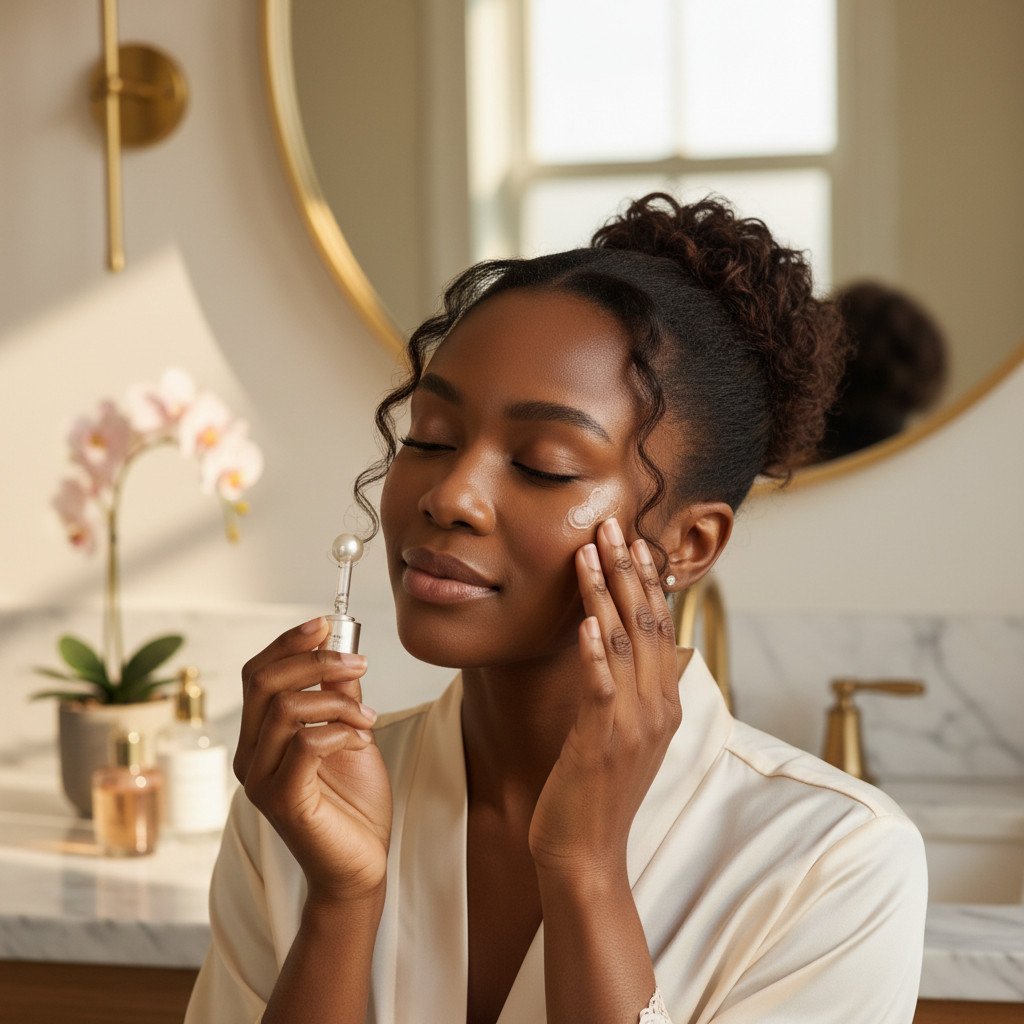
Concealer is your tool for targeted perfection and brightening. After foundation, apply concealer to areas that still need attention: under the eyes (in a triangle shape or just along the inner and outer corners), around the mouth if there’s residual discoloration, or on any remaining blemishes. For brightening, choose a concealer one to two shades lighter than your foundation with a warm, peachy or golden undertone. For spot concealing, match your foundation exactly. The application should be light-handed; use a small amount and tap it into the skin with your ring finger, a small brush, or a damp mini sponge. The warmth of your finger can help melt the product into the skin for a seamless finish. Blend the edges meticulously into the surrounding foundation, ensuring there are no harsh lines. This precise application lifts and brightens without creating a stark, unnatural contrast.
Powder: Setting with Intention
Powder is where many can lose dimension if applied incorrectly on deep skin. The aim is to set liquids and creams, control shine, and blur imperfections, not to mattify the entire face. Use a finely milled, translucent setting powder or a very sheer, skin-toned powder. Apply it with a fluffy brush or a powder puff, pressing gently only in areas prone to shine (T-zone, under-eyes) or where you’ve applied concealer to prevent creasing. For the under-eyes, a technique called “baking” can be used for special occasions: apply a generous layer of powder with a damp sponge, let it sit for a few minutes, then gently dust off the excess. This provides a smooth, creaseless finish. Crucially, leave areas like the high points of your cheeks free of heavy powder to allow your natural glow or any subsequent highlight to shine through. This selective powdering maintains the natural luminosity and dimension of your skin.
Cream Products (Contour, Blush, Highlight): Restoring Warmth and Structure
After your base liquids and creams are set, it’s time to bring back warmth and structure. For deep skin, cream products often blend more seamlessly and look more natural than powders. Apply cream contour in shades that mimic natural shadows (cool-toned browns or deep bronzes) under the cheekbones, along the jawline, and on the temples. Blend upwards and outwards. Follow with cream blush on the apples of your cheeks, blending towards your temples. Finally, apply a cream highlight to the high points of your face: cheekbones, brow bone, bridge of the nose, and cupid’s bow. The key is to blend each product meticulously before moving to the next, ensuring soft transitions. These layers add back the dimension that might have been subtly muted by foundation, making your face look sculpted and vibrant.
Powder Products (Bronzer, Blush, Highlight): Locking in and Enhancing
Once cream products are applied and blended, you can layer powder versions on top to intensify the effect and increase longevity. Use a powder bronzer to warm up the face, a powder blush to deepen the flush, and a powder highlight to amplify the glow. Again, apply with a light hand and blend well. This layering technique—cream underneath, powder on top—creates a multi-dimensional effect that looks rich and seamless on deep skin, ensuring your sculpted features last all day or night without fading. This careful, step-by-step application ensures that each product contributes to a harmonious, multi-dimensional finish, celebrating the inherent beauty of melanin-rich skin.
How to Keep the Base Flexible, Believable, and Camera-Aware
Creating a base that is flexible, believable, and camera-aware is paramount for women with deep skin tones. Whether for everyday wear or a special occasion, your makeup should adapt to different lighting, look natural up close, and photograph beautifully without flashback or an ashy appearance. This requires a thoughtful approach to product selection, application techniques, and an understanding of how light interacts with your complexion.
Understanding Lighting: The Ultimate Test
The way your makeup looks in natural daylight versus artificial indoor lighting, or under the harsh glare of camera flashes, can be dramatically different. For deep skin, certain ingredients in foundations and powders (like titanium dioxide or zinc oxide, often found in SPF) can cause a white cast or flashback in flash photography. To maintain a believable and camera-aware base:
- Test in Various Lights: Always check your base makeup in different lighting conditions – natural daylight, warm indoor light, and cooler fluorescent light – to ensure it looks harmonious and not too heavy or mismatched.
- Be Mindful of SPF: For camera-heavy events, opt for foundations and powders without high SPF, or choose mineral-based sunscreens that are less prone to flashback. If SPF is essential, look for formulas specifically designed to be “flash-friendly.”
- Embrace Warmth: Deep skin thrives with warm undertones. Ensure your foundation, concealer, and powders have appropriate golden, red, or peach undertones to prevent an ashy or grey appearance in any light.
The Power of Sheer Layers and Targeted Placement
To keep your base flexible and believable, resist the urge to apply heavy layers everywhere. Instead, focus on targeted application and sheer layers:
- Spot Concealing First: For everyday, start with concealer only on areas that truly need it (blemishes, hyperpigmentation, dark circles). This minimizes overall product use and allows more of your natural skin to show through.
- Foundation Where Needed: Apply foundation primarily to the central areas of your face and blend outwards, sheering it out towards the perimeter. This creates a natural gradient, preventing a mask-like effect and ensuring your face blends seamlessly with your neck and décolletage.
- Blend, Blend, Blend: Seamless blending is the cornerstone of a believable base. Use damp sponges, soft brushes, or your fingertips to press and buff products into the skin, ensuring no harsh lines or visible edges. The goal is for products to melt into your skin, not sit on top of it.
Choosing the Right Finishes for Versatility
The finish of your base products significantly impacts its flexibility and believability:
- Satin or Natural Finish Foundations: These are often the most versatile for deep skin, offering a healthy glow without being overly dewy or completely matte. They mimic the look of natural skin and adapt well to various lighting.
- Strategic Mattification: For areas prone to shine (T-zone), use a finely milled, translucent or skin-toned powder sparingly. Avoid over-powdering the entire face, as this can flatten dimension and make deep skin appear dull or ashy. Allow some natural luminosity to peek through.
- Cream vs. Powder: For a truly flexible base, consider using cream products (blush, contour, highlight) as your primary dimension builders. They melt into the skin more naturally than powders and can be set with a light dusting of powder for longevity, creating a multi-dimensional effect that looks more like skin.
The Role of Setting Sprays and Mists
Setting sprays are essential for making your base flexible, believable, and long-lasting:
- Melting Layers Together: After applying all your base products, a setting spray helps to fuse the layers, removing any powdery finish and making the makeup look more like skin.
- Extending Wear: For occasion looks, a long-wearing setting spray is crucial to lock everything in place, preventing smudging, fading, or creasing, especially in warm or humid conditions.
- Hydration and Refreshment: Hydrating mists can be used throughout the day to refresh your makeup, add a dewy finish, and prevent it from looking dry or caked, enhancing its believability.
The Impact of Blush, Bronzer, and Lip Choices
The same base can read entirely differently based on your choice of complementary products:
- Blush: A soft, natural flush (e.g., a peachy-pink or warm berry) can make a base look fresh and everyday. For an occasion, a more vibrant or sculpted blush application (e.g., a rich plum or deep terracotta) can elevate the look, adding drama and warmth.
- Bronzer: A subtle sweep of bronzer can add a healthy, sun-kissed glow for daily wear. For events, a more defined bronzer application, perhaps combined with contour, can enhance facial structure and add a luxurious warmth.
- Lips: A nude or sheer lip gloss can keep an everyday base feeling light and approachable. A bold, rich lipstick (think deep reds, berries, or chocolate browns) instantly transforms the same base into an occasion-ready statement, providing a focal point and balancing the intensity of the face makeup.
By understanding these principles and practicing mindful application, you can create a base that not only looks stunning in any light but also feels comfortable and confidently reflects your personal style, whether it’s for a casual day or a glamorous night out.
How to Layer Base Products: Everyday vs. Occasion
To illustrate the practical differences, let’s break down the layering process for each scenario. Remember, the products might be similar, but the intensity, placement, and technique are what truly differentiate an everyday look from an occasion look.
| Base Step | Everyday Version (Subtle & Fresh) | Occasion Version (Polished & Structured) |
|---|---|---|
| 1. Skin Prep | Cleanse, moisturize, light hydrating primer (optional). | Thorough cleanse, hydrate, targeted primer (hydrating, mattifying, or gripping). |
| 2. Color Corrector | Minimal, targeted application on significant dark spots/circles only. Blend lightly. | Precise application on all areas of discoloration (under-eyes, hyperpigmentation, around mouth). Blend thoroughly. |
| 3. Foundation | Lightweight formula (tinted moisturizer, sheer foundation). Apply sparingly to center of face, blend outwards. Sheer coverage. | Medium to full coverage foundation. Apply more broadly, but still blend outwards. Build coverage in thin layers where needed. |
| 4. Concealer | Spot conceal blemishes with skin-match shade. Lightly brighten under-eyes with 1 shade lighter, warm-toned concealer in inner/outer corners. | Spot conceal with skin-match shade. Brighten under-eyes with 1-2 shades lighter, warm-toned concealer (triangle shape), bridge of nose, forehead center. Blend meticulously. |
| 5. Cream Contour/Bronzer | Optional: very subtle cream bronzer for warmth on high points. | Defined cream contour (under cheekbones, jawline, temples) and cream bronzer for warmth and definition. Blend seamlessly. |
| 6. Cream Blush/Highlight | Soft, natural cream blush on apples of cheeks. Subtle cream highlight on high points. | More vibrant cream blush, blended upwards. More prominent cream highlight on high points for glow. |
| 7. Setting Powder | Light dusting of translucent powder in T-zone and under-eyes only. | More comprehensive setting: translucent or skin-toned powder on T-zone, under-eyes (may bake), and other areas needing longevity. |
| 8. Powder Bronzer/Blush/Highlight | Optional: very light powder blush for a pop of color. | Layer powder bronzer, blush, and highlight over cream products to intensify and set. |
| 9. Setting Spray | Optional: light hydrating mist for a fresh finish. | Essential: long-wearing setting spray to melt layers and extend wear. |
Everyday Base: The Art of Subtlety
For an everyday look, the goal is to enhance without overwhelming. After your skin prep, focus on minimal correction. If you have significant dark circles, a tiny dab of an orange or peach corrector, blended out, is sufficient. Follow with a lightweight foundation or tinted moisturizer, applied only where needed to even out your complexion. Use a damp sponge to press and blend the product, ensuring a sheer finish. Next, use a concealer that matches your skin tone to spot-conceal any blemishes. For under-eyes, a brightening concealer one shade lighter, applied sparingly to the inner and outer corners, will lift and refresh without looking heavy. Set only your T-zone and under-eyes with a finely milled translucent powder. The aim is to let your skin’s natural texture and glow shine through, creating a polished yet effortless appearance.
Occasion Base: Building Structure and Longevity
An occasion base demands more attention to detail and longevity. Begin with a more thorough color correction, ensuring all areas of discoloration are neutralized. Then, apply a medium to full coverage foundation in thin, buildable layers, blending meticulously with a brush or sponge. Pay attention to blending down the neck. Follow with concealer for both spot treatment and strategic brightening. Apply a slightly more generous amount of brightening concealer under the eyes, on the bridge of the nose, and the center of the forehead to create points of light. This is where you might introduce cream contour and blush to sculpt and add warmth before setting. For setting, use a more substantial amount of powder, potentially “baking” under the eyes and in the T-zone for a smooth, creaseless, and long-lasting finish. Finally, layer powder bronzer, blush, and highlight over their cream counterparts to intensify the effect and further lock them in. A generous mist of setting spray will melt all the layers together, creating a seamless, camera-ready finish that lasts for hours. Remember, even with more product, the technique should always be about blending and building thin layers to maintain dimension and avoid a cakey appearance.
How to Navigate This Topic
Navigating the world of base makeup, especially when differentiating between everyday and occasion looks, can feel overwhelming. The sheer volume of products, techniques, and advice available can make it difficult to know where to start. However, for women with deep, melanin-rich skin, this journey is about empowerment and understanding what truly works for your unique complexion. Here’s how to approach this topic with confidence and clarity:
Start with Your Skin’s Needs
Before you even consider products or techniques, take an honest assessment of your skin. What are your primary concerns? Is it hyperpigmentation, uneven texture, oiliness, or dryness? Understanding your skin’s specific needs will guide your product choices and application strategies. For example, if you have significant hyperpigmentation, a good color corrector will be a non-negotiable step for both everyday and occasion looks, though the intensity of application may vary. If you have oily skin, strategic mattifying primers and powders will be key for longevity, especially for occasion makeup. Your skin is the canvas, and its condition dictates the best approach.
Embrace Experimentation, But Be Strategic
Finding what works best for you will involve some experimentation. However, this doesn’t mean buying every trending product. Instead, focus on trying different application methods for the products you already own or investing in one new product at a time. For instance, try applying your foundation with a brush one day and a damp sponge the next to see which provides the finish you prefer for an everyday look. For an occasion, experiment with baking under your eyes versus just a light dusting of powder. Pay attention to how products wear throughout the day, how they look in different lighting, and how they photograph. Keep a small journal or notes on your phone to track what works and what doesn’t.
Prioritize Quality Over Quantity
You don’t need a vast collection of products to achieve a flawless base. Invest in high-quality staples that work well for your skin tone and type. For deep skin, this means foundations and concealers that offer a true match, with appropriate undertones that won’t leave you looking ashy or grey. A good setting powder that doesn’t cause flashback is also crucial. Sometimes, a few well-chosen products can outperform a cabinet full of mediocre ones. Focus on versatile products that can be sheered out for everyday or built up for occasions.
Learn the “Why” Behind the “How”
Don’t just follow instructions blindly. Understand *why* a particular technique or product is recommended. Why is color correction applied before foundation? (To neutralize discoloration without needing excessive foundation.) Why is powder applied strategically? (To set and control shine without flattening dimension.) When you understand the purpose behind each step, you can adapt techniques to suit your unique needs and preferences, making your makeup routine more intuitive and effective. This knowledge empowers you to make informed decisions and troubleshoot issues as they arise.
Practice Makes Perfect (and Efficient)
The ability to seamlessly transition your base from everyday to occasion looks comes with practice. Don’t expect perfection on your first try. Set aside time to practice different layering techniques when you don’t have to rush. The more you practice, the more efficient you’ll become, and the more confident you’ll feel in your ability to create any look you desire. This consistent practice will hone your skills, making the application feel second nature and allowing you to achieve beautiful results with less effort.
Seek Inspiration, Not Replication
Look to other Black women in beauty for inspiration, but remember that your face is unique. What works for one person might need slight adjustments for another. Pay attention to how different artists and creators adapt techniques for various skin tones and facial structures. Use their insights as a starting point, then customize and refine to suit your own features and preferences. This approach ensures your makeup enhances your individual beauty rather than trying to replicate someone else’s look.
By approaching this topic with intention, curiosity, and a focus on your unique needs, you’ll not only master the art of layering base products but also deepen your understanding and appreciation of your beautiful melanin-rich skin.
Where to Go Next
To further deepen your understanding of base makeup and refine your techniques for melanin-rich skin, explore these foundational articles within Black Beauty Basics:
- For a comprehensive breakdown of each product’s role: What Each Base Product Does on Deep Skin
- To master selecting the perfect finish and coverage: Choosing Coverage Levels and Finishes for Deep Skin
- For advanced techniques in color correction and multi-concealer use: Using Correctors and Multiple Concealers on Melanin-Rich Skin
- To troubleshoot common base makeup challenges: Troubleshooting Common Base Issues on Deep Skin
Additionally, consider these related articles to further enhance your overall makeup strategy:
- To understand how to adapt your entire routine for different scenarios: Everyday vs. Occasion Routines: Office, Night Out, Camera
- For tips on building efficient and versatile product collections: Product Capsule Systems: Minimalist, Travel, Work Kits
- For specialized advice on managing skin concerns while doing makeup: Makeup for Textured and PIH-Prone Skin
Quick Principles
Mastering the art of layering base products for deep skin comes down to a few core principles that guide every step of your routine, whether you’re aiming for a subtle everyday glow or a flawless occasion look. These principles ensure that your makeup enhances your natural beauty, maintains dimension, and provides longevity without ever appearing heavy or unnatural.
1. Less is More, Applied Strategically
The most crucial principle is to use minimal product, applied with precision. Instead of slathering on foundation, focus on areas that truly need coverage or evening out. Build thin layers gradually. For deep skin, this prevents an ashy or flat appearance that can result from over-application. Think of it as painting with light strokes, adding only where necessary to perfect the canvas, rather than covering it entirely. This approach preserves the natural variations and depth of your complexion, allowing your skin to look like skin.
2. Blend, Blend, Blend—Then Blend Some More
Seamless blending is non-negotiable. Each layer—corrector, foundation, concealer, contour, blush—must melt into the skin and into the previous layer without harsh lines or visible edges. Use damp sponges, soft brushes, or your fingertips to press and buff products. For deep skin, unblended makeup can be particularly noticeable and can disrupt the natural flow of your features. Meticulous blending ensures a harmonious transition between products, creating a smooth, airbrushed finish that looks natural up close and flawless from a distance.
3. Prioritize Undertones for Deep Skin
Always choose products with the correct undertones for your deep skin. Foundations and concealers should have warm, golden, red, or peach undertones to prevent an ashy or grey cast. Correctors should be orange, peach, or red to neutralize hyperpigmentation effectively. Even bronzers and blushes should complement your skin’s natural warmth. Incorrect undertones can instantly make your base look unnatural, regardless of how well it’s applied. Knowing your undertone is the foundation of a truly harmonious base.
4. Control Shine, Don’t Eliminate Glow
For deep skin, a healthy glow is a sign of vitality. While it’s important to control excess shine, especially in the T-zone, avoid over-powdering the entire face. Strategic powder application—only in areas prone to oiliness or creasing—maintains natural luminosity and prevents a flat, dull appearance. Allow the high points of your face to retain some natural radiance or enhance them with a subtle highlight. The goal is balance: a perfected, even complexion that still looks fresh and vibrant.
5. Build Dimension Back In
Fuller coverage foundations can sometimes flatten the natural contours of the face. It’s essential to reintroduce dimension through contour, bronzer, and blush. For deep skin, cream products often provide the most seamless and natural-looking dimension. Apply them after foundation and concealer, then set with powder versions if desired for intensity and longevity. This step sculpts the face, adds warmth, and brings back the beautiful depth that defines melanin-rich complexions, ensuring your face looks sculpted and alive, not one-dimensional.
6. Adapt to the Occasion and Lighting
Your base makeup should be flexible enough to adapt to different situations. For everyday, focus on minimal, targeted coverage and a natural finish. For occasions, you can build more coverage, intensify correction, and use more comprehensive setting techniques for longevity and a camera-ready finish. Always consider the lighting you’ll be in and whether flash photography will be involved. Avoid high SPF products for flash photography to prevent flashback, and always check your makeup in various light sources to ensure it looks consistent and flattering.
7. Skin Prep is Non-Negotiable
The quality of your base makeup is only as good as the skin beneath it. A well-hydrated, smooth canvas ensures products apply seamlessly, wear longer, and look more natural. Invest in a consistent skincare routine that addresses your specific concerns. Before makeup, cleanse, moisturize, and use a primer tailored to your skin type and desired finish. This foundational step makes all subsequent layering efforts more effective and ensures your makeup looks like a second skin.
By internalizing these quick principles, you’ll approach your base makeup with a strategic mindset, transforming your routine into an intentional practice that celebrates the unique beauty of your melanin-rich skin, every single day and for every special occasion.
Frequently Asked Questions
What is the biggest mistake Black women make when layering base makeup?
The biggest mistake is often applying too much product, especially foundation or powder, without proper blending or consideration for undertones. This can lead to a flat, ashy, or mask-like appearance that obscures the natural dimension and warmth of melanin-rich skin.
How can I prevent my base makeup from looking cakey on deep skin?
To prevent cakeiness, always apply products in thin, buildable layers, focusing on precise placement where coverage is truly needed. Ensure thorough blending of each layer, use a damp sponge for a seamless finish, and set with finely milled powder only in strategic areas.
Should I use a color corrector for everyday looks or just for occasions?
You can use a color corrector for both, but the intensity varies. For everyday, use a minimal, targeted application on significant discoloration. For occasions, you might apply it more comprehensively to ensure a completely even canvas before foundation.
What’s the best way to ensure my base makeup lasts all day or night for an occasion?
For longevity, start with a gripping primer, use long-wearing foundation and concealer formulas, and employ strategic setting techniques like baking in areas prone to creasing or shine. Finish with a high-quality, long-lasting setting spray to lock everything in place.
How do I choose the right undertone for foundation and concealer on deep skin?
Look for foundations and concealers with warm undertones—golden, red, or peach—that complement your skin’s natural warmth. Avoid cool or grey-toned products, as they can make deep skin appear ashy. Swatch shades on your jawline and check in natural light.
Can I use the same foundation for both everyday and occasion looks?
Yes, often you can. The key is in the application: for everyday, sheer it out with a damp sponge or mix with moisturizer for lighter coverage. For occasions, build it up in thin layers for more coverage, and pair it with more extensive correction and setting techniques.
How do I avoid flashback in photos with my base makeup?
To avoid flashback, choose foundations and powders that are free of high SPF (especially physical blockers like zinc oxide and titanium dioxide) for camera-heavy events. Opt for finely milled, translucent setting powders specifically formulated to be flash-friendly, and ensure thorough blending.
The journey to mastering your base makeup is a personal one, rooted in self-discovery and celebration of your unique beauty. By embracing these principles of strategic layering, you gain the power to craft a base that is not only flawless but also authentically you, reflecting your confidence and elegance in every setting. At Black Beauty Basics, we believe that makeup is a tool for enhancement and expression, never for concealment. Continue to explore, experiment, and empower yourself with the knowledge to create looks that truly resonate with your spirit and your melanin-rich glow.
INTERNAL LINKING OPPORTUNITIES
Base Makeup Architecture: Foundation, Concealer, Powder, Correctors
Makeup for Deep Skin Tones
What Each Base Product Does on Deep Skin
Choosing Coverage Levels and Finishes for Deep Skin
Using Correctors and Multiple Concealers on Melanin-Rich Skin
Troubleshooting Common Base Issues on Deep Skin
Everyday vs. Occasion Routines: Office, Night Out, Camera
Product Capsule Systems: Minimalist, Travel, Work Kits
Makeup for Textured and PIH-Prone Skin
Related next steps
Related posts:
 Everyday and Special-Occasion Body-Glow Routines
 What Each Base Product Does on Deep Skin
 Choosing Coverage Levels and Finishes for Deep Skin: Your Guide to Intentional Base Makeup
 Troubleshooting Common Base Issues on Deep Skin
 Everyday Sunscreen for Adult Melanin-Rich Skin
 Everyday Skincare & In-Office Options for PCOS on Melanin-Rich Skin