Ingredient and Formula Checklist for Acne-Prone Deep Skin
For many Black women and individuals with deep, melanin-rich skin tones, the journey to finding the perfect makeup is often a complex one. We celebrate the moment we discover a foundation or concealer that truly matches our unique undertones and depth, finally feeling seen and beautifully represented. However, this initial triumph can sometimes be short-lived. The excitement of a perfect shade match can quickly turn into frustration when the formula itself doesn’t cooperate with our skin’s specific needs. Perhaps it feels heavy and suffocating, exacerbating existing breakouts, or it seems to trigger new ones. Maybe it settles into fine lines, emphasizes texture, or simply doesn’t wear well throughout the day, leaving our skin feeling irritated or looking worse than before.
This experience is particularly common for those of us who navigate the challenges of acne-prone skin. It’s a delicate balance: we want makeup that enhances our natural beauty and provides coverage where needed, but we absolutely cannot afford for it to compromise our skin health. The wrong formula can feel like a step backward, undoing the progress made with careful skincare routines and leaving us questioning every product choice. It’s not just about avoiding breakouts; it’s about maintaining skin integrity, preventing post-inflammatory hyperpigmentation (PIH), and ensuring our skin feels comfortable and respected beneath the layers of product.
This article is crafted to empower you with the knowledge to make informed decisions about your makeup. We’ll move beyond the surface-level shade match and delve into the crucial aspects of ingredients, formulas, wear, and removal. Our goal is to equip you with a comprehensive checklist that helps you evaluate bases, concealers, powders, primers, and cheek products, always keeping both breakout prevention and deep-skin color performance in mind. Remember, makeup should be a tool for self-expression and confidence, not a source of skin stress. Let’s explore how to choose products that truly work with your skin, not against it, allowing your natural radiance to shine through, unburdened by unnecessary irritation or buildup.
What This Post Covers
This comprehensive guide is designed to be your essential resource for navigating the complex world of makeup when you have acne-prone, deep skin. We understand that your concerns extend far beyond simply finding a shade that matches; you need products that respect your skin’s delicate balance and support its health. In the following sections, we will meticulously break down the critical factors you need to consider when building your makeup routine, ensuring every product contributes positively to your skin’s well-being and your overall confidence.
We’ll begin by exploring the fundamental characteristics of makeup formulas that are generally more suitable for acne-prone skin, moving beyond marketing claims to understand what truly matters. From there, we’ll dive into specific ingredients and formula signals that warrant a closer look, helping you decipher product labels with greater clarity. Understanding how a product’s finish, wear time, and ease of removal impact breakout-prone skin is paramount, and we’ll dedicate a section to these often-overlooked aspects. Then, we’ll provide a detailed, category-by-category breakdown, offering tailored advice for primers, foundations, concealers, powders, and cheek products, ensuring each component of your makeup routine is optimized for your skin type.
Crucially, we’ll also guide you through effective strategies for patch-testing and tracking your skin’s responses, recognizing that individual reactions are unique and invaluable. Finally, we’ll offer practical advice on how to approach this topic holistically, integrating your makeup choices with your broader skincare and treatment plan. Our aim is to empower you with a practical, actionable checklist that supports both your skin’s comfort and the flawless performance of your makeup, allowing you to embrace your beauty without compromise.
What to Look for in Makeup Formulas When Skin is Acne-Prone
When your skin is prone to breakouts, selecting makeup isn’t just about aesthetics; it’s a critical component of your overall skin health strategy. The right formula can provide coverage and enhancement without exacerbating existing conditions or triggering new ones. Conversely, the wrong formula, even if it offers a perfect shade match, can undermine your skincare efforts and lead to frustration. Therefore, understanding what to prioritize in makeup formulas is paramount for anyone with acne-prone deep skin.
Prioritizing Non-Comedogenic and Non-Acnegenic Claims
The terms “non-comedogenic” and “non-acnegenic” are often seen on product labels, and while they are not absolute guarantees, they serve as valuable starting points. “Non-comedogenic” means the product is formulated not to clog pores, which is a primary cause of acne. “Non-acnegenic” implies it’s designed not to cause or worsen acne. These claims are based on testing, often on sensitive or acne-prone skin types, and indicate that the manufacturer has made an effort to exclude common pore-clogging or irritating ingredients. However, it’s vital to remember that these terms are not regulated by the FDA, and what works for one person may not work for another. They are guidelines, not ironclad promises, and your skin’s unique response remains the ultimate test. Always approach these claims with a practical mindset, using them as an initial filter rather than a definitive endorsement.
Understanding Oil-Free vs. Oil-Controlling Formulas
For acne-prone skin, especially deep skin tones that can sometimes be more prone to oiliness, the distinction between “oil-free” and “oil-controlling” is significant. An “oil-free” formula simply means it does not contain traditional oils like mineral oil, vegetable oils, or animal fats. This can be beneficial as some oils are known to be comedogenic. However, oil-free doesn’t necessarily mean it won’t feel heavy or contain other ingredients that could clog pores or irritate. Many oil-free products use silicones or synthetic esters to achieve a smooth texture, and while generally non-comedogenic, some individuals might find certain silicones too occlusive or feel heavy on their skin. “Oil-controlling” formulas, on the other hand, often contain ingredients like salicylic acid, zinc, or various clays and powders designed to absorb excess sebum and reduce shine throughout the day. These can be particularly helpful for managing surface oil, but it’s important to ensure they don’t over-dry or irritate the skin, which can sometimes trigger more oil production as a compensatory mechanism.
Seeking Lightweight and Breathable Textures
The texture of your makeup plays a crucial role in how your skin feels and reacts. Heavy, thick, or occlusive formulas can create a suffocating layer on the skin, trapping sweat, oil, and bacteria, which are prime conditions for breakouts. Instead, prioritize lightweight, breathable textures. This often means opting for liquids, serums, or very finely milled powders over thick creams or stick formulations, especially for all-over coverage. Products that feel like a second skin, allowing your pores to “breathe,” are generally preferred. Look for descriptions like “sheer,” “lightweight,” “serum-like,” or “fluid.” These types of formulas are less likely to create a barrier that interferes with your skin’s natural processes, reducing the risk of clogged pores and irritation. They also tend to layer better without feeling caked on, which is an important consideration for achieving a natural finish on deep skin tones.
Considering the Role of Fragrance and Dyes
Fragrance, whether synthetic or natural (from essential oils), is a common skin irritant and allergen. For acne-prone skin, which is often already compromised or sensitive, adding potential irritants can lead to redness, inflammation, and even exacerbate breakouts. The same goes for certain dyes. While not all dyes are problematic, some can be irritating or even comedogenic for sensitive individuals. When evaluating makeup, especially if you have a history of sensitivity or reactive skin, opting for “fragrance-free” and “dye-free” formulas is a wise choice. It minimizes the number of potential triggers your skin is exposed to, allowing it to focus on healing and maintaining its balance. Always check the ingredient list for terms like “fragrance,” “parfum,” or specific essential oils if you know you are sensitive to them. Even “natural” fragrances can be potent irritants, so “fragrance-free” is usually the safest bet.
The Importance of Hypoallergenic Formulations
While “hypoallergenic” is another term that lacks strict regulation, it generally indicates that a product has been formulated to minimize the risk of allergic reactions. For acne-prone skin, which can often be reactive and sensitive, choosing hypoallergenic products can be an additional layer of protection. These products typically avoid common allergens and irritants, including certain fragrances, dyes, and preservatives. While it doesn’t guarantee you won’t react, it significantly reduces the likelihood, making it a thoughtful consideration for your makeup checklist. When combined with non-comedogenic and fragrance-free claims, hypoallergenic formulations offer a more comprehensive approach to safeguarding your skin from potential irritants and breakout triggers.
Which Ingredient and Formula Signals Deserve a Closer Look
Navigating ingredient lists can feel like deciphering a complex code, but for acne-prone deep skin, it’s an essential skill. Beyond broad claims, certain ingredients and formula characteristics warrant a closer look, as they can significantly impact your skin’s health and comfort. Understanding these signals empowers you to make more precise choices, moving beyond generic advice to what truly resonates with your unique skin.
Common Comedogenic Ingredients to Be Wary Of
While “non-comedogenic” labels are helpful, they aren’t foolproof. Some ingredients are notorious for their pore-clogging potential, and being aware of them can help you scrutinize labels more effectively. These often include certain oils, waxes, and fatty acids. For instance, coconut oil (Cocos Nucifera Oil), while popular in many natural products, can be highly comedogenic for some. Isopropyl myristate, lanolin, and acetylated lanolin are also frequently cited as culprits. Certain synthetic esters, like isopropyl palmitate, can also be problematic. It’s important to note that an ingredient’s comedogenicity can depend on its concentration in a formula and how it interacts with other ingredients. A general rule of thumb is to be cautious if these appear high on the ingredient list, especially in products that cover a large area of your face, like foundations or primers. Keeping a mental or written list of ingredients that have historically caused issues for your skin is an invaluable tool.
The Double-Edged Sword of Silicones
Silicones, such as dimethicone, cyclomethicone, and cyclopentasiloxane, are ubiquitous in modern makeup. They are prized for their ability to create a smooth, silky finish, blur imperfections, and extend wear. For many, they are non-comedogenic and well-tolerated. However, for some individuals with acne-prone skin, particularly those sensitive to occlusive textures, silicones can present a challenge. While they don’t technically clog pores in the same way oils do, their film-forming nature can sometimes trap other ingredients, sweat, and sebum beneath the surface, potentially leading to congestion for certain skin types. This is especially true for heavier, less volatile silicones. If you find that products with a high silicone content make your skin feel suffocated or contribute to breakouts, it might be worth exploring silicone-free alternatives or opting for formulas with lighter, more volatile silicones that evaporate quickly. Observe how your skin reacts to different types and concentrations of silicones to determine your personal tolerance.
Alcohol-Heavy Formulas and Their Drying Effect
Many makeup products, particularly those marketed for oil control or long wear, contain high concentrations of denatured alcohol (alcohol denat., ethanol, isopropyl alcohol). While alcohol can provide a temporary tightening sensation and help products dry quickly, it is a significant irritant and can be highly detrimental to acne-prone skin in the long run. Alcohol strips the skin of its natural oils, disrupting the skin barrier. This can lead to increased dryness, redness, and inflammation. Paradoxically, this dryness can trigger the skin to produce even more oil to compensate, creating a vicious cycle that exacerbates breakouts. Furthermore, a compromised skin barrier is less effective at defending against bacteria and environmental aggressors, making it more vulnerable to acne. Always check ingredient lists and try to avoid products where alcohol is listed among the first few ingredients, indicating a high concentration. Opt for alcohol-free formulations whenever possible to maintain skin hydration and barrier integrity.
The Impact of Physical vs. Chemical Sunscreens in Makeup
Many foundations and primers now include SPF, which is excellent for daily sun protection. However, the type of sunscreen active can matter for acne-prone skin. Physical sunscreens, zinc oxide and titanium dioxide, are generally considered non-comedogenic and less irritating. They work by sitting on top of the skin and deflecting UV rays. For deep skin tones, the challenge with physical sunscreens in makeup is often the white cast they can leave, though formulations have improved significantly. Chemical sunscreens, on the other hand, absorb UV rays and convert them into heat. While effective, some chemical filters (like oxybenzone or avobenzone) can be irritating or even trigger allergic reactions in sensitive individuals. Certain chemical filters have also been linked to potential endocrine disruption, though research is ongoing. For acne-prone skin, physical sunscreens are often the preferred choice due to their gentle nature and broad-spectrum protection. If you opt for chemical sunscreens in your makeup, pay attention to how your skin reacts and look for newer generation filters that are less likely to cause irritation.
Recognizing Potential Irritants Beyond Fragrance
Beyond fragrance and alcohol, several other ingredients can act as irritants for sensitive, acne-prone skin. Essential oils, even “natural” ones like peppermint, eucalyptus, or citrus oils, can be highly sensitizing and pro-inflammatory. Certain preservatives, though necessary to prevent microbial growth, can also cause reactions in some individuals. Formaldehyde-releasing preservatives, parabens (though widely debated), and certain dyes are common culprits. Even some plant extracts, while beneficial for many, can be irritating for others. The key is to listen to your skin. If a new product causes redness, itching, stinging, or increased breakouts, check its ingredient list for potential irritants. Keeping a simple product reaction log can help you identify patterns and pinpoint specific ingredients that your skin doesn’t tolerate well. This personalized approach to ingredient scrutiny is far more effective than simply following generic “bad ingredient” lists.
How Finish, Wear Time, and Removal Affect Breakout-Prone Skin
When selecting makeup for acne-prone deep skin, the conversation often centers on ingredients. While crucial, it’s equally important to consider how a product performs throughout the day – its finish, wear time, and, critically, how easily it can be removed. These factors can significantly impact the health and comfort of breakout-prone skin, often in ways that are overlooked.
The Impact of Different Finishes (Matte, Satin, Dewy)
The finish of your makeup can influence not only your aesthetic but also your skin’s well-being. For acne-prone deep skin, which can sometimes lean oily, a matte finish might seem like the obvious choice. Matte foundations and powders are formulated to absorb excess oil and minimize shine, creating a smooth, non-reflective look. While this can be beneficial for managing oil, some intensely matte formulas can be very drying or feel heavy and suffocating, especially if they rely on high concentrations of powders or silicones. This dryness can sometimes trigger the skin to produce more oil in response, or it can emphasize texture and dry patches, making breakouts more noticeable. On the other hand, dewy or radiant finishes, while beautiful, might contain more emollients or oils that could potentially exacerbate oiliness or clog pores for some. A satin or natural finish often strikes the best balance, offering a healthy glow without excessive shine, and typically feeling lighter on the skin. These formulas tend to be less drying than ultra-mattes and less occlusive than very dewy options, allowing the skin to breathe more comfortably. The goal is to find a finish that complements your skin’s natural oil production without causing discomfort or congestion.
Evaluating Long-Wear and Transfer-Proof Formulas
Long-wear and transfer-proof makeup formulas are highly desirable for their ability to stay put through long days, humidity, and even light friction. However, for acne-prone skin, these benefits can come with a hidden cost. To achieve their tenacity, these formulas often rely on film-forming polymers, silicones, and other ingredients that create a strong, durable layer on the skin. While this layer prevents smudging and fading, it can also be more occlusive, potentially trapping sweat, oil, and bacteria beneath its surface. This creates an environment conducive to breakouts, especially if the skin is already prone to congestion. Furthermore, the very qualities that make these products long-lasting also make them more challenging to remove. The increased effort and more aggressive cleansing required to break down these tenacious formulas can lead to excessive rubbing, irritation, and a compromised skin barrier – all of which can worsen acne. It’s a trade-off: if you need extreme longevity, be extra diligent with your cleansing routine. Otherwise, consider if a slightly less tenacious formula that is easier to remove might be a kinder choice for your skin on a daily basis.
The Critical Role of Makeup Removal and Cleansing
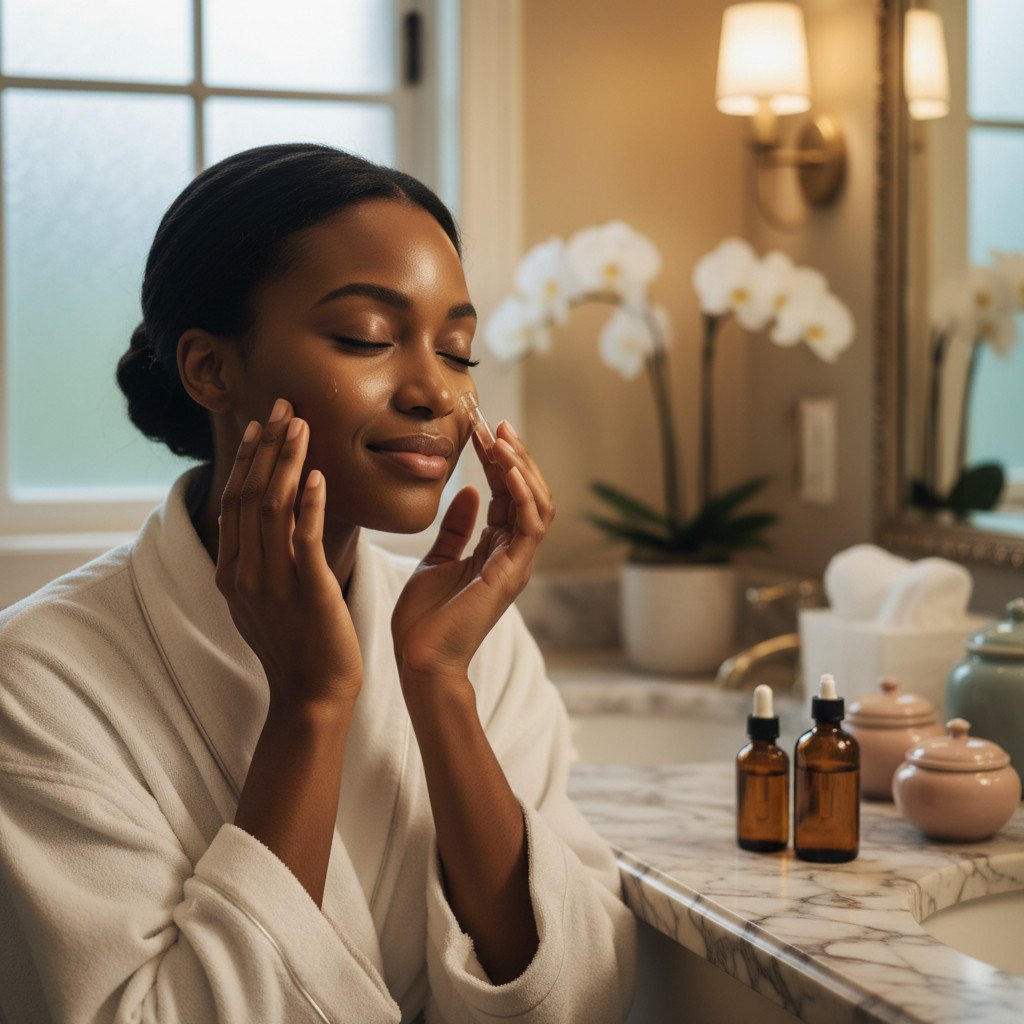
This brings us to one of the most critical, yet often underestimated, aspects for acne-prone deep skin: makeup removal and cleansing. No matter how “non-comedogenic” or “breathable” your makeup claims to be, if it’s not thoroughly removed, it will contribute to clogged pores and breakouts. For acne-prone skin, the removal process itself needs to be effective but gentle. Heavy, long-wear, or waterproof makeup demands a more robust removal strategy than a light, sheer tint. This often means a double cleanse: first, an oil-based cleanser, balm, or micellar water to break down and lift makeup, sunscreen, and excess sebum, followed by a gentle, water-based cleanser to remove any residue and thoroughly cleanse the skin. The key is to achieve complete removal without excessive scrubbing or harsh chemicals that strip the skin. If your makeup requires vigorous rubbing to come off, it’s likely too tenacious for your acne-prone skin, as this friction can irritate active breakouts and contribute to PIH. Prioritize makeup that melts away relatively easily with a gentle cleanser, ensuring your skin is clean and ready for your evening skincare routine without unnecessary stress. This seamless integration of makeup wear and removal is paramount for maintaining clear, healthy skin.
How to Evaluate Primers, Foundations, Concealers, Powders, and Cheek Products
Building a makeup routine for acne-prone deep skin requires a strategic approach to each product category. It’s not just about finding a shade match, but ensuring every item in your arsenal supports your skin’s health and comfort. Let’s break down how to evaluate primers, foundations, concealers, powders, and cheek products with both breakouts and deep-skin color performance in mind.
Primers: The First Layer of Defense
Primers are designed to create a smooth canvas, extend makeup wear, and address specific skin concerns. For acne-prone deep skin, a primer can be a crucial first line of defense or an unnecessary layer of potential irritation.
What to Look For:
- Non-comedogenic and Oil-Free: These are non-negotiable. Look for primers explicitly stating these claims.
- Lightweight, Water-Based, or Gel-Based Formulas: These tend to feel less occlusive and allow the skin to breathe. Silicones can be present, but ideally, they should be lighter, more volatile types or in a formula that doesn’t feel heavy.
- Mattifying or Pore-Minimizing (if needed): If oiliness is a concern, look for primers with ingredients like silica or clay derivatives that gently absorb excess sebum without over-drying.
- Soothing Ingredients: Primers containing ingredients like niacinamide, allantoin, or green tea extract can offer a calming effect.
What to Be Cautious About:
- Heavy Silicone-Based Primers: While they create a smooth surface, very thick, occlusive silicone primers can trap everything underneath, potentially leading to congestion.
- Fragrance and Essential Oils: As with all products, avoid these to minimize irritation.
- “Glow-boosting” or Shimmering Primers: While beautiful, some can contain larger shimmer particles that might emphasize texture or irritate active breakouts.
Consider a primer that offers a subtle blur or simply creates a smooth, hydrated base without adding a heavy layer. Sometimes, a well-formulated moisturizer can double as a primer.
Foundations: The Base of Your Look
Foundation is arguably the most critical makeup product for acne-prone deep skin, as it covers the largest surface area. The right foundation can provide confidence-boosting coverage without compromising skin health.
What to Look For:
- Non-comedogenic and Non-acnegenic: Absolutely essential.
- Breathable, Lightweight Formulas: Opt for liquids, serums, or very thin creams. Avoid heavy stick foundations or extremely thick creams that can feel suffocating.
- Medium, Buildable Coverage: This allows you to customize coverage without applying an overly thick layer. Sheer to medium coverage often looks more natural and is less likely to settle into texture.
- Satin or Natural Finish: These finishes often balance oil control with a healthy look, without being overly matte or excessively dewy.
- Shade Match and Undertone: Beyond the formula, a perfect shade match with the correct undertone is paramount for deep skin. A foundation that’s too ashy or too red will not look natural, regardless of its skin-friendly properties.
- Easy Removal: Choose foundations that break down easily with a gentle cleanser, minimizing the need for harsh scrubbing.
What to Be Cautious About:
- Full-Coverage, Heavy Formulas: While tempting for covering breakouts, these are often more occlusive and can feel heavy, potentially worsening congestion.
- Highly Mattifying or Drying Formulas: These can strip the skin, leading to compensatory oil production or emphasizing dry patches and texture.
- Fragrance and Alcohol: Avoid these common irritants.
- Foundations with Large Shimmer Particles: These can highlight texture rather than smooth it.
For deep skin, ensure the foundation doesn’t oxidize to an ashy or orange tone throughout the day, which can be a common issue. Understanding your undertones is key here.
Concealers: Targeted Correction
Concealers are used for targeted coverage of blemishes and PIH. Their concentrated nature means ingredient choices are even more critical.
What to Look For:
- Non-comedogenic and Non-acnegenic: Especially important for direct application on breakouts.
- Creamy, Blendable Texture: A concealer that blends seamlessly without tugging or requiring excessive rubbing is ideal. This reduces irritation on active breakouts.
- Good Pigmentation: You want a concealer that offers effective coverage with a minimal amount of product. High pigment means less product, which means less potential for clogging.
- Flexible Finish: A natural or satin finish often works best, as overly matte concealers can look dry and cakey on blemishes, while overly dewy ones might not offer enough coverage or slip too much.
- Shade Match: For blemishes, a concealer that matches your foundation is usually best. For brightening under-eyes, a slightly lighter, warmer shade can be effective for deep skin.
What to Be Cautious About:
- Thick, Paste-Like Formulas: These can feel heavy, look cakey, and be difficult to blend without disturbing the skin.
- Concealers with Strong Drying Agents: While some might contain salicylic acid, be careful not to over-dry the area, which can lead to flaking and make the blemish more noticeable.
- Fragrance and Alcohol: Avoid these, particularly on sensitive, broken skin.
Remember that for PIH, a color corrector might be used *before* concealer to neutralize discoloration, reducing the amount of concealer needed. Learn more about spot concealing vs. all-over coverage.
Powders: Setting and Mattifying
Powders are essential for setting makeup, controlling shine, and sometimes adding a touch of extra coverage.
What to Look For:
- Finely Milled and Translucent: These are less likely to look heavy, settle into texture, or clog pores. Translucent powders are often best for deep skin to avoid an ashy cast.
- Non-comedogenic: Look for powders that explicitly state this.
- Silica or Mineral-Based: These ingredients can effectively absorb oil without feeling heavy.
- Talc-Free (Optional): While talc is generally safe and non-comedogenic, some individuals prefer to avoid it.
What to Be Cautious About:
- Heavy, Pigmented Powders: These can look cakey, especially when layered over foundation, and can be more prone to settling into fine lines and texture.
- Powders with Shimmer: Can emphasize texture and active breakouts.
- Fragrance: Avoid.
Apply powder sparingly, focusing on areas prone to shine (T-zone) with a light hand or a fluffy brush to avoid a flat, dull look on deep skin. For more on base makeup architecture, see our guide.
Cheek Products (Blush, Bronzer, Highlighter): Adding Dimension
Cheek products add warmth, color, and dimension. While they cover a smaller area, their formulas still matter for acne-prone skin.
What to Look For:
- Non-comedogenic: Essential, especially for blush and bronzer applied to areas where breakouts might occur.
- Powder Formulas: Often the safest bet for acne-prone skin, as they are generally less occlusive than creams or liquids. Look for finely milled powders that blend seamlessly.
- Cream or Liquid Formulas (with caution): If you prefer creams or liquids, opt for lightweight, gel-based, or serum-like textures. Ensure they are explicitly non-comedogenic.
- Subtle Shimmer (if any): Choose products with very fine, integrated shimmer rather than large glitter particles, which can emphasize texture.
What to Be Cautious About:
- Heavy Cream Blushes/Bronzers: Some can be quite emollient and potentially clog pores for sensitive individuals.
- Highlighters with Chunky Glitter: These can highlight texture and active breakouts rather than creating a smooth glow.
- Fragrance: Avoid.
For deep skin, ensure bronzers are warm without being orange, and blushes offer a vibrant pop of color that complements your undertone without looking chalky. Highlighters should provide a seamless, lit-from-within glow rather than a stark stripe.
| Product Category | What to Look For | What to Be Cautious About |
|---|---|---|
| Primers | Non-comedogenic, oil-free, lightweight, water/gel-based, soothing ingredients (niacinamide, allantoin), mattifying (if needed). | Heavy silicone-based, fragrance/essential oils, “glow-boosting” with large shimmer. |
| Foundations | Non-comedogenic, non-acnegenic, breathable, lightweight liquids/serums, medium buildable coverage, satin/natural finish, true shade match & undertone, easy removal. | Full-coverage heavy creams/sticks, highly mattifying/drying, fragrance/alcohol, large shimmer particles. |
| Concealers | Non-comedogenic, non-acnegenic, creamy/blendable texture, high pigmentation (less product needed), flexible finish, accurate shade match. | Thick/paste-like formulas, strong drying agents, fragrance/alcohol. |
| Powders | Finely milled, translucent, non-comedogenic, silica/mineral-based, talc-free (optional). | Heavy/pigmented powders, powders with shimmer, fragrance. |
| Cheek Products (Blush, Bronzer, Highlighter) | Non-comedogenic, finely milled powder formulas, lightweight cream/liquid (with caution), subtle shimmer, true shade match. | Heavy cream formulas, chunky glitter, fragrance. |
How to Patch-Test and Track What Your Skin Actually Responds To
Even with the most meticulous ingredient analysis and careful formula selection, individual skin reactions are unique. What works beautifully for one person with acne-prone deep skin might trigger a breakout for another. This is why patch-testing and diligently tracking your skin’s responses are not just recommendations, but essential practices for building a truly skin-friendly makeup routine. This personalized approach empowers you to move beyond generic advice and truly understand what your skin loves and loathes.
The Importance of Patch-Testing New Products
Patch-testing is your first line of defense against widespread irritation or breakouts. It involves applying a small amount of a new product to a discreet area of your skin and observing for any adverse reactions before applying it to your entire face. This step is particularly crucial for foundations, primers, and concealers, which cover larger areas or are applied directly to blemishes.
How to Patch-Test Effectively:
- Choose a Discreet Area: The jawline, behind the ear, or a small patch on the neck are ideal spots. These areas are less visible but still reflective of facial skin sensitivity.
- Apply a Small Amount: Use the product as you would normally, but only on the chosen patch.
- Observe for 24-48 Hours: Leave the product on for at least 24 hours, ideally 48. Watch for any signs of redness, itching, stinging, burning, or new breakouts. If you experience any discomfort, wash it off immediately.
- Repeat for Each New Product: This process should be done for every new foundation, primer, concealer, and even powders or cheek products if you have very sensitive skin.
Patch-testing helps you identify immediate irritations or allergic reactions. However, it’s important to note that some comedogenic reactions can take longer to manifest, sometimes appearing days or even weeks after consistent use. This leads us to the next crucial step: tracking.
Creating a Simple Product Reaction Log
A product reaction log is an invaluable tool for understanding your skin’s long-term responses to makeup. It helps you connect the dots between product use and skin conditions, allowing you to identify patterns and pinpoint specific culprits. This log doesn’t need to be elaborate; consistency is key.
What to Include in Your Log:
- Date Started: When you first introduced a new product into your routine.
- Product Name: Be specific (e.g., “Brand X Foundation, Shade Y”).
- Product Type: (e.g., foundation, primer, blush).
- Key Ingredients (Optional but Helpful): Note any ingredients you’re particularly watching out for (e.g., “contains dimethicone,” “fragrance-free”).
- Daily Skin Observations:
- Morning: How does your skin look and feel? (e.g., “clear,” “a few small bumps,” “redness around chin”).
- Evening (after removal): Any new irritation, dryness, oiliness, or breakouts? How easily did the makeup remove?
- Overall Impression: (e.g., “felt heavy,” “looked natural,” “skin felt fine”).
- Decision: (e.g., “continue,” “discontinue,” “use occasionally”).
How to Use Your Log:
Maintain this log for at least 2-4 weeks when introducing a new base product. If you notice a recurring issue (e.g., “breakouts on forehead every time I use X foundation”), you’ve likely found a product that isn’t compatible with your skin. This log also helps you differentiate between a product-induced breakout and a hormonal or stress-related one, providing clarity in your skincare journey. It’s a proactive way to take control and ensure your makeup choices are truly serving your skin’s health.
Understanding Delayed Reactions and Cumulative Effects
It’s crucial to understand that not all skin reactions are immediate. Some ingredients, particularly comedogenic ones, can take time to manifest as clogged pores or breakouts. This is known as a delayed reaction. You might use a product for a week or two without issue, only to start seeing increased congestion or small bumps appearing. This is why consistent tracking over several weeks is more informative than just a 24-hour patch test for certain types of reactions.
Furthermore, there’s the concept of cumulative effects. While one product might be perfectly fine on its own, a combination of several products with similar potentially problematic ingredients (e.g., multiple silicone-heavy products, or several products with low levels of a mild irritant) can collectively overwhelm your skin. Your skin might tolerate a small amount of a specific ingredient in one product, but if that ingredient is present in your primer, foundation, and concealer, the cumulative exposure could trigger a reaction. Your product reaction log can help you identify if a cluster of new breakouts coincides with the introduction of multiple new products or a change in your routine, rather than just one single item. This holistic view is essential for truly understanding your skin’s sensitivities and building a harmonious makeup and skincare regimen.
How to Navigate This Topic
Navigating the world of makeup for acne-prone deep skin can feel overwhelming, with a constant influx of new products, conflicting advice, and the unique challenges of melanin-rich skin. This section is designed to provide you with a strategic framework for approaching this topic, ensuring you make choices that are both effective for your skin health and empowering for your self-expression. Remember, the goal is not to fear makeup, but to use it as a tool that works harmoniously with your skin.
Embrace a Holistic Approach: Skincare First
The most fundamental principle for acne-prone skin, regardless of makeup choices, is to prioritize a consistent and effective skincare routine. Makeup should always complement, not compensate for, good skincare. Before you even consider what foundation to buy, ensure you have a solid regimen in place that includes gentle cleansing, targeted treatments (like salicylic acid or benzoyl peroxide, if recommended by a dermatologist), adequate hydration, and daily sun protection. When your skin is healthier and more balanced, it will be less reactive to makeup, and you’ll require less coverage overall. Think of makeup as the beautiful accessory to your well-cared-for skin, rather than a mask to hide underlying issues. This holistic approach means that your makeup choices are an extension of your commitment to skin health, not a separate, potentially conflicting, endeavor. A healthy canvas is the best foundation for any makeup look.
Listen to Your Skin: Your Ultimate Guide
While ingredient lists and “non-comedogenic” claims offer valuable guidance, your skin’s individual response is the ultimate authority. No expert advice or product review can fully predict how your unique skin will react. Pay close attention to how products feel immediately upon application, throughout the day, and after removal. Does it feel heavy or suffocating? Does it cause itching, redness, or stinging? Do you notice new breakouts or increased congestion after a few days or weeks of use? Keep a simple mental note or, ideally, a physical log, as discussed in the previous section. If a product consistently makes your skin feel uncomfortable or look worse, it’s not the right fit for you, regardless of its popularity or claims. Trust your intuition and your skin’s signals. This self-observational practice is the most powerful tool you have for curating a makeup collection that genuinely supports your skin’s well-being.
Patience and Persistence: Finding Your Perfect Match
Finding the perfect makeup routine for acne-prone deep skin is rarely an overnight process. It requires patience, persistence, and a willingness to experiment. You might try several foundations before finding one that truly works. You might discover that an ingredient that’s generally considered “safe” still irritates your skin. This is normal. Don’t get discouraged by setbacks or feel pressured to stick with a product that isn’t serving you. View each trial as a learning opportunity, gathering more information about your skin’s unique preferences and sensitivities. Be prepared to invest time in patch-testing, observing, and adjusting. This journey is about empowering yourself with knowledge and making choices that honor your skin, leading to a more confident and comfortable relationship with your makeup. The reward is a routine that not only enhances your beauty but also supports the health and vitality of your melanin-rich skin.
Where to Go Next
Now that you’re equipped with a comprehensive understanding of how to evaluate makeup ingredients and formulas for acne-prone deep skin, you’re ready to dive deeper into other aspects of managing and enhancing your beautiful complexion. The journey to flawless makeup and healthy skin is multifaceted, and each piece of knowledge builds upon the last. We’ve curated a selection of articles from Black Beauty Basics that will further empower you on this path, providing insights into managing texture, perfecting coverage, aligning makeup with treatment plans, and understanding the nuances of deep skin tones.
Understanding Skin Texture and PIH
If you’re dealing with acne, you’re likely also familiar with skin texture and post-inflammatory hyperpigmentation (PIH), which are common concerns for deep skin tones. To truly master your makeup application, it’s essential to understand how these conditions manifest and how makeup can best work with them. Our article, “How Texture and PIH Show Up on Deep Melanin-Rich Skin,” provides a foundational understanding of these unique challenges, helping you identify and address them effectively. This knowledge will inform your choices not just in terms of ingredients, but also in application techniques and product finishes.
Targeted Coverage Strategies
Once you understand your skin’s texture and PIH, the next step is to master targeted coverage. Not every blemish or area of discoloration requires a full face of heavy foundation. In fact, for acne-prone skin, a more strategic approach is often better. Our guide, “Spot Concealing vs. All-Over Coverage for PIH on Deep Skin,” will teach you the art of precise application, helping you achieve a natural, even-toned look without overwhelming your skin with unnecessary product. This technique is particularly beneficial for reducing the overall burden of makeup on breakout-prone areas.
Choosing Textures and Finishes
Beyond ingredients, the texture and finish of your makeup play a crucial role in how it interacts with and enhances textured or PIH-prone skin. A product that looks beautiful on smooth skin might emphasize imperfections on textured skin. To navigate this, explore “Choosing Textures and Finishes That Respect Texture.” This article delves into how different formulations can either smooth or highlight skin texture, guiding you towards choices that create a seamless, flattering appearance while still being gentle on your skin.

Integrating Makeup with Treatment Plans
For those actively managing acne or PIH with dermatological treatments, it’s vital that your makeup choices support, rather than hinder, your treatment plan. Certain makeup ingredients can interfere with active ingredients in skincare or exacerbate sensitivities. Our article, “Aligning Makeup with Your Hyperpigmentation and Acne Treatment Plan,” offers practical advice on how to select makeup that works synergistically with your skincare regimen, ensuring your efforts towards clear, even-toned skin are maximized.
Explore the Makeup for Deep Skin Tones Pillar
This article is part of a larger, comprehensive resource designed specifically for your needs. To gain a broader perspective on all aspects of makeup for melanin-rich skin, we encourage you to visit our main pillar page: “Makeup for Deep Skin Tones.” Here, you’ll find a wealth of information covering everything from shade matching to application techniques, all tailored to celebrate and enhance your unique beauty.
Related Resources for Your Journey
To further deepen your understanding and address related concerns, we recommend these additional resources:
- Acne & Sensitive Skin: For a deeper dive into managing acne and sensitivity in Black women, read “Acne & Sensitive Skin in Black Women.” This article offers culturally relevant insights and strategies for maintaining skin health.
- Base Makeup Architecture: Understanding the foundational layers of your makeup is key. Explore “Base Makeup Architecture: Foundation, Concealer, Powder, Correctors” to learn how to build a harmonious and effective base.
- Shade Matching Systems and Undertones: Achieving the perfect match is more than just color; it’s about undertones. Master this crucial skill with “Shade Matching Systems and Undertones for Deep Skin.”
By exploring these interconnected resources, you’ll build a robust knowledge base that empowers you to make confident, informed choices for your makeup, ensuring every product you use contributes to the health and radiance of your deep, melanin-rich skin.
Quick Principles
Navigating the vast world of makeup with acne-prone deep skin doesn’t have to be daunting. By adhering to a few core principles, you can make informed choices that prioritize both your skin’s health and your desired aesthetic. These quick principles serve as a concise reminder of the key takeaways from our detailed discussion, empowering you to approach your makeup routine with confidence and clarity.
Prioritize Skin Health Above All
Your skin’s health should always be the guiding factor in your makeup decisions. A perfect shade match is meaningless if the formula irritates your skin, clogs your pores, or exacerbates breakouts. Seek out products that explicitly claim to be non-comedogenic and non-acnegenic, and always opt for formulas that feel lightweight and breathable. Remember that makeup is an enhancement, not a replacement for good skincare. Ensure your foundational skincare routine is robust and consistent, as healthy skin will always be your best canvas.
Scrutinize Ingredients and Formula Characteristics
Move beyond marketing hype and become an educated label reader. Be wary of common comedogenic ingredients, excessive alcohol, and strong fragrances or essential oils. Understand that while silicones can be beneficial for many, they might feel occlusive for some acne-prone individuals. Pay attention to the overall feel and texture of a product – if it feels heavy, sticky, or suffocating, it’s likely not ideal for your skin. The goal is to minimize potential irritants and pore-cloggers, ensuring your makeup supports rather than compromises your skin barrier.
Consider Finish, Wear, and Ease of Removal
The performance of your makeup throughout the day and its removal process are just as important as its initial application. Opt for finishes that balance oil control with a natural look, avoiding overly matte or excessively dewy options that might exacerbate issues. Be cautious with extremely long-wear or transfer-proof formulas, as their tenacity often means they are more occlusive and require more aggressive removal, which can irritate acne-prone skin. Prioritize products that break down easily with a gentle double cleanse, minimizing friction and stress on your skin. A product that’s hard to remove is a product that’s hard on your skin.
Patch-Test and Observe Your Unique Skin
No two skins are exactly alike. Always patch-test new products on a small, discreet area before full-face application. More importantly, maintain a keen awareness of how your skin reacts to products over time. Keep a simple log of new products and any changes in your skin’s condition – whether positive or negative. This personalized observation is the most accurate way to determine what truly works for your unique skin, helping you identify specific triggers and build a makeup routine that is perfectly tailored to your needs. Your skin will tell you what it likes; you just need to listen.
Empower Yourself with Knowledge and Patience
The journey to finding the ideal makeup for acne-prone deep skin is an ongoing process of learning and refinement. Arm yourself with knowledge about ingredients, formulations, and application techniques. Be patient with yourself and your skin, understanding that setbacks are part of the process. Don’t be afraid to discontinue products that aren’t serving you or to seek professional advice when needed. By embracing a proactive, informed, and self-aware approach, you can confidently select makeup that not only enhances your beautiful deep skin tone but also respects and supports its health, allowing your inner radiance to shine through without compromise.
Frequently Asked Questions
What does “non-comedogenic” truly mean for acne-prone deep skin?
While “non-comedogenic” means a product is formulated not to clog pores, it’s not a guaranteed promise, especially for acne-prone deep skin. It indicates the product has been tested to minimize pore-clogging ingredients, but individual reactions can vary, so always patch-test and observe your skin’s unique response.
Are oil-free foundations always better for acne-prone deep skin?
Oil-free foundations are generally a good starting point as they avoid traditional oils that can be comedogenic. However, “oil-free” doesn’t mean it’s entirely free of pore-clogging ingredients or that it will feel lightweight; some oil-free formulas use heavy silicones or esters that might still feel occlusive or cause issues for certain skin types.
How do I know if a makeup product is irritating my skin, especially if I have deep skin tones?
Irritation can manifest as redness, itching, stinging, burning, or increased sensitivity. For deep skin tones, redness might appear as a darkening or purpling of the skin. Pay attention to any new or worsening breakouts, unusual dryness, or a feeling of discomfort after applying a new product. A product reaction log can help track these observations.
Should I avoid all silicones in my makeup if I have acne-prone skin?
Not necessarily. Many silicones are generally considered non-comedogenic and can provide a smooth finish. However, some individuals with acne-prone skin might find heavier, less volatile silicones too occlusive, potentially trapping sweat and sebum. Pay attention to how your skin feels and reacts; if a silicone-heavy product feels suffocating or causes breakouts, consider alternatives.
How important is makeup removal for acne-prone deep skin?
Makeup removal is critically important. Even the most skin-friendly makeup can cause breakouts if not thoroughly removed, especially for acne-prone skin. A gentle double cleanse – first with an oil-based cleanser or micellar water, then a water-based cleanser – is highly recommended to ensure all makeup, sunscreen, and impurities are lifted without harsh scrubbing.
Can long-wear makeup be used on acne-prone deep skin?
Long-wear makeup can be used, but with caution. These formulas often rely on tenacious ingredients that can be more occlusive and harder to remove, potentially leading to clogged pores or irritation from excessive scrubbing. If you use long-wear products, ensure they are explicitly non-comedogenic and commit to a diligent, gentle double-cleansing routine to minimize risks.
What’s the best way to choose a foundation shade that won’t look ashy or orange on my deep, acne-prone skin?
Beyond finding a non-comedogenic formula, focus on matching your undertone (warm, cool, neutral, or olive) and testing the shade directly on your jawline in natural light. Allow it to oxidize for 10-15 minutes to ensure it doesn’t shift to an ashy or orange tone. Many brands now offer a wider range of shades with diverse undertones specifically for deep skin, making it easier to find a true match.
For additional non-comedogenic makeup options specifically for deep skin, you can Shop non-comedogenic makeup for deep skin on Amazon.
To explore a range of gentle, effective makeup removers, consider Shop gentle makeup removers for acne-prone skin on Amazon.
For foundations that prioritize skin health, you might look for Shop breathable foundations for acne-prone skin on Amazon.
Related next steps
Related posts:
 Liquid Lipstick vs. Bullet — Which Formula Is Best for Your Needs?
 Spot-Concealing vs All-Over Coverage for PIH on Deep Skin: Choosing Your Canvas
 Postpartum Skin Reset: Pigmentation, Acne, and Barrier Repair on Melanin-Rich Skin
 How Hormonal Acne from PCOS Looks on Dark Skin
 African American Acne Skin Care Products?
 African American Acne Skin Care Products?