The world of exfoliation can feel like a maze, especially when you’re trying to care for melanin-rich skin. One corner of the internet might declare that chemical exfoliants are the only enlightened path, while another condemns all scrubs as skin-damaging villains. It’s easy to feel caught between conflicting advice, wondering if you’re doing more harm than good, particularly when the stakes feel higher for us.
For Black women and others with melanin-rich skin, exfoliation isn’t just about achieving a glow; it’s about doing so without triggering post-inflammatory hyperpigmentation (PIH). Our skin, while resilient and beautifully diverse, often responds to irritation by producing extra melanin, leaving behind dark spots that can linger for months or even years. This unique characteristic means that while exfoliation can be a powerful tool for addressing uneven tone, texture, and dullness, it also carries a distinct risk if not approached with care and wisdom. It’s a delicate balance, and understanding the nuances is key to unlocking your skin’s best self.
The truth is, the “best” exfoliation choice isn’t the one currently trending on social media or the most aggressive option promising instant results. It’s the one your skin can genuinely tolerate, the one that supports its natural functions, and the one that leaves you with a healthy, radiant complexion, not a new set of dark marks to fade. This article is part of our broader discussion on Cleansing & Exfoliation Best Practices, designed to empower you with knowledge that centers your skin’s unique needs. We believe in a barrier-first approach, recognizing that gentle care is often the most effective path to lasting skin health for all skin types, especially melanin-rich skin. For a deeper dive into overall skin health, explore our Skincare for Black Women pillar.
What This Post Covers
Navigating the world of exfoliation requires clarity and a deep understanding of your skin. This guide is crafted to demystify the options and empower you to make informed choices that honor your melanin-rich skin. Here’s what you’ll learn:
- What chemical and physical exfoliation actually mean: We’ll break down the fundamental differences between these two broad categories in simple, accessible language, moving beyond the jargon.
- How each method works in plain language: Understand the mechanisms behind chemical and physical exfoliation, explaining how they interact with your skin to achieve their effects.
- Where each one may help or hurt on dark skin: We’ll explore the specific benefits and potential drawbacks of both methods, with a keen focus on how they impact melanin-rich skin and its unique sensitivities.
- How to think about PIH risk and barrier stress: Learn to identify the signs of irritation and understand how exfoliation choices can either protect or compromise your skin’s vital barrier and contribute to post-inflammatory hyperpigmentation.
- How to choose based on skin pattern, not marketing: We’ll guide you away from hype and towards a personalized approach, helping you read your skin’s signals to determine the most suitable exfoliation strategy.
- How to build a gentler exfoliation rhythm: Discover practical tips for integrating exfoliation into your routine in a way that is consistent, effective, and protective, ensuring long-term skin health and radiance.
Why This Comparison Matters on Melanin-Rich Skin
For many, exfoliation is simply about shedding dead skin cells for a brighter complexion. But for melanin-rich skin, the stakes are significantly higher. When our skin experiences inflammation, whether from a breakout, a scratch, or irritation from a skincare product, it often responds by overproducing melanin. This leads to post-inflammatory hyperpigmentation (PIH), those stubborn dark spots that can take months or even years to fade. This is why understanding the nuances of exfoliation, and choosing wisely, is not just a preference but a crucial aspect of maintaining an even, radiant complexion.
The challenge lies in the fact that both over-scrubbing with a harsh physical exfoliant and overusing strong chemical exfoliants can lead to inflammation. A physical scrub that’s too abrasive can create micro-tears, triggering an inflammatory response. Similarly, a chemical exfoliant that’s too potent, used too frequently, or layered incorrectly can compromise the skin barrier, leading to irritation, sensitivity, and subsequently, dark marks. It’s a common misconception that “chemical good, physical bad” or vice versa. The reality is far more complex and depends entirely on the product’s formulation, its intensity, the frequency of use, and most importantly, your skin’s individual readiness and tolerance.
Our goal isn’t to demonize one method over the other, but to equip you with the knowledge to discern what’s appropriate for your unique skin. The issue isn’t the category of exfoliant itself, but rather its fit for your skin, its intensity, and whether your skin barrier is robust enough to handle it. A gentle approach, prioritizing barrier health and minimizing inflammation, is always the most effective strategy for melanin-rich skin. This perspective allows us to move beyond rigid rules and embrace a flexible, responsive skincare philosophy that truly serves our skin.
What Chemical Exfoliation Actually Means
At its core, chemical exfoliation involves using specific ingredients that help to loosen the bonds between dead skin cells and the healthy skin beneath. Unlike physical exfoliation, which relies on friction, chemical exfoliants work at a molecular level to gently dissolve or detach these cells, allowing them to shed more easily. This process reveals the fresher, brighter skin underneath, leading to a smoother texture and a more even tone. It’s a sophisticated approach that, when done correctly, can be incredibly beneficial for melanin-rich skin.
The primary active ingredients in chemical exfoliants are typically acids, but the term “acid” doesn’t automatically mean harsh or aggressive. There’s a wide spectrum of chemical exfoliants, ranging from very gentle to quite potent. The most common types include Alpha Hydroxy Acids (AHAs) like glycolic and lactic acid, Beta Hydroxy Acids (BHAs) like salicylic acid, and Polyhydroxy Acids (PHAs) like gluconolactone and lactobionic acid. Each type works slightly differently and offers unique benefits. AHAs are water-soluble and work primarily on the skin’s surface, great for texture and tone. BHAs are oil-soluble, allowing them to penetrate deeper into pores, making them excellent for congested or acne-prone skin. PHAs are the gentlest, with larger molecular structures that prevent deep penetration, making them ideal for sensitive skin.
It’s important to clarify that chemical exfoliation doesn’t have to mean dramatic peeling or visible flaking. In fact, for melanin-rich skin, a gentle, consistent approach with lower concentrations and less frequent use is often far more effective and safer than aggressive treatments. The goal is a gradual, subtle renewal, not an overnight transformation that risks irritation. When used thoughtfully, chemical exfoliants can be a powerful ally in managing concerns like hyperpigmentation, rough texture, and dullness, all while respecting the delicate balance of your skin barrier.
What Physical Exfoliation Actually Means
Physical exfoliation, in its simplest form, involves using a textured material or a specific tool to manually remove dead skin cells from the surface of the skin. Think of it as a gentle buffing action. This method relies on friction to slough off the outermost layer of dull, dead cells, immediately revealing smoother skin underneath. It’s a tactile experience, and for many, the instant gratification of feeling smoother skin is appealing. However, this immediate gratification can sometimes mask potential underlying irritation, especially for melanin-rich skin.
When we talk about physical exfoliation, it encompasses a broad range of methods and tools. This can include granular scrubs containing ingredients like sugar, salt, finely ground nuts, or synthetic beads (though the latter are increasingly being phased out due to environmental concerns). It also includes tools like cleansing brushes (manual or electric), konjac sponges, washcloths, or even microdermabrasion devices. The key characteristic is the direct, manual removal of skin cells through rubbing or brushing.
It’s crucial to understand that “physical” does not automatically equate to rough, damaging, or outdated. A very soft washcloth used with minimal pressure, or a finely milled, smooth-particle scrub, can be a gentle form of physical exfoliation. The problem arises when the texture is too coarse, the pressure applied is too heavy, or the frequency of use is too high. Aggressive physical exfoliation can easily create micro-tears in the skin, disrupt the skin barrier, and trigger inflammation. For melanin-rich skin, this inflammation is a direct pathway to PIH. Therefore, while physical exfoliation can offer immediate smoothing benefits, it demands a high degree of mindfulness and a commitment to gentleness to avoid backfiring.
Chemical vs Physical Exfoliation at a Glance
To help you visualize the differences and make an informed choice, here’s a quick comparison of chemical and physical exfoliation, keeping the needs of melanin-rich skin at the forefront. Remember, these are general tendencies, and individual product formulations and your skin’s unique response will always be the ultimate guide.
| Feature | Chemical Exfoliation | Physical Exfoliation |
|---|---|---|
| How it works | Dissolves bonds between dead cells, promoting shedding. | Manually buffs away dead cells using friction. |
| Common ingredients/tools | AHAs (glycolic, lactic), BHAs (salicylic), PHAs (gluconolactone). | Scrubs (sugar, jojoba beads), cleansing brushes, washcloths. |
| How it feels | Often imperceptible, mild tingling, or slight warmth. No immediate “scrubbing” sensation. | Immediate tactile sensation of scrubbing or buffing. Can feel smooth instantly. |
| Primary targets | Uneven tone, dullness, fine lines, congested pores (BHAs). | Rough texture, flakiness, immediate surface smoothness. |
| PIH risk (if overused/harsh) | High, due to barrier disruption and inflammation. Delayed onset. | High, due to micro-tears, friction, and immediate inflammation. More immediate onset. |
| Barrier stress potential | Moderate to high, depending on strength and frequency. Can strip lipids. | Moderate to high, depending on abrasiveness and pressure. Can cause micro-damage. |
| Control/Evenness | Generally more even application and exfoliation across the skin surface. | Can be uneven, with areas receiving more pressure/friction than others. |
| Who may prefer it | Those seeking gentle, consistent renewal; addressing PIH; sensitive skin (PHAs). | Those who prefer immediate tactile smoothness; specific body areas; very gentle, infrequent use. |
| Key consideration for melanin-rich skin | Start low, go slow. Prioritize PHAs or low-concentration AHAs/BHAs. Hydrate well. | Choose very fine, smooth particles or soft tools. Use minimal pressure and frequency. |
How Dark Skin Often Reacts When Exfoliation Is Too Much
One of the most critical aspects of exfoliation for melanin-rich skin is understanding its unique response to irritation. While lighter skin tones might show immediate redness as a warning sign, our skin often communicates distress in more subtle, yet ultimately more lasting, ways. It’s a common misconception that if you don’t see overt redness, your skin is tolerating a product well. For us, the signals can be different, and often, the most significant visible consequence—dark spots—appears days or even weeks later.
When exfoliation, whether chemical or physical, becomes too aggressive, melanin-rich skin might first exhibit signs like a subtle stinging or burning sensation upon application, which some might mistakenly interpret as the product “working.” You might also experience tenderness to the touch, a feeling of tightness, or an unusual ashiness that wasn’t present before. The skin might look duller, feel rougher in patches despite exfoliating, or even develop a slightly crepey texture, all indicating a compromised skin barrier. These are early warnings that your skin’s protective shield is being stripped away, leaving it vulnerable.
The most disheartening reaction, however, is the delayed appearance of dark marks. This post-inflammatory hyperpigmentation (PIH) is the body’s natural response to trauma or irritation. When the skin barrier is damaged by over-exfoliation, it triggers an inflammatory cascade, prompting melanocytes (the cells that produce melanin) to go into overdrive. The result is those stubborn brown or black spots that can take a significant amount of time and effort to fade. Recognizing these signals is paramount. If you’re experiencing any of these signs, it’s a clear indication that your exfoliation routine needs adjustment. For a comprehensive guide on identifying these red flags, refer to our article on Signs You Are Over-Cleansing or Over-Exfoliating.
When Chemical Exfoliation May Be a Better Fit
For many with melanin-rich skin, chemical exfoliation, when approached thoughtfully and gently, can offer a more controlled and beneficial path to skin renewal. Its ability to work at a cellular level, often without the need for physical friction, can be a significant advantage in minimizing the risk of irritation and subsequent PIH. Here are specific scenarios where chemical exfoliation might be a particularly good choice:
Uneven tone and dullness
If your primary concerns are an overall lack of radiance, a patchy or uneven skin tone, or a persistent dullness, chemical exfoliants can be highly effective. AHAs, in particular, work on the skin’s surface to gently dissolve the bonds holding dead cells together, promoting a more uniform shedding process. This gradual renewal helps to reveal brighter, more luminous skin underneath, improving overall clarity and reducing the appearance of minor discoloration. The key is consistent, gentle use rather than aggressive treatments.
Texture that responds better to low-friction care
Some skin types, especially those prone to sensitivity or reactivity, simply don’t tolerate physical friction well. If you find that even gentle scrubbing leaves your skin feeling tight, irritated, or looking inflamed, chemical exfoliation offers a friction-free alternative. Ingredients like PHAs or low-concentration AHAs can provide effective exfoliation without the mechanical stress, making them ideal for smoothing rough patches and refining texture without aggravating the skin. This low-friction approach is especially valuable for preventing the inflammatory response that often leads to PIH.
Readers who tend to over-scrub
It’s a common habit: the more we scrub, the smoother we think our skin will get. For those who find themselves instinctively applying too much pressure with physical exfoliants or using them too frequently, switching to a chemical method can be a game-changer. Chemical exfoliants remove the temptation to over-scrub, as their efficacy doesn’t depend on manual effort. This can help break the cycle of self-inflicted irritation and allow the skin barrier to heal and strengthen, ultimately leading to healthier, more radiant skin without the risk of overdoing it.
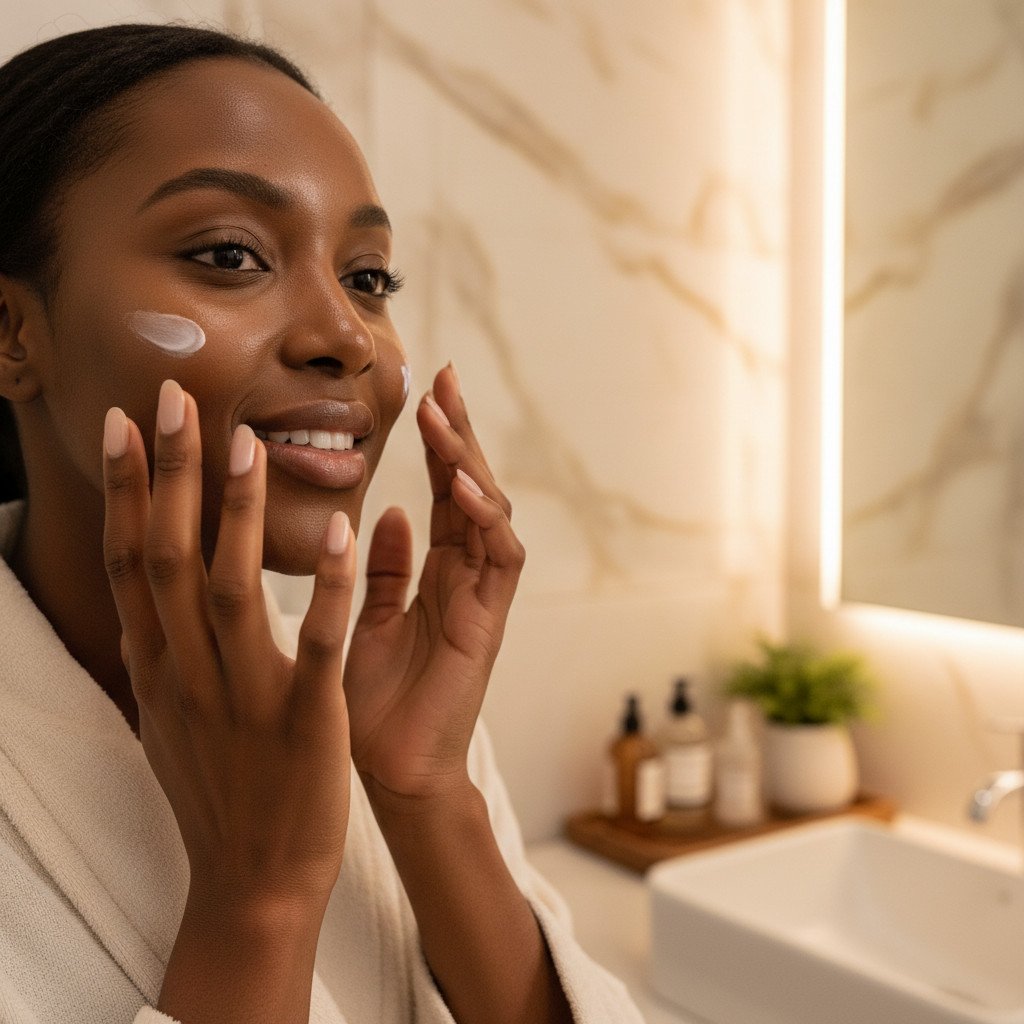
Sensitive skin that still wants exfoliation
Having sensitive skin doesn’t mean you have to forgo exfoliation entirely. In fact, gentle exfoliation can still be beneficial for improving skin texture and tone, even for reactive skin types. This is where Polyhydroxy Acids (PHAs) truly shine. With their larger molecular structure, PHAs penetrate the skin more slowly and superficially, causing less irritation than AHAs or BHAs. They also offer humectant properties, drawing moisture into the skin, which can be particularly soothing for sensitive or dry skin types. PHAs allow sensitive skin to experience the benefits of exfoliation without compromising its delicate barrier, making them an excellent starting point for those new to chemical exfoliants or prone to reactivity.
When Physical Exfoliation May Be a Better Fit
While chemical exfoliation often takes the spotlight for melanin-rich skin due to its lower risk of friction-induced irritation, there are still contexts where physical exfoliation, when chosen and used with extreme care, can be a suitable option. The emphasis here is always on gentleness, appropriate tools, and mindful application to avoid any adverse reactions.
Readers who dislike leave-on acids
Some individuals simply prefer the ritual of a rinse-off product or find the concept of leave-on acids intimidating or uncomfortable. For these readers, a very gentle physical exfoliant can provide the desired smoothing effect without the need for chemical ingredients to remain on the skin. This preference is valid, and with the right product and technique, it’s possible to incorporate physical exfoliation safely. The key is to select products with exceptionally fine, smooth particles and to use them sparingly.
Occasional buildup that needs a light reset
For those who experience occasional, light surface buildup or flakiness that feels like it needs a quick, gentle buff, a mild physical exfoliant can offer an immediate sense of smoothness. This might be particularly true for areas that tend to accumulate more dead skin, such as the sides of the nose or the chin. The emphasis here is on “occasional” and “light”—this is not a daily or even weekly practice for most, but rather a targeted, infrequent reset when the skin truly calls for it.
Body areas vs facial skin
The skin on our body is often thicker and less delicate than the skin on our face. This means that some individuals might tolerate a slightly more robust form of physical exfoliation on areas like the elbows, knees, or legs, where concerns like ingrown hairs or rough patches are common. Even on the body, however, the principles of gentleness and avoiding irritation remain paramount. A soft body brush or a scrub with fine, non-abrasive particles can be used, but always with light pressure and never on inflamed or broken skin. The goal is to smooth, not to scour.
Very selective, low-frequency use
The phrase “less is more” is particularly apt for physical exfoliation on melanin-rich skin. If you choose to incorporate a physical method, it should be reserved for very selective and low-frequency use. This might mean once every two weeks, or even once a month, depending on your skin’s tolerance. The aim is to provide a gentle polish without disrupting the skin’s natural barrier. A soft, damp washcloth can be an excellent, universally accessible tool for this purpose, offering a very mild form of physical exfoliation when used with a gentle cleanser and minimal pressure.
Where Chemical Exfoliation Can Backfire
Despite its many benefits, chemical exfoliation is not without its pitfalls, especially when not used with respect for melanin-rich skin. The very power that makes chemical exfoliants effective can also make them problematic if misused. Understanding these potential missteps is crucial for preventing irritation and the subsequent dark spots.
One of the most common ways chemical exfoliation can backfire is through overuse. The temptation to use an acid daily, or even twice daily, in pursuit of faster results can be immense. However, consistent daily use of even a gentle acid can gradually erode the skin’s protective barrier, leading to increased sensitivity, dryness, and a compromised ability to defend against environmental aggressors. For melanin-rich skin, this barrier damage is a direct precursor to inflammation and PIH.
Another significant risk is stacking too many actives. In the pursuit of a perfect routine, it’s easy to layer multiple exfoliating acids, combine them with retinoids, or use them alongside other potent ingredients like vitamin C. While each ingredient might be beneficial on its own, their combined effect can overwhelm the skin, leading to a synergistic irritation that is far greater than the sum of its parts. This “more is better” approach almost always backfires, especially for skin prone to hyperpigmentation.
Starting too strong is another frequent mistake. Jumping straight into a high-concentration glycolic acid serum or a potent BHA peel without gradually introducing the ingredient can shock the skin. Melanin-rich skin benefits immensely from a “start low, go slow” approach. Begin with lower concentrations and use them infrequently (e.g., once or twice a week) before gradually increasing frequency if your skin tolerates it well. Ignoring this gradual acclimation can lead to immediate irritation, stinging, and a damaged barrier.
Finally, using acids on already irritated or compromised skin is a recipe for disaster. If your skin is already feeling tight, dry, sensitive, or is experiencing breakouts or inflammation, introducing a chemical exfoliant will only exacerbate the problem. Exfoliation should always be performed on healthy, calm skin. When your barrier is compromised, it needs repair and soothing, not resurfacing. If you’re looking for gentle options, you can browse PHA exfoliants for sensitive dark skin on Amazon, as they are generally milder.
Where Physical Exfoliation Can Backfire
While the allure of immediate smoothness from physical exfoliation is strong, its potential to backfire on melanin-rich skin is significant and often underestimated. The very act of friction, if not meticulously controlled, can be a direct pathway to irritation and post-inflammatory hyperpigmentation. It’s not about shaming anyone for their preferred method, but about empowering informed choices.
The most obvious pitfall is the use of rough scrubs. Many traditional facial scrubs contain coarse, irregularly shaped particles like crushed nuts, apricot pits, or large sugar crystals. These can create microscopic tears in the skin’s surface, acting like tiny knives. For melanin-rich skin, these micro-injuries are a direct trigger for inflammation, which then leads to the production of excess melanin and, inevitably, dark spots. The temporary feeling of “cleanliness” or “smoothness” is often just the sensation of a compromised barrier.
Closely related is applying too much pressure. Even with a seemingly gentle scrub or a cleansing brush, excessive force can turn a mild exfoliation into an aggressive one. Many of us have been conditioned to believe that scrubbing harder will yield better results, a notion that is particularly detrimental for melanin-rich skin. The skin is delicate, and a light touch is always more effective and safer than aggressive rubbing.
Repeated passes over the same area, especially with a granular scrub or a brush, also contribute to over-exfoliation. Each pass adds more friction and stress to the skin. If you’re using a physical method, a single, gentle pass across each area is usually sufficient. Over-scrubbing a single spot in an attempt to “fix” it will only make matters worse.
Another common mistake is using scrub tools on inflamed skin. If you have active breakouts, rashes, or any form of skin irritation, physical exfoliation will only spread bacteria, exacerbate inflammation, and delay healing. This is a prime scenario for triggering widespread PIH. Physical exfoliation should only be performed on calm, healthy skin.
Finally, there’s the danger of confusing rawness for smoothness. The immediate sensation after a harsh scrub can be one of extreme smoothness, but this is often because the skin’s protective outer layers have been stripped away, leaving it vulnerable and raw. This feeling is not a sign of healthy skin, but rather a warning that the barrier has been compromised. True smoothness comes from healthy, properly functioning skin, not from aggressively abraded skin. When seeking a gentle face scrub, consider exploring options like gentle face scrubs for dark sensitive skin on Amazon, focusing on fine, spherical particles.
How to Choose Based on Skin Pattern, Not Hype
The most effective way to choose between chemical and physical exfoliation, or even decide on the best approach within each category, is to listen intently to your skin. Your skin’s unique patterns, its tendencies, and how it responds to different stimuli should always be your primary guide, far outweighing any marketing claims or social media trends. Melanin-rich skin, with its propensity for PIH, demands this personalized approach.
Consider your skin’s overarching behavior. If you have oily-sensitive skin, you might be prone to breakouts but also react easily to harsh products. A gentle BHA (like salicylic acid) can be excellent for managing oil and congestion without excessive friction, but at a low concentration and frequency. For dry-sensitive skin, PHAs are often a superior choice, offering gentle exfoliation with hydrating benefits, avoiding the stripping sensation that both harsh chemicals and physical scrubs can cause.
If you have acne-prone but reactive skin, the temptation to aggressively scrub away breakouts or use strong acids can be high. However, this often exacerbates inflammation and leads to more PIH. Here, a gentle, consistent chemical exfoliant (like a low-dose BHA or PHA) that works to prevent future breakouts without irritating current ones is often the best strategy. For combination skin, you might find that different areas of your face respond differently. This might mean targeted application of a chemical exfoliant only where needed, or opting for an all-over gentle PHA that suits both oily and drier zones.

For all skin types, but especially for PIH-prone skin, the golden rule is to judge by how your skin behaves *after* exfoliation, not just during or immediately after. Does it feel tight, sensitive, or look duller a day or two later? Do new dark spots appear in the weeks following? These are critical signals. A successful exfoliation leaves your skin feeling calm, comfortable, and looking subtly brighter over time, without any signs of irritation. It’s a marathon, not a sprint. To ensure your exfoliation routine is truly protective, delve into our guide on Exfoliation Routines That Protect Against Dark Spots.
Exfoliation for Sensitive, PIH-Prone Skin
When your skin is both sensitive and prone to post-inflammatory hyperpigmentation, the landscape of exfoliation narrows significantly, demanding an even more cautious and deliberate approach. This combination means that any form of irritation, no matter how minor, carries a higher risk of leaving a lasting dark mark. The primary goal shifts from mere resurfacing to gentle renewal that actively prevents inflammation.
For sensitive, PIH-prone skin, low-friction and low-frequency strategies are not just recommendations; they are essential principles. This often means leaning heavily towards chemical exfoliation, specifically those with the gentlest profiles. Polyhydroxy Acids (PHAs) are often the hero ingredients here. Their larger molecular size means they don’t penetrate as deeply or as quickly as AHAs or BHAs, resulting in a much milder exfoliation experience. They also have humectant properties, helping to attract and retain moisture, which is a huge benefit for sensitive skin that often struggles with barrier integrity.
When considering any exfoliant, whether chemical or the rare physical option, the focus must be on preventing even the slightest hint of irritation. This means avoiding anything that causes stinging, burning, or prolonged redness. Remember, for melanin-rich skin, dark spots often begin with irritation, not just acne or physical injury. A product that feels “active” or “tingly” might be signaling inflammation, even if it doesn’t manifest as immediate redness. The ideal exfoliant for sensitive, PIH-prone skin should feel almost imperceptible, working subtly over time to improve texture and tone without any noticeable discomfort.
Frequency is just as important as product choice. Instead of daily use, sensitive, PIH-prone skin might only tolerate exfoliation once or twice a week, or even less frequently. The key is to observe your skin’s response over several weeks and adjust accordingly. If you notice any new sensitivity, dryness, or the faintest hint of discoloration, it’s a clear signal to reduce frequency or switch to an even milder product. Protecting your skin barrier and preventing inflammation is the most direct route to managing hyperpigmentation effectively. For a deeper understanding of how to manage and prevent these marks, explore our comprehensive guide on Hyperpigmentation and Dark Spots.
Exfoliation for Barrier-Stressed Skin
Sometimes, the best choice between chemical and physical exfoliation isn’t to choose at all, but to pause. When your skin barrier is stressed or compromised, introducing any form of exfoliation can do more harm than good, regardless of how gentle the method claims to be. Recognizing the signals of a stressed barrier is paramount for melanin-rich skin, as pushing through irritation can lead directly to persistent dark spots.
Signals that your skin needs repair more than resurfacing include persistent dryness, flakiness, tightness, a rough or sandpaper-like texture, unusual sensitivity to products that were previously tolerated, stinging or burning sensations, or a general feeling of discomfort. Your skin might also look duller than usual, or you might notice a sudden increase in breakouts or redness (even if subtle on darker skin). These are all indicators that your skin’s protective shield is weakened and needs immediate attention.
When your barrier is compromised, its primary function—to keep irritants out and moisture in—is impaired. Exfoliation, by its very nature, involves removing skin cells, and when the barrier is already struggling, this removal can strip away essential lipids and further weaken its defenses. Instead of trying to “fix” the texture with more exfoliation, the focus should shift entirely to soothing, hydrating, and repairing. This means simplifying your routine drastically: cleanse gently with a non-foaming cleanser, apply a hydrating serum (like hyaluronic acid), and follow with a rich, occlusive moisturizer that contains barrier-supportive ingredients like ceramides, fatty acids, and cholesterol. Sun protection is also non-negotiable to prevent further damage.
Allow your skin several weeks, or even a month, to fully recover before even considering reintroducing a very gentle exfoliant. During this time, observe how your skin responds to the simplified routine. Once the tightness, sensitivity, and dryness have subsided, and your skin feels calm and comfortable again, you can then slowly and cautiously reintroduce a mild PHA or a very low-concentration AHA, always prioritizing your skin’s comfort and avoiding any signs of irritation. For comprehensive guidance on restoring your skin’s health, refer to our article on Barrier Repair and Moisture Balance.
Face vs Body Exfoliation on Melanin-Rich Skin
It’s important to recognize that the skin on your face and the skin on your body are not identical, and therefore, your exfoliation approach might need to differ between the two. While the principles of gentleness and PIH prevention remain universal for melanin-rich skin, the body often tolerates certain methods that would be too harsh for the more delicate facial skin.
The skin on the body, particularly on areas like the arms, legs, back, and torso, tends to be thicker and more resilient than the skin on the face. This means it might be able to withstand a slightly more robust form of exfoliation without immediately showing signs of irritation or barrier compromise. For example, some individuals might find that a gentle body scrub with fine, smooth particles, or a soft body brush, can be effective for addressing concerns like rough patches, keratosis pilaris (small, bumpy skin), or ingrown hairs on the legs and arms. However, even on the body, the rule of “gentle pressure and infrequent use” still applies. Aggressive scrubbing can still lead to irritation, dryness, and body hyperpigmentation.
Friction zones, such as the knees, elbows, and underarms, can also be particularly prone to hyperpigmentation if irritated. While exfoliation might seem like a solution for darkening in these areas, it’s crucial to be extremely cautious. Over-exfoliating these areas can easily exacerbate the problem, leading to more pronounced dark marks. Chemical exfoliants, particularly those containing AHAs or BHAs, can be effective for body exfoliation, especially for concerns like body acne or ingrown hairs, as they offer a more even and controlled application without mechanical friction. Look for body lotions or washes formulated with these acids, and always start with a low concentration and patch test.
Ultimately, visible irritation still matters on dark skin, whether it’s on your face or your body. Any stinging, prolonged itching, dryness, or the eventual appearance of dark spots indicates that your exfoliation method or frequency is too aggressive for that particular area. Listen to your body’s signals and adjust your routine accordingly. A practical approach means being flexible and understanding that what works for your face might not be suitable for your legs, and vice versa.
What to Pair With Either Method So It Does Not Backfire
Exfoliation, whether chemical or physical, is never a standalone step. Its success and safety, especially for melanin-rich skin, depend heavily on the surrounding skincare routine. Think of exfoliation as a powerful tool that needs a supportive environment to thrive without causing harm. Pairing it with the right complementary products ensures your skin barrier remains intact, irritation is minimized, and you achieve a healthy, radiant glow without the risk of PIH.
The foundation of any exfoliation routine is gentle cleansing. Before you exfoliate, you need to remove dirt, oil, and makeup without stripping your skin. A harsh, foaming cleanser can compromise your skin barrier even before you apply an exfoliant, making it more susceptible to irritation. Choose a creamy, hydrating, or oil-based cleanser that leaves your skin feeling soft and comfortable, not tight or squeaky clean. This sets a calm stage for the exfoliation process. For guidance on selecting the right cleanser, see our article on Choosing a Gentle Cleanser for Dark, Sensitive Skin.
Immediately after exfoliating, supportive moisturizing is non-negotiable. Exfoliation, by its nature, removes dead skin cells, which can temporarily make your skin more vulnerable. A rich, nourishing moisturizer helps to replenish lost lipids, strengthen the skin barrier, and lock in hydration. Look for ingredients like ceramides, hyaluronic acid, glycerin, and squalane. This step is crucial for preventing dryness, tightness, and inflammation, which are precursors to PIH.
Embracing a calmer routine overall is also key. If you’re incorporating an exfoliant, consider temporarily reducing or pausing other potent actives in your routine, such as retinoids or strong vitamin C serums, especially when first introducing exfoliation or if your skin is sensitive. This prevents ingredient overload and gives your skin a chance to adapt without being overwhelmed. Simplicity often leads to greater efficacy and fewer adverse reactions.
Finally, and perhaps most critically for melanin-rich skin, is next-day sun protection. Exfoliated skin is more susceptible to sun damage. UV exposure can trigger inflammation and directly worsen hyperpigmentation, undoing all the benefits of your exfoliation. Always apply a broad-spectrum sunscreen with an SPF of 30 or higher every morning, rain or shine, and reapply as needed. This protective shield is non-negotiable for preventing new dark spots and fading existing ones. You don’t need an overloaded routine to make exfoliation “work”; you need a balanced, supportive one. For more on post-exfoliation care, read our guide on Post-Exfoliation Care for Dark Skin.
Common Mistakes When Comparing Chemical and Physical Exfoliation
Navigating the exfoliation landscape can be tricky, and many common misconceptions can lead to choices that backfire, especially for melanin-rich skin. Being aware of these pitfalls can help you make more informed decisions.
- Assuming one method is universally better: There’s no single “best” exfoliation method for everyone. The ideal choice depends entirely on your skin type, concerns, tolerance, and current skin condition. What works for one person might be detrimental to another.
- Copying routines built for skin that is not PIH-prone: Many popular skincare routines are designed for skin types that don’t readily develop dark spots from inflammation. Following these blindly can lead to over-exfoliation and persistent hyperpigmentation for melanin-rich skin.
- Using rough physical exfoliation on already reactive skin: If your skin is prone to sensitivity, redness, or breakouts, introducing a harsh scrub will only exacerbate these issues, creating more inflammation and a higher risk of PIH.
- Layering chemical exfoliants too aggressively: Combining multiple strong acids or using them too frequently can overwhelm the skin barrier, leading to irritation, dryness, and increased sensitivity, which then triggers melanin production.
- Ignoring stinging because there is no obvious redness: For melanin-rich skin, stinging is a significant warning sign of irritation, even if it doesn’t manifest as visible redness. Do not dismiss this signal; it often indicates barrier compromise.
- Choosing intensity over consistency: Believing that a stronger, more aggressive exfoliant will yield faster or better results is a common mistake. Gentle, consistent exfoliation over time is far more effective and safer than infrequent, intense treatments.
- Expecting exfoliation alone to fix all dark marks: While exfoliation can help fade existing dark spots by promoting cell turnover, it’s not a magic bullet. A comprehensive approach including sun protection, barrier support, and targeted brightening ingredients is essential for managing hyperpigmentation.
How to Build This Into a Real Routine
Building an exfoliation routine for melanin-rich skin means creating a rhythm that is gentle, effective, and responsive to your skin’s needs. It’s about integration, not isolation, ensuring that exfoliation supports your overall skin health rather than detracting from it. Here are practical examples for different skin patterns, including how to scale back when your skin feels off.

For Sensitive Skin:
Start with a PHA-based toner or serum. After cleansing in the evening, apply a gentle PHA product (like gluconolactone or lactobionic acid) 2-3 times a week. Follow with a hydrating serum and a rich, barrier-supporting moisturizer. On non-exfoliation nights, focus on hydration and barrier repair.
Low-energy version: Use the PHA product only once a week.
“Skin feels off” version: Pause all exfoliation. Focus on gentle cleansing, hydrating serums, and a thick moisturizer until skin feels calm and comfortable again.
For Acne-Prone but Reactive Skin:
Incorporate a low-concentration BHA (salicylic acid) product, perhaps a serum or a leave-on treatment, 2-3 times a week in the evening. BHAs are oil-soluble and excellent for decongesting pores without excessive irritation. Use a gentle cleanser, then the BHA, followed by a non-comedogenic moisturizer.
Low-energy version: Use the BHA only 1-2 times a week, or as a spot treatment for specific areas of congestion.
“Skin feels off” version: If skin is inflamed or breaking out severely, pause BHA. Focus on soothing, anti-inflammatory ingredients and barrier repair. Reintroduce slowly once skin calms.
For Oily-but-Dehydrated Skin:
This skin type often feels oily on the surface but tight underneath, indicating a compromised barrier. A gentle AHA (like lactic acid) or a PHA can be beneficial. Use a low-concentration lactic acid serum 2-3 nights a week. Lactic acid is an AHA that also has hydrating properties, making it less drying than glycolic acid. Follow with a lightweight, hydrating moisturizer.
Low-energy version: Use the AHA/PHA 1-2 times a week.
“Skin feels off” version: If skin feels tight or extra oily (paradoxically, dehydration can increase oil production), pause exfoliation. Focus on hydrating serums and a balanced moisturizer to restore moisture balance before reintroducing.
You can browse gentle chemical exfoliants for dark skin on Amazon to find suitable options for your routine.
Always remember to apply broad-spectrum sunscreen every morning, regardless of your exfoliation schedule. The goal is a flexible routine that adapts to your skin’s daily needs, ensuring consistent, gentle renewal without triggering irritation or PIH. Your skin’s comfort and clarity are the ultimate indicators of success.
How to Navigate This Topic
This article, “Chemical vs Physical Exfoliation on Melanin-Rich Skin,” is a foundational piece within our Cleansing & Exfoliation Best Practices cluster. Our aim is to provide you with the detailed understanding necessary to make informed decisions about how you prepare and renew your skin, always with a focus on preventing irritation and protecting against dark spots.
Depending on where you are in your skincare journey, you might find different articles within this cluster particularly helpful:
- If you’re still trying to choose the right exfoliation method for your specific concerns and skin type, this article has laid the groundwork. Your next step might be to explore Exfoliation Routines That Protect Against Dark Spots to see how to integrate your chosen method safely.
- If you suspect your skin might be irritated or over-exfoliated, our guide on Signs You Are Over-Cleansing or Over-Exfoliating will provide crucial insights and help you identify the red flags.
- Once you’ve exfoliated, proper aftercare is vital. To ensure you’re supporting your skin’s recovery and maximizing benefits, delve into Post-Exfoliation Care for Dark Skin.
- And remember, a gentle cleansing routine is the bedrock of healthy skin, especially when exfoliating. Learn more about Choosing a Gentle Cleanser for Dark, Sensitive Skin to set your routine up for success.
All of these resources contribute to a holistic understanding of how to cleanse and exfoliate effectively and safely, forming a crucial part of our broader mission to provide premium Skincare for Black Women.
Quick Principles for Choosing Between Chemical and Physical Exfoliation
When it comes to exfoliating melanin-rich skin, remember these guiding principles to ensure your choices lead to radiance, not regret:
- Category matters less than how your skin responds: Don’t get fixated on whether it’s “chemical” or “physical.” Pay attention to how your specific skin feels and looks after use.
- Dark marks often begin with irritation: Any stinging, tightness, or prolonged sensitivity is a warning sign. Your skin’s inflammatory response is a direct pathway to PIH.
- Smoother does not have to mean harsher: True smoothness comes from healthy, intact skin, not from aggressively stripped or abraded skin. Gentle methods can be profoundly effective over time.
- Low frequency can still be effective: You don’t need to exfoliate daily. For melanin-rich skin, less frequent, consistent exfoliation often yields better and safer results than aggressive, daily use.
- Friction and acids can both be too much: Both physical rubbing and potent chemical concentrations can compromise your skin barrier. The goal is gentle renewal, not aggressive stripping.
- Your skin is responding, not failing: If your skin reacts negatively, it’s communicating its needs. It’s not a failure on your part, but an opportunity to adjust and learn.
- Sun protection is non-negotiable: After any exfoliation, your skin is more vulnerable to UV damage, which exacerbates PIH. Always apply broad-spectrum SPF 30+ daily.
Frequently Asked Questions
Is chemical exfoliation better than physical exfoliation for dark skin?
Neither method is inherently “better”; it depends on your skin’s specific needs, sensitivity, and how gently the product is formulated and used. Chemical exfoliation, particularly with PHAs or low-concentration AHAs, is often recommended for melanin-rich skin due to its ability to exfoliate without physical friction, thereby reducing the risk of irritation and subsequent PIH.
Can physical exfoliation cause hyperpigmentation?
Yes, physical exfoliation can absolutely cause hyperpigmentation. If a scrub is too abrasive, used with too much pressure, or applied too frequently, it can create micro-tears and inflammation in the skin. For melanin-rich skin, this inflammation is a direct trigger for post-inflammatory hyperpigmentation (PIH), leading to dark spots.
Can chemical exfoliation irritate melanin-rich skin?
Yes, chemical exfoliation can certainly irritate melanin-rich skin if used incorrectly. Common mistakes include using too high a concentration, applying too frequently, layering multiple strong acids, or using them on an already compromised skin barrier. This irritation can lead to inflammation and, subsequently, post-inflammatory hyperpigmentation.
Which type is better for sensitive skin?
For sensitive melanin-rich skin, chemical exfoliation with Polyhydroxy Acids (PHAs) is generally considered the gentlest and safest option. PHAs have larger molecules that exfoliate more superficially, causing less irritation, and they also offer hydrating benefits. Physical exfoliation, even with fine particles, carries a higher risk of friction-induced irritation for sensitive skin.
Is a scrub always too harsh for dark skin?
Not always, but most traditional scrubs are too harsh. A scrub with very fine, smooth, spherical particles, used with extremely light pressure and very infrequently (e.g., once a month), might be tolerated by some. However, the risk of irritation and PIH is generally higher with physical scrubs compared to well-chosen chemical exfoliants for melanin-rich skin.
Can I use both chemical and physical exfoliation?
While it’s technically possible, combining both chemical and physical exfoliation is generally not recommended for melanin-rich skin due to the increased risk of over-exfoliation and irritation. If you choose to use both, ensure they are extremely gentle, used on different days (never together), and with very low frequency. Most experts advise sticking to one method to minimize risk.
How do I know if my skin is over-exfoliated?
Signs of over-exfoliated melanin-rich skin include persistent dryness, tightness, flakiness, increased sensitivity, stinging or burning sensations, a dull or rough texture despite exfoliating, and the appearance of new dark spots (PIH). If you notice any of these, pause all exfoliation and focus on barrier repair.
What should I use after exfoliating?
After exfoliating, it’s crucial to soothe, hydrate, and protect your skin. Apply a hydrating serum (like hyaluronic acid), followed by a rich, barrier-supporting moisturizer to replenish moisture and strengthen your skin’s protective barrier. Always finish with a broad-spectrum sunscreen (SPF 30+) in the morning to protect against UV damage and prevent hyperpigmentation.
Final Thoughts
Navigating the world of exfoliation for melanin-rich skin doesn’t have to be a source of confusion or anxiety. By understanding the fundamental differences between chemical and physical methods, recognizing your skin’s unique signals, and prioritizing gentleness and barrier health, you can unlock a path to truly radiant, even-toned skin. The journey is not about finding the trendiest product or the most aggressive treatment, but about cultivating a deep relationship with your skin, listening to its needs, and responding with wisdom and care.
Remember, the best exfoliation choice is ultimately the one that smooths and brightens your complexion without leaving a trail of inflammation or dark spots behind. Trust the patterns you observe in your skin—its comfort levels, its texture, any stinging, ashiness, or the behavior of dark marks. These are your most reliable guides, far more valuable than any marketing claim. We encourage you to continue exploring our Cleansing & Exfoliation Best Practices cluster and the broader Skincare for Black Women pillar, as we are dedicated to providing you with the knowledge and confidence to nurture your beautiful skin.
INTERNAL LINKING OPPORTUNITIES:
https://blackbeautybasics.com/skincare-for-black-women/cleansing-and-exfoliation-best-practices/
This is the cluster hub, offering a broader context for all articles related to cleansing and exfoliation, helping you navigate best practices.
https://blackbeautybasics.com/skincare-for-black-women/
This is the parent pillar, providing a comprehensive overview of all skincare topics relevant to Black women, offering a holistic perspective.
https://blackbeautybasics.com/skincare-for-black-women/cleansing-and-exfoliation-best-practices/signs-you-are-over-cleansing-or-over-exfoliating/
If you suspect your current routine is too much for your skin, this article helps you identify the subtle signs of over-cleansing or over-exfoliating.
https://blackbeautybasics.com/skincare-for-black-women/cleansing-and-exfoliation-best-practices/exfoliation-routines-that-protect-against-dark-spots/
This article provides specific routines and strategies to ensure your exfoliation actively protects against post-inflammatory hyperpigmentation.
https://blackbeautybasics.com/hyperpigmentation-and-dark-spots/
For a deeper dive into the causes, prevention, and treatment of dark spots and hyperpigmentation, this article offers comprehensive guidance.
https://blackbeautybasics.com/skincare-for-black-women/barrier-repair-and-moisture-balance/
If your skin is feeling compromised or irritated, this article provides essential information on how to repair and maintain your skin’s vital protective barrier.
https://blackbeautybasics.com/skincare-for-black-women/cleansing-and-exfoliation-best-practices/choosing-a-gentle-cleanser-for-dark-sensitive-skin/
A gentle cleanser is the foundation of any healthy routine, especially when exfoliating, and this guide helps you choose the best one for sensitive dark skin.
https://blackbeautybasics.com/skincare-for-black-women/cleansing-and-exfoliation-best-practices/post-exfoliation-care-for-dark-skin/
This article details the crucial steps to take immediately after exfoliating to soothe, hydrate, and protect your skin, preventing irritation and dark spots.
Related next steps
Related posts:
 How Often Should Black Women Exfoliate? Physical vs Chemical Safely Explained
 Gentle Exfoliation for Dark Spots: Routines for Melanin-Rich Skin
 A Comprehensive Guide to Chemical Exfoliation for Darker Skin Tones
 Post-Exfoliation Care for Dark Skin: Nurturing Melanin-Rich Complexions
 Gentle Full-Body Exfoliation on Dark Skin: Unveiling Your Natural Radiance
 Waxing vs Sugaring on Melanin-Rich Skin: A Gentle Guide to Hair Removal Choices