
How to Layer Actives on Dark Skin (Vitamin C, Niacinamide, Retinoids, Acids)
The pursuit of radiant, even-toned skin is a journey many Black women embark on, often navigating a beauty landscape that doesn’t always speak directly to our unique needs. Perhaps you’ve scrolled through countless skincare routines online, admiring the luminous complexions achieved by layering a symphony of ‘actives’ – vitamin C, niacinamide, retinoids, and various acids. You’ve seen the promises of transformative glow, only to find that replicating these complex regimens on your melanin-rich skin led to an unwelcome surprise: stinging, persistent redness, uncomfortable peeling, or, most dishearteningly, new dark spots.
This experience is not a reflection of your skin’s resilience, but rather a common consequence of advice that overlooks a crucial biological truth: melanin-rich skin, while robust in many ways, responds to irritation with a heightened propensity for post-inflammatory hyperpigmentation (PIH). What might be a temporary flush for lighter skin tones can manifest as a stubborn, long-lasting dark mark for us. The frustration is palpable – wanting to harness the power of these potent ingredients for clarity and anti-aging, yet feeling as though every step forward risks a step back into deeper discoloration.
Black Beauty Basics understands this delicate balance. We recognize that the desire for a vibrant, healthy complexion should not come at the cost of your skin’s comfort or integrity. This comprehensive guide is designed to empower you with the knowledge and strategy needed to safely and effectively incorporate actives into your routine. You will leave with clear rules of thumb for what to use when, which combinations are gentler, and how to build up over time, ensuring that your journey to radiant skin is one of steady progress, not painful setbacks.
What “Actives” Do on Melanin-Rich Skin
In the realm of skincare, ‘actives’ are the powerhouse ingredients formulated to create a specific, noticeable change in the skin. Unlike emollients or humectants that primarily hydrate and protect, actives are designed to influence cellular behavior, address specific concerns like hyperpigmentation, acne, or fine lines, and ultimately transform the skin’s appearance and function. Think of them as the skilled architects of your skin’s renewal process, working to brighten, speed up cell turnover, or treat underlying conditions. For melanin-rich skin, these ingredients hold immense promise, offering pathways to address common concerns such as uneven tone, dark spots, and textural irregularities that are often more pronounced or persistent in our skin type.
However, the very power that makes actives so effective also necessitates a strategic approach, especially for those with melanin-rich skin. The critical distinction for us lies in our melanocytes – the cells responsible for producing melanin. When these cells are stimulated by inflammation, irritation, or trauma, they can go into overdrive, producing excess pigment that results in post-inflammatory hyperpigmentation (PIH). This means that while actives are powerful tools for transformation, their application requires precision and a deep understanding of how our skin responds. Fear of actives is understandable if past experiences have led to worsened dark marks, but with the right strategy, this fear can transform into confident, informed use. It’s about harnessing their benefits without inadvertently triggering the very concerns we aim to resolve.
Among the pantheon of actives, niacinamide stands out as a particularly beneficial ingredient for melanin-rich skin. This form of vitamin B3 is celebrated for its ability to support the skin’s barrier function, reduce inflammation, and help diminish the appearance of PIH, all with a relatively low risk of irritation compared to some other potent actives. Its multifaceted benefits make it an excellent cornerstone for any routine, especially when introducing more potent ingredients. By bolstering the skin’s natural defenses, niacinamide can act as a buffer, helping to mitigate potential irritation from other actives and allowing your skin to reap their rewards more comfortably. Understanding the specific actions and potential pitfalls of each active is the first step toward building a truly effective and protective routine for your beautiful skin. To learn more about building a foundational routine, explore our comprehensive guide: Skincare for Black Women – The Complete Melanin-Rich Skin Guide.
Meet the Core Actives – Vitamin C, Niacinamide, Retinoids, and Acids
Navigating the world of skincare actives can feel like learning a new language, especially when each ingredient has its own unique personality and set of rules for melanin-rich skin. To confidently layer and integrate these powerful compounds, it’s essential to understand their individual roles, how they interact with our skin’s biology, and the specific considerations for preventing irritation and hyperpigmentation. Let’s delve into the four pillars of active skincare: Vitamin C, Niacinamide, Retinoids, and Acids, examining each through the lens of melanin-rich, PIH-prone skin.
Vitamin C – Brightening Antioxidant
Vitamin C, or L-Ascorbic Acid, is a celebrated antioxidant revered for its ability to brighten the complexion, fade existing hyperpigmentation, and protect the skin from environmental damage caused by free radicals. For melanin-rich skin, its brightening capabilities are particularly appealing, helping to address uneven tone and the lingering effects of dark spots. However, its potency comes with a caveat: vitamin C, especially in higher concentrations or unstable formulations, can be a source of irritation. When melanin-rich skin experiences irritation, its natural defense mechanism can kick in, leading to an overproduction of melanin and, paradoxically, new or worsened dark spots. This is why careful selection and application are paramount.
The key to successfully incorporating vitamin C lies in choosing stable forms and appropriate concentrations, and understanding its optimal role within your routine. While it offers comprehensive benefits, its primary strength for our skin type often lies in its capacity as a morning antioxidant. Applied in the morning, it works synergistically with your sunscreen to provide enhanced protection against UV damage and pollution, which are significant contributors to hyperpigmentation. Think of it as your skin’s morning shield, offering both immediate antioxidant defense and long-term brightening. Always follow with a broad-spectrum SPF to maximize its protective benefits and prevent further discoloration. Starting with a lower concentration (e.g., 10-15%) and observing your skin’s response is a wise approach, gradually increasing if tolerated.
Niacinamide – Barrier-Supporting Multitasker
Niacinamide, a form of vitamin B3, is a true hero ingredient for melanin-rich skin, earning its reputation as a barrier-supporting multitasker. Unlike some other actives that primarily focus on one specific concern, niacinamide offers a spectrum of benefits with a remarkably low irritation risk. It’s an anti-inflammatory powerhouse, helping to calm redness and reduce the inflammatory response that can trigger PIH. It also strengthens the skin’s natural barrier, improving its ability to retain moisture and protect against environmental aggressors. This enhanced barrier function is crucial for melanin-rich skin, as a compromised barrier can lead to increased sensitivity and a greater likelihood of hyperpigmentation.
Beyond its barrier-supporting and anti-inflammatory properties, niacinamide actively works to reduce the appearance of PIH and improve overall skin tone. It does this by inhibiting the transfer of melanin from melanocytes to keratinocytes, the surface skin cells, effectively preventing excess pigment from reaching the skin’s surface. What makes niacinamide particularly valuable is its versatility and compatibility. It pairs exceptionally well with most other actives, acting as a gentle buffer. When used alongside retinoids or acids, it can help mitigate their potential for dryness and irritation, making the overall routine more tolerable and effective. Its ability to soothe and strengthen makes it an ideal ingredient to incorporate into almost any skincare regimen, especially for those prone to sensitivity or hyperpigmentation. You can find more insights on niacinamide’s benefits for Black skin in our detailed guide on Hyperpigmentation and Dark Spots.
Retinoids – Nighttime Texture and Tone Refiners
Retinoids, a family of vitamin A derivatives, are often hailed as the gold standard for anti-aging and skin renewal. They work by accelerating cell turnover, stimulating collagen production, and improving skin texture, tone, and the appearance of fine lines and wrinkles. For melanin-rich skin, retinoids are also highly effective in addressing post-inflammatory hyperpigmentation over time, by promoting the shedding of pigmented cells and encouraging the growth of new, unpigmented ones. However, their potency means they can be a double-edged sword: if introduced too quickly, at too high a concentration, or too frequently, retinoids can easily cause irritation, redness, peeling, and, critically, trigger PIH in melanin-rich skin.
The cardinal rule for retinoids on dark skin is ‘slow and steady wins the race.’ They are strictly nighttime-only ingredients, as they can increase sun sensitivity and degrade in UV light. Building tolerance is non-negotiable. Start with a low-strength formula (e.g., a gentle retinol or retinaldehyde) and apply it only 1-2 nights a week, gradually increasing frequency as your skin adapts. Barrier support is paramount when using retinoids. Always ensure your skin is well-hydrated and protected with a rich, barrier-supporting moisturizer, both before and after retinoid application. Some prefer the ‘sandwich method’ – applying moisturizer, then retinoid, then another layer of moisturizer – to minimize direct contact and irritation. Patience is key; while results don’t appear overnight, consistent and careful use of retinoids can lead to significant improvements in skin clarity, texture, and firmness without compromising your skin’s health. For a deeper dive into managing skin concerns, explore our Acne & Sensitive Skin pillar hub.
Acids – AHAs, BHAs, and More
Exfoliating acids, including Alpha Hydroxy Acids (AHAs) like glycolic and lactic acid, and Beta Hydroxy Acids (BHAs) like salicylic acid, are invaluable for improving skin texture, addressing acne, and enhancing overall brightness. AHAs work primarily on the skin’s surface, dissolving the bonds between dead skin cells to reveal fresher, brighter skin beneath. They are excellent for improving tone, texture, and mild hyperpigmentation. BHAs, being oil-soluble, can penetrate deeper into pores, making them particularly effective for treating blackheads, whiteheads, and acne, as well as reducing inflammation. For melanin-rich skin, these acids can be transformative, helping to clear congested pores and gently resurface the skin to fade dark marks.
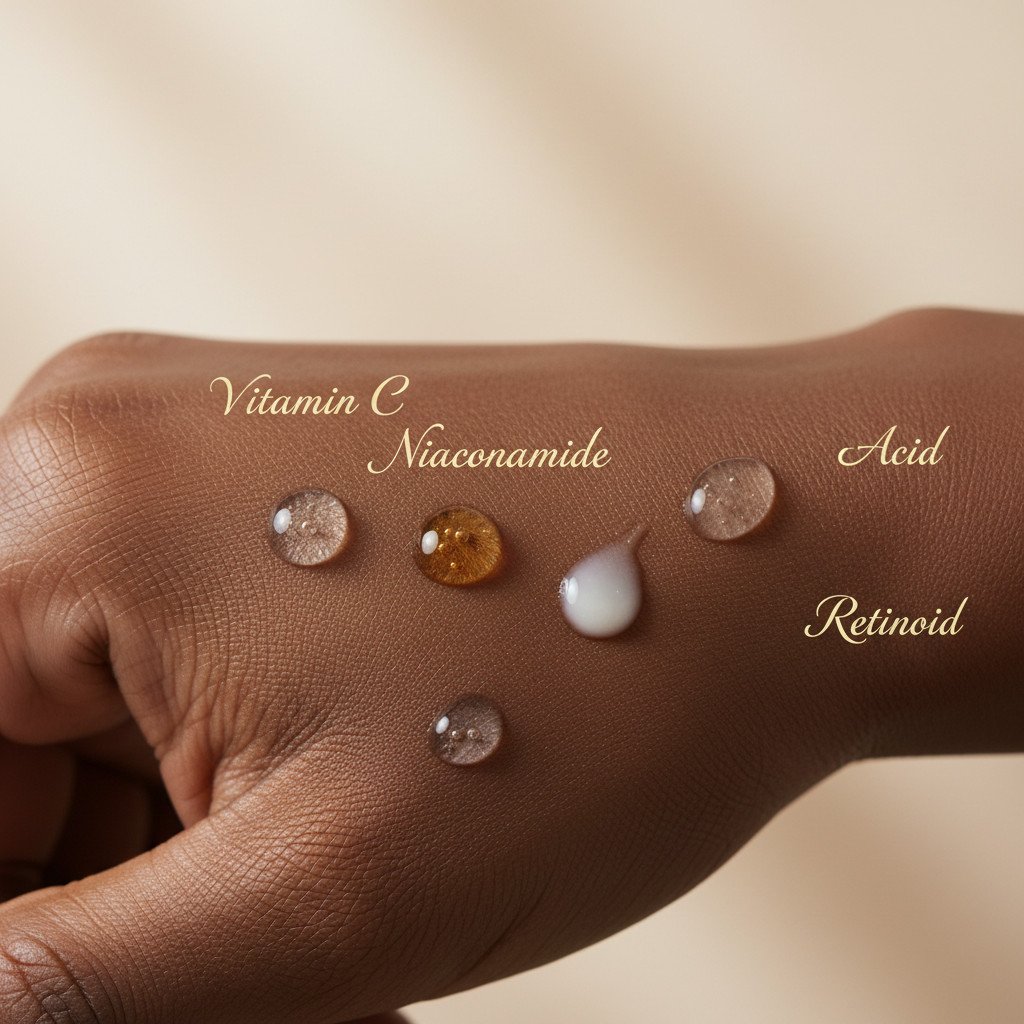
However, the exfoliating action of acids, while beneficial, also presents a risk of irritation if overused or applied in high concentrations. Frequent or aggressive use of strong acids can compromise the skin barrier, leading to inflammation that, for darker skin tones, can easily result in post-inflammatory hyperpigmentation flares. The goal is gentle, consistent exfoliation, not aggressive stripping. Begin with milder formulations and limit frequency, especially when you are also using other potent actives like retinoids or vitamin C. Consider using acids as a targeted treatment rather than an everyday staple, perhaps 2-3 times a week on non-retinoid nights. Lactic acid, known for its larger molecular size and hydrating properties, is often a gentler starting point for AHAs. Salicylic acid, effective for acne, can be used as a spot treatment or in a gentle cleanser. Always pay close attention to your skin’s response, reducing frequency or strength if any signs of irritation appear. For comprehensive guidance on exfoliation tailored for melanin-rich skin, refer to our post: How Often Should Black Women Exfoliate?
Rules of Thumb for Layering Actives on Dark Skin
The art of layering actives on melanin-rich skin is less about accumulating products and more about strategic, mindful application. The core philosophy at Black Beauty Basics is rooted in the principle that ‘less is often more,’ especially when dealing with skin prone to post-inflammatory hyperpigmentation. The objective is not to bombard your skin with every potent ingredient available, but rather to introduce targeted actives slowly, support them with robust barrier protection, and always, always prioritize sun protection. This approach ensures that you harness the transformative benefits of actives without triggering the very inflammatory responses that lead to unwanted dark marks.
It’s a common misconception that higher percentages or a greater number of products automatically equate to better or faster results. For melanin-rich skin, this can often be a direct route to irritation and subsequent PIH. Instead, think of your skincare routine as a carefully choreographed dance, where each active plays a specific role, introduced at the right moment and in the right sequence. Patience and observation are your most valuable tools. Your skin will tell you what it needs and what it can tolerate. Listen to its feedback, and remember that a healthy, glowing complexion is the result of consistent, gentle care, not aggressive intervention. Always pair your active routine with a gentle cleanser, a nourishing moisturizer, and a broad-spectrum SPF to maintain skin health and prevent further issues.
- Start one new active at a time, giving your skin a full 2–4 weeks to adjust before introducing another. This allows you to pinpoint any potential irritation and understand how your skin responds to each ingredient individually.
- Keep vitamin C mostly in the morning routine, where it can act as an antioxidant shield alongside your SPF. Reserve retinoids for your nighttime routine, as they are best applied away from sunlight and work during your skin’s natural repair cycle. Niacinamide is flexible and can be used both morning and night, but avoid excessively high percentages (e.g., above 10-15%) if your skin is sensitive.
- Avoid stacking strong acids, retinoids, and strong vitamin C in the same routine, especially if you are a beginner or have reactive skin. These combinations significantly increase the risk of irritation and barrier compromise, which can lead to PIH. Instead, alternate these potent ingredients on different nights or use them in different parts of your routine (e.g., vitamin C in the AM, retinoid in the PM).
- Always cleanse your skin gently before applying actives. A hydrating cleanser helps prepare your skin without stripping its natural oils. Discover gentle options in our Cleanser post.
- Follow actives with a rich, barrier-supporting moisturizer to soothe and protect your skin. This is non-negotiable, especially when using retinoids or acids. Find your ideal barrier cream in our Moisturizer/barrier post.
- Never skip broad-spectrum SPF 30 or higher, every single morning, regardless of the weather. Sun protection is the most crucial step in preventing and managing hyperpigmentation, especially when using actives. Explore our recommendations in the Sunscreen pillar hub.
Beginner-Friendly Layering Routines
For those new to the world of skincare actives or with skin that tends to be easily irritated, the thought of layering multiple potent ingredients can be daunting. The key to success is to start with simplicity, focusing on one or two well-tolerated actives that address your primary concerns, and building a routine around robust barrier support and consistent sun protection. These beginner-friendly frameworks are designed to gently introduce your skin to the benefits of actives, allowing it to adapt without overwhelm, and minimizing the risk of irritation and subsequent hyperpigmentation. Consider these as your initial roadmap, always listening to your skin and adjusting as needed.
Remember, the goal is not immediate, dramatic transformation, but rather sustainable, healthy skin improvements. Each routine prioritizes gentleness and efficacy, ensuring that your journey with actives is a positive and empowering one. We’ll explore scenarios tailored for everyday brightening, managing acne and dark marks, and addressing texture and fine lines, providing clear AM/PM examples to guide your initial steps. As your skin becomes more resilient, you can gradually introduce additional actives or increase frequency, but always with caution and care.
Focus – Everyday Brightening and Prevention
This routine is ideal for individuals seeking to enhance their skin’s natural radiance, even out minor tone irregularities, and provide daily antioxidant protection without overwhelming sensitive or reactive skin. It prioritizes gentle brightening agents and robust barrier support, making it an excellent starting point for anyone new to actives or those whose primary concern is maintaining a healthy, luminous complexion and preventing future dark spots. The emphasis here is on consistent, mild intervention that respects the skin’s natural balance.
The morning routine leverages the protective power of antioxidants, while the evening focuses on gentle repair and barrier maintenance. This separation minimizes potential interactions and allows each active to perform optimally. If you find vitamin C too stimulating initially, substituting it with niacinamide in the morning can offer similar brightening and antioxidant benefits with an even lower risk of irritation. This foundational approach ensures your skin receives the benefits of actives while remaining calm, hydrated, and protected. For more comprehensive morning care, consult our Morning Routine post.
- Simple AM: Begin with a gentle cleanser to refresh your skin without stripping it. Follow with a gentle vitamin C serum (or niacinamide serum if your skin is particularly sensitive) to provide antioxidant protection and subtle brightening. Lock in moisture and prepare your skin for the day with a nourishing moisturizer, then complete with a broad-spectrum SPF 30+ to shield against UV damage and prevent hyperpigmentation.
- Simple PM: After cleansing with your gentle cleanser, you can opt for a niacinamide serum to support your skin barrier and further aid in evening tone, or simply proceed directly to a rich, barrier-supporting moisturizer. The focus here is on hydration and repair, allowing your skin to recover overnight without the introduction of additional potent actives. This minimalist evening approach ensures your skin remains calm and resilient.
For those specifically targeting hyperpigmentation, integrating this routine into a broader strategy can be highly effective. Our Hyperpigmentation pillar hub offers further resources and insights into managing and preventing dark spots. Remember, consistency is key, and even gentle actives, when used regularly, can yield significant improvements over time.
Focus – Acne and Dark Marks
This routine is specifically designed for individuals grappling with active breakouts and the lingering dark marks (post-inflammatory hyperpigmentation) that often accompany them on melanin-rich skin. The strategy here is to gently address acne-causing factors while simultaneously working on fading existing discoloration, all without provoking further inflammation that could lead to more PIH. Niacinamide plays a central role due to its anti-inflammatory properties and its ability to improve barrier function, which is often compromised in acne-prone skin.
The routine carefully balances targeted treatment with barrier support, ensuring that while you’re fighting breakouts, you’re not inadvertently creating new problems. The use of BHAs or gentle AHAs is limited to a few nights a week, allowing the skin ample time to recover and preventing over-exfoliation. This measured approach is crucial for melanin-rich skin, as aggressive acne treatments can often exacerbate hyperpigmentation. By focusing on gentle yet effective ingredients and strategic application, this routine aims to clear blemishes and fade marks, revealing a calmer, more even complexion. For more insights on managing acne, explore our Acne & Sensitive Skin pillar hub.
- AM: Start with a gentle cleanser formulated for acne-prone skin. Follow with a niacinamide serum to reduce inflammation, support the barrier, and begin addressing dark marks. Hydrate with a lightweight, non-comedogenic moisturizer, and conclude with a broad-spectrum SPF 30+ to protect against UV damage, which can worsen acne marks.
- PM (2–3 nights per week): After cleansing, apply a BHA (salicylic acid) or a gentle AHA (like lactic acid) to target active breakouts and gently exfoliate. Follow with a barrier-supporting moisturizer. On the other nights, cleanse and apply your niacinamide serum, then a moisturizer, skipping the exfoliating acid. This alternation prevents over-exfoliation and allows your skin to recover.
For deeper understanding on exfoliation and avoiding common pitfalls, our Exfoliation post and Skincare Mistakes post offer valuable insights. Remember to introduce new products one at a time and observe your skin’s response carefully.
Focus – Texture, Fine Lines, and PIH
This advanced beginner routine is designed for those looking to address concerns such as uneven skin texture, the appearance of fine lines, and persistent post-inflammatory hyperpigmentation, while still prioritizing a gentle approach suitable for melanin-rich skin. The star of this routine is the retinoid, introduced cautiously to harness its powerful cell-renewing benefits without causing irritation. The strategy involves separating potent actives into different parts of the day or alternating them on different nights, thereby minimizing the risk of adverse reactions and maximizing their individual efficacy.
The morning focuses on antioxidant protection and brightening, while the evening is dedicated to cellular renewal and repair. This careful balance allows your skin to gradually adapt to the retinoid, promoting smoother texture and a more even tone over time. Consistent use of SPF is absolutely critical in this routine, as retinoids can increase sun sensitivity. By integrating these powerful ingredients thoughtfully, you can achieve significant improvements in texture, reduce the visibility of fine lines, and effectively fade PIH, all while maintaining the integrity and health of your skin barrier. For a comprehensive evening regimen, refer to our Night Routine for hyperpigmentation.
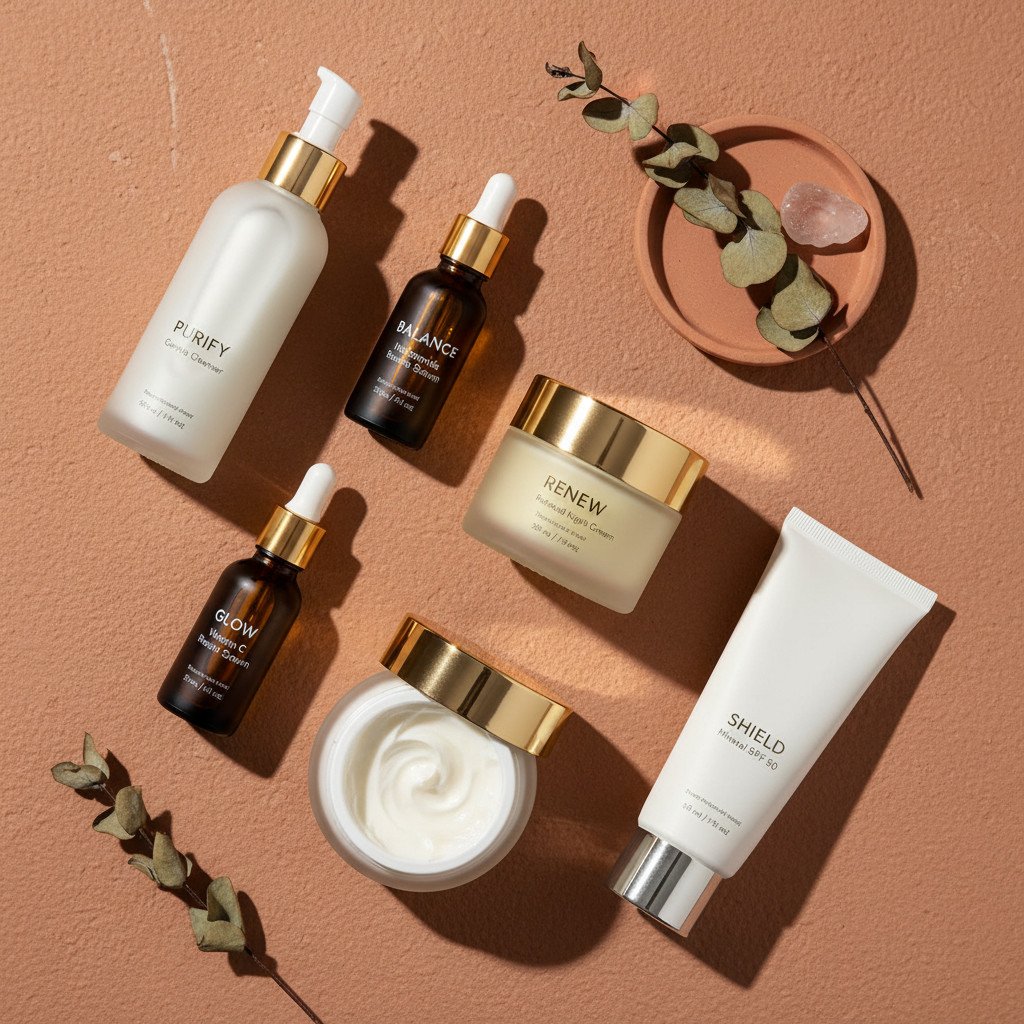
- AM: Cleanse gently. Apply a vitamin C serum for antioxidant protection and brightening (or niacinamide if vitamin C is too stimulating). Finish with a nourishing moisturizer and a broad-spectrum SPF 30+ to protect your skin, especially given the use of retinoids in the evening.
- PM (few nights per week): After cleansing, apply a beginner retinoid (e.g., a low-strength retinol or retinaldehyde) to address texture, fine lines, and PIH. Follow immediately with a rich, barrier-supporting moisturizer. On alternate nights, cleanse and apply a niacinamide serum, followed by your moisturizer, skipping the retinoid. This allows your skin to rest and repair on non-retinoid evenings.
Supporting your skin barrier with a robust moisturizer is key to tolerating retinoids. Our Moisturizer/barrier post provides excellent options. Remember, patience and consistency are your allies in achieving desired results with retinoids.
When Not to Stack Actives
While the strategic layering of actives can be incredibly beneficial for melanin-rich skin, there are critical times when the impulse to ‘do more’ must be resisted. Just as a chef knows when to add a powerful spice and when to hold back, you must learn to read your skin’s signals and understand when stacking actives, even gently, poses an unnecessary risk. Melanin-rich skin, with its propensity for post-inflammatory hyperpigmentation, is particularly vulnerable when its barrier is compromised or when it’s already under stress. In these scenarios, adding more potent ingredients can tip the delicate balance, leading to inflammation, irritation, and ultimately, worsened dark marks.
Consider your skin’s current state as the ultimate determinant. If your skin is feeling irritated, looks visibly red or inflamed, or is experiencing peeling or flaking, it is a clear signal to pause all but the most gentle, barrier-supporting products. Similarly, if you’ve recently undergone professional treatments like chemical peels, microneedling, or laser therapy, your skin is in a vulnerable healing phase. Introducing actives too soon can disrupt this process and significantly increase the risk of complications, including severe PIH. Even something as common as a sunburn, often underestimated on darker skin, renders your skin compromised and requires a complete cessation of actives. The mantra here is simple: if your skin is not in its optimal, healthy state, more ‘doing’ will almost always lead to more problems. Respecting these boundaries is not a sign of weakness, but of wisdom and deep care for your skin’s long-term health and clarity.
There are specific combinations of actives that, for most beginners and even intermediate users with melanin-rich skin, should be avoided in a single routine. These combinations significantly increase the likelihood of irritation, barrier disruption, and subsequent hyperpigmentation. While some highly experienced individuals with robust, non-reactive skin might eventually tolerate some of these pairings, it is a perilous path for the majority of us, and one that Black Beauty Basics advises against for general practice. The risk-to-reward ratio is simply too high when your skin’s natural response to irritation is to produce more pigment. Prioritizing skin health and barrier integrity over aggressive layering will always yield better, more sustainable results for melanin-rich skin.
- High-Strength Vitamin C + Strong Acid + Retinoid: This trifecta of potent exfoliants and cell-turnover accelerators is a recipe for disaster on melanin-rich skin. The combined exfoliating and stimulating effects almost guarantee barrier compromise, leading to severe irritation, redness, and a high likelihood of significant PIH. These ingredients should be used on separate days or in separate routines (e.g., Vitamin C in AM, Retinoid in PM, Acids on non-retinoid nights).
- Multiple Exfoliating Products at Once (e.g., AHA serum + BHA toner + exfoliating cleanser): Over-exfoliation is one of the quickest ways to trigger PIH. Using several exfoliating products in a single routine, or even on consecutive days, strips the skin’s protective barrier, leaving it vulnerable and inflamed. Choose one primary exfoliant and use it judiciously, 2-3 times a week at most, especially when starting.
- Retinoid + Strong Acid (applied consecutively): While some advanced users might alternate these on different nights, applying them one after the other in the same routine is highly irritating. Both increase cell turnover and can cause sensitivity. The combined effect is often too much for the skin barrier to handle, leading to dryness, peeling, and inflammation that can easily result in PIH.
- New Active + New Active: When introducing new ingredients, always do so one at a time. Adding multiple new actives simultaneously makes it impossible to identify which product is causing irritation if a reaction occurs. Give your skin 2-4 weeks to adjust to one new active before introducing the next.
Understanding the timing of actives around professional treatments is also crucial. Our Beauty Devices & Treatments pillar hub offers guidance on preparing your skin and resuming actives safely after such procedures. Always err on the side of caution and prioritize your skin’s healing and barrier function.
Reading Your Skin’s Feedback and Adjusting
Your skin is a remarkably intelligent organ, constantly communicating its needs and responses. When incorporating powerful actives, learning to decipher these signals is paramount, especially for melanin-rich skin where the line between healthy adjustment and damaging irritation can be subtle yet consequential. A bit of initial dryness, a mild tingling sensation that quickly subsides, or a slight purging of blemishes when starting a retinoid are often considered normal adjustment phases. These are signs that the active is working as intended, and your skin is adapting. However, there’s a distinct difference between these mild, transient responses and the red flags that demand immediate attention and a change in your routine.
Red flags include persistent burning, stinging that doesn’t subside, widespread redness that lingers for hours or days, excessive peeling or flaking, or, most critically for melanin-rich skin, the appearance of new or rapidly spreading dark spots. A greyish tone to the skin can also indicate a compromised barrier. These are not signs of ‘toughing it out’ for results; they are clear indicators that your skin barrier is compromised, and inflammation is taking hold. Continuing with actives under these conditions will not lead to improvement; it will almost certainly lead to worsened hyperpigmentation and a longer recovery period. Empowering yourself to recognize these signals and respond appropriately is a fundamental act of self-care and a cornerstone of successful active layering on dark skin.
When your skin sends these distress signals, the most effective response is to immediately reduce the frequency of the offending active, lower its concentration, or, most often, pause it entirely. This is not a failure; it is a wise adjustment. Think of it as hitting the reset button for your skin. Give your barrier time to heal and recover by simplifying your routine to the absolute essentials. Focus on gentle cleansing, consistent barrier-repairing moisturization, and diligent sun protection. Once your skin has calmed and returned to its baseline, you can very slowly reintroduce actives, perhaps at a lower strength or frequency, or consider a different formulation. Consulting with a dermatologist or a knowledgeable skincare professional can also provide invaluable personalized guidance when navigating persistent irritation or adverse reactions.
- Steps to take if irritation starts: Immediately pause all actives (Vitamin C, Niacinamide, Retinoids, Acids). Simplify your routine to a gentle, hydrating cleanser, a rich, barrier-repairing moisturizer, and a broad-spectrum SPF 30+. Focus on soothing and healing your skin for at least 1-2 weeks, or until all signs of irritation have subsided. Avoid hot water, harsh scrubbing, and fragranced products during this time.
- When to seek professional support: If irritation is severe, persistent, accompanied by pain, swelling, or blistering, or if you notice rapid worsening or spreading of hyperpigmentation, it’s time to consult a board-certified dermatologist. They can assess your skin’s condition, identify the root cause of the reaction, and provide tailored advice or prescription treatments to safely get your skin back on track. Do not attempt to self-diagnose or self-treat severe reactions.
For more insights into managing hyperpigmentation, our Hyperpigmentation pillar hub offers extensive resources. Remember, your skin’s health is paramount, and a responsive approach to actives ensures long-term success. For a holistic view of skincare, revisit our main Skincare pillar hub.
Final Thoughts
The journey to radiant, healthy melanin-rich skin is deeply personal, and it’s perfectly natural to desire both transformative results and the unwavering protection of your unique pigment. You absolutely do not have to choose between these two aspirations. With the right knowledge and a thoughtful approach, you can harness the power of actives to address your concerns – whether it’s hyperpigmentation, uneven texture, or the first signs of aging – without compromising the integrity or comfort of your beautiful skin. The key, as we’ve explored, lies not in aggressive pursuit, but in a philosophy of slow, steady, and strategic layering.
Embracing a slow, thoughtful approach to layering actives is not a sign of impatience or a lack of discipline; it is, in fact, a profound act of respect for your skin. It acknowledges its unique biology, its resilience, and its particular sensitivities. It’s about building a relationship of trust with your skin, listening to its feedback, and providing it with what it truly needs to thrive, rather than imposing a one-size-fits-all solution. This mindful approach ensures that every step you take in your skincare journey contributes positively to your skin’s health and radiance, rather than creating setbacks.
We invite you to revisit your skincare routine with fresh eyes, armed with the insights from this guide. Take the time to assess each step, from your cleanser to your SPF, and consider how your chosen actives fit into this delicate ecosystem. Let our Skincare pillar hub, Hyperpigmentation pillar, and our detailed routine posts serve as your trusted roadmap. With patience, precision, and self-love, you can unlock the full potential of your melanin-rich skin, achieving the clarity, even tone, and luminous glow you deserve, without compromise.
Frequently Asked Questions
Can I use vitamin C and niacinamide together on dark skin?
Yes, vitamin C and niacinamide can generally be used together on dark skin, and often complement each other. While older theories suggested they couldn’t be combined due to potential irritation, modern formulations are stable. Niacinamide can even help buffer potential irritation from vitamin C, making them a powerful duo for brightening and barrier support.
How often should I use retinoids if I have melanin-rich, sensitive skin?
For melanin-rich, sensitive skin, start with retinoids very slowly. Begin with a low-strength formula (e.g., a gentle retinol or retinaldehyde) just 1-2 nights per week. Gradually increase to 2-3 nights per week as your skin builds tolerance, always observing for any signs of irritation. Prioritize barrier support with a rich moisturizer.
Is it safe to use acids and retinoids in the same routine?
Generally, it is not recommended to use strong acids and retinoids in the same routine, especially for melanin-rich skin prone to PIH. Both are potent exfoliants and can cause significant irritation when combined. It’s much safer to alternate them on different nights, allowing your skin to recover in between, or use acids in the morning and retinoids at night if your skin is very tolerant and non-reactive.
What’s the best order to apply vitamin C, niacinamide, acids, and retinoids?
The best order depends on your routine. Typically, apply actives from thinnest to thickest consistency. For AM: Cleanser > Vitamin C > Niacinamide (optional) > Moisturizer > SPF. For PM: Cleanser > Acid (on acid nights) or Retinoid (on retinoid nights) > Niacinamide (optional, can be before or after retinoid/acid depending on sensitivity) > Moisturizer. Always allow each product to absorb fully.
How long before I see results from layering actives for PIH?
Patience is crucial when treating PIH with actives. You can expect to see initial improvements in skin texture and overall brightness within 4-8 weeks. However, significant fading of stubborn dark spots and a more even tone typically takes 3-6 months of consistent, careful use. More severe PIH can take even longer, up to a year or more. Consistency and sun protection are key.
What should I do if an active makes my dark spots worse?
If an active makes your dark spots worse, it’s a clear sign of irritation and inflammation. Immediately stop using that active. Simplify your routine to a gentle cleanser, a barrier-repairing moisturizer, and diligent SPF. Focus on soothing and healing your skin. Once your skin has calmed, you can reintroduce actives very slowly at a lower strength or frequency, or consider a different ingredient. If worsening persists, consult a dermatologist.
Shop gentle vitamin C serum on Amazon
Shop niacinamide serum on Amazon
Shop beginner retinol on Amazon
Shop gentle cleanser on Amazon
Shop barrier-supporting moisturizer on Amazon
Shop broad-spectrum SPF on Amazon
Related next steps
Related posts:
 How to Layer Actives Safely on Melanin-Rich Skin
 Ingredient-Based Solutions for Hyperpigmentation & Dark Spots on Melanin-Rich Skin: Vitamin C, Niacinamide, Azelaic, Tranexamic, Retinoids
 Acids and Exfoliation on Dark, PIH-Prone Skin
 Niacinamide vs. Vitamin C – Which One Should You Use for Hyperpigmentation?
 Exfoliating Body Routine for Black Women: Scrubs, Acids, and Tools for Melanin-Rich Skin
 How to Add Actives Without Overwhelming PIH-Prone Skin