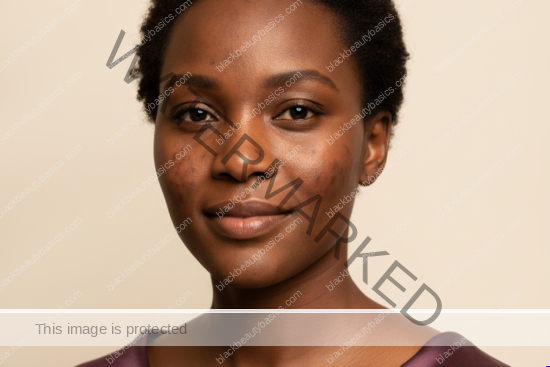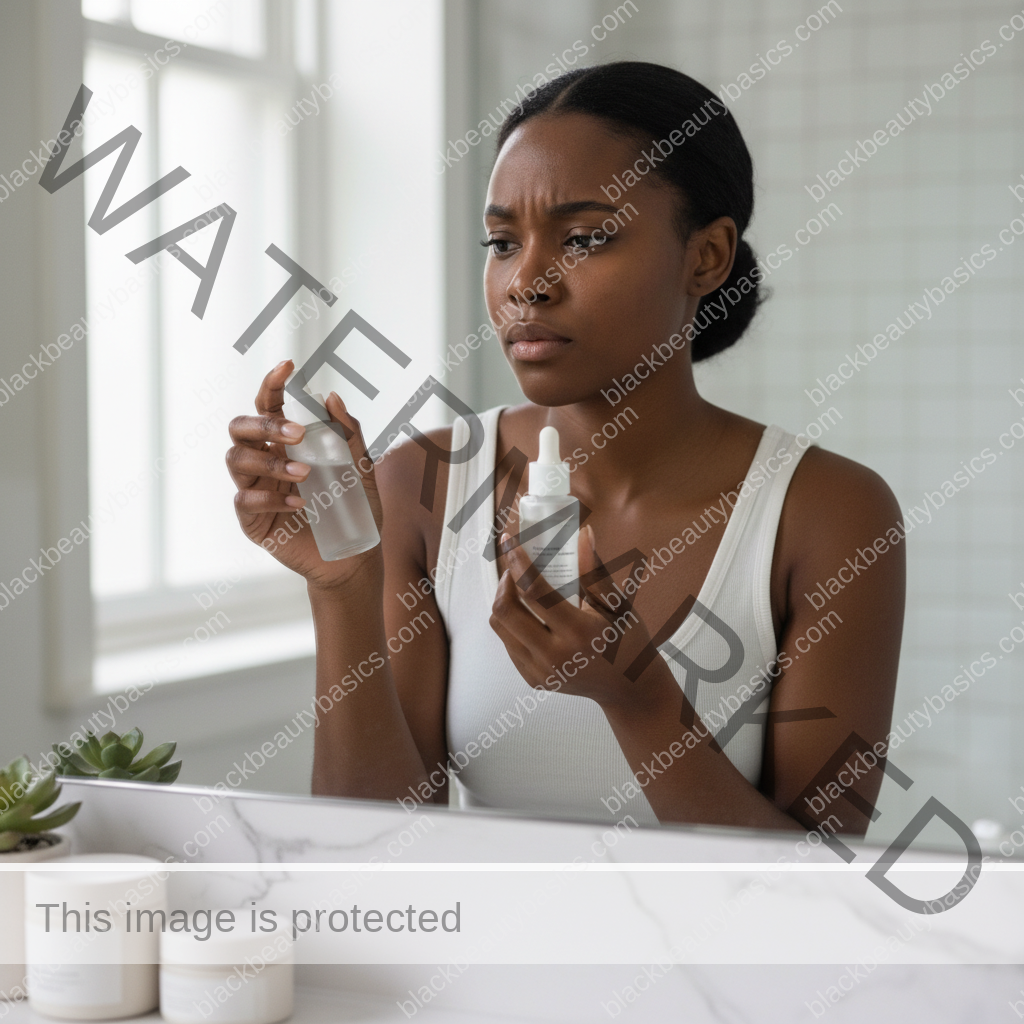
Acne-prone and dehydrated is one of the most frustrating skincare combinations. You are trying to avoid clogged pores, but your skin still feels tight. You skip moisturizer to avoid breakouts, then your face looks dull, rough, or ashy by midday. You try a richer cream and suddenly feel heavy or congested. It can feel like you are always choosing between comfort and clarity.
This guide is for Black women and people with richly melanated skin who are navigating that exact tension. The goal is not to find one “perfect” jar. The goal is to choose moisturizer texture and ingredients that support hydration without making acne management harder.
If you want the full system, keep BBB’s routine design guide as your hub. Here, we focus on one decision point that changes everything: picking the right moisturizer for skin that breaks out and still feels dry.
Why Acne-Prone Skin Can Still Be Dehydrated
Acne-prone does not automatically mean well-hydrated. Oil production and water balance are different. You can have shine on the surface while still lacking water support in the upper skin layers. This often shows up as tightness after cleansing, makeup catching on texture, and skin that feels both oily and uncomfortable.
For melanin-rich skin, this matters because irritation has consequences. Over-drying routines can increase inflammation, and inflammation can leave dark marks that linger. If your acne routine strips your barrier, you may see more reactivity and more visible aftermath, even if oil temporarily looks reduced.
A smart moisturizer choice helps interrupt that cycle. It supports barrier function, lowers unnecessary irritation, and can make treatment steps more tolerable. In other words, moisturizer is not a “nice extra.” It is part of acne strategy when dehydration is in the mix.
Signs Your Current Moisturizer Is Not the Right Fit
You do not need to guess blindly. Watch for repeat patterns.
If your skin feels tight again soon after application, the formula may be too light or missing hydration support. If your face feels coated, greasy, or overheated, it may be too heavy. If new breakouts cluster where product sits thickest, texture or quantity may be off. If sunscreen pills constantly, your moisturizer and SPF may be clashing.
Also watch your behavior: if you keep skipping moisturizer because you dislike how it feels, that product is not truly working for your life. The best moisturizer is one you can use consistently.
How to Choose Texture First, Then Ingredients
Start with texture class before ingredient obsession. For many acne-prone, dehydrated routines, gel-cream or light lotion textures are the easiest middle ground. They usually hydrate better than ultralight gels but feel less occlusive than rich creams.
If you are very oily in humid weather, a lighter gel-cream may be enough across the face with a little more product on drier zones. If you are in dry weather or heavy indoor heat, you may need a light lotion plus a targeted richer layer on the perimeter of the face.
For category comparison, gel cream moisturizer for acne-prone skin is a useful search type when you are filtering by feel and finish, not hype.
Then look at barrier-supportive ingredients that your skin tolerates. Ceramides can be helpful for barrier support, and humectants can improve water comfort. If you are exploring formula families, ceramide moisturizer for face is a practical category to compare.
If your skin is very reactive, fragrance-free options may reduce unnecessary irritation variables. For that lane, fragrance free face moisturizer is another relevant category search.
How to Apply Moisturizer Without Triggering Congestion
Application method matters as much as formula choice. Use moisturizer on slightly damp skin so hydration is supported before water evaporates. Start with a modest amount, then add a little more only where needed.
If your T-zone clogs easily, avoid over-layering there while still supporting drier zones like cheeks or around the mouth. You do not have to apply identical amounts everywhere. Zone-aware application is often the difference between “this breaks me out” and “this finally works.”
Give moisturizer time to settle before sunscreen and makeup. Rushed layering can cause pilling and make everything feel heavier than it actually is.
How This Fits in a Full Routine
Your moisturizer should sit inside a stable baseline: gentle cleanse, moisturizer, sunscreen in the morning; gentle cleanse, moisturizer at night. Add treatment only when the baseline is comfortable.
If cleanser harshness is making moisturizer fail, use BBB’s cleanser-too-harsh guide. If your routine is overloaded and reactive, use the routine reset guide. If texture and shine are mixed, pair this with oily-and-ashy routine.
Troubleshooting: If You Are Still Breaking Out
If breakouts increase after switching moisturizer, do not panic-replace everything at once. First check amount and placement. Many people use too much initially. Try a smaller amount and focus extra product only where dryness is strongest.
Check other variables too: hairline products, makeup removal quality, pillowcase habits, and new treatment products introduced at the same time. Moisturizer often gets blamed for breakouts caused by routine overlap.
If you are still tight and irritated while breaking out, you may need a gentler cleanser and more barrier support before stronger acne treatment. Treating through irritation rarely gives the best outcome on melanin-rich skin.
Frequently Asked Questions
Can acne-prone skin really need moisturizer every day?
Yes. Acne-prone skin can still be dehydrated or barrier-stressed. Skipping moisturizer may increase discomfort and reactivity, which can complicate acne and tone outcomes. The key is choosing the right texture and amount, not avoiding moisturizer completely.
How do I know if my moisturizer is too heavy?
Common signs are a coated feeling, increased congestion in oil-prone zones, makeup sliding, or persistent pilling with sunscreen. If that happens, try a lighter texture or use less in the T-zone while maintaining support on drier areas.
What if my moisturizer feels light but my skin is still tight?
You may need more hydration under it, a stronger barrier-supportive formula, or better timing. Apply on damp skin, then reassess. If tightness persists, your cleanser may be too stripping or your moisturizer may be underpowered for your environment.
Should I use different moisturizers for day and night?
Sometimes, yes. Many people do well with a lighter daytime texture under SPF and a slightly more supportive nighttime texture. If you are easily overwhelmed, start with one reliable product first, then split day and night only if needed.
Can moisturizer make dark marks worse?
A suitable moisturizer usually helps by reducing irritation and supporting barrier stability. What can worsen marks is ongoing inflammation from harsh routines, picking, or untreated irritation. Comfort and consistency are protective.
How long should I test a new moisturizer?
Usually 2 to 4 weeks, unless you get clear irritation quickly. Watch comfort, congestion pattern, and layering behavior with sunscreen. Make only one major change at a time so your results are readable.
When should I see a dermatologist?
If breakouts are painful, persistent, cystic, or leaving frequent dark marks despite routine simplification, professional support is appropriate. Also seek care for burning, swelling, or reactions that do not settle after stopping a suspect product.
What to Do Next
Choose one moisturizer strategy today: lighter all-over with targeted extra on dry zones, or a single balanced gel-cream used consistently for two weeks. Keep the rest of the routine steady while you test.
If comfort improves and breakouts do not worsen, stay the course before adding new variables. If things remain unstable, troubleshoot cleanser and layering next rather than immediately buying another random product.
Your moisturizer should make acne-prone skin easier to manage, not harder. When the fit is right, your skin feels calmer, more readable, and less like a daily guessing game.
Related next steps
Related posts:
 Pre-Makeup Skin Prep for Acne-Prone Melanin-Rich Skin
 Moisture Balance for Oily but Dehydrated Dark Skin
 Sulfur-Based Options for Acne-Prone Melanin-Rich Skin
 Ingredient and Formula Checklist for Acne-Prone Deep Skin
 Basic AM and PM Routines for Acne-Prone Melanin-Rich Skin
 Choosing Foundation and Concealer for Acne-Prone Dark Skin