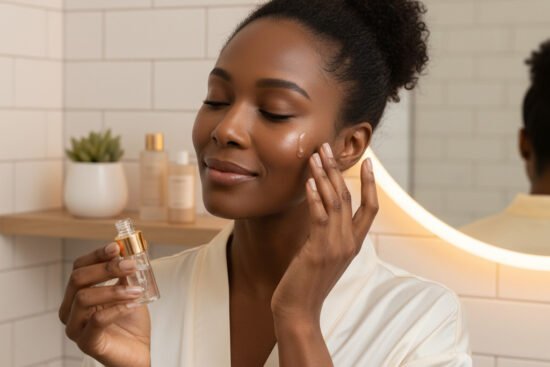
Have you ever felt like your skin suddenly turned on you? One day, your routine feels comfortable, and the next, everything stings. Perhaps your complexion looks duller, feels rough to the touch, or reacts to products it once loved. This feeling of your skin being “off” – reactive, tight, rough, or unexpectedly sensitive – is a common experience, especially when your skin’s protective outer layer, the barrier, is compromised.
For Black women and those with melanin-rich skin, recognizing a damaged skin barrier can be a unique journey. The signs aren’t always the obvious redness often depicted in mainstream skincare. Instead, irritation might manifest as a deeper, almost bruised-looking discoloration, a persistent ashiness, a new texture you can’t quite pinpoint, or a burning sensation that leaves you questioning every product. It’s a frustrating experience, often compounded by the feeling that your concerns aren’t being fully seen or understood.
At Black Beauty Basics, we understand these nuances. Your skin’s barrier is crucial for its overall health, protecting against environmental aggressors and sealing in vital moisture. When this delicate shield is weakened, your skin becomes vulnerable. This article is dedicated to helping you understand the specific ways a compromised barrier can present on melanin-rich skin, offering clarity and validation for what you might be experiencing. We’re here to guide you through identifying these signs, understanding common triggers, and taking supportive steps to restore your skin’s resilience. For a deeper dive into nurturing this vital protective layer, explore our comprehensive guide on Barrier Repair & Moisture Balance.
Understanding your skin’s signals is a profound act of self-care. It’s about listening to your body and giving it the gentle attention it deserves. When your skin feels irritated, it’s not a personal failing; it’s a call for understanding and support. This journey of recognizing and restoring your skin’s balance is a cornerstone of our philosophy at Black Beauty Basics, where we center the unique needs and experiences of Black women. For a broader perspective on caring for your skin, we invite you to explore our Skincare for Black Women pillar, designed to empower you with knowledge and confidence.
What This Post Covers
Navigating the complexities of skin health, especially when it feels out of balance, can be overwhelming. This guide is designed to shed light on the often-misunderstood topic of barrier damage, specifically through the lens of melanin-rich skin. We aim to provide you with clear, actionable insights that empower you to understand and respond to your skin’s needs with confidence and care.
- How Barrier Damage Can Look on Dark Skin: We’ll explore the distinct ways a compromised barrier manifests, moving beyond conventional signs to address the unique visual and tactile cues specific to melanin-rich complexions.
- Early Signs Readers Often Miss: Discover the subtle indicators that your barrier might be struggling before more obvious symptoms appear, helping you intervene proactively.
- Common Triggers: Understand the everyday factors and skincare habits that can inadvertently lead to barrier compromise, enabling you to identify and adjust potential stressors.
- What Calming Support Can Look Like: Learn about the foundational principles and gentle approaches that can help soothe and restore your skin’s balance without causing further irritation.
- When to Pause Actives and When to Seek Professional Help: Gain clarity on when to simplify your routine, when to consider professional guidance, and how to make informed decisions for your skin’s long-term health.
How Barrier Damage Can Look on Melanin-Rich Skin
The skin barrier, also known as the stratum corneum, is your skin’s outermost layer. It’s a sophisticated protective shield, composed of skin cells (corneocytes) held together by a lipid matrix, much like bricks and mortar. This barrier plays a critical role in preventing water loss from the skin (transepidermal water loss or TEWL) and blocking the entry of irritants, allergens, and microbes. When this barrier is healthy, your skin feels smooth, supple, and resilient. When it’s damaged, this delicate balance is disrupted, leading to a cascade of uncomfortable symptoms.
On melanin-rich skin, the visual cues of inflammation and irritation often differ significantly from those seen on lighter skin tones. Where lighter skin might show a bright red flush, deeper skin tones might present with a duller, deeper discoloration. This difference is due to the presence of melanin, which can mask the typical redness associated with inflammation. This distinction is crucial because it can lead to delayed recognition of barrier damage or, unfortunately, dismissal of symptoms by those unfamiliar with how irritation manifests on Black skin.
Instead of overt redness, you might observe a range of other signs:
- Tightness: A persistent feeling that your skin is stretched, especially after cleansing or exposure to dry air. This isn’t just a temporary sensation; it’s a sign your skin is struggling to retain moisture.
- Stinging or Burning: Products that once felt benign, even moisturizing, now cause a sharp, uncomfortable sensation upon application. This is a clear indicator that your skin’s protective layer has been breached, allowing ingredients to penetrate too deeply and trigger nerve endings.
- Ashiness: While ashiness can be a general sign of dryness, a sudden increase or persistence of a grayish, dull, or chalky appearance, particularly after moisturizing, can point to a compromised barrier. Your skin isn’t just dry; it’s unable to hold onto the moisture you’re applying.
- Roughness or Unusual Texture: Your skin might feel uneven, bumpy, or sandpaper-like, even if you’re exfoliating regularly. This texture change indicates that the skin cells aren’t shedding optimally, and the lipid matrix is disrupted, leading to a less smooth surface.
- Increased Sensitivity: Your skin suddenly reacts to environmental factors like wind, cold, or even mild sunlight with discomfort, itching, or a feeling of vulnerability. It’s like your skin’s alarm system is constantly on high alert.
- Dullness: A lack of natural radiance or a muted complexion, even when you’re well-rested and hydrated. A healthy barrier reflects light evenly; a damaged one can scatter it, leading to a lackluster appearance.
- Flaky Patches: While sometimes just dry skin, persistent or widespread flaking, especially in areas not typically prone to it, signals that your skin’s natural shedding process is impaired and its moisture barrier is struggling.
- Darkening After Irritation (Post-Inflammatory Hyperpigmentation): This is one of the most significant and frustrating signs for melanin-rich skin. Any form of inflammation, even subtle irritation from a compromised barrier, can trigger melanocytes (the cells that produce melanin) to overproduce pigment. This results in new or worsening dark spots that can linger for months. This isn’t just a cosmetic concern; it’s a direct consequence of your skin’s inflammatory response to barrier damage.
It’s important to understand that these signs are your skin’s way of communicating distress. They are not merely cosmetic issues but indicators of underlying physiological imbalance. Recognizing these unique manifestations on melanin-rich skin is the first step toward providing the targeted care and gentle support your skin needs to heal and thrive. This understanding is particularly empowering as it allows you to advocate for your skin’s needs, even when conventional descriptions of skin irritation don’t seem to apply to your experience.
Common Signs Your Barrier May Be Compromised
When your skin barrier is compromised, it sends out signals, some subtle, others more overt. Learning to interpret these signals is key to bringing your skin back to a state of calm and resilience. It’s about developing a deeper intuition for your skin’s needs, recognizing that its behavior might have shifted from its usual patterns. Here are some of the most common indicators that your skin barrier might be struggling:
- Products Suddenly Stinging or Burning: This is perhaps one of the most immediate and undeniable signs. If your beloved serum, moisturizer, or even a gentle cleanser suddenly causes a sharp, uncomfortable sensation upon application, it’s a strong indicator that your barrier is no longer intact. The protective layer is compromised, allowing ingredients to penetrate more deeply than intended, irritating nerve endings. This isn’t a sign that a product is “working” or “active”; it’s a sign of distress.
- Face Feeling Tight Right After Cleansing: That squeaky-clean feeling? It’s often a red flag. If your skin feels uncomfortably tight, stripped, or parched immediately after washing, even before you’ve applied any other products, your cleanser is likely too harsh, or your barrier is already weakened. A healthy barrier should allow your skin to feel soft and balanced after cleansing, not taut and uncomfortable.
- Skin Looking Shiny and Dehydrated at the Same Time: This can be a confusing symptom. You might notice an oily sheen, especially in your T-zone, but simultaneously feel an underlying dryness, tightness, or see fine lines that indicate a lack of moisture. This phenomenon, often called “dehydrated oily skin,” occurs when the barrier is damaged, leading to increased transepidermal water loss. In an attempt to compensate for this moisture loss, your skin might produce more oil, creating a shiny yet parched appearance.
- Rough Patches or Increased Flaking: While occasional flaking can happen, persistent rough texture, dry patches that don’t seem to respond to regular moisturizing, or an overall unevenness to your skin’s surface can signal barrier disruption. The natural exfoliation process is impaired, and skin cells aren’t shedding smoothly, leading to a buildup of dead, dry cells.
- Irritation After Products That Used to Feel Fine: This is a particularly frustrating experience. A product that was once a staple in your routine, perhaps a gentle toner or a hydrating serum, now causes itching, redness (or discoloration on dark skin), or a general sense of discomfort. Your skin’s tolerance threshold has lowered, indicating that its defenses are down.
- Breakouts Plus Sensitivity Happening Together: Often, we associate breakouts with oily skin, but when your barrier is compromised, you might experience new or worsening acne alongside unusual sensitivity. A damaged barrier can make your skin more susceptible to bacteria and inflammation, leading to breakouts. Simultaneously, the weakened barrier means your skin is less able to tolerate typical acne treatments, creating a frustrating cycle of breakouts and irritation.
- Post-Inflammatory Hyperpigmentation Showing Up More Easily After Irritation: For melanin-rich skin, this is a critical sign. Any inflammation, even minor irritation from a compromised barrier, can trigger melanocytes to produce excess pigment. This means that even a small scratch, a mild breakout, or a patch of irritated skin can leave behind a lingering dark spot or patch of discoloration. If you notice that your skin is developing dark marks more readily or that existing marks are becoming darker after any form of irritation, your barrier likely needs attention.
- Makeup Sitting Unevenly Because the Surface Is Dry, Reactive, or Textured: If your foundation looks patchy, clings to dry areas, or emphasizes texture you didn’t notice before, it could be a sign of barrier damage. A compromised barrier leads to an uneven skin surface, making it difficult for makeup to apply smoothly and blend seamlessly. The skin may also feel more reactive, making makeup application uncomfortable.
These signs are not isolated incidents but often interconnected symptoms of a deeper issue. Paying attention to these cues allows you to pause, assess, and adjust your skincare approach, moving towards a more supportive and healing path for your skin.

What Commonly Triggers Barrier Damage
Understanding the “why” behind a compromised skin barrier is just as important as recognizing the “what.” Many factors, both within our control and beyond, can contribute to barrier damage. It’s rarely about a single misstep but often a combination of habits or environmental stressors that gradually wear down your skin’s defenses. Approaching these triggers with awareness, rather than blame, is key to fostering a healthier relationship with your skin.
- Over-Exfoliation: This is one of the most common culprits. In the quest for smooth, radiant skin, it’s easy to fall into the trap of over-exfoliating, whether through physical scrubs, aggressive brushes, or chemical exfoliants like AHAs and BHAs. While exfoliation removes dead skin cells, excessive or too-frequent exfoliation strips away the vital lipids that hold your skin barrier together, leaving it vulnerable. This is especially true for melanin-rich skin, which can be more prone to post-inflammatory hyperpigmentation (PIH) from any irritation, including over-exfoliation. If you suspect this is a factor, our guide on Repairing Your Barrier After Over-Exfoliation offers tailored insights.
- Stacking Too Many Actives: The allure of potent ingredients can lead to using multiple active serums or treatments simultaneously. Retinoids, Vitamin C, AHAs, BHAs, and other powerful ingredients all have their benefits, but using too many at once, or introducing them too quickly, can overwhelm your skin. Each active has a specific mechanism, and their combined effect can be more irritating than beneficial, leading to barrier breakdown.
- Harsh Cleansers: That “squeaky clean” feeling might be satisfying in the moment, but it’s often a sign that your cleanser has stripped your skin of its natural oils and lipids. Cleansers containing strong sulfates or high pH levels can disrupt the acid mantle and compromise the barrier, leaving your skin tight, dry, and vulnerable.
- Fragrance-Heavy or Irritating Formulas: While a pleasant scent can enhance the skincare experience, fragrance (both synthetic and natural essential oils) is a common irritant for many, especially those with sensitive or already compromised barriers. Other ingredients, such as certain alcohols or harsh preservatives, can also trigger irritation and weaken the skin’s defenses.
- Weather Shifts, Indoor Heat, Dry Air, and Environmental Stress: Your skin barrier is constantly interacting with its environment. Extreme weather changes, like transitioning from humid summer to dry winter, can stress the barrier. Indoor heating or air conditioning can significantly reduce humidity, leading to increased transepidermal water loss. Pollution, UV radiation, and even psychological stress can also contribute to barrier dysfunction, making your skin more reactive.
- Acne Routines That Become Too Stripping: When battling acne, the impulse is often to use strong, drying ingredients to “zap” blemishes. However, many conventional acne treatments (like high concentrations of salicylic acid, benzoyl peroxide, or strong retinoids) can be very stripping if not used carefully, especially on melanin-rich skin which is already prone to dryness. This aggressive approach can damage the barrier, leading to a cycle of irritation, increased oil production (in an attempt to compensate), and even more breakouts, alongside the risk of PIH.
- Chasing Fast Results Because Dark Marks or Texture Feel Urgent: This is a deeply relatable trigger for many Black women. The desire to quickly address hyperpigmentation, uneven texture, or breakouts can lead to impatience and the overuse of aggressive treatments. The emotional weight of these concerns can push us to seek rapid solutions, sometimes at the expense of our barrier health. This often results in a vicious cycle where irritation from harsh treatments leads to more dark marks, creating a frustrating and disheartening experience.
Recognizing these triggers is not about assigning blame, but about empowering you with knowledge. It allows you to make conscious choices about your skincare routine and lifestyle, creating an environment where your skin can thrive rather than constantly defend itself. By understanding what might be challenging your barrier, you can begin to implement supportive changes that lead to lasting skin health.
What to Do First When Your Skin Feels Damaged
When your skin is sending distress signals, the most powerful first step you can take is to pause and simplify. It’s a moment to shift from “correction” to “calm,” allowing your skin the space and gentle support it needs to begin its healing process. This isn’t about punishment or deprivation; it’s about nurturing and listening to what your skin is clearly trying to tell you.
Here’s a supportive pathway to consider when your barrier feels compromised:
- Simplify the Routine: This is paramount. Imagine your skin is overwhelmed; adding more complex steps or ingredients will only increase its burden. Strip your routine back to the absolute essentials: a gentle cleanser, a hydrating serum (optional, but beneficial if it feels comfortable), and a nourishing moisturizer. This minimalist approach reduces the chances of further irritation from active ingredients or complex formulations.
- Pause Nonessential Actives for Now: This includes retinoids, AHAs, BHAs, Vitamin C, and any other potent treatments. While these ingredients are wonderful for specific concerns, they can be too stimulating for a compromised barrier. Think of it as hitting the reset button. You can reintroduce them slowly and carefully once your barrier has recovered, but for now, their job is on hold.
- Switch to Gentle Cleansing: Ditch any foaming cleansers that leave your skin feeling tight or “squeaky clean.” Opt for a creamy, milky, or oil-based cleanser that effectively removes impurities without stripping your skin’s natural oils. Look for formulas labeled “gentle,” “hydrating,” or “for sensitive skin.” The goal is to cleanse without disrupting the delicate balance of your skin’s surface. You can browse options for gentle cleansers on Amazon that are formulated with sensitive, melanin-rich skin in mind.
- Focus on Moisture and Barrier Support: This is where your skin needs the most help. Seek out moisturizers rich in ceramides, fatty acids, cholesterol, hyaluronic acid, glycerin, and niacinamide. These ingredients mimic and replenish your skin’s natural barrier components, helping to repair and strengthen its protective function. Apply moisturizer generously and frequently, especially after cleansing and throughout the day if your skin feels dry or tight. Consider layering a hydrating toner or serum underneath for an extra boost of moisture.
- Reduce Friction and Avoid Scrubbing: Be incredibly gentle with your skin. Avoid physical exfoliation, harsh scrubbing with washcloths or brushes, and even vigorous towel drying. Pat your skin dry gently with a soft towel. When applying products, use soft, upward strokes rather than rubbing or pulling. Every touch should be a gentle, nurturing one.
- Keep Expectations Realistic: Healing a compromised barrier takes time and consistency. It’s not an overnight fix. Be patient with your skin and with yourself. Focus on small, consistent acts of kindness towards your skin, and trust that with time and proper care, it will gradually regain its strength and resilience. Celebrate small improvements, like reduced stinging or a softer texture, as signs of progress.
Remember, this initial phase is about creating a calm, supportive environment for your skin to heal. It’s about reducing inflammation, replenishing moisture, and allowing your skin’s natural repair mechanisms to kick in. By taking these foundational steps, you’re setting the stage for long-term skin health and resilience.
Ingredients and Product Features to Look For
When your skin barrier is compromised, selecting the right products becomes less about chasing specific concerns and more about providing foundational support. The goal is to soothe, replenish, and protect, without introducing further irritation. Think of it as a carefully curated diet for your skin, focusing on nutrient-rich, gentle ingredients that promote healing and strength.
Here’s what to prioritize and what to approach with caution:
Prioritize These for Barrier Support:
- Gentle, Non-Stripping Cleansers: Look for formulas that are sulfate-free, pH-balanced, and creamy or milky in texture. Ingredients like glycerin, hyaluronic acid, and colloidal oatmeal can provide a soothing cleanse without stripping. The aim is to cleanse effectively while leaving your skin feeling soft and comfortable, not tight or dry.
- Moisturizers That Reduce Tightness and Ashiness: A good moisturizer is your skin’s best friend during barrier repair. Seek out rich, emollient creams that contain a blend of humectants, emollients, and occlusives.
- Humectants (like hyaluronic acid, glycerin, sodium PCA, urea) draw moisture into the skin.
- Emollients (like ceramides, fatty acids, cholesterol, squalane, shea butter, plant oils) fill in gaps between skin cells, smoothing the surface and replenishing lipids.
- Occlusives (like petrolatum, mineral oil, dimethicone) form a protective layer on the skin’s surface to prevent water loss. The best barrier repair moisturizers will have a balanced combination of these. For a range of options, you can explore moisturizers for dark skin women on Amazon.
- Fragrance-Free or Lower-Irritation Options for Reactive Skin: Fragrance, whether synthetic or natural (from essential oils), is a common sensitizer. During barrier repair, it’s best to opt for products explicitly labeled “fragrance-free” or “for sensitive skin.” This minimizes the risk of introducing additional irritants that could prolong the healing process.
- Barrier-Supportive Ingredients and Calming Formulas:
- Ceramides: These are the “mortar” of your skin barrier, essential lipids that hold skin cells together. Products rich in ceramides are crucial for rebuilding and strengthening a compromised barrier.
- Fatty Acids (e.g., Linoleic Acid, Oleic Acid): These are also vital components of the lipid matrix, supporting barrier function and skin health.
- Cholesterol: Another key lipid that works synergistically with ceramides and fatty acids to restore barrier integrity.
- Niacinamide (Vitamin B3): A powerhouse ingredient that helps strengthen the skin barrier, reduce inflammation, improve skin tone, and support ceramide production. It’s generally well-tolerated, even by sensitive skin.
- Panthenol (Pro-Vitamin B5): A humectant and emollient that helps soothe, hydrate, and promote skin healing.
- Centella Asiatica (Cica): Known for its soothing and wound-healing properties, it can help calm irritated skin and support barrier recovery.
- Colloidal Oatmeal: An anti-inflammatory and soothing ingredient that can relieve itching and discomfort associated with a compromised barrier.
What to Pause or Watch Carefully:
- Exfoliants (AHAs, BHAs, Physical Scrubs): As mentioned, these can further damage an already compromised barrier. Pause all forms of exfoliation until your skin feels calm and resilient again.
- Retinoids (Retinol, Retinaldehyde, Tretinoin): While excellent for long-term skin health, retinoids can be irritating, especially during the initial adjustment phase. They should be completely paused until your barrier is fully restored.
- High Concentrations of Vitamin C (L-Ascorbic Acid): While a powerful antioxidant, L-Ascorbic Acid can be acidic and potentially irritating for sensitive or damaged skin. Consider pausing it or switching to gentler Vitamin C derivatives if you feel your skin can tolerate it.
- Strong Acne Treatments (Benzoyl Peroxide, High-Strength Salicylic Acid): These can be very drying and stripping. If you’re experiencing acne alongside barrier damage, focus on gentle, soothing ingredients like niacinamide and cica, and consult a professional for acne management once your barrier is stable.
- Products with Alcohol Denat. or SD Alcohol: These types of alcohols can be very drying and irritating, stripping the skin’s natural oils and exacerbating barrier damage.
The key is to simplify and be consistent. Focus on a few well-formulated, gentle products that provide essential hydration and barrier support. Your skin needs time and a nurturing environment to heal, and choosing the right ingredients is a crucial part of that restorative process. When in doubt, less is often more, allowing your skin’s natural healing mechanisms to take precedence.
When Barrier Damage and Hyperpigmentation Overlap
For melanin-rich skin, the relationship between barrier damage and hyperpigmentation is particularly significant and often a source of deep frustration. It’s not just about managing discomfort; it’s about preventing and treating the dark spots that can linger long after the initial irritation has subsided. Understanding this intricate connection is vital for effective and compassionate skincare.
When your skin barrier is compromised, it means its protective function is weakened. This makes your skin more susceptible to inflammation from various sources – environmental aggressors, harsh products, friction, or even minor irritations. For melanin-rich skin, any form of inflammation, no matter how subtle, can trigger an overproduction of melanin by melanocytes. This process is known as post-inflammatory hyperpigmentation (PIH).

Here’s how the overlap manifests:
- Increased Susceptibility to PIH: A healthy skin barrier acts as a buffer, helping to minimize the inflammatory response to irritants. When this barrier is damaged, the skin’s defense system is on high alert, making it more prone to an exaggerated inflammatory reaction. This heightened inflammation directly translates to a higher risk of developing PIH, even from minor irritations that might not cause dark spots on intact skin.
- Dark Spots Linger or Worsen: If you’re already prone to dark spots, a compromised barrier can make them more persistent or even deepen their tone. The ongoing inflammation and impaired healing associated with barrier damage mean that the melanocytes continue to be stimulated, making it harder for existing PIH to fade and easier for new spots to form.
- Cycle of Irritation and Darkening: This can become a frustrating cycle. You might use aggressive products to fade existing dark spots, but if those products further damage your barrier, they can cause new inflammation, leading to *more* dark spots. This is why a barrier-first approach is so critical for managing hyperpigmentation on melanin-rich skin. You cannot effectively treat PIH if your barrier is constantly being challenged.
- Uneven Skin Tone and Texture: Beyond distinct dark spots, a compromised barrier can contribute to an overall uneven skin tone and texture, making the complexion appear duller and less vibrant. This is because the skin’s surface is not smooth and healthy, and areas of subtle inflammation contribute to a mottled appearance.
The key takeaway here is that calming inflammation and restoring your skin barrier must be a foundational step in any hyperpigmentation management strategy. You cannot effectively address dark spots if your skin is in a constant state of distress. Healing your barrier creates a stable, healthy canvas that is less reactive and more receptive to treatments aimed at fading discoloration.
This understanding underscores the importance of gentle care and patience. Rather than aggressively targeting dark spots with harsh ingredients when your barrier is compromised, the initial focus should always be on soothing and strengthening. Once your barrier is robust and resilient, your skin will be much better equipped to handle treatments for hyperpigmentation, and you’ll see more sustained and positive results. For a comprehensive understanding of how to address and prevent these concerns, we encourage you to explore our dedicated resources on Hyperpigmentation and Dark Spots, where we delve deeper into effective strategies for melanin-rich skin.
How to Navigate This Topic
Understanding your skin’s barrier health is a cornerstone of effective skincare, especially for Black women and those with melanin-rich skin. This article serves as a vital entry point into a broader conversation about nurturing your skin’s resilience. It sits within our comprehensive Barrier Repair & Moisture Balance cluster, a dedicated space designed to equip you with the knowledge and tools to maintain a healthy, thriving complexion.
Our aim at Black Beauty Basics is to provide a holistic and empowering approach to skincare. This article has focused on helping you identify the unique signs of a compromised barrier on melanin-rich skin, moving beyond generalized symptoms to address the specific ways irritation and damage manifest for us. Recognizing these signs is the first, crucial step toward effective care.
Now that you’re more attuned to your skin’s signals, you might be wondering what comes next. Our cluster is thoughtfully organized to guide you through the entire journey of barrier health, from initial recognition to sustained maintenance. Depending on your current needs and observations, here are some pathways you might want to explore next:
- If you’re ready to implement a gentle, restorative regimen, our guide on Barrier Repair Routine for Sensitive Dark Skin provides a step-by-step approach to rebuilding your skin’s defenses with carefully selected products and practices.
- For those who experience the perplexing combination of oiliness and dehydration, our article on Moisture Balance for Oily But Dehydrated Dark Skin offers tailored advice to harmonize your skin’s needs without exacerbating either concern.
- If you’re specifically looking for guidance on selecting the right products to support your barrier, especially moisturizers, you’ll find valuable insights in Choosing Moisturizer Textures for Melanin-Rich Skin. This helps you understand how different formulations can cater to various skin types and conditions.
Each article within this cluster is designed to build upon the last, offering nuanced perspectives and practical advice tailored to your unique skin. We believe that informed choices lead to empowered self-care. By exploring these resources, you’re not just learning about skincare; you’re investing in your skin’s long-term health and resilience, fostering a relationship built on understanding and gentle nurturing.
Remember, your skin journey is unique, and we are here to support you every step of the way. This journey is part of a larger commitment to comprehensive Skincare for Black Women, ensuring that your needs are always at the forefront of our content.
Quick Principles for a Compromised Barrier
When your skin barrier is compromised, it can feel overwhelming to navigate the path to recovery. To simplify this journey, here are some foundational principles to keep in mind. These are not rigid rules, but gentle reminders to guide your approach, fostering patience and understanding with your skin.
- Stinging is Not a Sign a Product is “Working”: This is a crucial reframe. Many of us have been taught that a tingling or stinging sensation means a product is active and effective. When your barrier is compromised, stinging is almost always a sign of irritation and damage. Your skin is trying to tell you that something is wrong, not that it’s improving. Listen to this signal and adjust accordingly.
- Calm Comes Before Correction: Resist the urge to immediately attack every perceived flaw. If your skin is irritated, sensitive, or inflamed, addressing these issues must take precedence over concerns like dark spots, fine lines, or texture. You cannot effectively correct these concerns on a stressed foundation. Prioritize soothing and strengthening your barrier first; other goals can follow once your skin is stable.
- Dark Skin Can Be Irritated Without Looking Red: This bears repeating and internalizing. The absence of overt redness does not mean the absence of inflammation or irritation on melanin-rich skin. Look for deeper discoloration (gray, purple, dark brown), increased ashiness, stinging, tightness, or unusual texture changes as your primary indicators. Trust your own observations and sensations.
- Barrier Recovery Is About Consistency, Not Punishment: Healing your barrier requires consistent, gentle care, not harsh treatments or aggressive interventions. It’s about showing up for your skin every day with kindness, using supportive products, and avoiding triggers. There’s no need to feel guilty or punish your skin for being reactive; it’s simply responding to its environment and care.
- If Your Skin Suddenly Reacts to Everything, Simplify First: When your skin seems to develop new sensitivities overnight, it’s a strong signal that your barrier is overwhelmed. The most effective immediate action is to strip your routine back to the bare minimum: a gentle cleanser, a barrier-supporting moisturizer, and perhaps a hydrating serum. This allows your skin to rest and reset without constant new inputs.
- Persistent Worsening Deserves Professional Attention: While many cases of barrier damage can be managed with consistent at-home care, if your symptoms are severe, worsening despite gentle efforts, or accompanied by intense itching, pain, or signs of infection, it’s time to consult a dermatologist. They can provide a diagnosis, rule out underlying conditions, and offer guidance on more targeted interventions. Trust your intuition about when professional help is needed.
These principles are designed to empower you to approach your skin’s health with wisdom and grace. They encourage a shift from a reactive, problem-solving mindset to a proactive, nurturing one, recognizing that your skin is a dynamic and responsive organ deserving of your gentle attention.

Frequently Asked Questions
Navigating skin health, especially when your barrier feels compromised, often brings a host of questions. Here, we address some of the most common inquiries to provide clarity and reassurance on your journey to skin resilience.
Can dark skin have barrier damage without looking red?
Absolutely, and this is a critical point often overlooked in general skincare advice. On melanin-rich skin, inflammation and irritation from barrier damage frequently manifest as deeper discoloration—such as gray, purplish, or dark brown tones—rather than the bright redness seen on lighter skin. You might also notice increased ashiness, stinging, or unusual texture changes as key indicators.
Is ashiness a sign of a damaged barrier?
Yes, persistent or increased ashiness can certainly be a sign of a compromised skin barrier, especially if it doesn’t resolve easily with regular moisturizing. Ashiness indicates that your skin is struggling to retain moisture, a primary function of a healthy barrier. It suggests that the protective lipid matrix is disrupted, leading to excessive water loss and a dull, grayish appearance.
Why does everything sting all of a sudden?
If products that once felt comfortable now cause stinging or burning, it’s a strong indicator that your skin barrier is compromised. A damaged barrier has microscopic breaches, allowing ingredients to penetrate deeper and irritate nerve endings that would normally be protected. This sensation is your skin’s way of signaling distress, not that a product is effectively “working.”
Can barrier damage cause dark spots?
Yes, for melanin-rich skin, barrier damage is a significant contributor to post-inflammatory hyperpigmentation (PIH), or dark spots. Any inflammation or irritation resulting from a compromised barrier can trigger melanocytes to overproduce pigment. This means even minor irritation can lead to new or worsening dark spots that can be challenging to fade.
Should I stop all my actives at once?
When your barrier is compromised, it’s generally advisable to pause all non-essential active ingredients, such as retinoids, AHAs, BHAs, and high-concentration Vitamin C. Introducing too many actives can further irritate and overwhelm an already struggling barrier. Simplifying your routine to gentle cleansing and barrier-supporting moisturization allows your skin to rest and focus on healing.
How long does it usually take skin to feel calmer?
The timeline for barrier recovery varies for everyone, depending on the severity of the damage and individual skin characteristics. However, with consistent, gentle care, many people start to notice a reduction in stinging, tightness, and overall sensitivity within a few days to two weeks. Full barrier restoration, leading to resilient and healthy-feeling skin, can take several weeks to a few months.
When should I see a dermatologist?
While many cases of barrier damage can improve with careful at-home care, it’s wise to consult a dermatologist if your symptoms are severe, persist or worsen despite your gentle efforts, or are accompanied by intense itching, pain, or signs of infection. A professional can provide an accurate diagnosis, rule out underlying conditions, and offer personalized guidance or prescription treatments if necessary.
Final Thoughts
Understanding the intricate language of your skin, especially when it’s sending signals of distress, is a profound act of self-care. For Black women, this journey often requires a more nuanced perspective, one that acknowledges the unique ways irritation and damage manifest on melanin-rich skin. We hope this guide has provided clarity, validation, and a sense of empowerment as you navigate the signs of a compromised barrier.
Remember, skin setbacks are not a personal failure. They are simply your skin communicating its needs, inviting you to pause, listen, and respond with kindness and informed care. Your skin is resilient, and with the right approach—one rooted in gentleness, patience, and targeted support—it has an incredible capacity to heal and thrive.
We encourage you to continue exploring the wealth of knowledge within our Barrier Repair & Moisture Balance cluster and our broader Skincare for Black Women pillar. Each resource is crafted to support you on your journey to vibrant, healthy skin, celebrating your unique beauty with wisdom and confidence. Your skin deserves nothing less than your most compassionate attention.
INTERNAL LINKING OPPORTUNITIES:
Barrier Repair & Moisture Balance for Melanin-Rich Skin: Your Essential Guide
Skincare for Black Women: Your Ultimate Guide to Melanin-Rich Skin Health
https://blackbeautybasics.com/skincare-for-black-women/barrier-repair-and-moisture-balance/repairing-your-barrier-after-over-exfoliation/
Hyperpigmentation & Dark Spots: Your Guide to Radiant Melanin-Rich Skin
https://blackbeautybasics.com/skincare-for-black-women/barrier-repair-and-moisture-balance/barrier-repair-routine-for-sensitive-dark-skin/
https://blackbeautybasics.com/skincare-for-black-women/barrier-repair-and-moisture-balance/moisture-balance-for-oily-but-dehydrated-dark-skin/
https://blackbeautybasics.com/skincare-for-black-women/barrier-repair-and-moisture-balance/choosing-moisturizer-textures-for-melanin-rich-skin/
Related next steps
Related posts:
 Signs of Over-Cleansing & Over-Exfoliating on Melanin-Rich Skin
 Barrier Repair Routine for Sensitive Dark Skin: Your Gentle Guide
 Sensitivity and Stinging on Dark Skin: Understanding Your Skin’s Early Warning Signs
 The Melanin Guide to Barrier Repair: How to Heal and Strengthen Your Skin’s Protective Shield
 Postpartum Skin Reset: Pigmentation, Acne, and Barrier Repair on Melanin-Rich Skin
 Gentle Cleansing for Dark, Sensitive Skin: A Barrier-First Guide