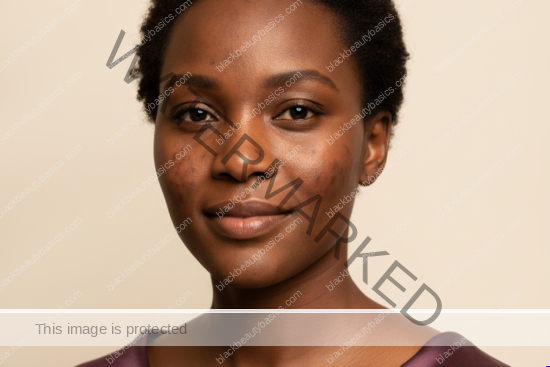
When your face feels stingy, tight, hot, rough, unusually reactive, or simply tired of being “worked on,” more skincare is not always the answer. A reset is a short period of intentional simplicity: fewer variables, gentler habits, and enough consistency to notice what your skin is actually asking for. It is not a punishment for having textured skin, oily areas, dry patches, acne marks, or a routine that stopped feeling good.
For Black women, femmes, and people with richly melanated skin, irritation can feel especially loaded because inflammation may leave lingering uneven tone or make existing marks look more noticeable. That does not mean your skin is failing you, or that you need to chase a perfectly even, poreless finish. This two-week plan sits within our broader Skincare for Black Women guide and is designed to help you step back without shame, panic-buying, or switching products every few days.
The goal is not to diagnose the cause of your irritation from a screen. It is to create a calm baseline. For 14 days, you will reduce common sources of friction, support moisture comfort, and observe patterns in a simple way. If something is painful, rapidly worsening, spreading, swollen, blistered, crusting, or affecting your eyes or lips, skip the reset mindset and seek medical care promptly. Otherwise, let this be a small, protective challenge: less pressure, less guessing, and more room for your skin to settle.
Start by redefining what a skincare reset is for
A skincare reset is not a “detox.” Skin does not need to be punished, scrubbed, or deprived in order to become clean. It is a practical editing period for a routine that may have become crowded with actives, fragranced extras, aggressive cleansing, frequent product testing, or techniques that feel good in the moment but leave your face uncomfortable afterward.
People use the phrase “damaged barrier” often, sometimes as a catch-all for every skin concern. It can be useful shorthand, but it is not a diagnosis. Skin-barrier research in skin of color is still nuanced and limited by inconsistent methods and definitions. Race, ethnicity, pigmentation, and phototype also are not interchangeable categories. Our barrier repair and moisture balance guide explains the broader foundation. What matters for this reset is more immediate: your skin is showing signs that your current routine may be too stimulating, too drying, too inconsistent, or simply not a good fit right now.
During these two weeks, success may look quiet. Your face may feel less tight after cleansing. Makeup may sit more comfortably. The urge to scratch or keep touching a rough area may lessen. You may notice that one product has been doing more than you thought. Or you may learn that your symptoms are not improving enough for home routine changes to be the right next step. Each of those outcomes is useful information.
Signs that make a reset worth considering
You do not need every sign on this list to simplify. Consider a reset if your usual products suddenly sting; your skin feels squeaky or tight after washing; dry patches keep returning; products pill because you are applying too many layers; or you are adding new acids, retinoids, masks, spot treatments, or brightening products faster than you can assess them. Flaking around the nose, mouth, brows, or hairline can also be a reason to pause and observe rather than exfoliate harder.
Another common sign is routine fatigue. Maybe your bathroom shelf has become a lineup of products purchased for every possible concern. Maybe you are applying skincare while distracted and cannot remember what changed. Maybe you have been trying to fade marks while also treating breakouts, managing dryness, and copying a routine that does not suit your face. A reset gives you permission to stop performing skincare and return to the essentials.
What this reset does not ask you to do
You do not need to stop wearing makeup if it feels comfortable and you can remove it gently. You do not need to abandon sunscreen, especially if daylight exposure is part of your normal day. You do not need to accept discomfort because a product is expensive or popular. And you do not need to erase your natural tone variation, facial texture, or hyperpigmentation before you can call your skin healthy-looking.
Keep your expectations grounded. A two-week routine cannot guarantee that every concern will resolve, and it may not identify one single cause. Its value is in reducing noise. If you want a deeper foundation for supporting skin that feels compromised or overworked, read our guide to rebuilding a stressed skincare barrier in melanin-rich skin after you establish a calmer baseline.
What to pause, avoid, and put aside for 14 days
The fastest way to make a reset confusing is to keep using every “treatment” product while adding a soothing one on top. For two weeks, pause optional products that are likely to create extra irritation or make it difficult to tell what is happening. This is not a moral judgment about exfoliants, retinoids, vitamin C, acne treatments, or brightening ingredients. Many can have a place in a well-tolerated routine. They are simply not the focus when your skin is already protesting.
Pause extra exfoliation and high-intensity treatment nights
Set aside scrubs, exfoliating brushes, peeling gels, strong masks, leave-on acids, frequent clay masks, and at-home peel products. Also pause retinoids, benzoyl peroxide, and other strong acne treatments unless a clinician has specifically instructed you to continue. Do not “make up” for missed treatment days by using more product later. A reset works because it removes pressure, not because it creates a stricter schedule.
If you use a prescription topical medication, do not casually discontinue it based on an article. Check with the prescribing clinician or pharmacist about how irritation should be handled. A prescription plan may need adjustment, but it deserves individualized guidance. The same applies if you have been directed to use medicated washes, antifungals, or topical steroids.
Pause friction disguised as self-care
Friction can come from more than a cleanser. For now, skip washcloth scrubbing, cleansing devices, rough towels, facial razors used over irritated areas, and repeated picking at flakes, bumps, or healing blemishes. Pat your face dry with a clean, soft towel rather than rubbing. If you wear a bonnet, headband, wig grip, helmet, mask, or scarf that regularly rubs your hairline or jaw, notice the contact points and make small comfort adjustments where possible.
Be careful with the belief that tingling proves a product is working. Sometimes a mild sensation passes without a problem; sometimes stinging is your cue to stop. Your skin does not owe a product endurance. The same goes for strongly scented oils, essential-oil blends, fragranced mists, and “cooling” products that feel dramatic but leave you more reactive.
Avoid changing five things at once
You may need to buy one basic replacement if your cleanser or moisturizer is clearly uncomfortable. Beyond that, resist the urge to rebuild your entire shelf overnight. Introducing several new products creates a new puzzle. Choose a simple baseline first, use it consistently, and write down anything that feels off. If you suspect your routine has crossed from helpful into too much, our guide to signs your skincare routine may be doing too much can help you recognize the patterns without blaming yourself.
Also avoid using hot water as a comfort ritual. Warm water is usually enough for cleansing. Very hot showers can feel relaxing, but they may leave already-dry or reactive skin feeling more stripped. If your water feels harsh, do not assume hard water is the entire explanation; evidence is limited and individual experiences vary. Focus first on gentle cleansing, less rubbing, and prompt moisturizing.
Your gentle 14-day skincare reset plan
This plan intentionally repeats itself. Repetition is what makes it useful. Keep the routine small enough that you can follow it on a tired Tuesday, after a workout, during a busy travel week, or when you have no interest in doing a ten-step routine. If you miss a step, start again at the next one. There is no need to restart the challenge from day one.
Days 1 through 3: make the routine boring on purpose
In the morning, rinse with lukewarm water if that feels comfortable, or use a small amount of a gentle cleanser if you wake up oily, sweaty, or coated in product. Pat dry. Apply a plain moisturizer while your skin is still slightly damp, then use sunscreen if you will be exposed to daylight. Choose a sunscreen texture you can wear consistently rather than one that looks perfect online but feels drying, greasy, or leaves a cast you dislike.
At night, cleanse once to remove sunscreen, makeup, sweat, and the day. If you wore heavy makeup or a water-resistant sunscreen, you may need a gentle first removal step followed by your regular cleanser, but avoid prolonged rubbing. Apply moisturizer. That is the entire core routine. No toner is required. No exfoliating pad is required. No overnight mask is required.
For cleanser selection, look for a formula described as gentle and fragrance-free, and prioritize how your face feels after rinsing over buzzwords on the front label. A cleanser should remove what you need removed without routinely leaving your face tight, squeaky, burning, or desperate for product. If you need a starting point while shopping, an Amazon search for gentle fragrance-free face cleansers can help you compare product types and ingredient lists. It is an optional shopping tool, not a guarantee that any particular formula will suit you.
Days 4 through 7: observe comfort instead of chasing visible change
By now, the urge to add “just one serum” may be strong. Hold steady. Notice whether discomfort happens immediately after cleansing, several minutes after moisturizer, overnight, or only when you wear makeup. Notice location too. A tight forehead may point to one issue; irritation around the mouth, eyelids, hairline, or jaw can have different triggers. Observation is not overthinking when it helps you reduce unnecessary products.
Keep a short note on your phone once daily. Use plain categories: comfortable, slightly tight, stinging, itchy, flaky, oily, or new bumps. Add anything unusual, such as a long hot shower, a new edge-control product touching your forehead, a workout, a day in dry indoor air, or makeup removal with wipes. You are not trying to create a perfect scientific record. You are looking for repeatable clues.
Moisturizer is your main support product during this phase. Useful formulas may combine humectants, which help hold water; emollients, which soften and smooth; and occlusive ingredients, which help reduce water loss from the skin surface. There is no universal ideal texture or ingredient ratio. A lightweight lotion may be enough for one person, while another needs a richer cream, especially at night or on dry areas.
Days 8 through 10: refine the baseline, not the treatment plan
If your face feels comfortable, continue exactly as you have been. If it feels dry despite moisturizer, try applying your moisturizer more generously to damp skin or use a richer fragrance-free cream at night. You can apply a little more to the areas that need it instead of coating your whole face in a heavy layer if your T-zone becomes uncomfortable easily. This is a reset, not an instruction to force one finish across your entire face.
When choosing a moisturizer, favor a formula you can tolerate morning and night, without a strong fragrance or a long list of “active” promises. Packaging and texture matter too: a product you can dispense cleanly and use regularly is often more helpful than a complicated product you save for special occasions. If you are comparing options, this Amazon search for fragrance-free barrier-supporting moisturizers is a place to review product types. Treat it as a shopping reference, not medical advice or a cure.
If you wear sunscreen daily, keep it in the routine unless it is clearly causing discomfort and you need professional guidance on alternatives. Sunscreen can be especially relevant when you are concerned about lingering post-inflammatory discoloration, but the right one is the one you can use without excessive irritation. Try not to test several new sunscreens during this narrow two-week window. Make a note for later instead.
Days 11 through 14: decide what your skin is telling you
At this point, ask a few simple questions. Is washing less uncomfortable? Are the dry areas less persistent? Has stinging reduced after you removed certain products? Are you still getting irritation at the same time each day? Has nothing changed, or has it become worse? Do not grade your face in the mirror under harsh lighting. Judge the reset by comfort, consistency, and the information you have gathered.
If you are clearly more comfortable, keep the basic routine for another week before considering one reintroduction. If you are only somewhat better, you can still extend the simplified phase rather than rushing back to treatment products. If you are no better, or symptoms are worsening, this is useful information too. It may be time for a dermatologist or another qualified clinician to assess what a basic routine cannot answer.
When you do eventually reintroduce a product, add only one at a time. Start with the product most important to your actual goals, not the product you feel pressured to use. Use it less often than before at first, and give yourself time to observe. This slow return is especially important if you are trying to address acne, uneven tone, or texture without creating another cycle of irritation.
Adjust the reset for your actual skin and daily life
A simple routine should still be responsive. You may have dry cheeks and an oilier forehead. You may wear makeup for work, shave facial hair, exercise often, or use hair products that touch your skin. You may be managing concerns that existed long before this reset. The point is not to pretend those realities disappear; it is to make small adjustments without turning the routine into another pile of variables.
If your face is dry in some places and oily in others
Use one gentle cleanser and one moisturizer as your starting point. At night, apply a slightly thicker layer of moisturizer to areas that feel dry, such as the cheeks, around the mouth, or beside the nose. Use a lighter hand on areas that feel coated or congested. This is often easier than buying separate full routines for different zones. Our practical guide to layering moisturizer for dry patches and oily zones can help you make those adjustments without overloading your face.
If cleansing is the part that hurts
A cleanser does not need to foam dramatically to be effective. Use lukewarm water, short contact time, and your fingertips rather than a textured tool. If your face feels tight almost every time you wash, consider whether you are cleansing too often, using too much product, or relying on a formula that is not mild enough for your skin right now. Our guide on choosing a gentle cleanser when dark skin feels tight after washing offers more detail on what to notice beyond a product’s marketing claims.
If hair, makeup, or shaving may be part of the picture
During the reset, pay attention to the perimeter of your face. Pomades, edge-control products, fragranced sprays, wig adhesives, beard oils, makeup brushes, and makeup-removal habits can all affect what touches your skin. You do not have to give up every part of your routine. Try creating a little separation between hair products and your forehead, cleaning tools regularly, and removing makeup with patient, low-friction steps.
If you shave your face, pause close shaving over areas that are actively irritated when possible. When you resume, use a clean razor, adequate slip, and light pressure. Avoid repeatedly passing over one spot to achieve perfect smoothness. Texture is normal; forcing the skin to feel glassy can create more discomfort than it solves.
If you have a special event during the 14 days
Stay with familiar products. This is not the moment to test a peel, a new brightening serum, a strong setting spray, or a professional treatment you have never tried. If you need makeup, moisturize first, use clean tools, and remove it gently at the end of the day. A calm, comfortable face is a better goal than a flawless finish that costs you several days of irritation afterward.

Troubleshoot thoughtfully and know when home care is not enough
Not every uncomfortable reaction is caused by “too many actives,” and not every flare will settle with a basic cleanser and moisturizer. This reset is a low-risk organizational tool, not a substitute for evaluation. If something feels consistently wrong, believe that information. You do not need to keep experimenting just because a product was recommended by a friend, creator, or salesperson.
When to simplify further
If your routine is still uncomfortable, check the basics first. Are you washing more than twice a day? Taking very hot showers? Applying products to a face that is rubbed raw with a towel? Using fragranced body products near your neck and jaw? Applying treatment products “just on one spot”? Wearing makeup to bed because you are exhausted? Small habits can matter more than adding another serum.
Consider whether a product is being used in a way its directions do not support. More cleanser does not clean better. More moisturizer does not always improve comfort if the formula itself is not agreeing with you. And using several products with overlapping active ingredients can quietly create a harsher routine than you intended.
When to seek medical guidance
Seek prompt medical care for swelling of the face, lips, tongue, or eyes; trouble breathing; widespread hives; severe pain; blisters; oozing; crusting; signs of infection; or a reaction that is rapidly spreading. These are not situations for product experimentation. Also contact a dermatologist or qualified clinician if persistent itching, rash-like changes, painful breakouts, recurrent cracking, or ongoing burning does not improve with simplification.
A dermatologist can help distinguish between concerns that look similar in the mirror but need different approaches. If you seek care, bring your product list, photos of changes if you have them, and notes from your reset. Tell them what you stopped, what improved, and what did not. That gives them more useful information than trying to remember every product under pressure.
Be especially protective of your mental space during this process. Irritated skin can make you want to avoid mirrors, cancel plans, or buy every product that promises instant calm. You deserve care without being sold insecurity. Your tone, texture, marks, and healing process are not a public problem to solve.
What to Do Next
On day 14, do not rush to rebuild your old routine. First, choose the path that matches your notes. If your skin feels more comfortable, continue your cleanser, moisturizer, and sunscreen baseline for another seven days. That extra week can help you confirm that the improvement is steady rather than a one-day fluctuation.
If you want to reintroduce a treatment product after that, choose only one. Start with the concern that matters most to you, use it conservatively, and keep every other part of the routine the same. If discomfort returns, stop and return to your calm baseline rather than layering more products to counteract it. You are allowed to decide that a product is not worth the trade-off.
If you saw no improvement, worsened, or feel unsure about what you are seeing, make a list of your products and consider booking a dermatology visit. Bring the information you gathered rather than trying to troubleshoot alone indefinitely. A reset is successful when it helps you make a clearer next decision, whether that decision is to stay simple, reintroduce carefully, or ask for support.
Frequently Asked Questions
Can I do this reset if I have acne-prone skin?
Yes, but keep the goal realistic. Acne-prone skin can still become irritated from frequent exfoliation, harsh cleansing, multiple spot treatments, or product overload. During the reset, use a gentle cleanser, moisturizer, and sunscreen as tolerated. If you use prescription acne medication or a clinician-directed treatment, ask the prescriber before stopping or changing it. A short simplified period may help you notice whether your routine is aggravating your skin, but it is not a replacement for acne treatment or professional care when breakouts are painful, persistent, or scarring.
Should I stop using sunscreen for two weeks if it stings?
Do not force yourself through significant stinging, but do not treat sunscreen as an optional extra if you can find a comfortable alternative. During a reset, it is reasonable to avoid testing multiple new formulas at once. Try using a familiar sunscreen that has been comfortable in the past, and apply moisturizer underneath if that helps the finish. If every sunscreen burns or causes ongoing irritation, simplify the rest of your routine and seek individualized guidance. Hats, shade, and other sun-protective habits can also be useful while you sort out a tolerable product.
Can I use petroleum jelly during a skincare reset?
Some people find a thin layer of petrolatum helpful as a final nighttime step over moisturizer on very dry, non-acne-prone areas. Others find it too heavy or uncomfortable on the whole face. It is not required for a successful reset. If you try it, use a small amount on clean skin after your moisturizer and avoid adding several other new products at the same time. Stop if it feels irritating or seems to worsen congestion for you. The best reset routine is the simplest one your skin can tolerate consistently.
What if my skin looks darker or more uneven while it is irritated?
Inflammation can make existing uneven tone or post-inflammatory marks appear more noticeable, especially in richly melanated skin. That can be emotionally frustrating, but it is not a reason to immediately add stronger brightening products. First focus on reducing visible irritation and avoiding further friction. Once your skin feels stable, you can consider reintroducing one treatment product slowly if it aligns with your goals. If discoloration changes rapidly, appears alongside concerning symptoms, or is affecting your confidence deeply, a dermatologist can offer more individualized guidance than trial-and-error product layering.
Can I wear makeup while doing the two-week reset?
You can wear makeup if it feels comfortable and you remove it gently. Use products you already know your skin tolerates rather than experimenting with a new primer, foundation, setting spray, or adhesive during the reset. Clean brushes, sponges, and applicators regularly, especially if your skin is irritated or breaking out. At the end of the day, remove makeup with minimal rubbing and follow with your gentle cleanser if needed. The key is reducing friction and extra variables, not making you abandon your personal style or daily routine.
How do I know whether my moisturizer is too heavy?
A moisturizer is not automatically “too heavy” because it has a rich texture. What matters is your experience over several uses. It may not be the best fit if it leaves you persistently uncomfortable, greasy in a way you dislike, more congested, or itchy. During a reset, try adjusting the amount before replacing it entirely. Use more on dry areas and less on oilier zones. If a formula consistently stings or causes a reaction, stop using it. Richly melanated skin does not require one universal moisturizer texture.
What should I reintroduce first after the reset?
Reintroduce the product that serves your highest-priority goal, not necessarily the most expensive or most popular one. For some people, that may be an acne treatment; for others, a retinoid, vitamin C product, or exfoliant. Wait until your skin has felt comfortable for several days, then add one product at a time and use it less frequently at first. Keep your cleanser, moisturizer, and sunscreen routine steady while you observe. If irritation returns, stop the new addition and go back to the simple baseline before deciding what to try next.
Related next steps
Related posts:
 Weekend Reset Routines After a Busy Week
 Calming Routine for Sensitive, Easily Irritated Dark Skin
 Sunday Reset Beauty Rituals for Black Women
 How Many Times You Should Wash Your Hair In A Week?
 How Many Times You Should Wash Your Hair In A Week?
 Mapping Your Week to a Realistic Hair and Scalp Routine